

Description
QMR4-45 Mobile Block Machine – In Stock Ready to Ship
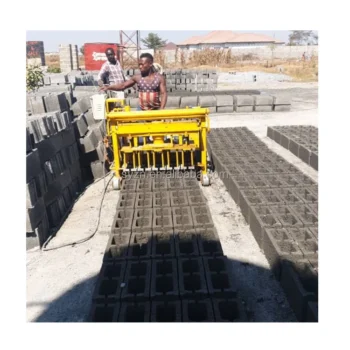
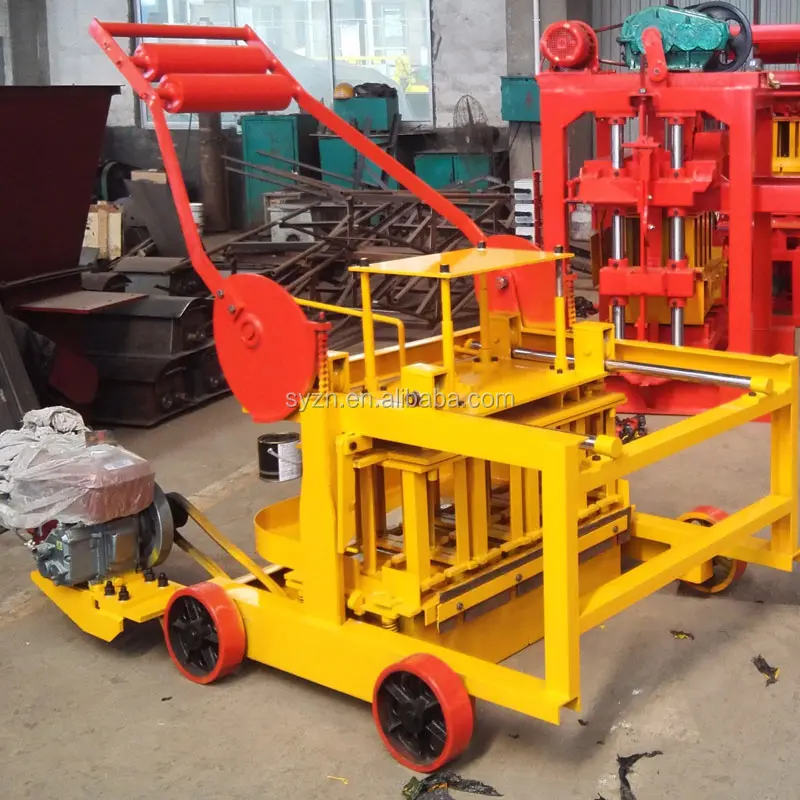
Pallet-Free Mobility — the QMR4-45 arrives fully assembled and begins producing blocks on a flat concrete floor the same day it is offloaded, eliminating pallet purchasing and curing-rack handling from your site setup.
Technical Specifications
| Parameter | Value |
|---|---|
| Model | QMR4-45 |
| Product Type | Mobile Block Making Machine |
| Overall Dimensions (L×W×H) | 1100 × 950 × 2100 mm |
| Net Weight | 810 kg |
| Molding Cycle | 30–45 seconds |
| Power Source | Diesel engine / Petrol engine / Electric motor |
| Pallet Requirement | None — egg-laying operation |
| Output Capacity | 2,560 pcs/day (basis not stated in source — confirm block format and wall thickness) |
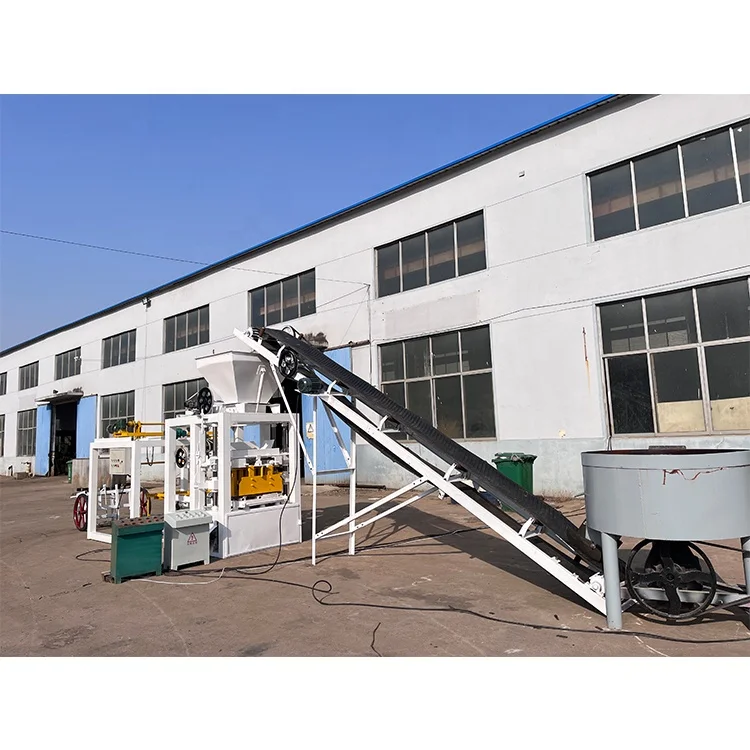
| Basic Equipment Included | JZC350 or JQ350 diesel concrete mixer, trolley |
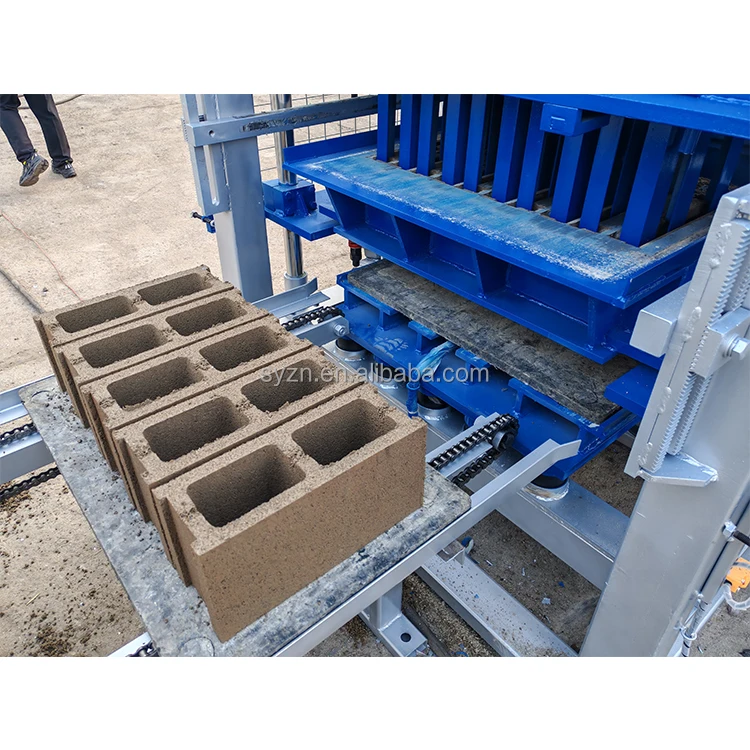
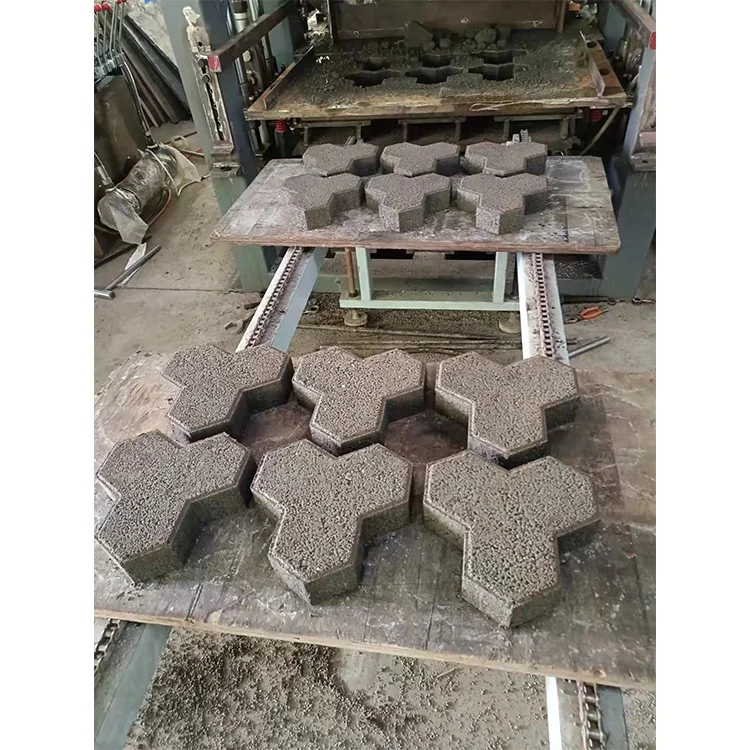
| Block Formats Supported | Hollow block, solid brick, paver brick, fly ash brick, concrete block |
| Warranty | 1 year |
Application Suitability
| Application | Material or Output |
|---|---|
| On-site hollow block production for housing projects | Crushed stone, sand, cement mix laid directly on a flat concrete slab |
| Solid brick and paver production at remote construction camps | Fly ash or aggregate blends with diesel power where grid electricity is unavailable |
| First plant setup by small-scale entrepreneurs | Low-investment, pallet-free operation producing multiple formats from a single unit |
| Infrastructure contractor producing kerb and channel blocks on location | Coarse aggregate and cement blends, relocated across the job site as work progresses |
Why Stock Availability Matters More Than Catalogue Output
A mobile block making machine in stock means your crew is laying blocks next week, not waiting eight weeks while a project deadline passes.
When a contractor commits to a housing project timeline, the block supply has to start the moment the foundation cures. Procurement delays on equipment push every downstream trade — plasterers, roofers, plumbers — into a cascading standby. I have seen site supervisors in West Africa burning through daily wage costs while a container was still on the water, and the crew had nothing to do but wait [NEED_CITE: project delay costs from equipment procurement lead times in emerging-market construction]. A QMR4-45 mobile block making machine that is stocked and ready to dispatch collapses that gap between order and first production run to the shipping transit time alone.
Dispatch Timing and Container Planning
The QMR4-45 is a compact, fully assembled mobile block making machine in stock configuration, meaning no production backlog stands between your purchase order and the container door. At 810 kg and 1100 × 950 × 2100 mm, the unit fits inside a standard 20-foot container alongside the included concrete mixer and trolley, with remaining space available for additional moulds or spare wear parts. Packing photographs and a container loading plan are provided before dispatch so you can confirm the shipment composition and plan your port-side receiving logistics [NEED_CITE: standard container loading dimensions and weight limits for industrial machinery].
Power Source Selection Before Loading
Diesel, petrol, or electric — the QMR4-45 mobile block making machine ships configured to match your site utility reality. Remote infrastructure projects in areas without reliable three-phase power typically run the diesel option paired with the included JZC350 mixer. Urban or peri-urban sites with stable grid connections opt for the electric motor to reduce fuel cost and noise. Confirming this choice at the inquiry stage prevents a situation where the machine arrives and sits idle because the site lacks the electrical infrastructure or the fuel supply chain to run it.
Cycle Time, Mould Format, and Realistic Daily Volume
The 30–45 second molding cycle is the mechanical rhythm the machine can sustain when the operator keeps a steady feed of mixed concrete available. The daily output figure of 2,560 pieces carries a caveat: it is not tied to a specific block format or wall thickness in the source data. A standard 400 × 200 × 200 mm hollow block, a thinner paver, and a solid brick each consume different volumes of mix per cycle and demand different handling times between lays. Buyers should confirm which block format they intend to produce and request a capacity calculation based on that specific dimension before committing to a project supply schedule.
How the No-Pallet Design Simplifies Site Logistics
Traditional stationary block machines require pallets — typically thousands of them — to carry wet blocks from the press to the curing area. The QMR4-45 eliminates that entire layer. The machine lays blocks directly onto a smooth, level concrete floor and then moves forward to repeat the process. This egg-laying approach removes pallet purchasing cost, pallet storage space, and the forklift traffic that a pallet-based curing yard demands. For a contractor already managing cement trucks, aggregate stockpiles, and crew movement on a tight site, removing one more material flow is a meaningful simplification [NEED_CITE: pallet cost and handling burden in small-scale block production].
When Stock Moulds Do Not Match Your Market
A mobile block making machine is only as flexible as the moulds available to run on it. If your local market sells a hollow block with a non-standard web pattern or a paver with an interlocking profile that differs from the stock mould catalogue, the machine will arrive ready but the product will not match what your buyers expect. Always verify that the specific mould format your customers demand is either in stock or can be manufactured and loaded into the same container before the dispatch date. A mismatch discovered after arrival means weeks of zero revenue while a custom mould is produced and shipped separately.
Why Procurement Choices Matter on a Job Site
Ordering a mobile unit without confirming the power source, the mould format, and the included auxiliary equipment often surfaces as a problem only after the container is opened. A diesel machine on a site that only has grid power wastes fuel budget. An electric machine on an off-grid site is a heavy paperweight. Missing moulds mean the machine runs one product while your market needs three. These are not engineering failures — they are specification gaps at the inquiry stage [NEED_CITE: common causes of equipment idle time after delivery in construction machinery procurement].
What This Supplier Brings to the Transaction
Block machinery is the sole product focus here, so the QMR4-45 is specified as a matched system: machine, mixer, mould, and trolley are confirmed together rather than assembled from separate catalogue pages. Stock availability is quoted upfront with a dispatch timeline, not a production lead time that extends your project schedule. Packing photographs, container loading plans, and customs documentation support are standard, so your freight forwarder has what they need before the container leaves the factory yard. Mould formats are confirmed against your market requirements, and additional moulds can share the same container to avoid a second shipment.
Documentation & Verification
- Factory test record showing the QMR4-45 running your requested mould format before dispatch
- Machine specification sheet confirming power source, dimensions, and included auxiliary equipment
- Container loading plan and packing photographs provided prior to shipment release
- Mould drawing and format list matching your confirmed block product range
- Operation and maintenance manual covering diesel and electric variants with wear parts schedule
Installation, Commissioning & Support
- Arrives fully assembled — no foundation bolts or structural assembly required on site
- Requires a flat, level concrete floor of adequate strength to bear 810 kg plus dynamic vibration load
- Diesel variant needs fuel supply logistics; electric variant requires confirmed voltage and frequency at the site panel
- JZC350 or JQ350 mixer included and matched to the QMR4-45 cycle rhythm for continuous feed
- Operator training covers mould change procedure, cycle pacing, and daily wear-part inspection
- Spare vibration belts and wear components recommended for inclusion in the same container shipment
Before You Request a Quote
Send the specific block format your market sells — including length, width, height, and whether it is hollow, solid, or paver — along with your site power availability and your target daily volume. If you already have a concrete mixer on site, state its model so the included equipment list can be adjusted. Confirming these details at the inquiry stage allows the dispatch timeline and container plan to be quoted accurately from the first response.
Frequently Asked Questions
Q: What block format is the 2,560 pcs/day capacity based on?
A: The published figure does not specify a block format or wall thickness in the source data. Realistic output varies considerably between a 400 × 200 × 200 mm hollow block and a thinner solid paver. Request a capacity calculation based on your specific product dimensions before committing to a supply schedule.
Q: Is the QMR4-45 currently in stock and ready to ship?
A: Stock status and dispatch timing are confirmed at the inquiry stage based on your chosen power source and mould configuration. A container loading plan and estimated transit time to your destination port are provided before you commit to the order.
Q: Should I choose diesel or electric, and is the mixer included?
A: The choice depends on your site utility conditions. Remote or off-grid sites typically use the diesel option. The quoted package includes a JZC350 diesel mixer or JQ350 electric mixer along with a trolley, matched to the machine you select.
Q: Can additional mould formats ship in the same container?
A: The compact dimensions of the QMR4-45 leave space inside a standard 20-foot container for extra moulds and spare wear parts. Confirming your full mould list at the inquiry stage ensures everything loads into a single shipment.
Q: How is the machine packed and does it need assembly on arrival?
A: The QMR4-45 ships fully assembled with no dismantling required for container loading. It arrives ready to operate once placed on a flat concrete surface and connected to its power source. Packing photographs are provided before dispatch.