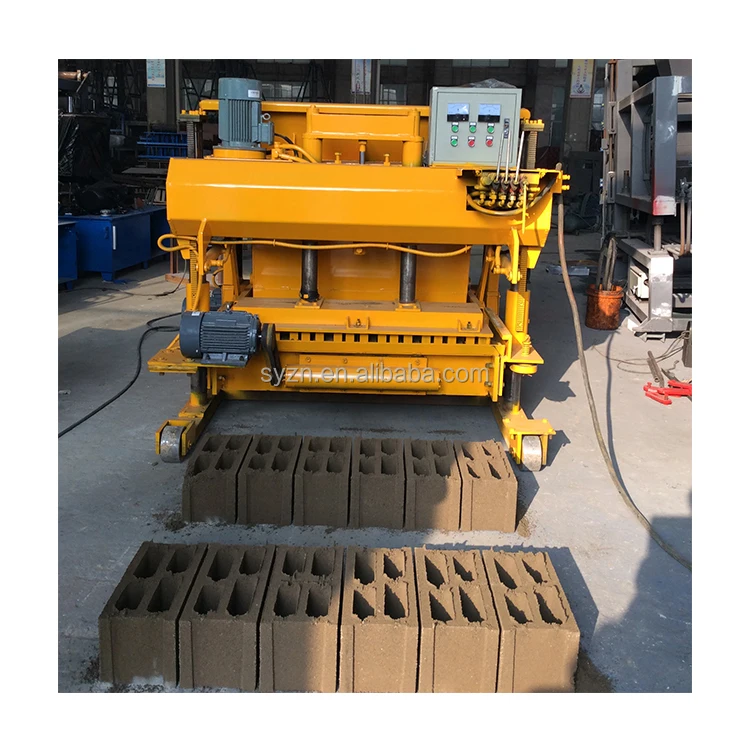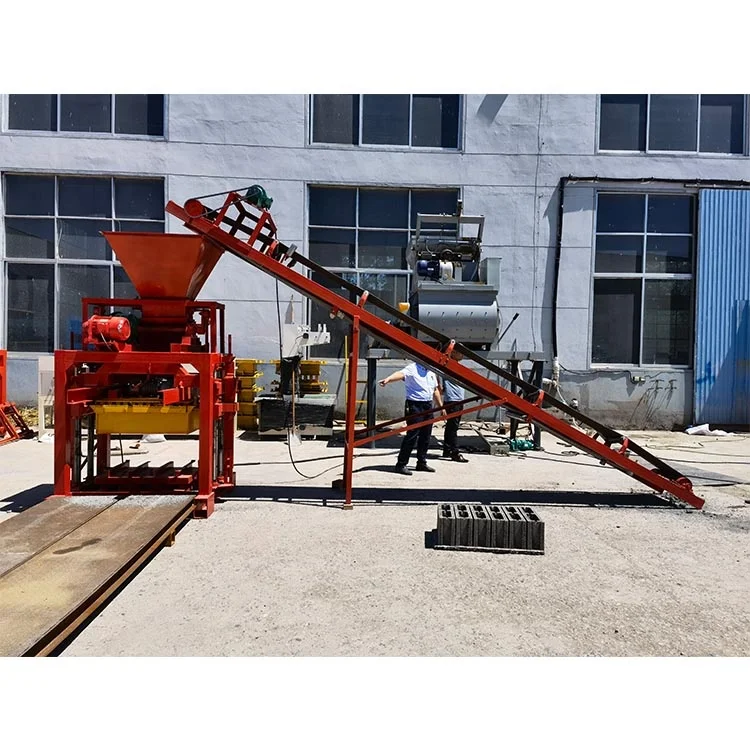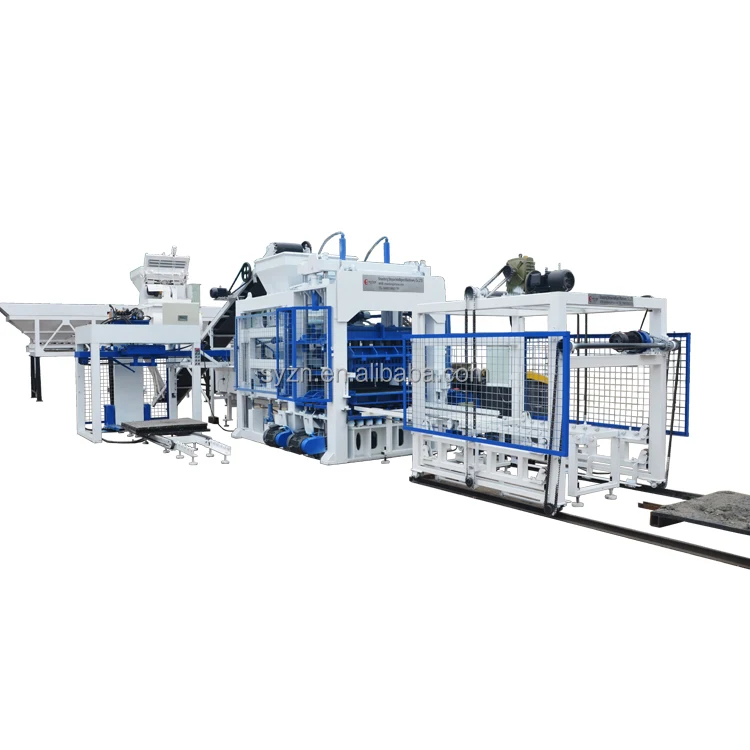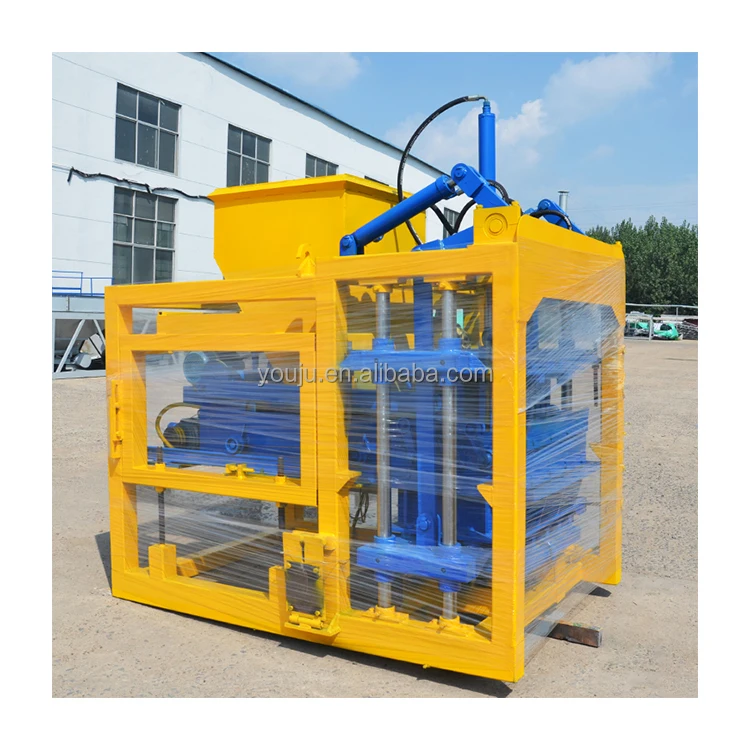


Description
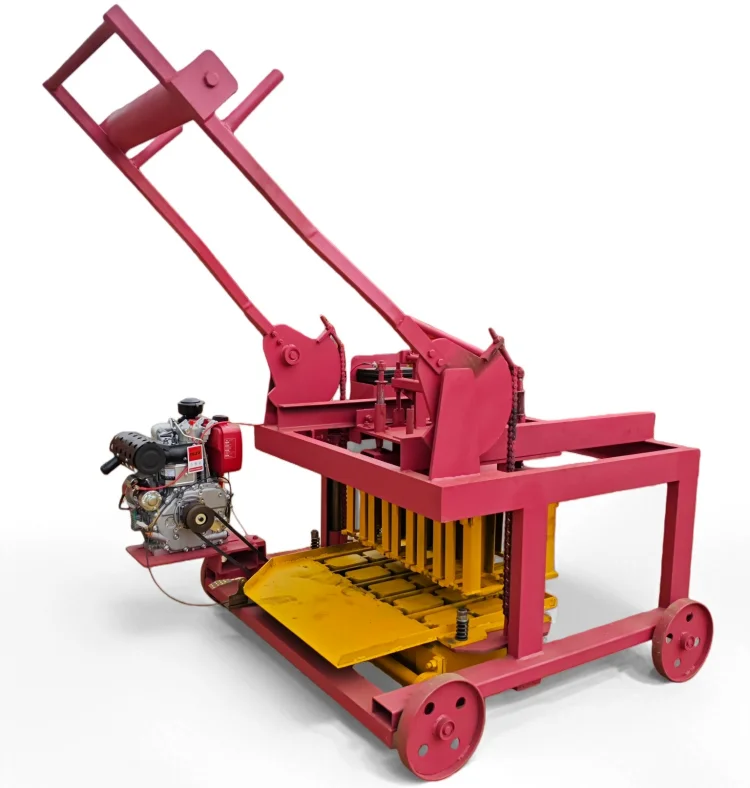
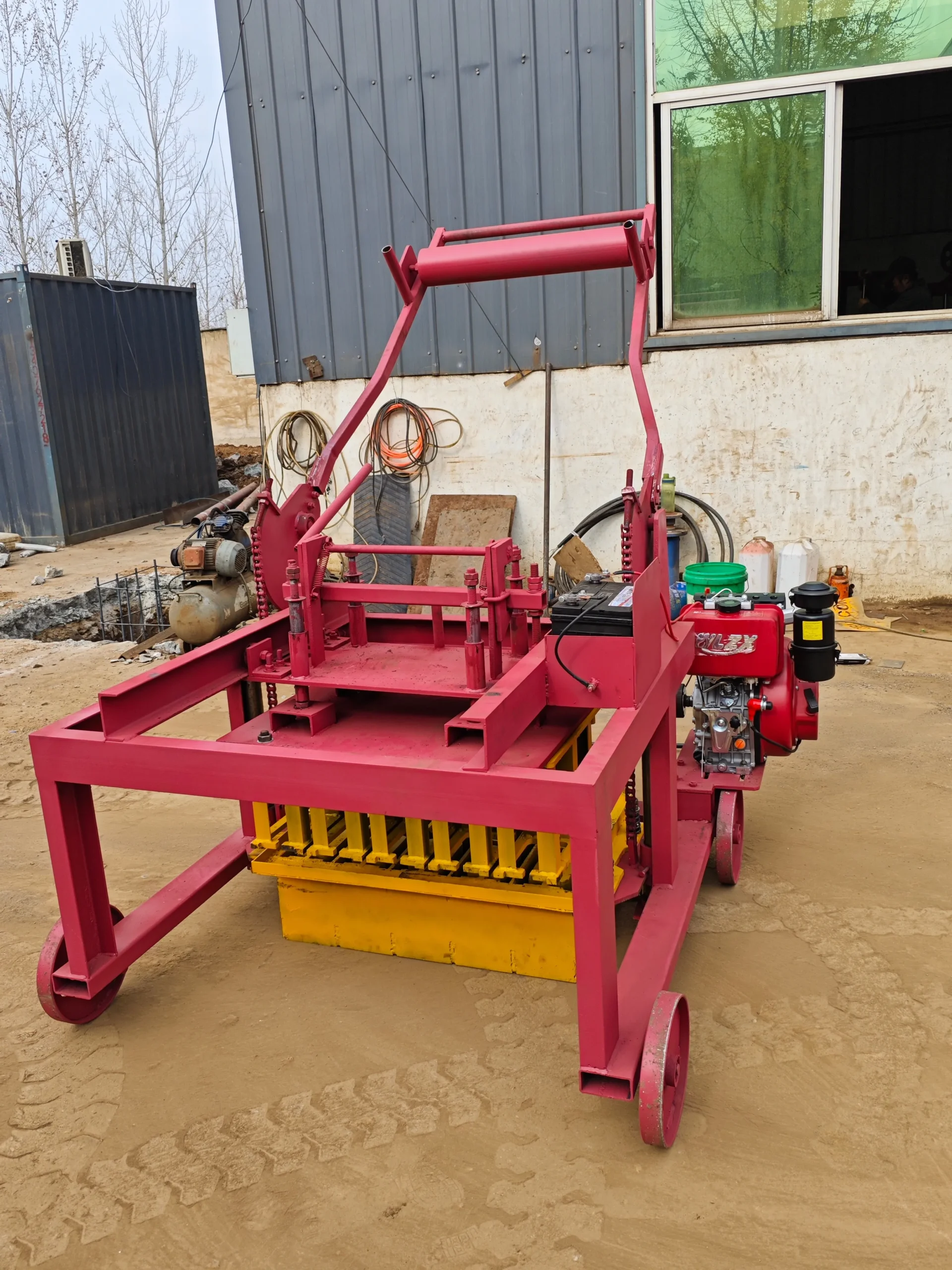
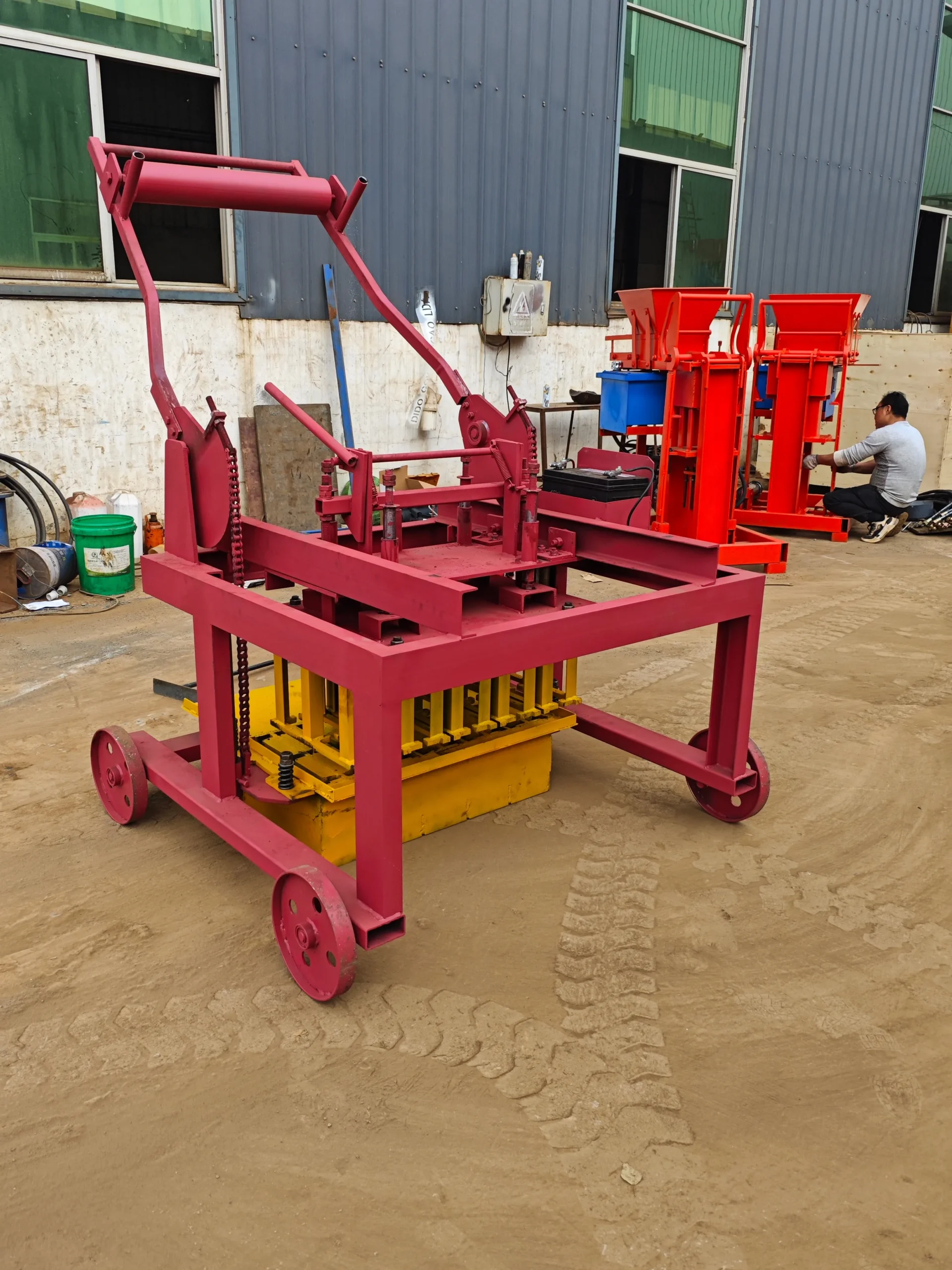
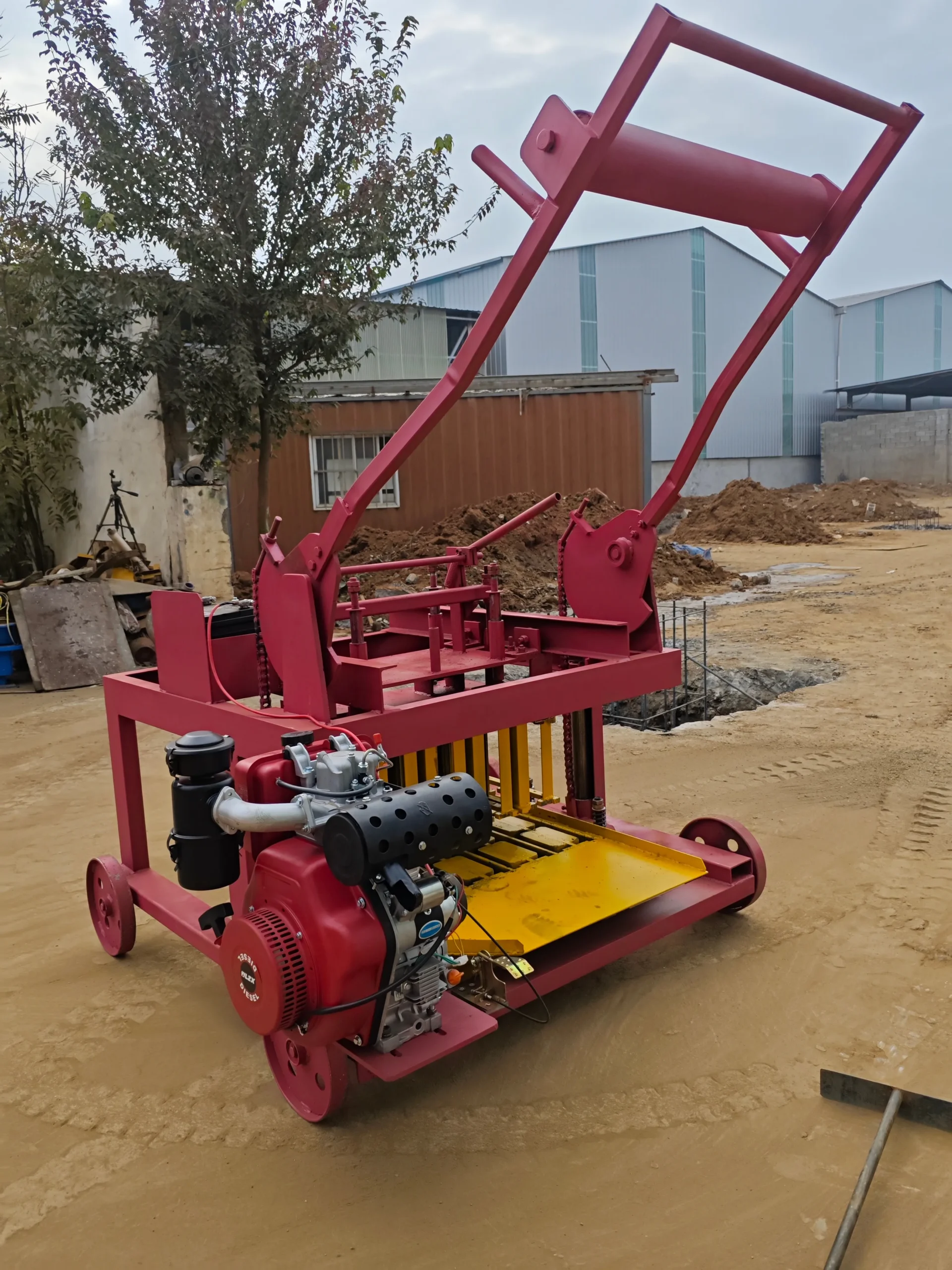
Fast Container Dispatch — Stocked QMR4-45 mobile egg laying block machines are pre-assembled, tested, and photographed before your container is booked, so you know exactly what leaves the factory.
Technical Specifications
| Parameter | Value |
|---|---|
| Model | QMR4-45 |
| Product Type | Mobile Egg Laying Concrete Block Machine |
| Overall Dimensions (L×W×H) | 2420 × 1320 × 1650 mm |
| Net Weight | 810 kg |
| Moulding Cycle | 40–45 s |
| Pallet Requirement | No pallet required (egg laying type) |
| Rated Power | 6 kW |
| Diesel Engine Option | 6 kW or 6–8 HP |
| Voltage | 220 V / 380 V (configurable to local standard) |
| Hydraulic Pressure Source | Diesel engine driven |
| Mould Change System | Interchangeable moulds for different block formats |
| Automation Level | Manual / semi-manual operation |
| Ground Requirement | Operates on existing site ground, no fixed concrete floor |
| Output Capacity | 3000 pcs/day (basis: 400×200×200 mm hollow block, 4 pcs/mould, 8 h shift) |
| Certification | CE referenced |
Application Suitability
| Application | Material or Output |
|---|---|
| On-site hollow block production for building contractors | Crushed stone, sand, cement, water — no fixed batching plant required |
| Remote yard production for housing development projects | Multi-cellular bricks and standard blocks using locally sourced aggregate |
| First-time block plant startup with minimal site preparation | Paving bricks and solid bricks laid directly on level ground |
| Emergency block supply during tight construction schedules | Diesel-powered operation independent of grid electricity availability |
What "Ready to Ship" Actually Means When Your Deadline Is Real
A QMR4-45 mobile block machine in stock is not a promise — it is a container loading plan with a confirmed departure date.
I have watched project timelines collapse because a block machine was quoted as available but still needed a six-week production run. The QMR4-45 mobile block machine in stock you see listed here has already passed factory testing, and its dismantling points are mapped to standard container dimensions. When your contractor needs blocks on-site next month, the difference between a stocked unit and a built-to-order unit is the difference between meeting the schedule and explaining delays [NEED_CITE: typical lead time variance between stocked and custom-built block machinery].
Stocked Configurations and Dispatch Timing
The QMR4-45 mobile block machine in stock is available in both electric motor and diesel engine variants, with standard mould sets for hollow blocks and solid bricks already matched to the machine frame. Before you confirm an order, we provide the exact unit serial number, current location in the yard, and the earliest container booking date. This eliminates the common scenario where a machine quoted as available turns out to require component sourcing or assembly.
Container Loading and Dismantling Strategy
An 810 kg machine with dimensions of 2420 × 1320 × 1650 mm fits within standard container constraints, but how it is dismantled determines whether you also ship moulds, spare wear parts, and tools in the same container. The QMR4-45 mobile block machine in stock is partially disassembled at documented break points — the hopper, mould box assembly, and engine mount — so that bracing and dunnage hold the main frame rigid during transit. You receive packing photographs before the container door closes.
Reading the Specifications Against Your Site Reality
The 40–45 second moulding cycle assumes a consistent mix fed into the hopper and level ground for the egg laying travel path. If your aggregate runs oversized or your site surface is uneven, the real cycle stretches and daily output drops below the 3000-piece reference figure. The 6 kW diesel engine provides independence from unreliable grid supply, but fuel quality and ambient temperature affect cold-start behavior in tropical or high-altitude sites [NEED_CITE: diesel engine derating factors at altitude and high ambient temperature]. Voltage configuration for the electric variant must be confirmed against your local standard before the motor is wired — a 380 V motor shipped to a 220 V site means rewinding or replacement before commissioning begins.
The Cost of Skipping Pre-Shipment Verification
I once saw a contractor receive a mobile block machine with a mould set designed for fine sand, while his local quarry only supplied coarse volcanic aggregate. The hopper bridged constantly, the mould cavity filled unevenly, and block density varied so much that half the output cracked during curing. That machine was not verified against his material before dispatch. When a QMR4-45 unit ships without a material sample review and a confirmed mould-to-aggregate match, the downtime and wasted cement compound quickly [NEED_CITE: block density variation caused by aggregate gradation mismatch]. Skipping this step is the most common reason a mobile block machine underperforms against its rated cycle time.
Why Source This Machine Through Our Stock Channel
Every stocked QMR4-45 unit is photographed in its assembled state and its dismantled state, so you see exactly what arrives at your port. Container loading plans include total CBM, bracing method, and a list of items sharing the container — no surprises when the packing list arrives. Mould sets stocked alongside the machine are tested for fit on that specific frame before dispatch, not pulled from separate inventory. Dispatch lead time is quoted as a date, not a range. Arrival estimates are calculated from the booking confirmation against your destination port, accounting for typical transit routes [NEED_CITE: common ocean freight transit times from Chinese ports to Southeast Asian and African destinations]. Documentation — including customs classification codes and CE declaration where applicable — is prepared before shipment, not assembled after the container sails.
Documentation & Verification
- Factory test record showing moulding cycle timed on your specified block format
- Packing photographs of dismantled machine and mould sets before container loading
- Container loading plan with CBM breakdown, bracing details, and shared cargo list
- Voltage and motor wiring confirmation matched to your declared local electrical standard
- CE declaration and customs documentation package ready before container departure
Installation, Commissioning & Support
- Operates on level compacted ground; no fixed concrete foundation required for the 2420 × 1320 mm footprint
- Diesel engine variant requires verified fuel grade and local filtration availability before first start
- Electric variant needs dedicated circuit matching confirmed voltage and frequency rating
- Mould change procedure demonstrated on-site using your stocked interchangeable mould sets
- Spare wear parts list provided with reorder quantities specific to your production intensity
- Daily greasing points and weekly vibration assembly inspection schedule included in manual
Before You Send the Inquiry
Share your target block format and dimensions, the aggregate type and gradation available near your site, and whether grid power at your declared voltage is stable enough for the electric variant or whether the diesel engine is the practical choice. If you have an existing curing area or forklift, let us know — even a pallet-free egg laying machine benefits from knowing how blocks will be moved after they set. Confirming these details before quotation means the QMR4-45 unit we allocate from stock is configured for your actual conditions, not a catalogue default.
Frequently Asked Questions
Q: Which QMR4-45 models and moulds are in stock right now, and what is the real dispatch lead time?
A: Stocked units include both diesel-powered and electric motor variants, paired with standard hollow block and solid brick moulds. Dispatch lead time is quoted as a specific date based on container availability at the nearest port, typically within days of order confirmation for units already built and tested.
Q: How is the machine dismantled and loaded into a container, and what CBM does one unit occupy?
A: The QMR4-45 is dismantled at three documented break points — hopper, mould box, and engine mount — reducing the main frame footprint for container stowage. A loading plan with total CBM, bracing method, and dunnage specification is provided before you confirm the booking.
Q: Can the diesel engine be matched to locally available fuel, and is an electric motor variant available from stock?
A: Both variants are held in stock. The diesel engine can be specified to match your local fuel grade and filtration standards. For the electric variant, voltage and frequency are confirmed against your site supply before the motor is wired and tested.
Q: What arrival estimate can I work with once the container is booked?
A: Arrival is estimated from the confirmed vessel booking against your destination port, using published transit times for the relevant shipping route. We provide the estimate at order confirmation so you can schedule site preparation and operator availability.
Q: Are matching moulds for my block format stocked together with the machine, or do they need a separate production run?
A: Standard hollow block and solid brick moulds are stocked and fit-tested on the allocated machine before dispatch. Custom block formats require a separate mould production run, and we confirm the timeline for that run before you commit to the machine order.