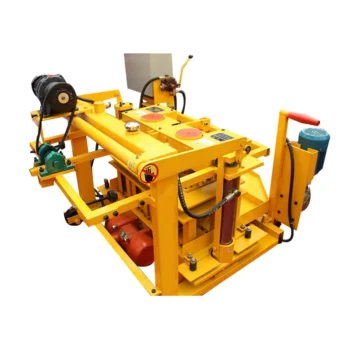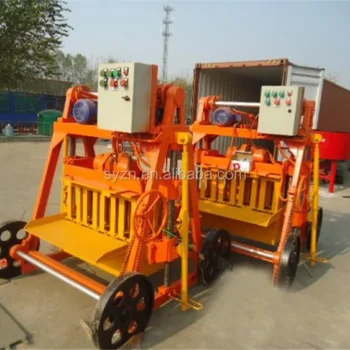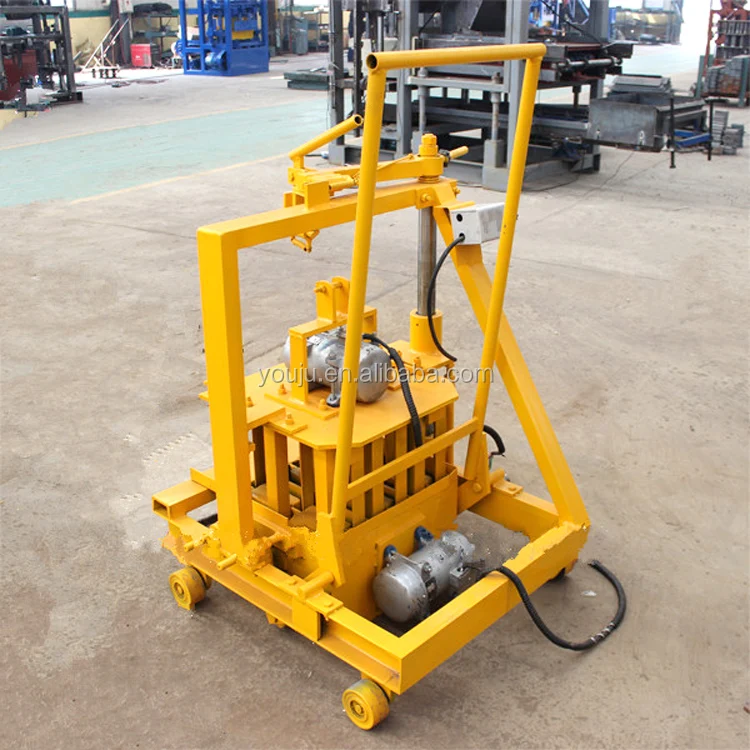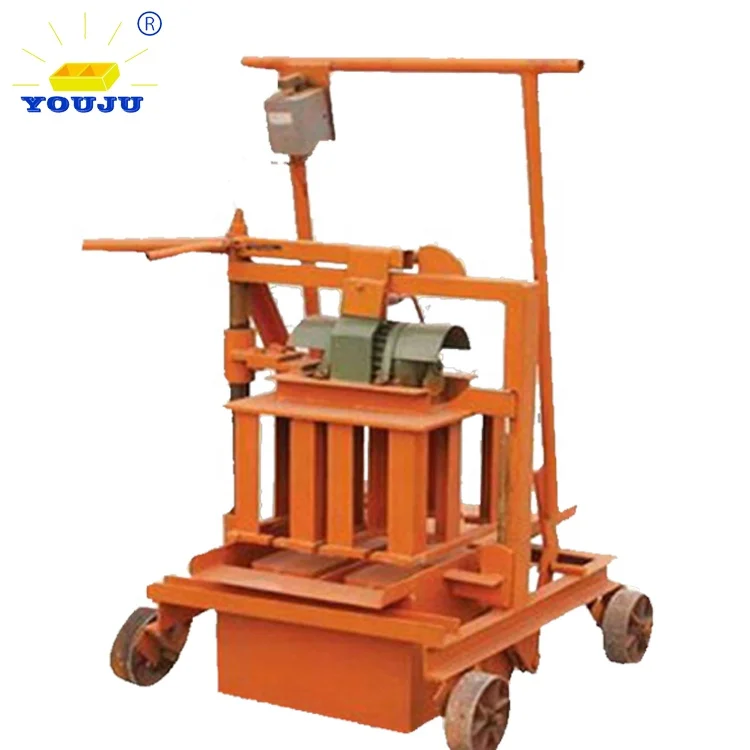
Description
Stocked and Dispatch-Ready — QMY4-30 mobile block machine ships from inventory with plywood packing, so your on-site production starts on a predictable timeline rather than waiting for a build slot.
Technical Specifications
| Parameter | Value |
|---|---|
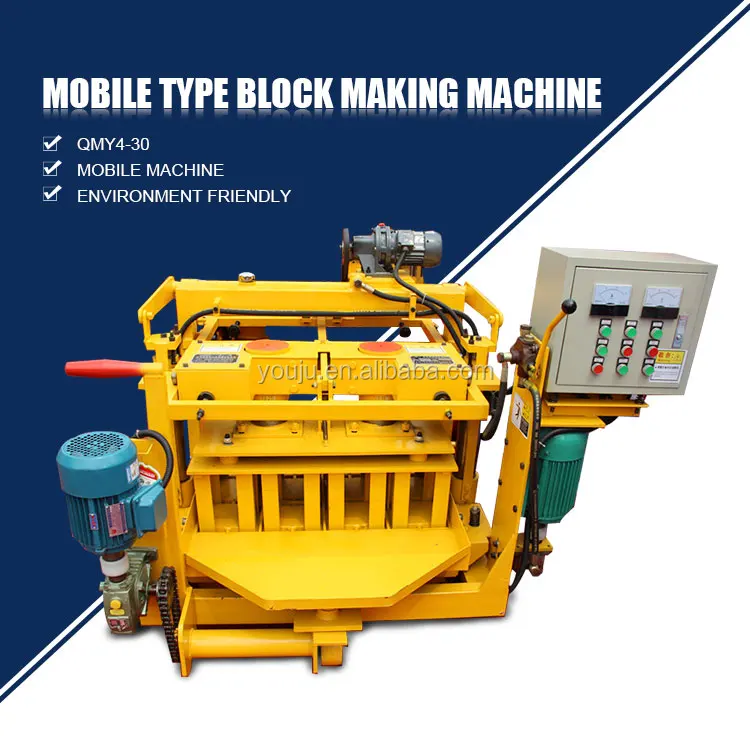
| Model | QMY4-30 |
| Product Type | Mobile Hollow Block Making Machine |
| Rated Power | 5 kW |
| Voltage & Frequency | Configurable to buyer site supply (basis to be confirmed) |
| Control System | Manual push-button operation |
| Overall Dimensions (L×W×H) | 1200 × 1200 × 1100 mm |
| Net Weight | 950 kg |
| Cycle Time | 30 seconds |
| Output Capacity | 480 pcs/h based on 400×200×200 mm hollow block |
| Output Capacity | 600 pcs/h based on 400×150×200 mm hollow block |
| Output Capacity | 840 pcs/h based on 400×100×200 mm hollow block |
| Daily Output (8 h shift) | 3,840 pcs based on 400×200×200 mm hollow block |
| Daily Output (8 h shift) | 4,800 pcs based on 400×150×200 mm hollow block |
| Daily Output (8 h shift) | 6,720 pcs based on 400×100×200 mm hollow block |
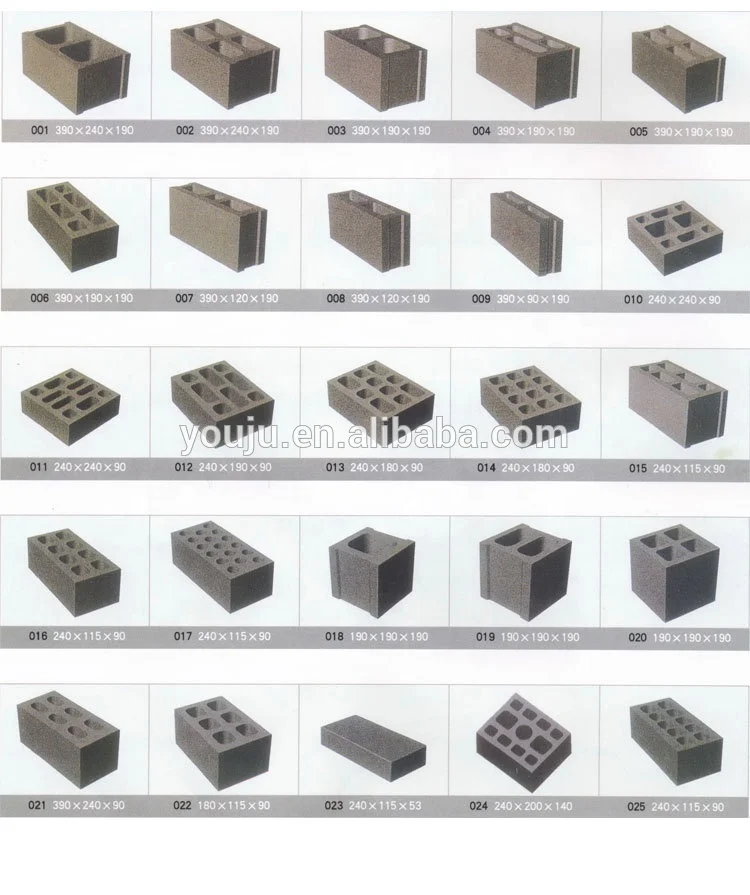
| Mould Format | Changeable for hollow block and solid brick (normal size) |
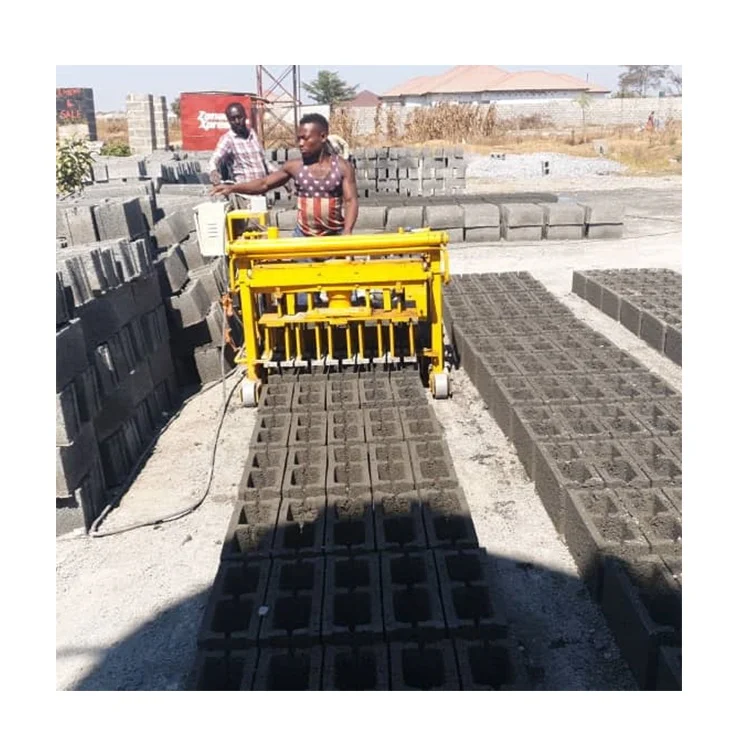
| Automation Level | Manual operation, mobile egg-laying type |
| Raw Materials | Cement, sand, crushed stones, slag |
| Warranty | One year |
Application Suitability
| Application | Material or Output |
|---|---|
| On-site hollow block production for housing projects | Cement, sand, crushed stone mixes laid directly on the ground |
| Small-scale solid brick manufacturing | Slag and cement blends for load-bearing and partition bricks |
| Contractor yard production for remote build sites | Local aggregate and cement without a fixed batching plant |
| First plant setup by entrepreneurs entering block sales | Low-investment egg-laying format producing standard formats |
Why Voltage Confirmation Must Happen Before the Machine Ships
A mobile block machine in stock is only useful if it matches your site’s power supply the day it arrives.
I once stood on a job site in Saudi Arabia watching a crew uncrate a machine that could not be energised. The unit was wired for 380 V, but the contractor’s temporary supply was 220 V, and nobody had verified the single-line diagram before loading. The site sat idle for weeks while a frequency converter was sourced. The QMY4-30 mobile block machine in stock ships with a configurable motor and control circuit, but the buyer must confirm the exact voltage and frequency before the machine leaves the warehouse [NEED_CITE: voltage and frequency standards by export market]. Skipping this step turns a fast-dispatch advantage into a costly delay.
Dispatch Certainty When the Project Clock Is Already Running
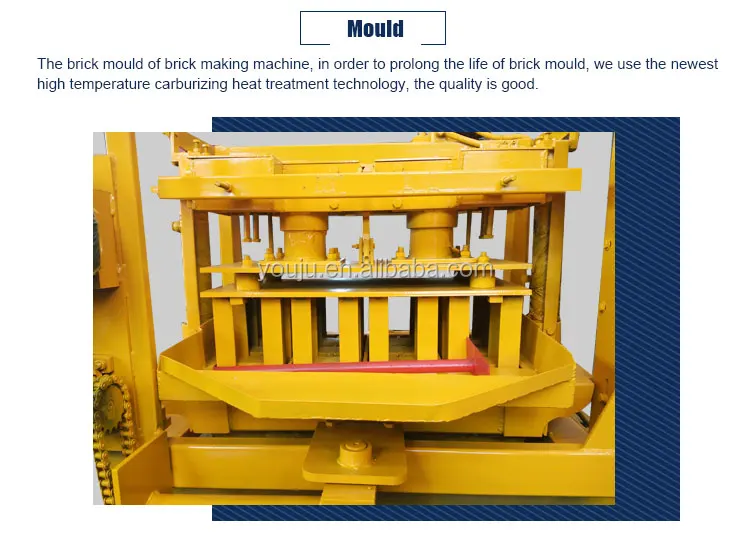
When a contractor commits to a block-laying schedule, the machine arrival date becomes a critical path item. The QMY4-30 mobile block machine in stock eliminates the production lead time that custom-built lines require. Standard moulds for common hollow and solid formats are matched to the machine at the warehouse, so the unit ships as one complete package rather than waiting for accessory builds to finish.
Plywood Crating and Container Loading Clarity
The machine dismantles into a compact footprint of roughly 3 m³ inside plywood packing. This volume lets logistics planners confirm container allocation immediately — whether the unit shares space with pallets and spare moulds or rides alongside other site equipment. Packing photographs are issued before the container doors close, so the buyer can verify crate condition and machine orientation for discharge at the destination port.
Reading the Specifications That Actually Matter on Site
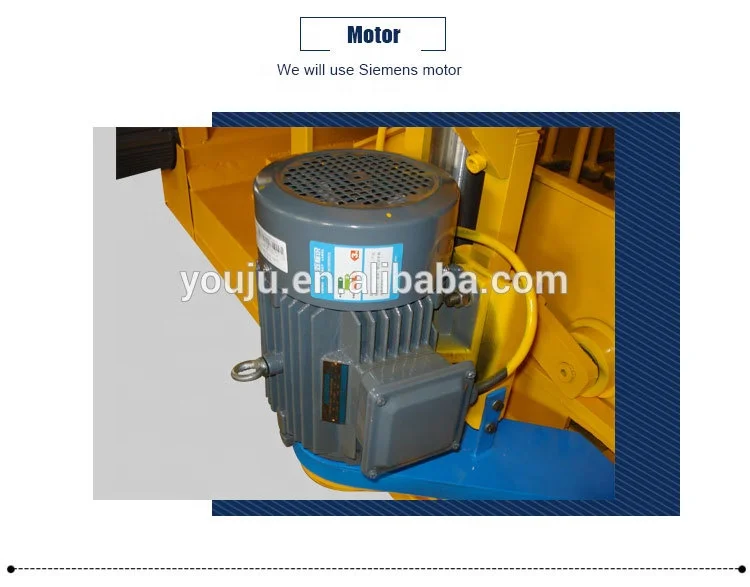
The 30-second cycle time is measured under continuous egg-laying operation, meaning the machine advances after each press and the operator feeds the next cycle without pallet exchange. Output figures therefore depend directly on which block format the operator runs: 480 pieces per hour on 200 mm wide hollow blocks versus 840 pieces per hour on 100 mm partitions. The 5 kW rated power reflects the vibration motor and hydraulic pump combined, which determines the circuit breaker and cable sizing the site electrician must prepare before the machine arrives. Manual push-button control keeps the electrical cabinet simple — no PLC to program, no HMI screen to replace if damaged on a dusty site. This simplicity suits remote projects where specialist technicians are days away [NEED_CITE: maintenance logistics for remote construction sites].
The Cost of Overlooking Site Infrastructure
A machine that arrives on time still costs money every day it sits without power or the right mould. Buyers who skip the voltage check or fail to specify their primary block format end up paying for idle labour, rented generators, or air-freighted converters. On mobile egg-laying machines the mould is the format, so ordering the wrong standard mould means waiting for a replacement while the crew hand-lays blocks they could have pressed in seconds [NEED_CITE: impact of specification mismatches on equipment commissioning].
Why Buyers Source This Mobile Block Machine Here
Block machinery is the single focus of this supply operation, meaning the QMY4-30 is specified as a matched system of machine, mould, and packing rather than assembled from unrelated component vendors. Dispatch lead time is confirmed in writing before payment, so the buyer can book freight with a real date instead of an estimate. Standard moulds for hollow and solid formats ship with the machine, avoiding separate purchase orders that delay loading. Packing photographs and customs documentation are issued as part of the shipment record, reducing clearance friction at the destination port. The one-year warranty covers manufacturing defects and is backed by a wear parts list that identifies items the buyer should stock from day one.
Documentation & Verification
- Factory test record running the buyer’s target block format before crating
- Voltage and frequency confirmation sheet signed before motor wiring
- Packing photographs showing machine dismantling state and plywood crate
- Customs documentation package prepared for destination clearance
- Wear parts and mould list identifying first-replacement items
- Operation manual covering daily start-up and egg-laying procedure
Installation, Commissioning & Support
- Confirm site supply matches the 5 kW rated power and configured voltage
- Level the machine on firm ground using the 1200 × 1200 mm base footprint
- Verify vibration motor rotation direction on first energisation
- Run sample cycles on each standard mould before full-shift production
- Train operators on the 30-second cycle feed and manual advance sequence
- Stock mould wear parts from the supplied replacement list on site
What to Include in Your Enquiry
To match the right QMY4-30 configuration to your project, provide your destination port, the voltage and frequency available at your site, and the primary block format you intend to produce. If you plan to run multiple formats, list each one so the correct standard moulds can be included in the same container. A site photograph of your temporary power distribution board helps confirm the supply arrangement before dispatch.
Frequently Asked Questions
Q: Is the QMY4-30 currently in stock and what is the dispatch lead time?
A: The QMY4-30 mobile block machine is held in inventory with standard hollow and solid moulds. Dispatch lead time is confirmed in writing once voltage and destination details are agreed, typically allowing container booking within a short window after payment clearance.
Q: How is the machine packed and loaded into the container?
A: The machine is dismantled and secured inside plywood packing at approximately 3 m³. Packing photographs are provided before loading, and the compact volume allows the unit to share container space with spare moulds or pallets if required.
Q: What is the estimated arrival time at my destination port?
A: Arrival estimates depend on the destination port and shipping line schedules. An indicative transit time is quoted alongside the dispatch date so the buyer can plan site preparation and customs clearance accordingly.
Q: Which standard moulds ship with the machine and can additional moulds be added?
A: The machine ships with standard moulds for hollow block and solid brick in normal sizes. Additional moulds for other formats can be included in the same shipment, subject to confirmation before the container is sealed.
Q: What customs documentation is provided with the shipment?
A: A full customs documentation package accompanies each shipment, including commercial invoice, packing list, bill of lading, and any certificates required by the destination country. Documentation support is provided to facilitate smooth port clearance.