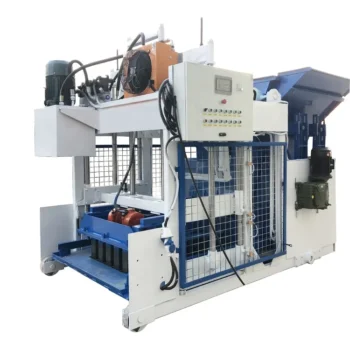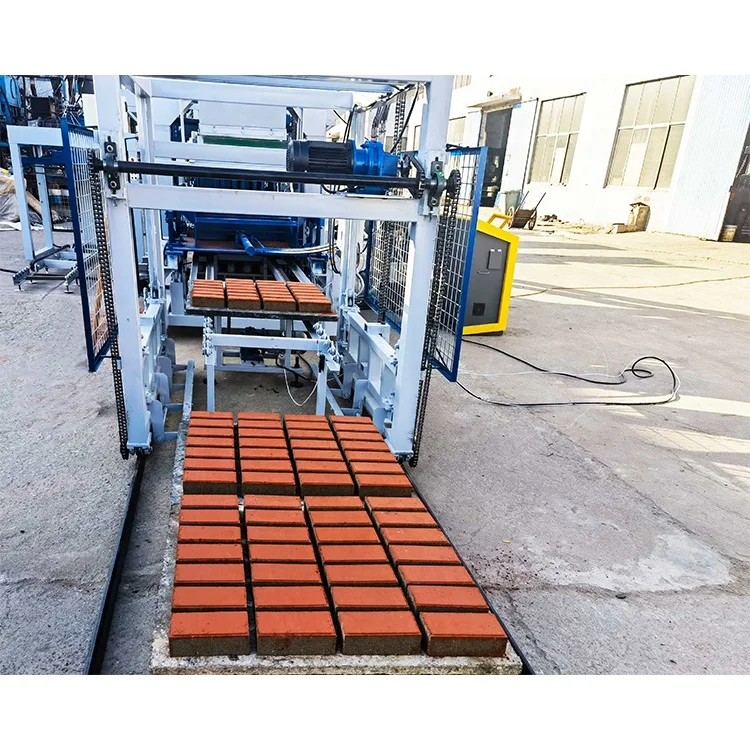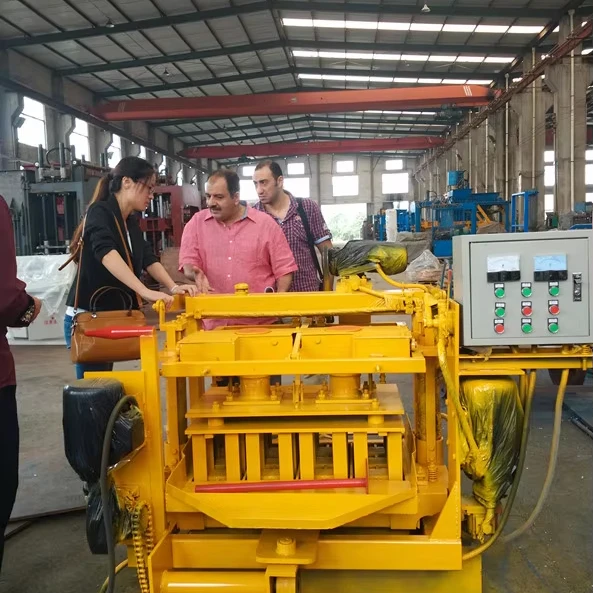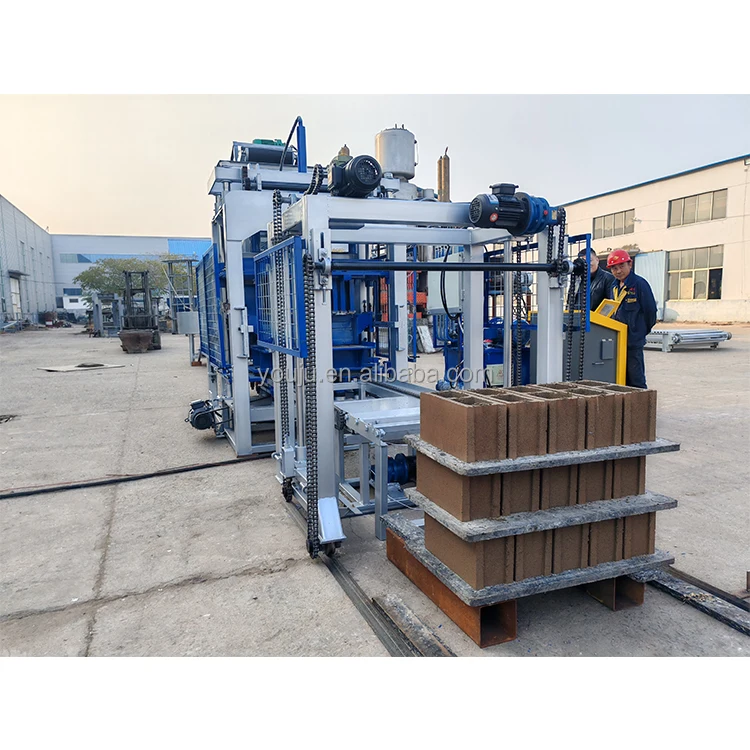

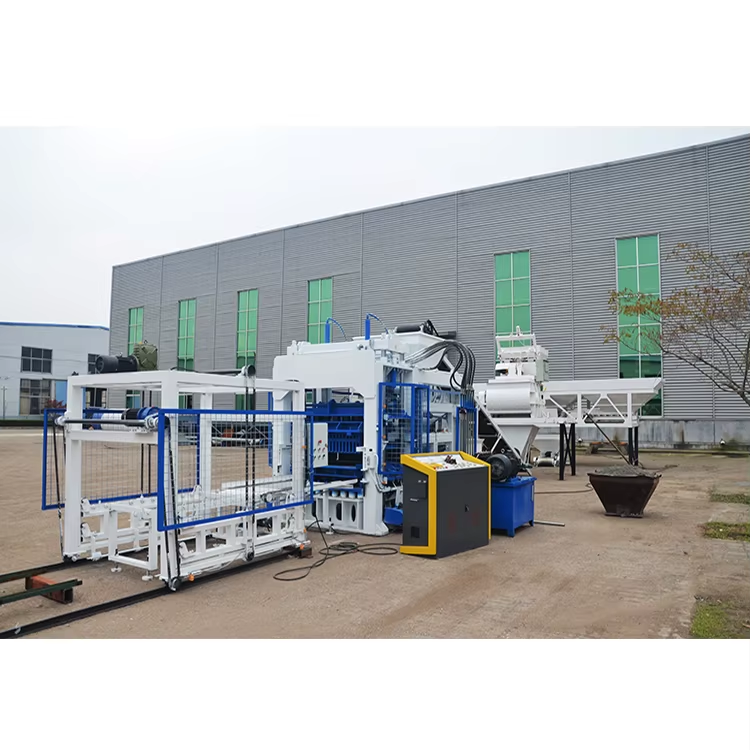
Description
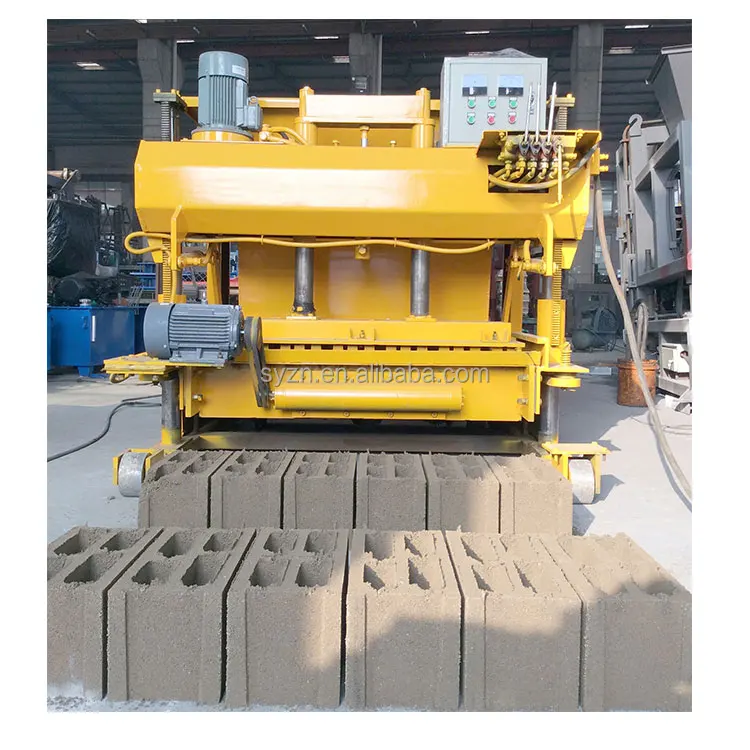
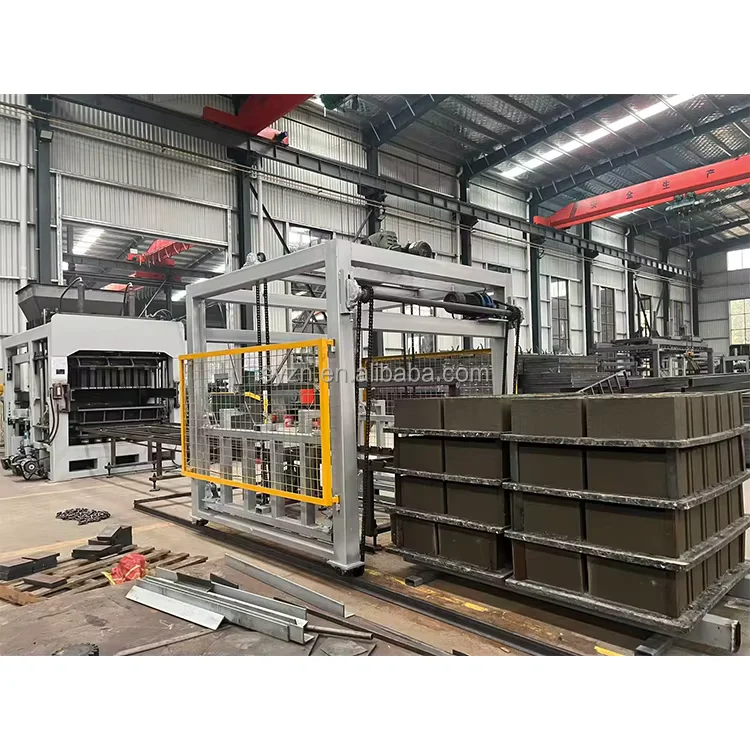
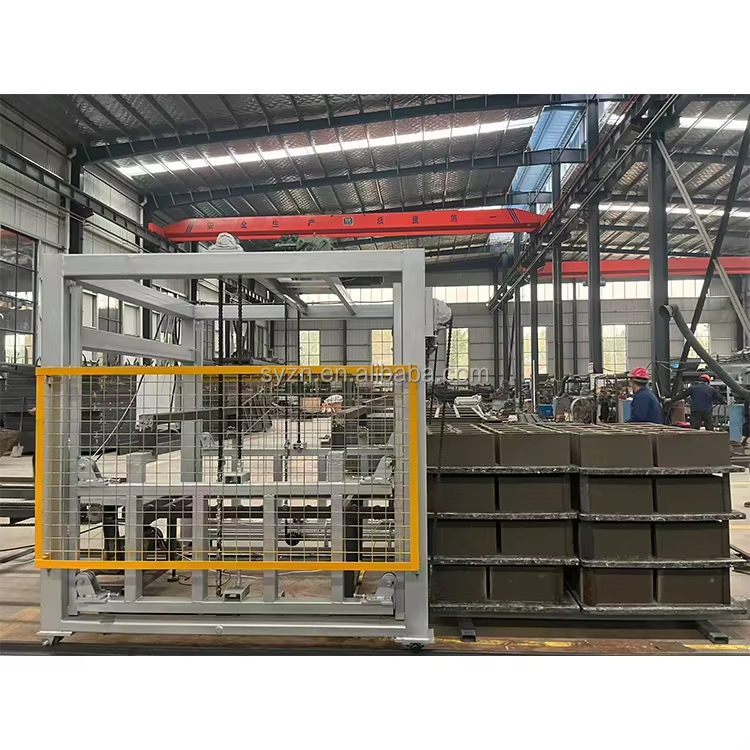
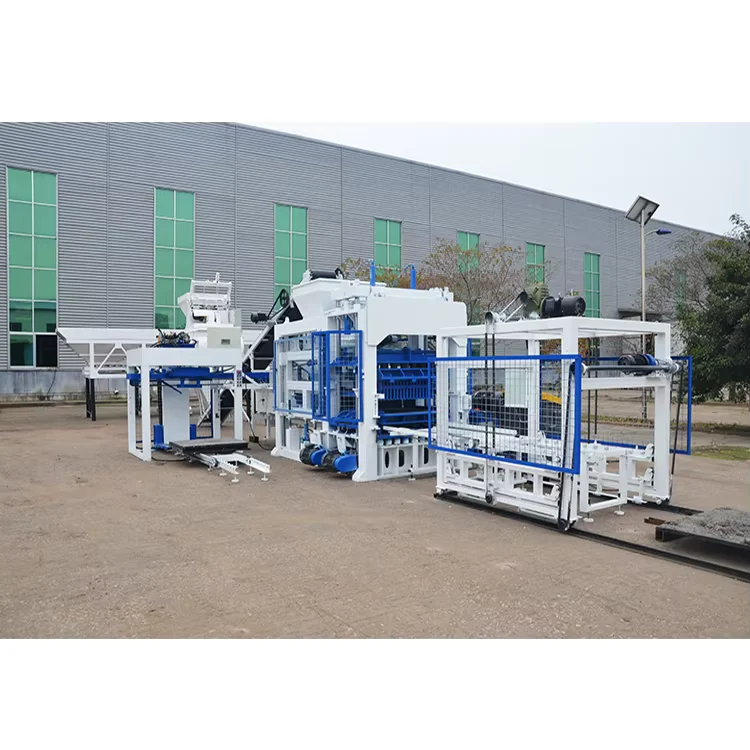
Rapid Dispatch Readiness — fully assembled main press and matched pallets are staged for immediate container loading, preventing project delays caused by missing auxiliary parts.
Technical Specifications
| Parameter | Value |
|---|---|
| Model | QT10-15 |
| Product Type | Fully Automatic Concrete Block Making Machine |
| Overall Power | 52 kW |
| Voltage | Customer local voltage |
| Control System | PLC |
| Overall Dimensions (L×W×H) | 9350 × 2320 × 2950 mm |
| Weight | 10000 kg |
| Hydraulic Pressure | 21 MPa |
| Vibration Form | Platform Vibration |
| Vibration Frequency | 2800-4500 r/min |
| Molding Cycle | 15-25 seconds (basis to be confirmed) |
| Pallet Size | 1150 × 900 mm |
| Automation Level | Fully Automatic |
| Warranty | 1 Year |
Application Suitability
| Application | Material or Output |
|---|---|
| Hollow block production | Cement and crushed stone aggregates |
| Paving block manufacturing | Concrete mixtures for heavy-duty surfaces |
| Interlocking block forming | Standard cementitious raw materials |
| Curbstone extrusion | Dense concrete for infrastructure edges |
Why "In Stock" Must Mean the Entire Line, Not Just the Press
A stocked main press is useless if the pallets and handling gear are still in production.
I have seen construction deadlines in South Asia completely derailed because a supplier shipped the main unit early while the auxiliary equipment was still being built. The QT10-15 block making machine in stock is only valuable when the 1150 × 900 mm pallets, feeding mechanisms, and standard moulds are physically staged together. When a project timeline is measured in weeks, partial shipments simply shift the bottleneck from the factory floor to your job site [NEED_CITE: impact of partial equipment shipments on construction schedules].
Container Loading and Dismantling Protocols
Getting a 10,000 kg machine across the ocean requires precise spatial planning. The 9350 × 2320 × 2950 mm footprint of this equipment means it cannot simply be rolled into a standard shipping container as a single unit. Our dispatch team dismantles the upper hydraulic assemblies and secures the heavy platform vibration base to the container floor, ensuring the center of gravity remains low during ocean transit. Every bolt and disconnected hydraulic hose is tagged and packed in dedicated wooden crates strapped to the main frame.
Dispatch Timelines and Port Arrival Estimates
When you are working against a strict handover date, vague lead times are unacceptable. We provide a clear dispatch schedule the moment the QT10-15 block making machine in stock is allocated to your order. This includes the exact date for container stuffing, the estimated vessel departure, and the projected arrival at your destination port. By coordinating the loading of the 52 kW power units and PLC cabinets alongside the main press, we eliminate the multi-week gaps that occur when components are shipped on separate bills of lading [NEED_CITE: standard maritime freight consolidation practices].
Evaluating the Physical Parameters for Site Readiness
The 21 MPa hydraulic pressure combined with a platform vibration frequency of 2800-4500 r/min requires a solid concrete foundation to prevent resonance from cracking the curing yard. The 1150 × 900 mm pallet size is a standard dimension, meaning you can source replacement pallets locally or use standard forklifts without custom attachments. While the molding cycle is noted at 15-25 seconds, the actual throughput depends entirely on your specific block format and material thickness, which we verify before loading the container to ensure the PLC is pre-programmed for your target output.
The Hidden Costs of Incomplete Shipments
Shipping a press without its matched curing rack handling system forces your crew to move heavy, freshly molded concrete by hand. This not only slows down the operation but leads to high breakage rates before the blocks even reach the curing zone. We ensure that the pallet feeding and stacking components are loaded into the same container as the main press, preventing the costly idle time that happens when a machine sits under a tarp waiting for a delayed secondary shipment [NEED_CITE: manual handling risks in concrete block production].
Why Procure Your Equipment Through Our Dispatch Channel
We treat order fulfillment as a single continuous chain rather than isolated manufacturing steps. The QT10-15 block making machine in stock is verified against your local voltage requirements before it leaves our floor, preventing commissioning delays. We provide container loading photographs and detailed dismantling diagrams so your local rigging crew knows exactly how to reassemble the 10,000 kg frame. Our focus remains strictly on ensuring the physical equipment arrives complete, intact, and ready for immediate power connection.
Documentation & Verification
- Factory test record confirming 21 MPa hydraulic pressure before dismantling.
- Container loading photographs showing secure bracing of the vibration platform.
- Voltage and PLC language confirmation sheet matching your local grid.
- Detailed dismantling and reassembly diagrams for the 9350 mm main frame.
- Complete packing list tagging every disconnected hydraulic hose and sensor.
Installation, Commissioning & Support
- Foundation must support the 10,000 kg dynamic load of the platform vibration system.
- Dedicated power circuit required to handle the 52 kW overall power draw safely.
- Reassembly guided by tagged components and provided dismantling diagrams.
- PLC booted and tested against local voltage parameters upon initial power-up.
- Standard wearing parts included in the initial crate to prevent early downtime.
Preparing Your Site for Immediate Deployment
To finalize the dispatch of your equipment, we need to confirm your local voltage and frequency to ensure the 52 kW motors are correctly wound before loading. Please also provide the dimensions of your available curing area so we can verify that the 1150 × 900 mm pallets will integrate smoothly with your existing forklift fleet and yard layout.
Frequently Asked Questions
Q: What standard moulds are included with the stocked machine?
A: The stocked unit ships with standard moulds for common hollow and paving formats, such as 400×200×200 mm. We verify these against your immediate project needs before loading the container to ensure you can start production on day one without waiting for custom tooling.
Q: How is the dispatch and container loading scheduled?
A: Once the QT10-15 block making machine in stock is allocated, we provide a firm date for container stuffing and vessel departure. The 10,000 kg machine is dismantled and braced specifically for ocean transit, with all auxiliary parts loaded in the same container.
Q: What is required for unloading and reassembly at the site?
A: You will need a crane capable of lifting the main frame components and a forklift for the 1150 × 900 mm pallets. We provide tagged components and reassembly diagrams so your local crew can reconstruct the 9350 × 2320 × 2950 mm footprint efficiently.
Q: Are the voltage and PLC language fixed on stock units?
A: We configure the 52 kW power system and PLC interface to your local voltage and language requirements during the final pre-dispatch staging. This ensures the control system is ready for immediate commissioning upon arrival at your facility.
Q: Are spare parts shipped with the main equipment?
A: Yes, the initial batch of hydraulic wear parts and standard maintenance items is packed in a dedicated crate within the same container. This prevents operational pauses while you wait for international shipping of replacement components.