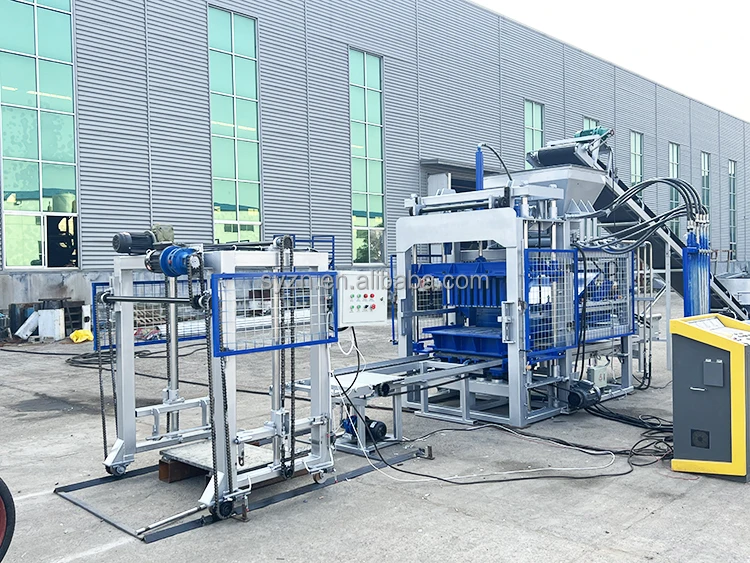
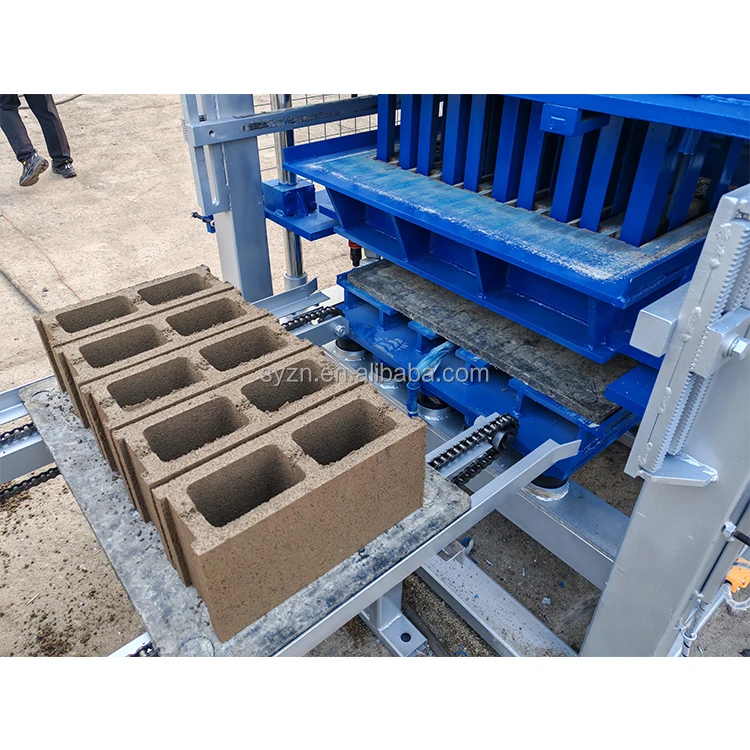
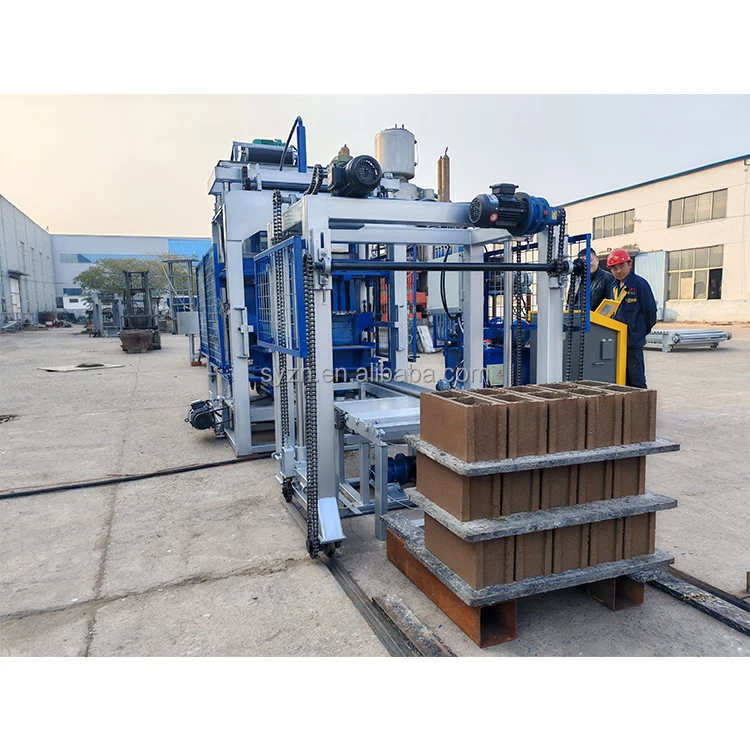
Description
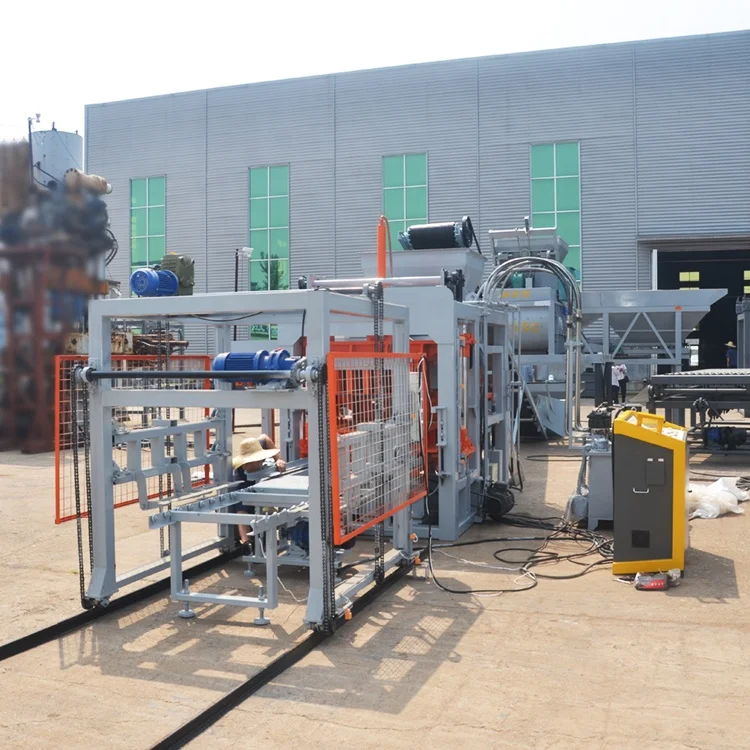
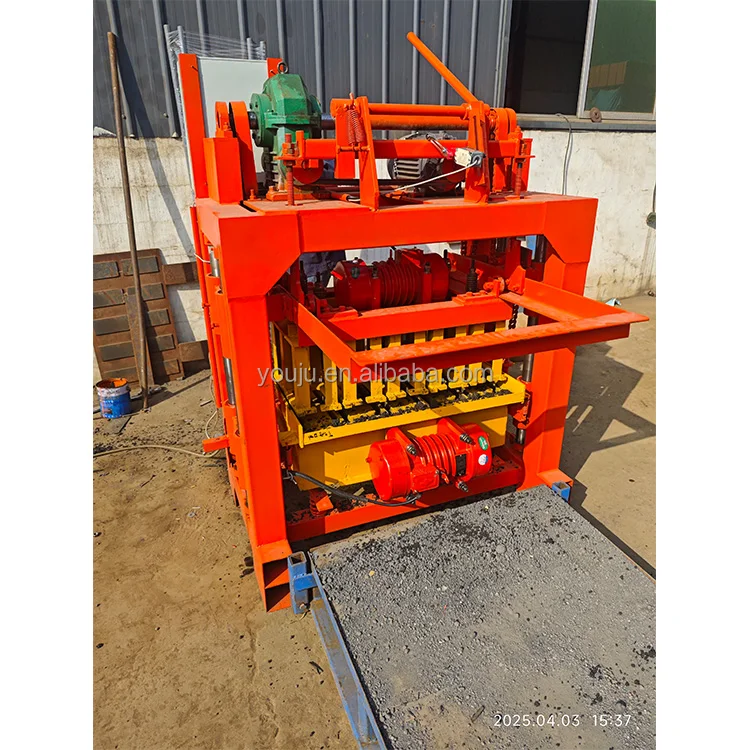
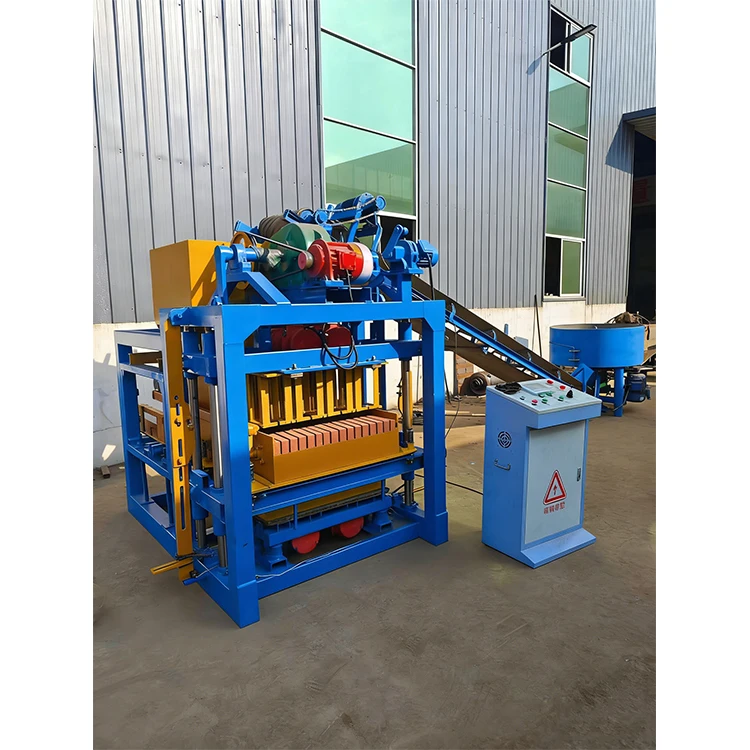
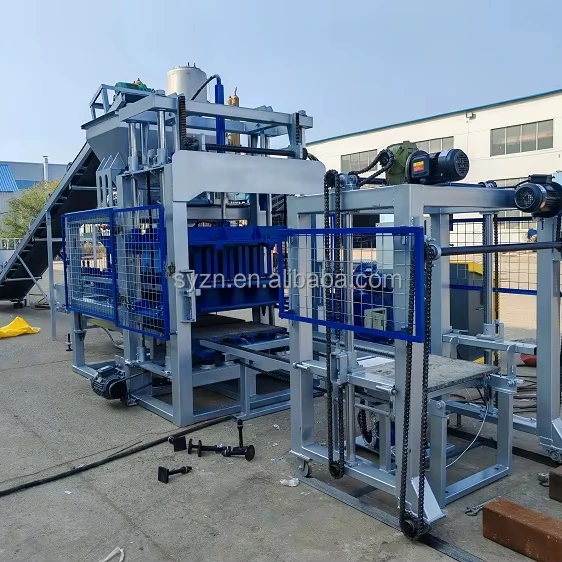
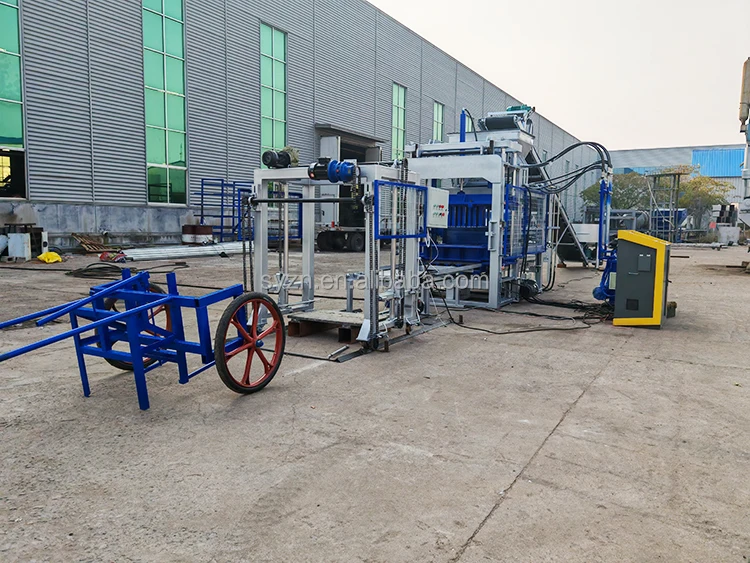
Ready to Ship Configuration — Every QT4-18 Concrete Block Making Machine leaves our yard only after a full wet-run test with your specified mix, preventing on-site surprises.
Technical Specifications
| Parameter | Value |
|---|---|
| Model | QT4-18 |
| Product Type | Concrete Block Making Machine |
| Overall Dimensions (L×W×H) | 3900 × 1600 × 2300 mm |
| Molding Cycle | 15–25 s |
| Vibration Force (Exciting Power) | 40–50 KN |
| Rated Power | 24 kW |
| Mixer Model | JQ350 |
| Pallet Size | 850 × 550 × 25 mm |
| Total Weight | 3 T |
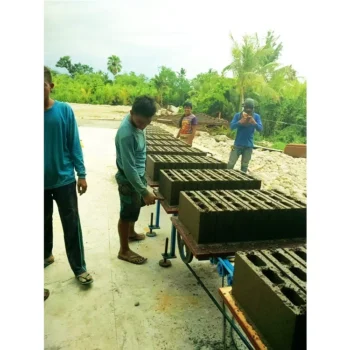
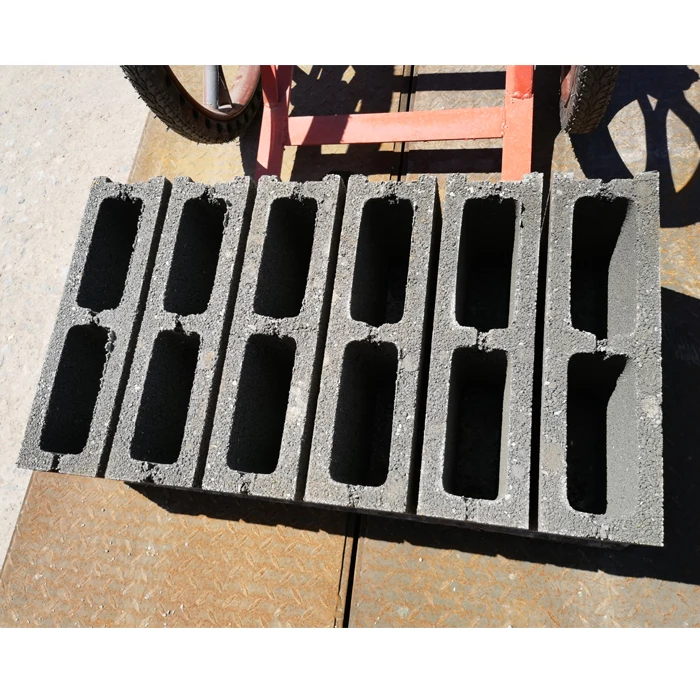
| Applied Products | Paver, solid brick, hollow block, curbstone |
| Raw Materials | Crushed stone, sand, cement, stone dust, fly ash |
| Output: Hollow Block 400×200×200mm | 1,200–1,680 pcs/hr, 9,600–13,440 pcs/8hr |
| Output: Hollow Block 400×150×200mm | 1,800–2,400 pcs/hr, 14,400–19,200 pcs/8hr |
| Output: Solid Brick 240×115×53mm | 3,240 pcs/hr, 16,200–19,440 pcs/8hr |
| Automation Level | Semi-automatic |
| Hydraulic Station | Adopted for high pressure and stable running |
| Standards | CE declaration where applicable |
Application Suitability
| Application Scenario | Typical Materials and Output |
|---|---|
| On-site production for housing developments | Hollow blocks from crushed stone and cement, rated at 1,200–1,680 pcs/hr for 400×200×200mm format |
| First block plant for entrepreneurs | Solid bricks from sand and fly ash, rated at 3,240 pcs/hr for 240×115×53mm format |
| Paver and curbstone supply for local contractors | Interlocking pavers and curbstones from aggregate mixes, cycle time 15–25 s depending on format |
| Building material distributor adding formats | Multiple mould options on a single 850×550 mm pallet footprint |
Why "Fast Delivery" Can Still Mean Weeks of Idle Time
A machine sitting in a container is only fast if it actually runs when it arrives.
I have watched a Concrete Block Making Machine in stock get unloaded at a project site, only for the crew to discover the local aggregate carried heavy clay content that doubled the vibration cycle. The rated output on paper meant nothing when every mould cycle stretched well beyond the tested baseline, and the masons ran out of blocks by midweek. Dispatch speed matters, but only when the machine has been validated against the actual raw materials it will consume [NEED_CITE: impact of aggregate clay content on concrete block cycle times]. This is why a Concrete Block Making Machine in stock still needs a pre-shipment wet test before it earns the label.
Stock Means Tested, Not Just Warehoused
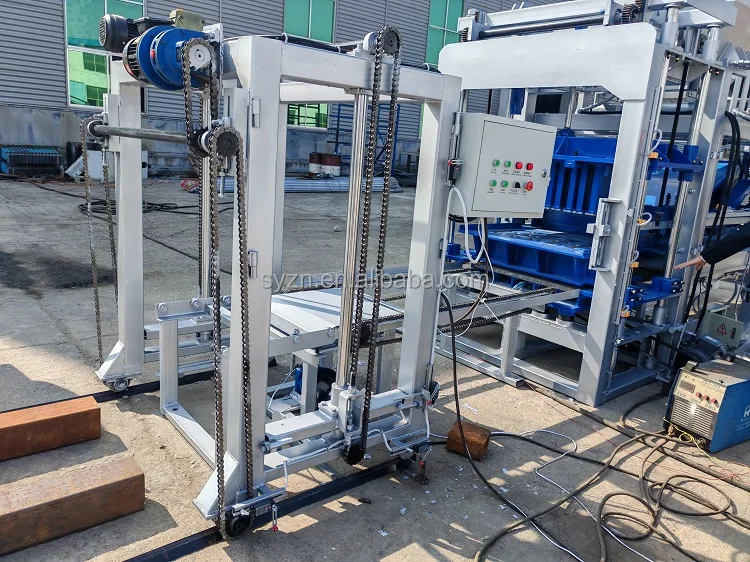
When we say a QT4-18 Concrete Block Making Machine is ready for fast delivery, it has already passed a full production cycle on our test floor. The JQ350 mixer runs through a complete batch, the hydraulic station builds to operating pressure, and the vibration platform cycles through the specified mould format. Machines that sit idle in a yard without validation can develop seized bearings or degraded hydraulic seals, turning a quick dispatch into a troubleshooting exercise on your site.
Container Loading Without Surprises
The QT4-18 is dismantled into its core assemblies for 20GP nude packing. The main frame, mixer, hydraulic station, and pallet feeder are secured individually to prevent transit damage. Every Concrete Block Making Machine in stock has a documented loading plan so you know exactly which components arrive in which container and what sequence they come out in. This eliminates the guesswork when your forklift meets the container at the port [NEED_CITE: standard container loading practices for heavy industrial machinery].
Vibration Force and Hydraulic Pressure: What the Numbers Actually Do
The QT4-18 delivers 40–50 KN of vibration force paired with a dedicated hydraulic station. In block production, vibration consolidates the mix into the mould cavity while hydraulic pressure compacts it from above. If the vibration force is too low for a dense aggregate mix, the block emerges with voids and low compressive strength. If the hydraulic pressure is mismatched, the block sticks to the mould or cracks on release. The 15–25 second molding cycle range reflects this balance — lighter mixes like fly ash and sand compress faster, while crushed stone with coarser grading needs the full cycle to achieve target density. The 850×550×25 mm pallet size was chosen to match common curing rack dimensions, so blocks transfer from press to curing area without rehandling. The 24 kW rated power covers the mixer, hydraulic pump, and vibration motor running simultaneously, meaning you need a dedicated circuit that can sustain continuous draw without voltage sag.
What Happens When Pallet Size Is an Afterthought
A buyer once received a machine with pallets that did not fit their existing curing racks or the forklift tines they already owned. Every pallet had to be moved by hand from the stacker to the rack, and the forklift could not carry a full layer. The semi-automatic line became a manual operation by default. The QT4-18’s 850×550 mm pallet is specified before dispatch so it matches your curing area layout and handling equipment, not just the machine’s output rate [NEED_CITE: pallet and curing rack compatibility in block production plants].
Why Buyers Source the QT4-18 Here
- Block machinery is our single focus, so the QT4-18 press, JQ350 mixer, pallet feeder, and moulds are specified as one matched system from a single source.
- Configuration is set against your actual mix design and local aggregate, not a catalogue default, so the 15–25 s cycle time reflects your materials.
- Mould design covers the block formats your market sells, with custom drawings available for non-standard paver and curbstone profiles.
- Semi-automatic operation means you can start with manual pallet handling and add automatic stacking later as volume grows.
- Dispatch lead time and arrival estimate are quoted upfront so your project timeline holds.
Documentation & Verification
- Factory test record on your specified block format and mix before dispatch
- Machine specification sheet confirming all QT4-18 parameters and pallet dimensions
- Mould drawing and format list for every block type included in your order
- Hydraulic and electrical schematic matching the as-built configuration
- Voltage and PLC display language confirmation document
- Packing photographs taken during container loading
Installation, Commissioning & Support
- Foundation pad sized to the 3900×1600 mm footprint with anchor bolt template provided before arrival
- Dedicated 24 kW circuit with correct voltage and frequency confirmed prior to production
- Machine arrives dismantled with labeled components and reassembly sequence documented
- First production run supervised with cycle time verified against your actual raw materials
- Operator training covers mould change procedure, hydraulic pressure adjustment, and daily maintenance
- Wear parts list and mould inventory provided so first replacements are planned before they are needed
Before You Request a Quote
Send us your target block format and the daily volume your project demands. Include a sample analysis of your local aggregate — sand source, stone grading, and any fly ash or dust you plan to use. Let us know your site voltage and frequency, the forklift and curing rack setup you already have, and your deadline. With that, we can confirm whether a QT4-18 Concrete Block Making Machine in stock fits your timeline and materials.
Frequently Asked Questions
Q: What is the dispatch lead time for the QT4-18?
A: Machines designated as in stock have completed factory testing and are prepared for container loading. Dispatch lead time depends on the destination port and current shipping schedules. We confirm the departure date and estimated arrival before you commit, so your project timeline is not left to guesswork.
Q: How is the QT4-18 packed and loaded for container shipment?
A: The machine is dismantled into major assemblies — main frame, mixer, hydraulic station, and pallet system — and secured in a 20GP container using nude packing. Each component is labeled and a loading plan is provided so your team knows the unloading sequence upon arrival.
Q: What is the estimated arrival time for my destination port?
A: Arrival estimates are quoted based on the shipping route and carrier schedule at the time of order. We provide the estimate upfront along with dispatch confirmation so you can plan site preparation, foundation work, and crew scheduling around a known date.
Q: Are standard moulds and pallets currently in stock?
A: Standard moulds for hollow block, solid brick, paver, and curbstone formats on the 850×550 mm pallet are available alongside the machine. Custom mould designs require additional lead time for drawing approval and fabrication, which we confirm during the quotation stage.