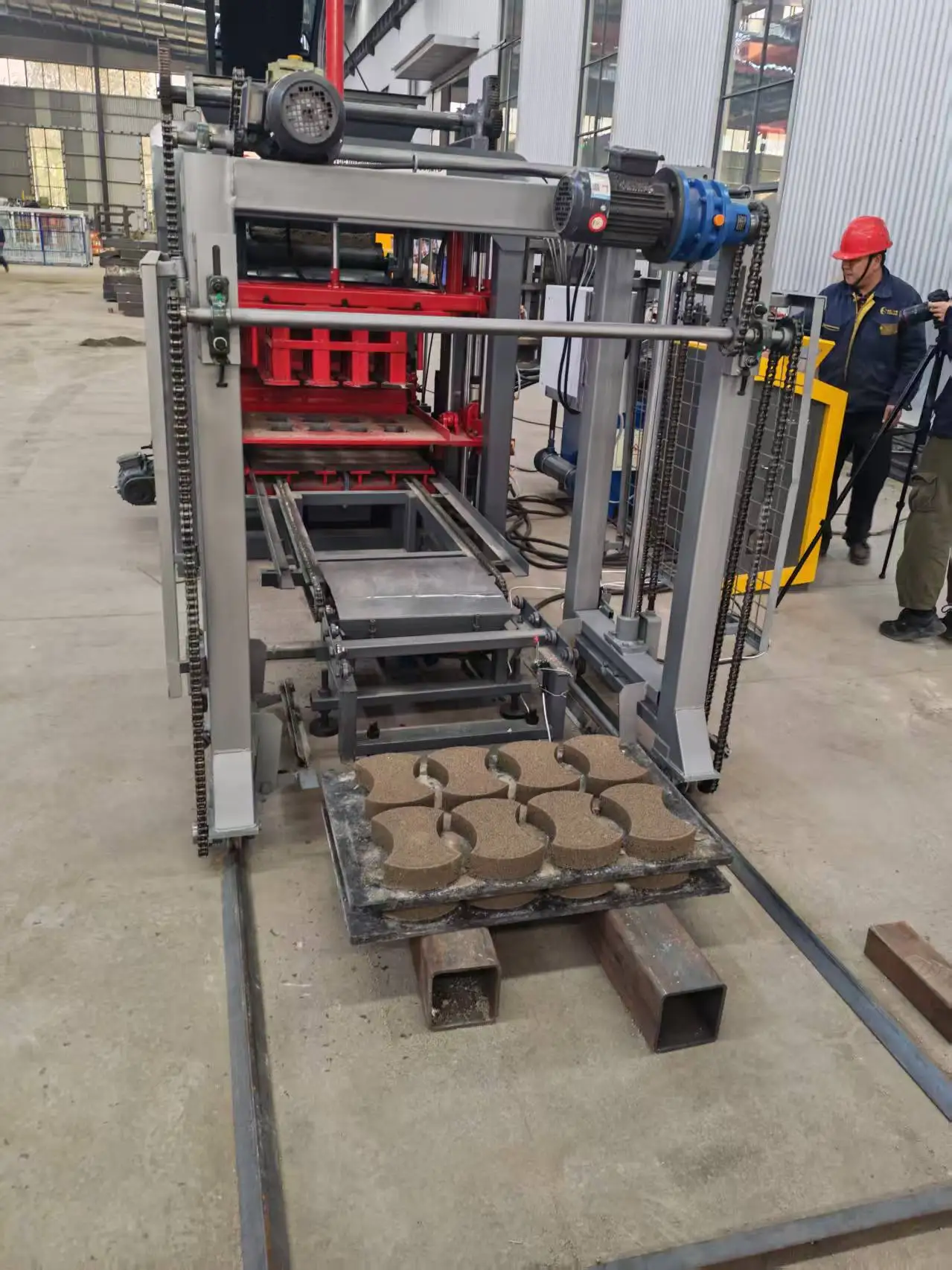
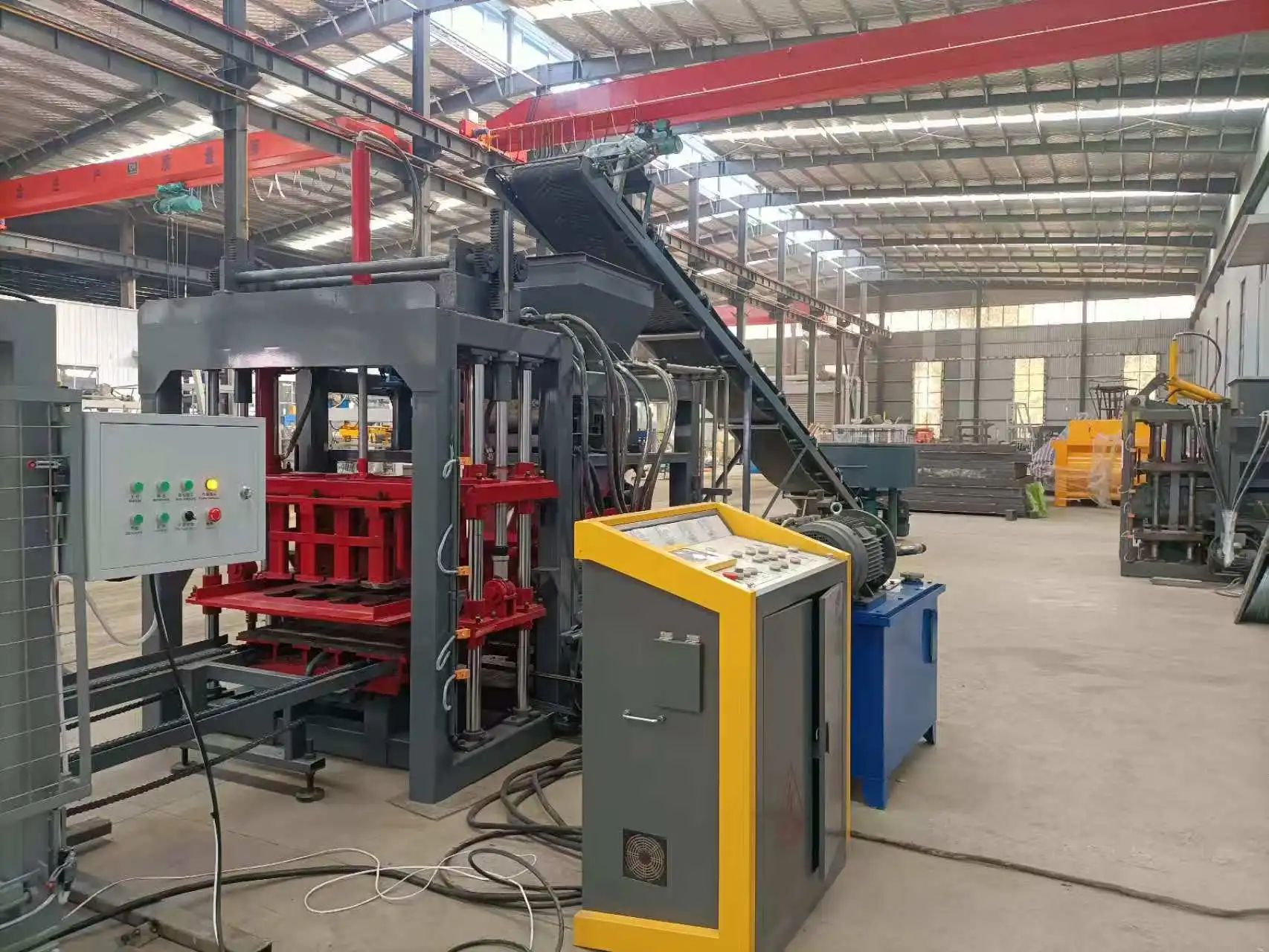
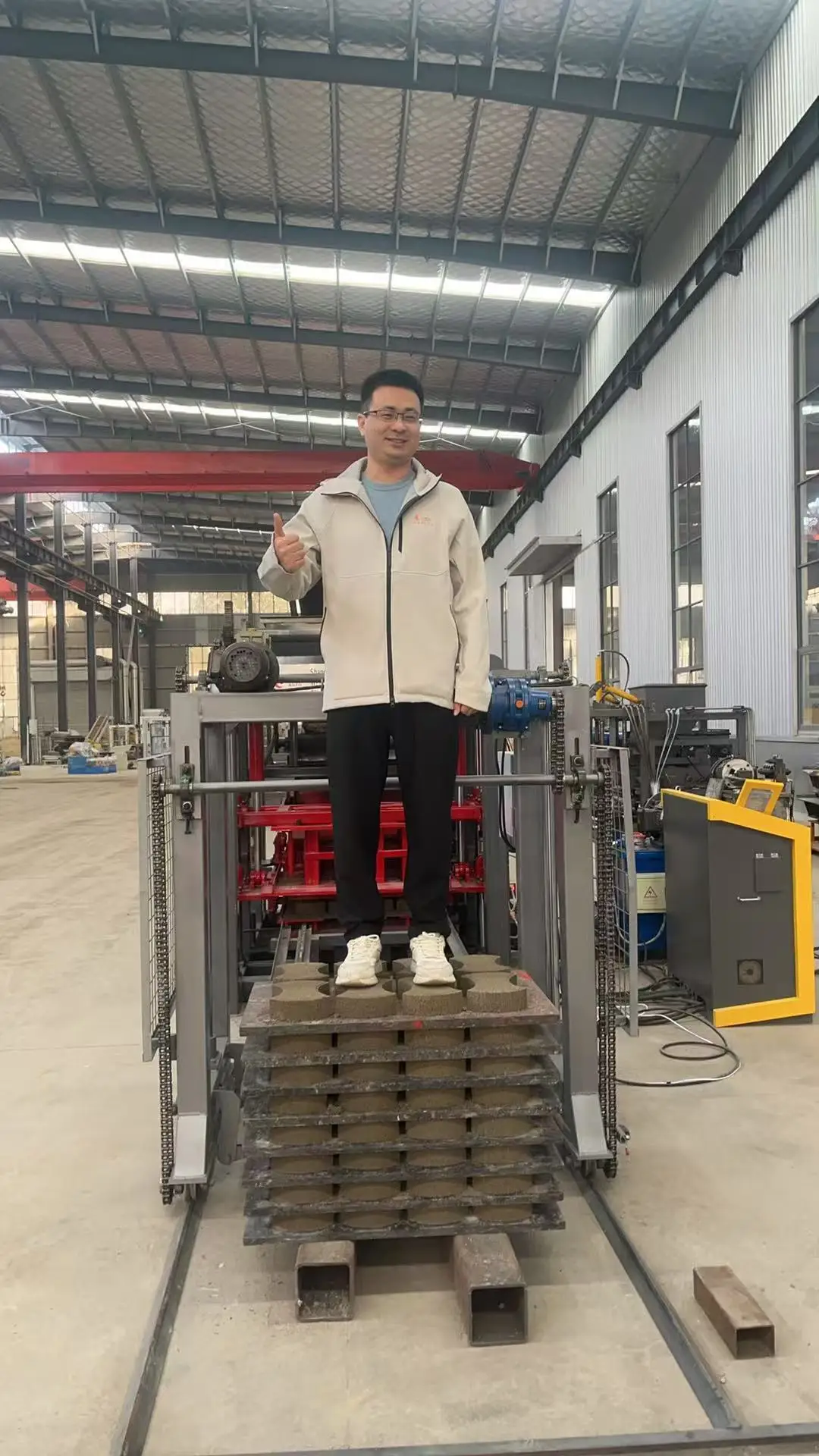
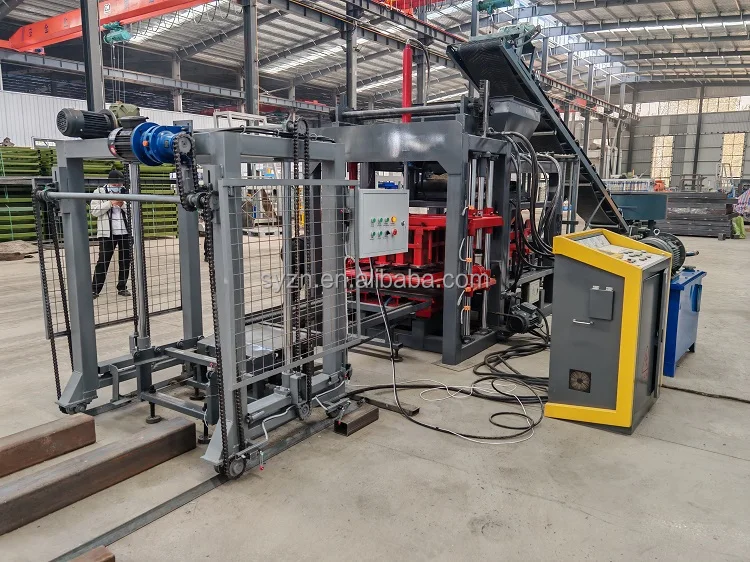
Description
Stocked configuration for fast dispatch — QT4-15 units are held ready with standard moulds and confirmed pallet specs, so buyers working to a project deadline can lock in arrival timing without waiting for a custom build cycle.
Technical Specifications
| Parameter | Value |
|---|---|
| Model | QT4-15 |
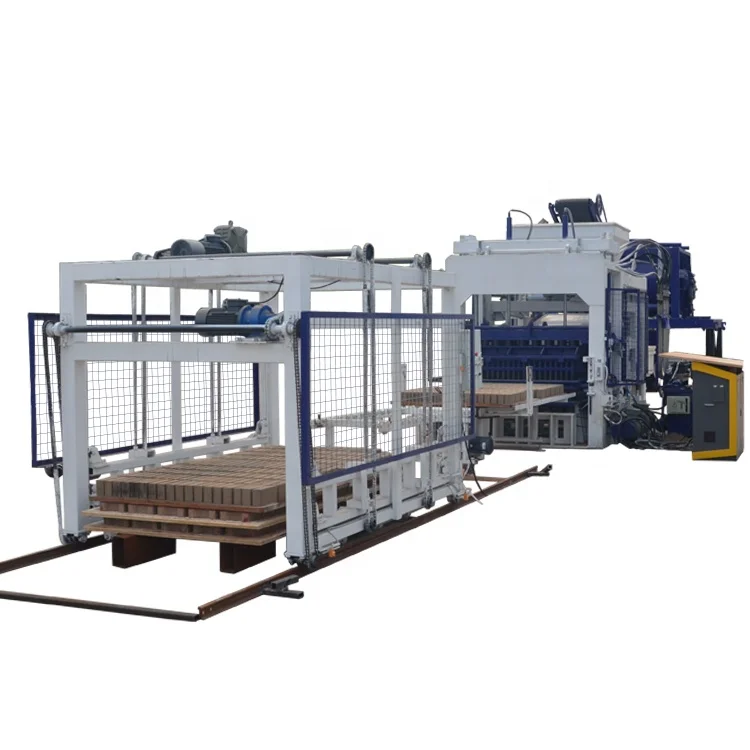
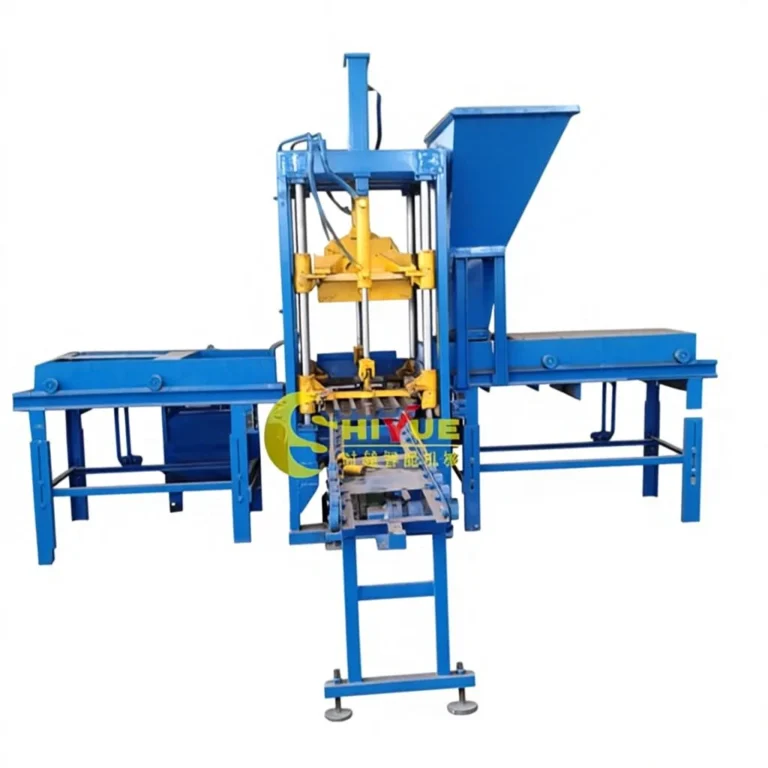
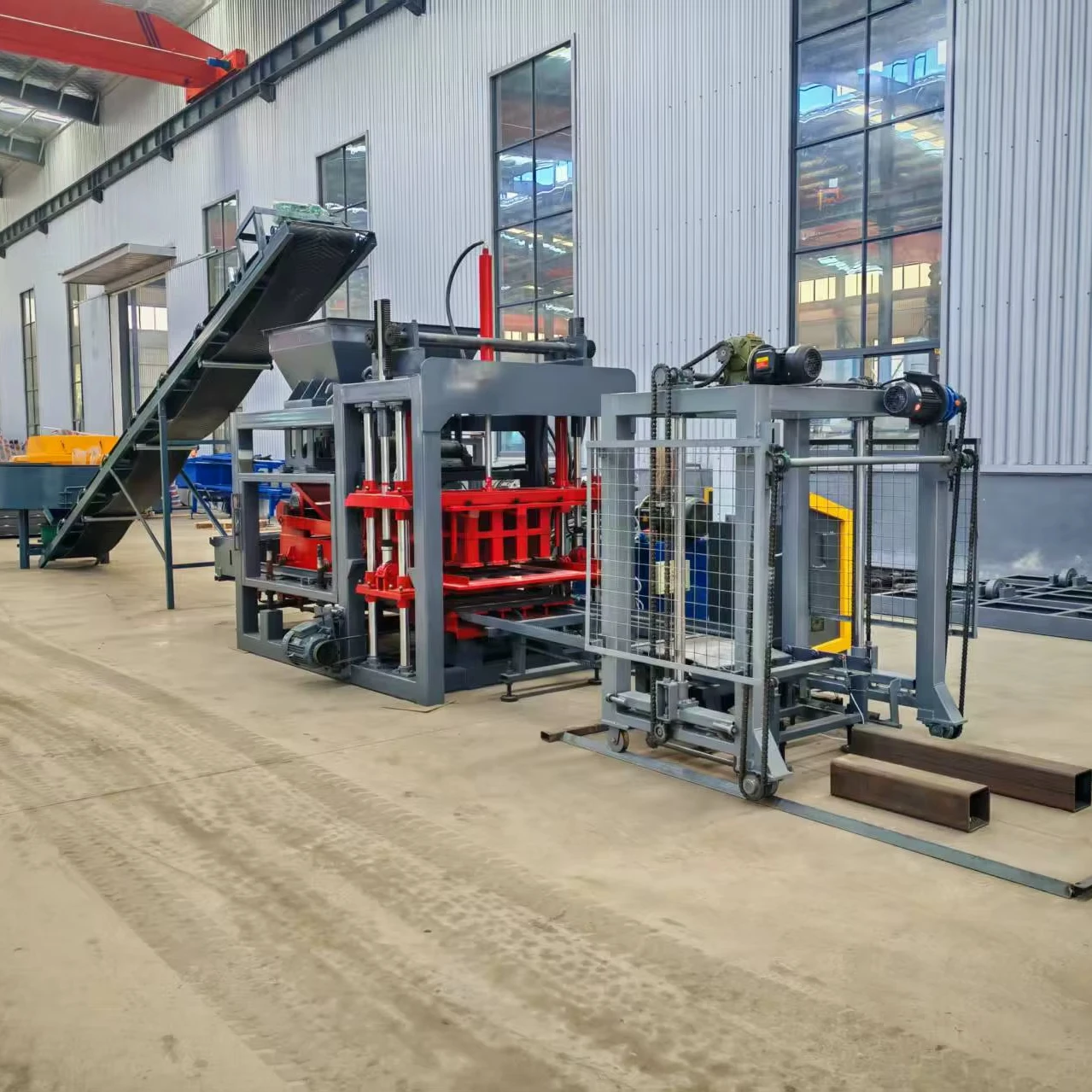
| Product Type | Full Automatic Hydraulic Block Making Machine |
| Overall Dimensions (L×W×H) | 7100×1600×2610 mm |
| Host Machine Dimensions | 2800×1800×2550 mm |
| Total Mass | 5 T |
| Rated Hydraulic Pressure | 16 MPa |
| Main Vibration Form | Platform Vibration |
| Vibration Frequency | 4600 r/min |
| Vibration Force | 40 kN |
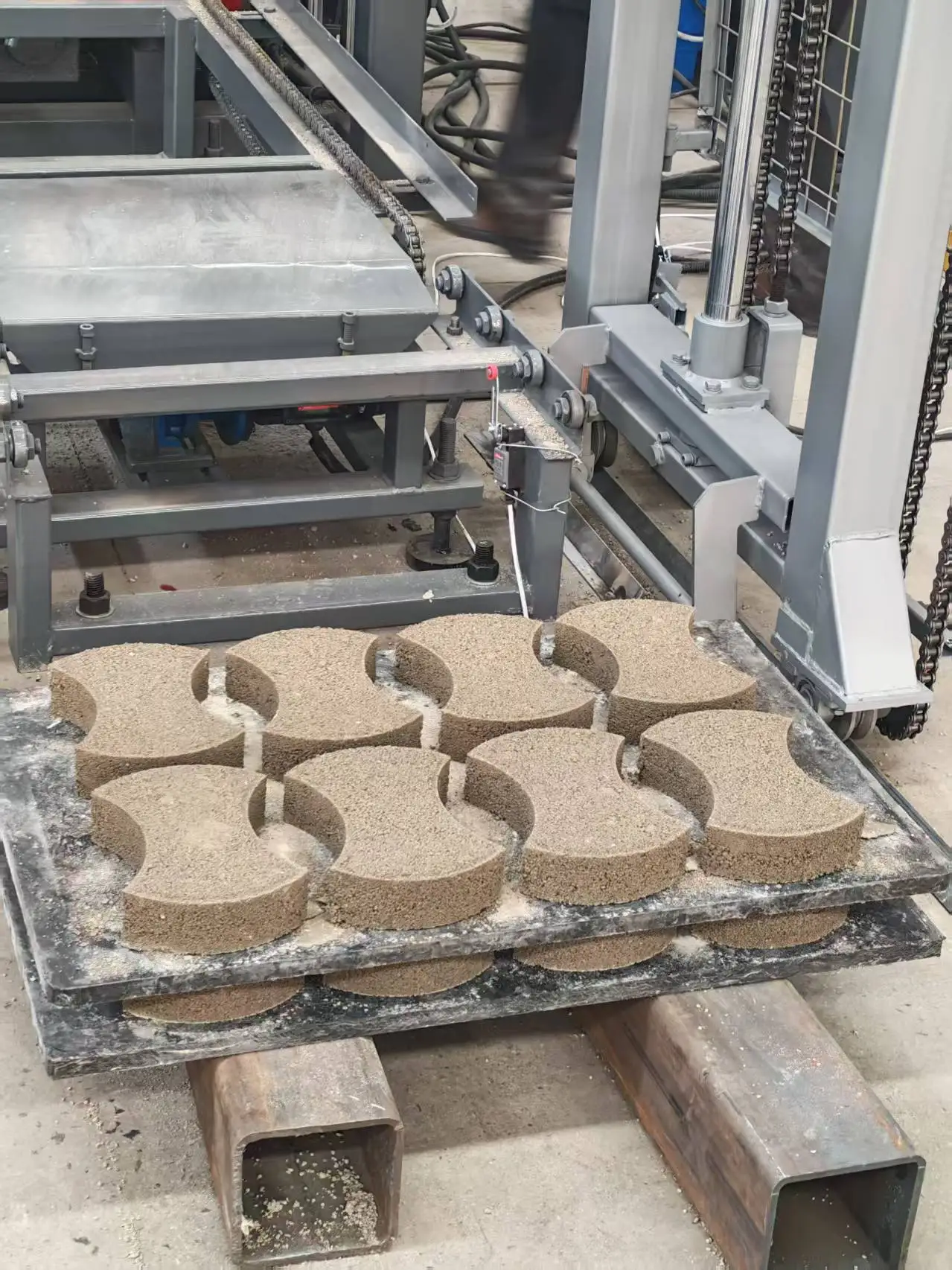
| Pallet Size | 950×550×20/25 mm |
| Molding Cycle | 15–25 s |
| Overall Power | 27.5 kW |
| Host Machine Power | 19.2 kW |
| General Water Consumption | 4 T/day |
| Control System | Siemens PLC with independently developed control program |
| Motor Brand | Siemens or ABB (per buyer requirement) |
| Hydraulic Valve | Double proportional hydraulic valve (Calyca or Youken brand) |
| Automation Level | Full automatic |
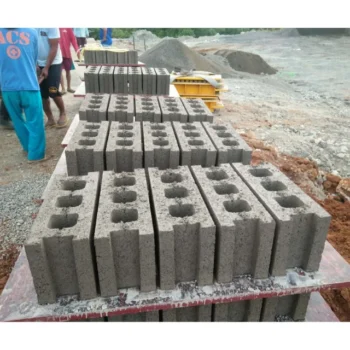
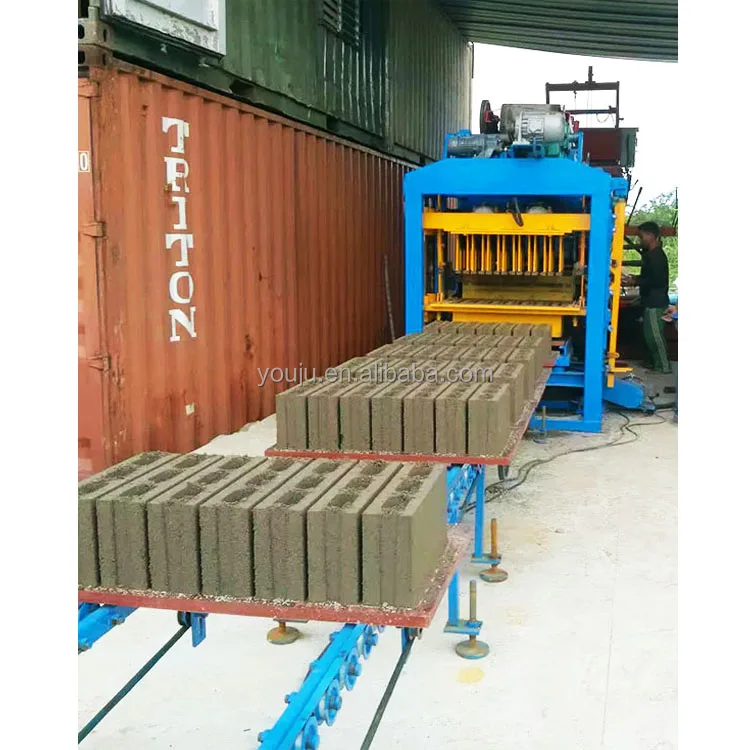
| Output Capacity — Hollow Brick | 720–960 pcs/h based on 390×190×190 mm, 4 pcs/mold, 15–20 s cycle |
| Output Capacity — Porous Brick | 2520–3360 pcs/h based on 240×115×90 mm, 14 pcs/mold, 15–20 s cycle |
| Output Capacity — Standard Brick | 5930–6720 pcs/h based on 240×115×53 mm, 28 pcs/mold, 15–17 s cycle |
| Warranty | 1 year (excluding spare parts) |
| Voltage & Frequency | To be confirmed with buyer’s site |
| PLC Display Language | To be confirmed with buyer’s site |
| Stacking Method | To be confirmed per line configuration |
Application Suitability
| Application | Material or Output |
|---|---|
| Hollow block production for residential and commercial walls | Crushed stone, sand, cement, and fly ash aggregates |
| Standard solid brick manufacturing for masonry supply | River sand, quarry dust, and Portland cement blends |
| Porous brick production for permeable paving and landscaping | Graded aggregate with controlled moisture content |
| On-site block production for construction contractors | Locally sourced aggregate matched to mix design |
| First block plant setup for entrepreneurs entering the market | Standard moulds for the most common local formats |
What the Container Loading Timeline Actually Depends On
The QT4-15 block machine in stock is ready for dispatch, but arrival timing depends on how thoroughly the dismantling and loading plan is confirmed before the container doors close.
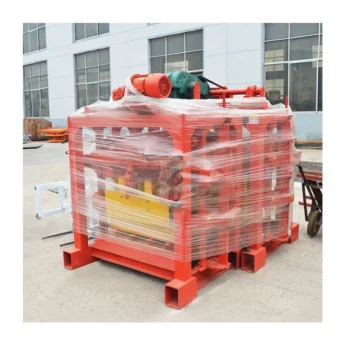
I have supervised enough QT4-15 shipments out of Linyi to know that the gap between "machine is ready" and "machine arrives undamaged" is entirely about what happens on the loading dock. One shipment I handled a couple of years back was rushed to meet a vessel cutoff — the 100-ton hydraulic host frame was not separated and braced properly inside the container, and the buyer spent weeks re-straightening it on site after arrival [NEED_CITE: container loading standards for heavy hydraulic machinery]. That delay cost more time than the production lead would have. Every QT4-15 full automatic block making machine that leaves now goes through a bolt-by-bolt dismantling check, bracing confirmation, and photographic record before I release it for loading.
Dispatch Readiness and What Ships Together
A QT4-15 block machine in stock means the host press, hydraulic station, and PLC cabinet are assembled, tested, and waiting — not that every line component is automatically included. Buyers often assume pallets, moulds beyond the standard set, and stacking equipment are part of the default package, and discovering they are not after the machine arrives creates the kind of delay no fast delivery promise can fix. We confirm exactly which moulds, pallet material and thickness, and auxiliary stations are in the container before dispatch.
How the Machine Travels and What to Expect on Arrival
The host frame, hydraulic power unit, and control cabinet are dismantled into separate secured sections for container loading. Each section is bolted to the container floor and braced with timber and steel strapping to prevent shifting during ocean transit. The QT4-15 block machine in stock typically ships within a short lead time once voltage, frequency, and PLC display language are confirmed, and the arrival estimate is quoted at the time of order so buyers can schedule foundation work and operator availability accordingly [NEED_CITE: typical ocean freight transit times from Chinese ports].
Reading the Specs That Actually Matter on Site
The 16 MPa rated hydraulic pressure and 40 kN platform vibration force work together to determine the density and compressive strength of every block the QT4-15 produces. If the vibration force is high but the hydraulic pressure is insufficient for the buyer’s specific mix design, the blocks will crack during curing — and if the pressure is adequate but vibration frequency does not match the aggregate gradation, surface finish suffers. The 950×550 mm pallet size must be checked against the curing area dimensions and the forklift the buyer already operates, because a mismatch here means either rearranging the entire curing yard or ordering custom pallets that delay production. The Siemens PLC with its independently developed control program manages the 15–25 second molding cycle automatically, but the cycle time varies depending on which block format is being pressed, and the output figures on the spec sheet each assume a specific mould and cycle combination.
The Real Cost of Skipping the Pre-Shipment Checklist
When voltage and frequency are not confirmed before the QT4-15 leaves the factory, the machine arrives with a motor and PLC configured for a power supply that does not match the buyer’s site — and sourcing a replacement transformer or reprogramming the controller locally adds a delay that no amount of fast dispatch can recover [NEED_CITE: voltage and frequency standards by export market]. I have seen buyers lose an entire commissioning week because the PLC display language was set to a default the operators could not read. The pallet thickness choice — 20 mm or 25 mm — also gets overlooked, and thinner pallets that warp under the buyer’s curing conditions mean blocks crack unevenly across every batch. These are not manufacturing defects; they are specification gaps that should have been closed before the container was sealed.
Why Buyers Working to Deadlines Source Here
Block machinery is the single focus of this operation, which means the QT4-15 is specified as a matched system — host press, mould, pallet, and handling equipment are configured together rather than assembled from unrelated suppliers. Configuration is set against the buyer’s actual mix design and local aggregate, not pulled from a catalogue default, so the machine produces consistent blocks from the first cycle after commissioning. Mould design covers the formats the buyer’s market actually sells, including custom drawings when standard moulds do not match local demand. The automation level is selectable, so a buyer can start with the full automatic configuration and plan upgrades to the handling and stacking stations as production volume grows. Factory testing is completed and documented before dispatch, with photographic records of the dismantled and braced machine inside the container provided to the buyer before shipment.
Documentation & Verification
- Factory test record showing cycle times for your specific block format before dispatch
- Machine specification sheet with voltage, frequency, and PLC language confirmed per your site
- Mould drawing and format list matching the block types your market sells
- Pallet specification confirming material, thickness, and compatibility with your curing setup
- Packing photographs showing dismantling, bracing, and container loading sequence
Installation, Commissioning & Support
- Foundation must accommodate the 7100×1600 mm overall footprint with level concrete pad rated for 5 T static load
- Dedicated power circuit required for 27.5 kW overall draw; confirm voltage and frequency before connection
- Host machine and hydraulic station arrive dismantled; on-site reassembly includes frame alignment and hydraulic line reconnection
- Siemens PLC commissioning includes cycle parameter tuning for your specific mould and mix design
- Operator training covers mould change procedure, PLC navigation, and daily maintenance checkpoints
- Wear parts and mould list provided at delivery so first replacement orders can be planned in advance
What to Include With Your Inquiry
To confirm availability and provide an accurate arrival estimate for the QT4-15 block machine in stock, we need the block formats you plan to produce, your target daily output per format, and the local aggregate and cement type available at your site. Please also specify your site voltage and frequency, the preferred PLC display language for your operators, and whether your existing curing area and forklift are compatible with the standard 950×550 mm pallet — or if a custom pallet size is required.
Frequently Asked Questions
Q: What is the dispatch lead time for stocked QT4-15 machines and standard moulds?
A: Stocked QT4-15 units with standard moulds are available for quick dispatch once voltage, frequency, and PLC language are confirmed. The exact lead time depends on container availability and the buyer’s confirmation speed on these electrical parameters. We quote the arrival estimate at order so you can plan your foundation and commissioning schedule without guessing.
Q: How is the machine dismantled and loaded into a container?
A: The host frame, hydraulic power unit, and PLC cabinet are separated, bolted to the container floor, and braced with timber and steel strapping. Each shipment includes photographic documentation of the dismantling and loading sequence. This process prevents the frame shifting and structural damage that can occur when heavy hydraulic equipment is loaded without proper separation and securing.
Q: Which voltage and frequency configurations are available for immediate shipment?
A: The QT4-15 motor and control system can be configured for the voltage and frequency required at your site, using Siemens or ABB motors per buyer preference. This configuration must be confirmed before dispatch — machines are not pre-wired to a default standard. Confirming this early ensures the machine is ready for connection the day it arrives.
Q: Can the PLC display language be set before dispatch?
A: Yes. The Siemens PLC display language is set to match your operators’ language before the machine ships, avoiding commissioning delays caused by unreadable menus and error messages on site. This is a simple configuration step, but it must be specified at order because changing it after arrival requires a technician visit or remote session that delays production startup.
Q: Are spare moulds and hydraulic wear parts shipped together with the machine?
A: Standard moulds for common block formats ship with the machine. Spare moulds for additional formats and hydraulic wear parts can be included in the same container if specified at order. We provide a complete wear parts and mould list at delivery so you can plan your first replacement order and avoid downtime when consumables reach their service interval.