

Description
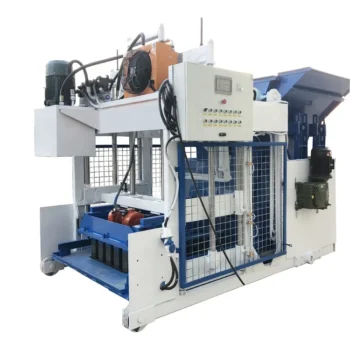
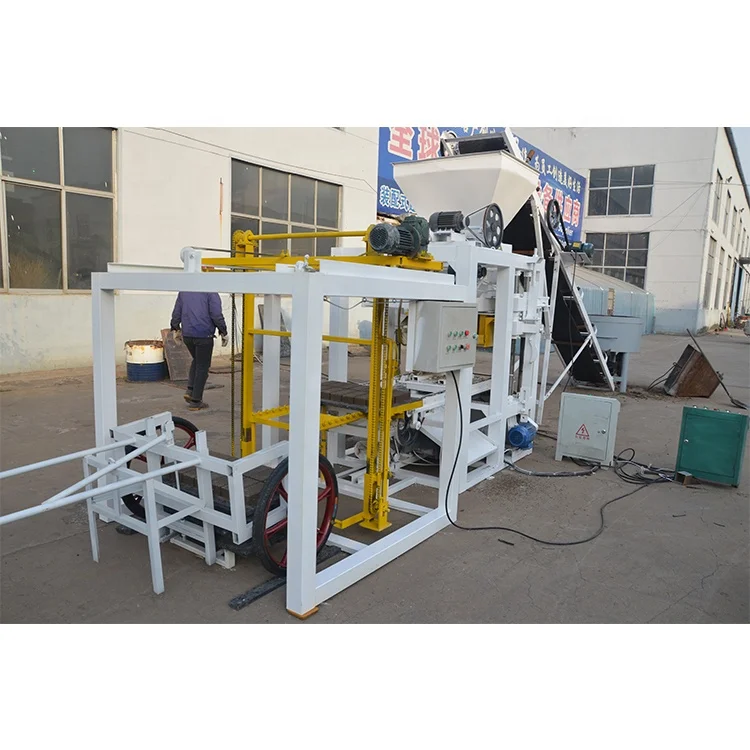
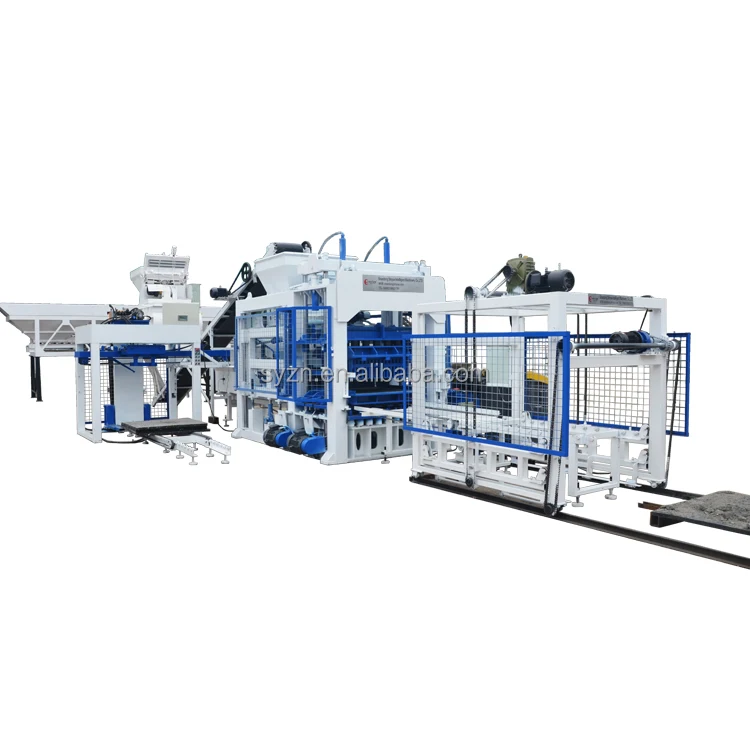
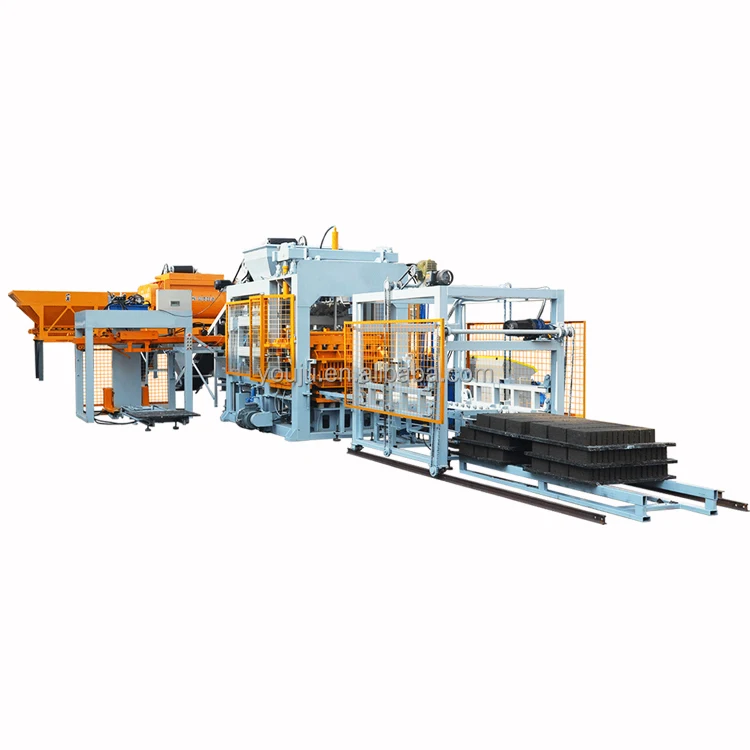
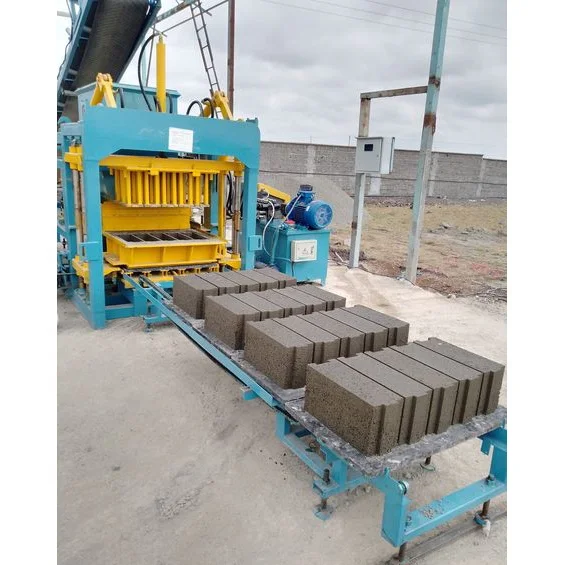
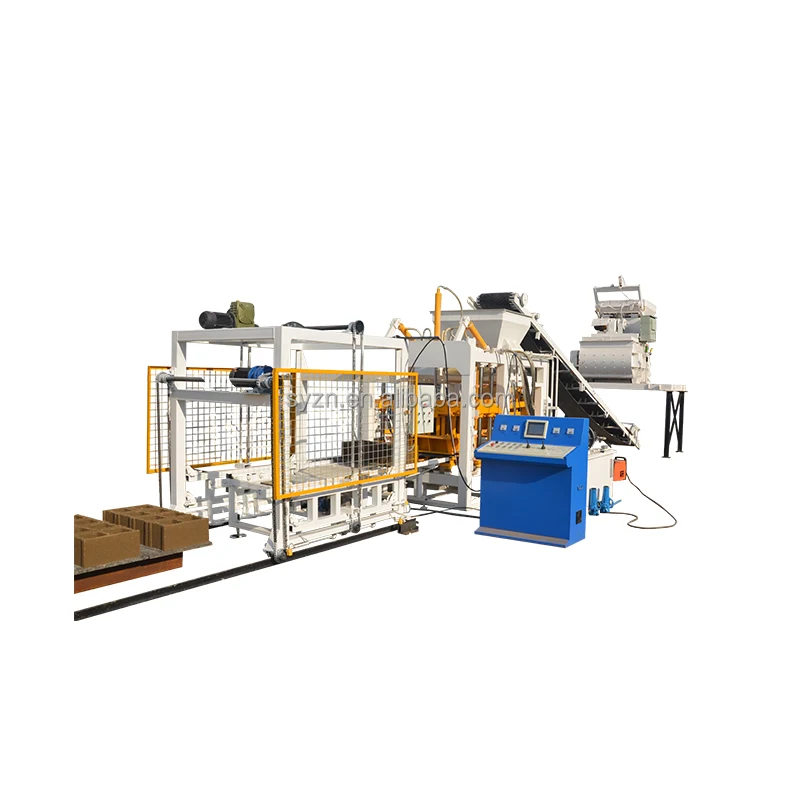
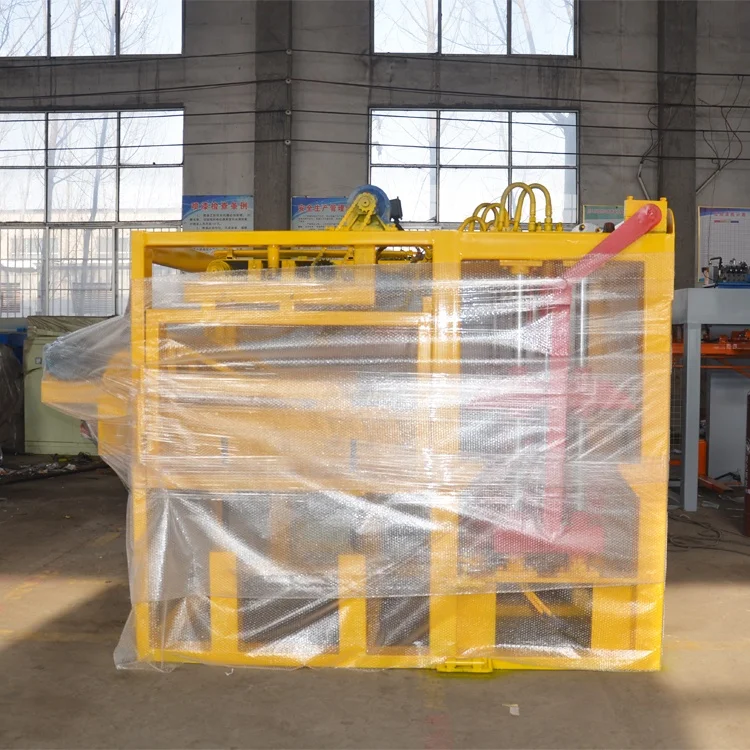
Complete Line Dispatch — Every QT4-15A unit leaves the yard as a fully kitted block production cell, not a bare press waiting for auxiliary gear to arrive weeks later.
Technical Specifications
| Parameter | Value |
|---|---|
| Model | QT4-15A |
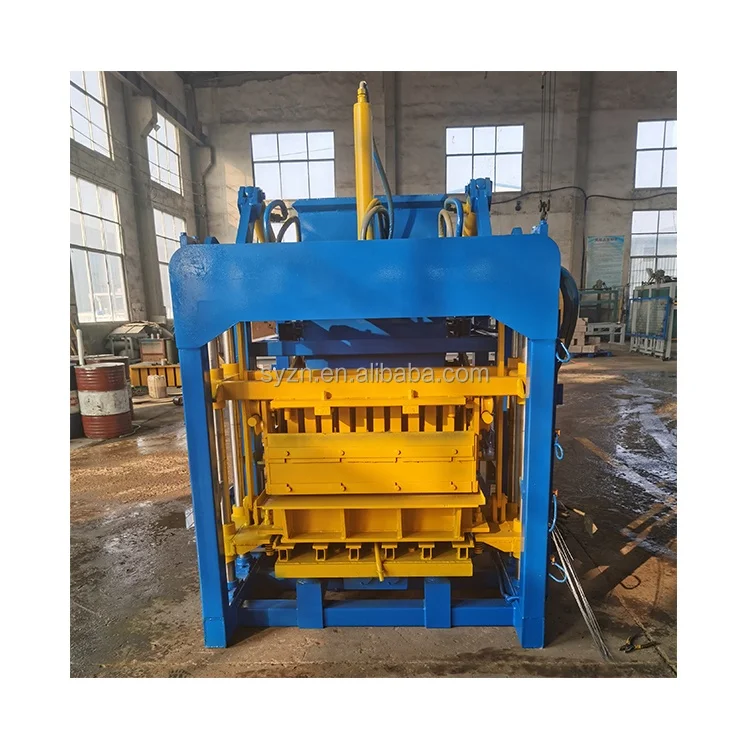
| Product Type | Automatic Hydraulic Block Making Machine |
| Overall Dimensions (L×W×H) | 7100×1600×2610 mm |
| Moulding Cycle | 15–25 s (basis not stated in source — confirm per block format) |
| Vibration Frequency | 4600 r/min |
| Vibration Force | 40–50 kN |
| Total Power | 18.45 kW |
| Mixer Model | JQ350 |
| Pallet Size | 850×550×25 mm |
| Total Weight | Approx. 3 T (host machine, basis to be confirmed) |
| Control System | PLC control system (language options to be confirmed) |
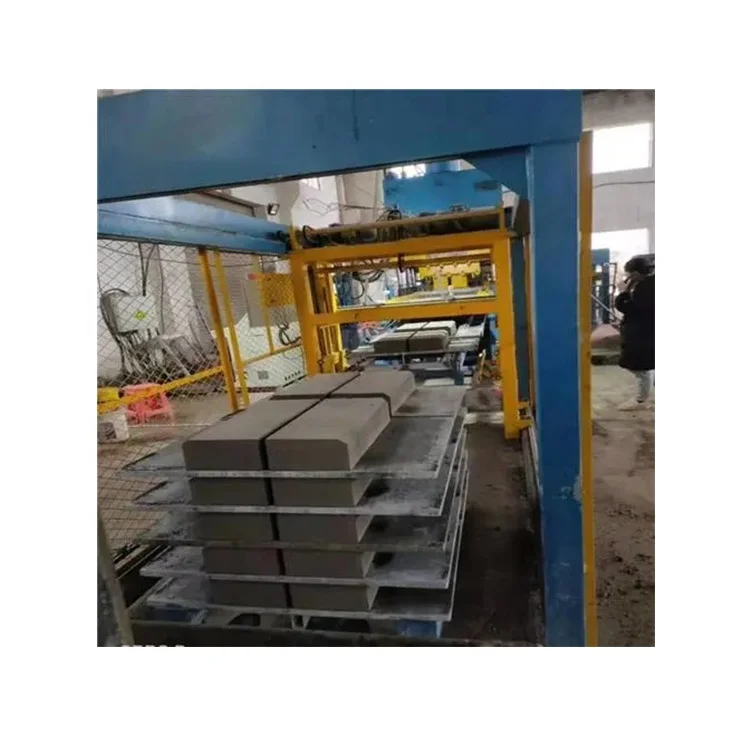
| Included Stations | Host press, hydraulic station, PLC cabinet, pallet feeder, brick conveyor, block sweeper |
| Voltage & Frequency | Configurable per destination market — confirm before dispatch |
Application Suitability
| Application | Material or Output |
|---|---|
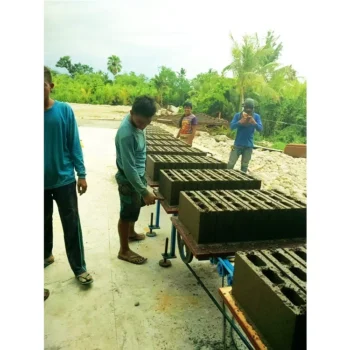
| Hollow block production for masonry walls | Crushed stone, sand, cement, fly ash — 400×200×200 mm and 400×150×200 mm formats |
| Solid brick production for load-bearing and infill | Cement-aggregate mix — 240×115×53 mm format |
| Paving and kerbstone production for hardscape | Dense aggregate blend — via mould change |
| On-site block production for housing projects | Locally sourced sand and crushed stone |
Why the Voltage Question Must Be Settled Before the Block Machine in Stock Ships
A stocked machine that arrives with the wrong motor is not stocked at all — it is a three-week delay sitting in a container.
I once watched twenty-odd workers stand idle outside a Colombian block plant because the press arrived wired for 380 V while the site transformer delivered 440 V at 60 Hz. The motor swap took three weeks and cost more than the ocean freight. Since that afternoon, every QT4-15A bound for export gets a written voltage, frequency, and PLC language confirmation before it is cleared for container loading. [NEED_CITE: voltage and frequency standards by export market]
A block machine in stock means nothing if the electrical specification is a guess. The confirmation takes a single exchange — your site voltage, your transformer capacity, your preferred control language — and it removes the most common commissioning blocker we see across Latin American and African project sites.
Dispatch Lead Time You Can Put on a Gantt Chart
The QT4-15A is held in the yard as a complete production cell: host press, hydraulic station, PLC cabinet, pallet feeder, brick conveyor, and block sweeper are all staged together. When a block machine in stock is reserved against your purchase order, the packing list is generated from that staged set, so nothing ships half-complete. You receive written dispatch timing and an arrival estimate at the point of order confirmation, not after the deposit clears.
Container Loading Without Surprises
The host machine dimensions of 7100×1600×2610 mm and a weight of roughly 3 T fit a standard 20 GP container in a bare-load arrangement. Pallets measuring 850×550×25 mm are stacked and lashed alongside, giving you a full production run of consumables from day one. Loading photographs are taken before the doors close, so your logistics team and customs broker see exactly what is inside before the vessel sails. [NEED_CITE: container loading and lashing standards for heavy industrial machinery]
Reading the Press Numbers That Actually Matter on Site
The vibration force of 40–50 kN at 4600 r/min works in tandem with the hydraulic station to compact the aggregate mix inside the mould cavity. Higher vibration frequency alone does not guarantee block density — it is the combination of vibration amplitude, hydraulic clamping pressure, and cycle time that determines whether a hollow block holds its edge when demoulded. The QT4-15A’s 15–25 second moulding cycle range gives the operator room to adjust dwell for different formats: a 400×200×200 mm hollow block needs a different compaction window than a 240×115×53 mm solid brick. The JQ350 mixer feeds the press with a consistent aggregate blend, and the pallet feeder delivers boards at a rate matched to the press cycle so the press is never left waiting for a board or a mix charge.
The Cost of Skipping the Auxiliary Equipment Conversation
Buyers who focus on the press alone often discover, after arrival, that pallet handling and stacking were never included in the scope. Output piles up on the conveyor and must be moved by hand, turning an automatic line into a manual bottleneck. [NEED_CITE: common causes of commissioning delays in block plant installations] The QT4-15A package includes the pallet feeder and brick conveyor, so the press discharge is managed mechanically from the start. Still, stacking method and curing rack arrangement are decisions you must confirm before shipment — an unaddressed gap that can stall production for weeks while local fabrication catches up.
Why Buyers Come Back for the Second Line
The machine, mould, pallet, and handling equipment are specified as one matched set rather than assembled from separate suppliers, so cycle times align across every station. Configuration is set against your actual mix design and local aggregate, not a catalogue default. Moulds are supplied for the formats your market sells, with custom drawing capability for non-standard profiles. Automation level is selectable, meaning you can start with the included pallet feeder and add automatic stacking later. Installation support and operator training are part of the scope, not an optional extra.
Documentation & Verification
- Line layout showing QT4-15A station positions and pallet flow path
- Capacity table stating assumed block format and moulding cycle per row
- Voltage, frequency, and PLC language confirmation sheet signed before dispatch
- Factory test record on your specified block format with cycle timing
- Packing photographs taken at container loading with lashing detail visible
- Hydraulic and electrical schematic matching the shipped configuration
Installation, Commissioning & Support
- Foundation pad must support 7100×1600 mm footprint and dynamic vibration load
- Dedicated electrical circuit sized for 18.45 kW total draw plus mixer startup surge
- Host press arrives dismantled from container bracing; reassembly on pre-set anchor bolts
- PLC cabinet powered up and language verified before first production run
- Operator training covers mould change procedure and pallet feeder synchronization
- Wear parts list and hydraulic seal kit included for first replacement cycle
What to Prepare Before Requesting a Dispatch Quote
Share your target block format and daily volume so we match the mould set and confirm realistic output against the 15–25 second cycle range. Confirm your site voltage, transformer rating, and preferred PLC display language to avoid the commissioning delays that stall so many projects. Let us know your available curing area and forklift capacity so the 850×550×25 mm pallets align with your existing handling infrastructure.
Frequently Asked Questions
Q: Which QT4-15A units are currently in stock, and do standard moulds ship with the press?
A: Stock status is confirmed against live yard inventory at the time of your inquiry. Standard moulds for common hollow block and solid brick formats are typically staged alongside the host machine and can be loaded in the same container. Custom mould profiles require a separate lead time that is quoted before you commit.
Q: How long does it take from purchase order to container departure?
A: For stocked QT4-15A units with standard mould sets, dispatch typically follows within a short window after voltage and PLC language confirmation is received. The arrival estimate is provided at order stage based on your destination port, so your project schedule can account for ocean transit.
Q: How is the QT4-15A loaded into a 20 GP container, and what else fits inside?
A: The host press is bare-loaded and lashed to container floor rails. Pallets measuring 850×550×25 mm are stacked and secured alongside, along with the hydraulic station, PLC cabinet, pallet feeder, conveyor, and free accessories. Loading photographs document the arrangement before doors close.
Q: What preparation does the site need before the machine arrives?
A: A level concrete foundation matching the 7100×1600 mm footprint, a dedicated power circuit matching the confirmed voltage and frequency, and curing space planned around the 850×550 mm pallet size. Our team reviews these items with you before dispatch to prevent on-site surprises.
Q: Are spare parts included, and how are replacements handled after installation?
A: A wear parts kit and hydraulic seal set ship inside the container with the QT4-15A. The included spare parts list identifies every consumable by part number. Replacement orders are fulfilled from the same supply chain that supports the initial build.