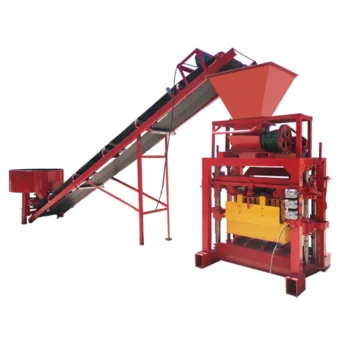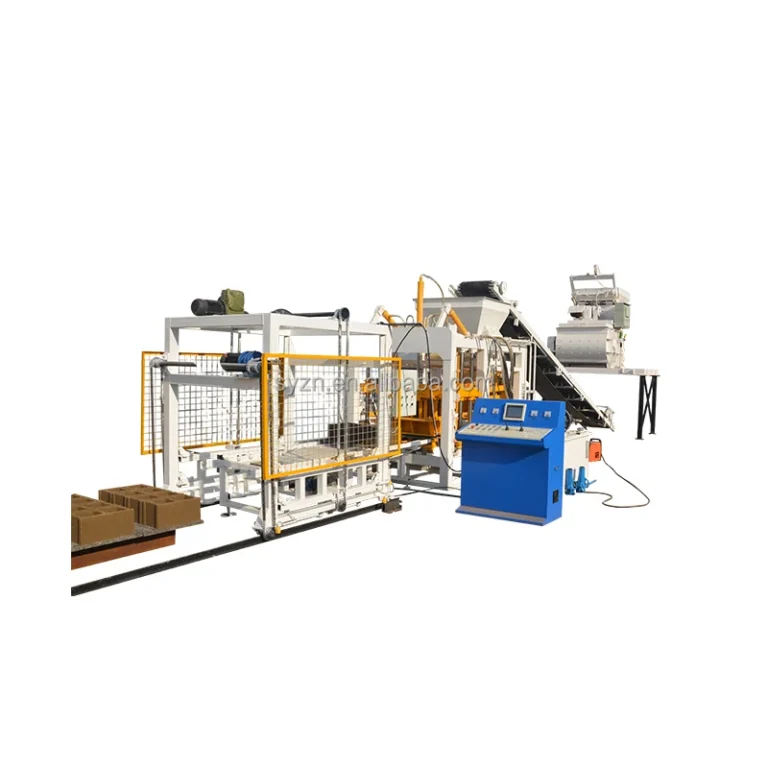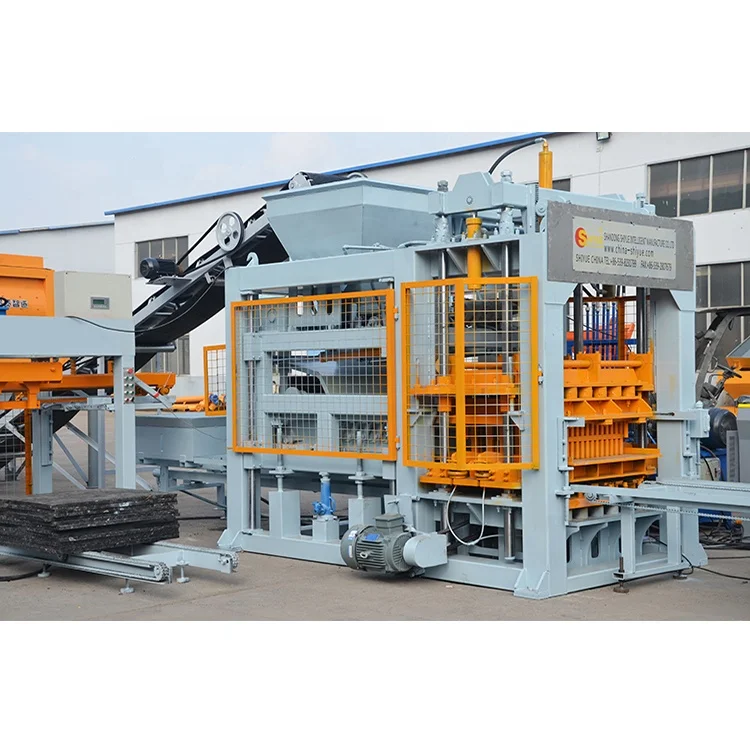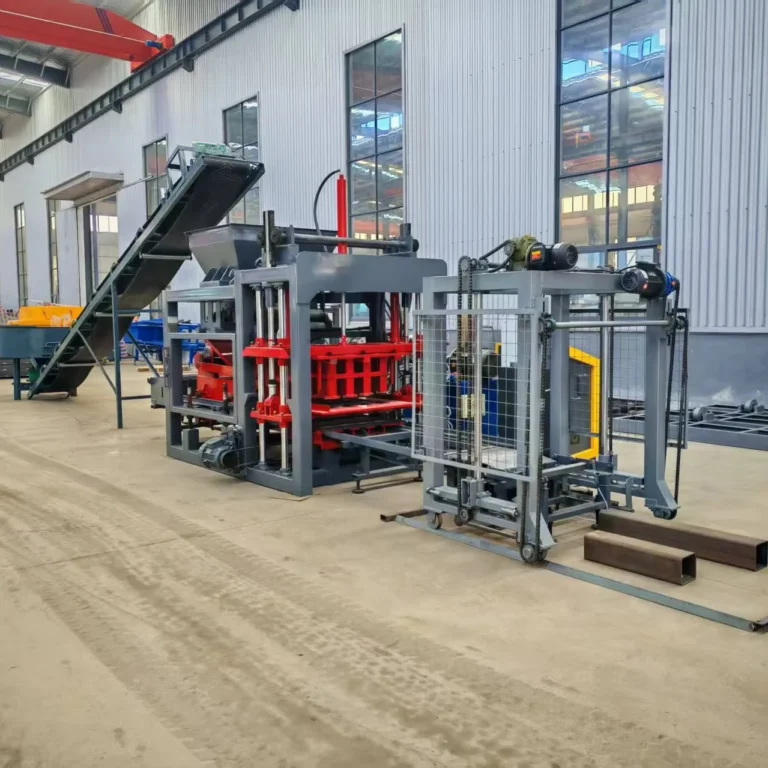
Description
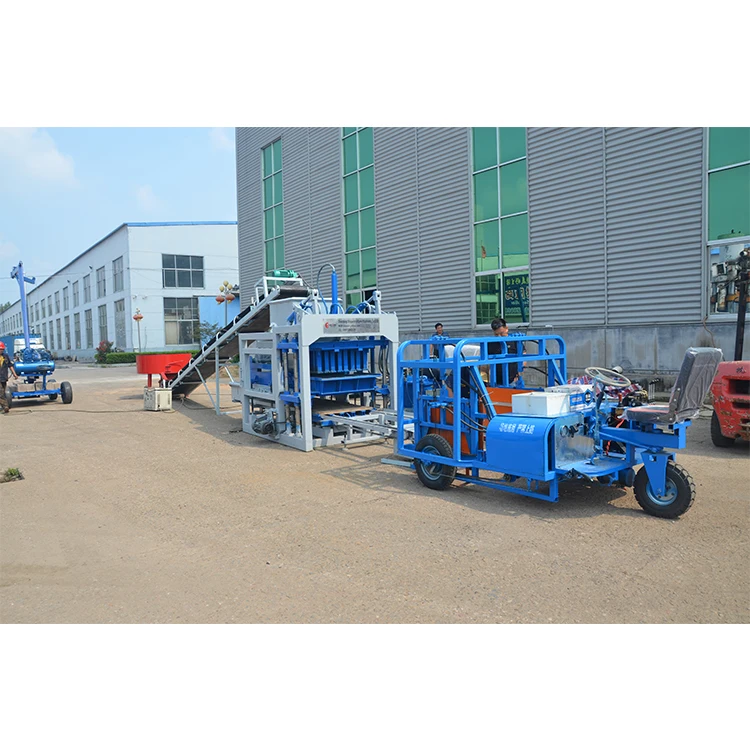
Matched System Dispatch — QT4-15A block machine, hydraulic station, PLC, pallet feeder and conveyor ship as one verified line rather than separate purchases assembled on site.
Technical Specifications
| Parameter | Value |
|---|---|
| Model | QT4-15A |
| Product Type | Fully Automatic Concrete Block Production Line |
| Overall Dimensions (L×W×H) | 7100×1600×2610 mm |
| Molding Cycle | 15-25 s |
| Vibration Frequency | 4600 r/min |
| Exciting Power | 40-50 kN |
| Rated Power | 18.45 kW |
| Mixer Model | JQ350 |
| Pallet Size | 850×550×25 mm |
| Net Weight | 3 T |
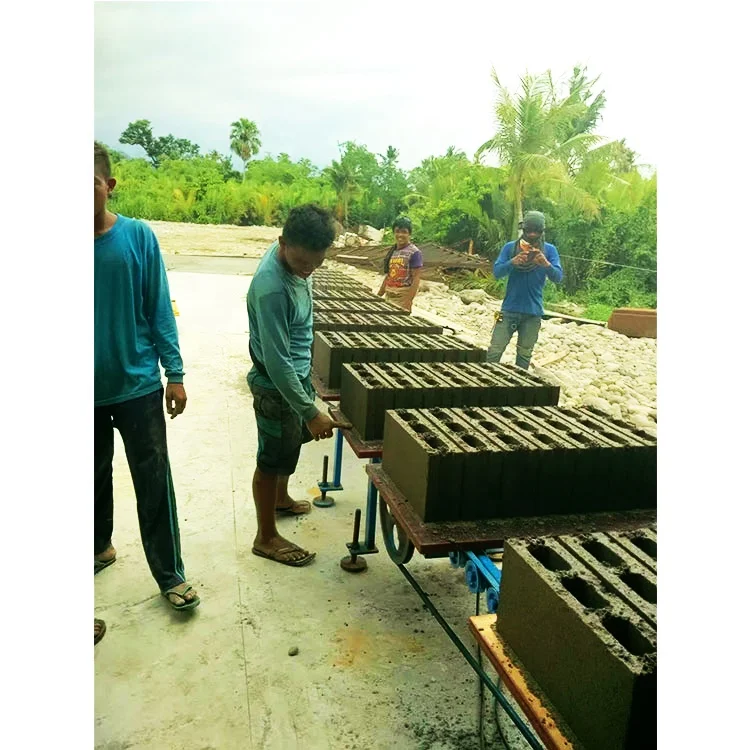
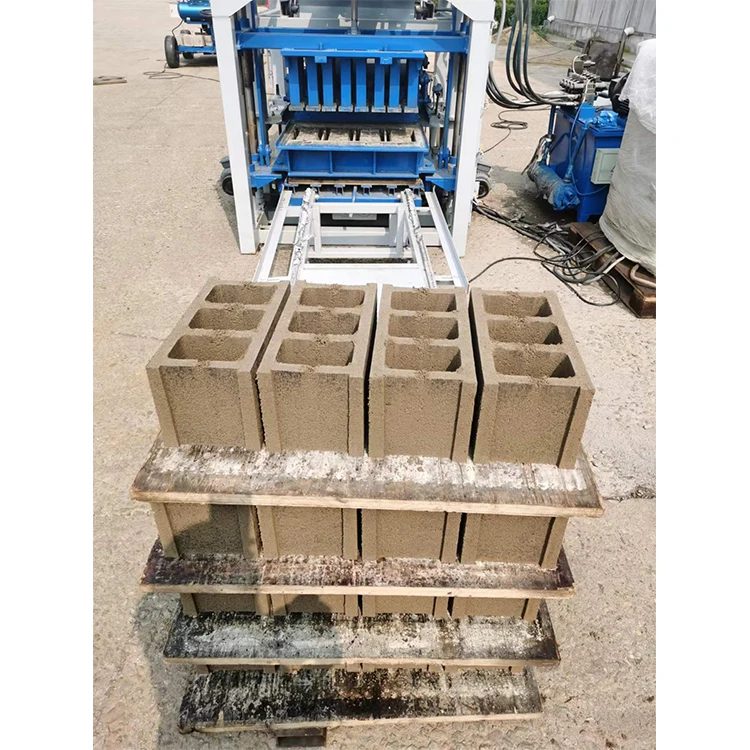
| Applied Products | Paver, solid block, hollow block, curbstone |
| Raw Materials | Crushed stone, sand, cement, dust, fly ash |
| Control System | PLC control system |
| Hydraulic Station | Included (high pressure, stable operation) |
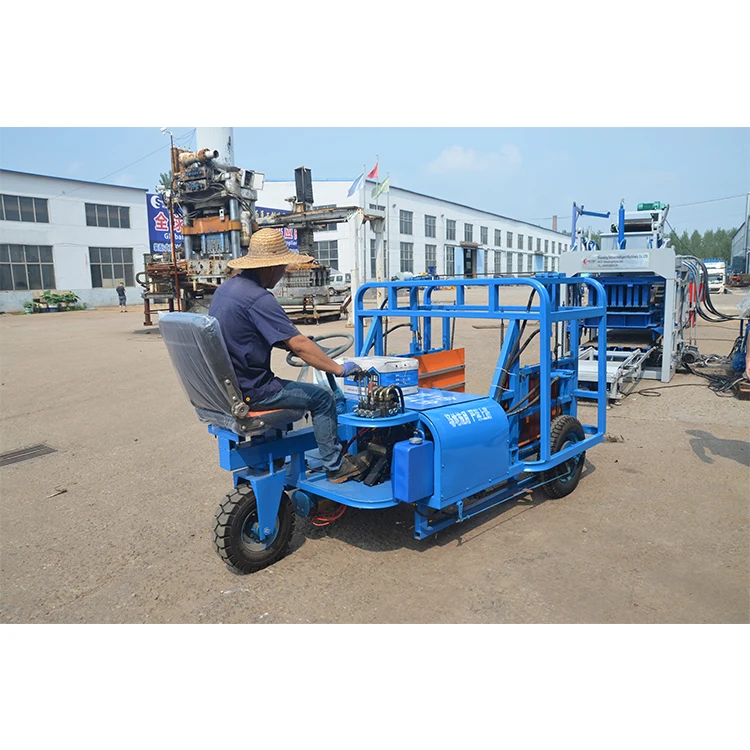
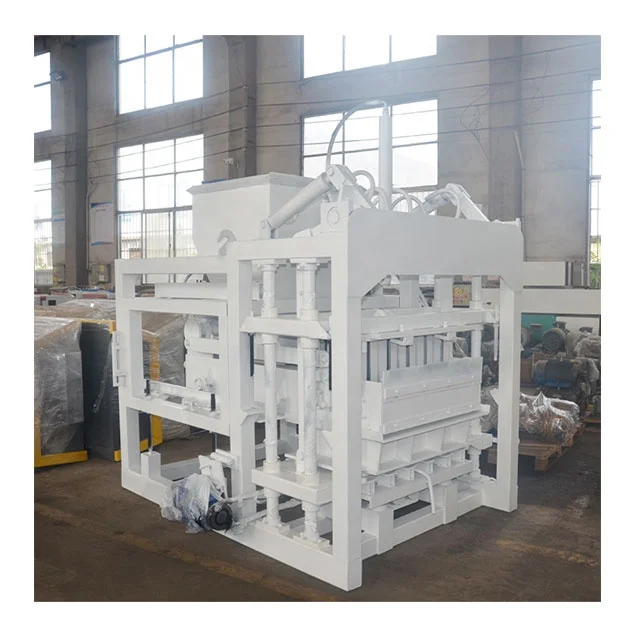
| Included Equipment | Block making machine, hydraulic station, PLC control system, pallet feeder, brick conveyor, block sweeper |
| Free Accessories | Manual hydraulic trolley, spare parts and tools |
| Output Capacity (Hollow Block 400×200×200 mm) | 408 pcs/h, 3264 pcs/8hr (based on 4 pcs/mould) |
| Output Capacity (Hollow Block 400×150×200 mm) | 510 pcs/h, 4080 pcs/8hr (based on 5 pcs/mould) |
| Output Capacity (Solid Brick 240×115×53 mm) | 2100 pcs/h, 17000 pcs/8hr (based on 18 pcs/mould) |
| Automation Level | Fully automatic (with pallet feeder, conveyor, sweeper) |
| Mould Change | Interchangeable moulds for multiple block formats |
Application Suitability
| Application | Material or Output |
|---|---|
| Hollow block production for building walls | Crushed stone, sand, cement, fly ash (400×200×200 mm or 400×150×200 mm formats) |
| Solid brick manufacturing for masonry | Sand, cement, dust, fly ash (240×115×53 mm format) |
| Concrete paver production for walkways and driveways | Crushed stone, sand, cement |
| Curbstone and kerbstone for road and pavement edges | Aggregates and cement mixes suited to high-density forming |
| On-site block production for housing and development projects | Locally available aggregates matched to the buyer’s mix design |
What "Ready to Ship" Actually Means for a QT4-15A Block Machine in Stock
A stocked line leaves the factory as one matched system, not a collection of separate orders waiting to converge at the port.
Project deadlines do not wait for custom build lead times. When a buyer needs a block line on site within weeks rather than months, the difference between a physically available machine and a built-to-order promise is the difference between meeting a construction schedule and missing it entirely. The gap widens when peripheral stations — pallet feeders, conveyors, sweepers — are sourced separately and arrive on different schedules [NEED_CITE: container consolidation delays when equipment arrives from multiple suppliers]. A QT4-15A block machine in stock with all stations included removes that coordination burden before the first container is loaded.
Dispatch Readiness and Container Loading
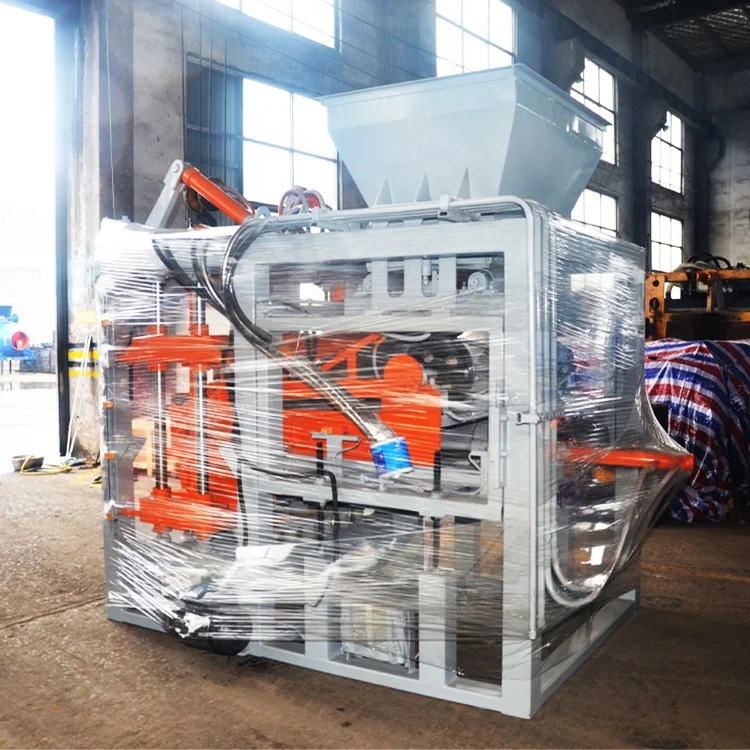
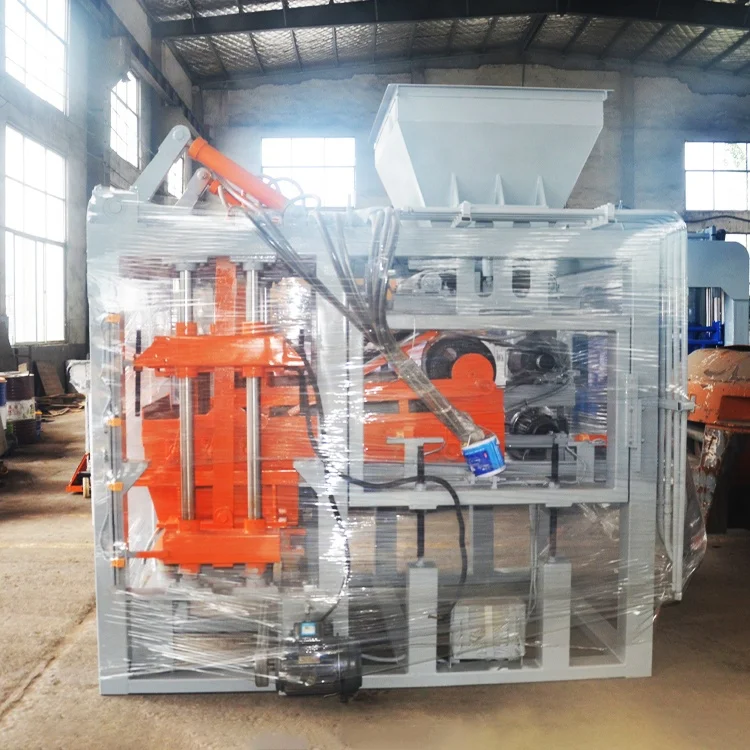
The QT4-15A block machine in stock ships as a complete line: the press itself, hydraulic station, PLC control cabinet, pallet feeder, brick conveyor and block sweeper are all accounted for in a single dispatch. Each component is dismantled and secured for container loading, with photographs taken before the doors close so the buyer has a visual record of how every station was packed. Fast delivery of this scope means the buyer receives everything needed for commissioning in one shipment rather than chasing delayed partial deliveries.
Arrival Timing Quoted Before Payment
Shipping schedules and port-to-port transit estimates are confirmed against the buyer’s project deadline before the order is finalized. The buyer knows which vessel, which port of discharge and which estimated arrival date applies to their QT4-15A block machine in stock — not an approximate window offered after payment clears. This matters most for construction contractors and housing project developers whose site teams are scheduled around a block supply start date [NEED_CITE: project delay costs when equipment arrival misses the construction window].
How Vibration and Pressure Shape Block Density
The QT4-15A runs a vibration frequency of 4600 r/min with an exciting power range of 40-50 kN, paired with a high-pressure hydraulic station. In block making, vibration alone does not guarantee density — hydraulic pressure must be matched to the vibration force and the buyer’s specific mix design. When these two forces are balanced against the local aggregate gradation, the result is consistent block strength across every pallet cycle. A mismatch between vibration force and hydraulic pressure is one of the most common reasons blocks fail compression testing on site, even when the machine itself is mechanically sound.
When Pallet Size Is Chosen Without the Buyer’s Curing Area in Mind
The standard pallet dimension for this line is 850×550×25 mm. If the buyer’s existing curing racks and forklifts were sized for a different pallet format, every loaded pallet becomes a manual handling problem once it leaves the conveyor. Buyers who skip this confirmation end up restacking blocks by hand or replacing their curing infrastructure to fit the machine — costs that appear nowhere in the original quotation [NEED_CITE: hidden handling costs from pallet and curing area mismatch].
Why Procurement Stops Being a Guess
Shandong Shiyue Intelligent Machinery Co., Ltd focuses exclusively on block making machinery, so the QT4-15A press, moulds, pallets and handling equipment are specified as one system rather than assembled from separate suppliers. Configuration is set against the buyer’s actual mix design and target block format, not a catalogue default. Mould design covers the formats the buyer’s market sells, with custom drawings available. Automation level is selectable, allowing a buyer to confirm the fully automatic scope before dispatch. Installation and commissioning support includes operator training so the line is producing saleable blocks, not just running empty cycles.
Documentation & Verification
- Factory test record run on the buyer’s target block format before dispatch
- Machine specification sheet with confirmed voltage and PLC display language
- Line layout showing pallet feeder, conveyor and sweeper station positions
- Mould drawing and format list covering hollow, solid, paver and curbstone
- Hydraulic and electrical schematic for on-site maintenance reference
- Packing photographs documenting container loading condition
Installation, Commissioning & Support
- Foundation plan matched to the 7100×1600 mm machine footprint and 3 T operating weight
- Power supply confirmation for the 18.45 kW rated load with dedicated circuit requirements
- Dismantling and reassembly sequence for all included stations on arrival
- PLC parameter setup calibrated to the buyer’s confirmed mix and mould format
- Operator training covering mould change, pallet feed and hydraulic station maintenance
- Wear parts list with recommended first-order quantities for hydraulic and vibration components
Before You Send an Inquiry
Provide the block formats your market sells, the daily output you need to hit, and the local aggregate type and gradation available at your site. Confirm the voltage and frequency at your plant so the electrical system is built to match. If you have existing curing racks or forklifts, share the pallet dimensions they accept so the 850×550 mm standard is verified or adjusted before the line ships.
Frequently Asked Questions
Q: Which QT4-15A configurations and mould formats are currently in stock for immediate dispatch?
A: Stocked configurations include the complete line with hydraulic station, PLC control system, pallet feeder, brick conveyor and block sweeper. Standard mould formats for hollow blocks, solid bricks, pavers and curbstones on 850×550 mm pallets are available. Custom mould formats require a separate lead time confirmation. Contact us to verify current stock against your required block format and daily output target.
Q: What is the dispatch lead time and how is the machine dismantled and loaded into a container?
A: Dispatch lead time for stocked QT4-15A lines is confirmed at the quotation stage, not after payment. The machine is dismantled into its component stations — press, hydraulic station, control cabinet, pallet feeder, conveyor and sweeper — each secured for container transit. Packing photographs are taken before the container doors close and shared with the buyer as a shipment verification record.
Q: How is arrival timing estimated and what shipping documentation is provided?
A: Arrival estimates are quoted upfront based on the confirmed vessel schedule and port of discharge, matched against the buyer’s project deadline. Shipping documentation includes customs paperwork support, packing lists and the factory test record. Port-to-port transit timing is stated before the order is finalized so the buyer can align site preparation and commissioning dates accordingly.
Q: Are pallets included in the shipment and how many can be loaded per container?
A: Pallet specification and quantity are confirmed during the quotation stage based on the buyer’s curing area and daily cycle count. The standard pallet size is 850×550×25 mm. Pallet loading quantity per container depends on the material chosen and the other line components sharing the same shipment. This is confirmed in the container loading plan before dispatch.
Q: What voltage and frequency options are available from stock for the target market?
A: Voltage and frequency are confirmed with the buyer before dispatch to match the local power supply at the installation site. The PLC display language is also confirmed at this stage so operators can read the interface from the first day of commissioning. Buyers should provide their site voltage, frequency and preferred control language when submitting an inquiry.