

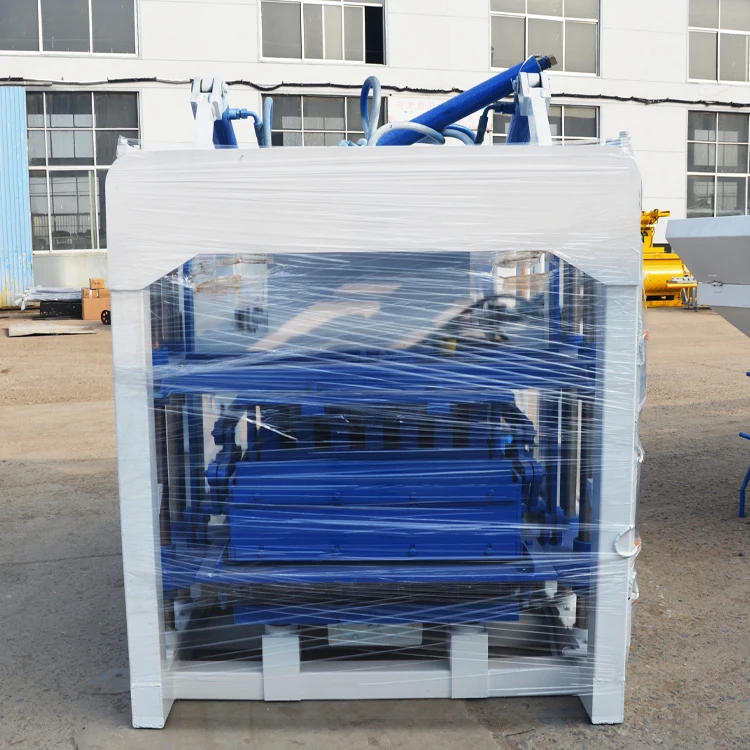

Description
Matched Line Scope — every QT4-15A block machine in stock ships with a defined equipment list, so you know exactly what arrives at your port before committing.
Technical Specifications
| Parameter | Value |
|---|---|
| Model | QT4-15A |
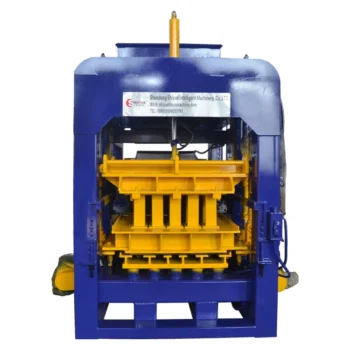
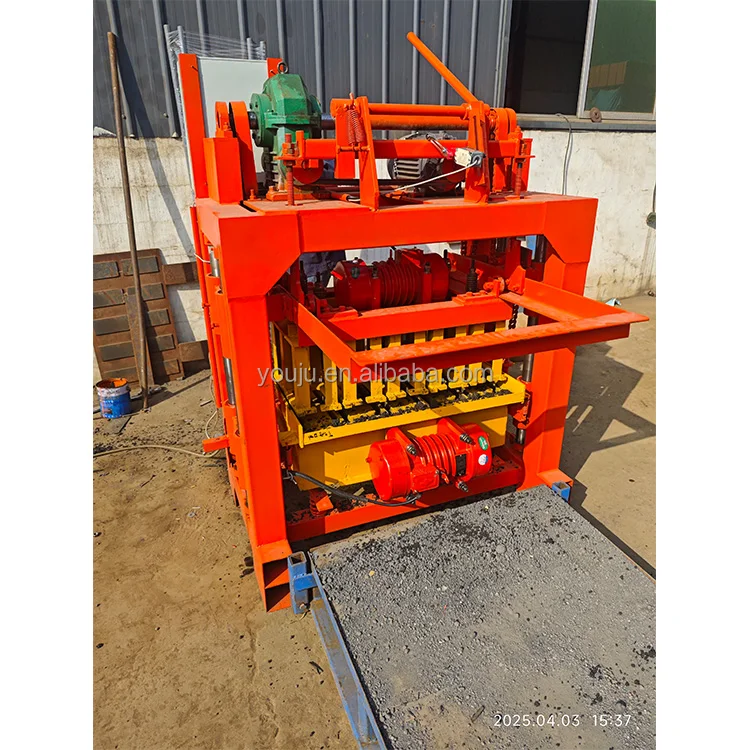
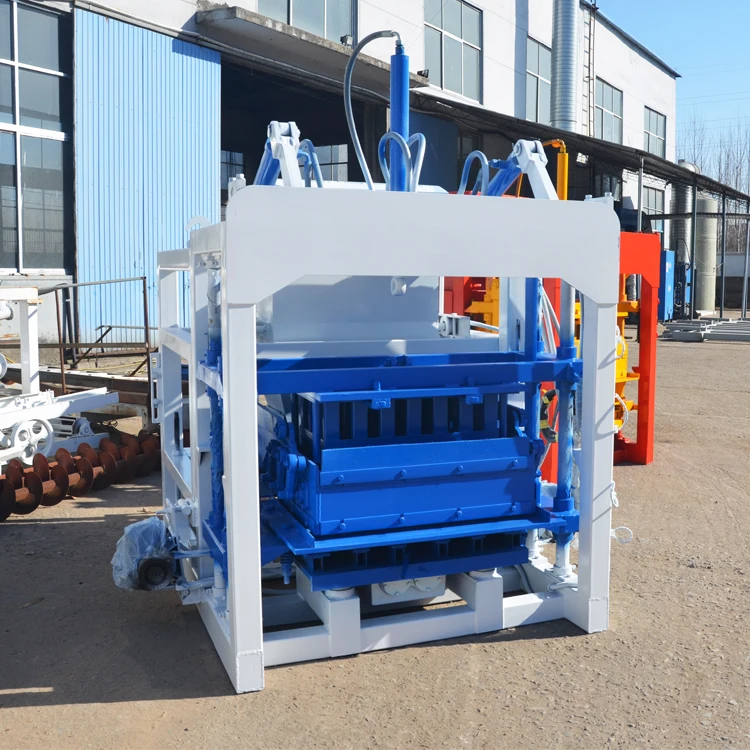
| Product Type | Hydraulic Concrete Block Making Machine |
| Overall Dimensions (L×W×H) | 4100 × 1600 × 2600 mm |
| Rated Pressure | 16–21 MPa |
| Vibration Force | 55 kN |
| Vibration Frequency | 4200 r/min |
| Main Vibration Form | Platform Vibration |
| Pallet Size | 880 × 550 mm |
| Molding Cycle | 25–30 s (basis not stated in source — confirm block format / material / thickness) |
| Overall Power | 18.45 kW |
| Total Mass | 4 T |
| Demolding Method | Hydraulic |
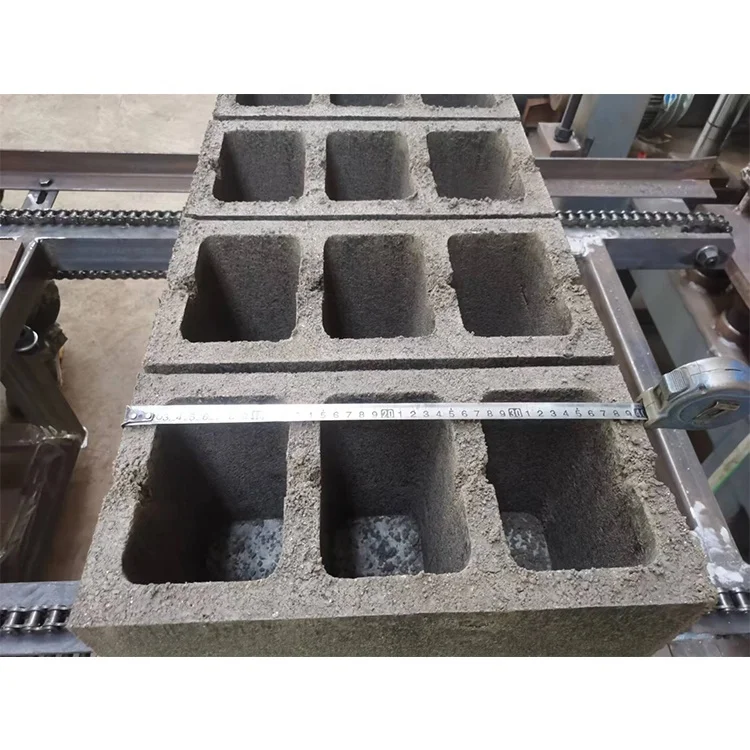
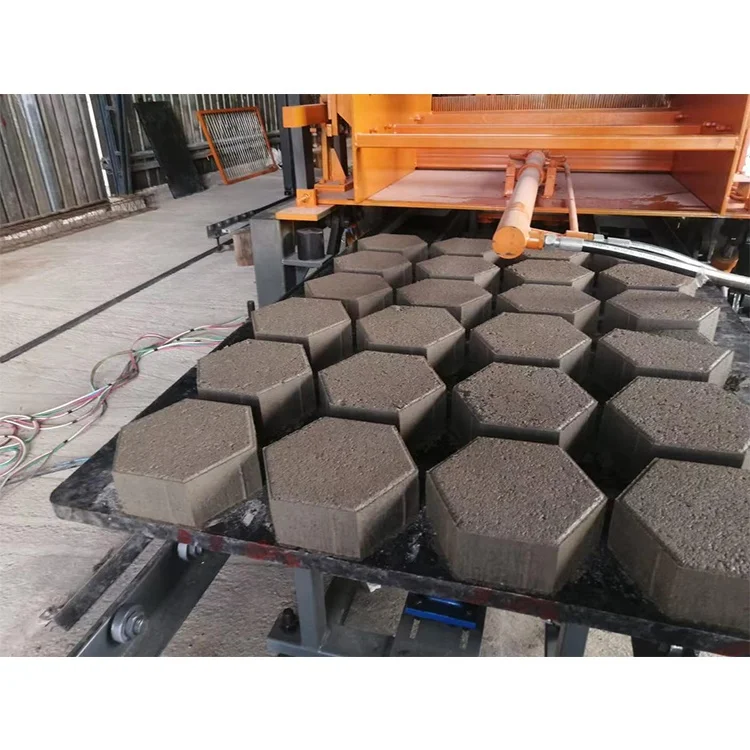
| Applied Products | Concrete blocks, hollow/solid blocks, pavers, interlocking blocks, curbstone, colored pavers |
| Raw Material | Crushed stone, sand, cement, dust, fly ash, gravel, slag |
| Container Loading | 1 × 40HQ (basic equipment) |
| Warranty | 1 year (excluding spare parts) |
| Standards | CE |
Application Suitability
| Application | Material or Output |
|---|---|
| Hollow block production for masonry walls | Crushed stone, sand, cement, fly ash blends |
| Solid block manufacturing for load-bearing structures | Gravel, cement, and slag aggregates |
| Interlocking paver production for walkways and plazas | Colored concrete mixes with fine sand |
| Kerbstone and curb production for road projects | Coarse aggregate with cement binder |
| Porous block output for permeable paving | Graded gravel with reduced cement ratio |
Why Voltage Confirmation Must Happen Before Dispatch — Not After Arrival
A QT4-15A block machine in stock ships fast, but only if the electrical system matches your site grid from day one.
I once watched a block machine sit idle on a Jordanian job site for three weeks because the local supply voltage did not match the factory default. The masonry crew had no blocks, the scaffolding went unused, and the general contractor started counting liquidated damages. That delay had nothing to do with the press itself — it came down to a single unchecked line on the specification sheet [NEED_CITE: voltage and frequency standards by export market]. When you order a QT4-15A block machine in stock for a project with a hard deadline, the dispatch conversation must start with your site voltage, frequency, and control language, not end with them.
Dispatch Timing and Container Loading Clarity
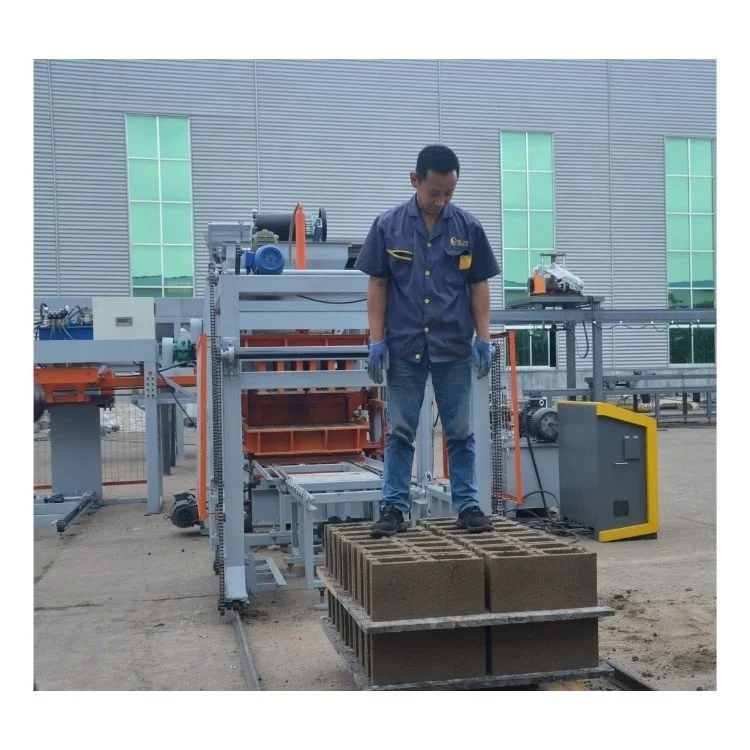
Stock availability means the main press, hydraulic station, and control cabinet are assembled, tested, and ready for dismantling. A QT4-15A block machine in stock loads into one 40HQ container for the basic equipment set, and the loading plan — which components are broken down, how they are secured, and what arrives as a single skid — is confirmed before the booking is placed.
Arrival Estimates Quoted Before the Purchase Order
The value of a fast-dispatch machine disappears if you cannot plan around its arrival. Shipping transit time, port clearance variables, and inland transport to your yard are mapped out during the quotation stage, giving you a working arrival window to share with your project scheduler [NEED_CITE: typical ocean freight transit times for machinery containers to Middle East ports]. This removes the guesswork that stalls site preparation and delays foundation work.
Reading the Numbers That Actually Matter on Site
The 16–21 MPa rated pressure and 55 kN vibration force work together to compact the concrete mix into a dense, consistent block. Higher pressure alone will not produce a strong block if the vibration frequency — here 4200 r/min through platform vibration — is too low to settle fines into the voids left by coarse aggregate. The 880 × 550 mm pallet size determines how many blocks cure per square meter of yard space, and whether your existing forklift can handle the loaded pallet weight without modification.
The Hidden Cost of an Incomplete Line Scope
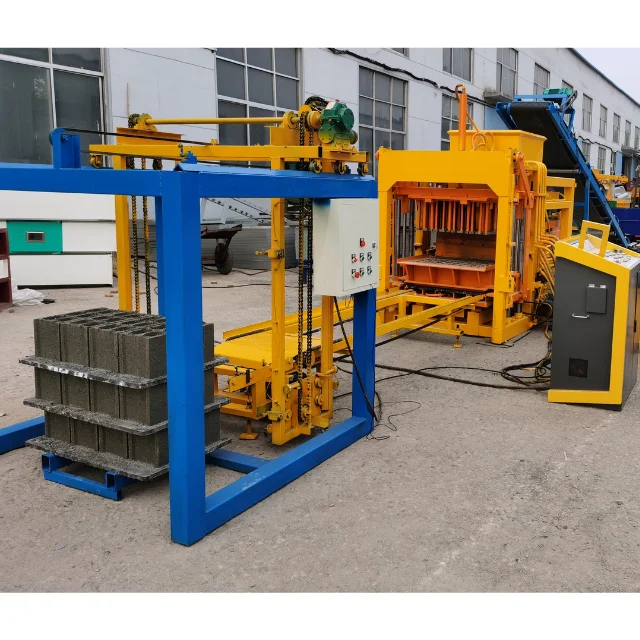
Quotations that list only the press leave buyers discovering — after the container arrives — that pallet handling, stacking, and curing equipment were never included. Output piles up at the press exit and workers stack blocks by hand, creating a bottleneck that erases any cycle time advantage the machine itself delivers [NEED_CITE: block production line bottlenecks caused by missing downstream equipment]. Confirming the full scope of what ships in the 40HQ and what must be sourced locally prevents that first-week scramble.
Why Procurement Here Reduces Arrival Risk
The machine, mould, pallet, and handling equipment are specified as one matched system rather than assembled from unrelated suppliers. Configuration is set against the buyer’s actual mix design and local aggregate, not a catalogue default, so the block strength meets local standards without material substitution. Mould design covers the formats the destination market actually sells, with custom drawings available when standard options fall short. Voltage, frequency, and PLC display language are confirmed before production — a step that prevents the three-week idle-machine scenario described earlier. Factory test records and packing photographs are shared before dispatch so you verify the exact machine that enters the container.
Documentation & Verification
- Factory test record run on your target block format before dispatch
- Machine specification sheet with confirmed voltage, frequency, and PLC language
- Mould drawing and format list matching your local market requirements
- Hydraulic and electrical schematic for on-site troubleshooting
- Packing photographs showing dismantling and container loading arrangement
- CE declaration documentation for customs clearance
Installation, Commissioning & Support
- 4100 × 1600 mm footprint requires a level concrete pad with drainage provision
- 18.45 kW total power needs a dedicated circuit matched to confirmed site voltage
- Machine arrives dismantled; reassembly sequence documented with labelled components
- First-run commissioning includes molding cycle verification on your local aggregate
- Operator training covers mould change procedure and daily vibration platform inspection
- Wear parts list identifies hydraulic seals and vibration springs for first reorder
What to Prepare Before Requesting a Dispatch Date
Share your target block format, daily output requirement, and the raw materials available at your site so the cycle time can be verified against a realistic production scenario. Confirm your local voltage, frequency, and the control language your operators read. If you already have a curing yard and forklift, send the dimensions and capacity so the 880 × 550 mm pallet can be cross-checked against your existing setup.
Frequently Asked Questions
Q: Which QT4-15A configurations are currently in stock and what is the dispatch lead time?
A: Standard configurations with common mould formats and default electrical specifications are held in stock for faster dispatch. Lead time depends on whether your voltage, frequency, or control language requires a non-standard configuration. Confirming these details early allows the dispatch date to be quoted before you issue a purchase order.
Q: How is the machine packed and loaded into the container?
A: The QT4-15A is dismantled into major assemblies — main frame, hydraulic station, vibration platform, and control cabinet — and loaded into one 40HQ container for the basic equipment set. A detailed loading plan with packing photographs is provided before the container is sealed so you know exactly how the machine arrives.
Q: Can I receive an arrival estimate before placing the order?
A: Yes. Shipping transit time from the port of loading to your destination port is estimated during the quotation stage, giving you a working arrival window. This allows you to schedule foundation work, electrical connection, and operator availability around a known timeline rather than a guess.
Q: What standard moulds ship with the machine and which formats need a separate order?
A: Standard stock moulds cover common hollow block, solid block, and paver formats. If your market requires interlocking profiles, kerbstones, or custom dimensions, those moulds are manufactured to drawing and may carry a separate lead time. Confirming your format list early ensures moulds ship with the machine when possible.
Q: What voltage and control language options are available from stock?
A: Stock machines are typically configured for common industrial voltage and frequency combinations. Non-standard electrical specifications and PLC display languages require configuration before dispatch. Providing your site voltage and preferred control language at inquiry stage prevents delays and avoids on-site electrical rework after arrival.