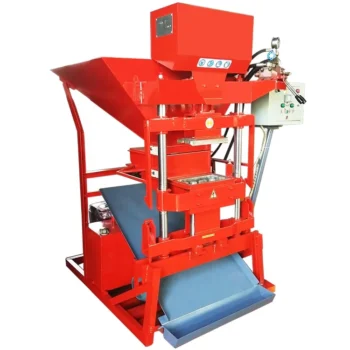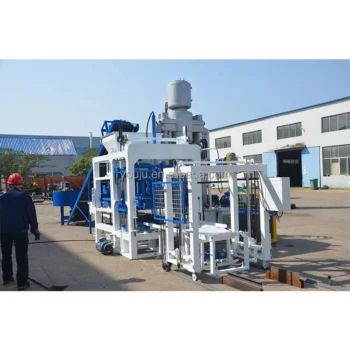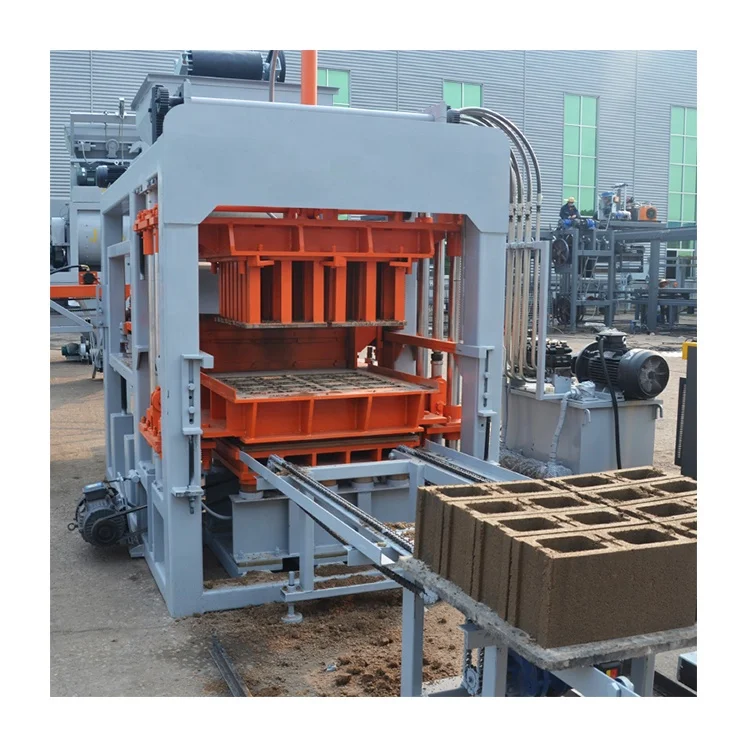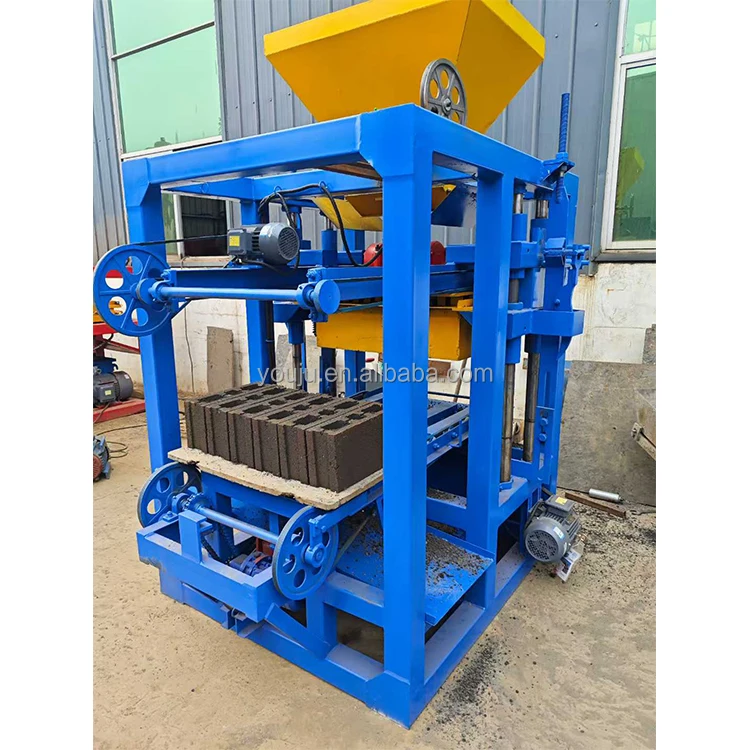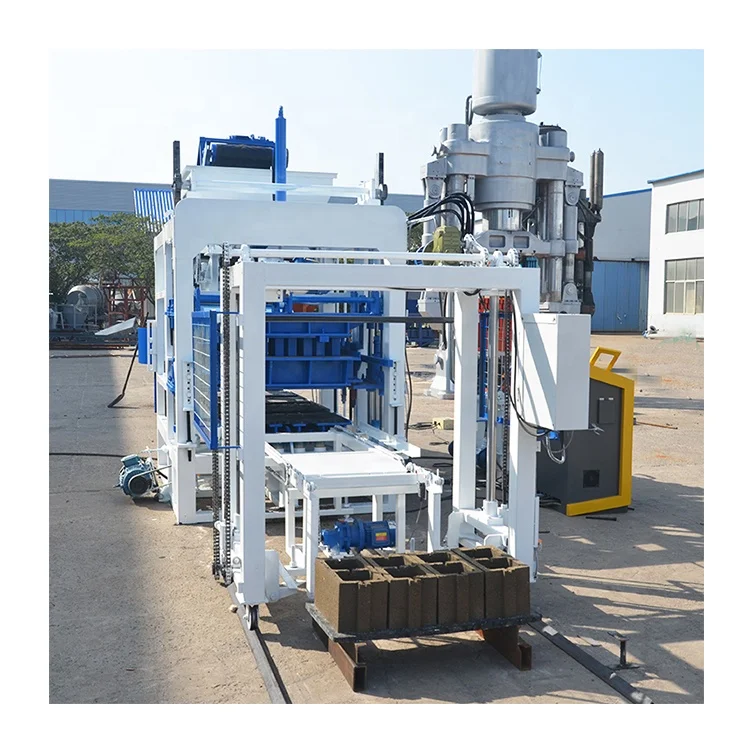
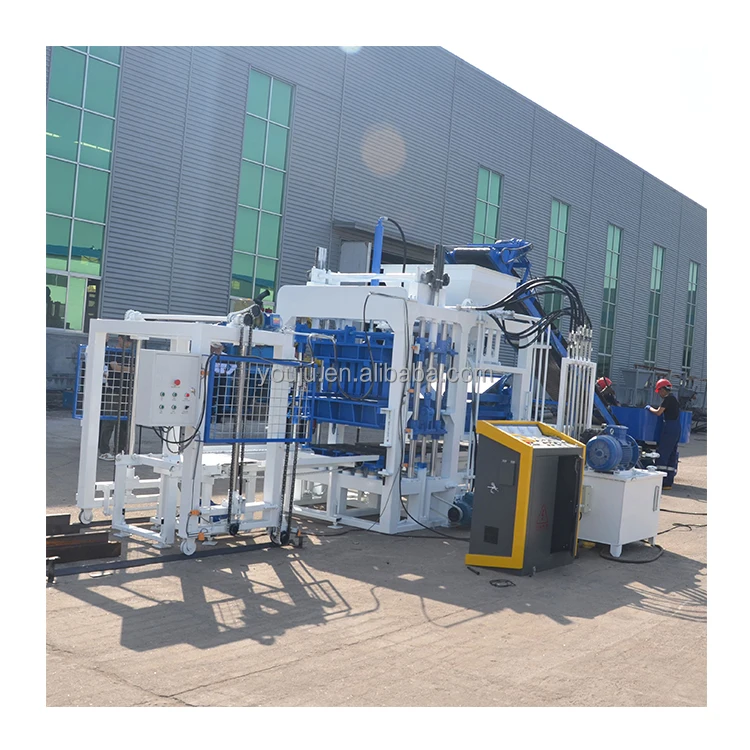

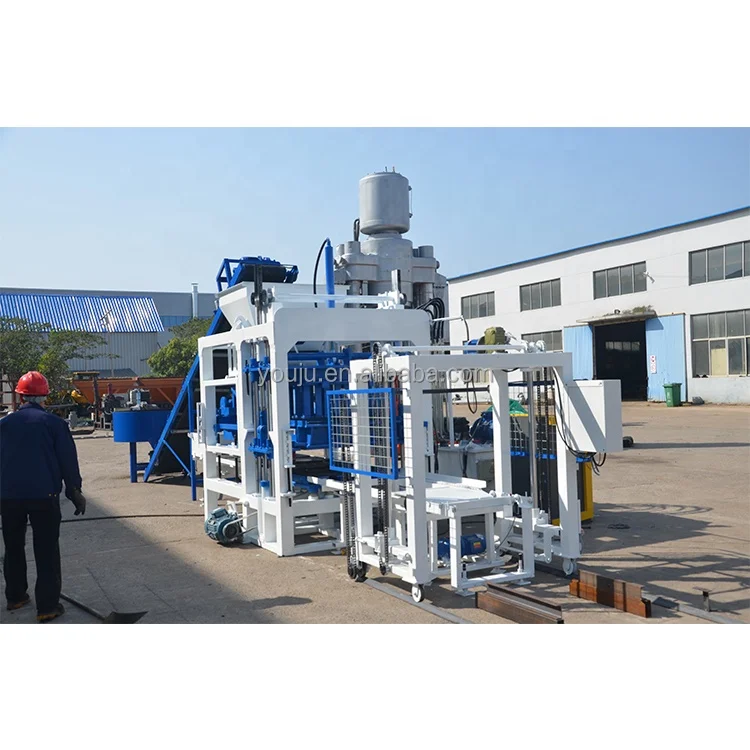


Description
Ready Stock Availability — QT4-18 units are held in inventory with complete support equipment packages, allowing buyers with tight project deadlines to bypass manufacturing lead times and proceed directly to container loading after voltage and control language verification.
Technical Specifications
| Parameter | Value |
|---|---|
| Model | QT4-18 |
| Product Type | Automatic Concrete Block Making Machine |
| Overall Dimensions (L×W×H) | 2500×1750×2200 mm |
| Rated Pressure | 16 MPa |
| Vibration Form | Platform Vibration |
| Pallet Size | 950×550 mm |
| Molding Cycle | 18–25 s (basis to be confirmed per block format) |
| Overall Power | 27.5 kW |
| Control System | PLC with Frequency Converter |
| Electrical Components | Schneider Brand |
| Mould Lifting Mechanism | Double-sided Synchronous Gears |
| Material Feeder System | Distribution Belt Hopper |
| Included Moulds | One Free Hollow Mould (additional moulds as paid options) |
| Support Equipment Options | JQ500 Concrete Pan Mixer, 8 m / 6 m Belt Conveyor, Stacker, Block Clamper, Cement Silo, Batching Plant |
| Trolley | Included |
| Certification | CE |
Application Suitability
| Application | Material or Output |
|---|---|
| Hollow block production | Cement, crushed stone, sand, and fly ash blends |
| Solid block manufacturing | Dense aggregate and cement mixes for load-bearing walls |
| Cement brick production | Fine aggregate mixes for masonry and partition bricks |
| Small to medium block plants | Daily runs across multiple block formats on a single machine |
| On-site contractor production | Housing project blocks made locally without a fixed factory |
| First-time plant startups | Entrepreneurs entering block manufacturing with limited initial capital |
Why Cycle Time Claims Often Disappoint on Day One
Buyers regularly see an automatic block machine in stock advertised with an 18–25 second cycle and assume that figure applies to every block format on the mould list. The cycle time a machine achieves depends entirely on which block format is being pressed and how the vibration, pressure, and feed sequence are tuned for that specific mould. A hollow block with thin webs fills and compacts faster than a dense interlocking paver that demands longer vibration and higher hydraulic dwell. When the quotation does not state the format behind the quoted cycle, buyers install the machine, run their best-selling product, and watch daily output fall well below the numbers they planned around [NEED_CITE: capacity calculation methodology for concrete block machines]. This mismatch is not a machine fault — it is a specification gap that could have been closed before shipment with a simple format-by-format capacity table.
Stocked Machines with Verified Dispatch Timelines
The QT4-18 is one of the automatic block machine models we keep in stock precisely because small and medium buyers cannot afford the typical multi-week manufacturing wait. When a housing project has a block delivery deadline or a distributor needs to fill a container before the shipping window closes, having the press, mixer, conveyor, and stacking equipment physically available in the yard changes the conversation entirely. Buyers confirm their voltage, frequency, and control language, we run a factory test on their chosen block format, and the equipment moves to loading.
Complete Line Equipment Bundled Before Dispatch
A press sitting in a workshop is not a production line. The QT4-18 package addresses this by including the JQ500 pan mixer, belt conveyor options in 8 m and 6 m lengths, a stacker, a block clamper, and a trolley as part of the standard offering. Cement silos and batching plants are available as add-ons for buyers who want full raw material handling from day one. This approach prevents the common situation where the press arrives, but the buyer spends additional weeks sourcing and importing auxiliary equipment separately [NEED_CITE: typical block plant auxiliary equipment sourcing delays].
How Pressure, Vibration, and Pallet Size Shape Block Quality
The 16 MPa rated pressure and platform vibration system on the QT4-18 work together to compact the concrete mix into the mould cavity. Pressure alone does not produce a strong block — vibration settles the aggregate particles into a dense arrangement before the hydraulic ram applies full force. If vibration is too short, voids remain inside the block wall; if pressure is too low relative to the mix stiffness, the block cracks during demoulding. The PLC with frequency converter allows operators to adjust the vibration duration and intensity across the 18–25 second molding cycle, matching the settings to whatever local aggregate and cement ratio the buyer sources. The 950×550 mm pallet size must also align with the curing yard dimensions and the forklift tine spacing the buyer already operates, otherwise freshly pressed blocks cannot be transported to curing racks without manual handling.
The Cost of Skipping Voltage Confirmation Before Loading
I once helped a buyer who received a block machine at site only to discover the local supply was a different voltage and frequency from what the electrical cabinet was built for. The machine sat idle for weeks while the panel was reconfigured. Since then, I treat voltage, frequency, and PLC display language as non-negotiable checkpoints before any QT4-18 leaves the yard. The Schneider electrical components are rated for specific supply configurations, and swapping them on site is neither quick nor cheap [NEED_CITE: electrical standard mismatches in exported industrial machinery]. A ten-minute confirmation call saves a three-week project delay.
What Sets This Stocking Point Apart
Block machinery is the single product focus here, which means the press, mould, pallet, and handling equipment are specified as one matched system rather than assembled from unrelated suppliers. The QT4-18 in stock is configured against the buyer’s actual block format and local mix design, not shipped as a catalogue default with a note saying "adjust on arrival." Moulds for the formats the buyer’s market actually sells — including custom drawings — are available from the same inventory, so the first container carries everything needed for production. Automation level is selectable, allowing a buyer to start with the included semi-automatic handling and upgrade the stacking and cubing sections later as volume grows. Installation and commissioning support with operator training means the first production run happens with someone who understands the vibration and pressure tuning, not just the button sequence.
Documentation & Verification
- Line layout showing the QT4-18 footprint with mixer and conveyor positions
- Capacity calculation stating the exact block format behind each cycle time figure
- Hydraulic and electrical schematic matching the Schneider component list
- Voltage, frequency, and PLC language confirmation sheet signed before dispatch
- Factory test record on the buyer’s chosen mould before container loading
- CE declaration and operation manual covering mould change and maintenance intervals
Installation, Commissioning & Support
- Foundation pad sized to the 2500×1750 mm QT4-18 footprint with anchor bolt layout
- Dedicated power circuit matching the confirmed voltage and 27.5 kW total draw
- Machine shipped partially dismantled with reassembly supervised on site
- PLC parameters and frequency converter settings tuned to the buyer’s block format
- Operator training covering mould change via the double-sided synchronous gear system
- Wear parts list and mould maintenance schedule provided at handover
Send the Right Details to Get a Dispatch Date
To move from inquiry to a confirmed loading schedule, share the block formats your market sells, your target daily output per format, and the local aggregate and cement you plan to use. Include your site voltage, frequency, and preferred PLC display language so the electrical cabinet is built correctly the first time. If you have existing curing racks, forklifts, or upstream mixers, send those dimensions so the pallet size and conveyor length are matched before the QT4-18 leaves the yard.
Frequently Asked Questions
Q: What block format does the 18–25 second cycle time assume?
A: The cycle range varies depending on the block format being pressed. A thin-wall hollow block may achieve the shorter end, while a dense solid block or interlocking paver requires longer vibration and pressure dwell. We provide a format-by-format capacity table so buyers know the realistic daily output for the specific blocks they intend to produce before committing to the order.
Q: Is the QT4-18 currently in stock and how fast can it ship?
A: This automatic block machine in stock is available for dispatch once voltage, frequency, control language, and mould selection are confirmed. Factory testing on the buyer’s chosen format is completed before container loading. Actual sailing dates depend on the destination port and current vessel schedules, which we quote at the proposal stage.
Q: Which voltage and frequency options can be configured before shipment?
A: The Schneider-based electrical cabinet on the QT4-18 can be built to match the buyer’s local supply standard. We require written confirmation of voltage, phase, frequency, and PLC display language before the machine is wired and tested. This step eliminates the risk of on-site electrical rework after arrival.
Q: What support equipment comes with the standard package?
A: The standard QT4-18 package includes one free hollow mould, a trolley, the JQ500 pan mixer, an 8 m or 6 m belt conveyor, a stacker, and a block clamper. Cement silos and batching plants are optional additions. We confirm the full equipment list with the buyer so nothing essential is missing when the container arrives.
Q: Can additional moulds ship in the same container from current inventory?
A: Yes. Extra moulds for solid blocks, paving blocks, kerbstones, or interlocking bricks are available as paid additions and can be loaded into the same container as the QT4-18. Custom mould designs based on the buyer’s drawings are also produced and shipped together when lead time allows.