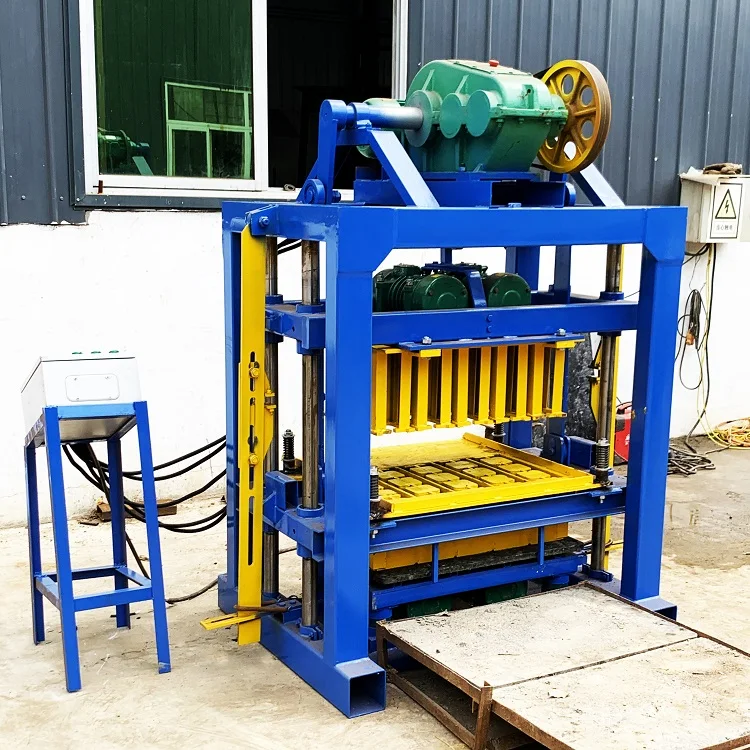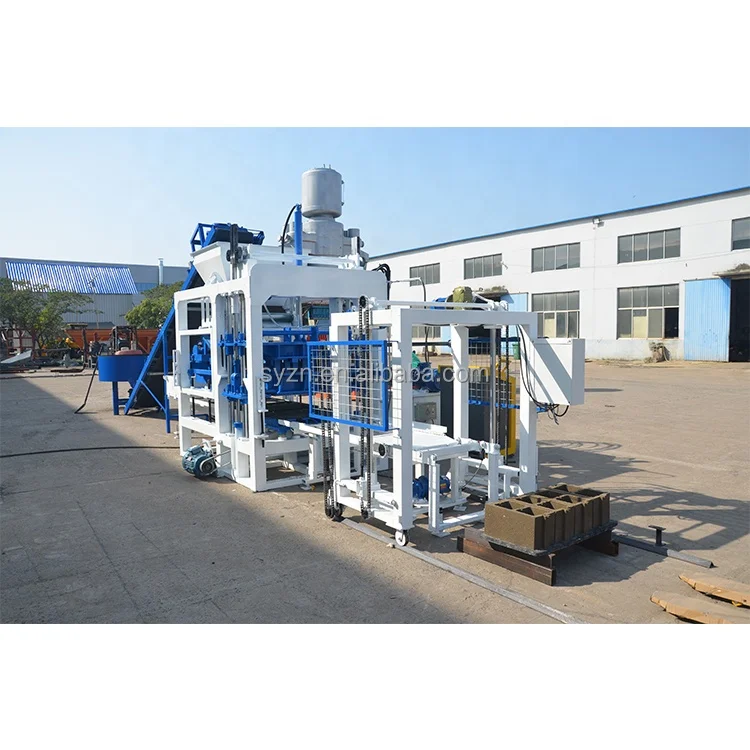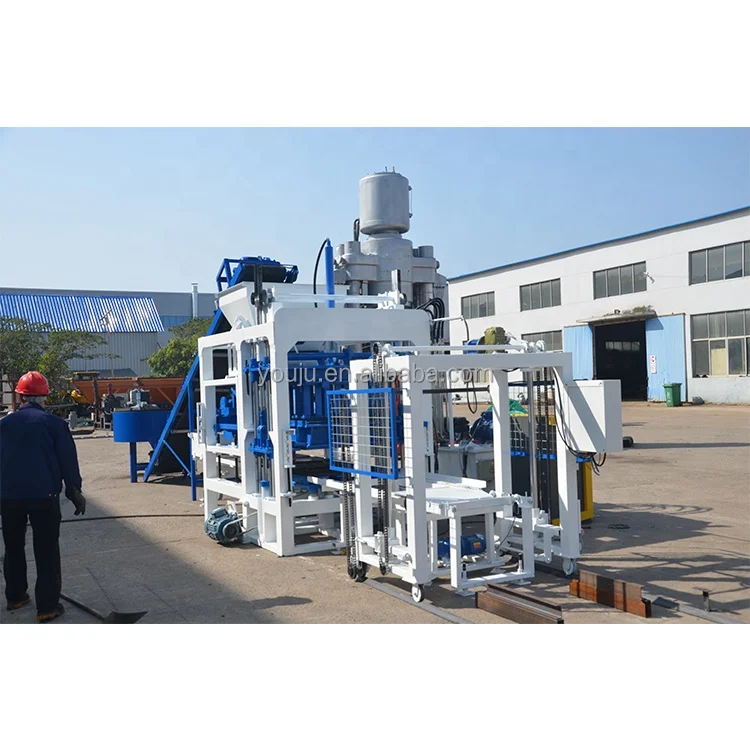


Description
Stock Verification Before Dispatch — every QT4-18 block machine in stock is checked against the buyer’s destination voltage, local aggregate compatibility, and curing area dimensions before container loading is confirmed.
Technical Specifications
| Parameter | Value |
|---|---|
| Model | QT4-18 |
| Product Type | Automatic Concrete Block Making Machine |
| Overall Dimensions (L×W×H) | 2500 × 1750 × 2200 mm |
| Rated Pressure | 16 MPa |
| Vibration Form | Platform Vibration |
| Pallet Size | 950 × 550 mm |
| Molding Cycle | 18–25 s (basis to be confirmed per block format) |
| Overall Power | 27.5 kW |
| Control System | PLC control (brand and language to be confirmed) |
| Electrical Components | Schneider (full list to be confirmed) |
| Automation Level | Automatic with manual pallet handling elements |
| Support Equipment Available | JQ500 mixer, 8 m / 6 m belt conveyor, stacker, block gripper, trolley, extra molds |
| Voltage & Frequency | Configurable to destination market (to be confirmed) |
Application Suitability
| Application | Material or Output |
|---|---|
| On-site hollow block production | Crushed stone, sand, cement with local aggregate gradations |
| Solid block manufacturing for housing projects | River sand, fly ash, or crusher dust blends |
| Paving block runs for municipal contracts | High-density concrete mixes with fine aggregate |
| First plant setup by entrepreneurs | Standard concrete mixes using locally sourced raw materials |
What "In Stock" Actually Means for Your Project Deadline
A stocked QT4-18 block machine in stock ships only after voltage, frequency, and local material compatibility are confirmed — not before.
Buying a block machine off a warehouse floor sounds straightforward until it arrives with a 380 V motor in a 415 V market, or a PLC screen displaying text your operators cannot read. I have seen machines sit idle for weeks at port because the electrical configuration was never matched to the destination country’s grid standards [NEED_CITE: voltage and frequency standards by export market]. The dispatch advantage disappears the moment commissioning stalls. An in stock QT4-18 block machine in stock should mean the machine is physically ready and the configuration is locked to your site conditions, not just that a unit happens to be sitting in a yard.
Dispatch Lead Time Versus Arrival Reality
Lead time on the QT4-18 block machine in stock is measured from the moment configuration confirmation is signed off, not from the purchase order date. Container loading plans are prepared alongside the machine specification sheet so the buyer knows exactly which components ship in which container. For a project contractor working against a construction deadline, the difference between a quoted lead time and an actual arrival estimate can determine whether blocks are produced on-site before the masonry crew arrives.
Container Loading and Dismantling Protocol
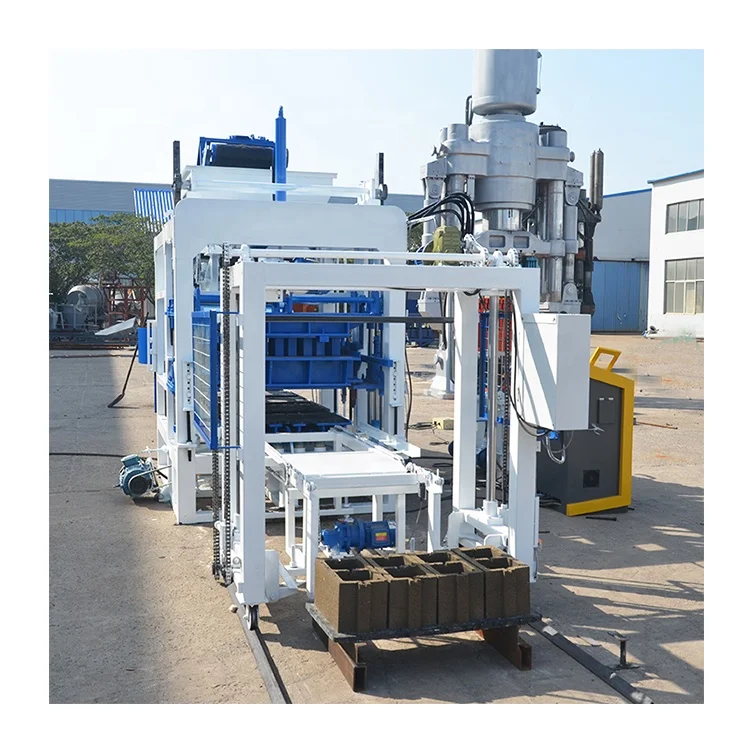
The QT4-18 block machine in stock is dismantled into major assemblies — press frame, hydraulic station, control cabinet, and conveyor sections — to fit standard container dimensions. Each assembly is photographed before crating, and packing photographs form part of the shipment documentation. Buyers working to tight project timelines need to know that the machine arriving at their port matches what left the factory floor [NEED_CITE: container loading procedures for heavy industrial equipment]. The support equipment package, including the JQ500 mixer and belt conveyor, can share container space when configured as a matched line.
Reading the Specs That Matter for Block Output
The 16 MPa rated pressure works together with platform vibration to compact the concrete mix into the mold cavity. Higher vibration force without sufficient hydraulic pressure leaves blocks with inconsistent density across their cross-section. The 950 × 550 mm pallet size determines how many blocks per cycle the machine can form, but it also dictates the curing rack spacing and forklift tine width the buyer needs on the ground. The 27.5 kW overall power draw requires a dedicated circuit with appropriate breaker sizing at the buyer’s facility — a detail that must be verified against local electrical codes before the machine ships. Molding cycle of 18–25 seconds varies depending on the block format being pressed and the consistency of the raw material feed.
When a Stocked Machine Becomes a Delayed Machine
Shipping a QT4-18 block machine in stock without confirming the buyer’s pallet dimensions against their existing curing area means the buyer may need to rebuild racks or purchase new forklifts upon arrival. Sending a machine configured for a standard aggregate blend that the buyer cannot source locally forces a material change mid-production, wasting cement and delaying deliveries to the construction site [NEED_CITE: aggregate compatibility requirements for concrete block production]. These are the hidden costs that erase whatever advantage immediate dispatch was supposed to provide.
Why Buyers Source This Machine Here
Block machinery is the single focus, so the QT4-18 press, its molds, pallets, and handling equipment are specified as one matched system rather than assembled from separate suppliers. Configuration is set against the buyer’s actual mix design and local aggregate, not a catalog default — this matters even on a stocked unit because pallet size and electrical setup are finalized per order. Mold supply covers the formats the buyer’s market sells, including custom drawings when standard formats do not match local building codes. Automation level is selectable, allowing a buyer to start with the semi-automatic pallet handling configuration and add stacking equipment later. Installation support includes operator training at the buyer’s site, ensuring the crew understands the PLC interface and mold change procedure before the first production run.
Documentation & Verification
- Machine specification sheet with voltage, frequency, and PLC language confirmed per destination
- Factory test record showing molding cycle on buyer’s specified block format before dispatch
- Pallet specification matched to buyer’s curing rack dimensions and forklift capacity
- Packing photographs documenting dismantled assemblies before container sealing
- Hydraulic and electrical schematic with component list for local maintenance sourcing
- Operation and maintenance manual in buyer’s confirmed language
Installation, Commissioning & Support
- Foundation pad sized to 2500 × 1750 mm footprint with level tolerance specified before arrival
- Dedicated 27.5 kW circuit with voltage and frequency matched to destination grid confirmed pre-shipment
- Major assemblies reassembled on-site with hydraulic lines and electrical connections verified
- PLC display language and control parameters set to buyer’s confirmed preferences during commissioning
- Operator training covers mold change procedure, pallet loading sequence, and daily maintenance checks
- Wear parts list provided with hydraulic seal and vibration motor specifications for local sourcing
Before You Request a Quote
To move from a general inquiry to a confirmed dispatch date on the QT4-18 block machine in stock, we need to know your destination port, the voltage and frequency at your site, and the block format you intend to produce. Share your local aggregate type and whether you have existing curing racks or forklifts so the pallet configuration can be matched. If you are adding this machine to an existing line, tell us what upstream and downstream equipment is already in place so the support equipment package can be scoped accordingly.
Frequently Asked Questions
Q: Which QT4-18 machines and standard molds are currently available for immediate dispatch?
A: Stock levels change with orders already in progress. When you confirm your target block format and destination port, we verify which QT4-18 units and matching standard molds are available in the warehouse and provide a written stock confirmation with a specific dispatch date.
Q: How is arrival time estimated once the QT4-18 ships?
A: After container loading is completed, we provide the vessel name and estimated transit time based on the destination port. The arrival estimate accounts for standard shipping routes and typical port handling times, though customs clearance speed at your end affects final delivery to your site.
Q: How is the machine prepared for container shipment?
A: The QT4-18 is dismantled into its press frame, hydraulic station, control cabinet, and conveyor sections to fit standard container dimensions. Each assembly is photographed before crating, and a container loading plan is shared with the buyer showing which components are in which container.
Q: Can the support equipment ship in the same container as the QT4-18?
A: Depending on the support equipment selected — mixer, belt conveyor, stacker, or extra molds — some combinations fit within a single container while others require a second. The loading plan is confirmed before dispatch so the buyer knows exactly what arrives and when.
Q: What voltage options can be configured before the stocked machine ships?
A: Voltage and frequency are confirmed against the buyer’s site electrical supply before the machine leaves the factory. The QT4-18 can be configured for common industrial voltage standards, and the PLC display language is set to the buyer’s preference during pre-dispatch testing.