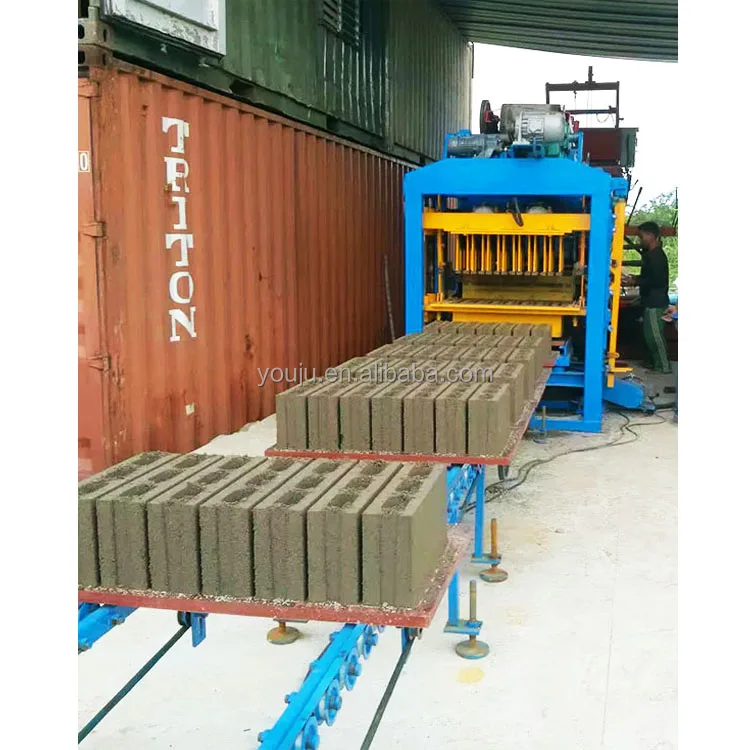
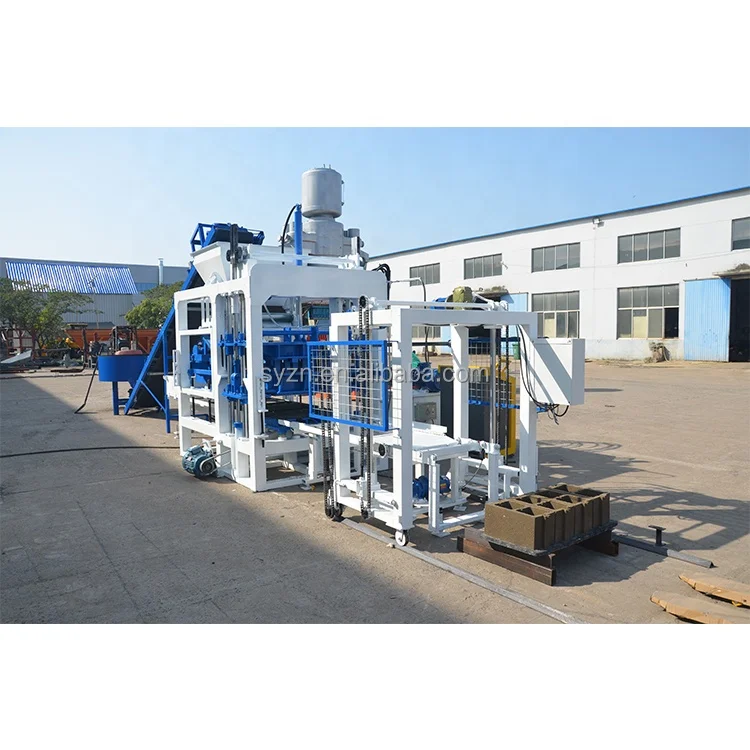


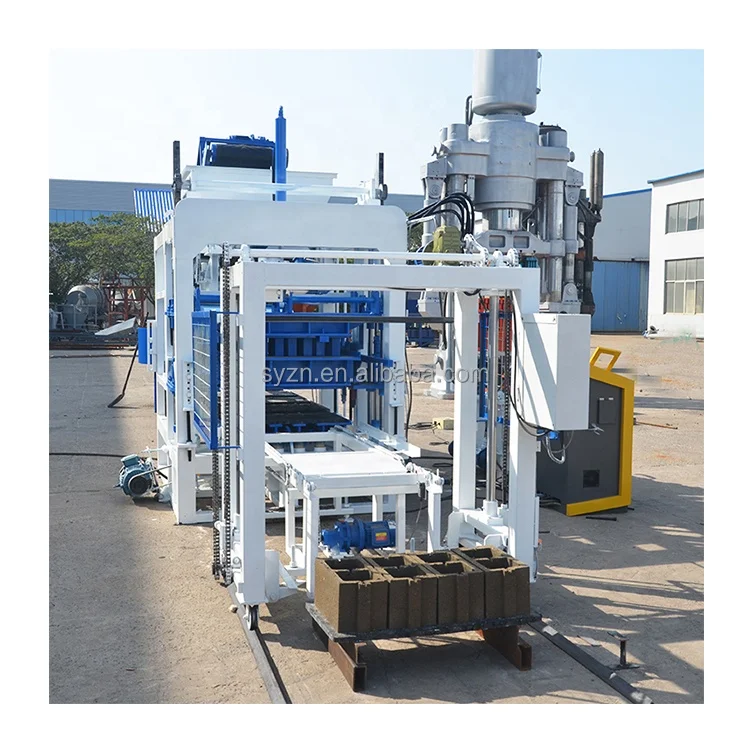
Description
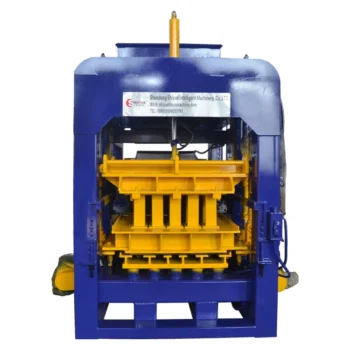
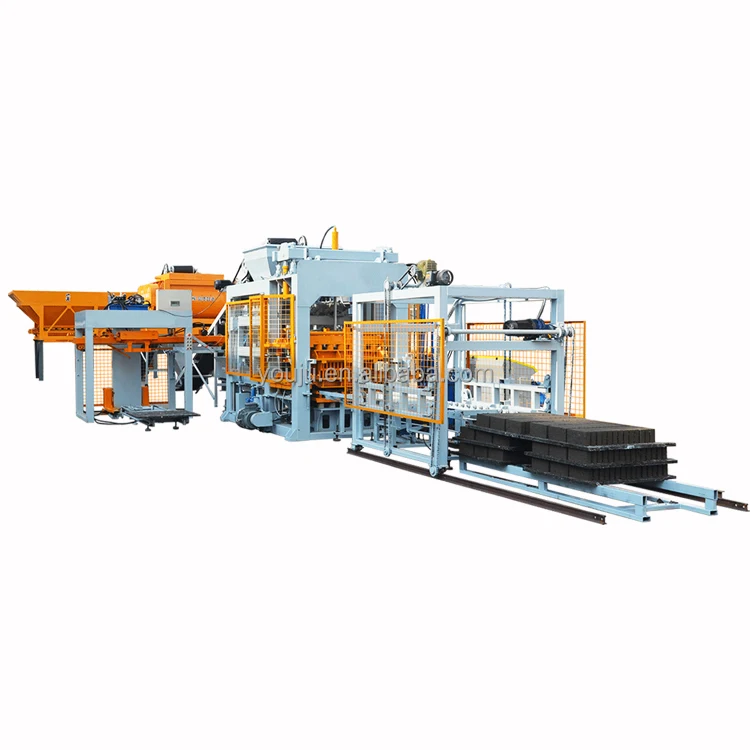
Stocked for Fast Dispatch — QT4-18 block machine in stock ships as a complete matched line, so your site receives every station needed to start production without waiting for separate procurement.
Technical Specifications
| Parameter | Value |
|---|---|
| Model | QT4-18 |
| Product Type | Hydraulic Concrete Block Making Machine |
| Overall Dimensions (L×W×H) | 3900×1600×2300 mm |
| Molding Cycle | 15-25s |
| Vibration Force | 40-50 KN |
| Rated Power | 24 kW |
| Mixer Model | JQ350 |
| Pallet Size | 850×550×25 mm |
| Total Weight | 3 T |
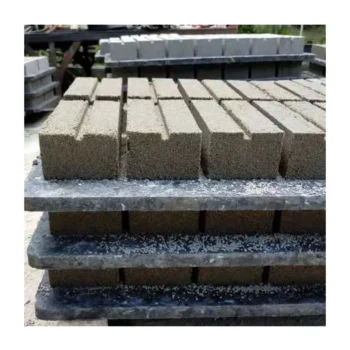
| Applied Products | paver, solid block, hollow block, curbstone |
| Raw Materials | crushed stones, sand, cement, dust, fly ash |
| Control System | PLC control system |
| Included Equipment | block making machine, hydraulic station, PLC control system, pallet feeder, brick conveyor, block sweeper |
| Automation Level | automatic operated |
| Output (Hollow block 400×200×200mm) | 1200-1680 pcs/hr |
| Output (Hollow block 400×150×200mm) | 1800-2400 pcs/hr |
| Output (Solid brick 240×115×53mm) | 3240 pcs/hr |
| Voltage & Frequency | (basis not stated in source — confirm block format / material / thickness) |
| Stacking Method | (basis not stated in source — confirm block format / material / thickness) |
Application Suitability
| Application | Material or Output |
|---|---|
| On-site production for construction contractors | Hollow and solid blocks using local crushed stone and cement |
| First block plant setup for entrepreneurs | Pavers and solid bricks from sand, fly ash, and cement |
| Quick market entry for building material distributors | Curbstones and standard hollow blocks from mixed aggregates |
Why "Sample Capacity" Often Fails on Arrival
Real output depends on your local aggregate, not the factory test sand.
When a machine arrives at a project site, the rated capacity from the brochure rarely matches the daily reality if the raw materials differ. I have seen QT4-18 block machine in stock configurations arrive in regions where the sand contained high clay levels, causing the bricks to crack under standard vibration settings. The molding cycle of 15-25s assumes a specific mix design [NEED_CITE: impact of clay content on concrete block curing and strength]. If the local aggregate requires more moisture or a different vibration force, the daily volume drops significantly. Confirming the sand sample before shipment allows the hydraulic pressure and vibration parameters to be adjusted to the actual material.
Container Loading and Dispatch Timing
Securing a machine that is ready for immediate shipment prevents project delays. The QT4-18 block machine in stock is dismantled specifically to fit into standard shipping containers, with the hydraulic station and PLC control system packed to withstand ocean transit. We confirm the dispatch lead time and container loading plan in writing before the order is finalized, ensuring the arrival estimate is known upfront.
Matching Pallet Size to Your Curing Area
The 850×550×25 mm pallet size dictates the layout of the curing yard. If the forklifts or curing racks at the destination site are not sized for these dimensions, the block sweeper and brick conveyor cannot operate efficiently. This station is designed to move the pallets smoothly through the production line [NEED_CITE: pallet handling standards in concrete block manufacturing], but the site infrastructure must match. Verifying the pallet requirements against the buyer’s existing equipment prevents a bottleneck on the first day of operation.
Vibration Force and Hydraulic Pressure Balance
The 40-50 KN vibration force works in tandem with the hydraulic station to compact the raw materials into dense blocks. For a hollow block 400×200×200mm, the machine produces 1200-1680 pcs/hr, while a solid brick 240×115×53mm yields 3240 pcs/hr. These figures hold only when the mix design matches the vibration settings. The PLC control system allows the operator to adjust the molding cycle between 15-25s, ensuring the crushed stones and cement are fully compacted without damaging the mould.
The Cost of Unconfirmed Voltage and Language
Arriving at a site to find the 24 kW motor is wired for the wrong frequency is a common failure point. The PLC control system display language must also match the local operators to ensure safe operation. When these details are not confirmed before the machine ships [NEED_CITE: industrial machinery voltage and frequency standards], the commissioning process stalls while transformers or new control boards are sourced. This delay halts the entire block line, leaving the contractor with a stationary asset and a missed project deadline.
Sourcing a Complete Matched Line
We provide the QT4-18 as a single package including the block making machine, hydraulic station, PLC control system, pallet feeder, brick conveyor, and block sweeper. This prevents the integration issues that arise when stations are sourced from separate suppliers. The machinery is configured against the buyer’s actual mix design and local aggregate, not a default catalogue setting. We confirm stock availability and dispatch lead times in writing, and the container loading plan is provided upfront to ensure a smooth arrival.
Documentation & Verification
- Factory test record on your specific hollow block format before dispatch
- Line layout and capacity calculation stating the block format assumed
- Machine specification sheet with confirmed pallet size and power rating
- Hydraulic and electrical schematic matching the shipped configuration
- Voltage and control language confirmation document
Installation, Commissioning & Support
- Foundation requirements for the 3900×1600×2300 mm main frame and mixer
- Dedicated power circuit for the 24 kW rated load and JQ350 mixer
- Reassembly of dismantled hydraulic station and pallet feeder on site
- Vibration force tuning to local sand and crushed stone density
- Operation training on the PLC control system and mould change procedure
- Wear parts list for the brick conveyor and block sweeper mechanisms
Inquiry Requirements for Fast Dispatch
To provide an accurate arrival estimate, we need the target block format and the local raw material sample. Please specify the site voltage and frequency, along with the preferred language for the PLC control system display. Confirming the curing area dimensions helps us verify the 850×550×25 mm pallet compatibility.
Frequently Asked Questions
Q: Is the QT4-18 currently in stock, and what is the dispatch lead time?
A: The QT4-18 block machine in stock is available for quick shipment. We confirm the exact dispatch lead time and container loading plan in writing before you commit, ensuring you have a reliable arrival estimate for your project deadline.
Q: How is the machine packed and loaded into a container for shipment?
A: The machine is dismantled into main assemblies to fit standard containers. The hydraulic station and PLC control system are secured to prevent transit damage, and we provide a detailed packing list and loading plan upfront.
Q: Are voltage, frequency, and PLC language confirmed before the machine ships?
A: Yes. We confirm the voltage, frequency, and PLC display language at the inquiry stage. This prevents commissioning delays and ensures the 24 kW motor and control systems match your site infrastructure upon arrival.
Q: Which spare parts and moulds ship with the machine, and how quickly can replacements follow?
A: The package includes free accessories such as a manual hydraulic trolley and essential spare parts. Replacement moulds and hydraulic wear parts are available for rapid dispatch to maintain production continuity.