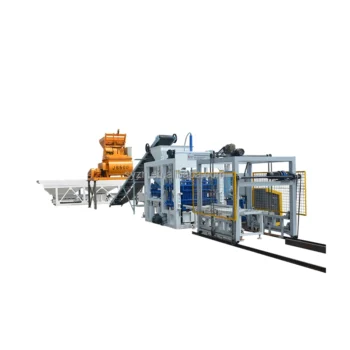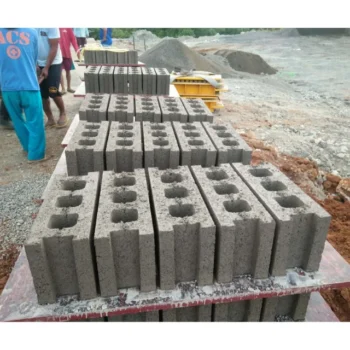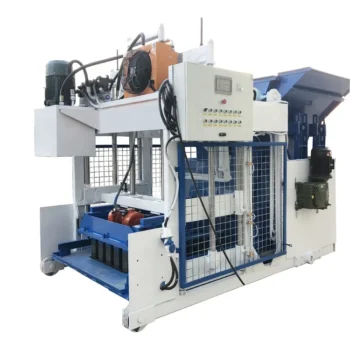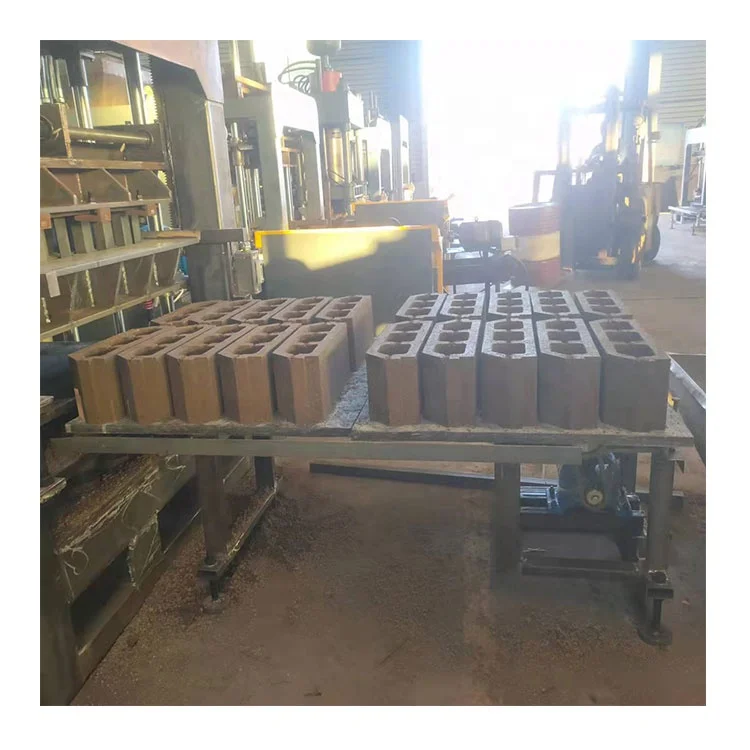
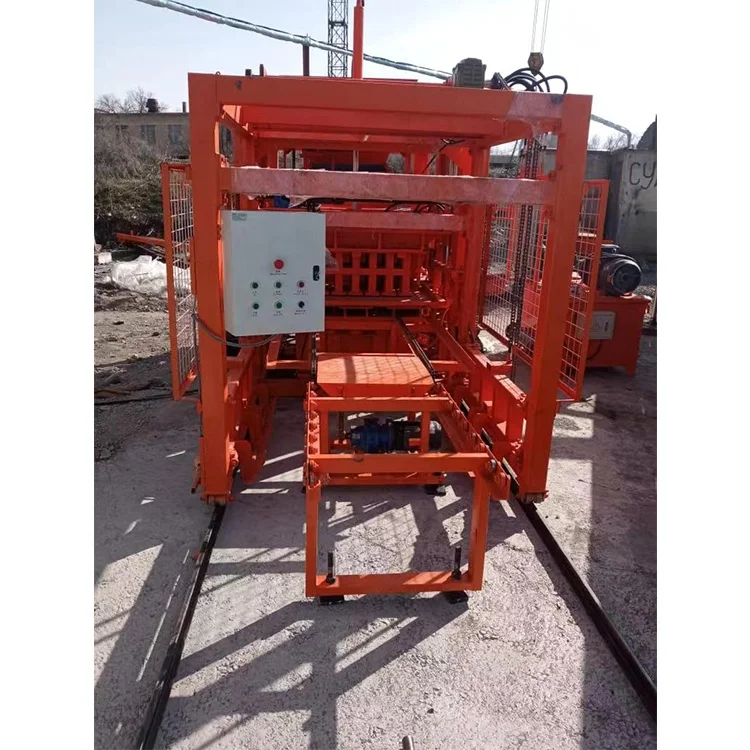
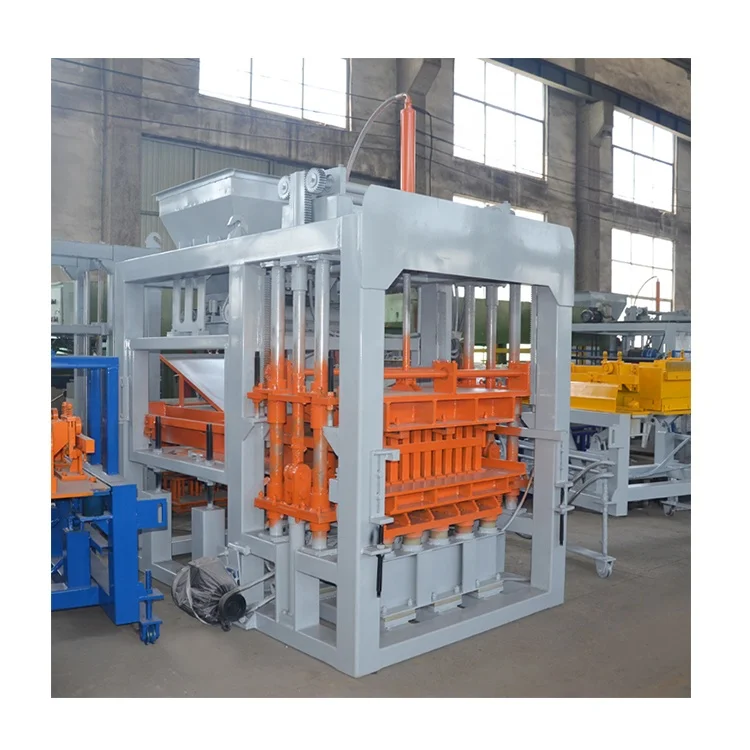
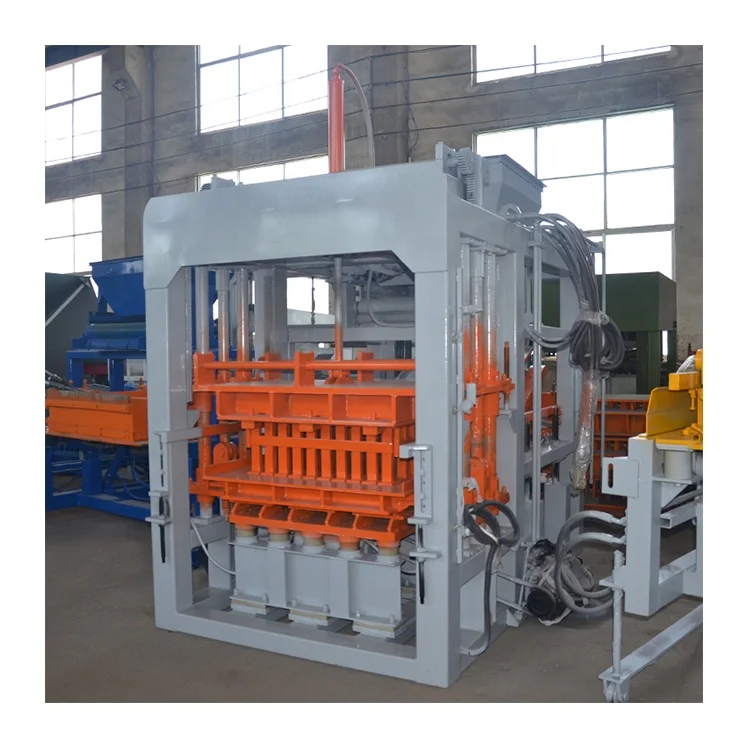
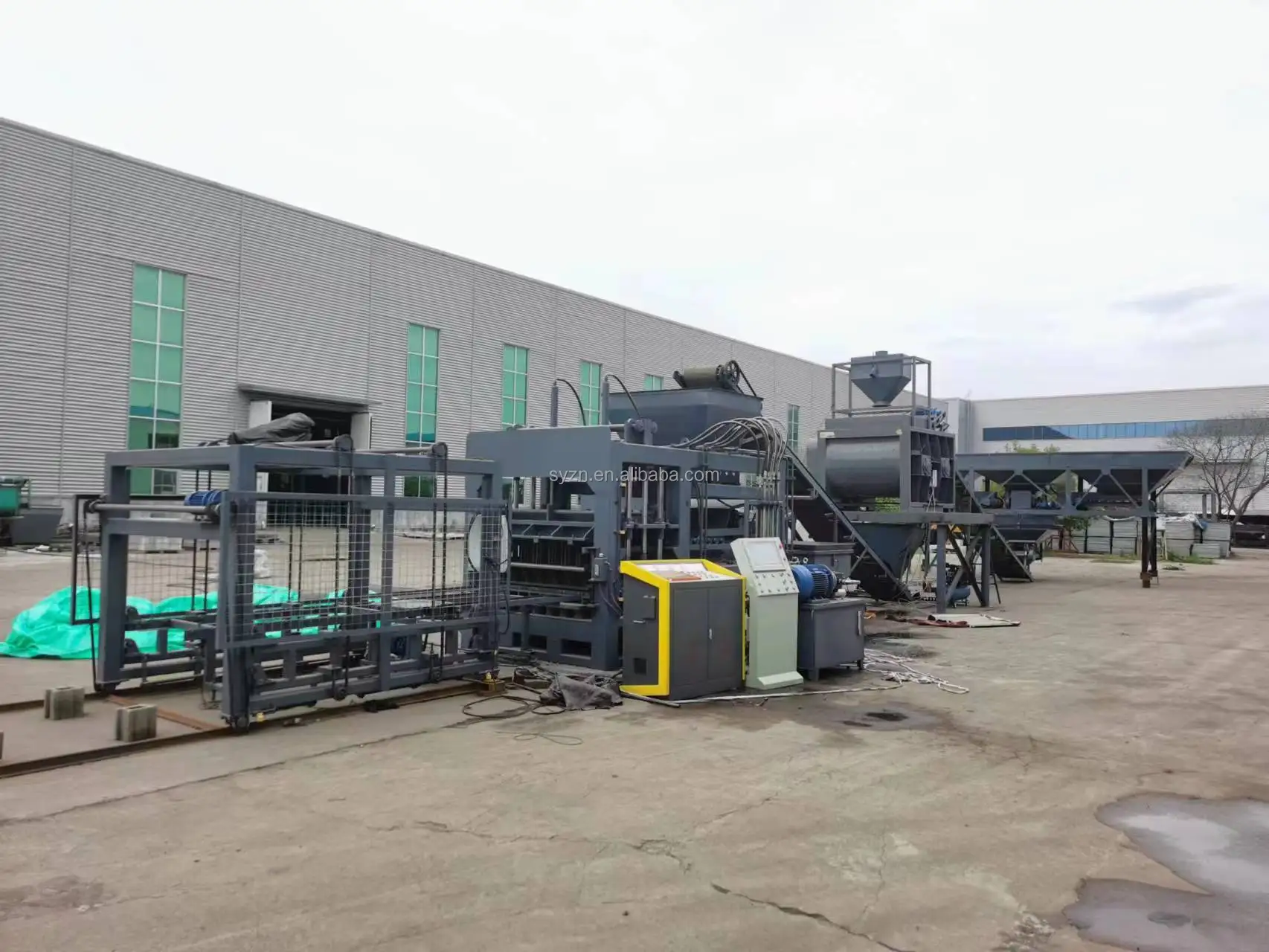
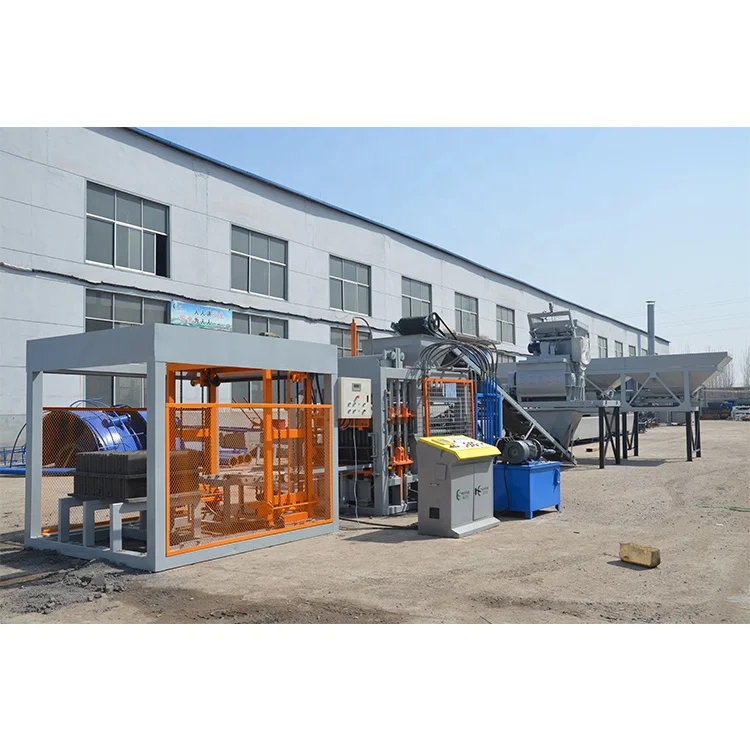
Description
Stocked for dispatch — QT5-15 units are held in Linyi ready for container loading, so buyers working to a project deadline can confirm arrival timing before committing.
Technical Specifications
| Parameter | Value |
|---|---|
| Model | QT5-15 |
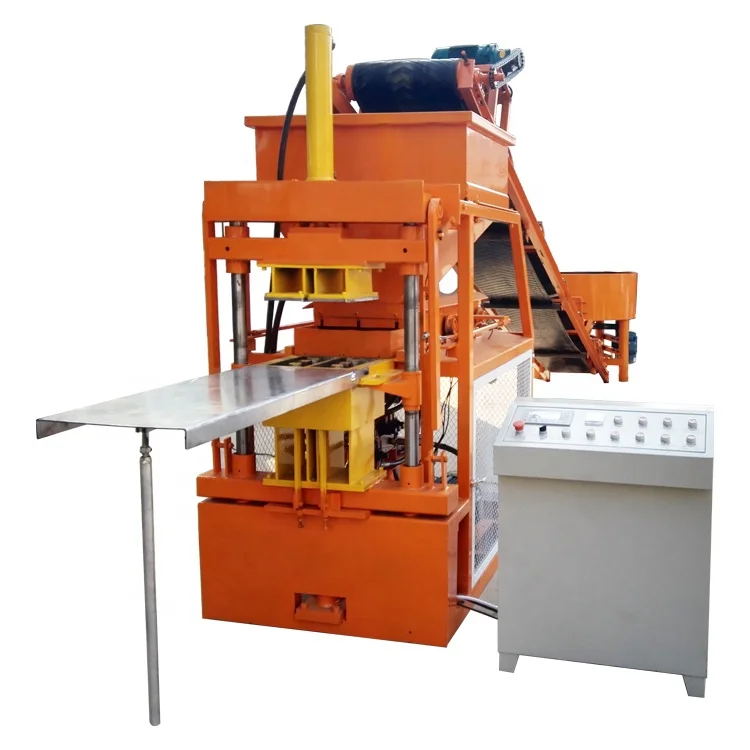
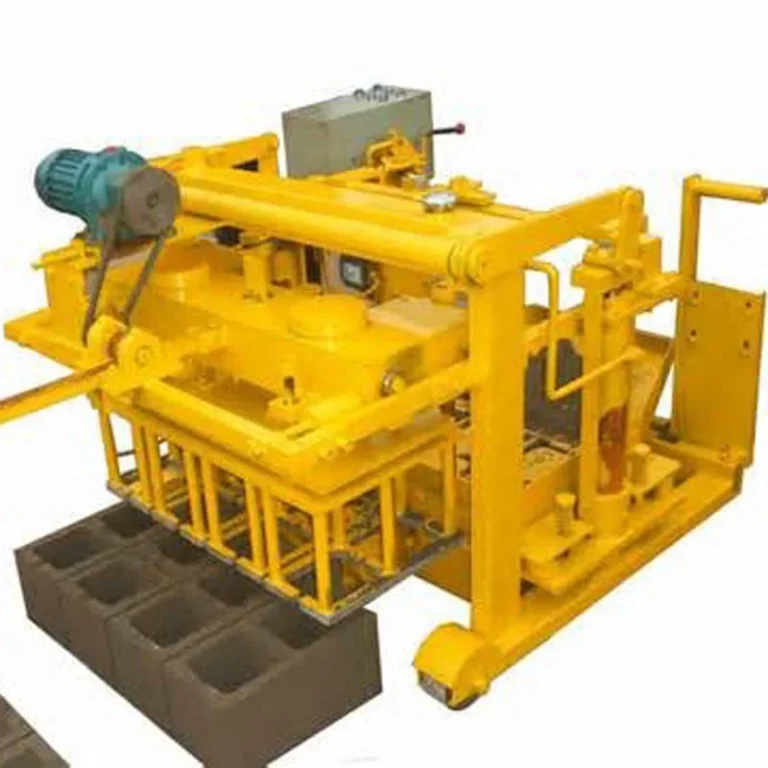
| Product Type | Automatic Hydraulic Block Making Machine |
| Overall Dimensions | 7100×1600×2610 mm |
| Molding Cycle | 15 s (basis to be confirmed per block format) |
| Vibration Frequency | 0–60 Hz |
| Vibration Force | 40 kN |
| Total Power | 33.5 kW |
| Mixer Included | JS500 |
| Pallet Size | 1100×550 mm |
| Total Weight | 5 T |
| Control System | PLC control system |
| Hydraulic Station | High-pressure hydraulic system included |
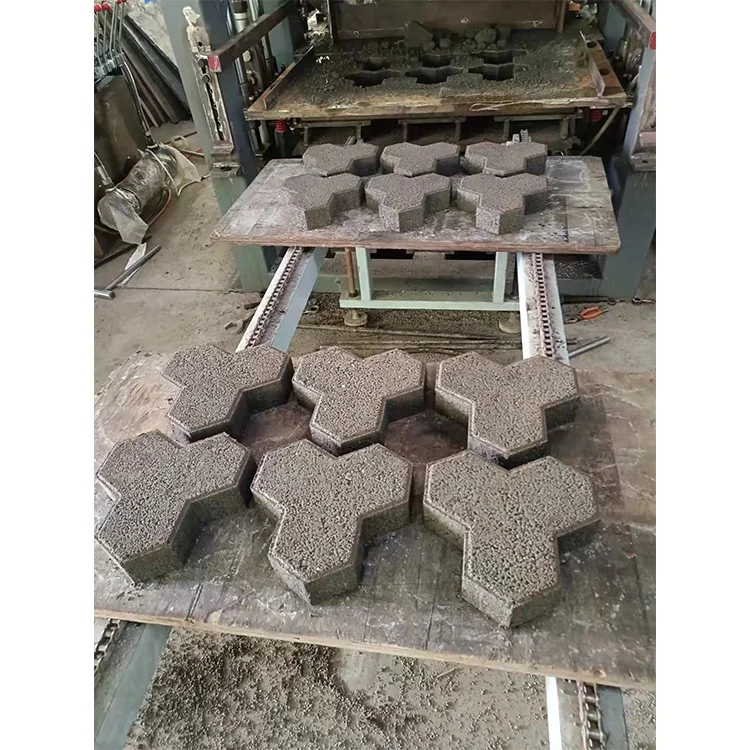
| Applied Products | Hollow block, solid block, paver, curbstone (via mould change) |
| Raw Materials | Crushed stone, sand, cement, dust, fly ash |
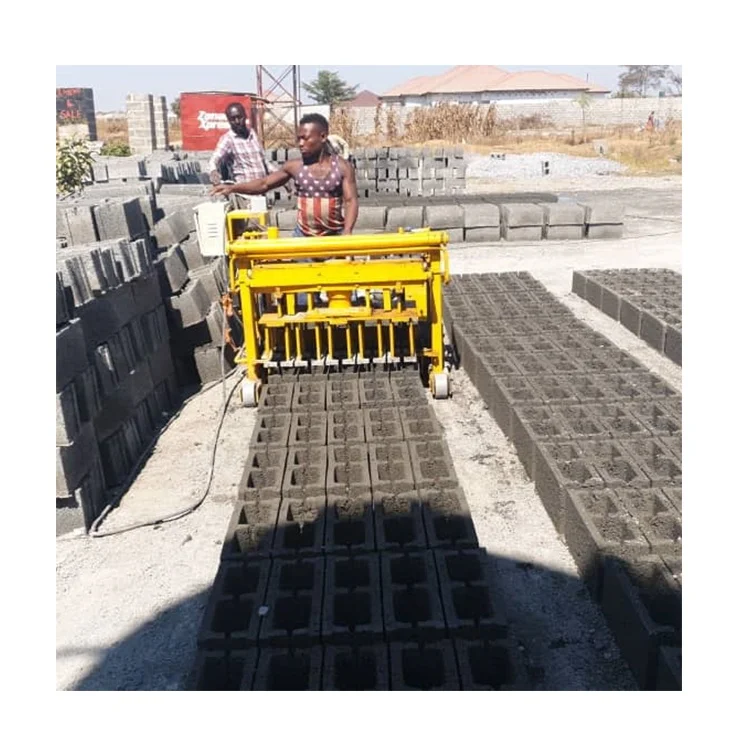
| Output: Hollow Block 400×200×200 mm | 5 pcs/mould, 450 pcs/hr, 3600 pcs/8hr |
| Output: Hollow Block 400×150×200 mm | 6 pcs/mould, 540 pcs/hr, 4320 pcs/8hr |
| Output: Solid Brick 400×100×200 mm | 8 pcs/mould, 720 pcs/hr, 5760 pcs/8hr |
| Included Equipment | Block machine, hydraulic station, PLC, pallet feeder, brick conveyor, block sweeper, manual hydraulic trolley, spare parts and tools |
Application Suitability
| Application | Material or Output |
|---|---|
| Construction site hollow block production | Crushed stone, sand, cement blended on-site for structural walling |
| Paver production for municipal and residential paving | Fine aggregate and cement with surface texture moulds |
| Solid block manufacturing for load-bearing walls | Sand, fly ash, and cement at higher compression |
| Kerbstone and curb production | Coarse aggregate mixes formed in dedicated moulds |
What "15-Second Cycle" Actually Means for Your Daily Output
The cycle time quoted only applies to a specific block format and mix — your real output depends on what you are actually moulding.
I once watched a QT5-15 block making machine in stock fast delivery situation arrive at a port in West Africa. The buyer had planned around 450 hollow blocks per hour, which is the rated figure for a 400×200×200 mm hollow block. But the local project required a thinner 400×150×200 mm format, and the actual cycle stretched because the hydraulic pressure and vibration had to be re-tuned for the available laterite aggregate. The machine performed well once dialled in, but the first week of production fell short of what the brochure implied. Capacity figures always assume a specific block size and mix design [NEED_CITE: block machine output calculation standards for different mould formats].
Stocked Configurations and What Ships Now
The QT5-15 block making machine in stock fast delivery program holds completed units with the JS500 mixer, pallet feeder, brick conveyor, and sweeper pre-assembled as a matched set. This matters when your construction timeline does not allow for a build-to-order wait. Standard moulds for hollow block and solid brick formats are typically available alongside the press, while custom paver or interlocking profiles follow a separate lead time.
Container Loading and Port Arrival Timing
Shipping a 5-tonne, 7.1-metre press requires a clear loading plan before payment changes hands. The nude packing arrangement for a 20GP container is defined at quotation stage, and the machine is dismantled into manageable sections for loading. Buyers receive packing photographs and customs documentation support so the cargo clears without surprises at destination [NEED_CITE: container loading practices for heavy block machinery].
How Vibration and Hydraulic Pressure Shape Your Block
The 40 kN vibration force working with the high-pressure hydraulic station determines the density and strength of each block leaving the press. If the vibration frequency is set too high for a fine fly ash mix, the surface cracks before curing begins. Set it too low for a coarse crushed stone blend and the block emerges under-compacted. The 0–60 Hz adjustable range lets operators match the excitation to whatever aggregate is sourced locally. Pallet size at 1100×550 mm is a standard format that fits common curing racks and standard forklift tines, avoiding a costly mismatch between the press output and the yard you already have.
When the Wrong Configuration Arrives at Your Site
A buyer I worked with ordered a fully automatic QT5-15 without confirming the local grid frequency. The PLC display language was set to Chinese, and the motor wiring was for 50 Hz while the site ran on 60 Hz. Commissioning stalled for days until replacement contactors and a language update were arranged. That kind of delay is invisible at quotation stage but costly once the machine is sitting on your foundation waiting to produce [NEED_CITE: common commissioning delays caused by voltage and language mismatches].
Why Buyers Source This Model Here
Block machinery is our single focus, so the QT5-15 is specified as one matched system — press, mould, pallet, and handling — rather than assembled from separate vendors. Every machine is checked against the buyer’s actual mix design and target block format, not pulled from a catalogue default. Stocked standard moulds mean you can start production on the formats your market sells right away. Voltage, frequency, and PLC language are confirmed before shipment, not discovered at commissioning. The dispatch lead time and arrival estimate are quoted upfront, so project schedules stay intact.
Documentation & Verification
- Factory test record run on your specified block format before dispatch
- Machine specification sheet matching the stocked configuration shipped
- Mould drawing and format list for each mould included in the crate
- Voltage and PLC control language confirmation signed off pre-shipment
- Packing photographs and customs documentation for port clearance
Installation, Commissioning & Support
- Foundation plan sized to the 7100×1600 mm footprint with anchor bolt layout
- 33.5 kW total power requirement confirmed against your local supply panel
- Dismantled sections reassembled on-site with hydraulic line reconnection
- PLC parameters set to your block format during first-day commissioning
- Operator training covers mould change procedure and cycle adjustment
- Wear parts and mould list provided with recommended reorder intervals
Before You Request a Quote
Send us the block formats you need to produce, your daily volume target, and the aggregate materials available at your site. Include your local voltage, frequency, and preferred PLC display language so the QT5-15 block making machine in stock fast delivery can be matched to your conditions before it leaves Linyi.
Frequently Asked Questions
Q: Which QT5-15 configurations and mould formats are currently in stock?
A: Completed QT5-15 units with the standard hollow block and solid brick moulds are held ready for dispatch. The JS500 mixer, pallet feeder, conveyor, and sweeper ship as part of the stocked package. Custom paver or interlocking moulds are built to order and carry a separate lead time, which we confirm at the quotation stage.
Q: What is the dispatch lead time and how is the machine loaded?
A: Stocked units are prepared for container loading once voltage and control language are confirmed. The press is dismantled for nude packing into a 20GP container. We provide a loading plan and packing photographs before shipment so you know exactly how the cargo is secured.
Q: Can voltage and PLC language be confirmed before shipment?
A: Yes. We require your local voltage, frequency, and preferred PLC display language before the machine is finalized for dispatch. This step prevents commissioning delays that occur when electrical specifications are discovered only after the machine arrives on site.
Q: What standard moulds ship with the stocked machine?
A: The stocked QT5-15 typically includes moulds for 400×200×200 mm and 400×150×200 mm hollow blocks plus 400×100×200 mm solid bricks. Additional formats or custom profiles are available as built-to-order items with lead times quoted separately.
Q: How do I get an arrival estimate for my port before ordering?
A: Share your destination port with us at the inquiry stage. We calculate transit time from Linyi based on current shipping schedules and provide an estimated arrival date alongside the dispatch lead time, so you can plan your project timeline before payment.