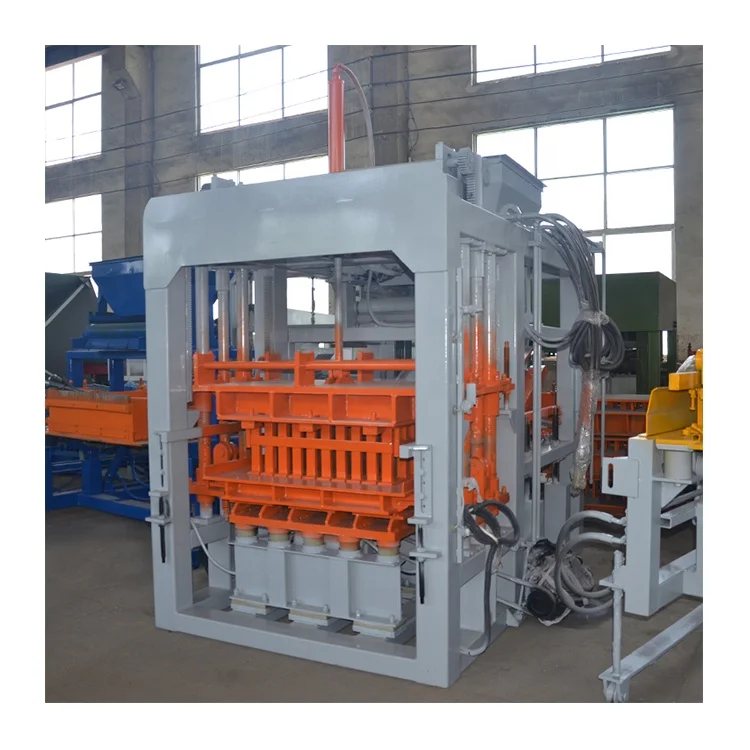
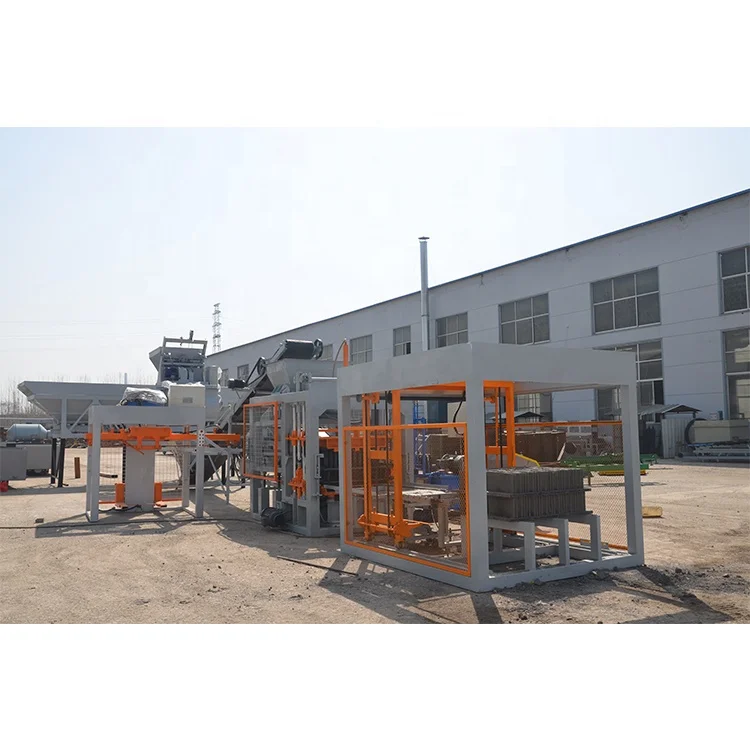
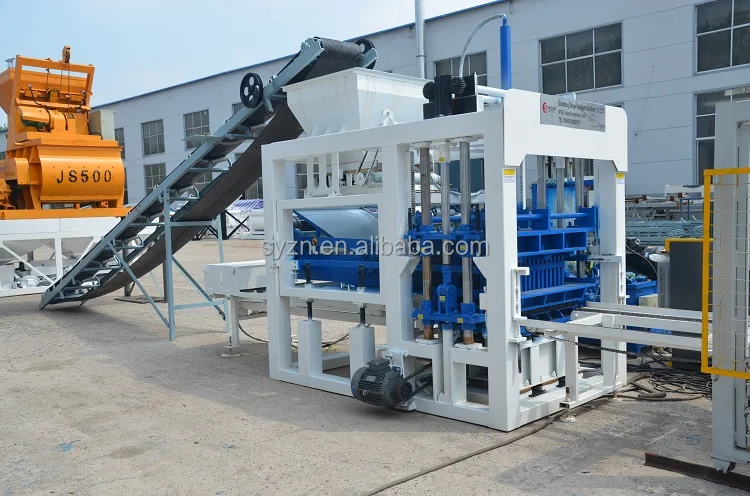
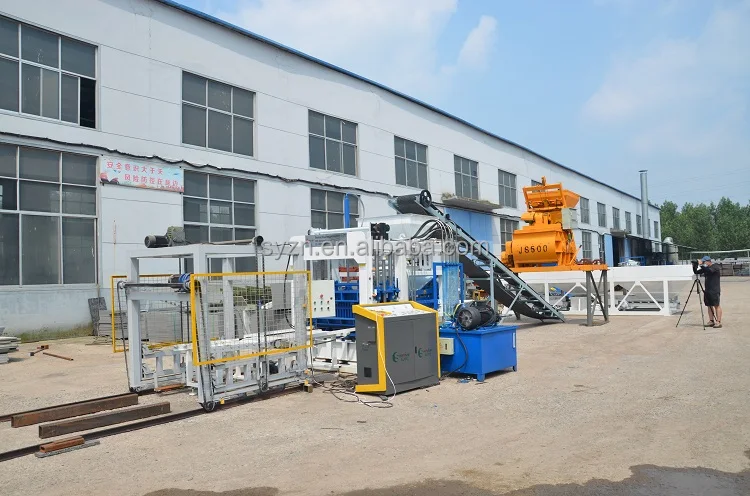
Description
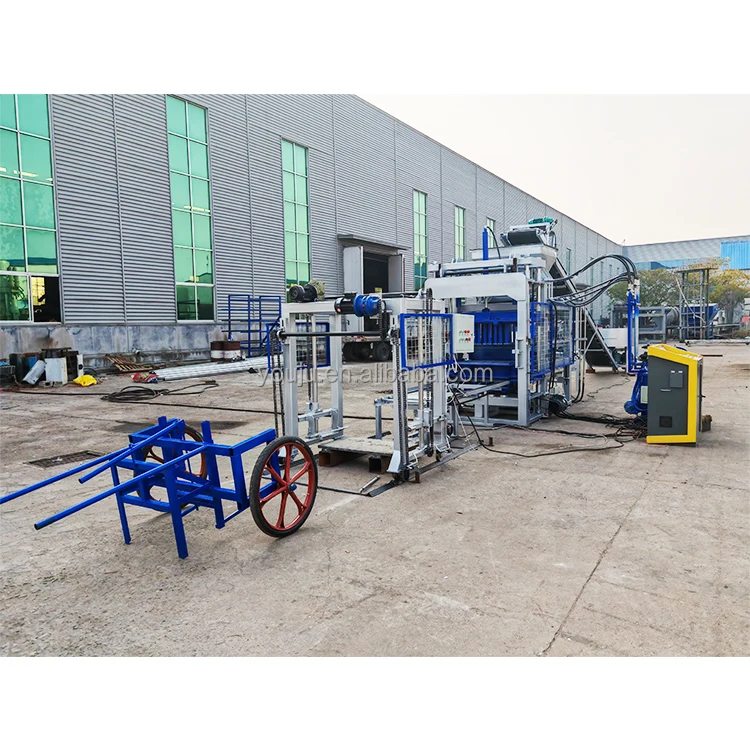
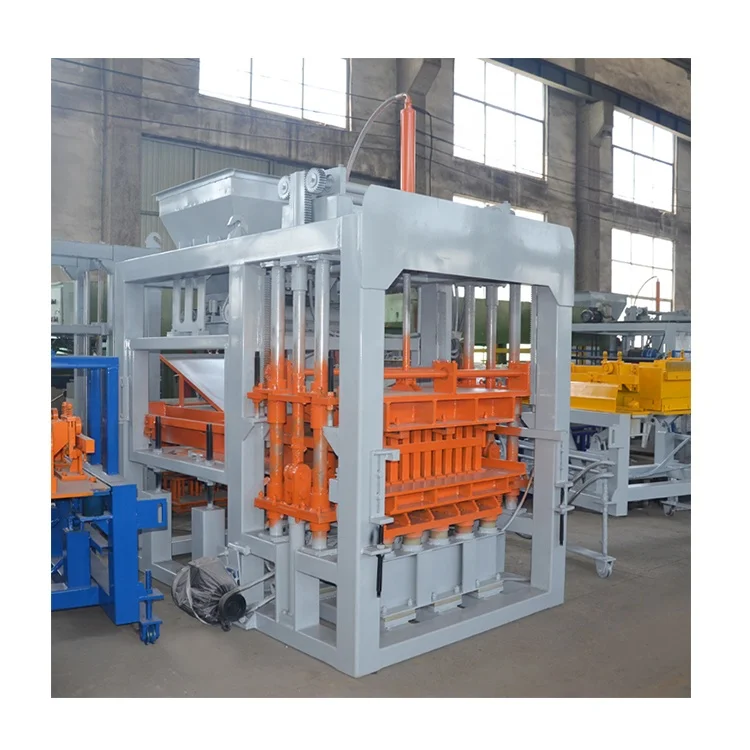
Stocked & Shipped — QT5-15 fully automatic block machine is built, tested, and staged for container loading with a confirmed dispatch timeline, so project-deadline buyers receive an arrival estimate before committing payment rather than an open-ended production queue.
Technical Specifications
| Parameter | Value |
|---|---|
| Model | QT5-15 |
| Product Type | Automatic Concrete Block Making Machine |
| Overall Dimensions (L×W×H) | 7100×1600×2610 mm |
| Molding Cycle | 15 s |
| Vibration Frequency | 0–60 Hz |
| Vibration Force / Exciting Power | 40 kN |
| Rated Power | 33.5 kW |
| Mixer Model | JS500 |
| Pallet Size | 1100×550 mm |
| Total Weight | 5 T (basis to be confirmed) |
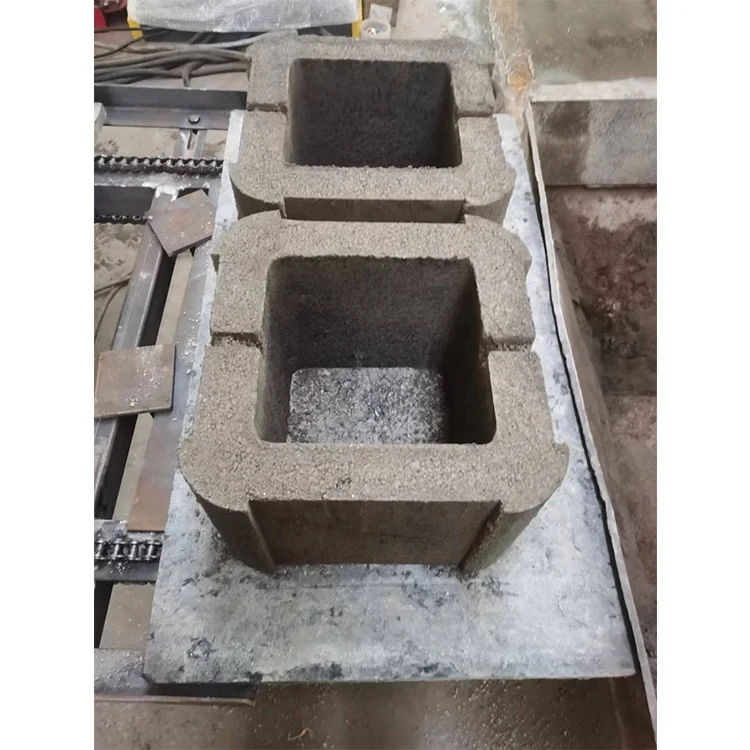
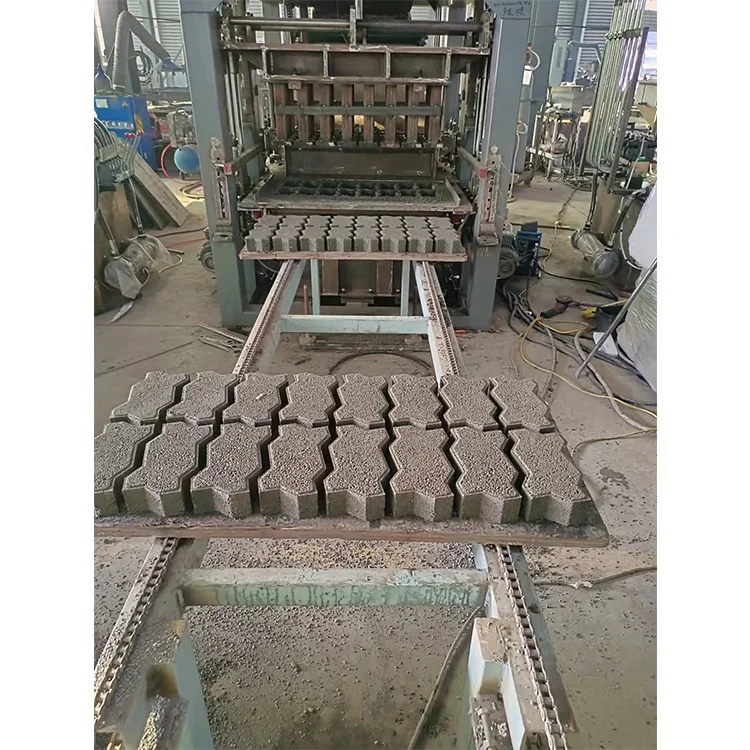
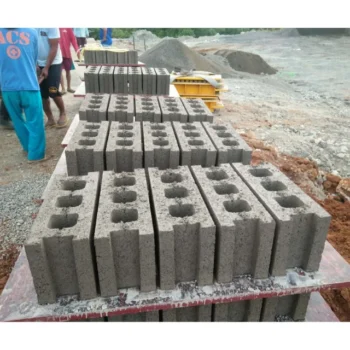
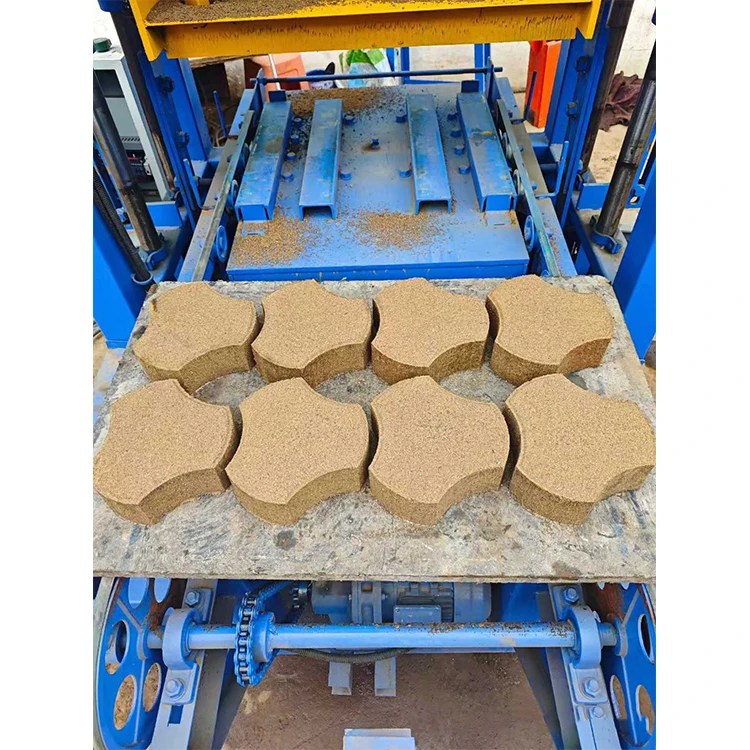
| Applied Products | Paver, solid block, hollow block, curbstone (via mould change) |
| Raw Materials | Crushed stone, sand, cement, dust, fly ash |
| Control System | PLC control system (language configurable) |
| Voltage & Frequency | Configurable to buyer market |
| Hydraulic Station | Included (pressure rating to be confirmed) |
| Automation Level | Fully automatic with pallet feeder, brick conveyor, block sweeper |
| Output — Hollow Block 400×200×200 mm | 5 pcs/mould, 450 pcs/h, 3600 pcs/8 hr |
| Output — Hollow Block 400×150×200 mm | 6 pcs/mould, 540 pcs/h, 4320 pcs/8 hr |
| Output — Solid Brick 400×100×200 mm | 8 pcs/mould, 720 pcs/h, 5760 pcs/8 hr |
| Included Ancillaries | Hydraulic station, PLC system, pallet feeder, brick conveyor, block sweeper, manual hydraulic trolley, spare parts and tools |
| Packing / Loading | Nude packing in 20GP container, approx. 500 pcs pallets (basis to be confirmed) |
| Key Features | CE declaration where applicable, fully automatic line, PLC control, multiple mould compatibility |
Application Suitability
| Application | Material or Output |
|---|---|
| Hollow block production for housing and commercial builds | Crushed stone, sand, cement, fly ash — 400×200×200 mm and 400×150×200 mm formats |
| Solid brick manufacturing for load-bearing and partition walls | Cement-aggregate mix — 400×100×200 mm format |
| Paver and curbstone production for roads and landscaping | Dense aggregate-cement mix with colour oxide additive via mould change |
| On-site block production for development and infrastructure projects | Locally sourced sand, crushed stone and cement fed through JS500 mixer |
| Format expansion for existing concrete product manufacturers | Additional block sizes accommodated through custom mould design |
Why Voltage Confirmation Must Happen Before Container Loading
A QT5-15 block machine in stock is only useful if it can be powered the day the container door opens.
I have watched a fully automatic block press sit idle on a job site for three weeks because the local grid ran at a frequency the control cabinet was never set up for. The buyer had a project deadline and a crew standing by, but the transformer retrofit consumed the entire schedule buffer. Voltage, frequency, and PLC display language are not afterthoughts — they are the difference between commissioning on arrival and commissioning after an electrician’s visit. Every QT5-15 fast delivery concrete block machine we dispatch has its electrical system verified against the buyer’s local grid specification before it leaves the factory [NEED_CITE: voltage and frequency standards by export market]. That single checkpoint removes the most common cause of delayed startup on international machinery shipments.
Dispatch Readiness Versus Catalogue Promises
Buyers working to a project deadline cannot absorb a multi-week production queue. The QT5-15 block machine in stock is staged in our Linyi facility with the hydraulic station, PLC cabinet, pallet feeder, and brick conveyor already assembled and functionally tested as a matched set. Container loading plans — including the nude packing arrangement for the 20GP and the approximate 500-piece pallet count — are confirmed with the buyer before the order is finalized. This means the departure date and estimated port arrival are known quantities at the time of commitment, not estimates revised after payment clears.
What Ships Together and Why It Matters
A block machine without its ancillaries is an expensive sculpture. The QT5-15 fast delivery concrete block machine package includes the JS500 mixer, hydraulic station, pallet feeder, brick conveyor, block sweeper, manual hydraulic trolley, and a starter set of spare parts and tools — all consolidated into the same shipment. Buyers do not need to coordinate a second supplier for the pallets or a third for the conveyor belt. When the container arrives, the entire line is present for assembly and commissioning [NEED_CITE: block production line ancillary coordination requirements].
Reading the Specs That Actually Affect Your Site
The 15-second molding cycle governs output, but the real-world daily count depends entirely on which block format the mould is producing. At 400×200×200 mm hollow blocks the press yields 5 pieces per cycle, reaching 3,600 pieces across an 8-hour shift; switching to 400×100×200 mm solid bricks pushes the mould count to 8 pieces per cycle and 5,760 pieces per shift. The vibration frequency range of 0–60 Hz and 40 kN exciting power must be tuned to the buyer’s specific aggregate density and cement ratio — a high-fly-ash mix responds differently than a clean crushed-stone blend. The 1100×550 mm pallet size must be cross-referenced against the buyer’s existing curing rack spacing and forklift fork dimensions before the pallets are manufactured. The 33.5 kW rated power determines the dedicated circuit breaker sizing and cable gauge at the installation site, and any mismatch here will trip the supply before the first mould is filled.
The Cost of Skipping Configuration Details
A buyer who accepts a catalogue-default pallet size without checking their curing area will discover, after the machine arrives, that the pallets do not fit the rack slots they already built. A control cabinet labelled in a language the operators cannot read forces a translator on-site for every fault code. And a hydraulic station set to a pressure that does not match the buyer’s local aggregate produces blocks that crumble at the edge or split under the stacker’s weight. These are not manufacturing defects — they are configuration gaps that could have been closed with a five-question checklist before shipment [NEED_CITE: block machine configuration verification best practices].
Why Buyers Source This Machine Here
Block machinery is our single focus, so the QT5-15 press, its moulds, pallets, and handling equipment are specified as one matched system rather than assembled from unrelated suppliers. Configuration is set against the buyer’s actual mix design, local aggregate, and target block format, not a generic catalogue default. Mould design and supply cover the formats the buyer’s market actually sells, with custom drawings available for non-standard sizes. Automation level is selectable — a buyer can take delivery fully automatic now and add stacking or cubing upgrades later. Installation and commissioning support includes operator training so the crew is producing saleable blocks before the technician leaves the site.
Documentation & Verification
- Factory test record running the buyer’s target block format before container loading
- Machine specification sheet confirming voltage, frequency, and PLC display language
- Mould drawing and format list covering every block size in the order
- Pallet specification with dimensions matched to the buyer’s curing layout
- Packing photographs documenting machine condition at the time of dispatch
- Customs documentation package supporting destination clearance procedures
Installation, Commissioning & Support
- Foundation pad sized for 7100×1600 mm footprint with drainage provision for mixer wash-down
- Dedicated circuit rated for 33.5 kW plus JS500 mixer load with correct voltage and frequency
- Nude-packed machine reassembled on-site with hydraulic lines pressure-tested before first cycle
- PLC parameters and vibration frequency tuned to the buyer’s confirmed mix design and aggregate
- Operator training covering mould change procedure, daily greasing points, and fault code response
- Wear parts and mould list provided so first replacements can be ordered before stock runs out
Before You Request a Quote
To keep the dispatch timeline tight, provide your target block format and daily output requirement, the local voltage and frequency at your installation site, and the PLC display language your operators need. If you have existing curing racks or a forklift, share the pallet dimensions and fork width so the 1100×550 mm pallets can be validated against your current equipment. Let us know whether you need the JS500 mixer included or if you are integrating the QT5-15 into an existing batching setup.
Frequently Asked Questions
Q: Which QT5-15 configurations and standard moulds are currently in stock and ready for dispatch?
A: The QT5-15 block machine in stock ships as a fully automatic package including the PLC cabinet, hydraulic station, pallet feeder, brick conveyor, and block sweeper. Standard moulds for 400×200×200 mm and 400×150×200 mm hollow blocks and 400×100×200 mm solid bricks are available from stock. Custom mould formats require a drawing review and additional lead time, which is quoted separately before the order is confirmed.
Q: What is the realistic dispatch lead time and estimated arrival date to my port?
A: Stocked QT5-15 units can be prepared for container loading within a short window after voltage, frequency, and PLC language are confirmed. The dispatch date and estimated sea transit time to your destination port are provided before payment so you can plan site preparation and customs clearance accordingly. Arrival estimates are recalculated if the confirmation process extends beyond the initial window.
Q: How is the machine dismantled and loaded into a 20GP container?
A: The QT5-15 fast delivery concrete block machine is dismantled into major assemblies — press frame, hydraulic station, PLC cabinet, pallet feeder, and conveyor — and secured with nude packing inside a 20GP container. Approximately 500 pallets are loaded in the same container. A loading plan with item placement is shared with the buyer before the container is sealed.
Q: Are pallets, hydraulic station, and ancillaries shipped together in the same container?
A: Yes. The hydraulic station, pallet feeder, brick conveyor, block sweeper, manual hydraulic trolley, spare parts, tools, and approximately 500 pallets are consolidated into the same 20GP container as the press. This single-shipment approach means commissioning can begin as soon as the container is unpacked at the site without waiting for secondary deliveries.
Q: What voltage, frequency, and PLC language will be set before the machine leaves the factory?
A: The buyer’s local voltage and frequency are confirmed during the order process, and the electrical system is configured accordingly before dispatch. The PLC display language is set to the buyer’s specified language. A pre-shipment factory test runs the machine on the confirmed electrical specification, and the test record is shared with the buyer along with packing photographs.



![QT4-16 Automatic Hydraulic Hollow Block Machine – In Stock 记录ID数字之和:8+2+7+7+7 = 31 31 mod 6 = 1 → 句式:[站点修饰词] [品类词] for [应用或物料] 第一层:sdsyblockmachine.com → 现货交付类 → In Stock / Ready to Ship / Fast Delivery 31 mod 3 = 1 → Ready to Ship 尝试:Ready to Ship QT4-16 Block Machine for Hollow Block = 48 chars(不足50) 补:Ready to Ship QT4-16 Automatic Block Machine for Hollow Block = 61 chars ✓](https://sdsyblockmachine.com/wp-content/uploads/2026/04/H6e9b09b95f124bda8eac4744b5e99c07g.webp)