
Description
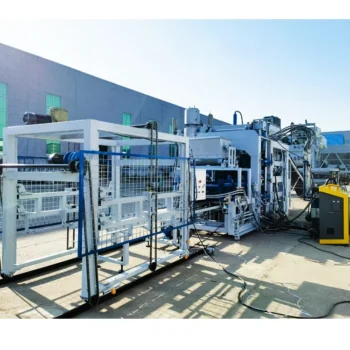
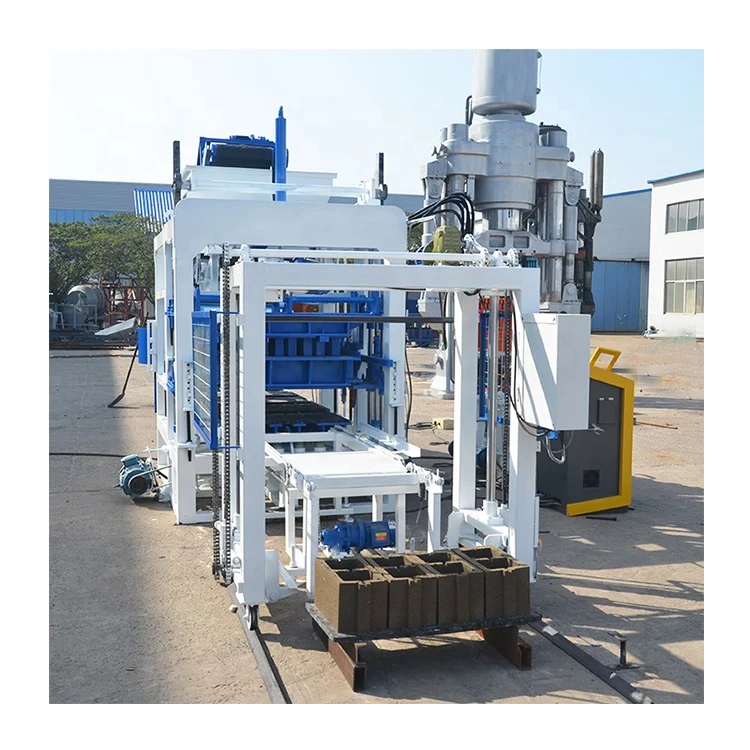
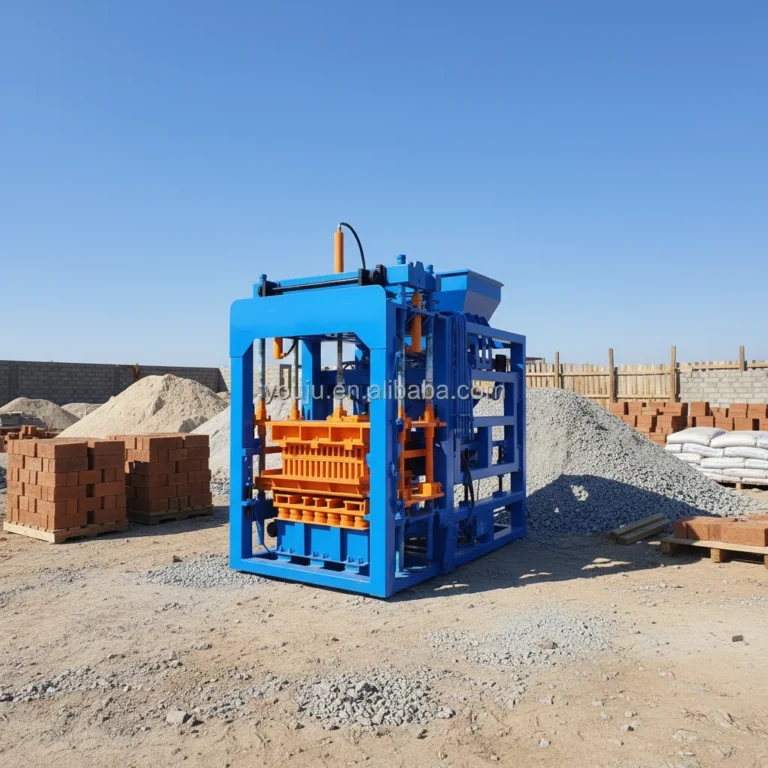
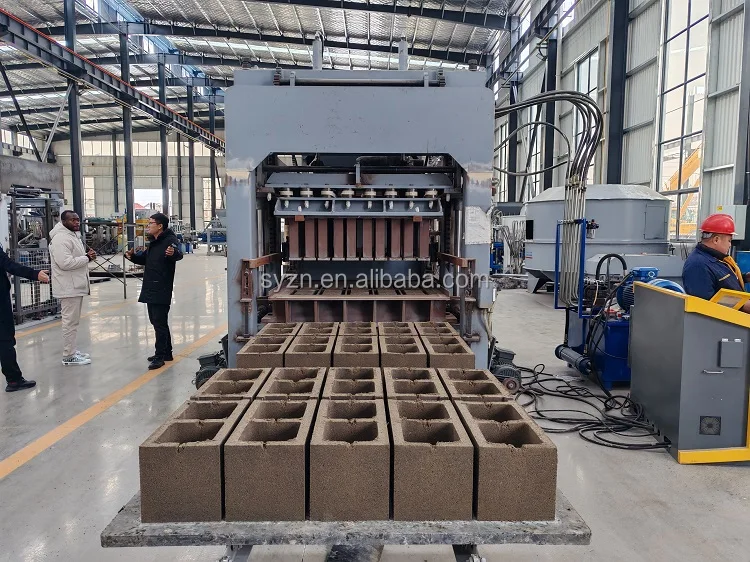
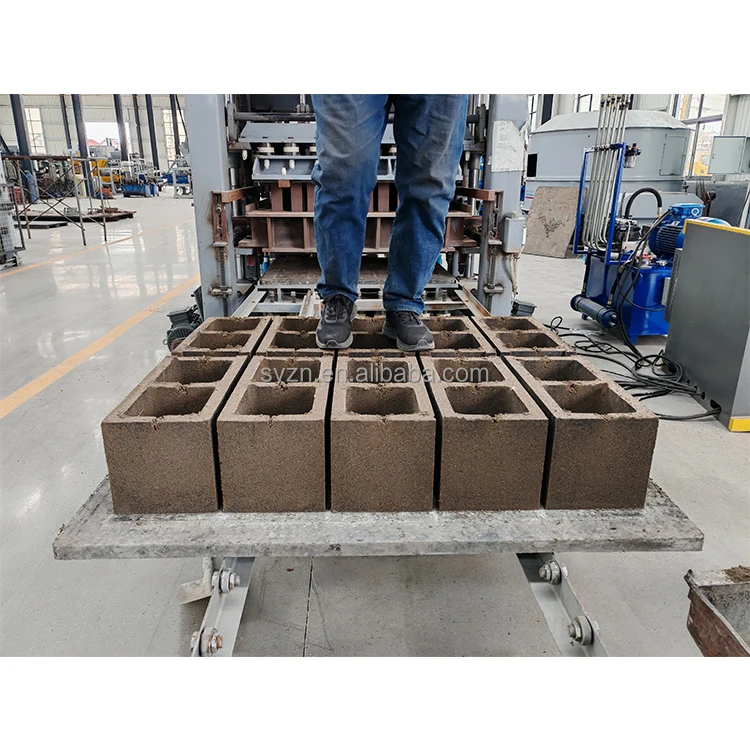
Stocked Machine Availability — QT5-15 units are kept on the factory floor with standard moulds, ready for dismantling and container loading against a quoted dispatch lead time rather than built from scratch after payment.
Technical Specifications
| Parameter | Value |
|---|---|
| Model | QT5-15 |
| Product Type | Stationary Hydraulic Concrete Block Making Machine |
| Overall Dimensions (L×W×H) | 7400×1950×2800mm |
| Rated Pressure | 21MPa |
| Main Vibration Form | Platform Vibration |
| Vibration Frequency | 2800~4500 r/min |
| Pallet Size | 1100×550mm |
| Molding Cycle | 15-25s |
| Overall Power | 26.5KW |
| Demolding Method | Hydraulic |
| Output Capacity (Hollow brick 400×200×200mm) | 1800 pcs/h (basis: 5 pcs/mold, 16-20s cycle) |
| Output Capacity (Hollow block 400×150×200mm) | 1300 pcs/h (basis: 6 pcs/mold, 15-20s cycle) |
| Output Capacity (S paver 225×112.5×60mm) | 3700 pcs/h (basis: 16 pcs/mold, 15-17s cycle) |
| Applied Products | Concrete blocks, hollow/solid blocks, pavers, interlocking blocks, curbstone, colored pavers |
| Raw Material | Crushed stone, sand, cement, dust, fly ash, gravel, slag |
| Automation Level | Automatic |
| Warranty | One year |
Application Suitability
| Application | Material or Output |
|---|---|
| Hollow block production for building contractors | Crushed stone, sand, cement, fly ash mixes |
| Paver and interlocking brick manufacturing | Gravel, sand, cement with pigment additives |
| On-site block production for housing projects | Local aggregate and cement blends |
| Curbstone and solid block runs | Coarse aggregate with standard cement ratios |
What a "Dispatch Lead Time" Actually Covers
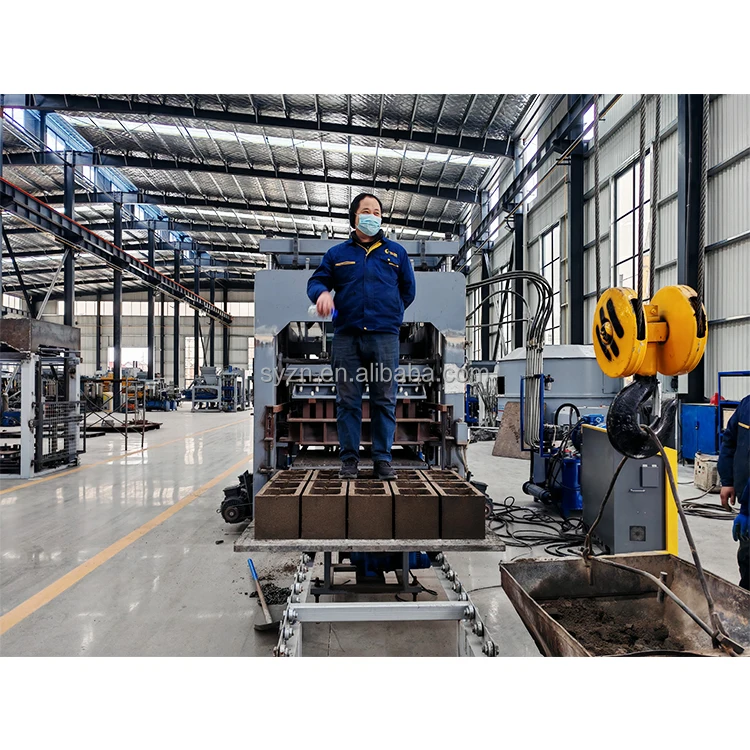
A stationary block machine in stock should mean the press is assembled, tested, and photographed on the factory floor — not that a production slot has been reserved. Real stock availability means the buyer receives a dismantling plan, packing photographs, and a container booking date within days of order confirmation.
Project contractors working to a building phase deadline cannot absorb a multi-week production backlog. When a machine is still being welded while the foundation crew is already pouring concrete, the entire site schedule shifts. I have seen buyers lose their curing yard lease because the machine they ordered was quoted as "available" but was actually at the start of a build cycle [NEED_CITE: typical production lead times for hydraulic block machines]. The distinction between stocked inventory and built-to-order units is the single most important question a buyer working to a deadline should ask before signing a proforma invoice.
What Is On the Floor Right Now
The QT5-15 stationary block machine in stock configuration comes with the platform vibration system pre-assembled and the hydraulic circuit pressure-tested at 21MPa. Standard moulds for hollow block, solid block, and paver formats sit alongside the press, ready for crating. Buyers who need a non-standard mould or a specific pallet material beyond the default configuration should expect a separate production window for those items, which is quoted transparently at the inquiry stage rather than discovered after the deposit clears.
How the Machine Ships
Dismantling a 7400×1950×2800mm press for container loading involves separating the host frame, vibration platform, hydraulic power pack, and pallet feeder into discrete assemblies. Each assembly is photographed in its crated state before the container doors close. The Stationary Block Machine in stock dispatch process includes a packing list that matches the container load plan, so the buyer’s receiving team knows which crate contains the hydraulic manifold and which holds the mould bolts. No component ships without a corresponding packing photograph [NEED_CITE: container loading standards for heavy industrial machinery].
Reading the Specifications Against Your Site
The 1100×550mm pallet size must match the curing racks and forklift tines already at the buyer’s yard. A pallet dimension chosen without this check means either new racks or manual offloading, both of which erase the time advantage of buying a stocked machine. The vibration frequency range of 2800~4500 r/min combined with 21MPa hydraulic pressure gives the operator a tuning window, but the optimal point within that window depends entirely on the local aggregate gradation and cement ratio. A machine configured for river sand will not produce the same block strength on volcanic scoria without a full parameter reset — something I learned spending four days on a commissioning site recalibrating a press that had been tested on standard sand at the factory.
The 26.5KW overall power draw dictates the dedicated circuit and transformer sizing at the buyer’s facility. Voltage and frequency are configurable, but the target specification must be confirmed before the machine leaves the factory floor, because rewiring a hydraulic power pack on arrival delays first production by days.
The Cost of Skipping the Stock Confirmation
When a buyer assumes availability without requesting floor photographs, the machine may enter production only after the proforma is signed. This shifts the dispatch date by weeks, and the sea freight transit window shifts with it. For a contractor whose masonry crew is hired and waiting, the idle labour cost during that delay far exceeds any price difference between suppliers [NEED_CITE: construction project delay costs from equipment late delivery]. The QT5-15 Stationary Block Machine in stock eliminates this gap only when the buyer verifies actual floor inventory, not catalogue availability.
Why Source This Unit Here
The machine, mould, pallet, and handling equipment are specified as one matched system from a single manufacturer, so the pallet size, mould format, and press cycle time align without cross-vendor coordination. Dispatch lead time is quoted against actual floor stock, not catalogue estimates. Container loading plans with dismantling photographs are issued before shipment, giving the buyer’s logistics broker the documentation needed to book onward freight. Voltage and control language are confirmed before crating, so the machine arrives ready to commission rather than requiring on-site electrical rework. Customs documentation — including HS code, packing list, and commercial invoice — is prepared in parallel with the packing photographs [NEED_CITE: export documentation requirements for block making machinery].
Documentation & Verification
- Factory test record on your block format with cycle time logged before dispatch
- Dismantling and packing photographs matching each container load position
- Voltage and PLC language confirmation sheet signed before crating
- CE declaration issued where applicable to the destination market
- Mould drawing and format list matching the pallet size and press stroke
Installation, Commissioning & Support
- Foundation pad sized to 7400×1950mm footprint with anchor bolt template provided
- Dedicated circuit rated for 26.5KW overall power with correct voltage and frequency
- Machine arrives as separate assemblies with crating photographs for receiving inspection
- Hydraulic pressure and vibration frequency calibrated to buyer’s local aggregate on site
- Mould change procedure and cycle time by format covered during operator training
- Wear parts list with hydraulic seal and mould liner part numbers for first reorder
What to Include in Your Inquiry
Send the block format you intend to produce, your daily output target stated per format, and the local aggregate type available at your site. Confirm your existing pallet size, curing rack dimensions, and forklift specification so the Stationary Block Machine in stock configuration is verified against your actual yard layout. State your site voltage, frequency, and preferred PLC display language to avoid commissioning delays after arrival.
Frequently Asked Questions
Q: Which QT5-15 configurations are currently in stock versus built to order?
A: Standard configurations with platform vibration, 1100×550mm pallet size, and hollow block or paver moulds are held on the factory floor. Custom mould formats, non-standard pallet materials, or specific PLC language requirements may require a short production window, which is quoted at the inquiry stage with a confirmed dispatch date.
Q: How is the machine dismantled for container loading?
A: The host frame, vibration platform, hydraulic power pack, and pallet feeder are separated into discrete assemblies. Each is crated and photographed before loading. The packing list identifies every crate’s position inside the container so the receiving team can locate components in the correct unloading sequence.
Q: What is the realistic dispatch-to-arrival timeline?
A: Stocked units can be dismantled, crated, and moved to port within a short window after order confirmation. Sea freight transit time depends on the destination port. The buyer receives a dispatch date and estimated arrival window before the container is booked, so site preparation can be scheduled with confidence.
Q: Are standard moulds shipped with the machine or ordered separately?
A: Standard hollow block, solid block, and paver moulds matched to the 1100×550mm pallet are included with stocked configurations. Additional formats such as interlocking blocks or kerbstones are available as separate items with their own lead time, which is stated clearly in the quotation.
Q: What customs and shipping documents are provided?
A: The shipment includes a commercial invoice, detailed packing list, bill of lading, and HS code classification. A CE declaration is issued where applicable to the destination market. These documents are prepared in parallel with packing photographs so the buyer’s customs broker can begin clearance before the vessel arrives.