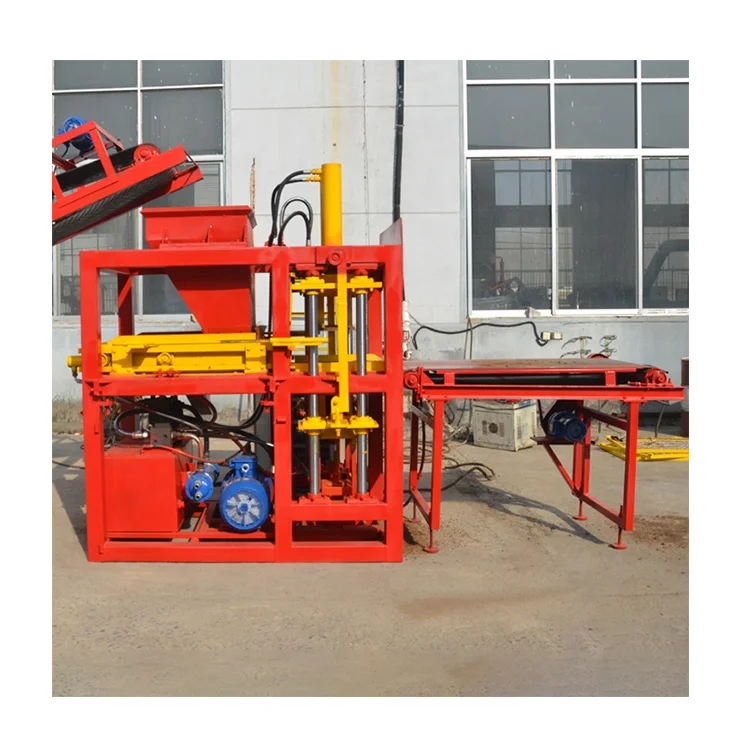
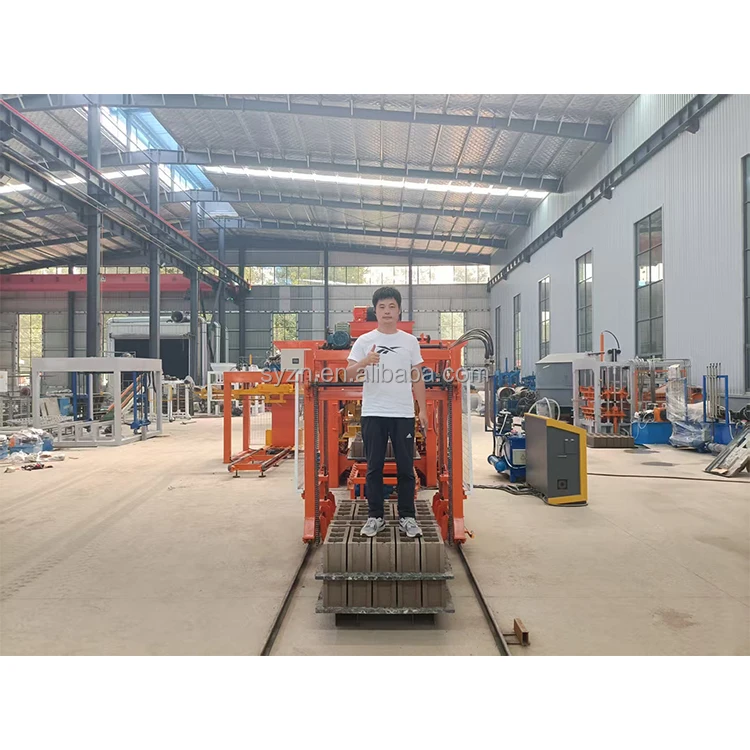
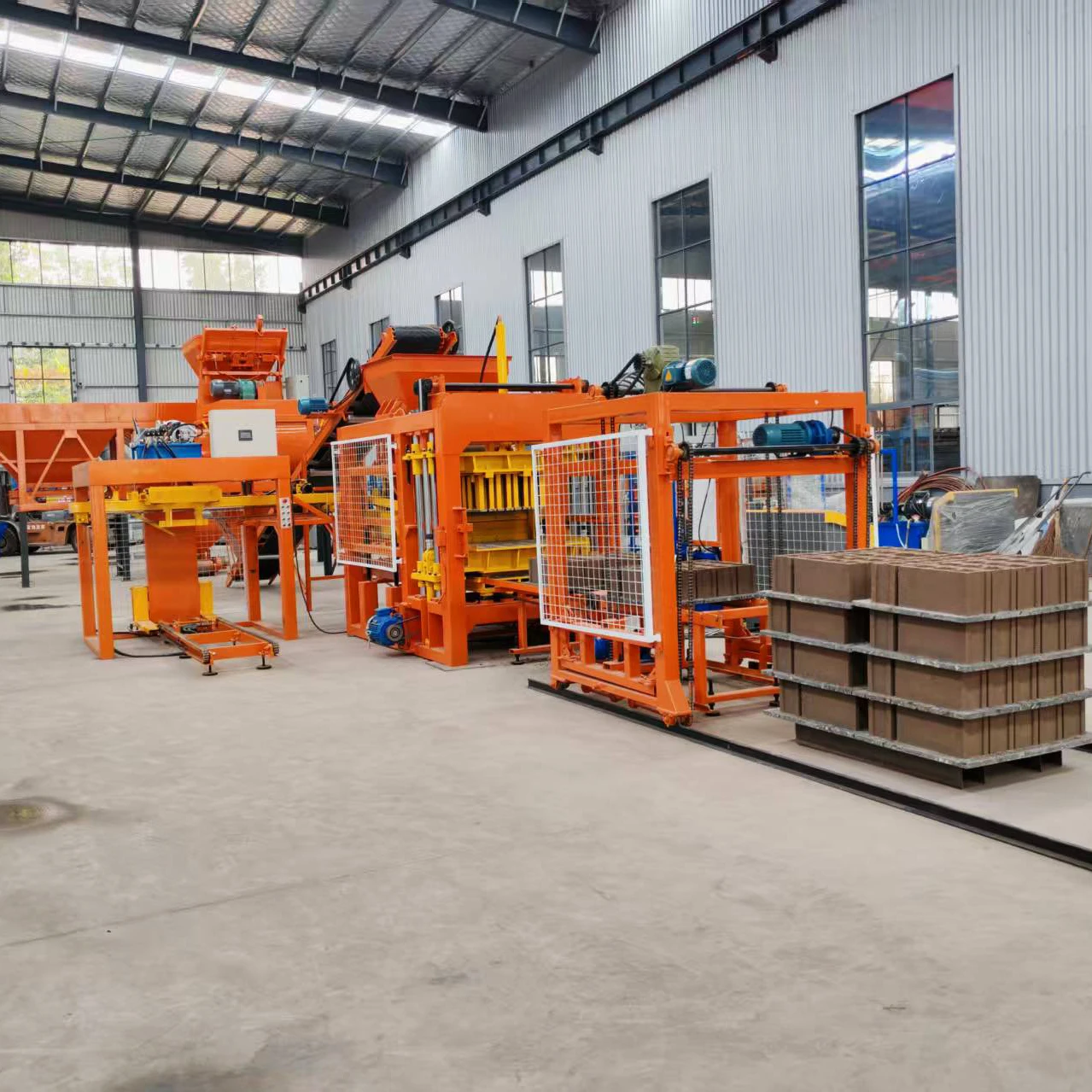
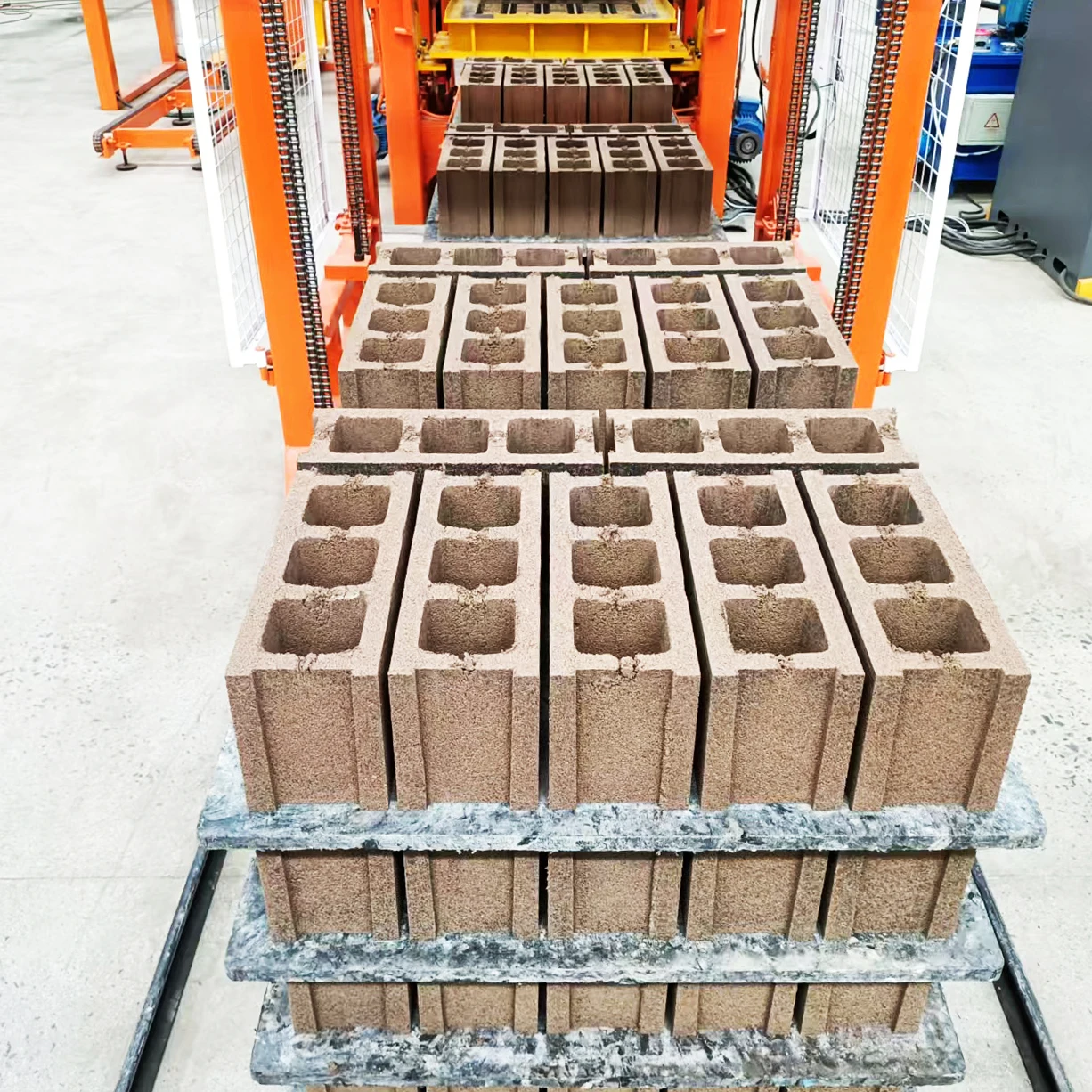
Description
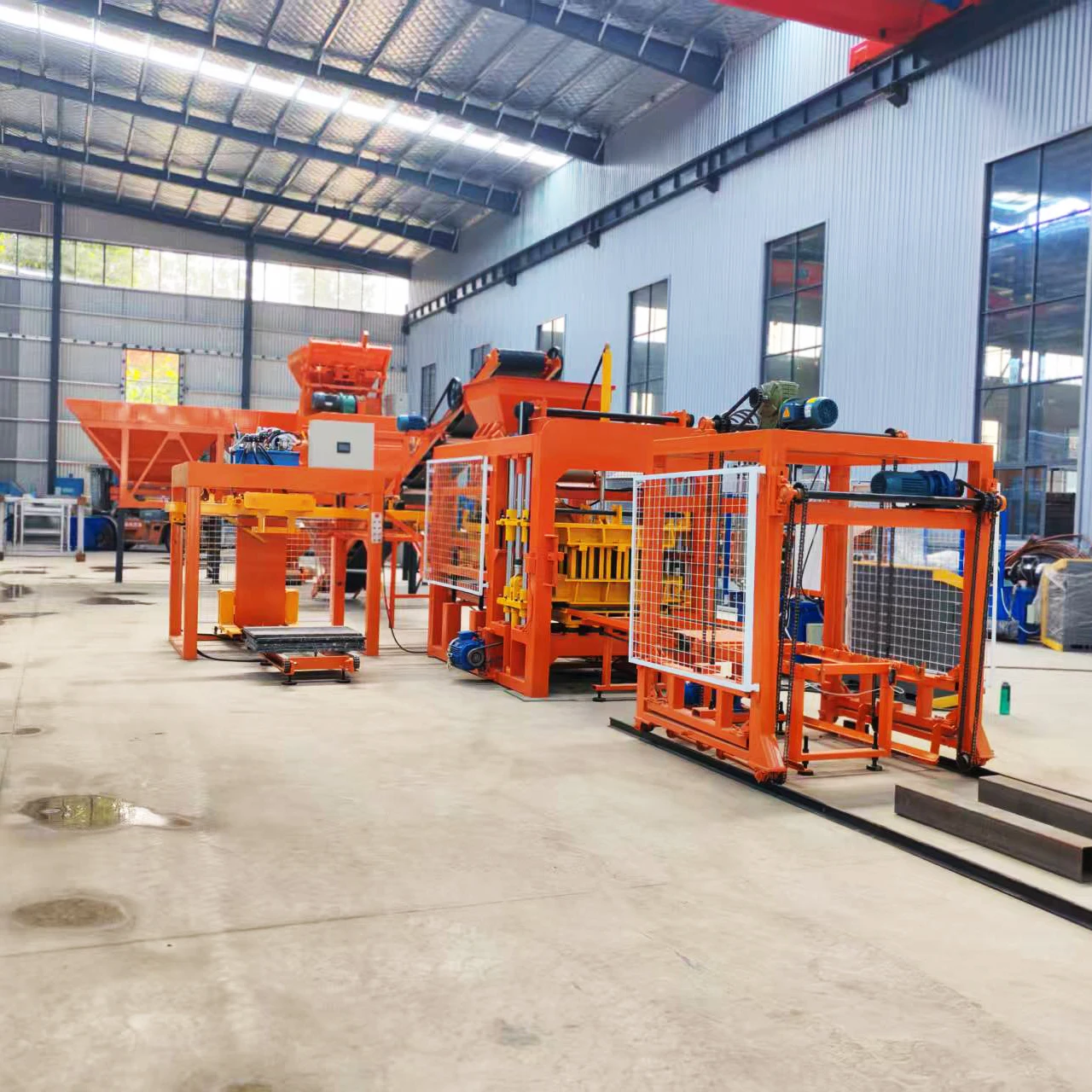
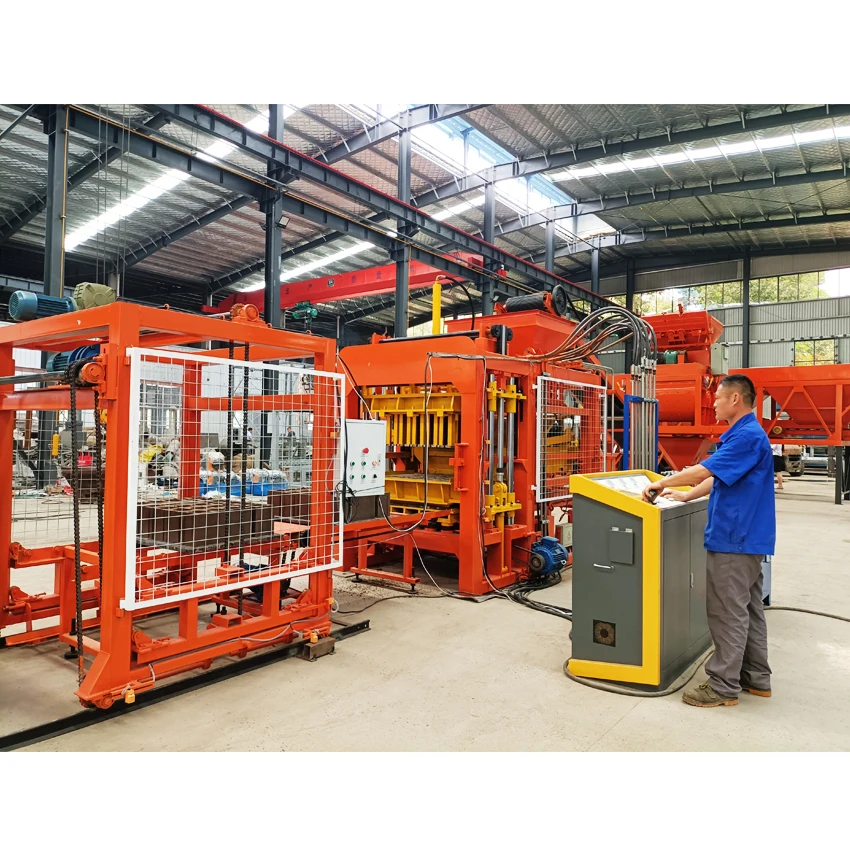
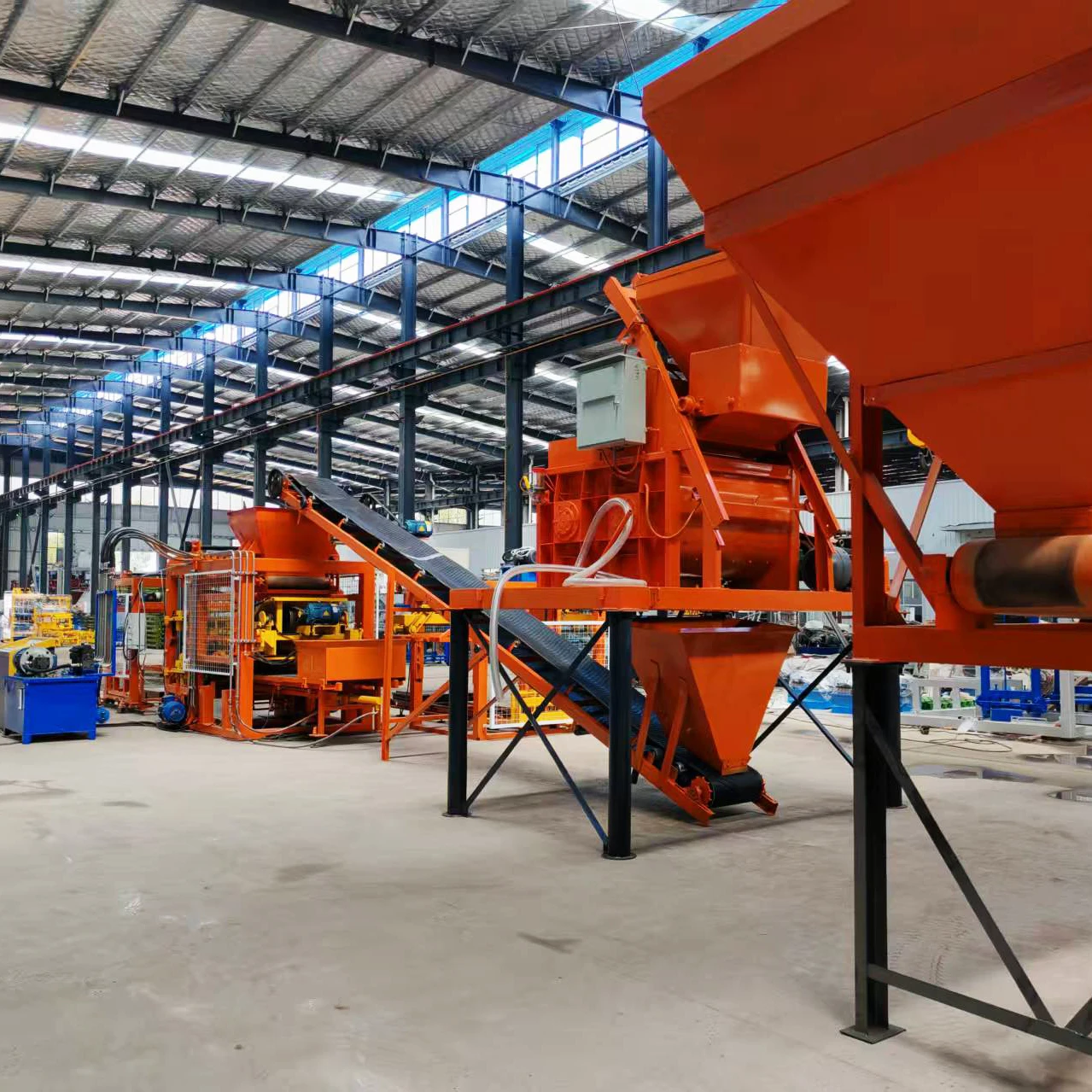
Fast Dispatch Readiness — QT6-15 units held in stock with standard moulds and pallets configured for immediate container loading, skipping the production queue when your project deadline cannot wait.
Technical Specifications
| Parameter | Value |
|---|---|
| Model | QT6-15 |
| Product Type | Automatic Concrete Block Making Machine |
| Rated Power | 31.25 kW |
| Voltage & Frequency | Configured to buyer’s local standard |
| Control System | PLC with selectable display language |
| Overall Dimensions (L×W×H) | 7100 × 1500 × 3000 mm |
| Net Weight | 8500 kg |
| Hydraulic Pressure | 16–21 MPa |
| Main Vibration Form | Platform vibration |
| Moulding Cycle | 15–20 seconds |
| Pallet Size | 850 × 680 mm |
| Output – Hollow Block | 8640 pcs/day (basis: 400×200×200 mm, 6 pcs/mould, 16–20 s cycle) |
| Output – Porous Block | 22400 pcs/day (basis: 240×115×90 mm, 14 pcs/mould, 15–18 s cycle) |
| Output – Standard Block | 54400 pcs/day (basis: 240×115×53 mm, 30 pcs/mould, 14–17 s cycle) |
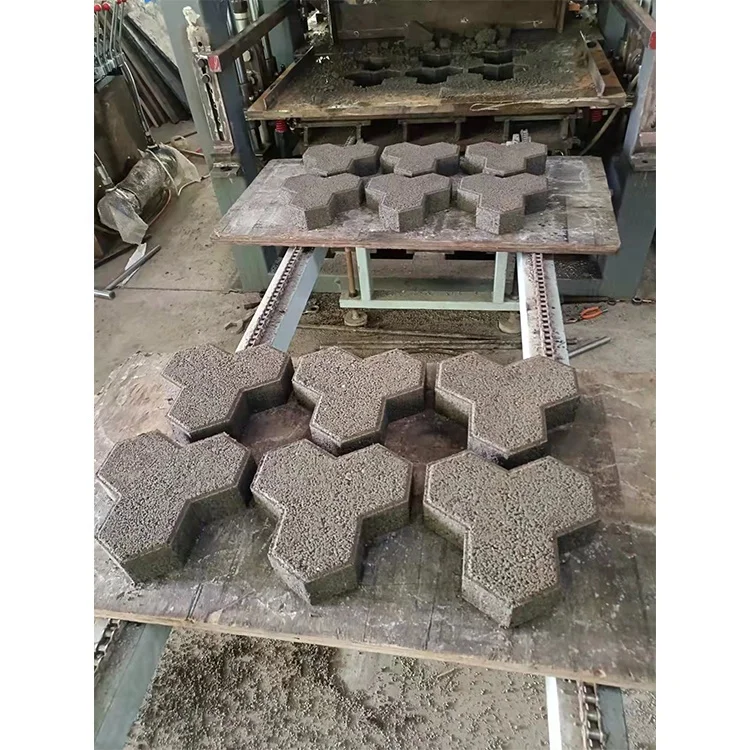
| Mould Compatibility | Hollow, solid, porous, paver, interlocking, curbstone, colored paver |
| Raw Materials | Crushed stone, sand, cement, fly ash, gravel, slag, dust |
| Certification | CE |
Application Suitability
| Application | Material or Output |
|---|---|
| Hollow block production for residential walls | Crushed stone, sand, cement, fly ash blends |
| Solid block manufacturing for load-bearing structures | Gravel, sand, cement mixes |
| Porous block for infill and partition walls | Sand, cement, lightweight aggregate |
| Paving block and colored paver runs | Crushed stone, sand, cement with pigment |
| Interlocking brick and curbstone for site works | Gravel, slag, dust, cement combinations |
Why "Pieces per Hour" Is Not the Number You Should Order On
Real daily output depends on the block format, your local aggregate, and the shift length you actually run.
A catalogue capacity figure assumes a perfect mix, a specific block size, and uninterrupted operation. I have seen containers arrive at site with the buyer expecting one number and producing half of it because the local sand carried high clay content that the vibration frequency could not compact properly. The QT6-15 block machine in stock fast delivery listing means the iron arrives quickly, but the output you achieve depends on testing your material before the machine ships [NEED_CITE: aggregate clay content impact on vibration compaction]. This is why every unit we dispatch runs a trial press with the buyer’s own sample material — if the density does not meet target, the machine does not load.
Stocked Units and What "Ready to Ship" Actually Covers
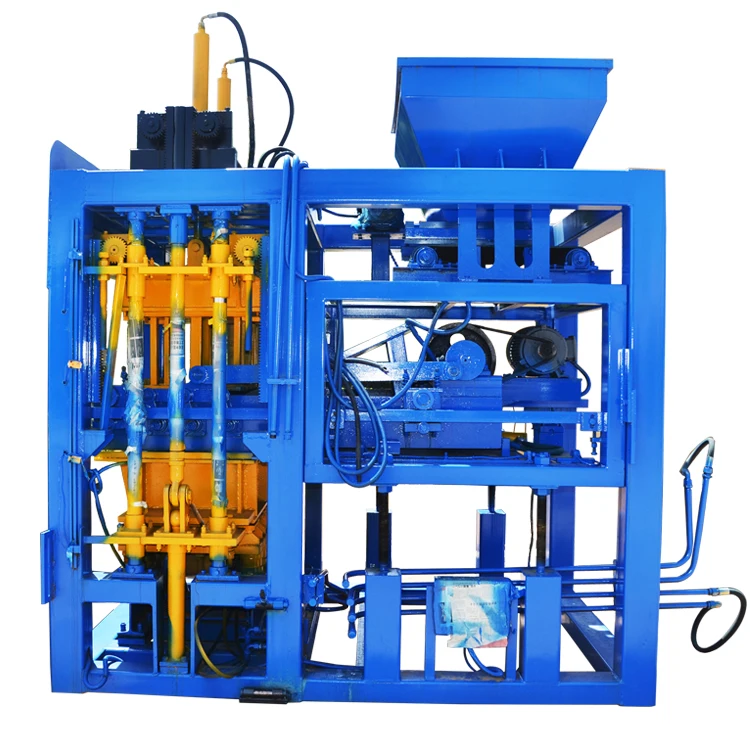
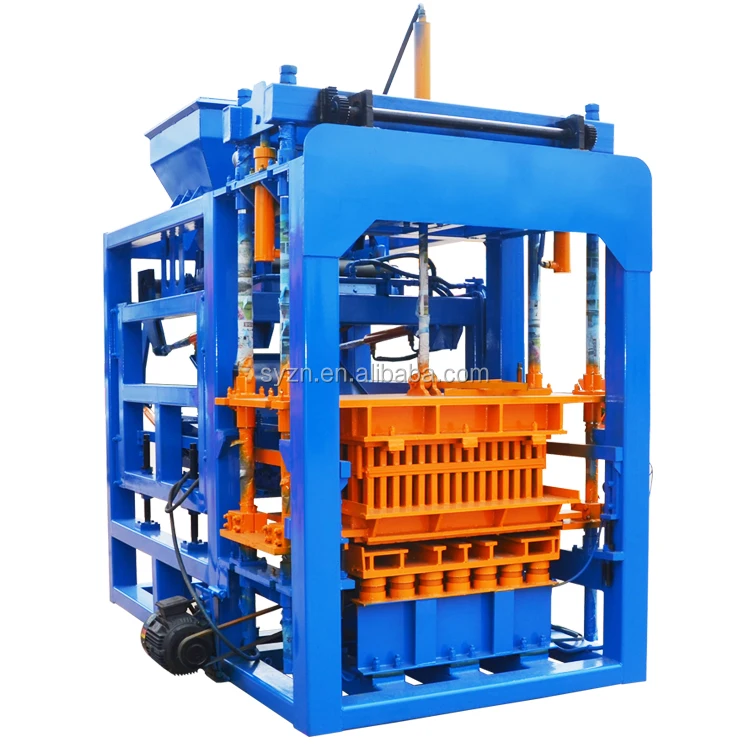
When a project deadline is fixed, the difference between a stocked QT6-15 and a made-to-order unit is measured in weeks. Stocked machines have completed assembly, factory testing, and electrical checkout. The QT6-15 block machine in stock fast delivery status means the main press, hydraulic station, and PLC cabinet are built and paired. Standard moulds for hollow block, solid block, and porous formats are typically on hand alongside the machine, so they load into the same container rather than arriving on a separate shipment later.
Container Loading and Dismantling for Transit
The QT6-15 weighs 8500 kg and stands 3000 mm tall, which means the upper frame and mould head are dismantled to fit a standard 40-foot container. Pallets measuring 850 × 680 mm are bundled and secured against the press body. The hydraulic station is drained and sealed. Each connection point is photographed before the container doors close, so your site team knows exactly which bolt pattern matches which flange when reassembly begins [NEED_CITE: container loading standards for heavy industrial machinery].
How Hydraulic Pressure and Vibration Shape Block Density
The 16–21 MPa hydraulic range and platform vibration system work together: hydraulic pressure compresses the mix from above while vibration settles the aggregate from below. If your local crushed stone is angular and well-graded, lower pressure within that range produces dense blocks without cracking. If the sand is fine or the mix includes fly ash, higher pressure and longer vibration settle the particles. The 15–20 second moulding cycle gives the operator room to adjust dwell time based on what the material needs, rather than forcing a single fixed rhythm across every format.
The Cost of Skipping the Material Test Before Shipment
Ordering on catalogue capacity alone is the most common reason a block plant underperforms on day one. The machine arrives, the mould goes in, and the blocks crumble at the edges or come out underweight. The buyer then spends weeks adjusting mix ratios and vibration settings that should have been resolved before the container was booked. High clay content in local sand, oversized gravel that jams the mould cavity, or a cement grade that sets too slowly for the cycle time — all of these surface during a trial press but remain invisible in a brochure [NEED_CITE: block density testing standards for concrete masonry units].
What Makes Procurement From This Source Different
Block machinery is the single focus here, so the QT6-15 is specified as a matched system — press, mould, pallet, and handling — rather than assembled from separate suppliers. Stock status is confirmed in writing with a container loading plan and dispatch lead time quoted before the order is placed. Voltage, frequency, and PLC display language are locked down during the order stage so commissioning is not delayed by a mismatch at site. Factory test records are taken with the buyer’s target block format and shared before shipment, not after. Mould drawings and a wear parts list ship with the machine so the first replacement order can be placed without guessing part numbers.
Documentation & Verification
- Capacity calculation sheet stating output per block format, cycle time, and shift hours
- Stock confirmation with container loading plan and dispatch date
- Voltage, frequency, and PLC language confirmation before production release
- Factory test record on buyer’s target block format before container loading
- Machine dismantling and packing photographs provided before shipment
Installation, Commissioning & Support
- 7100 × 1500 mm footprint requires a level concrete slab with anchor bolt provision
- 31.25 kW rated power needs a dedicated circuit breaker sized to local code
- Upper frame and mould head reassembled on site using dismantling photographs as reference
- First-run parameter setting covers hydraulic pressure, vibration dwell, and cycle timing
- Operator training covers mould change procedure and PLC fault code reading
- Wear parts and mould list included for first reorder planning
What to Prepare Before Requesting a Quote
To move from inquiry to dispatch confirmation, the useful details are your target block format and daily output, the raw materials you source locally with a sample if possible, and your site voltage and frequency. Floor space available for the press and curing area helps us confirm the 850 × 680 mm pallet fits your existing racks and forklift. If you have a project start date, state it so dispatch can be scheduled against the QT6-15 block machine in stock fast delivery availability.
Frequently Asked Questions
Q: Which QT6-15 units are currently in stock and what is the dispatch lead time?
A: Stocked QT6-15 units have completed assembly and factory testing. Dispatch lead time depends on container booking and customs documentation preparation, typically measured in days rather than weeks. Confirming voltage, frequency, and PLC language upfront prevents delays that push the loading date back.
Q: How is the machine dismantled and loaded into the container?
A: The upper frame, mould head, and hydraulic station are separated from the main press body to fit a standard 40-foot container. Each connection is photographed before packing. The 8500 kg base frame is secured to the container floor with steel braces.
Q: What is the arrival estimate once the container departs?
A: Transit time depends on the destination port and shipping line schedule. The dispatch date is confirmed before loading, and the bill of lading provides the vessel name and estimated arrival for your logistics team to plan site readiness.
Q: Can standard moulds ship together with the machine from stock?
A: Standard moulds for hollow, solid, and porous block formats are typically held alongside stocked machines. Shipping moulds in the same container avoids a second shipment and lets production start as soon as the QT6-15 block machine in stock fast delivery unit is reassembled.
Q: Is voltage and control language confirmed before the machine leaves the factory?
A: Yes. Voltage, frequency, and PLC display language are confirmed in writing before the unit is released for loading. This step ensures the electrical system matches the buyer’s site supply and operators can read the control screen on day one.