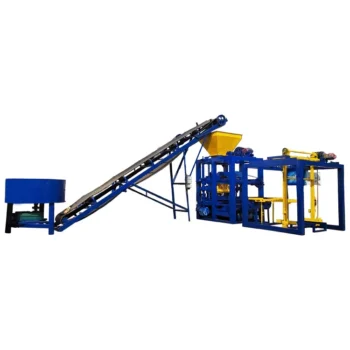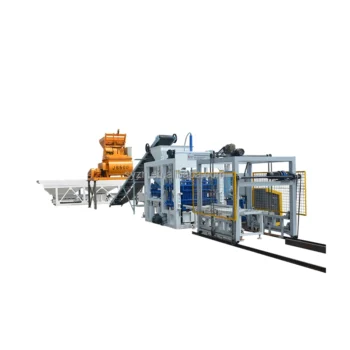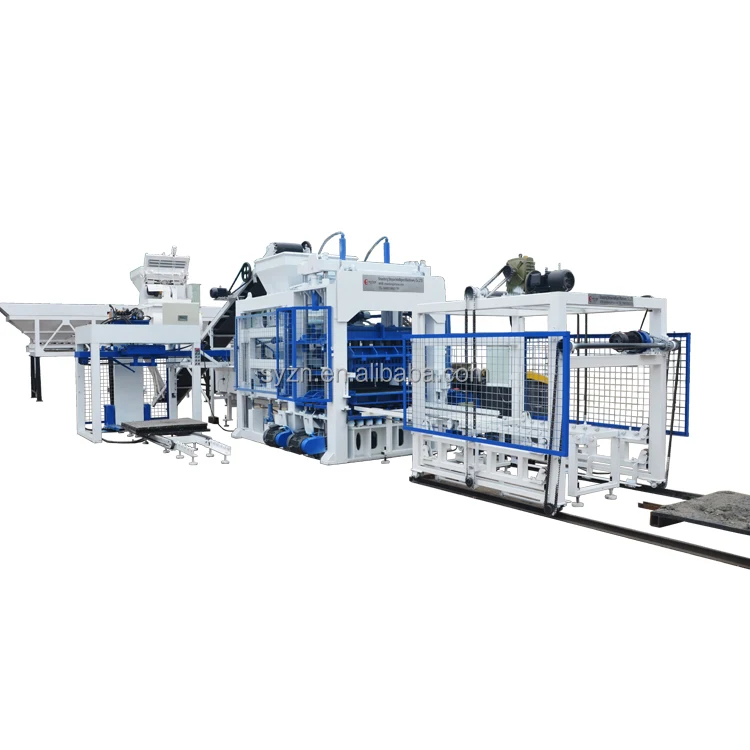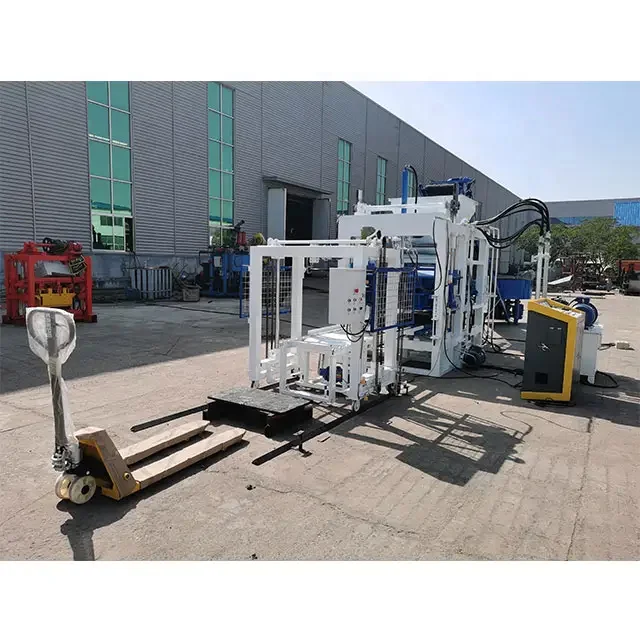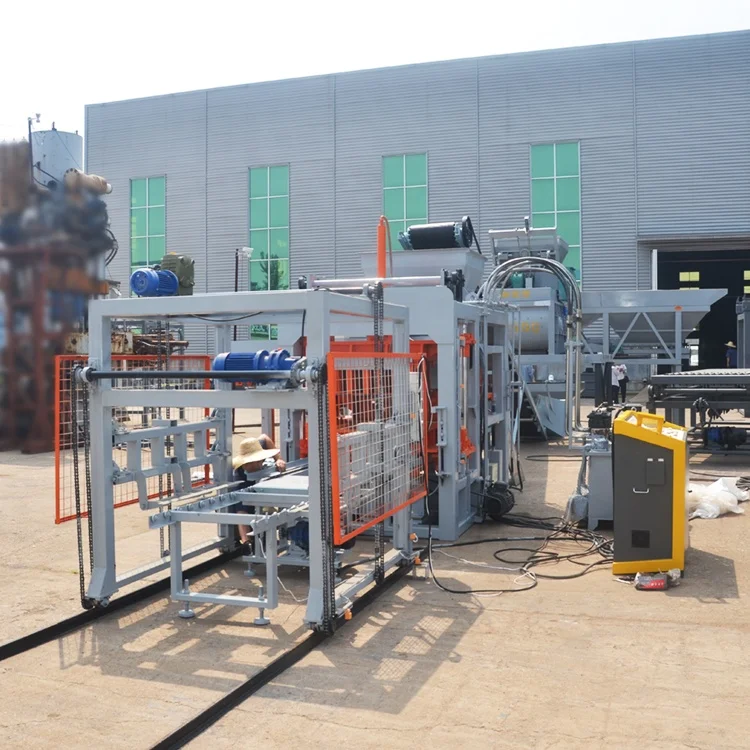


Description
Dispatch-ready block machine inventory — QT6-15 units are tested with buyer-specific raw materials before loading, preventing the vibration mismatch failures I have seen halt production for weeks on site.
Technical Specifications
| Parameter | Value |
|---|---|
| Model | QT6-15 |
| Product Type | Hydraulic Hollow Block Making Machine |
| Overall Dimensions (L×W×H) | 8200×1700×2950 mm |
| Total Mass | 7 T |
| Overall Power | 37 kW |
| Vibration Force | 45 kN |
| Vibration Frequency | 0-60 Hz |
| Vibration Form | Platform Vibration |
| Pallet Size | 880×850 mm |
| Molding Cycle | 15-20s (basis not stated in source — confirm block format / material / thickness) |
| Moulding Mode | Automatic loading, vibration moulding |
| Demolding Method | Hydraulic |
| Control System | PLC with touch screen and built-in fault diagnosis |
| Hydraulic System | Independent integrated hydraulic station |
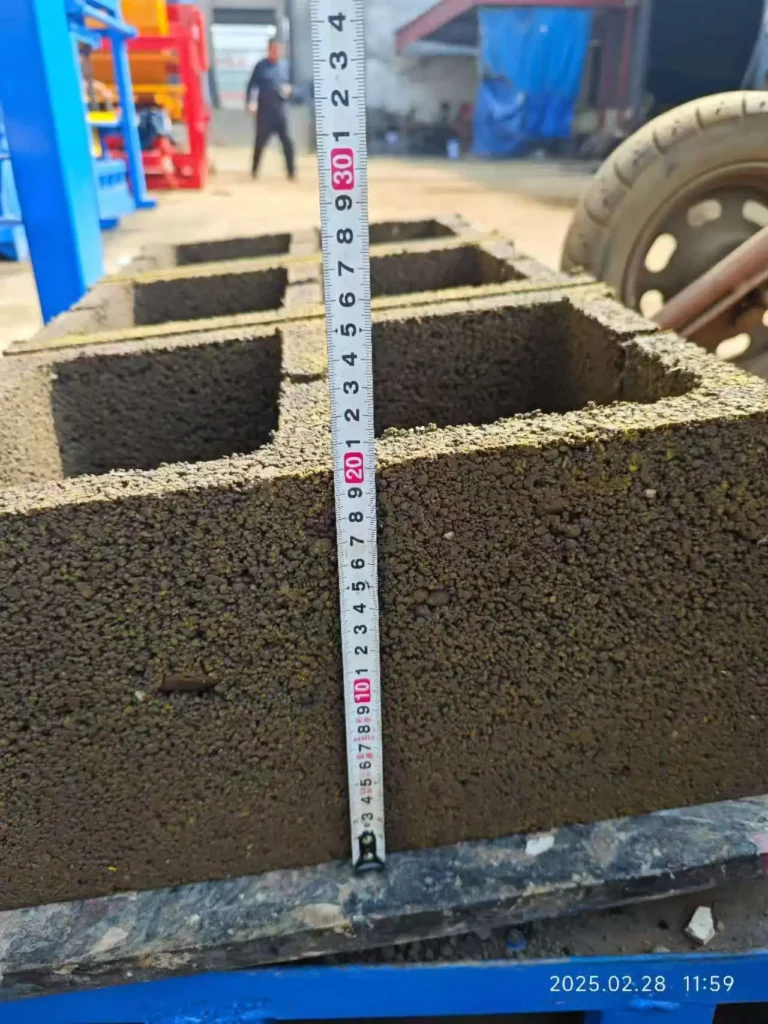
| Output Capacity (Hollow block 400×200×200mm) | 1080-1440 pcs/hour, 8640-11520 pcs/8hr |
| Output Capacity (Hollow block 400×150×200mm) | 1440-1920 pcs/hour, 11520-15360 pcs/8hr |
| Output Capacity (Solid brick 240×115×53mm) | 5760-7680 pcs/hour, 46080-61440 pcs/8hr |
| Output Capacity (Rectangular brick 200×100×60mm) | 2160-2880 pcs/hour (cycle 20-25s), 17280-23040 pcs/8hr |
| Output Capacity (Zigzag brick 225×112.5×60mm) | 2160-2880 pcs/hour (cycle 20-25s), 17280-23040 pcs/8hr |
| Compressive Strength of Blocks | >15 MPa |
| Recommended Factory Area | 1200 m² |
| Warranty | 1 year (excluding spare parts) |
Application Suitability
| Application | Material or Output |
|---|---|
| Hollow block production | Standard aggregate, crushed stone and cement mixes for 400×200×200mm and 400×150×200mm formats |
| Solid brick production | Dense concrete mixes for 240×115×53mm building bricks |
| Paving brick production | High-strength mixes for 200×100×60mm rectangular pavers at 20-25s cycle |
| Interlocking brick production | Interlocking profile moulds for 225×112.5×60mm zigzag format |
| Waste material utilization | Ash, slag and locally sourced aggregate blends with reduced cement dosage |
| Bearing and non-bearing walls | Structural and partition blocks meeting >15 MPa compressive strength |
Why Arrival Date Means Nothing Without a Loading Plan
A QT6-15 block machine in stock still takes weeks off your schedule if the container loading plan is an afterthought.
I have watched contractors burn through float days because nobody mapped how a 7-tonne press with an 8200 mm frame actually sits inside a 40-foot container, or which components come off for transit and bolt back on site. The machine arrives, the forklift cannot reach the pallet size specified, and the curing area was built around a different footprint entirely. The QT6-15 block machine in stock conversation must include dismantling sequence, container layout and pallet compatibility before any payment moves [NEED_CITE: container loading standards for heavy industrial machinery].
Stock Status and Dispatch Lead Time
When a buyer needs a QT6-15 block machine in stock, the first question is not price — it is whether the configuration on the floor matches their voltage, their PLC language and their pallet system. I confirm these three points at inquiry stage, because a machine sitting in the warehouse wired for 380V/50Hz is useless to a site running 440V/60Hz. Standard moulds for hollow block and rectangular paver formats are stocked alongside the press, so the dispatch lead time covers the complete working unit rather than a bare frame waiting on mould tooling from a separate supplier.
Container Loading and Machine Dismantling for Shipment
The 8200×1700×2950 mm frame of the QT6-15 requires partial dismantling for ocean freight. The hydraulic station, PLC cabinet and vibration platform are secured as separate assemblies, each wrapped and braced against container wall contact. I have seen damage claims filed because a hydraulic hose was left connected during transit and sheared at the fitting — every connection point is now capped and photographed before the container doors close [NEED_CITE: ocean freight securing requirements for heavy machinery]. The loading plan is shared with the buyer so their receiving team knows which crate holds the mould, which holds the pallets and which contains the electrical panel.
Pallet Size and Curing Area Compatibility Before Dispatch
The 880×850 mm pallet size is fixed into the QT6-15 design, and it dictates everything downstream. If the buyer’s existing curing racks were built for a different pallet dimension, those racks become scrap the day the machine arrives. I ask for the curing area layout and the forklift fork width at inquiry stage — not after the machine ships. This single check has saved buyers from discovering that their pallet handling equipment is incompatible with a press they already paid for.
Reading the Cycle Time and Output Figures Honestly
The 15-20 second molding cycle applies under specific conditions: a defined block format, a proven mix design and consistent material feed. The output of 8640-11520 hollow blocks per 8-hour shift is calculated on the 400×200×200mm format at that cycle range. Switch to the 200×100×60mm rectangular paver and the cycle extends to 20-25 seconds, shifting the daily output to 17280-23040 pieces. The 45 kN vibration force combined with hydraulic pressure compacts the mix to >15 MPa, but only if the vibration frequency is tuned to the actual aggregate density. When I send a sample request before dispatch, it is because a volcanic aggregate at one frequency compacts cleanly, while a limestone mix at the same setting produces crumbly faces. The PLC touch screen stores frequency profiles per mould, so operators switch formats without relearning the press.
What Happens When the Pallet System Is Not in the Quotation
A press without a matched pallet feeding and handling system means workers carry wet blocks by hand from the moulding station to the curing racks. On a machine producing over a thousand blocks per hour, that manual gap becomes a bottleneck that cancels out the output the buyer paid for. The pallet size, the pallet material and the stacking method must be quoted as part of the line, not discovered on site when the first shift ends with blocks piled on the floor [NEED_CITE: manual handling risks in concrete block production].
Why Procurement Through This Channel Works for Deadline-Driven Buyers
Stock availability is confirmed at inquiry, not after a deposit clears. Container loading plans and dismantling sequences are quoted alongside the machine price so there are no freight surprises. Voltage, frequency and PLC display language are locked before production begins. Factory test records document the actual block format, cycle time and compressive strength achieved during testing — not a catalogue claim. Standard moulds for the formats the buyer’s market demands ship with the press, and custom mould drawings are accommodated within the same dispatch window where tooling capacity allows. The 37 kW total power requirement is stated upfront so the buyer can prepare the electrical supply before the container arrives.
Documentation & Verification
- Factory test record showing cycle time and output for your specific block format before dispatch
- Machine specification sheet with voltage, frequency and PLC language confirmed to your site requirements
- Container loading plan with dismantling sequence and bracing layout for the 7-tonne press
- Pallet specification sheet matching the 880×850 mm size to your curing rack dimensions
- Hydraulic and electrical schematics for on-site troubleshooting during commissioning
- Operation and maintenance manual covering mould change procedure and wear part replacement intervals
Installation, Commissioning & Support
- Foundation must support 7 tonnes across the 8200×1700 mm footprint with level tolerance for platform vibration alignment
- Dedicated 37 kW electrical circuit at confirmed voltage and frequency, isolated from heavy motor start-up loads
- Hydraulic station reconnected and pressure-checked on site before first production run
- PLC touch screen configured in buyer’s operating language with built-in fault diagnosis activated
- Mould change procedure demonstrated using buyer’s stocked format to confirm shift-change flexibility
- Wear parts list provided with reorder intervals based on local aggregate abrasiveness
What to Include in Your Inquiry
Send the block format you sell most, the daily output you need to hit and a sample of your local aggregate so the vibration frequency can be set before the machine leaves the factory. Confirm your site voltage, frequency and the language your operators read on a touch screen. If you have existing curing racks or forklifts, share the pallet dimensions they were built around so the 880×850 mm pallet system is verified as compatible before dispatch.
Frequently Asked Questions
Q: Is the QT6-15 currently in stock or what is the production lead time?
A: Stock status and available configurations are confirmed at inquiry stage. If your required voltage, PLC language or mould format matches a stocked unit, dispatch lead time is measured in days rather than weeks. Custom configurations enter a production queue with a stated completion date before any payment is required.
Q: What is the container loading plan and how is the machine dismantled for shipment?
A: The 8200×1700×2950 mm frame requires partial dismantling. The hydraulic station, PLC cabinet and vibration platform ship as separate secured assemblies inside a standard ocean container. A loading diagram is provided before dispatch so your receiving team knows the unloading sequence.
Q: Can voltage, frequency and PLC display language be confirmed before dispatch?
A: Yes. These three parameters are locked at inquiry stage, before production or dispatch. The PLC touch screen is configured in your operators’ language, and the electrical system is wired to your site voltage and frequency so commissioning begins immediately on arrival.
Q: Which standard moulds ship with the machine and what is the arrival estimate?
A: Hollow block moulds in 400×200×200mm and 400×150×200mm formats are standard stock items. Rectangular paver and solid brick moulds are also held in inventory. Arrival estimate depends on destination port and is quoted alongside the dispatch date once the loading plan is confirmed.
Q: What on-site conditions must be ready before the QT6-15 arrives?
A: A 1200 m² factory area with a level foundation rated for 7 tonnes, a dedicated 37 kW power supply at your confirmed voltage, and curing racks built to accept 880×850 mm pallets. Forklift capacity should match loaded pallet weight for daily handling.