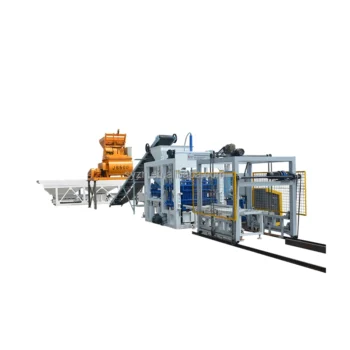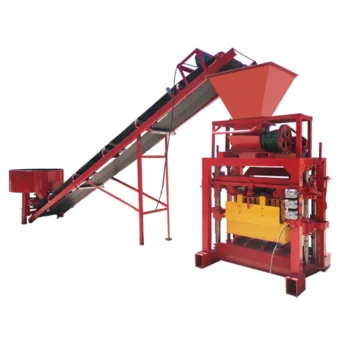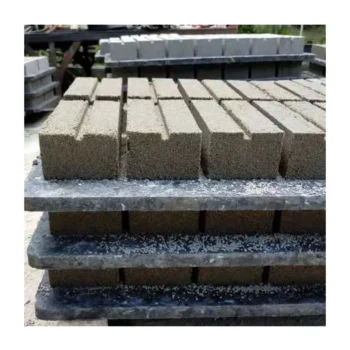
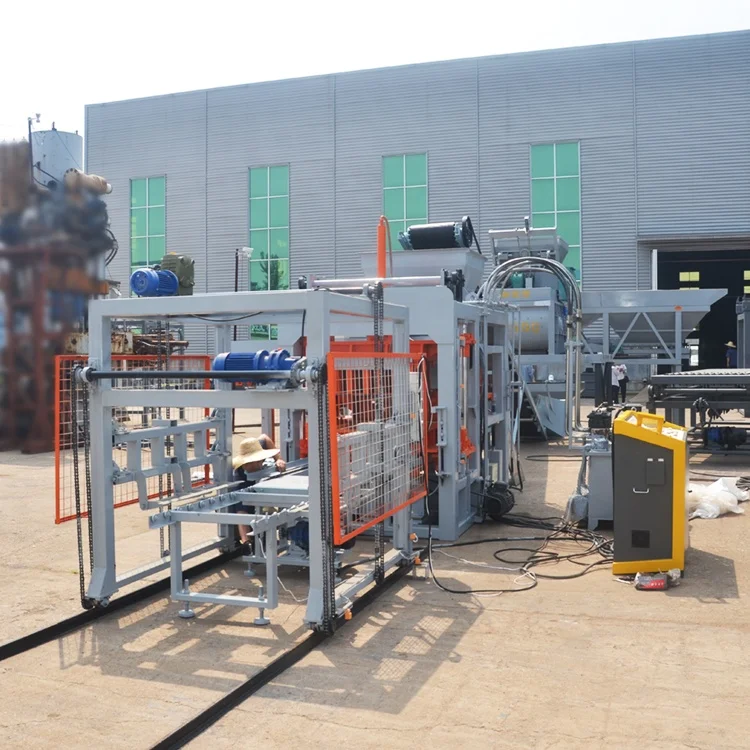
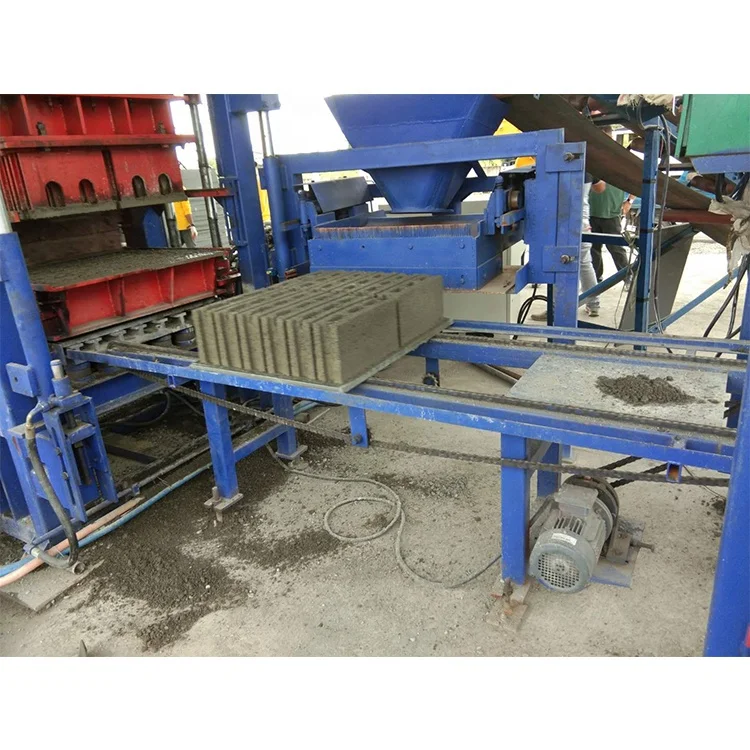
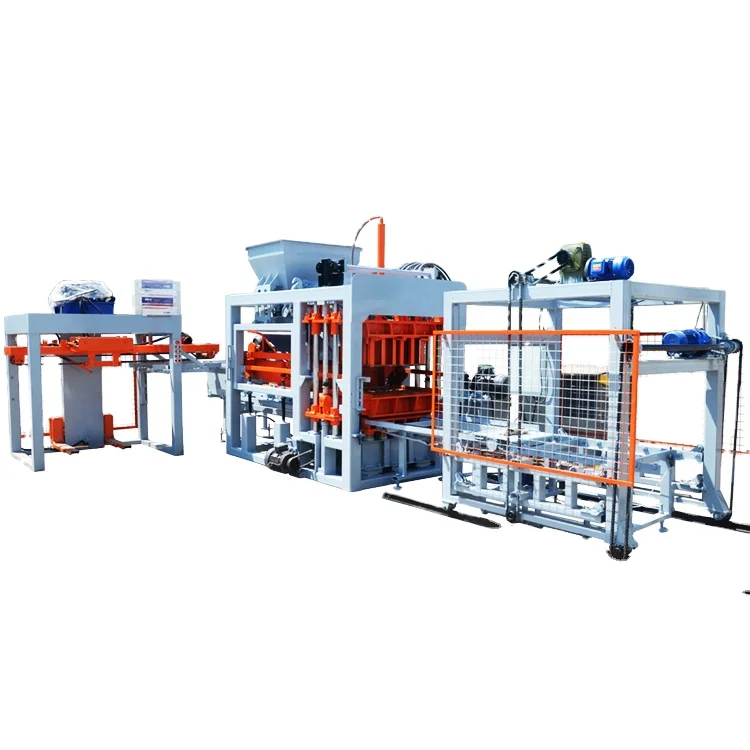
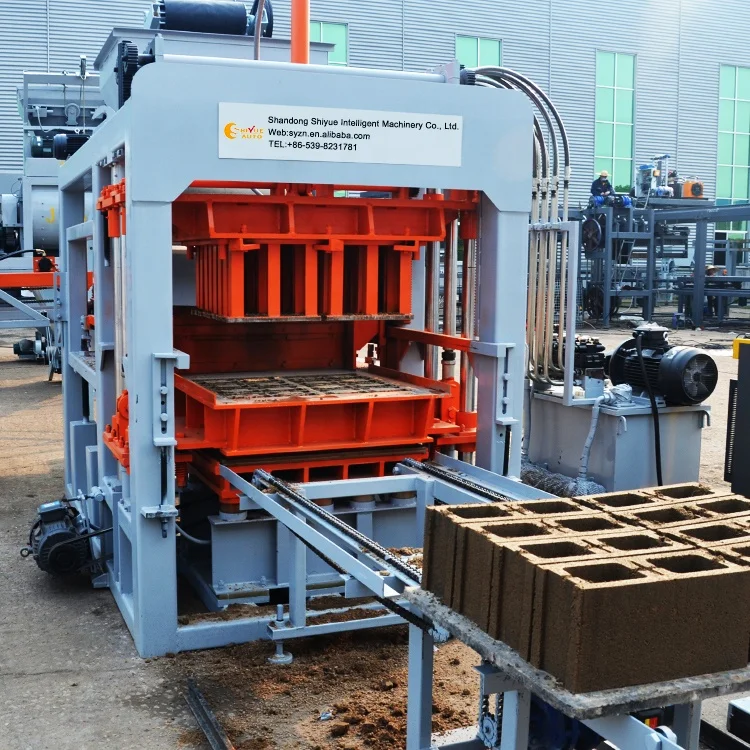
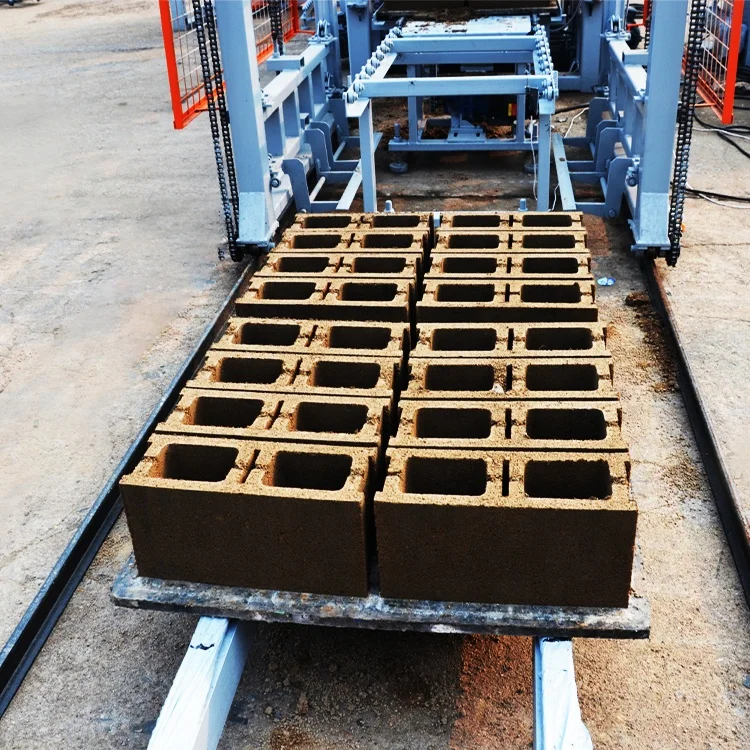
Description
Stocked Dispatch Planning — QT6-15 block machine in stock status and container loading sequences are mapped to your project deadline so arrival dates remain predictable from the moment the purchase order is signed.
Technical Specifications
| Parameter | Value |
|---|---|
| Model | QT6-15 |
| Product Type | Hydraulic Concrete Block Making Machine |
| Overall Dimensions (L×W×H) | 8200×1700×2950 mm |
| Pallet Size | 880×850 mm |
| Vibration Frequency | 0-60 Hz |
| Vibration Form | Platform Vibration |
| Vibration Force | 45 kN |
| Moulding Mode | Automatic loading, vibration moulding |
| Demolding Method | Hydraulic |
| Molding Cycle | 15-20 s (basis not stated in source) |
| Overall Power | 37 kW |
| Total Mass | 7 T |
| Factory Area Required | 1200 m² |
| Control System | PLC with touch screen HMI |
| Block Compressive Strength | >15 MPa |
| Output: Hollow Block 400×200×200 mm | 6 pcs/mould, 1080-1440 pcs/h, 8640-11520 pcs/8hr |
| Output: Hollow Block 400×150×200 mm | 8 pcs/mould, 1440-1920 pcs/h, 11520-15360 pcs/8hr |
| Output: Solid Brick 240×115×53 mm | 32 pcs/mould, 5760-7680 pcs/h, 46080-61440 pcs/8hr |
| Output: Rectangular Brick 200×100×60 mm | 21 pcs/mould, 2160-2880 pcs/h (cycle 20-25 s), 17280-23040 pcs/8hr |
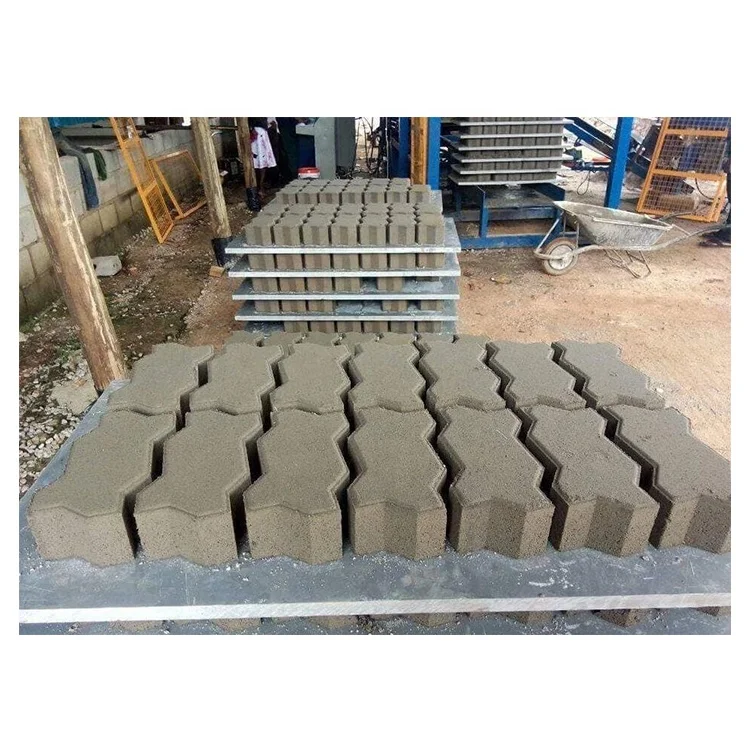
| Output: Zigzag Brick 225×112.5×60 mm | 15 pcs/mould, 2160-2880 pcs/h (cycle 20-25 s), 17280-23040 pcs/8hr |
| Hydraulic System | Independent integrated hydraulic station |
| Raw Material Adaptability | Waste ash, slag, various aggregates |
| Voltage & Frequency | Configurable (basis to be confirmed before shipment) |
| PLC Display Language | Configurable (basis to be confirmed before shipment) |
| Standards | CE declared where applicable |
Application Suitability
| Application | Material or Output |
|---|---|
| Hollow Block Production | Fly ash, slag, and crushed stone mixes for structural and non-load-bearing masonry |
| Solid Brick Production | Dense aggregate and cement blends for high-compression building bricks |
| Paving Brick Production | Rectangular and interlocking zigzag formats from fine aggregate and pigment-dosed mixes |
| Multi-cellular Brick Production | Lightweight aggregate or aerated concrete formulations for partition blocks |
| On-Site Construction Supply | Project-based hollow block output for housing developments with fixed completion timelines |
Why the Dispatch Timeline Matters More Than the Quoted Cycle Time
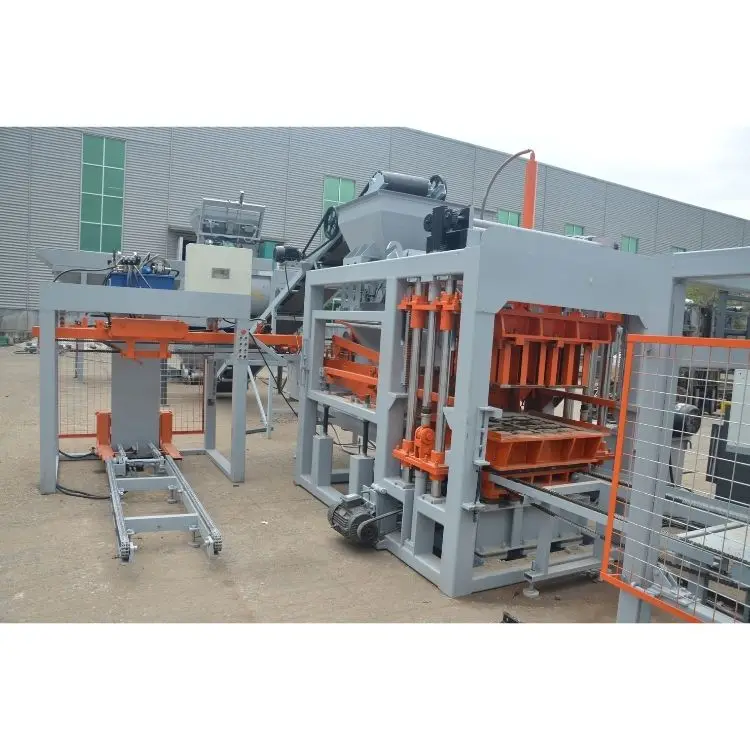
A stocked QT6-15 block machine in stock removes production lead uncertainty, but arrival timing depends on container loading plans confirmed before the machine leaves the factory.
Buyers working to a project deadline often receive quotations listing cycle times without context — a number that means little if the machine is still six weeks from being built. When I supported installations in Latin America, the most common complaint was not about block quality but about arrival dates shifting after the order was placed. A machine quoted as "ready" still requires dismantling, crating, inland transport, and port scheduling. Every one of those steps adds days that compound into missed construction milestones [NEED_CITE: typical container shipping lead times for industrial machinery]. The real question at inquiry stage is not how fast the press cycles, but when the container will actually arrive at your port.
Stocked Units and Realistic Dispatch Windows
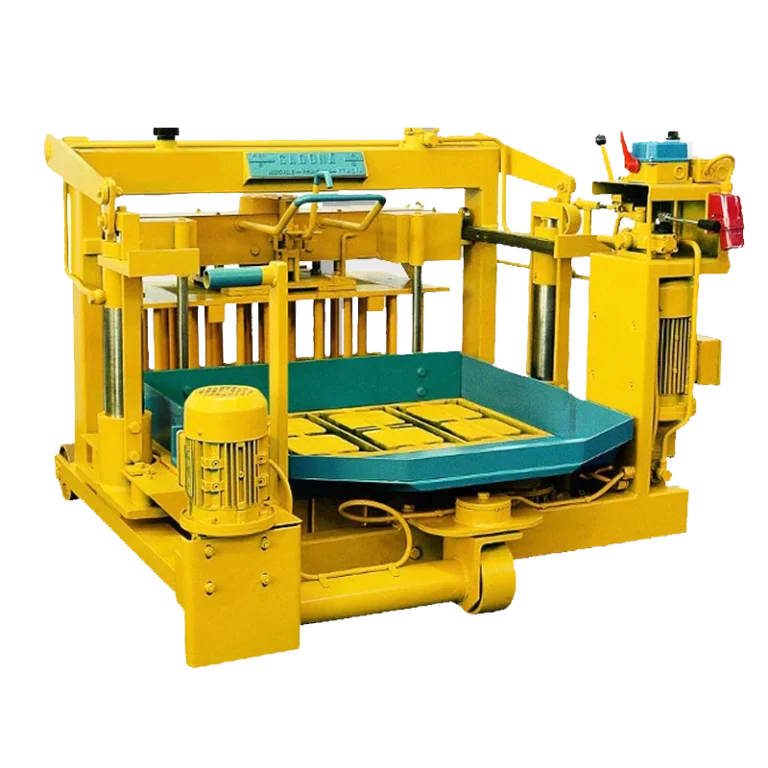
The QT6-15 block machine in stock designation means the main frame, hydraulic station, and vibration platform have been assembled and factory-tested. Standard moulds for hollow block and solid brick formats are matched and held alongside the press. Dispatch lead time covers final inspection, dismantling for container loading, and inland haulage to port — a sequence that is quoted in calendar days at the offer stage rather than left to assumption. Buyers receive the loading plan before the container is sealed.
Container Loading and Machine Dismantling
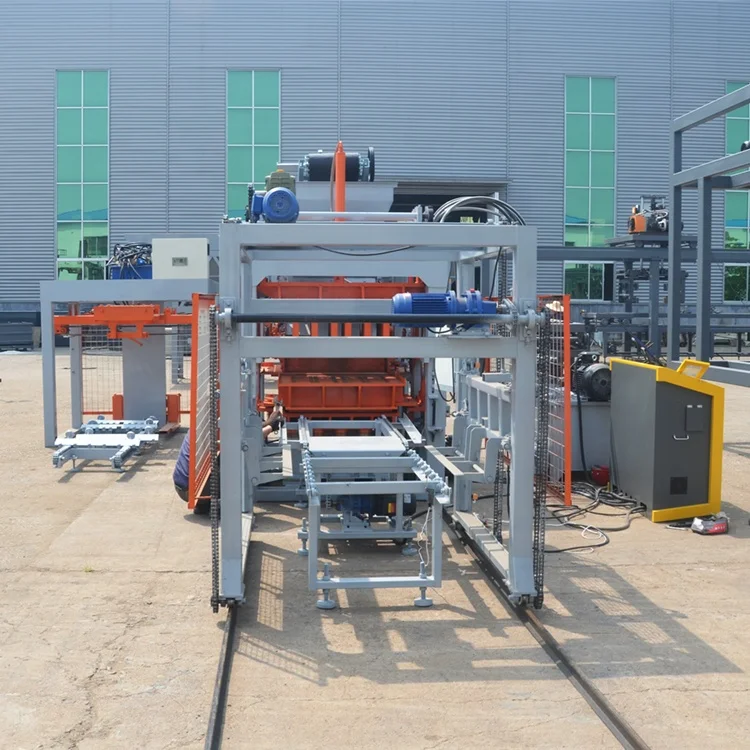
The 8200×1700×2950 mm overall dimension means the QT6-15 does not fit a standard container as a single assembled unit. The hydraulic station, pallet feeder, and control cabinet are separated and secured against movement during ocean transit. Each dismantled section is photographed before crating so the receiving team can verify completeness on arrival. This process prevents the situation where a critical sub-assembly is discovered missing only after the container is opened at destination [NEED_CITE: machinery export packing standards for heavy equipment].
Arrival Estimate Quoted at Inquiry Stage
From order confirmation to port of destination, the timeline includes factory preparation, customs export clearance, ocean transit, and import clearance at your end. The ocean leg varies by destination port and shipping line schedule. What remains within the supplier’s control — machine readiness, documentation accuracy, and container booking — is committed to specific dates in the purchase contract rather than described vaguely.
Voltage, Frequency, and Language Locked Before Production
The QT6-15 block machine in stock ships with electrical and control configurations matched to the buyer’s site. Voltage and frequency are confirmed in writing before any wiring is finalized. The PLC touch-screen display language is set to the operator’s working language. These three confirmations — voltage, frequency, and language — eliminate the most common commissioning delays I encountered during field service: a machine that powers on but cannot be operated because the HMI displays in an unfamiliar script or the motor rotation is reversed due to a phase sequence mismatch [NEED_CITE: voltage and frequency standards by export market].
Pallet Size and Curing Area Compatibility
The 880×850 mm pallet size determines how cured blocks move from the press to the curing rack and onward to the forklift. If the buyer’s existing curing racks or forklift tines were designed around a different pallet dimension, every pallet must be handled manually — negating the output advantage of an automatic line. Confirming pallet size at inquiry stage ensures the press output integrates with the curing infrastructure already on site.
What Happens When Dispatch Details Are Assumed
A machine that arrives without confirmed voltage specification requires an on-site electrician to rewire the control panel before commissioning can begin — a delay that typically stretches into days while the correct components are sourced locally. Similarly, a pallet size mismatch means the automatic stacker cannot interface with existing curing racks, forcing manual handling of every pallet through the curing cycle. These are not equipment failures; they are specification gaps that should have been resolved before the container was sealed. The cost is measured in idle construction crews waiting for blocks that the machine is physically capable of producing but logistically unable to deliver to the curing area [NEED_CITE: common causes of commissioning delay in exported machinery].
Why Procurement Through This Channel Works
Block machinery is the single product focus here, which means the QT6-15 is specified as a matched system — press, mould, pallet, and handling — rather than assembled from separate suppliers whose interfaces may not align. Configuration is set against the buyer’s actual mix design and target block format, not a catalogue default. Standard moulds stocked alongside the machine cover the formats most commonly sold in export markets, and custom mould drawings can be produced to buyer specifications. Installation support includes operator training on the PLC interface and mould change procedure. Documentation arrives with the machine, not weeks after it.
Documentation & Verification
- Factory test record showing output on your specified hollow block format before dispatch
- Machine specification sheet confirming pallet size, vibration force, and hydraulic pressure settings
- Mould drawing and format list for every mould included in the shipment
- Voltage and control language confirmation document signed before wiring begins
- Packing photographs of each dismantled section before container sealing
- Customs documentation package prepared for destination import clearance
Installation, Commissioning & Support
- 1200 m² factory area requirement confirmed against your site plan before shipment
- 37 kW total power requirement communicated for dedicated circuit and breaker sizing
- Machine dismantling state documented so reassembly sequence is clear on arrival
- PLC touch-screen commissioning includes parameter setting for your block format and cycle time
- Operator training covers mould change procedure, fault diagnosis, and daily maintenance checks
- Wear parts list and hydraulic seal kit specified for your production volume and material mix
What to Provide With Your Inquiry
To receive a quotation with a committed dispatch date and arrival estimate, share your target block format and daily output requirement, the voltage and frequency at your site, the operator language for the PLC display, and the pallet dimensions your existing curing racks and forklifts accept. If you are setting up a new plant, include the available factory footprint so the line layout can be confirmed alongside the machine offer.
Frequently Asked Questions
Q: Which QT6-15 models and standard moulds are currently stocked and what is the dispatch lead time?
A: Stocked units include the QT6-15 main press with standard moulds for 400×200×200 mm hollow blocks and 240×115×53 mm solid bricks. Dispatch lead time covers final inspection, dismantling, and inland transport to port, quoted in calendar days at the offer stage. Lead time varies by current stock position and destination port scheduling.
Q: How is the QT6-15 dismantled and loaded into the container?
A: The hydraulic station, pallet feeder, and control cabinet are separated from the main frame. Each section is secured and photographed before crating. The 8200 mm length requires strategic orientation within the container. A complete dismantling and packing photograph set is shared with the buyer before the container seal is applied.
Q: What is the estimated arrival time from order to port of destination?
A: The timeline includes factory preparation, export customs clearance, ocean transit, and import clearance. Ocean transit duration depends on destination port and shipping line schedule. Factory-side preparation and container booking dates are committed in the purchase contract, while ocean transit is quoted as an estimate based on current shipping line schedules.
Q: Are voltage and control language confirmed before the QT6-15 leaves the factory?
A: Yes. Voltage, frequency, and PLC display language are confirmed in writing before electrical wiring is finalized. This prevents commissioning delays caused by incompatible power supply or an unreadable HMI. The confirmation document is included in the shipment documentation package.
Q: What documentation is provided for customs clearance at the destination port?
A: The documentation package includes the commercial invoice, packing list, bill of lading, CE declaration where applicable, and machine specification sheet. Additional documents required by specific destination countries are prepared based on the buyer’s import requirements communicated at the order stage.