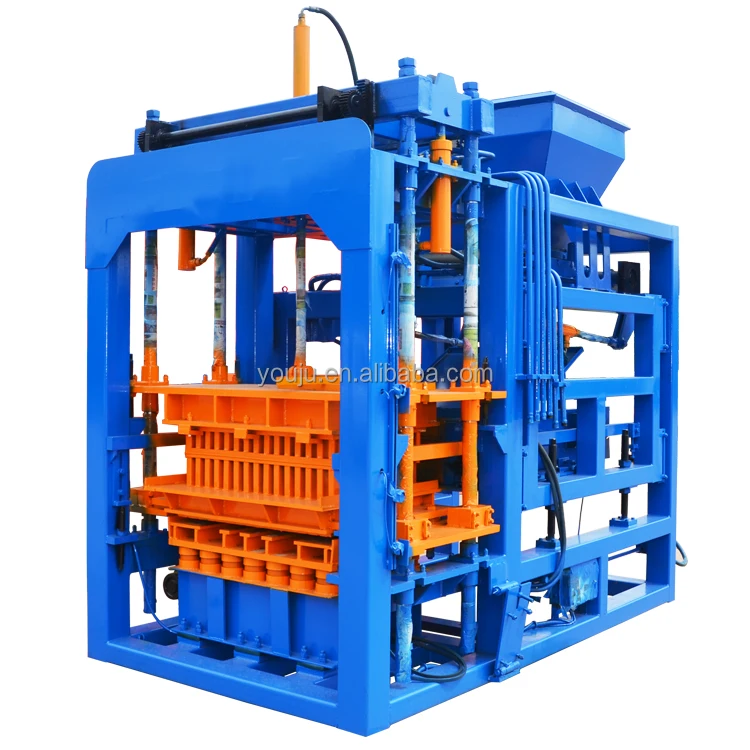
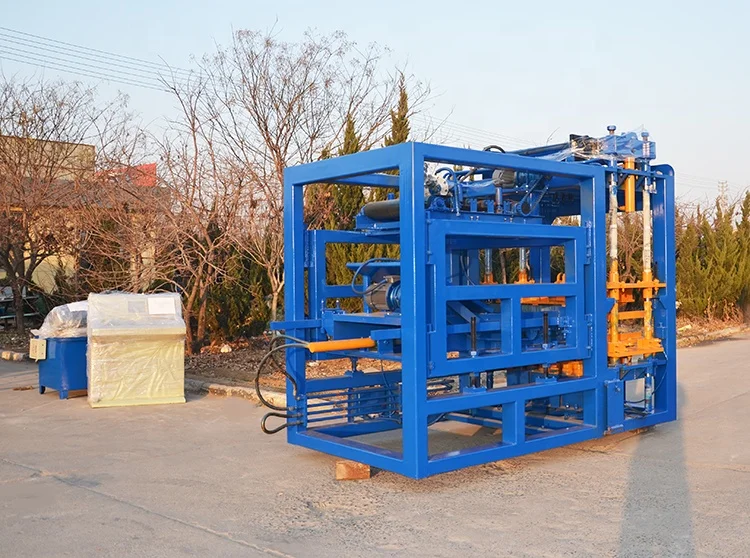
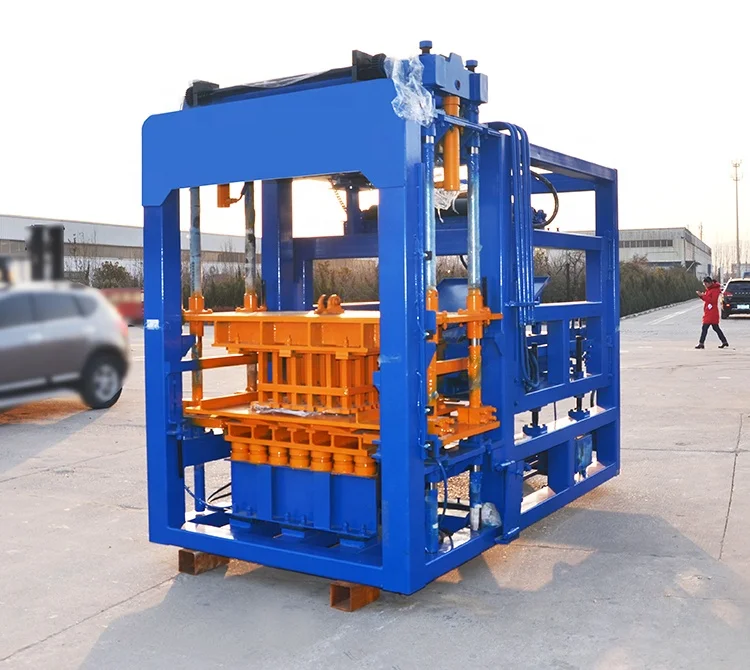
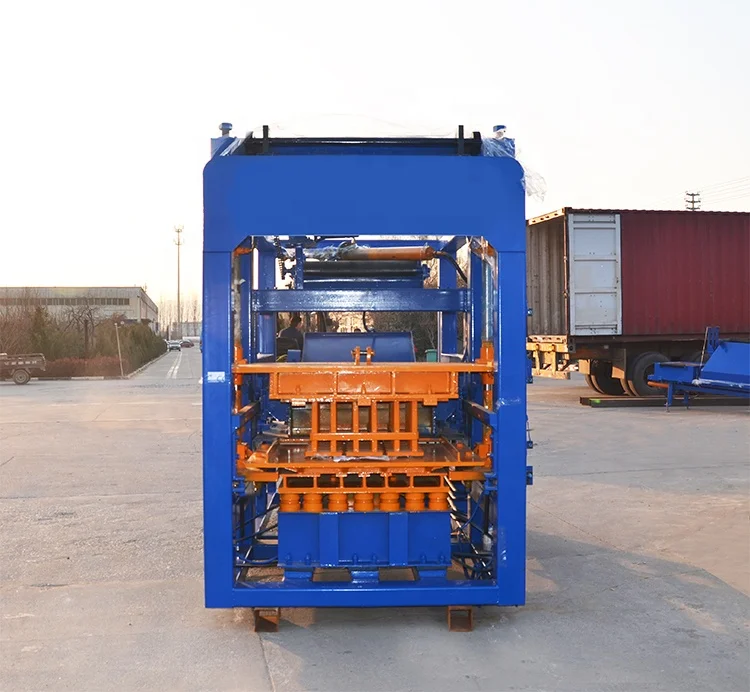
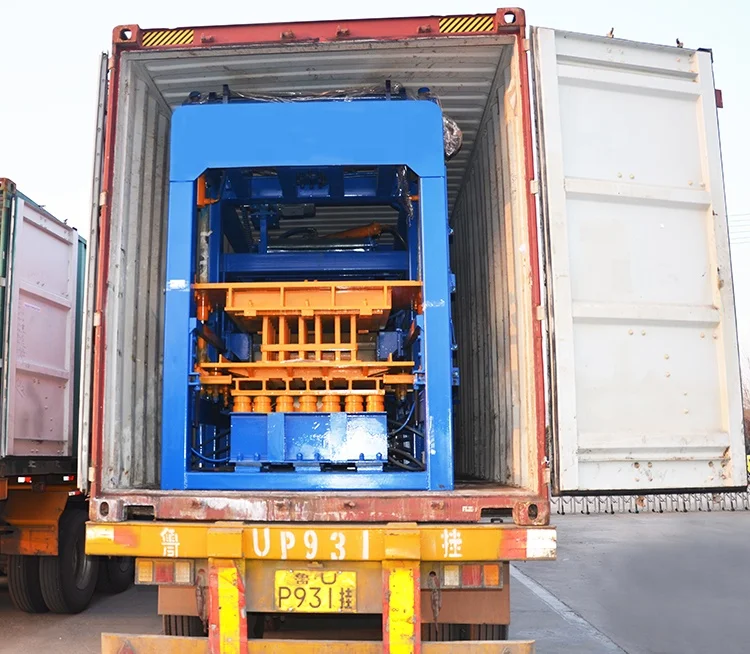
Description
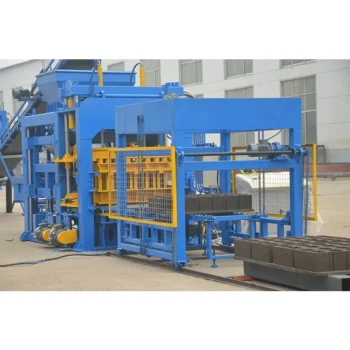
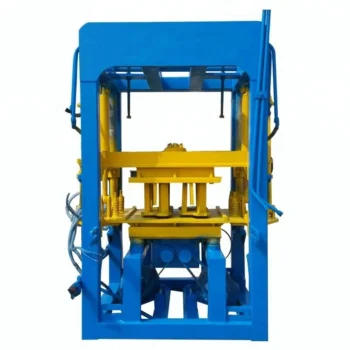
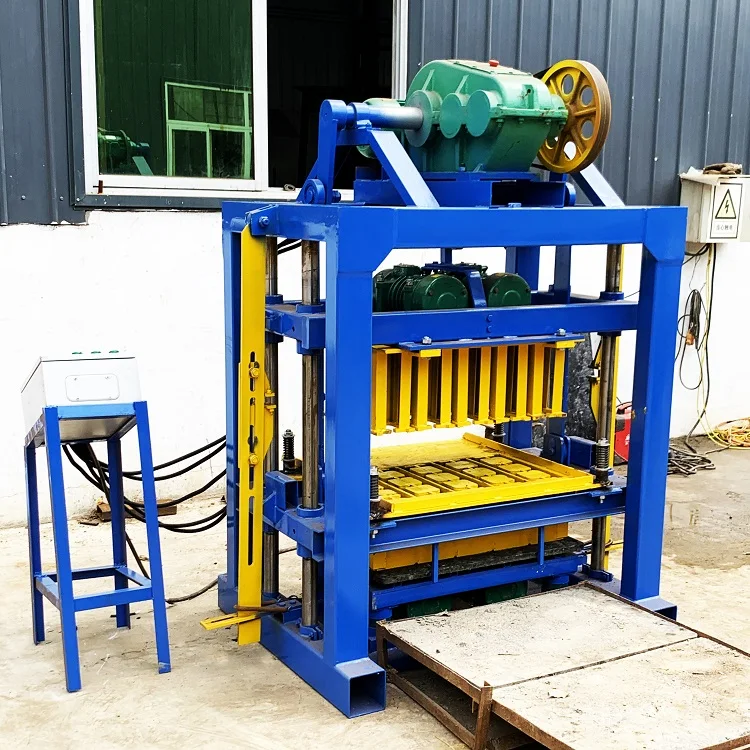
Ready to Load — QT6-15 units sit on our floor with standard moulds bolted on, so your container leaves within days, not weeks.
Technical Specifications
| Parameter | Value |
|---|---|
| Model | QT6-15 |
| Product Type | Semi-Automatic Concrete Block Making Machine |
| Rated Pressure | 21 MPa |
| Molding Way | Vibration and hydraulic pressing |
| Molding Cycle | 15s–20s per cycle |
| Pallet Size | 900×700 mm |
| Main Machine Weight | 6000 kg |
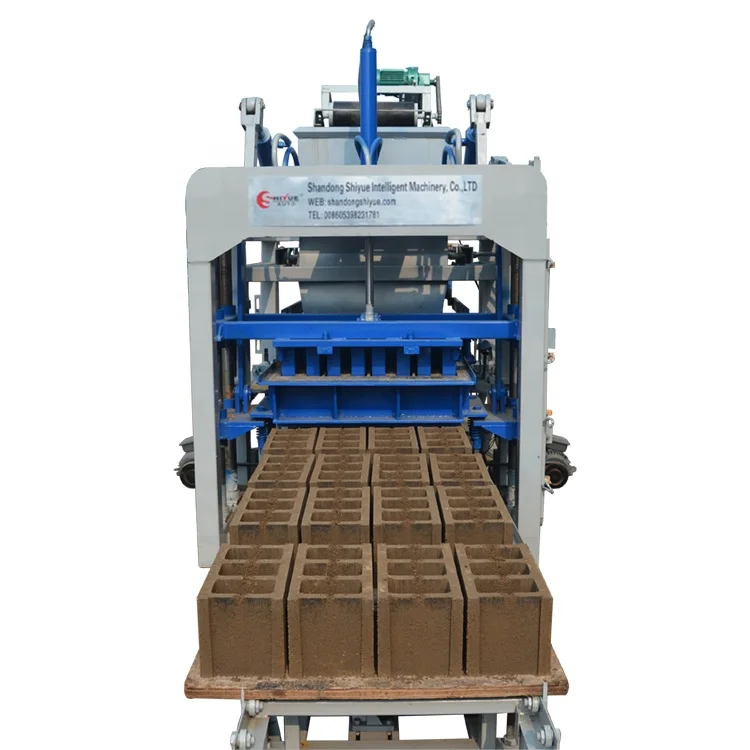
| Output Capacity (Hollow Block 400×200×200 mm) | 1440 pcs/h, 11520 pcs/8h |
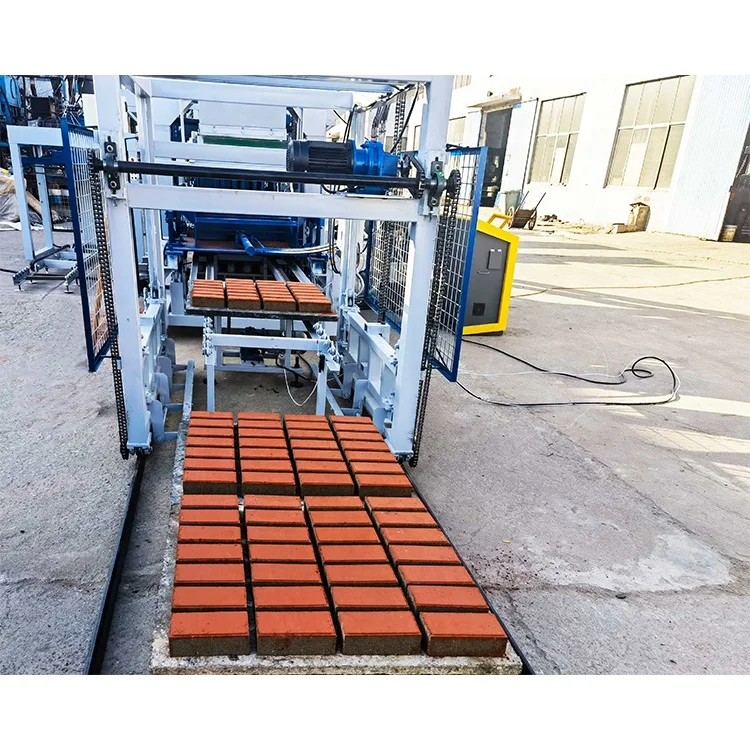
| Output Capacity (Paving Brick 200×100×60 mm) | 5040 pcs/h, 40320 pcs/8h |
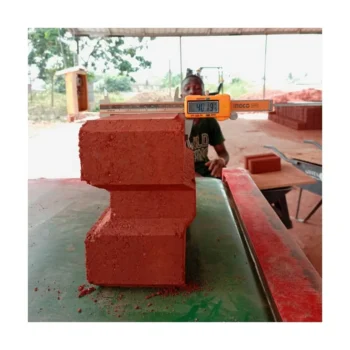
| Output Capacity (Solid Brick 240×115×53 mm) | 7680 pcs/h, 61440 pcs/8h |
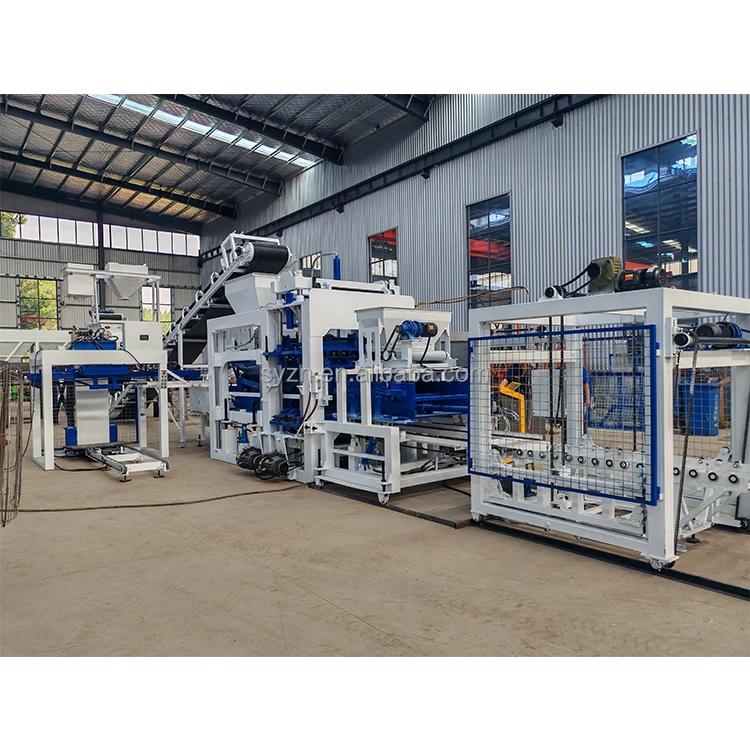
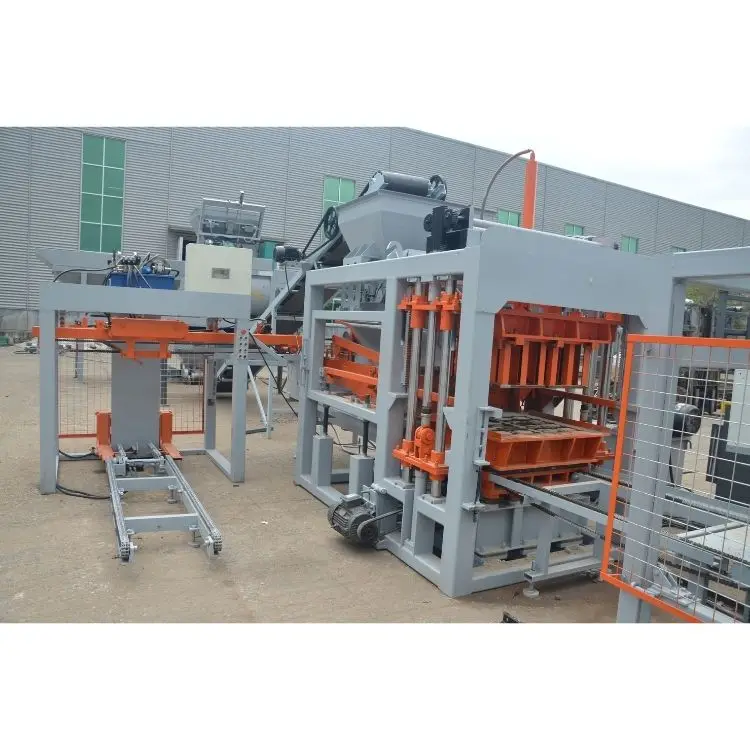
| Simple Line Configuration | JS500 mixer, 8m belt conveyor, automatic stacker |
| Full Line Configuration (optional) | Cement silo, screw conveyor, cement scale, batching machine, pallet feeder, pallet separator |
| Supported Mould Formats | Hollow block, paving brick, solid brick, kerbstone, interlocking brick |
| Mobility | Wheeled base for site relocation |
| Color Pigment Feeder | Removable for non-colored production |
| Motor Voltage | Customizable to local grid (confirm before dispatch) |
| PLC Display Language | Confirm before dispatch |
| Warranty | 1 year excluding wear parts |
Application Suitability
| Application | Material or Output |
|---|---|
| Hollow block production for building walls | Cement, sand, fly ash, crushed stone mix |
| Paving brick for walkways and yards | Concrete with fine aggregate and pigment |
| Solid brick for load-bearing structures | Cement, stone powder, slag blend |
| Kerbstone for road edges | High-density concrete with coarse aggregate |
| Interlocking brick for landscaping | Cement and sand with interlocking mould |
| On-site contractor block production | Local aggregate sourced near project location |
Why Voltage Must Be Confirmed Before the Container Is Booked
A Semi-Automatic Block Machine in Stock ships fast only if the motor matches your grid from day one.
I once watched a site in the Middle East sit idle for three weeks because a batch of block machines arrived with 50 Hz motors while the local grid ran at 60 Hz. The transformer workaround cost more than the delay itself. That memory is the reason I now check voltage, frequency, and PLC panel language before signing any dispatch order. When you are working to a project deadline, the fastest ship date means nothing if the machine cannot start on arrival. [NEED_CITE: voltage and frequency standards by export market]
What Ships in the Container
The QT6-15 simple line package leaves nothing to chance. The JS500 mixer, the 8 m belt conveyor, the automatic stacker, the selected mould, and the pallets all load into the same container. Buyers who have received partial shipments before know the frustration of waiting for a second container while the first sits unpacked on site. Every item on the packing list is photographed before the doors close.
How Dismantling Affects Your Arrival Timeline
The main machine weighs 6000 kg, and its dismantling method determines whether it fits a standard 40 ft container or requires a flat rack. We confirm the loading plan — which assemblies come off, how they are secured, and which container type is booked — before the vessel sailing date is set. This eliminates the scenario where a machine arrives at port and the local crane cannot unload it. [NEED_CITE: container loading standards for heavy industrial machinery]
Reading the Specs That Matter on the Job Site
The 21 MPa rated pressure combined with vibration determines how densely the concrete is compacted in the mould. Higher compaction means stronger blocks straight out of the press, which matters when your local aggregate is on the softer side. The 900×700 mm pallet size must align with the curing racks and forklifts already on your site — a mismatch here means rebuilding the curing area or buying new handling equipment. The 15s–20s molding cycle is the press rhythm; the actual daily output depends on how fast the mixer feeds material and how quickly the stacker clears finished blocks. If the mixer cannot keep up, the press waits, and the cycle time on paper never translates to blocks on the pallet. The wheeled base lets a contractor move the QT6-15 between project sites without dismantling the entire line, which is a practical advantage for on-site production where the work area shifts as the build progresses.
What Happens When the Quotation Skips the Line
Pallet handling, stacking, and curing are often left out of a quotation, which means the buyer discovers on arrival that blocks must be moved by hand. The QT6-15 simple line addresses this by including the automatic stacker from the start. Another common gap is the PLC display language — arriving to find all menus in a language the operators cannot read stalls commissioning by days. [NEED_CITE: common causes of delayed equipment commissioning on export projects]
Why Buyers Source This Machine Here
Every QT6-15 ships as a matched system: the press, mould, pallets, and handling equipment are specified together rather than assembled from separate suppliers. Standard moulds for hollow block, paving brick, and solid brick sit in stock alongside the machine, so the container carries everything needed to produce from the first day. Dispatch lead time is quoted upfront with the container loading plan, and the arrival estimate follows the same day. Voltage, frequency, and PLC language are confirmed before the machine leaves the floor — not after it arrives at your port. Factory test records on your target block format are included with the shipment so you can verify performance against your own mix before the container sails.
Documentation & Verification
- Line layout showing QT6-15 placement with curing area and pallet flow
- Capacity calculation stating the block format assumed for each output figure
- Factory test record on your chosen mould before dispatch
- Voltage and frequency confirmation sheet signed before shipment
- Packing photographs taken during container loading
- Customs documentation support matched to your destination port
Installation, Commissioning & Support
- Foundation pad sized for 6000 kg main machine with vibration isolation
- Dedicated power circuit matching your confirmed voltage and frequency
- Reassembly of dismantled components supervised during first start-up
- Mould alignment and cycle timing set against your local aggregate mix
- Operator training on PLC controls in your confirmed display language
- Wear parts list with mould spares identified before shipment
What to Send with Your Inquiry
To give you a firm dispatch date and an arrival estimate, we need the block format you plan to produce first, your local voltage and frequency, and the language your operators read on the PLC panel. Share the curing area dimensions and the forklift capacity already on site so we can confirm the 900×700 mm pallets fit your layout. If you are working to a project deadline, state the date and we will confirm whether the QT6-15 Semi-Automatic Block Machine in Stock can meet it.
Frequently Asked Questions
Q: Which QT6-15 models and moulds are in stock right now and what is the dispatch lead time?
A: Standard QT6-15 units with hollow block, paving brick, and solid brick moulds are held on the floor. Dispatch lead time depends on container availability at your destination port. We confirm the exact sailing date once voltage, frequency, and PLC language are locked in, and provide an arrival estimate the same day.
Q: How is the machine dismantled for container loading, and will loading photographs be provided?
A: The 6000 kg main machine is partially dismantled to fit the selected container type. Assemblies are secured with bracing to prevent transit damage. Photographs of every stage — open container, loaded machine, closed doors — are sent before the vessel departs so you have a full visual record for insurance and customs.
Q: What voltage and frequency configurations can be confirmed before shipment?
A: Motor voltage is customizable to match your local grid. The exact voltage and frequency must be confirmed before the order is released to the workshop. We also confirm the PLC display language at the same stage so operators can navigate menus from day one without needing translation.
Q: What is included in the simple line package so nothing is missing on arrival?
A: The simple line ships with the QT6-15 press, JS500 mixer, 8 m belt conveyor, automatic stacker, one selected mould, and pallets. Every item appears on the packing list and is photographed during loading. If you need the full line with cement silo and batching machine, those are quoted separately and loaded in the same or an additional container.