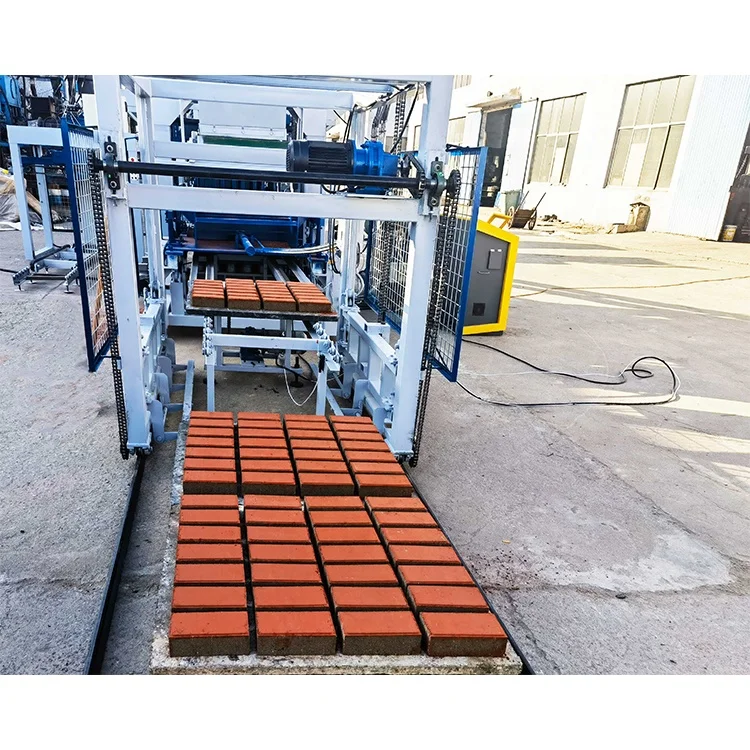
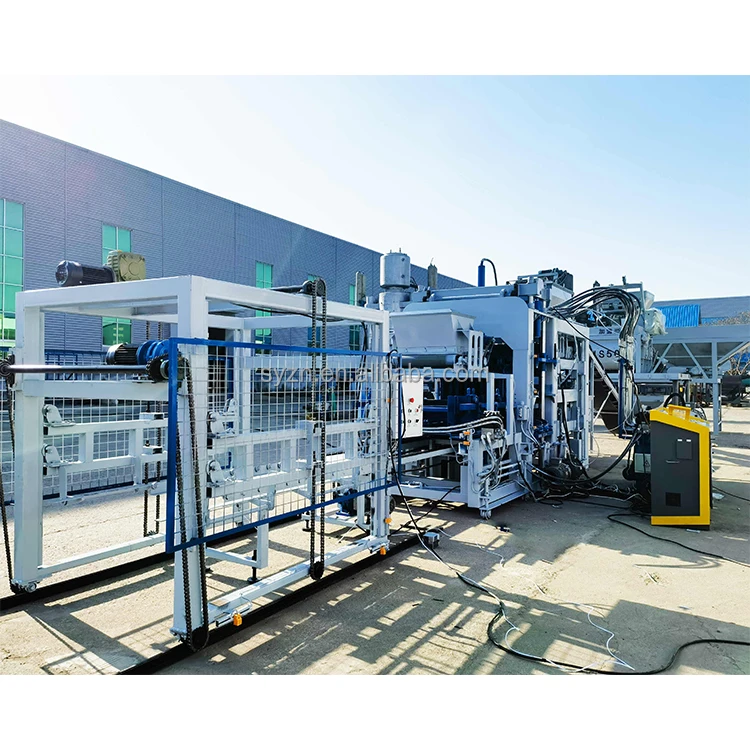
Description
Stocked QT8-15 Units — dispatch schedules are quoted against actual warehouse inventory, not production backlog, so your site timeline holds.
Technical Specifications
| Parameter | Value |
|---|---|
| Model | QT8-15 |
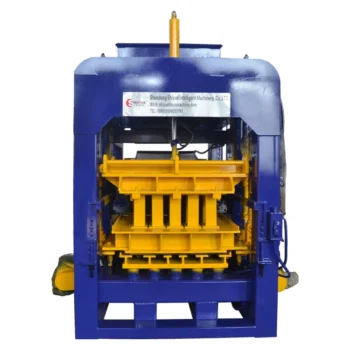
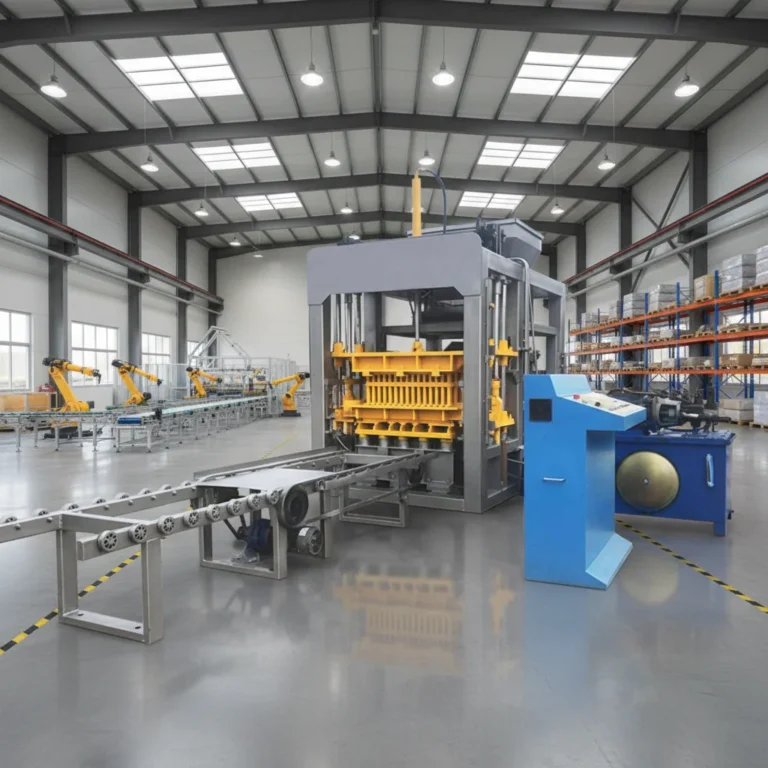
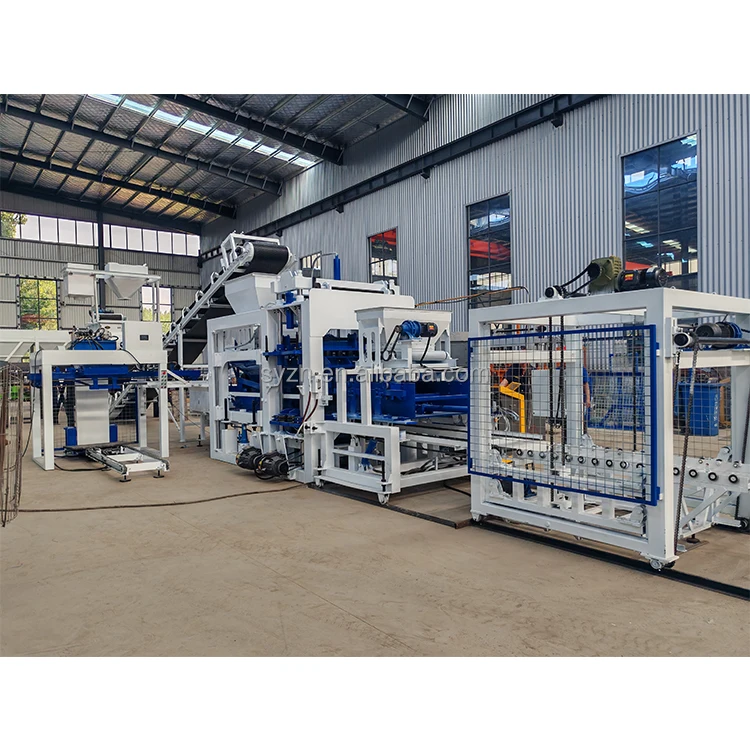
| Product Type | Hydraulic Concrete Block Making Machine |
| Overall Dimensions (L×W×H) | 8300 × 1860 × 3000 mm |
| Total Mass | 8 T |
| Rated Pressure | 21 MPa |
| Main Vibration Form | Platform Vibration |
| Vibration Frequency | 2800–4500 r/min |
| Vibration Force | 45 kN |
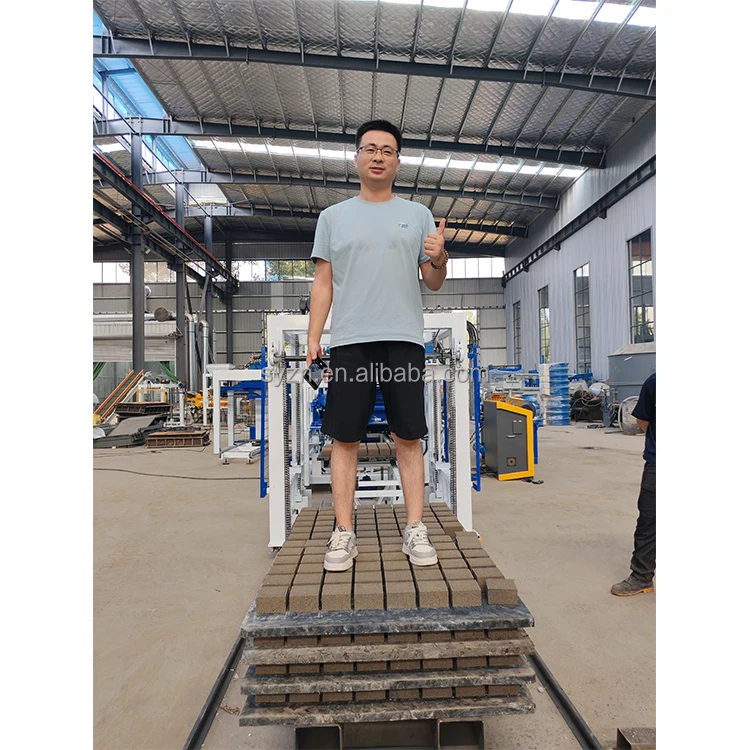
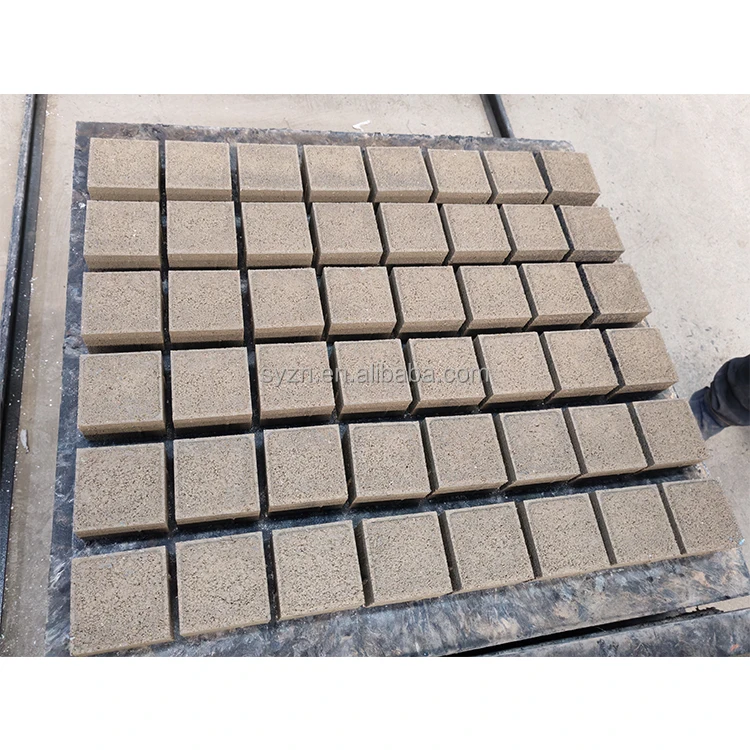
| Pallet Size | 950 × 900 mm |
| Molding Cycle | 15–20 s (basis not stated in source) |
| Overall Power | 55.5 kW |
| Demolding Method | Hydraulic |
| Required Factory Area | Approx. 300 m² |
| Container Loading | 1 × 40HQ (basic equipment) |
| Applied Raw Materials | Crushed stone, sand, cement, fly ash, gravel, slag |
| Warranty | 1 year (whole machine, excluding spare parts) |
Application Suitability
| Application Scenario | Typical Material or Output |
|---|---|
| Housing project on-site production | Hollow and solid concrete blocks from local aggregate and cement |
| Paver and kerbstone supply for municipal works | Interlocking pavers and curbstones using crushed stone and sand |
| Building material distributor inventory | Standard block formats restocked for quick-turnaround regional buyers |
| Fly ash utilization plants | Solid and hollow blocks incorporating fly ash and slag blends |
Why the Dispatch Date Matters More Than the Cycle Time
A quoted cycle time means nothing if the machine is still on the production floor when your foundation crew is waiting.
Buyers working to a construction season deadline often focus on molding speed, only to discover the equipment they selected is built to order with a multi-week lead. When a project schedule is fixed, the realistic arrival date of a QT8-15 block machine in stock determines whether the first blocks are laid on time or the entire masonry phase shifts. [NEED_CITE: construction project delay costs due to equipment late arrival]
What "In Stock" Actually Means for Your Timeline
When we confirm a QT8-15 block machine in stock, the unit is assembled, factory-tested, and staged for dismantling and container loading. This eliminates the production queue entirely. The remaining timeline covers final voltage verification, control language confirmation, dismantling for shipment, and container booking — steps that typically compress into a matter of weeks rather than months.
Container Loading and Dismantling for Shipment
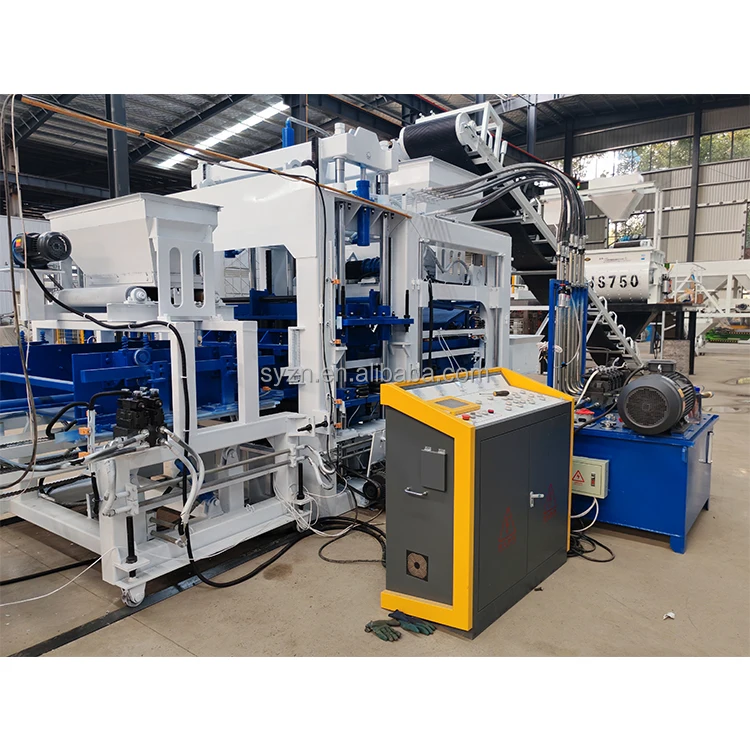
The basic QT8-15 configuration fits within a single 40HQ container. The main press, hydraulic station, and control cabinet are separated and secured against transit movement. Pallets and moulds are packed to maximize floor space inside the container. A detailed packing photograph set and loading plan are shared before the container is sealed, so the receiving team knows exactly how the cargo is arranged for unloading. [NEED_CITE: standard container loading practices for heavy industrial machinery]
Reading the Specs That Affect Your Site Setup
The 21 MPa rated hydraulic pressure combined with 45 kN platform vibration force determines the compaction density of every block leaving the press. Higher pressure and matched vibration produce blocks with consistent wall strength across formats, from hollow blocks to solid pavers. The 950 × 900 mm pallet size must align with your curing rack dimensions and the forklift capacity already on site — a mismatch here means buying new handling equipment or reconfiguring the curing yard. At 55.5 kW overall power, the electrical supply must include a dedicated circuit with adequate breaker rating; voltage and frequency need confirmation against local grid standards before the machine ships. The 8 T total mass and 8300 × 1860 × 3000 mm footprint require a level concrete foundation within the approximate 300 m² factory area, with sufficient overhead clearance for the hydraulic demolding stroke.
The Hidden Cost of Skipping the Unloading Check
Arriving at the job site with a container full of machinery and no way to get it out is a scenario that happens more often than buyers expect. If the unloading platform height, overhead clearance at the warehouse door, or local forklift capacity has not been verified before dispatch, the QT8-15 sits in the container while the crew improvises. Each idle day burns labor cost and pushes the masonry schedule further into the rainy season or past contractual milestones. [NEED_CITE: common equipment unloading failures at construction sites]
Why Procurement Here Reduces Arrival Risk
Every stocked unit undergoes a factory test run before dismantling, so mechanical and hydraulic performance is verified against a test record — not assumed from a catalogue sheet. The pallet specification and mould format list are confirmed against your target block type before loading, preventing a situation where the machine arrives but cannot produce the format your market actually sells. Voltage, frequency, and PLC display language are locked in during the pre-shipment check, avoiding a commissioning standoff caused by a language barrier on the control screen. Container loading plans and packing photographs are provided upfront, giving your receiving team the information needed to plan unloading equipment and staging space. Mould and hydraulic wear part lists ship with the documentation, so the first replacement order can be placed before the original parts are consumed.
Documentation & Verification
- Factory test record covering hydraulic pressure and vibration performance before dismantling
- Container loading plan with packing photographs showing cargo arrangement inside the 40HQ
- Voltage, frequency, and PLC display language confirmation sheet signed before dispatch
- Mould drawing and format list matched to your specified block types
- Hydraulic and electrical schematic for on-site troubleshooting and spare part ordering
- Operation and maintenance manual with wear parts list and recommended replacement intervals
Installation, Commissioning & Support
- Level concrete foundation required within 300 m² area to support the 8 T machine mass
- Dedicated power circuit sized for 55.5 kW total draw at confirmed local voltage and frequency
- Machine dismantled into press, hydraulic station, and cabinet for 40HQ loading and reassembled on site
- First-run commissioning includes hydraulic pressure calibration and vibration frequency adjustment per block format
- Operator training covers mould change procedure, pallet feeding sequence, and daily maintenance checkpoints
- Wear parts and mould list provided at handover so first replacement spares can be ordered proactively
What We Need to Confirm Before Dispatch
To match a stocked unit to your site, provide the target block format and daily volume expectation, local voltage and frequency standard, and the overhead clearance and door width of the receiving building. Confirm whether pallets and curing rack handling equipment are needed in the shipment or already available on site.
Frequently Asked Questions
Q: Is the QT8-15 currently in stock, and what is the realistic dispatch-to-arrival timeline?
A: Stocked units are assembled and factory-tested, ready for dismantling and container loading. The dispatch timeline covers final voltage and language confirmation, dismantling, packing, and container booking. Ocean transit time depends on the destination port. A complete arrival estimate is quoted before order confirmation so your project schedule can be planned around a known date.
Q: How is the machine dismantled for container loading, and is reassembly support included?
A: The basic QT8-15 equipment fits in one 40HQ container. The main press, hydraulic station, and control cabinet are separated and secured. Packing photographs and a loading plan are provided before sealing. On-site reassembly guidance and commissioning support are available to ensure the machine is correctly reconnected and calibrated.
Q: What voltage and frequency configurations can ship from stock?
A: Stocked machines carry a standard industrial voltage configuration. If your site requires a different voltage or frequency, electrical components may need adjustment before dispatch. Confirming local grid standards early ensures the control panel, motors, and heating elements match your supply, preventing commissioning delays after arrival.
Q: Are pallets included in the basic equipment package?
A: The basic container load covers the core block making equipment. Pallets are specified separately based on quantity, material preference, and the 950 × 900 mm size. Clarifying pallet requirements before loading ensures they are included in the same shipment rather than ordered as a separate consignment later.