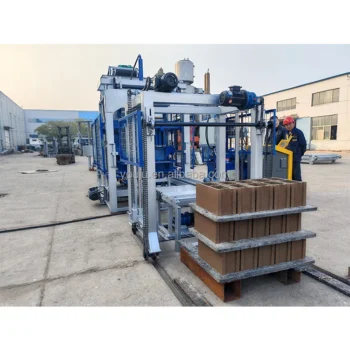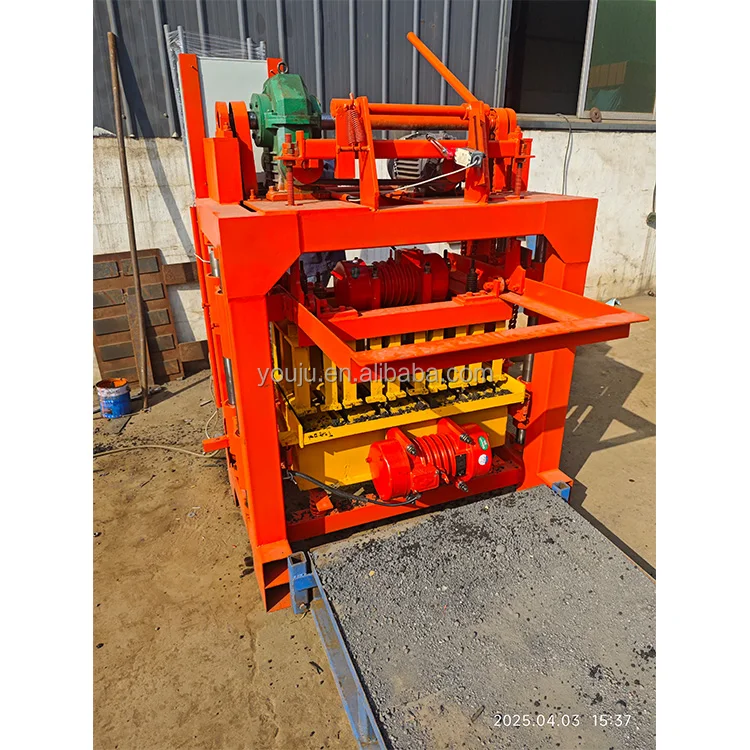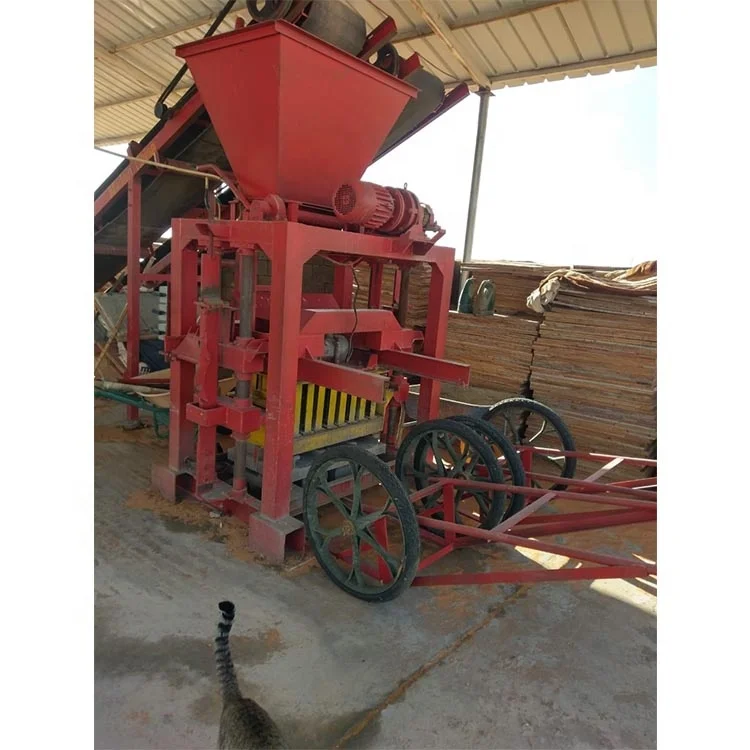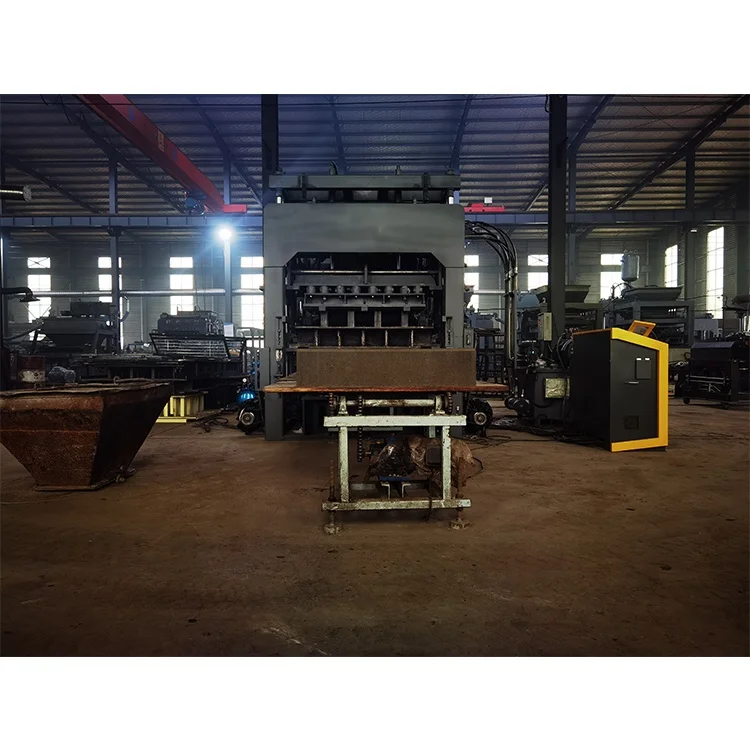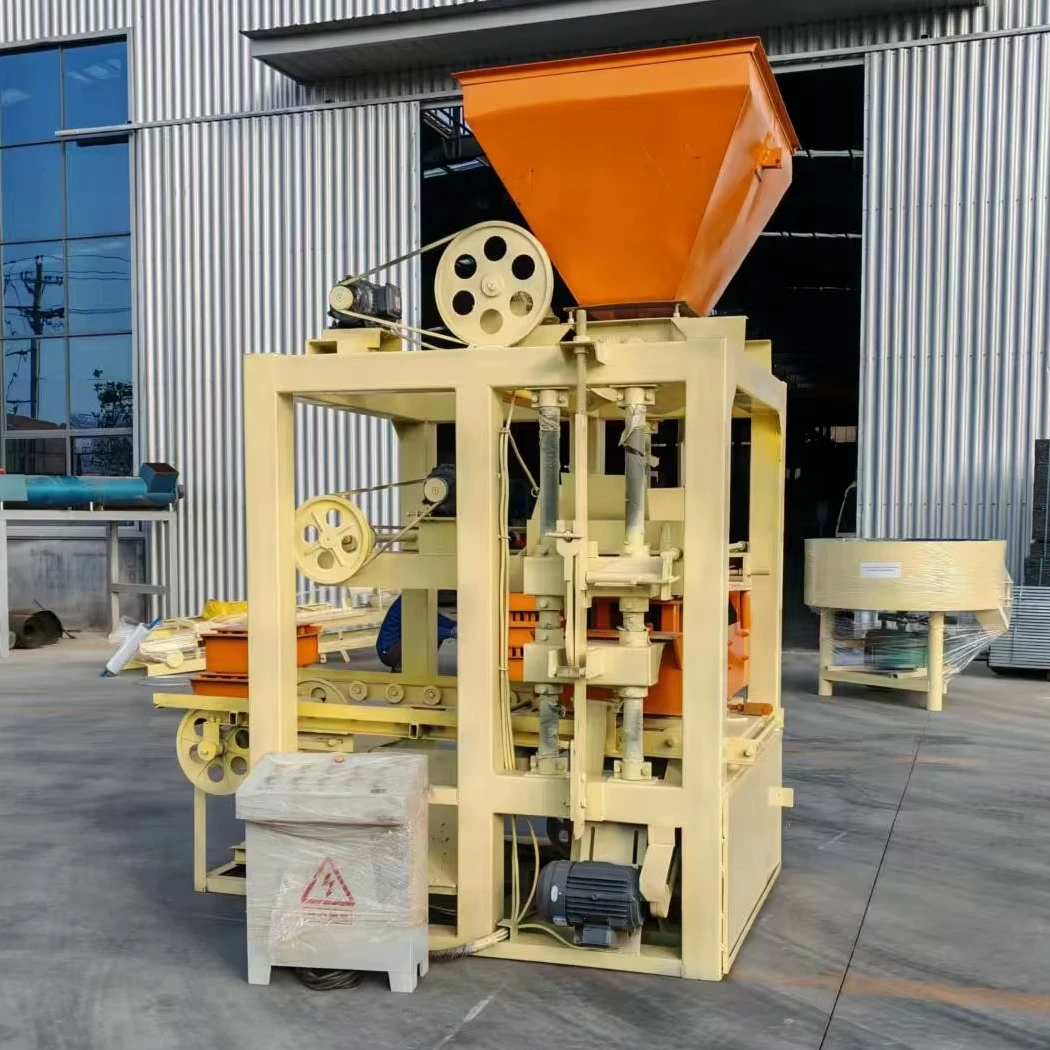


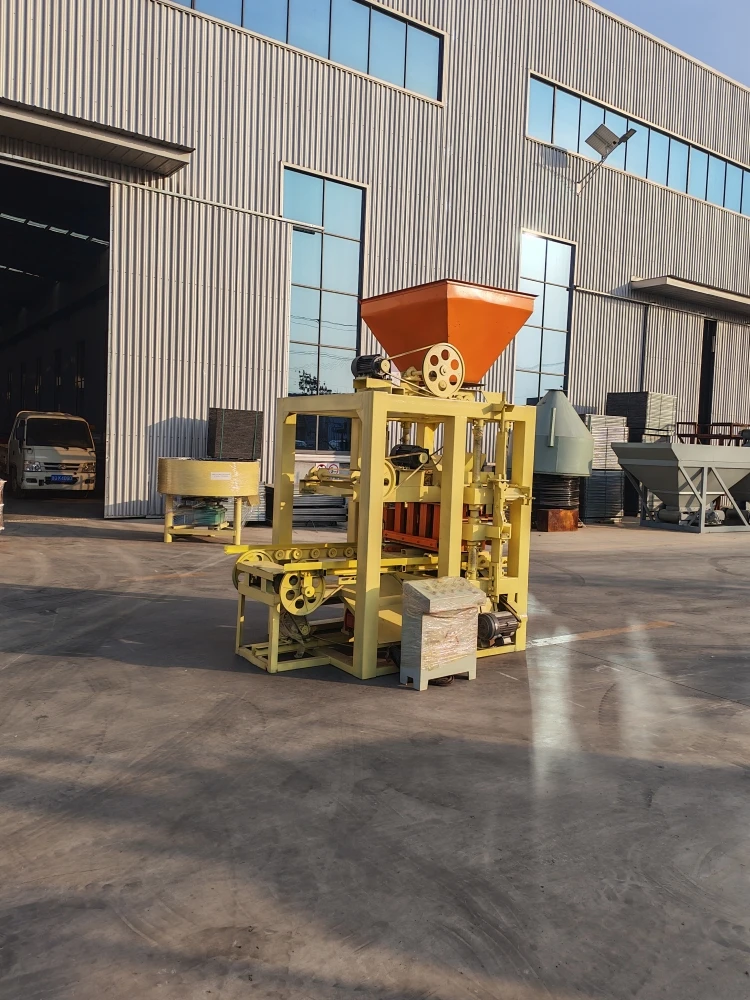
Description
Quick dispatch capability — The QTJ4-24 sits in our ready-to-ship inventory, so buyers working against tight project deadlines can bypass standard production queues and have equipment en route within days rather than months.
Technical Specifications
| Parameter | Value |
|---|---|
| Model | QTJ4-24 |
| Product Type | Semi-Automatic Cement Block Making Machine |
| Overall Dimensions (L×W×H) | 3600×1700×2560 mm |
| Net Weight | 2,000 kg |
| Pallet Size | 850×450 mm |
| Molding Cycle | 24–26 s |
| Vibration System | 4 vibrators (2×3 kW lower, 2×1.5 kW upper), 45 kN total force |
| Overall Power | 11.95 kW |
| Control System | PLC controlled |
| Material Distribution | Full-automatic spiral feeder |
| Mold Lifting Reducer | 350-type |
| Molding Method | Mechanical vibration |
| Hydraulic Pressure | N/A (mechanical system) |
| Automation Level | Semi-automatic |
| Key Features | PLC control, dual-level vibration, automatic spiral feeding |
| Warranty | 1 year (excluding wear parts) |
Application Suitability
| Application | Material or Output |
|---|---|
| Hollow block production for building walls | Cement, sand, crushed stone aggregate |
| Solid block manufacturing | Cement-sand mixes with local fine aggregate |
| Interlocking brick production | Cement with graded stone dust |
| Paving brick manufacturing | Cement-sand blends with coarse aggregate |
| Small to medium fixed-plant operations | 850×450 mm pallet footprint |
| On-site contractor production | Semi-automatic operation, compact footprint |
What "Ready Stock" Actually Means for Your Project Timeline
Buyers chasing a project deadline need to know what sits on the warehouse floor today, not what enters production next quarter.
I have seen contractors commit to a block machine based on a catalogue lead time of six to eight weeks, only to discover the specific mould and pallet configuration they need pushes the real dispatch date well beyond their site start date. With the QTJ4-24 block machine in stock, the conversation shifts from manufacturing scheduling to container loading logistics [NEED_CITE: standard container loading practices for industrial machinery]. The semi-automatic format keeps the machine compact enough for straightforward dismantling and loading, which matters when every day of transit planning counts.
Stock Configuration and Dispatch Window
The QTJ4-24 semi-automatic cement block making machine arrives with a standard PLC control system and the 850×450 mm pallet size already set. This pallet dimension dictates the mould formats you can run — hollow blocks, solid blocks, interlocking bricks, and paving bricks all share this footprint. When a buyer confirms the target block format and local voltage requirements, the machine can move from warehouse floor to container loading bay in a significantly shorter window than a build-to-order unit [NEED_CITE: typical dispatch timelines for stocked industrial equipment].
Container Loading and Machine Dismantling
The overall dimensions of 3600×1700×2560 mm mean the QTJ4-24 does not ship as a single assembled unit. The upper vibration assembly, hopper, and control cabinet are separated for flat-rack or open-top container loading. The 2-tonne net weight keeps the machine within standard container weight limits. Buyers receive packing photographs before the container doors close, so you can verify bracing and protection against your own import clearance requirements.
Arrival Estimate and Project Alignment
From port of loading to destination, transit time depends entirely on the shipping route. The point of stocking is to compress the front end of that timeline — the manufacturing and factory-test phase that normally consumes several weeks. For a contractor who needs hollow blocks on-site before the wet season or a distributor filling a showroom order, having the QTJ4-24 block machine in stock removes the largest variable from the schedule.
Vibration Force, Pallet Size, and What They Mean on the Ground
The 45 kN vibration force comes from four motors — two 3 kW units underneath the mould table and two 1.5 kW units above. This dual-level arrangement compacts the mix from both directions, which matters for hollow block walls where uneven density shows up as weak corners. The 850×450 mm pallet is compact compared to fully automatic lines, meaning you need less curing yard space and a smaller forklift. For a first-time plant operator, a smaller pallet also means lighter manual handling during the semi-automatic stacking phase. The 350-type reducer on the mould lifting mechanism handles the repetitive shock load of each cycle without the premature gear wear that lighter reducers develop after several months of continuous operation.
The Cost of Ordering What Is Not in the Warehouse
Buyers who select a machine based on brochure specifications but ignore stock status often face cascading delays. A mould that is not on the shelf adds its own lead time. A PLC configured for a language your operators do not read means commissioning stalls until a firmware update arrives [NEED_CITE: PLC language configuration requirements for export machinery]. Voltage mismatches discovered after arrival require transformer purchases or motor rewinds on-site — both expensive fixes that a simple pre-dispatch confirmation avoids entirely.
Why Source a Stocked Machine Through This Channel
Our block machinery focus means the QTJ4-24 is specified as part of a matched system — pallets, moulds, and handling equipment are checked for compatibility before dispatch. Mould formats are selected against the block types your market actually sells, not a default catalogue list. Voltage and PLC language are confirmed against your site conditions before the machine leaves the floor. Factory test records are generated with your target block format in the press. Wear part and mould availability is verified so your first replacement order does not become a sourcing project.
Documentation & Verification
- Factory test record showing cycle performance on your specified block format
- Machine specification sheet with confirmed voltage and frequency for your market
- Pallet specification matching your existing curing area and forklift capacity
- Packing photographs documenting bracing before container doors close
- Customs documentation support for smooth import clearance at destination port
Installation, Commissioning & Support
- Foundation pad sized to 3600×1700 mm footprint with level tolerance for vibration stability
- Dedicated electrical circuit rated for 11.95 kW total draw with correct voltage and frequency
- Upper vibration assembly and hopper reassembled on-site with alignment verification
- PLC control language set to operator preference before first production run
- Mould change procedure demonstrated with your specific block format installed
- Wear parts list provided with reorder intervals for vibration motors and reducer
What We Need to Confirm Before Dispatch
To match the right stocked unit to your site, send us the block format you intend to produce first, your local aggregate type and source, the voltage and frequency at your plant, and the language your operators need on the PLC display. If you already have curing racks or a forklift, share the pallet handling dimensions so we confirm the 850×450 mm pallet integrates without modification.
Frequently Asked Questions
Q: Which QTJ4-24 configurations and moulds are currently in stock?
A: Standard stock includes the QTJ4-24 with PLC control and the 850×450 mm pallet system. Available mould formats typically cover hollow block, solid block, interlocking brick, and paving brick. Specific mould inventory changes with demand, so confirm your required format before committing to a purchase order.
Q: What is the dispatch lead time from deposit to container loading?
A: Stocked units bypass the manufacturing queue, so the window from deposit confirmation to container loading is considerably shorter than build-to-order machines. The exact timeline depends on mould availability, voltage configuration, and any PLC language setup required before the machine leaves the warehouse floor.
Q: How is the machine dismantled and packed for container shipment?
A: The upper vibration assembly, material hopper, and control cabinet are detached from the main frame. Components are braced and secured for container transit. The 2-tonne net weight and dismantled profile fit standard container loading. Packing photographs are provided before dispatch for your records and customs clearance.
Q: Are voltage, frequency, and PLC language configurable before dispatch from stock?
A: Yes. Voltage and frequency are confirmed against your site electrical supply before the machine ships. The PLC display language is set to your operator preference during the pre-dispatch preparation phase. This avoids on-site commissioning delays caused by electrical mismatches or unreadable control interfaces.