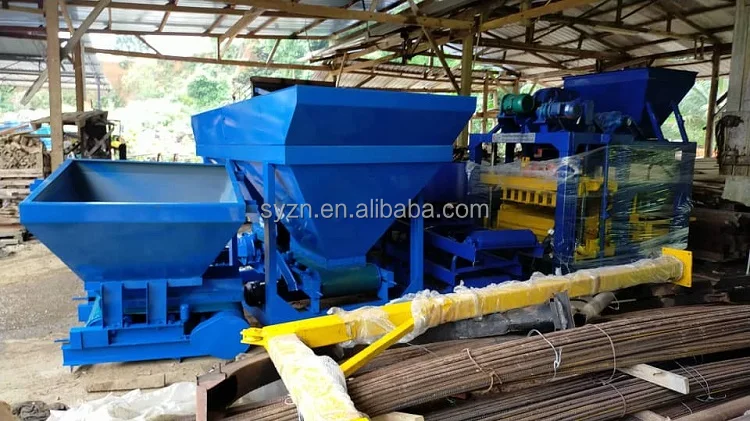
Description
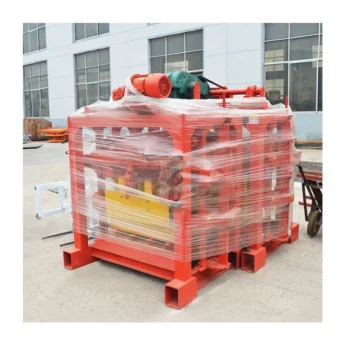
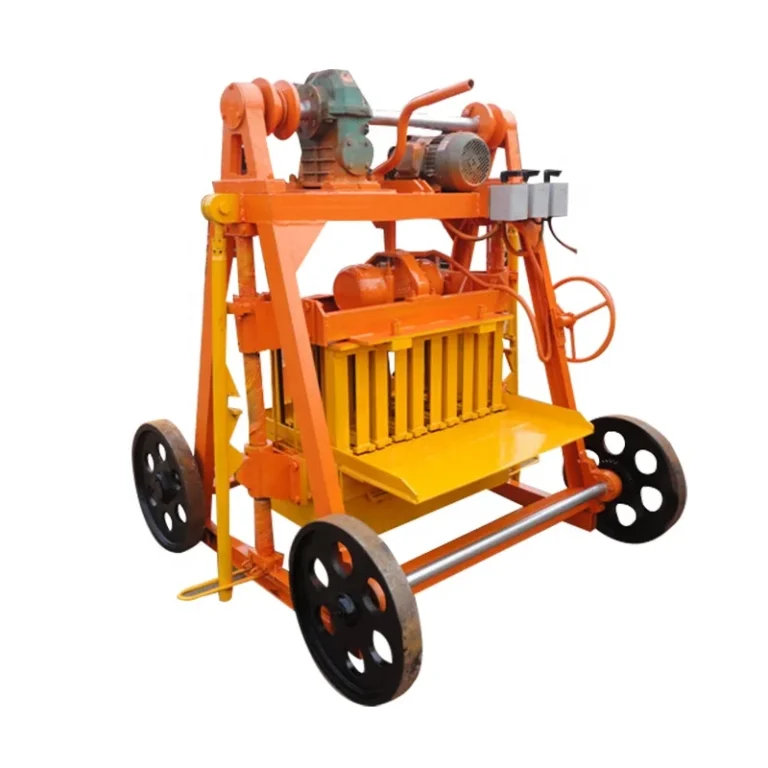
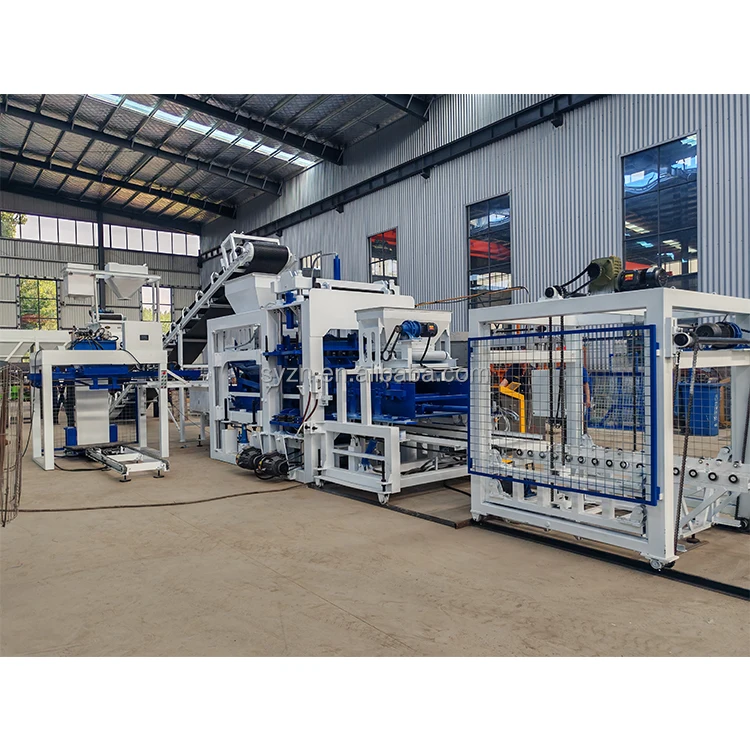
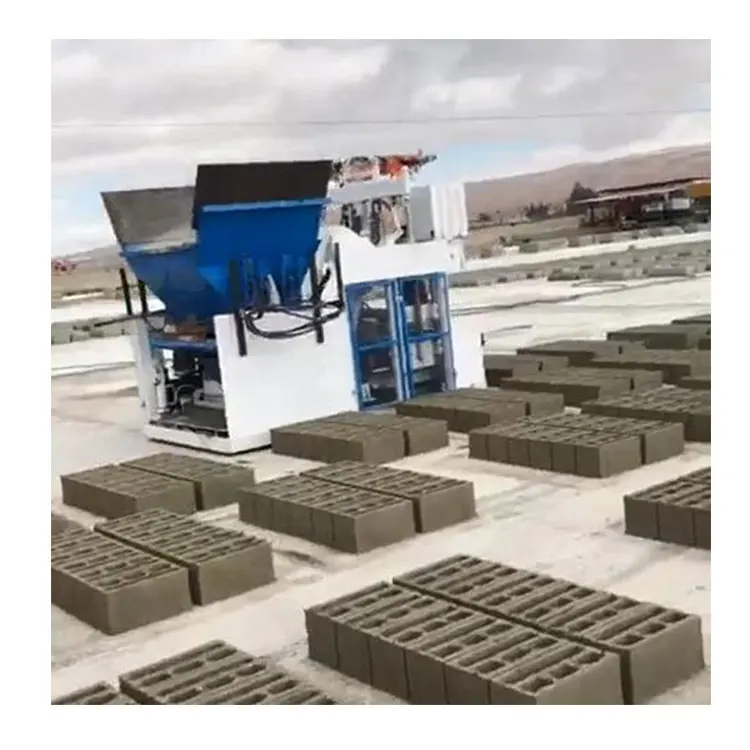
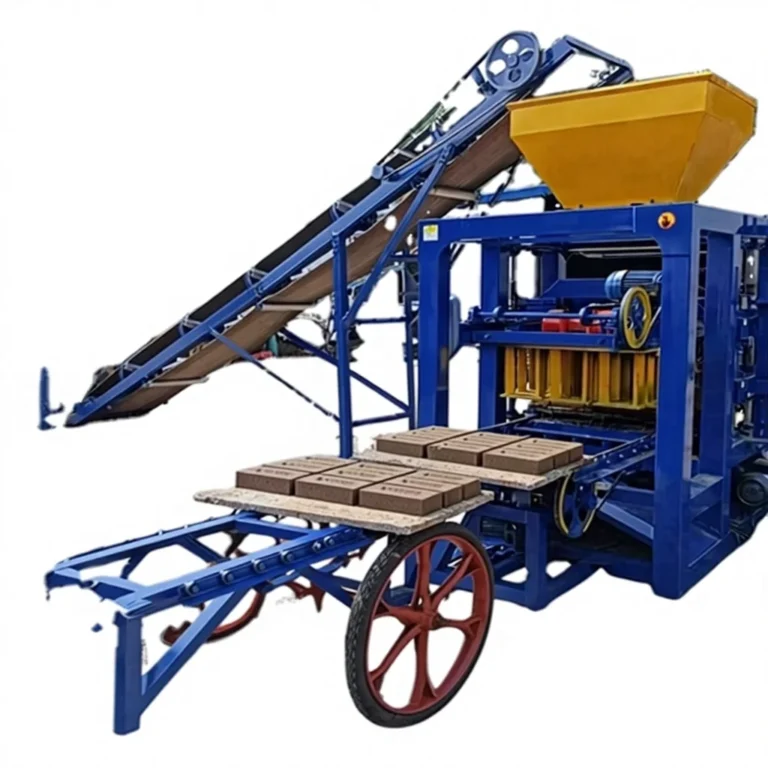
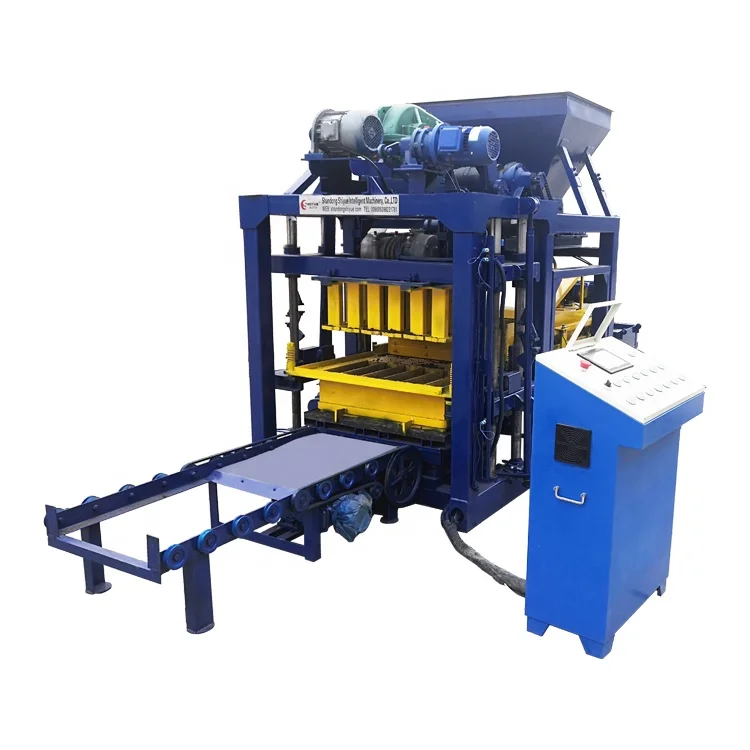
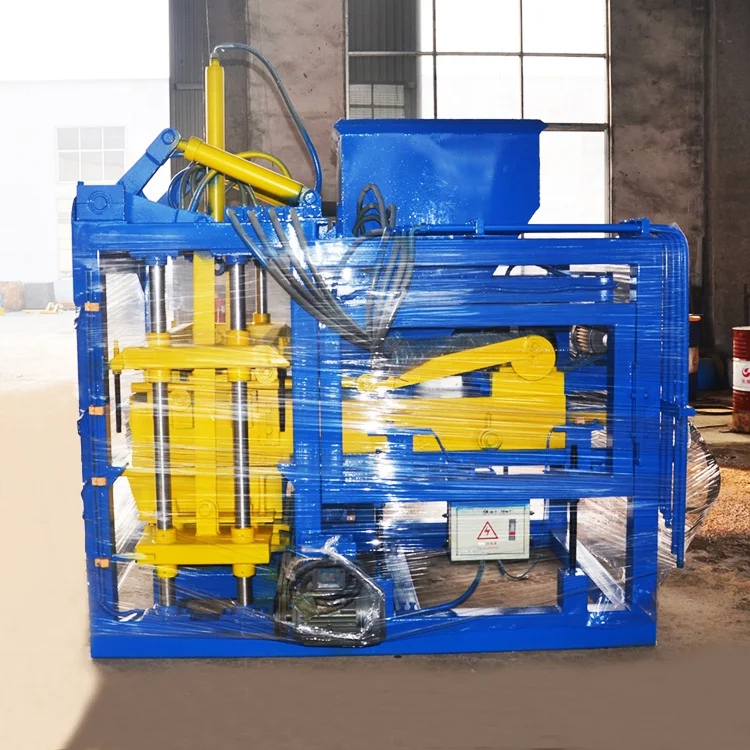
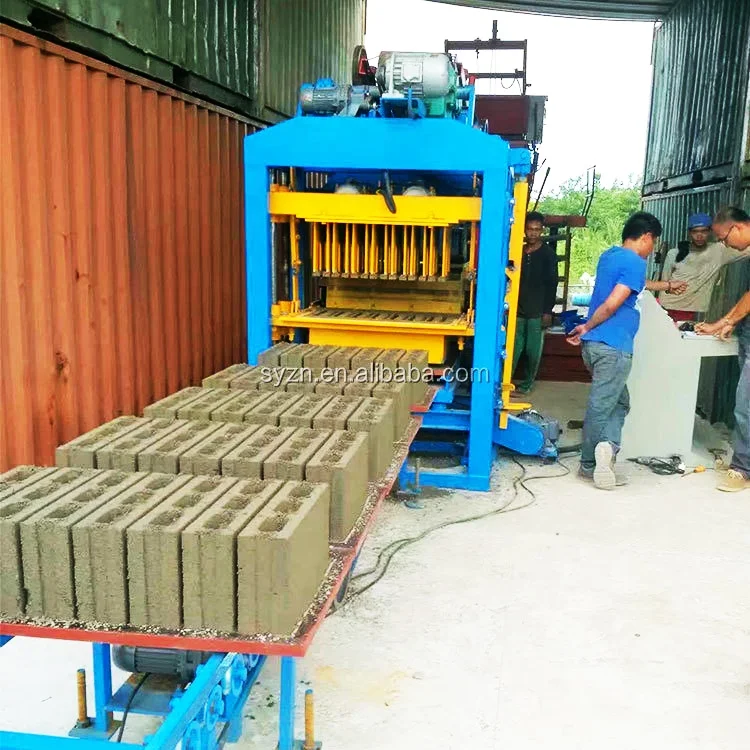
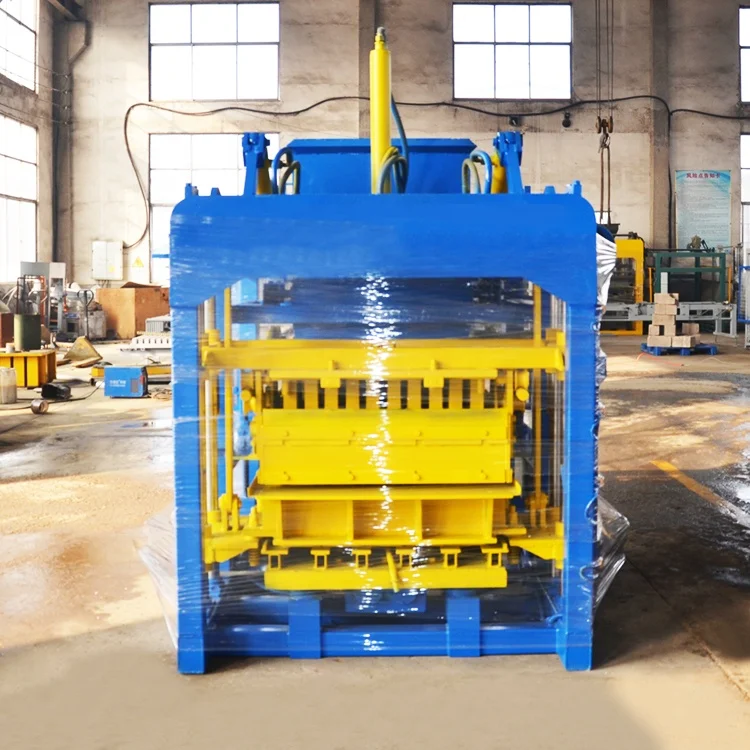
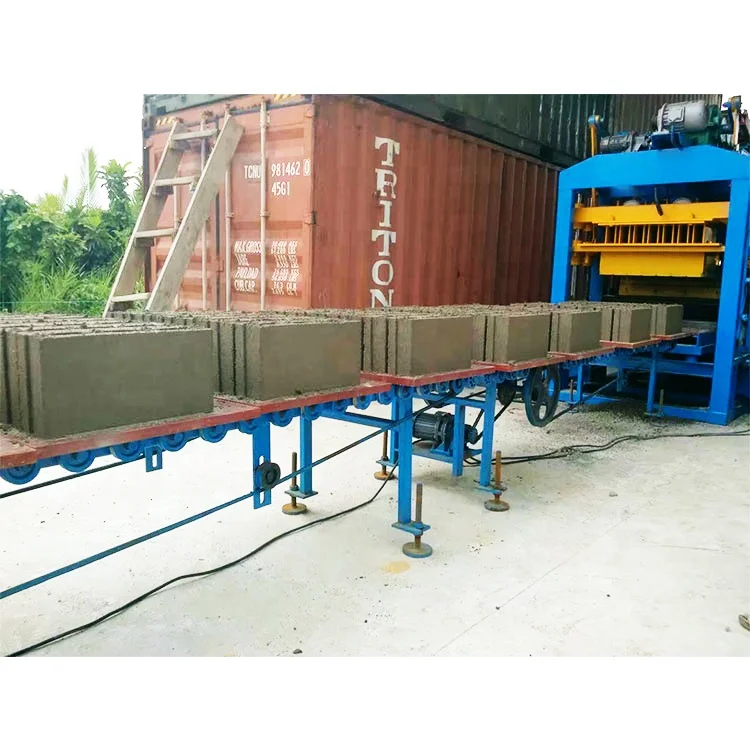
Stocked and Ready — QTJ4-25 block machine in stock with standard moulds, pallets, and mixer matched as one system, not assembled from separate suppliers after the order.
Technical Specifications
| Parameter | Value |
|---|---|
| Model | QTJ4-25 |
| Product Type | Automatic Concrete Block Making Machine |
| Overall Dimensions (L×W×H) | 6400 × 1500 × 2700 mm |
| Molding Cycle | 25 s (basis not stated in source) |
| Vibration Frequency | 2800–5100 r/min |
| Exciting Power | 60 KN |
| Rated Power | 17.9 kW |
| Mixer Model | JQ350 |
| Pallet Size | 850 × 550 × 20 mm |
| Net Weight | 2500 kg |
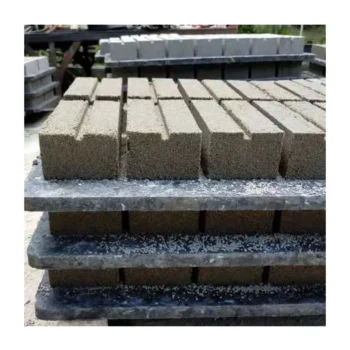
| Applied Products | Concrete hollow blocks (8 inch, 6 inch), solid brick |
| Raw Materials | Crushed stones, sand, cement, dust, fly ash |
| Control System | PLC (source value — verify against manufacturer catalog) |
| Output — Hollow Block 390×190×190 mm | 480 pcs/h, 3800 pcs/8 hr (4 pcs/mould) |
| Output — Hollow Block 400×150×200 mm | 600 pcs/h, 4800 pcs/8 hr (5 pcs/mould) |
| Output — Solid Brick 240×115×53 mm | 2100 pcs/h, 17000 pcs/8 hr (18 pcs/mould) |
| Voltage & Frequency | To be confirmed before dispatch |
| Automation Level | Automatic plate-supplying, material-disturbing, brick-discharging |
| Assembly State | Nude packing in 20GP container (source value — verify) |
| Standards | CE (referenced in documentation capability) |
Application Suitability
| Application | Material or Output |
|---|---|
| On-site hollow block production for building contractors | Crushed stone, sand, and cement mixes poured before concrete deadlines |
| Small-to-medium block plant operations | 6-inch and 8-inch hollow blocks from locally sourced aggregate |
| Building material distributor expanding stock range | Solid bricks at 240×115×53 mm from fly ash blends |
| First block plant for entrepreneurs | Concrete blocks using dust, sand, and cement at startup volume |
What "4800 Pieces per Shift" Leaves Out for Your Project Timeline
Capacity numbers only hold when your block format, mix design, and pallet logistics match what was assumed in the test.
I have watched buyers receive machines rated for high output, then learn on site that the test used a block size they never planned to sell. The QTJ4-25 block machine in stock here is quoted with output stated per format — 4800 pcs per 8-hour shift assumes the 400×150×200 mm hollow block at 5 pieces per mould, while the 390×190×190 mm hollow block drops to 3800 pcs per shift. If your local aggregate contains high clay content, the vibration frequency range of 2800–5100 r/min may need adjustment, and real output can fall short [NEED_CITE: effect of aggregate clay content on block molding cycle time]. The 25-second cycle is a starting point, not a guarantee, and every buyer should confirm the block format they actually sell before the container is sealed.
Dispatch Timing That Matches Your Construction Deadline
When a contractor commits to a building schedule, the block machine must arrive before the foundation work finishes. The QTJ4-25 block machine in stock ships as a complete unit with the JQ350 mixer, standard moulds, and pallets — no waiting for separate suppliers to deliver peripheral equipment. Container loading plans are confirmed at quotation stage so you know exactly which components fit and how they are dismantled for the 20GP container.
Pallet Compatibility Before the Machine Leaves the Factory
The 850×550×20 mm pallet size is fixed for this model, which means your existing curing racks and forklift must accommodate that dimension. I have seen situations where buyers received machines only to discover their curing yard was built for a different pallet footprint, forcing a costly yard reconfiguration. Confirm pallet handling logistics at the inquiry stage so the machine integrates with what you already have on site. [NEED_CITE: pallet sizing standards for concrete block curing operations]
How Vibration and Pressure Work Together in This Configuration
The 60 KN exciting power combined with a vibration frequency range of 2800–5100 r/min determines how densely the concrete mix is compacted inside the mould. Higher frequency works better with fine aggregates like sand and fly ash, while lower frequency suits coarser crushed stone. The rated power of 17.9 kW must be matched to your local voltage and frequency — a mismatch at commissioning delays the entire project. The QTJ4-25 block machine in stock requires voltage confirmation before dispatch so the electrical system arrives configured for your grid, not a default setting that needs rewiring on arrival. The PLC control language is another detail locked at order stage; an operator who cannot read the display adds days to the training period.
The Cost of Skipping the Mix Design Conversation
When a buyer orders without sharing their local raw material sample, the machine arrives configured for a mix that may not be available at their site. High clay content in stone dust, for example, reduces block strength and extends the molding cycle because the material does not flow cleanly into the mould. I once had a buyer call in frustration because their output was half the quoted figure — the issue was local aggregate, not the machine. Every order should include a material sample review before production begins, even if the unit is already in stock. [NEED_CITE: aggregate composition impact on concrete block compressive strength]
Why Buyers Source This Model From Here
Block machinery is the single focus of this operation, meaning the QTJ4-25 arrives with mould, pallet, and handling specified as one matched system. Configuration is set against the buyer’s actual block format and local aggregate rather than a catalogue default. Standard moulds ship with the stocked unit, and custom mould design to buyer drawings is available for additional formats. Automation level is selectable so a buyer can start with automatic plate-supplying and brick-discharging, then add stacking automation later. Installation support with operator training ensures the machine runs correctly from the first production day.
Documentation & Verification
- Machine specification sheet confirming pallet size, vibration range, and rated power for your electrical standard
- Mould drawing and format list showing which block dimensions ship standard and which require separate ordering
- Factory test record run on a block format matching your target output before container sealing
- Voltage and PLC control language confirmation document signed before dispatch
- Packing photographs showing machine dismantling state and container loading arrangement
Installation, Commissioning & Support
- Foundation pad must support 2500 kg net weight plus dynamic vibration loads across the 6400 mm machine length
- Dedicated power circuit sized for 17.9 kW rated draw with voltage and frequency matching the confirmed order specification
- Machine arrives dismantled for 20GP container transport; reassembly includes vibration motor alignment and pallet feed calibration
- PLC control parameters set during commissioning to match local aggregate characteristics and target block format
- Operator training covers mould change procedure, vibration frequency adjustment, and daily maintenance checkpoints
- Wear parts and spare mould availability confirmed at order stage for co-loading in the same container
What to Share When You Request a Quote
Provide the block format you actually sell, your daily output target, and a sample or description of your local aggregate including clay content if known. Confirm your site voltage, frequency, and the language your operators need on the PLC display. Share your curing area dimensions and existing forklift specifications so the 850×550 mm pallet integration is verified before the machine ships.
Frequently Asked Questions
Q: What block formats ship with the standard mould set on the QTJ4-25 block machine in stock?
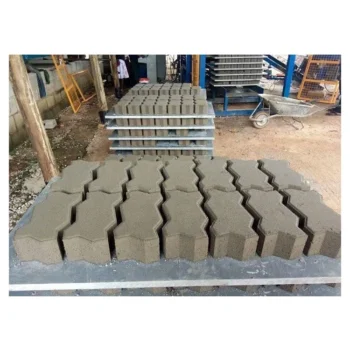
A: The stocked unit typically includes moulds for 390×190×190 mm hollow block, 400×150×200 mm hollow block, and 240×115×53 mm solid brick. Additional formats such as paving blocks or kerbstones require separate mould ordering. Confirm which formats are included in your quotation so there are no surprises at container opening.
Q: How many pallets fit inside the 20GP container alongside the machine?
A: The machine is dismantled for nude packing in the 20GP container, and the number of pallets that fit alongside depends on the mould set and mixer configuration included. Request a container loading plan at quotation stage so you can plan pallet inventory for your first production weeks.
Q: Can dispatch lead time be confirmed at quotation stage for project scheduling?
A: Yes. Because the QTJ4-25 block machine in stock is held as a complete unit, dispatch timing is quoted upfront based on current stock position and your voltage confirmation speed. This allows contractors to align machine arrival with their construction schedule rather than working from estimated production lead times.
Q: Is voltage and frequency locked before production, or adjustable at the destination?
A: Voltage and frequency must be confirmed before the machine is prepared for dispatch. The electrical system is configured to match your local grid specification, and changing it at destination requires rewiring that delays commissioning. PLC display language is confirmed at the same stage.
Q: What spare moulds and hydraulic wear parts are available for immediate co-loading?
A: Spare moulds for standard block formats and common hydraulic wear parts can be loaded in the same container if ordered at the quotation stage. Availability is confirmed at inquiry so you can stock critical replacements before the first production cycle begins.