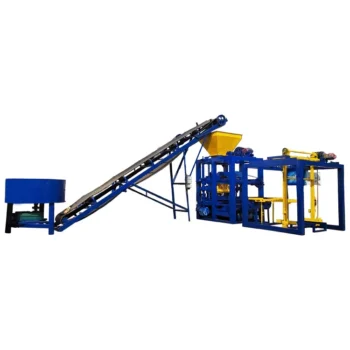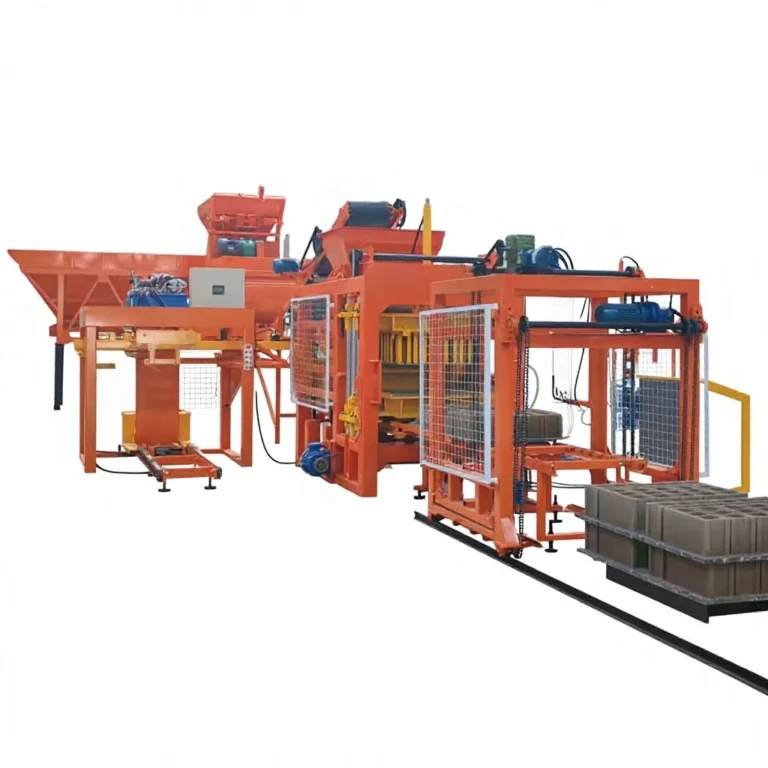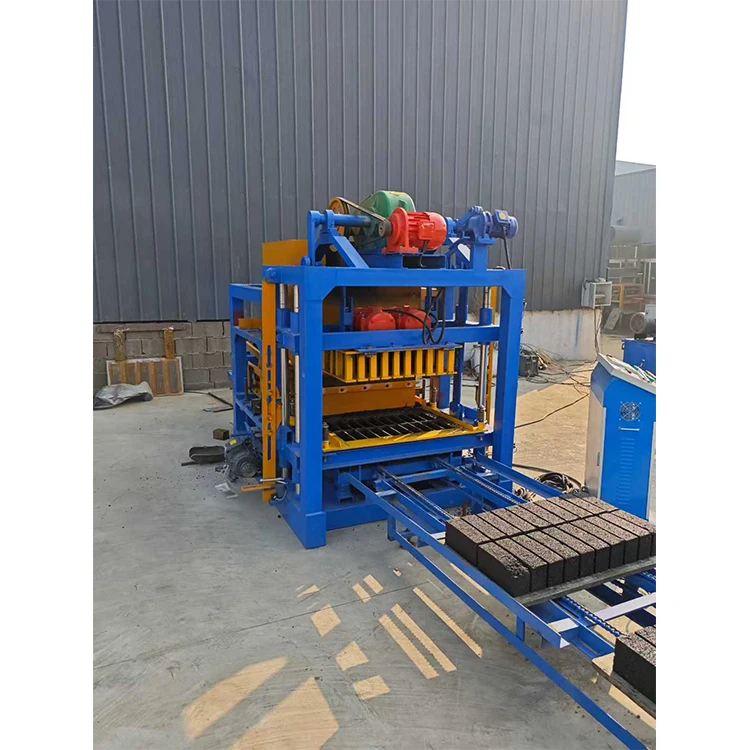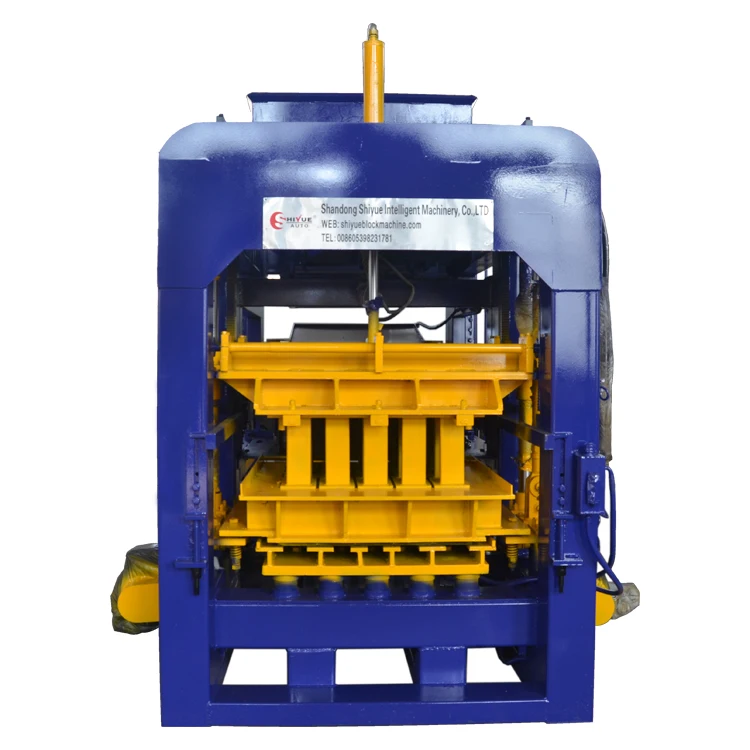
Description
Stocked and ready to ship — QTJ4-25 block machine units held in inventory so your project timeline is not held hostage by production delays.
Technical Specifications
| Parameter | Value |
|---|---|
| Model | QTJ4-25 |
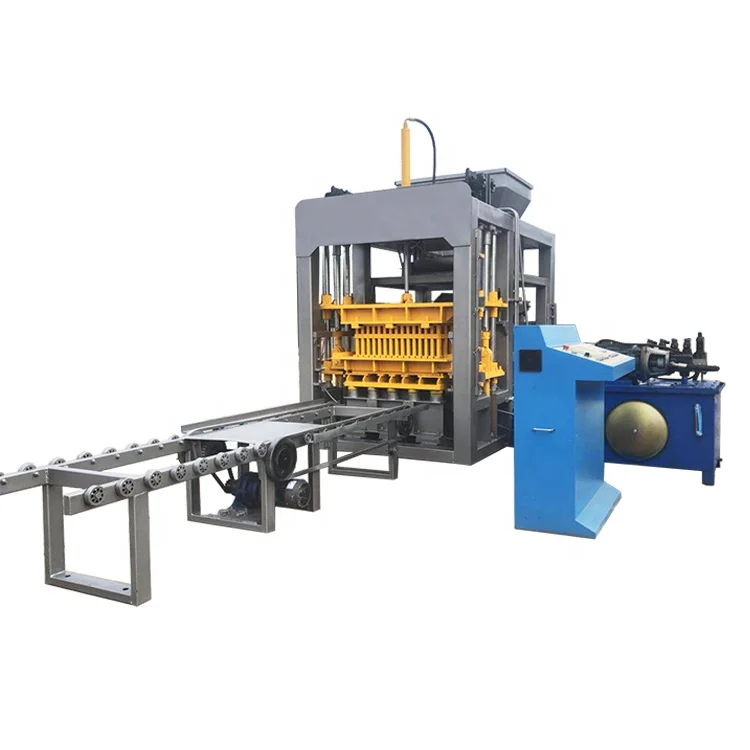
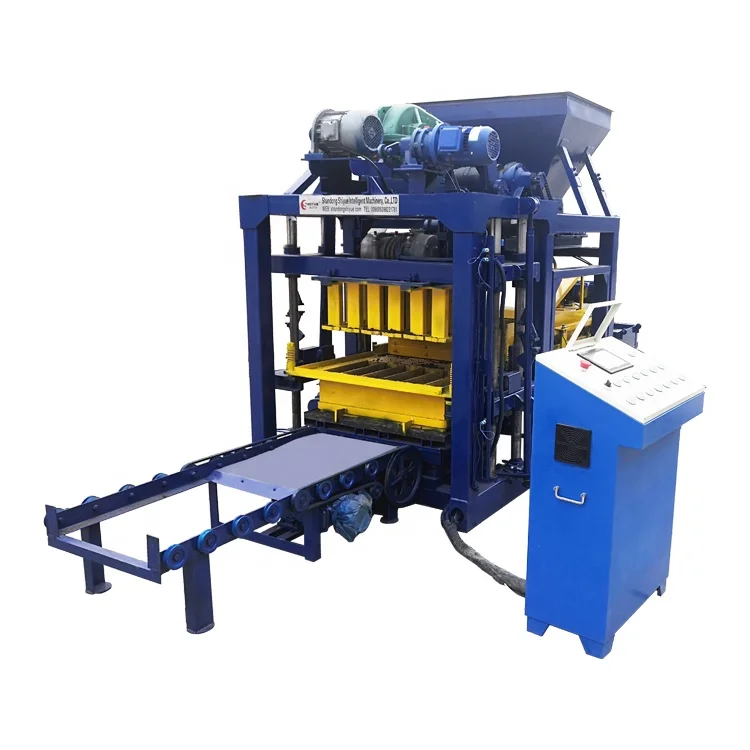
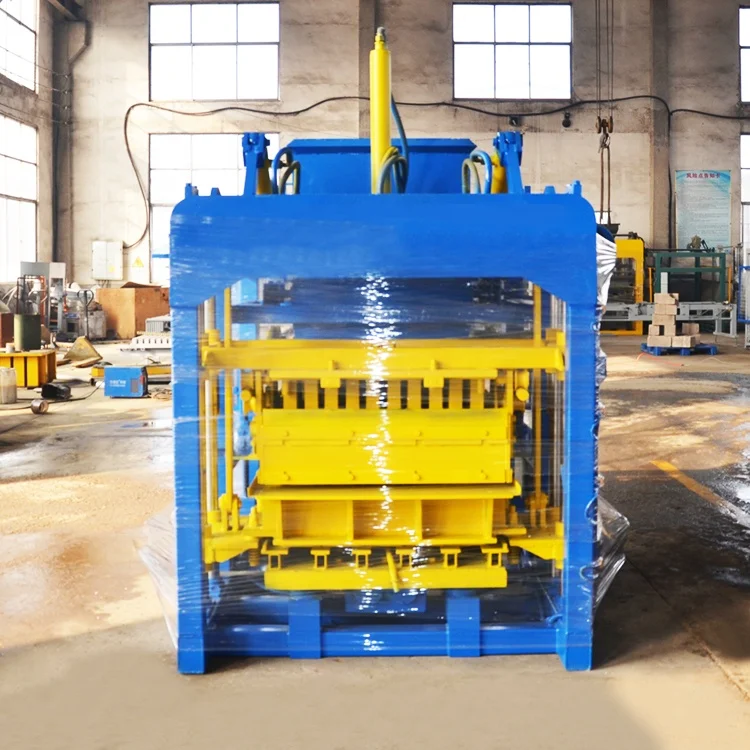
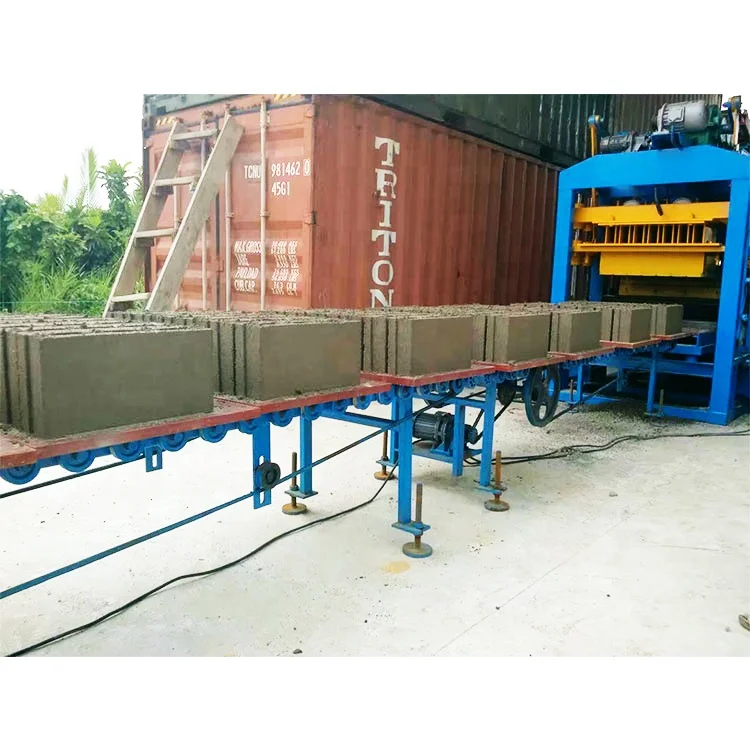
| Product Type | Automatic Concrete Block Making Machine |
| Overall Dimensions (L×W×H) | 6400×1500×2700 mm |
| Molding Cycle | 25 s |
| Vibration Frequency | 2800–5100 r/min |
| Exciting Power (Vibration Force) | 60 kN |
| Total Power | 17.9 kW |
| Mixer Model | JQ350 |
| Pallet Size | 850×550×20 mm |
| Net Weight | 2500 kg |
| Control System | PLC with automatic plate-supplying, material-disturbing, and brick-discharging |
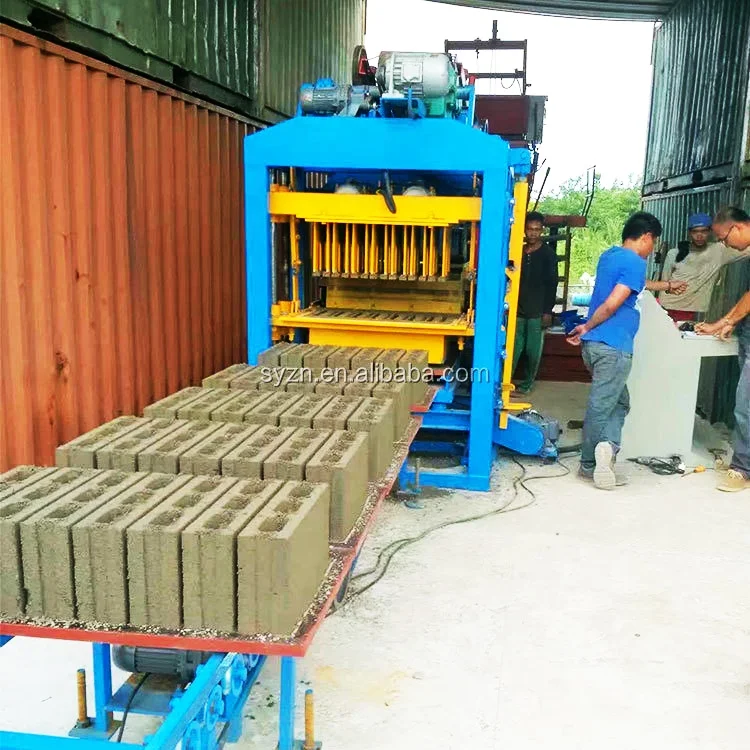
| Output — Hollow Block | 480 pcs/h (basis: 390×190×190 mm, 4 pcs/mould) |
| Output — Hollow Block | 600 pcs/h (basis: 400×150×200 mm, 5 pcs/mould) |
| Output — Solid Brick | 2100 pcs/h (basis: 240×115×53 mm, 18 pcs/mould) |
| Hydraulic Pressure | (basis to be confirmed) |
| Mould Change Time | (basis to be confirmed) |
| Voltage & Frequency | (basis to be confirmed) |
| Automation Level | Semi-automatic (PLC-controlled plate feeding and brick discharging) |
Application Suitability
| Application | Material or Output |
|---|---|
| Hollow block production for site-built housing | Crushed stone, sand, cement, fly ash mixtures |
| Solid brick runs for masonry and paving | Cement, dust, sand blends |
| Small-to-medium block plant start-ups | 6-inch and 8-inch concrete hollow blocks |
| On-site construction block manufacturing | Locally sourced aggregate with cement binder |
What "In Stock" Actually Means for Your Project Deadline
A stocked QTJ4-25 block machine in stock fast delivery shortens the gap between payment and first block on your curing rack.
When I was commissioning machines across West Africa, the most frustrating delays were never about the press itself. They came from voltage mismatches, missing pallets, and PLC screens displaying a language the operator could not read. Buyers working to a project deadline cannot afford to discover these gaps after the container arrives. The QTJ4-25 block machine in stock fast delivery promise only holds if every ancillary detail — pallet count, electrical specification, control language — is locked down before dispatch [NEED_CITE: common commissioning delays in exported block machinery].
Dispatch Timeline You Can Build a Gantt Chart Around
The value of a QTJ4-25 block machine in stock fast delivery is not just that the machine sits in a yard. It means the unit has passed factory testing, the moulds are matched to your block format, and the pallets are already allocated to your order. When stock is confirmed in writing, the remaining steps — container loading plan, customs documentation, and shipment booking — follow a predictable sequence rather than an open-ended wait.
Pallet and Container Logistics Confirmed Before You Pay
Approximately 500 pallets at 850×550×20 mm are loaded alongside the dismantled machine inside a single 20GP container. This matters because pallets are the first consumable you will run out of, and sourcing them locally in many markets means inconsistent thickness that jams the plate-supplying mechanism. Confirming pallet material, quantity, and container loading photographs before shipment removes a variable that otherwise surfaces on day one of production [NEED_CITE: pallet specification impact on block machine feeding systems].
Reading the Specs That Actually Affect Your Output
The 25-second molding cycle applies across formats, but the pieces-per-hour figure shifts depending on how many cavities each mould carries. At 4 cavities for a 390×190×190 mm hollow block, the press delivers 480 pieces per hour; at 18 cavities for a 240×115×53 mm solid brick, it reaches 2100 pieces per hour. The vibration frequency range of 2800–5100 r/min paired with 60 kN exciting force determines how densely the mix is compacted — and therefore how much cement you can reduce while maintaining block strength. Total installed power of 17.9 kW including the JQ350 mixer means you need to confirm your site supply can handle sustained draw at that level before the machine arrives.
The Cost of Skipping Pre-Shipment Confirmation
I once watched a contractor in Lagos lose an entire week because the machine arrived wired for a voltage the site transformer could not supply. The QTJ4-25 ships without a default voltage or frequency assumption — these must be confirmed against your local grid before the electrical panel is wired. The same applies to PLC display language. A control screen in a language your operator cannot read turns a semi-automatic machine into a manual one, and the cycle time advantage disappears along with the consistency that PLC control is meant to guarantee [NEED_CITE: voltage and frequency standards by export market].
Why Buyers Source This Model Here
Block machinery is the single focus of this operation, which means the QTJ4-25 is specified as a matched system — press, mould, pallet, and handling — rather than assembled from unrelated suppliers. Configuration is set against your actual mix design and local aggregate, not a catalogue default. Mould design covers the hollow block and solid brick formats your market demands, and the automation level leaves room to add stacking or cubing later. Installation support with operator training is part of the delivery scope, not an optional extra.
Documentation & Verification
- Factory test record run on your specified block format before dispatch
- Line layout with capacity calculation stating the mould cavity count assumed
- Pallet specification sheet confirming material, thickness, and quantity loaded
- Voltage, frequency, and PLC language confirmation signed before wiring
- Packing photographs and container loading plan shared before vessel booking
- Operation and maintenance manual with wear parts and mould list included
Installation, Commissioning & Support
- Foundation pad sized to 6400×1500 mm footprint with anchor bolt template provided
- Dedicated circuit rated for 17.9 kW continuous draw confirmed before energizing
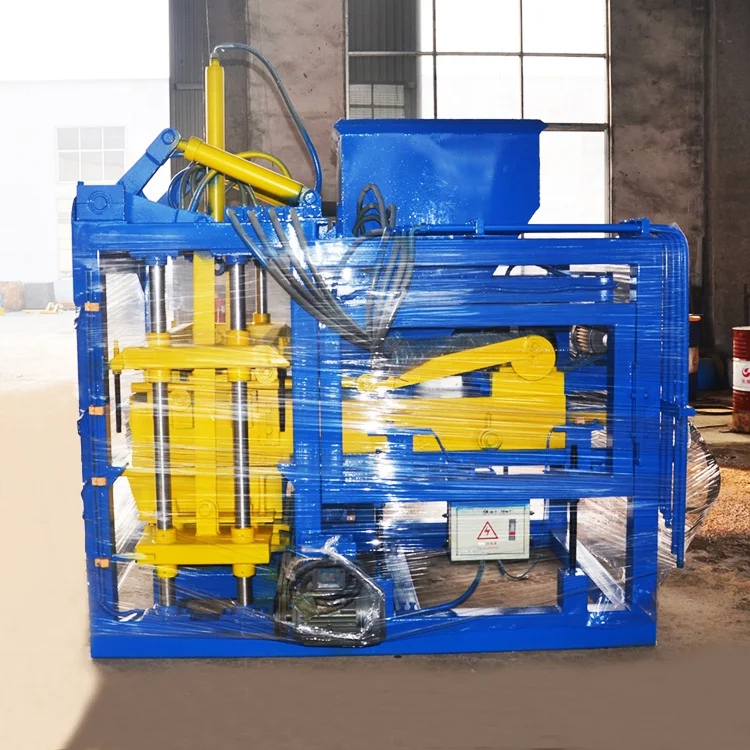
- Machine arrives dismantled; reassembly sequence documented with torque values
- First-run parameter tuning against your local aggregate and mix proportions
- Operator training covers PLC fault codes, mould change procedure, and daily greasing points
- Wear parts list identifies vibration motor bearings and mould liner replacement intervals
What to Include in Your Inquiry
To match a QTJ4-25 block machine in stock fast delivery unit to your site, share your target block format and daily volume, the local aggregate type and cement brand you plan to use, and your site voltage and frequency. If you already have curing racks or a forklift in place, send the dimensions so the 850×550 mm pallet can be verified against your existing equipment.
Frequently Asked Questions
Q: Is the QTJ4-25 currently in stock, and what is the confirmed dispatch date after payment?
A: Stocked units are available, but confirmation is issued in writing against your specific mould and voltage configuration. Once those are locked, the dispatch date is quoted as a calendar date — not a generic lead-time range — so you can plan container arrival and site preparation accordingly.
Q: How is the machine dismantled and packed for a 20GP container, and what is the total shipment weight?
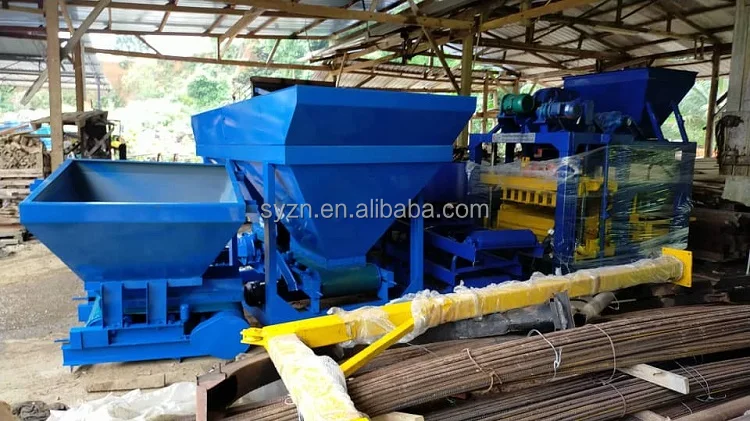
A: The QTJ4-25 at 2500 kg net weight is dismantled into main frame, vibration table, and hopper assemblies. Approximately 500 pallets fill the remaining container volume. A loading plan with securing details and packing photographs is shared before the container is sealed.
Q: What voltage and frequency options are available, and can the PLC language be set before dispatch?
A: Voltage and frequency are configured to your site supply before the electrical panel is wired. PLC display language is set to your operator’s preference during factory testing. Both are confirmed in writing before production to avoid commissioning delays on arrival.
Q: Are the 500 pallets included in the container, and what material and thickness are they?
A: Yes, approximately 500 pallets at 850×550×20 mm are loaded in the same container. Material and specification are confirmed against your curing environment and forklift capacity before shipment, so they integrate with your existing handling setup.
Q: How soon after arrival can the machine be commissioned, and is on-site installation support included?
A: Commissioning timeline depends on foundation readiness and power availability at your site. Installation guidance and operator training are included in the delivery scope, covering reassembly, first-run tuning with your local materials, and daily maintenance routines.