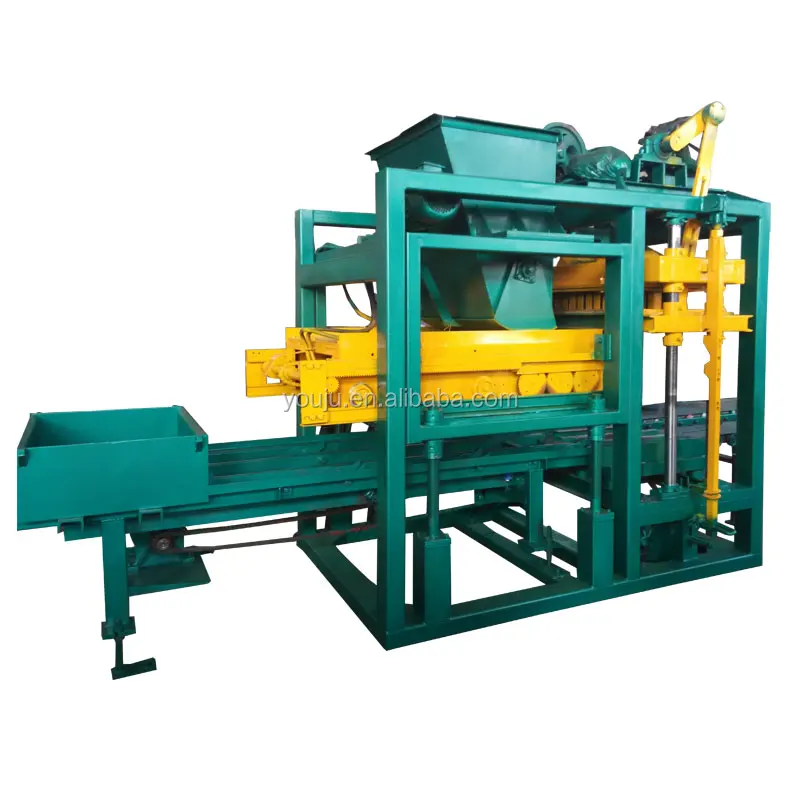

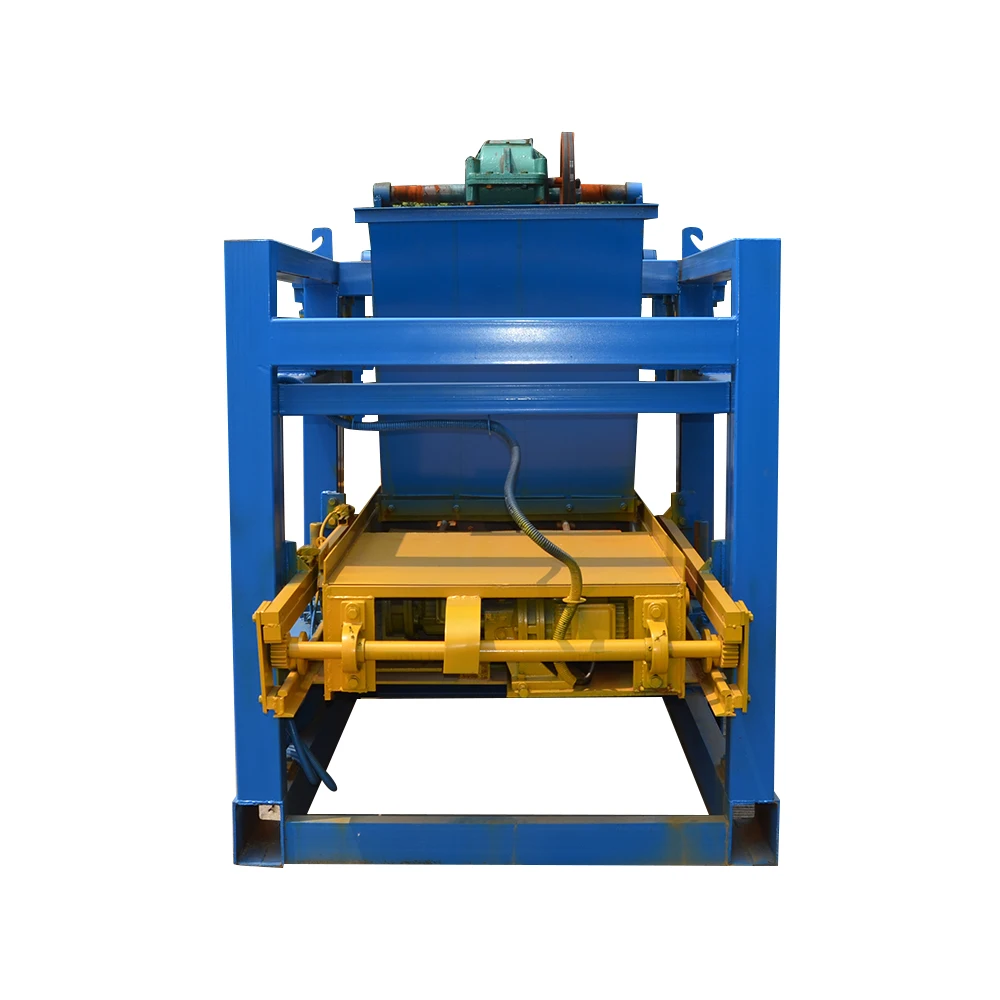
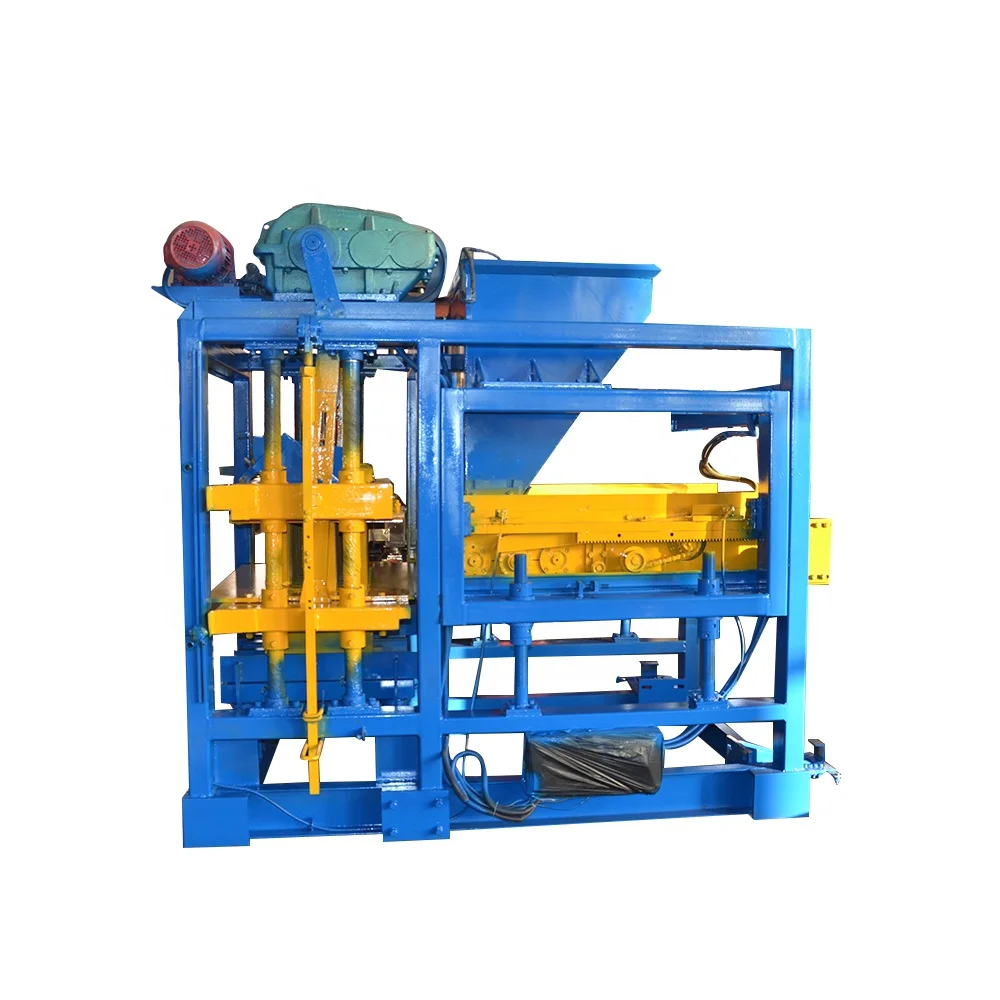


Description
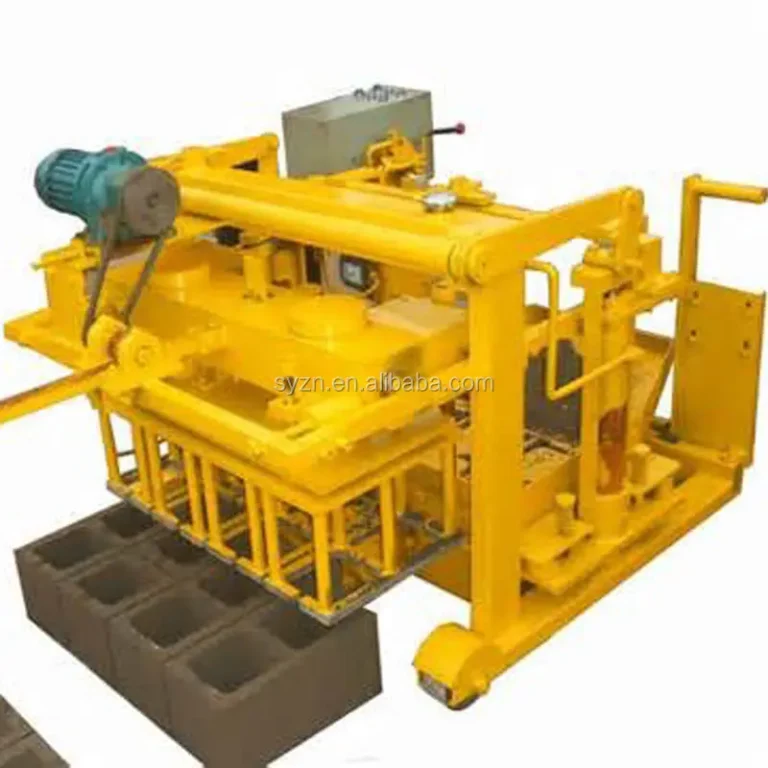
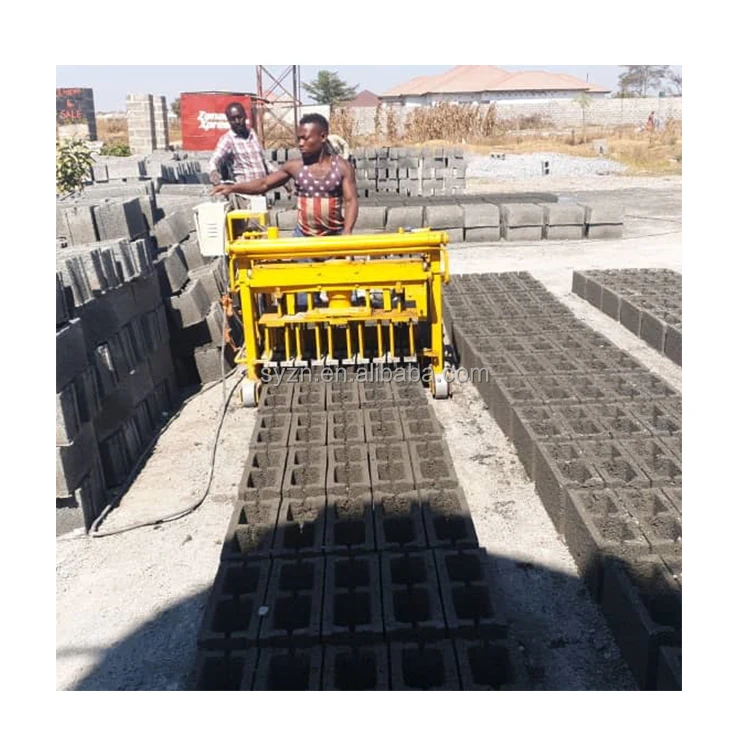
Stocked and ready to dispatch — the QTJ4-25 stationary block machine ships with confirmed lead times, standard mould options, and complete basic configuration so your project timeline stays intact.
Technical Specifications
| Parameter | Value |
|---|---|
| Model | QTJ4-25 |
| Product Type | Stationary Concrete Block Making Machine |
| Rated Power | 17.9 kW |
| Overall Dimensions (L×W×H) | 6400 × 1500 × 2700 mm |
| Net Weight | 2500 kg |
| Mould Format | 400 × 200 × 200 mm (standard hollow block) |
| Output Capacity | 960 pcs/h, 7680 pcs/day (based on 400×200×200mm hollow block, 4 pcs/mould, 25 s cycle) |
| Cycle Time | 25 s |
| Pallet Size | 850 × 550 × 20 mm |
| Vibration Force | 60 kN |
| Vibration Frequency | 2800 r/min |
| Automation Level | Semi-automatic |
| Control System | Motor-driven, PLC control available (configuration to be confirmed) |
| Mould Change System | Manual mould change supported (change time to be confirmed) |
| Included Configuration | Host machine 1 set, block mould 1 set, JQ350 mixer |
Application Suitability
| Application | Material or Output |
|---|---|
| Hollow block production for residential and commercial walls | Crushed stone, sand, cement, fly ash blends |
| Solid block manufacturing for load-bearing structures | Dense aggregate and cement mixes |
| Paving block production for walkways and yards | Fine aggregate with pigment additives |
| Kerbstone forming for road and curb applications | Coarse aggregate and cement compositions |
Why the Voltage Question Must Come Before Loading the Container
Every QTJ4-25 stationary block machine in stock must have voltage and frequency confirmed against your local grid before it leaves our yard.
I have watched container doors open at a job site in West Africa only for the crew to discover the 380V/50Hz motor control panel could not talk to the local 440V/60Hz supply. The machine sat idle for three weeks while a step-down transformer was sourced locally. That delay cost the contractor more than the transformer itself. When a fast delivery QTJ4-25 is your timeline lifeline, the electrical mismatch is the one variable that can erase every day you gained by buying from stock [NEED_CITE: voltage and frequency standards by export market].
What Stock Availability Actually Means for Your Schedule
Buying a stationary block machine in stock eliminates the typical multi-week build cycle. The QTJ4-25 units we hold are fully assembled, factory-tested, and paired with a standard 400×200×200mm hollow block mould plus a JQ350 mixer. Once your voltage, frequency, and PLC language are confirmed, the machine can be dismantled for container loading within days rather than months. For contractors racing a construction deadline or entrepreneurs who have already committed to a site lease, that difference is the entire margin between starting production on time and paying idle crews.
Dispatch Lead Time and Container Loading Realities
A fast delivery QTJ4-25 is only fast if the loading plan is settled before the order is placed. The 6400 × 1500 × 2700 mm frame and 2500 kg weight require a specific dismantling sequence and lashing arrangement inside a standard 20-foot container. We photograph every stage — machine breakdown, component wrapping, pallet stacking, and final lashing — so you see exactly what arrives before the ship leaves port. Pallet stock, spare mould sets, and mixer spares ride in the same container when dimensions allow, cutting the number of shipments you need to coordinate [NEED_CITE: container loading practices for heavy industrial machinery].
Reading the Specs That Dictate Your Daily Output
The 60 kN vibration force working at 2800 r/min determines how densely the QTJ4-25 compacts your local aggregate into each block. Pair that with the 25-second cycle time and you get the rated 7680 pcs/day based on 400×200×200mm hollow blocks at four pieces per mould. Switch to a smaller solid block format and the pieces-per-mould count rises, but cycle behaviour and compaction pressure may shift — always verify capacity against the specific format you plan to run. The 850 × 550 × 20 mm pallet size must also match the curing racks and forklift tines already on your site; a mismatch means new handling equipment or a pallet change before the first production shift.
The Hidden Cost of Skipping the Pre-Shipment Checklist
When a buyer focuses only on getting the stationary block machine in stock loaded quickly and skips confirming pallet material, mould format, or electrical specs, the consequences surface at the worst possible moment — commissioning day. A pallet material that warps under local humidity ruins block flatness. A PLC display left in the wrong language slows operator training. A missing customs document holds the container at port for days while demurrage accumulates. Each of these is a small conversation before shipment and an expensive crisis after arrival [NEED_CITE: CE machinery directive requirements for industrial equipment].
Why Source This Machine Through Our Dispatch Channel
Every QTJ4-25 we dispatch ships as one matched system — host machine, mould, pallet specification, and mixer — rather than components assembled from separate suppliers. Stock models are held with standard mould formats that move volume in most export markets, so you are not waiting for a custom tooling run. Dispatch lead times are quoted in the initial proposal, not revealed after payment. Factory test records, packing photographs, and customs documentation travel with the shipment, reducing surprises at your port of entry. My role is to personally verify voltage settings and PLC language on each unit before it leaves Linyi, because a two-day delay at our end prevents a three-week standstill at yours.
Documentation & Verification
- Factory test record run on your confirmed block format before dispatch
- Packing photographs showing dismantling, wrapping, and container lashing stages
- Voltage and frequency confirmation sheet signed before production release
- Pallet specification matched to your existing curing racks and forklift capacity
- Customs documentation package prepared for your destination port clearance
Installation, Commissioning & Support
- 17.9 kW total draw requires a dedicated circuit matching your confirmed voltage and frequency
- Machine arrives dismantled; reassembly follows the included component sequence and lashing photographs
- PLC language and motor rotation verified against your grid during commissioning
- Manual mould change procedure walked through with your operators on the standard 400×200×200mm hollow block set
- JQ350 mixer startup and batch proportioning calibrated to your local aggregate on day one
- Wear parts list provided with recommended reorder intervals for vibration motor and hydraulic seals
Before You Request a Quote
Tell us the block format your market moves in volume, the daily output you need against your construction schedule, and your site voltage and frequency. Let us know what pallet size your existing curing area and forklift can handle, and which PLC display language your operators read. With those details we can confirm whether the QTJ4-25 stationary block machine in stock matches your deadline or whether a different configuration serves you better.
Frequently Asked Questions
Q: Which QTJ4-25 configurations and mould formats are currently in stock?
A: We hold QTJ4-25 units configured as semi-automatic stationary machines with the standard 400×200×200mm hollow block mould and JQ350 mixer. Additional mould formats for solid blocks, paving blocks, or kerbstones can be added to the same container if stock is available at order time. Confirm your required format before placement so we can reserve matching tooling.
Q: What is the dispatch lead time and how is the machine loaded?
A: Once voltage, frequency, and PLC language are confirmed, the QTJ4-25 is dismantled and loaded into a standard 20-foot container within a matter of days. The 6400 mm frame is broken down to fit, and lashing photographs are shared before the container is sealed. Exact dispatch days depend on current stock position at the time of your order.
Q: What voltage and frequency options are available for immediate shipment?
A: Stock QTJ4-25 units are held with common industrial voltage configurations, but the motor and PLC panel must be matched to your site supply before dispatch. We confirm your local voltage, frequency, and phase requirement during the inquiry and adjust the configuration prior to loading if needed, rather than shipping a default that may not match your grid.
Q: Which pallet material and quantity should I order alongside the machine?
A: The QTJ4-25 runs 850 × 550 × 20 mm pallets. Bamboo, PVC, or steel pallet options are available depending on your curing environment and block weight. We recommend ordering enough pallets to fill your curing rack capacity plus a rotating buffer, and we confirm the quantity based on your daily output target and curing cycle length.
Q: How soon can installation and commissioning begin after arrival?
A: Commissioning can start once the machine is reassembled on a level concrete pad with your confirmed power supply connected. The QTJ4-25 arrives with dismantling photographs and component markings to speed reassembly. Operator training on mould change, PLC operation, and mixer batching runs on the first production day if site conditions are ready.