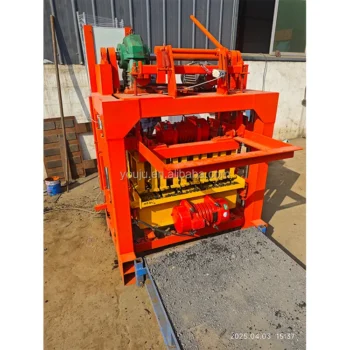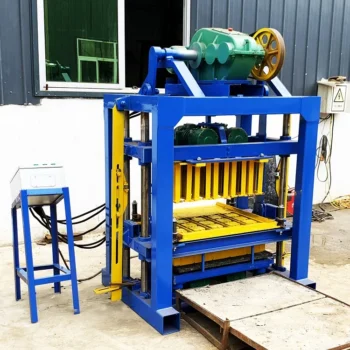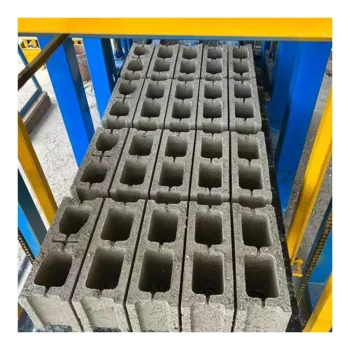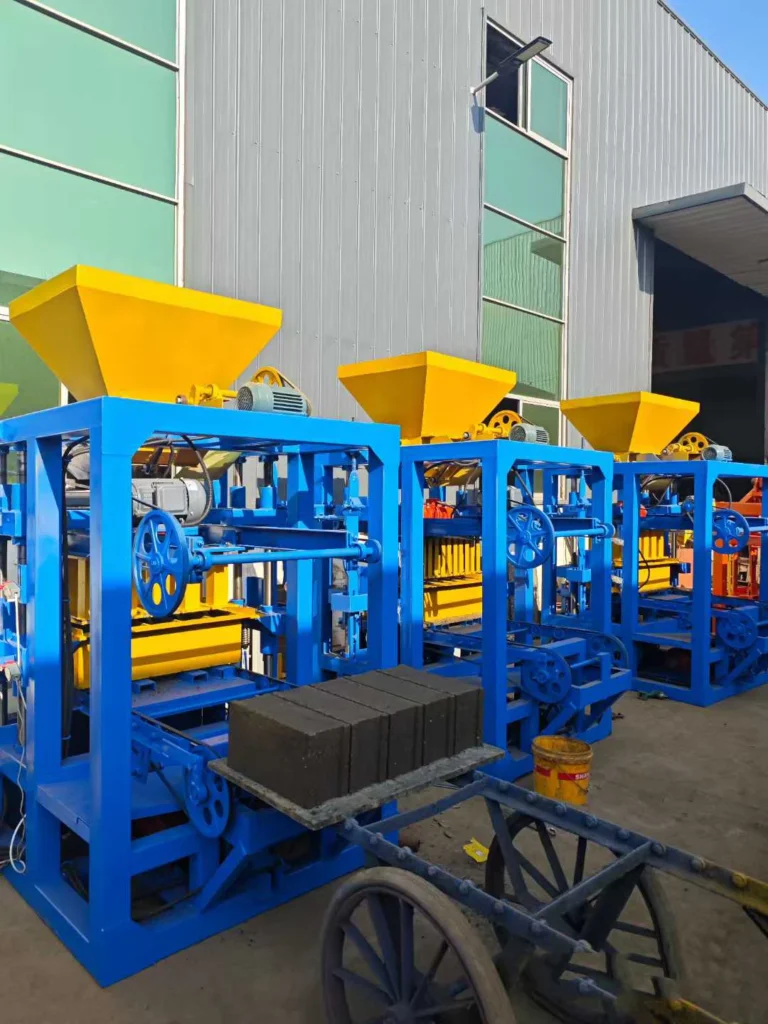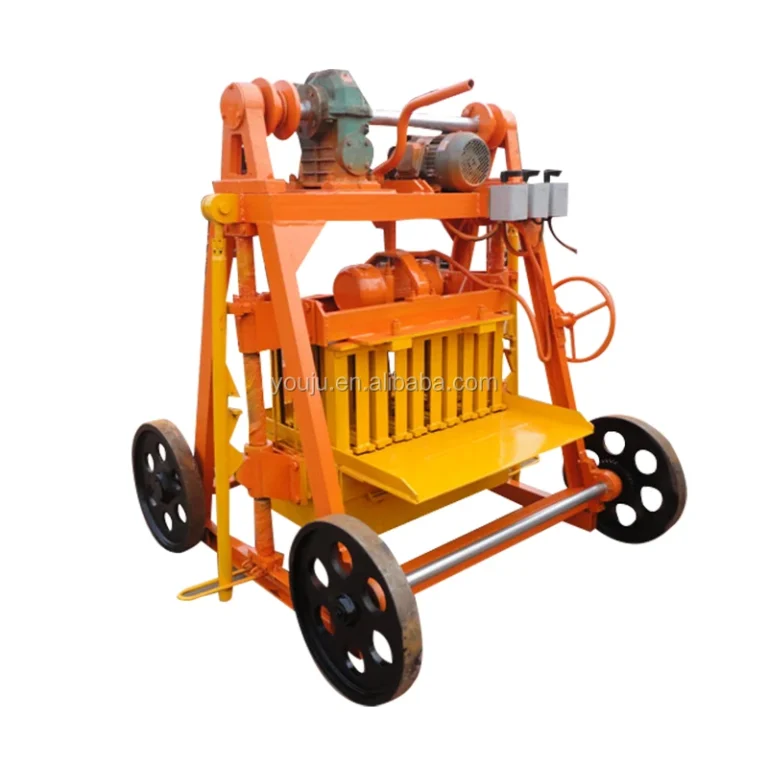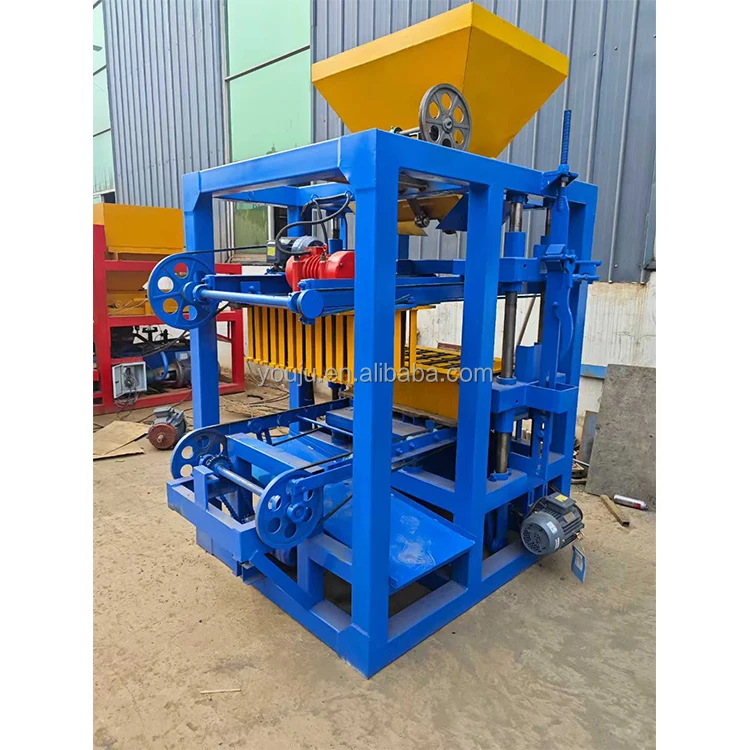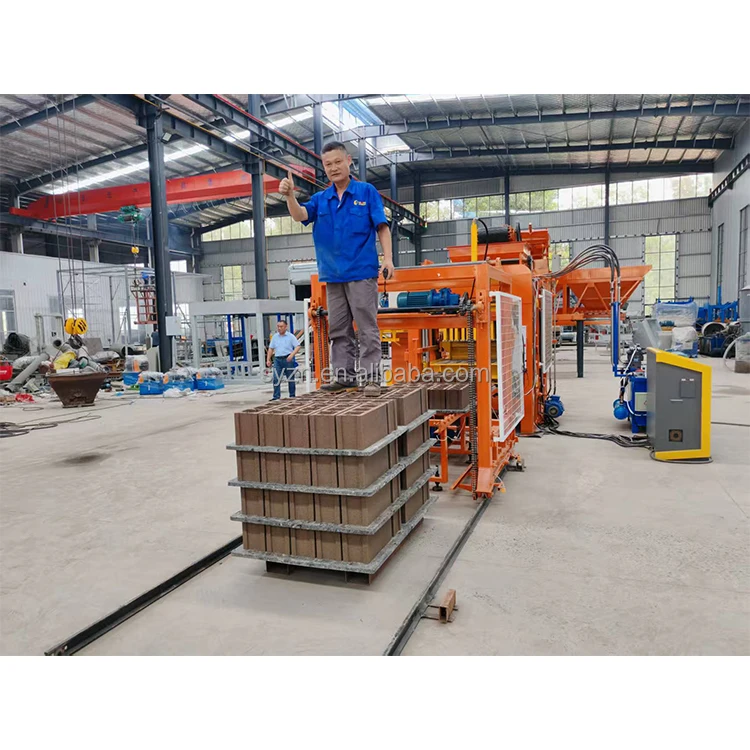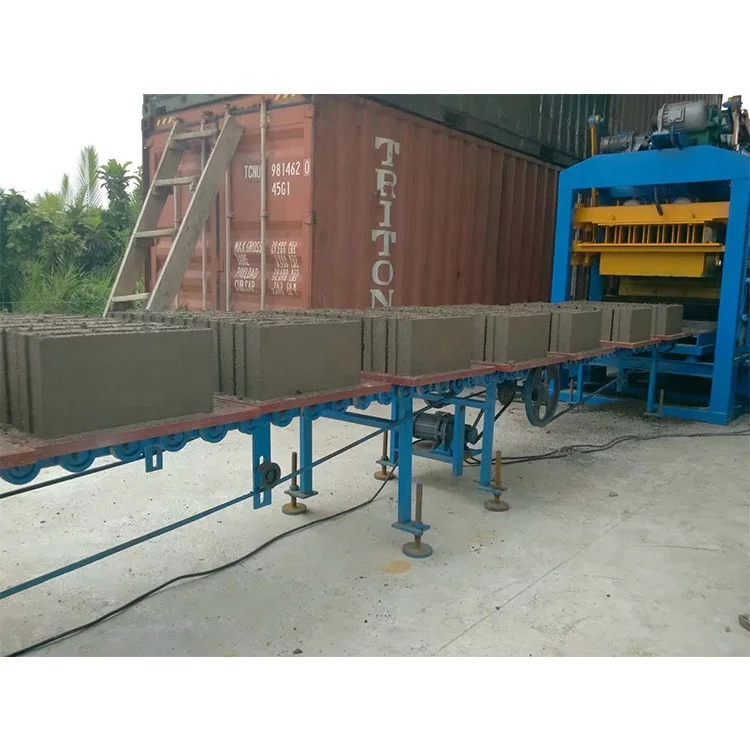
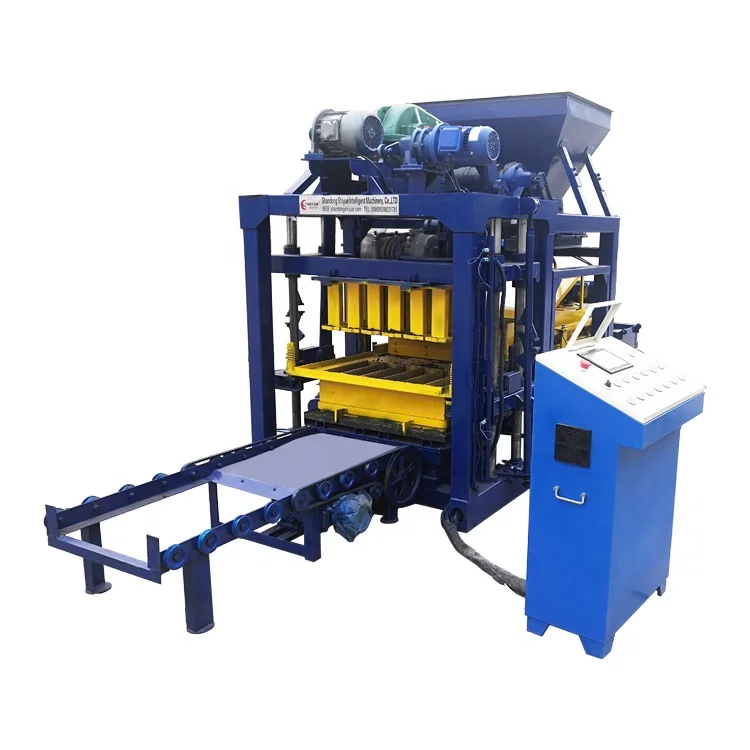
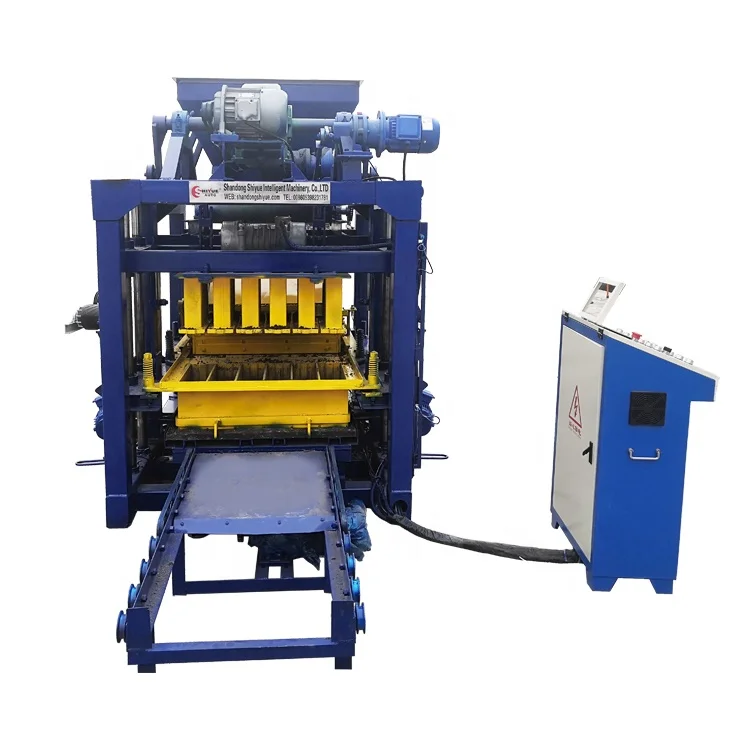
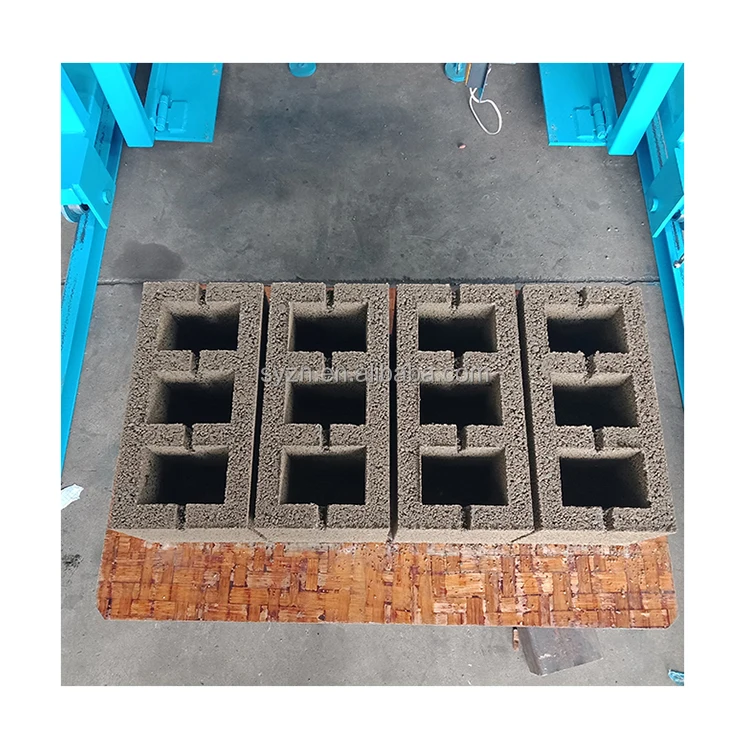
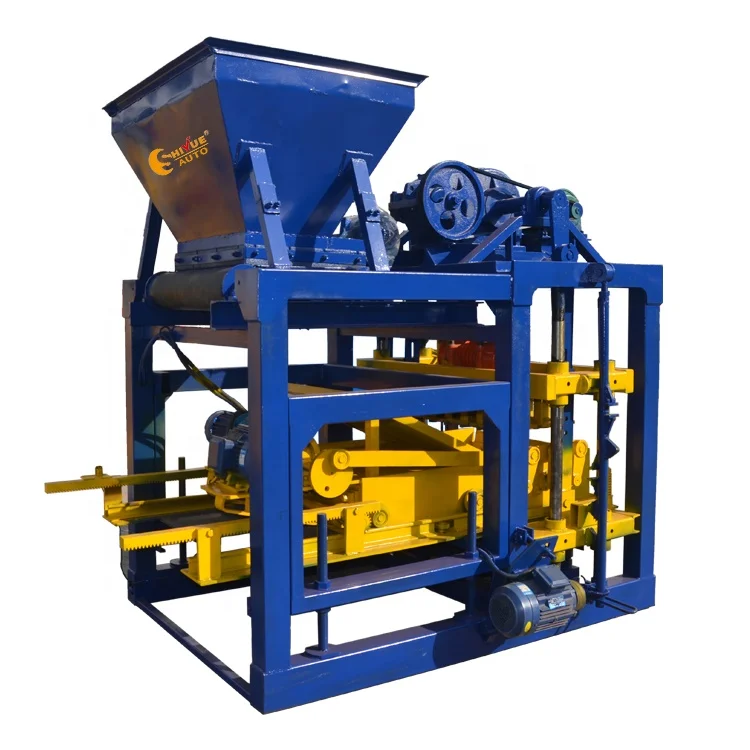
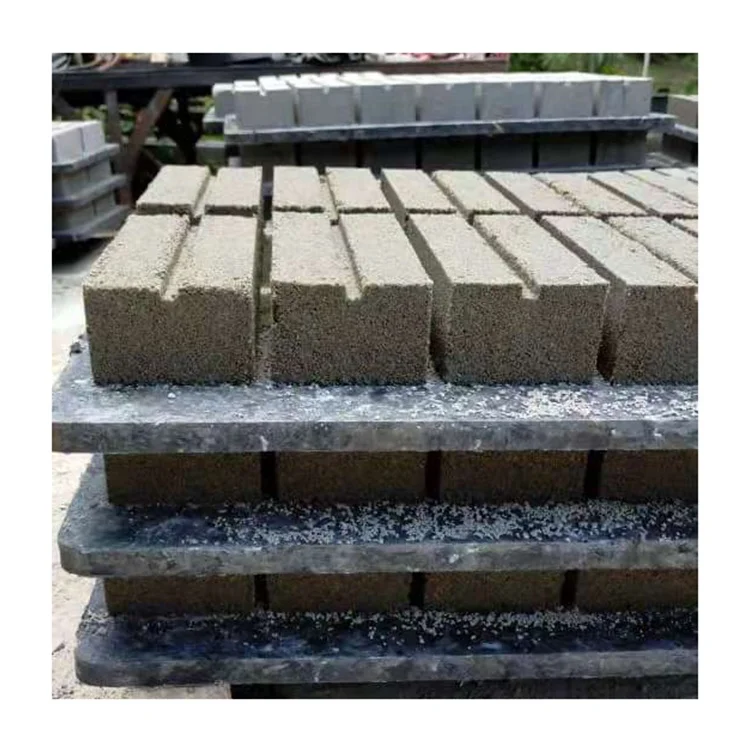
Description
Stocked Dispatch — QTJ4-25 ships from our Linyi floor within days of order confirmation, not weeks of custom fabrication, with container loading plans quoted before you commit.
Technical Specifications
| Parameter | Value |
|---|---|
| Model | QTJ4-25 |
| Product Type | Stationary Concrete Block Making Machine |
| Overall Dimensions (L×W×H) | 3060×1730×2580 mm |
| Rated Pressure | 16-21 MPa |
| Main Vibration Form | Platform Vibration |
| Vibration Frequency | 4200 r/min |
| Vibration Force | 45.5 kN |
| Pallet Size | 850×550 mm |
| Molding Cycle | 25-30 s (basis not stated in source — confirm block format / material / thickness) |
| Overall Power | 14.9 kW |
| Total Mass | 4 T |
| Demolding Method | Vibration |
| Factory Area Required | 200 m² |
| Raw Material | Crushed stone, sand, cement, dust, fly ash, gravel, slag |
| Container Loading | 1×40HQ (basic equipment) |
| Warranty | 1 year (excluding spare parts) |
Application Suitability
| Application | Material or Output |
|---|---|
| Small-scale hollow block plant | Crushed stone, sand, and cement blends |
| Solid brick production for local masonry | Fly ash and gravel mixes |
| Paving and interlocking block runs | Cement-bound aggregate with fine sand |
| On-site construction block supply | Local quarry dust and slag blends |
| Entrepreneurial first-plant setup | Standard concrete mixes for hollow and solid formats |
What "Ready to Ship" Actually Means for Your Timeline
The QTJ4-25 block machine in stock status is confirmed before we take your deposit — you get a serial number and packing photos, not a production promise.
Many buyers in West Africa have told me they ordered a machine advertised as available, only to discover it still needed six weeks of fabrication. By the time it sailed, their wet-season window was gone and contractors had walked off site. When you are working against a project deadline, the difference between a stocked unit and a made-to-order one is the difference between hitting your first delivery date and explaining delays to your customer. I now check our Linyi warehouse inventory myself before quoting any QTJ4-25 block machine in stock lead time, and I send you container loading photos before the doors close [NEED_CITE: typical container loading practices for heavy machinery exports].
How We Define Stock and Dispatch Readiness
When we list the QTJ4-25 block machine in stock, it means the press, hydraulic station, and control panel are assembled and factory-tested on our floor. We do not count machines in component stage as available. Standard moulds for hollow and solid blocks are matched to the press and staged together so the full basic line loads into one 40HQ container.
The Loading Sequence That Prevents Arrival Damage
Every QTJ4-25 destined for export is partially dismantled — the hopper and vibration platform are separated from the main frame to fit the container door height. I have watched loaders try to force fully assembled units through the door and damage the hydraulic hoses in the process. Our crew secures each sub-assembly with timber bracing and steel strapping, then photographs every angle before sealing. You receive those photos so you know exactly what arrives when you open the container doors at port [NEED_CITE: heavy machinery packing and bracing standards for ocean freight].
Why Platform Vibration Matters at This Machine Class
The QTJ4-25 runs platform vibration at 4200 r/min generating 45.5 kN of force. Unlike mould-table-only vibration, platform vibration transmits energy through the pallet into the entire block cross-section. For hollow blocks with thin webs, this matters because the vibration must reach the core of the mix before the hydraulic pressure locks it in place. If the vibration force is too low for a dense aggregate mix, blocks emerge with soft centres that crumble during curing. If it is too high for a lightweight fly ash blend, the mix segregates and the block surface shows aggregate clumping. The 16-21 MPa rated pressure range gives the operator enough adjustment to compress without crushing, but only if the vibration force is properly matched to the material first.
Pallet Size and Your Existing Curing Yard
The 850×550 mm pallet on the QTJ4-25 was chosen to fit standard curing rack configurations common in small to medium plants. Before you order, measure your curing area and the forklift tine spacing you already use. A mismatch here means either rebuilding your racks or hand-carrying pallets to a curing zone that was never designed for this size. I have seen plants in Ghana stack freshly pressed blocks three pallets high on the floor because their rack slots were sized for a different dimension, and the bottom-layer blocks cracked under the weight before curing was complete.
The Cost of Ordering Blind on Dispatch Dates
When a buyer assumes availability without written confirmation, the real loss is not the machine price — it is the idle crew, the rented yard, and the contractor penalties that pile up while the press is still on the production floor in China. One buyer in Accra held a lease on a 200 m² site for three extra months because his machine supplier quoted a dispatch date that was actually a production start date. Always ask for a stock certificate showing the unit serial and a dated factory test record before transferring funds [NEED_CITE: common machinery procurement disputes in international trade].
Why Buyers Source This Model Through Our Linyi Facility
- Block machinery is our single focus, so the press, mould, pallet, and handling gear ship as a matched set rather than a collection of separate purchases.
- Standard moulds for hollow, solid, and paver formats are stocked alongside the press, eliminating the usual multi-week mould production delay.
- Voltage and frequency are confirmed against your local supply before the machine leaves the floor — no rewiring on arrival.
- Factory test records are shot on video and shared with you, showing the exact QTJ4-25 you will receive running a test cycle.
- Our documentation package includes customs paperwork prepared for African and Southeast Asian ports, reducing clearance surprises.
Documentation & Verification
- Factory test record on the specific QTJ4-25 serial before container loading
- Mould drawing and format list matching your ordered block types
- Voltage and control language confirmation sheet signed before dispatch
- Packing photographs covering each sub-assembly and bracing point
- Customs documentation support for destination port clearance procedures
- Operation and maintenance manual in your confirmed language
Installation, Commissioning & Support
- 200 m² minimum factory floor with level concrete base for the 4 T machine mass
- 14.9 kW total power draw requires a dedicated circuit with proper breaker rating
- Hopper and vibration platform reassembly on site with guided hydraulic line connection
- First-cycle parameter tuning against your local crushed stone or fly ash aggregate
- Operator training covering mould change, pallet feed rhythm, and daily vibration force check
- Wear parts list with reorder intervals for platform springs and hydraulic seals
What We Need Before We Confirm Your Dispatch Slot
To lock a QTJ4-25 from our current stock, send us your target block formats, local aggregate type, and the voltage and frequency at your site. If you have an existing curing yard, share the pallet dimensions your racks accept and the forklift capacity you run. This lets us verify the standard pallet size works for your layout or flag a mismatch before the container is booked.
Frequently Asked Questions
Q: What is the current stock status and dispatch lead time for QTJ4-25?
A: We confirm stock status by serial number at inquiry stage. When a unit is on our Linyi floor and has passed its factory test, dispatch can proceed within days of order confirmation and payment clearance. Lead time to your port depends on the shipping line schedule, which we quote alongside the machine price so you see both numbers before committing.
Q: How is the machine loaded into a 40HQ container and what is included?
A: The basic QTJ4-25 equipment — press, hydraulic station, control panel, and standard moulds — fits one 40HQ container. The hopper and platform are separated for loading clearance, then timber-braced and steel-strapped inside. Pallets, spare wear parts, and documentation travel in the same container. Any additional automation or extra mould sets may require separate loading.
Q: Which voltage and frequency configurations are available for immediate shipment?
A: Stocked units are typically configured for common African and Southeast Asian supply standards, including 380V/50Hz and 440V/60Hz three-phase. If your site runs a different voltage or frequency, we can confirm whether a stocked unit can be rewired before dispatch or whether a fresh build is required. This verification happens before you place a deposit.
Q: Are standard moulds in stock or do they require a separate production run?
A: Hollow and solid block moulds matching the QTJ4-25 platform vibration system are kept in stock and ship with the press. Paver, interlocking, and kerbstone moulds may require a separate production cycle depending on current inventory. We confirm mould availability for your specific block format at the quotation stage so there are no surprises after order placement.
Q: What is the arrival estimate once the machine ships from China?
A: Ocean transit time varies by destination port and shipping line routing. West African ports typically receive containers within a standard multi-week transit window from Chinese departure ports. We provide the estimated arrival date alongside the bill of lading copy so you can plan site preparation, crew scheduling, and first-production material orders around a known timeline.