

Description
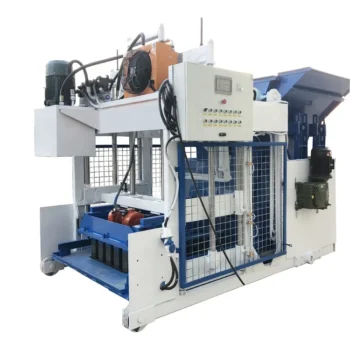
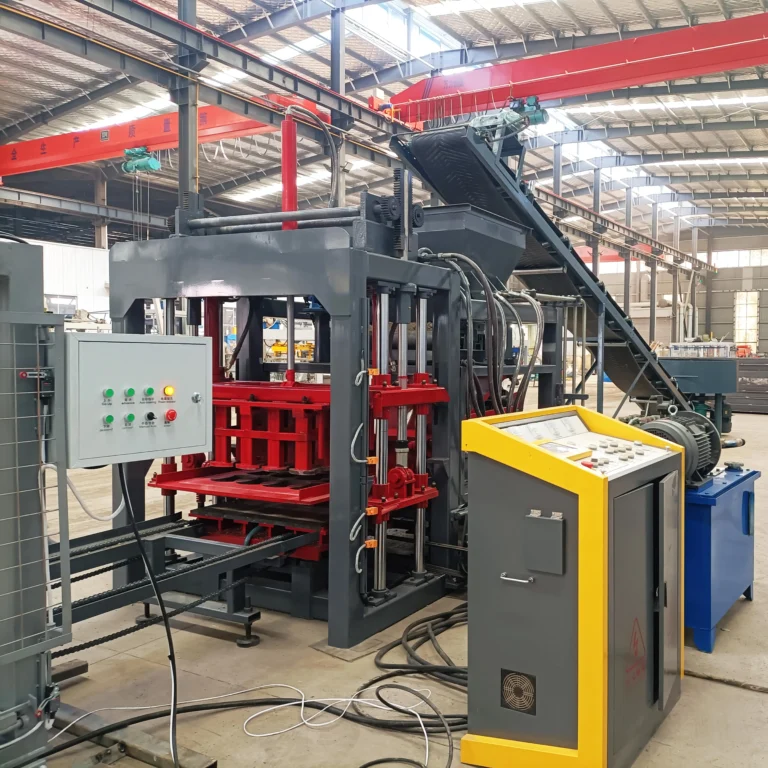
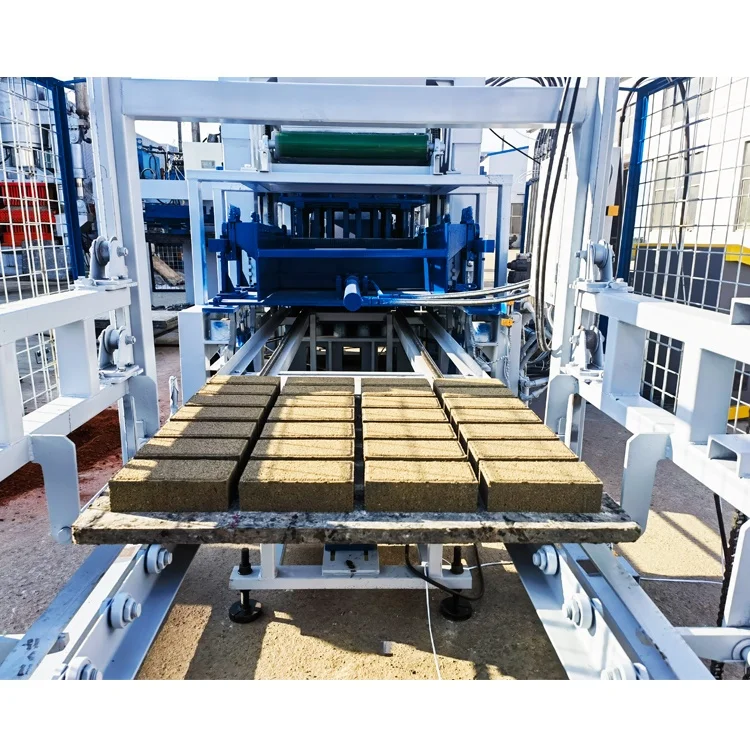
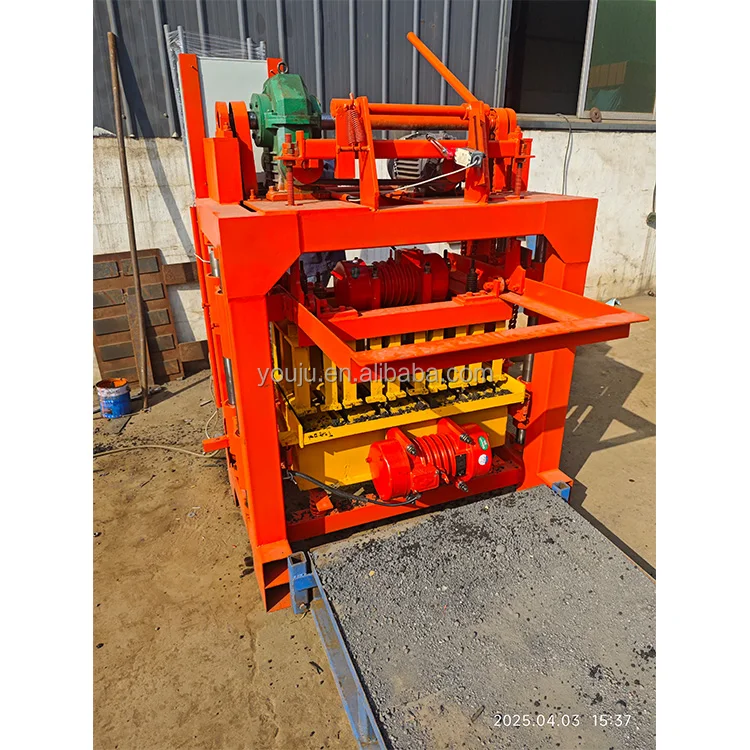
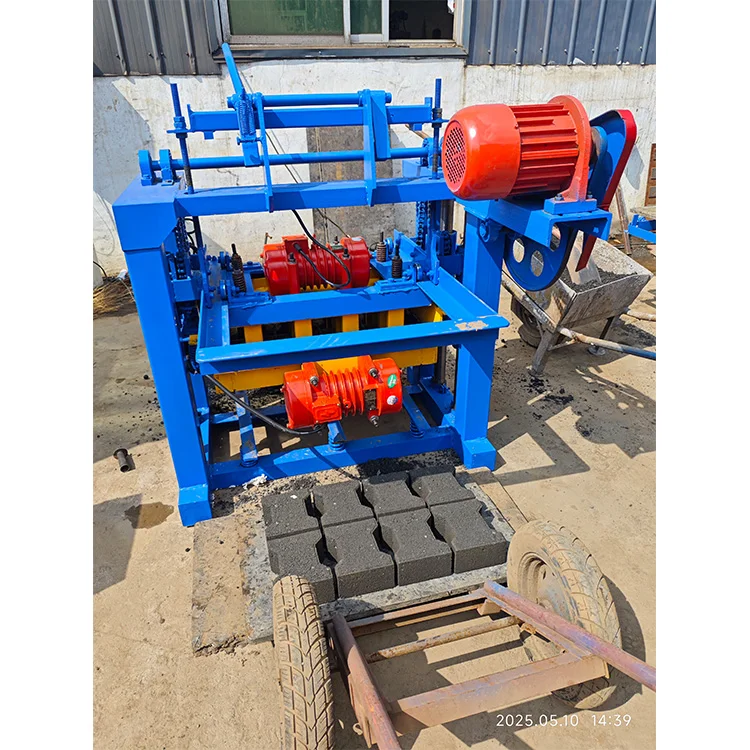
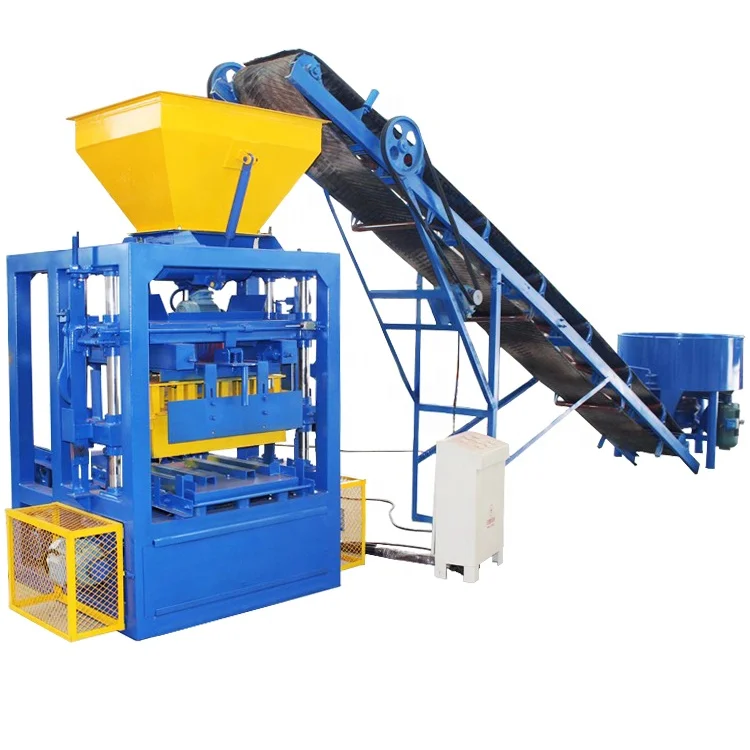
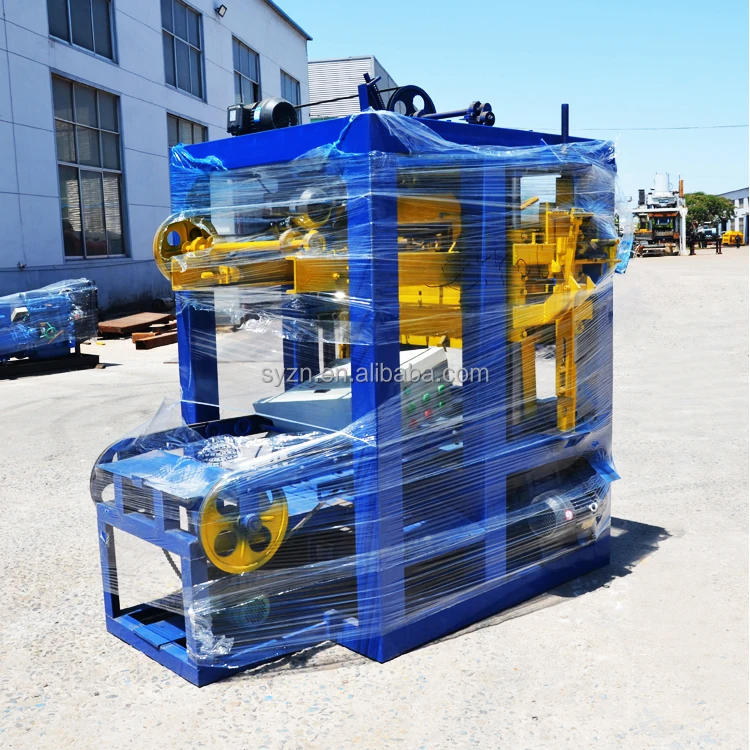
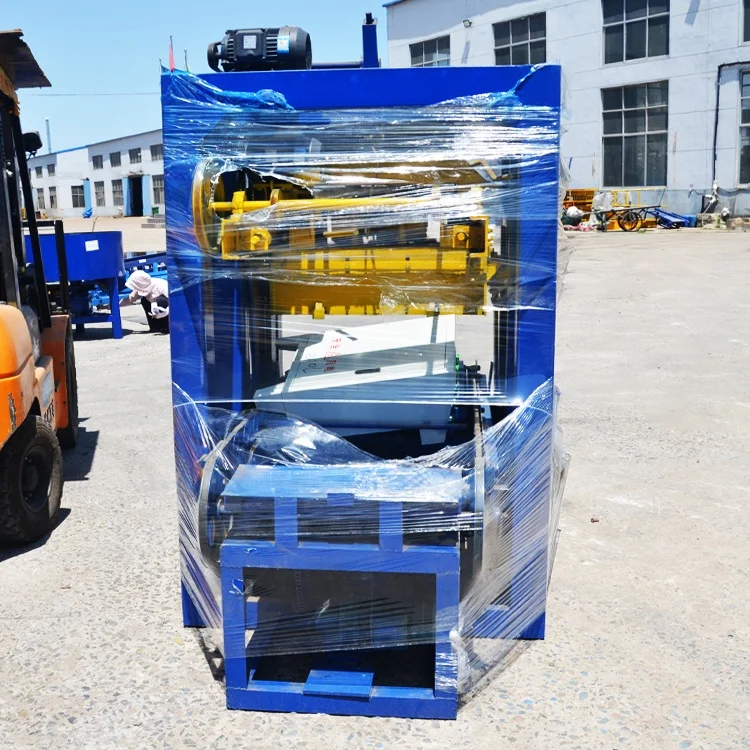
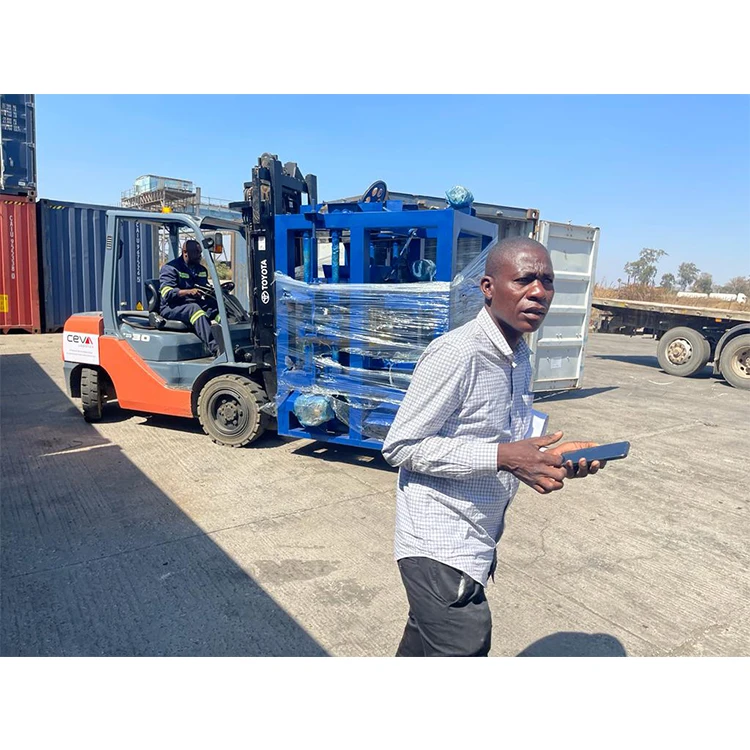
Stocked Dispatch — QTJ4-26 units held in the Linyi yard ready for container loading, with moulds and pallets matched to your block format before the machine leaves the factory.
Technical Specifications
| Parameter | Value |
|---|---|
| Product Type | Concrete Block Making Machine |
| Model | QTJ4-26 |
| Overall Dimensions (L×W×H) | 2060×1730×2580 mm |
| Molding Cycle | 26 s |
| Vibration Frequency | 4200 r/min |
| Exciting Force | 35.5 kN |
| Rated Power | 14.25 kW |
| Mixer Model | JQ350 |
| Pallet Size | 850×450×20 mm |
| Net Weight | 1800 kg |
| Automation Level | Semi-automatic (four guide pillars, automatic mould movement, manual pallet feeding) |
| Applied Products | Concrete hollow blocks (8 inch, 6 inch), solid bricks, interlocking bricks |
| Raw Materials | Crushed stones, sand, cement, dust, fly ash |
| Output Capacity (Hollow Block 390×190×190 mm) | 480 pcs/hr, 3800 pcs/8hr |
| Output Capacity (Hollow Block 400×150×200 mm) | 600 pcs/hr, 4800 pcs/8hr |
| Output Capacity (Solid Brick 240×115×53 mm) | 2100 pcs/hr, 17000 pcs/8hr |
| Voltage & Frequency | (source value — verify against manufacturer catalog) |
| Control System | (source value — verify against manufacturer catalog) |
Application Suitability
| Application | Material or Output |
|---|---|
| Small to medium block plants | Hollow blocks (8 inch, 6 inch) from crushed stone, sand, and cement |
| On-site production for housing projects | Solid bricks from locally available aggregates including fly ash |
| First-time block plant entrepreneurs | Interlocking bricks and pavers using dust and sand mixes |
| Contractor self-supply on development sites | Mixed-format output switching between hollow block and solid brick moulds |
Why the Voltage Question Should Come Before the Dispatch Date
Confirming voltage, frequency, and control language before the machine ships prevents weeks of idle time on your site.
I have watched containers arrive at West African ports with the QTJ4-26 block machine in stock fast delivery only to sit unpowered because the motor was wound for 380V/50Hz while the local grid runs 440V/60Hz. The machine itself is fine — the mismatch is purely a paperwork gap that should have been closed before the container was sealed [NEED_CITE: voltage and frequency standards by export market]. When you are working against a project deadline, that kind of delay is not a minor inconvenience; it costs real money in idle labour and extended site overheads.
What "In Stock" Actually Means for Your Schedule
A stocked QTJ4-26 block machine in stock fast delivery is not just a frame sitting in a warehouse. It means the press, the JQ350 mixer, standard moulds, and approximately 500 pallets have been grouped as a single matched set and can move to container loading once your voltage and control language are confirmed. The distinction matters because some suppliers list a machine as available but still need to source pallets or wind a custom motor, turning a fast dispatch into a multi-week wait.
How the Semi-Automatic Configuration Affects Your Crew Plan
The QTJ4-26 runs four guide pillars with automatic mould movement but requires manual pallet handling at the press exit. On a typical shift, that means two operators at the press — one feeding raw material and one pulling loaded pallets to the curing area. If you are staffing a site in a region where labour cost is low but project timelines are tight, this configuration keeps the capital outlay down while still maintaining a steady cycle. The trade-off is that your curing yard logistics need to be planned so pallets do not pile up faster than your crew can rack them [NEED_CITE: semi-automatic block plant labour allocation in developing markets].
Reading the Molding Cycle Against Your Actual Block Format
The 26-second molding cycle is measured at the press with the mould closed, vibration applied, and the block formed. That figure holds across formats, but the blocks-per-hour number changes because the mould cavity count differs. With the 390×190×190 mm hollow block mould you get 480 pieces per hour, while the 400×150×200 mm mould yields 600 pieces per hour because the cavity layout allows more units per cycle. The vibration frequency of 4200 r/min and exciting force of 35.5 kN work together to compact the mix — if your local aggregate has a high proportion of fine dust, you may need to adjust the moisture content to achieve consistent block density without surface cracking. The pallet size of 850×450×20 mm must match your existing curing racks and forklift dimensions; ordering a machine whose pallets do not fit your yard layout creates a bottleneck that no press speed can overcome.
The Cost of Skipping the Pallet Compatibility Check
When pallet dimensions are chosen without checking the curing area and forklift already on site, the result is blocks stacked by hand in the yard because the forklift tines cannot slide under the pallet edges. I have seen contractors receive a machine quickly but then spend the first two weeks improvising curing racks, which slows output far more than any press cycle could compensate for [NEED_CITE: pallet handling bottlenecks in small block plants]. The 850×450×20 mm pallet is a common size, but common does not mean universal — confirm your rack spacing before the container is booked.
Why Buyers Choose This Stocked Route
The QTJ4-26 ships as a matched system — press, mixer, moulds, pallets — rather than components sourced separately, so nothing arrives late or incompatible. Standard moulds for hollow block and solid brick are included in the stocked configuration, cutting the wait that custom mould fabrication adds. Each machine undergoes a factory test before dismantling, and I personally check the bolt bagging and small-parts labeling so your crew can begin reassembly on arrival without hunting for missing hardware. Voltage and control language are confirmed at order, not at the port. The 1800 kg net weight allows nude packing in a 20GP container with pallets stacked alongside, keeping freight straightforward.
Documentation & Verification
- Factory test record on your specified hollow block mould before dispatch
- Packing photographs showing bolt bags and small-parts labeling per container
- Voltage and control language confirmation sheet signed before shipment
- Mould drawing and format list matching your stocked configuration
- Operation and maintenance manual covering JQ350 mixer and press servicing
Installation, Commissioning & Support
- Foundation pad sized to 2060×1730 mm footprint with level tolerance for four guide pillar alignment
- Dedicated circuit rated for 14.25 kW total load with correct voltage and frequency confirmed at order
- Machine dismantled for 20GP loading with reassembly guided by labeled bolt bags on site
- First-run molding cycle checked at 26 s with your local aggregate mix before full shift begins
- Operator training covering manual pallet handling rhythm and mould changeover procedure
- Wear parts list for vibration motors and guide pillar bushings included with shipment
What to Include With Your Inquiry
Send your target block format, the daily output you need to hit your project deadline, and your site voltage and frequency so the correct motor and control language can be locked in before dispatch. If you already have curing racks or a forklift on site, share the dimensions so we can confirm pallet compatibility before the container is loaded.
Frequently Asked Questions
Q: What is the dispatch lead time for the QTJ4-26 from stock?
A: Stocked units can move to container loading once voltage, frequency, and control language are confirmed. The exact timeline depends on your confirmation speed and the shipping schedule from the Linyi port. We quote the dispatch date at order so you can plan your site preparation and crew arrival around a known window rather than guessing.
Q: Which mould formats are included in the standard stocked configuration?
A: The stocked configuration typically includes moulds for 390×190×190 mm hollow block and 240×115×53 mm solid brick. Additional formats such as interlocking brick or 400×150×200 mm hollow block may be available from stock or require a short fabrication lead. Confirm your required formats at inquiry so we can check availability before quoting.
Q: How many pallets ship with the machine and what material are they?
A: Approximately 500 pallets measuring 850×450×20 mm are loaded in the same container as the press and mixer. These pallets are packed alongside the dismantled machine to maximize container space. Verify that this pallet size matches your curing rack spacing and forklift tine width before dispatch.
Q: What container size is required and how is the machine loaded for shipment?
A: The QTJ4-26 at 1800 kg net weight is nude-packed in a 20GP container with pallets stacked around the dismantled press and mixer. Small parts and bolts are bagged and labeled with red paint marks so your crew can locate everything within minutes of opening the container doors.
Q: Can voltage and control language be confirmed before the machine leaves the factory?
A: Yes, and this must be done before dispatch. The motor winding and control panel labeling are set based on your confirmed voltage, frequency, and preferred language. Leaving this to chance risks arriving with a machine that cannot be powered on until components are rewound or replaced on site.