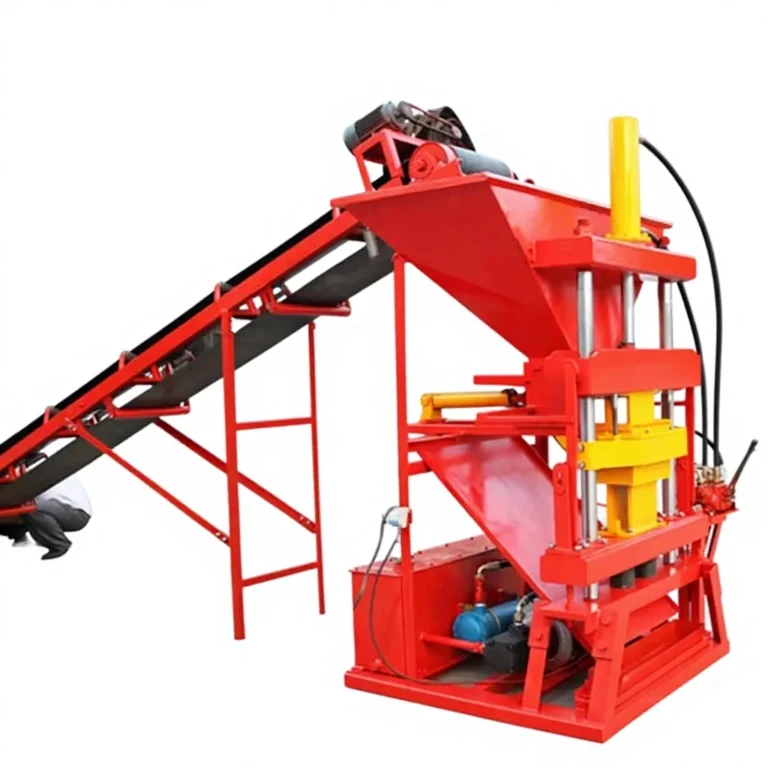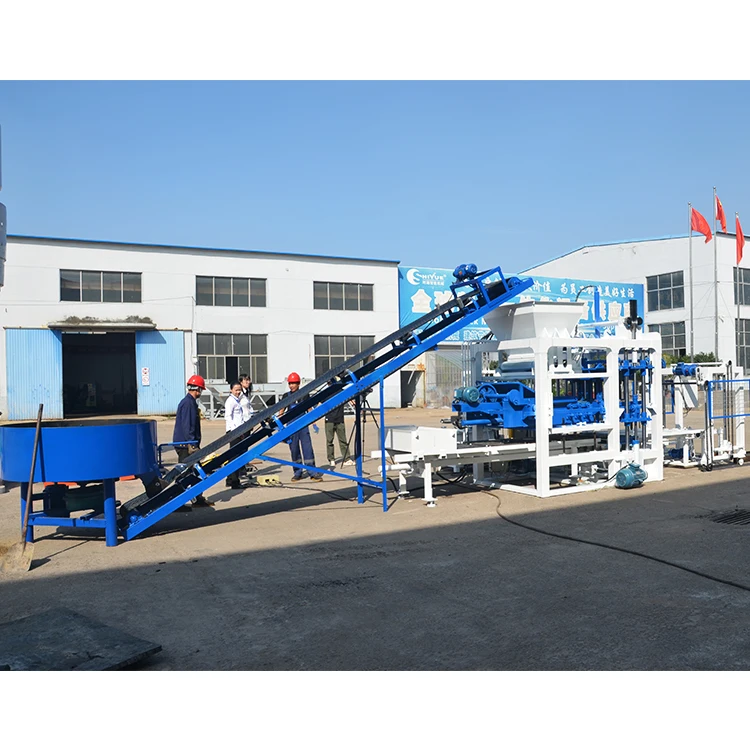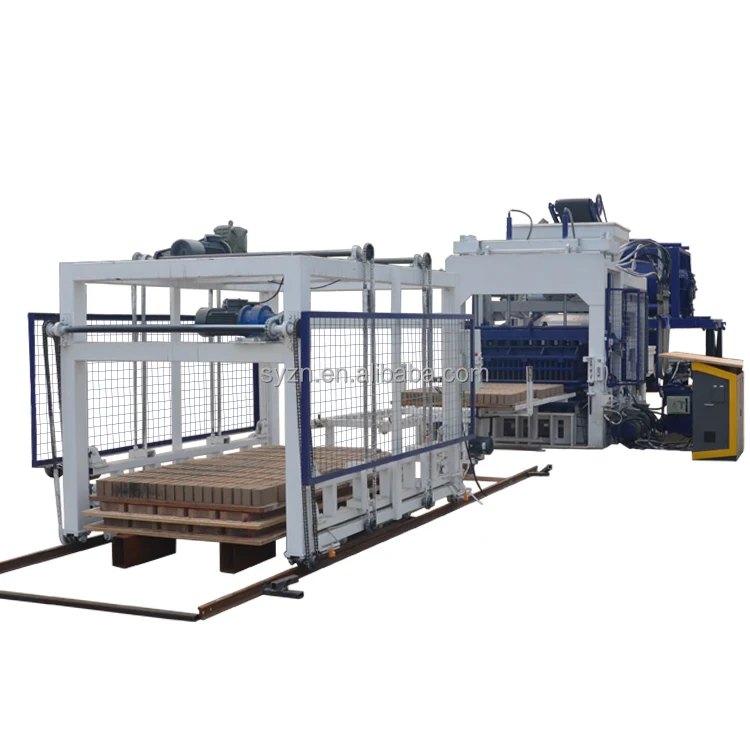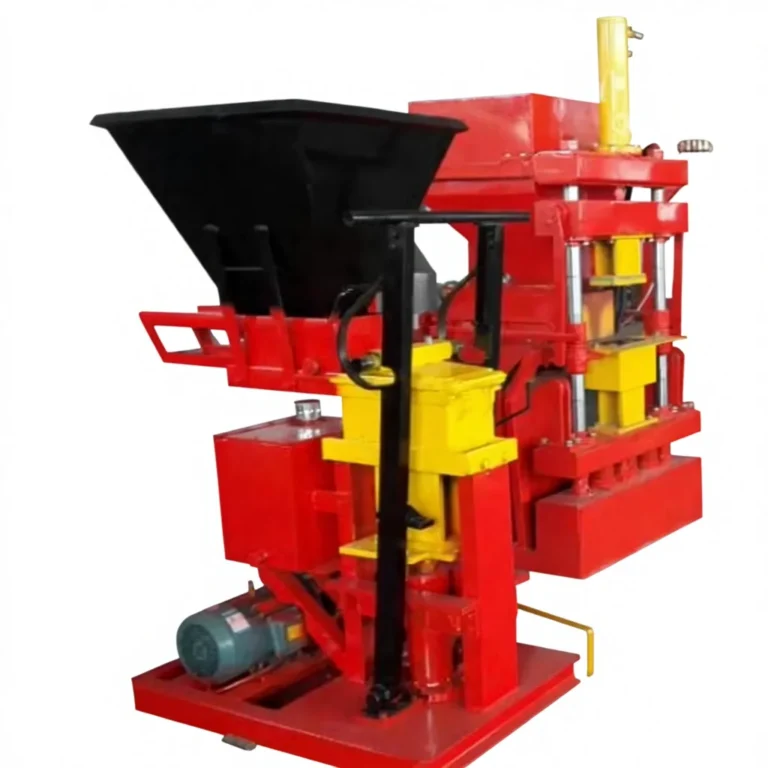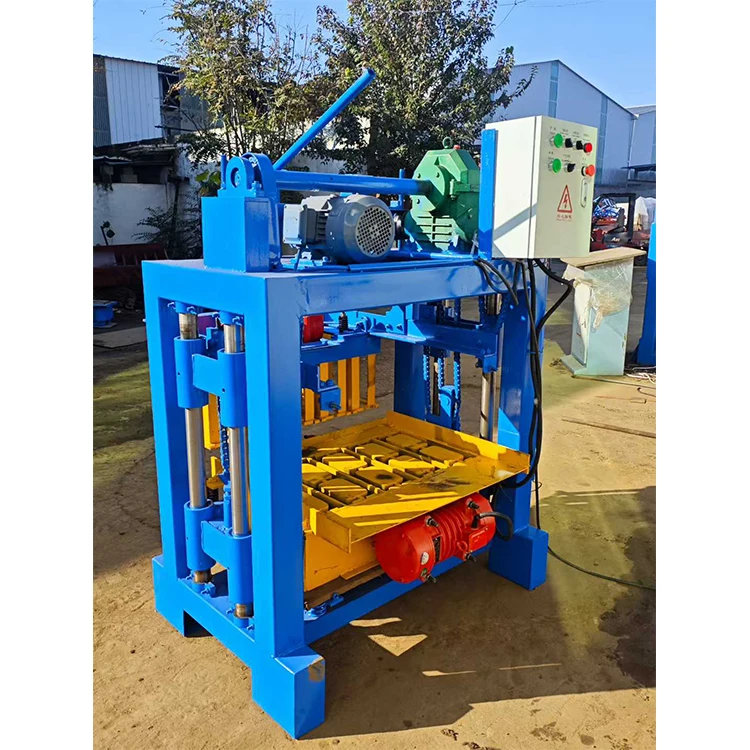
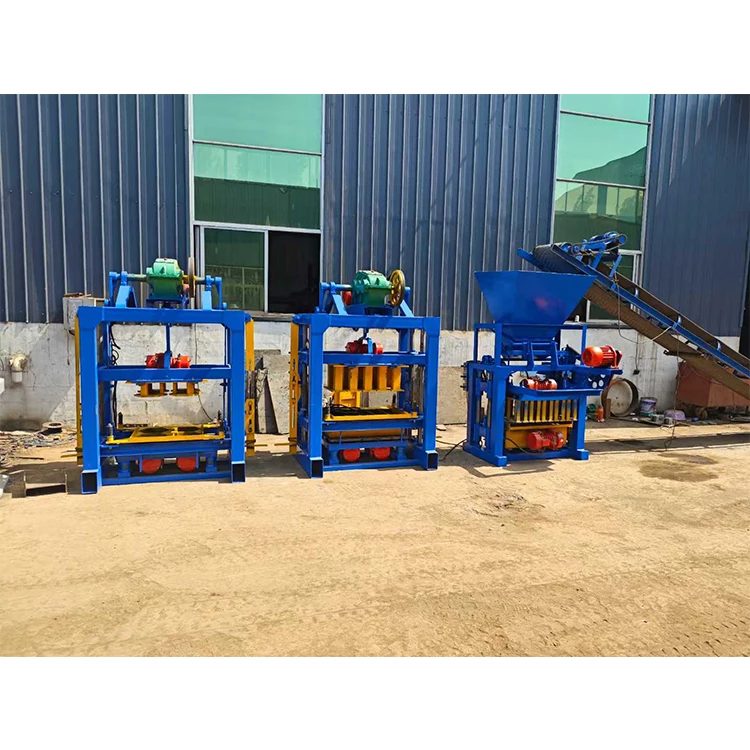
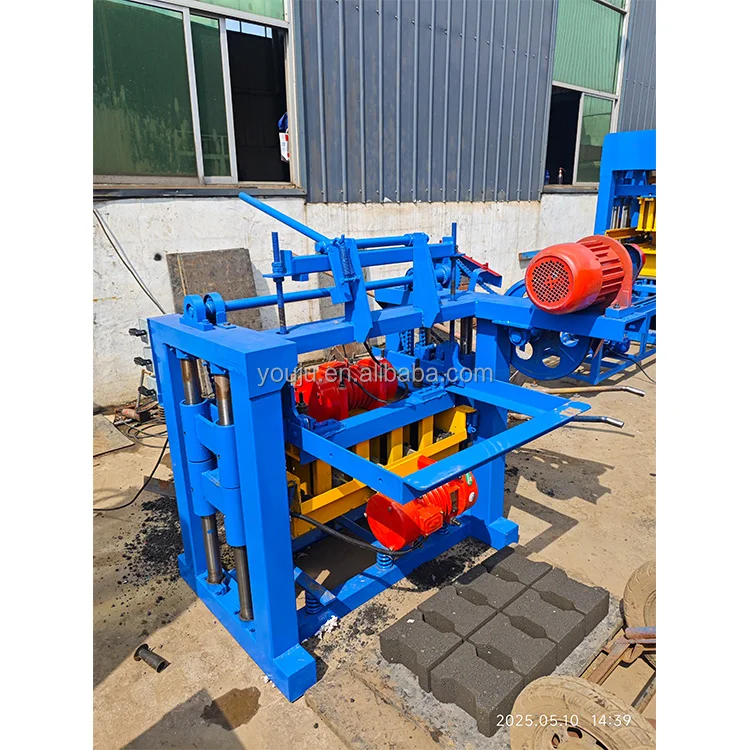
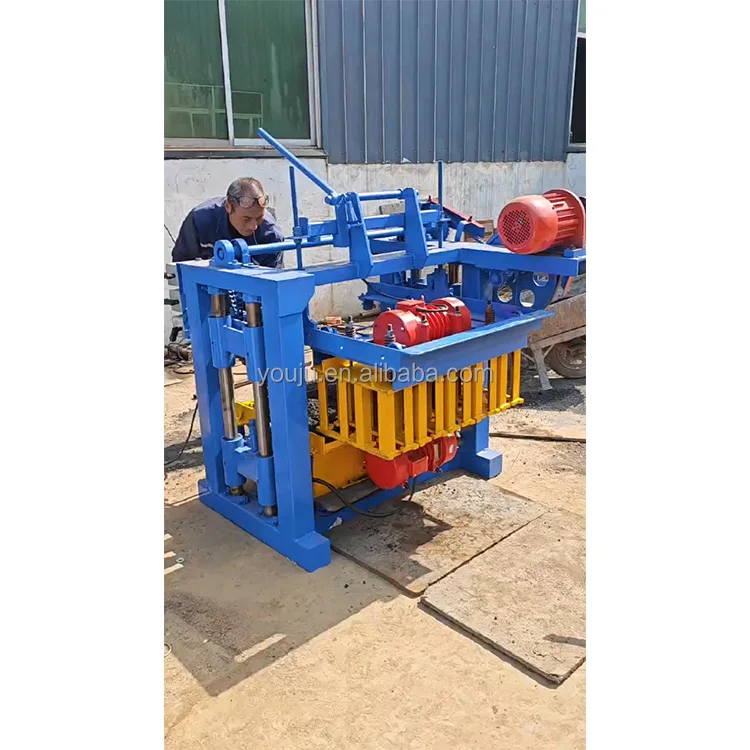
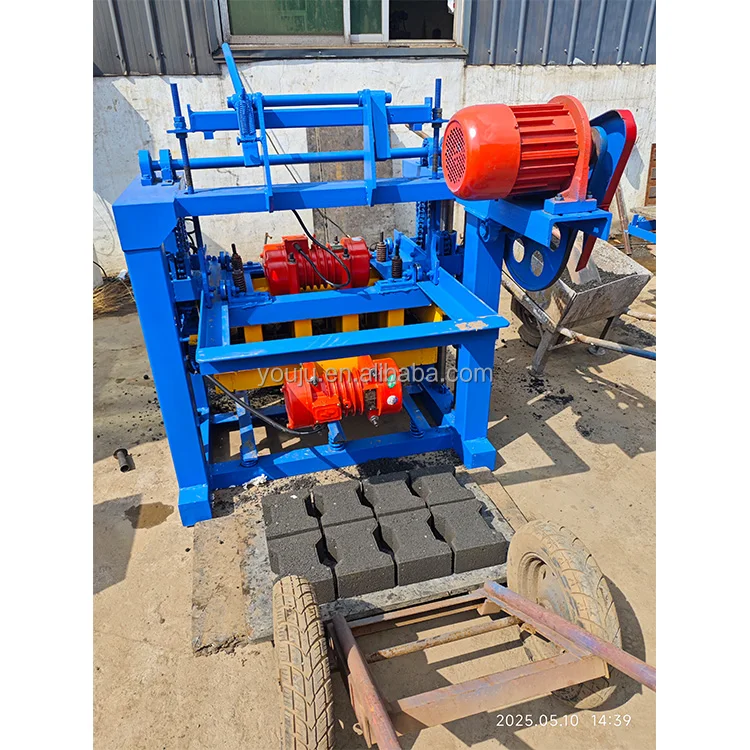
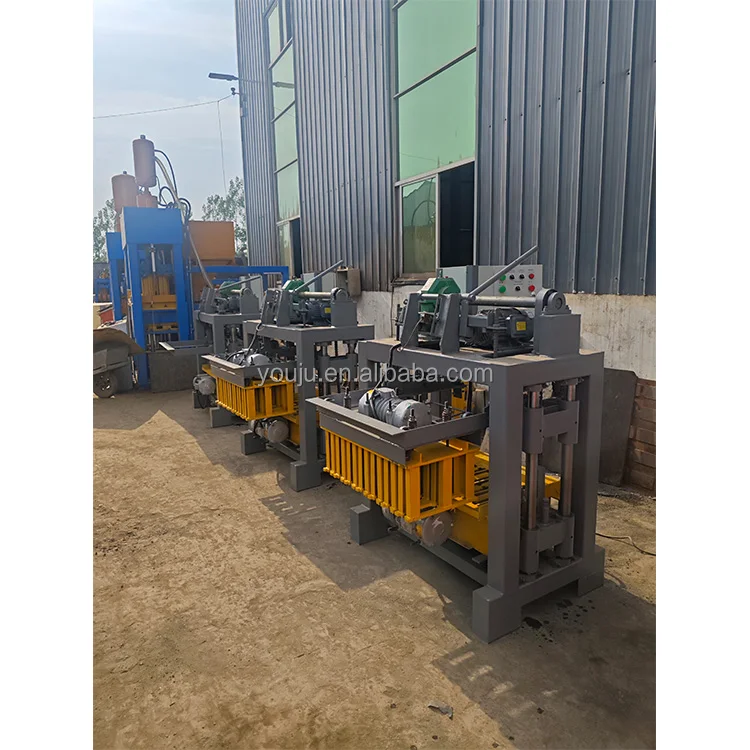
Description
Stock-Ready Dispatch — QTJ4-40 units staged for loading, so your site gets a working machine before the project deadline slips, with lead time quoted in days not months.
Technical Specifications
| Parameter | Value |
|---|---|
| Model | QTJ4-40 |
| Product Type | Stationary Manual Concrete Block Making Machine |
| Rated Power | 10.4 kW |
| Overall Dimensions (L×W×H) | 1350 × 1460 × 1800 mm |
| Total Mass | 1200 kg |
| Molding Cycle | 40 s |
| Output Capacity | 2400 pcs/hour, 19200 pcs/day (based on 400×200×200mm hollow block, 5 pcs/mould) |
| Pallet Size | 850 × 450 × 20 mm |
| Vibration Frequency | 2800 r/min |
| Vibration Type | Table vibration feeding, fluctuation vibration molding |
| Control System | Mechanical and electric combination (manual operation) |
| Automation Level | Manual with small platform vibration and mechanical lifting |
| Configuration Included | Host machine 1 set, block mould 1 set, JQ350 mixer |
| Voltage & Frequency | Configurable to destination country — confirm at order |
| Assembly State | Requires on-site assembly on flat cement ground |
Application Suitability
| Application | Material or Output |
|---|---|
| On-site hollow block production for building contractors | Cement, crushed stone, sand and water mixed on location |
| Small workshop solid block manufacturing | Local aggregate blended with Portland cement |
| Entry-level paver and brick startup | Cement-based mixes with fine aggregate gradings |
| Remote construction camp block supply | Locally sourced sand and gravel with cement binder |
Why the Voltage Question Must Come Before Dispatch
Locking your site voltage and frequency before the QTJ4-40 ships prevents weeks of idle machines sitting on a foundation waiting for an electrician.
I once watched a QTJ4-40 stationary block machine in stock sit unpacked on a Cambodian job site for three full weeks because the local supply was 380V and the machine had been wired for a different standard. The contractor had twelve masons on payroll with nothing to do. That single oversight cost more than the entire shipping bill [NEED_CITE: voltage and frequency standards by export market]. When we stage a machine for fast dispatch, the electrical specification is the first item on the checklist, not the last.
Stock Availability and Container Loading
The QTJ4-40 stationary block machine in stock is held in assembled-but-uncrated condition at the Shandong facility, meaning factory testing is already complete before your order is confirmed. Its compact footprint of 1350 × 1460 × 1800 mm allows the host machine, JQ350 mixer, mould set and pallets to load into a single standard container without major dismantling. This keeps ocean freight straightforward and reduces the chance of lost components during transit.
From Warehouse to Working Foundation
What separates a fast dispatch from a fast startup is groundwork. The QTJ4-40 requires a flat cement surface at the destination — no specialized foundation pit or anchor bolts. Once the container arrives, the machine is positioned, reassembled at the bolt points that were loosened for loading, wired to the confirmed supply, and test-run with the buyer’s local aggregate. Most site teams complete this sequence in a single working day when the preparation checklist is followed. [NEED_CITE: typical small block machine installation requirements on flat concrete floors]
Reading the Capacity Number Honestly
The quoted output of 2400 pieces per hour and 19200 pieces per day is measured on a 400×200×200mm hollow block at five pieces per mould with a 40-second cycle. Switching to a smaller solid block format changes the pieces-per-mould count and may alter the cycle, so daily totals will differ. Buyers planning production schedules should request a capacity calculation for their specific block format rather than extrapolating from the hollow block figure. The vibration frequency of 2800 r/min and table vibration feeding are matched to standard cement-aggregate mixes; unusual lightweight aggregates may require cycle adjustments.
What Happens When Dispatch Is Rushed Without Verification
Shipping a block machine to meet a deadline only helps if it actually runs on arrival. When pallet size is not cross-checked against the curing racks the buyer already has on site, the freshly pressed blocks cannot be moved into the curing area without manual restacking. When the mould included in the package is not the format the local market buys, the machine produces inventory nobody wants. These are not equipment defects — they are ordering oversights that a quick dispatch can make worse if the pre-shipment checklist is skipped [NEED_CITE: common block machine specification mismatches at commissioning].
Why Buyers Source This Model Here
Our yard keeps QTJ4-40 units staged so that dispatch lead time is measured in days, giving contractors with tight deadlines a realistic path to production. Each machine leaves with the JQ350 mixer and at least one mould matched to the buyer’s stated block format, eliminating the gap between press arrival and first block output. Electrical voltage and frequency are confirmed against the destination country’s grid before the machine is rewired and crated, preventing the idle-site scenario I have witnessed firsthand. Packing photographs and a factory test record are provided before the container door closes, so you see exactly what is on the truck. The documentation package travels with the shipment and covers the electrical schematic and maintenance intervals specific to this model.
Documentation & Verification
- Factory test record run on the buyer’s specified block format before dispatch
- Electrical schematic matching confirmed voltage, frequency and plug type
- Packing photographs showing machine condition inside the container
- Operation and maintenance manual covering the QTJ4-40 mechanical system
- Mould drawing and format list for the included mould set
- Container loading plan with estimated vessel departure date
Installation, Commissioning & Support
- Flat cement ground surface required before the 1200 kg machine is positioned
- Dedicated power circuit sized for 10.4 kW total draw must be prepared in advance
- Voltage and frequency confirmed at order to match local supply before wiring
- JQ350 mixer placed adjacent to the host for continuous material feed
- Mechanical lifting system inspected and lubricated during on-site reassembly
- First production run supervised to set 40-second cycle timing for local mix
What to Prepare Before Requesting a Quote
To match the right QTJ4-40 stationary block machine in stock to your project, share your target block format and daily volume requirement so the correct mould is included in the package. Confirm your site voltage, frequency and plug type — this single step prevents the most common commissioning delay. Let us know your available curing area dimensions and forklift capacity so the 850 × 450 × 20 mm pallets align with your existing handling setup.
Frequently Asked Questions
Q: Which QTJ4-40 models are currently in stock and what is the dispatch lead time?
A: The QTJ4-40 is held in factory-tested condition at the Shandong yard. Once voltage, frequency and mould format are confirmed, the machine is prepared for container loading and dispatched within a short lead time that is quoted at the quotation stage. Exact availability varies with order volume, so confirming your requirement early secures your position in the dispatch queue.
Q: How is the machine packed and loaded into a container for shipment?
A: The QTJ4-40 is partially dismantled at key bolt points to fit within a standard container alongside the JQ350 mixer, one mould set and pallets. The 1350 × 1460 × 1800 mm overall envelope keeps the loading straightforward. A container loading plan is provided at quotation, and packing photographs are shared before the container is sealed.
Q: What electrical specifications need to be confirmed before the machine ships?
A: Your site voltage, frequency and plug type must be confirmed before the machine is wired and dispatched. The rated power draw is 10.4 kW, so the local circuit must be sized accordingly. Getting this wrong can leave the machine idle on site waiting for a transformer or panel modification, a delay that is entirely avoidable at the order stage.
Q: What block formats can the QTJ4-40 produce and are additional moulds available from stock?
A: The standard package includes one mould set — commonly the 400×200×200mm hollow block at five pieces per mould. Additional mould formats such as solid blocks and pavers can be supplied from stock or produced to buyer drawings. When ordering, state the format your market requires so the correct mould ships with the machine.
Q: What installation requirements must be prepared before the machine arrives on site?
A: A flat cement ground surface is needed to receive the 1200 kg machine, along with a dedicated electrical circuit matching the confirmed voltage and frequency. The JQ350 mixer is positioned beside the host for material feed. On-site reassembly at the loosened bolt points and a test run with your local aggregate complete the commissioning sequence.