

Description
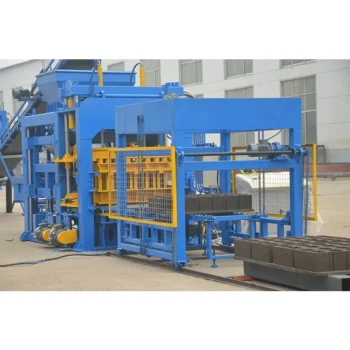
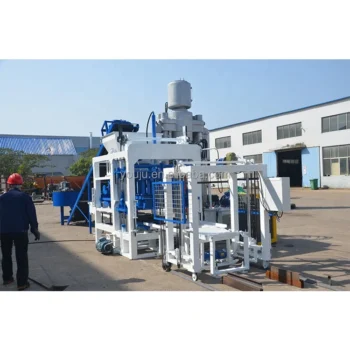
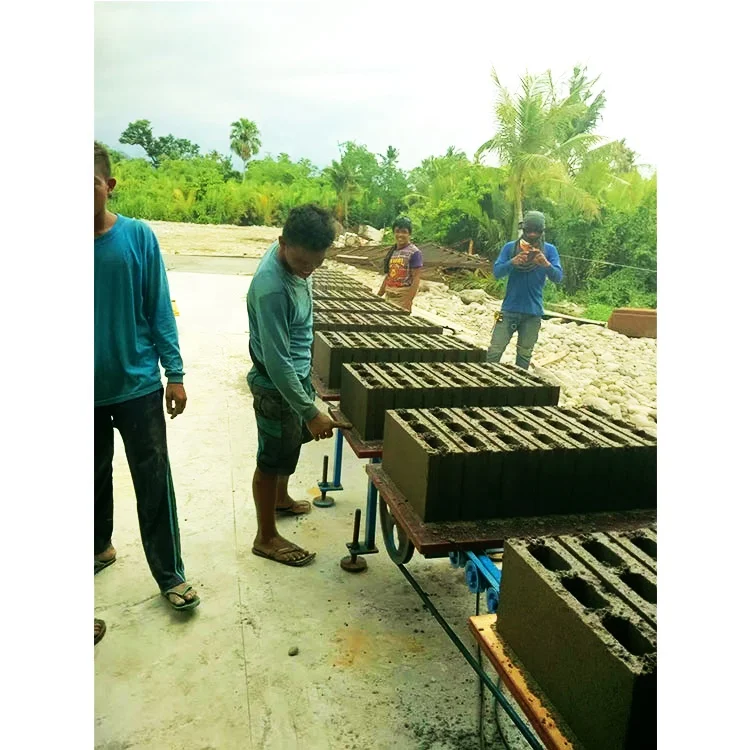
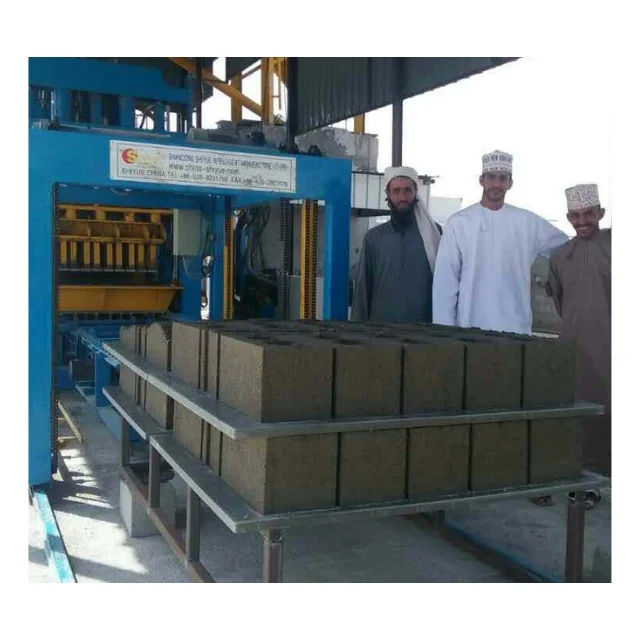
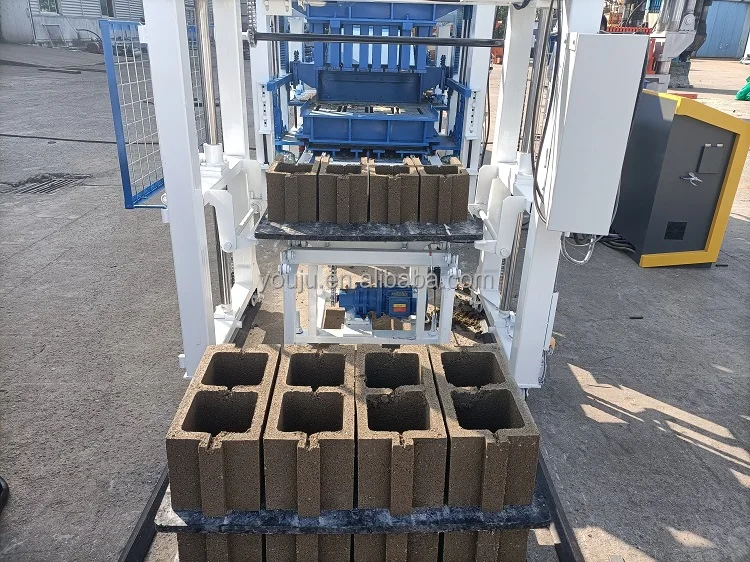
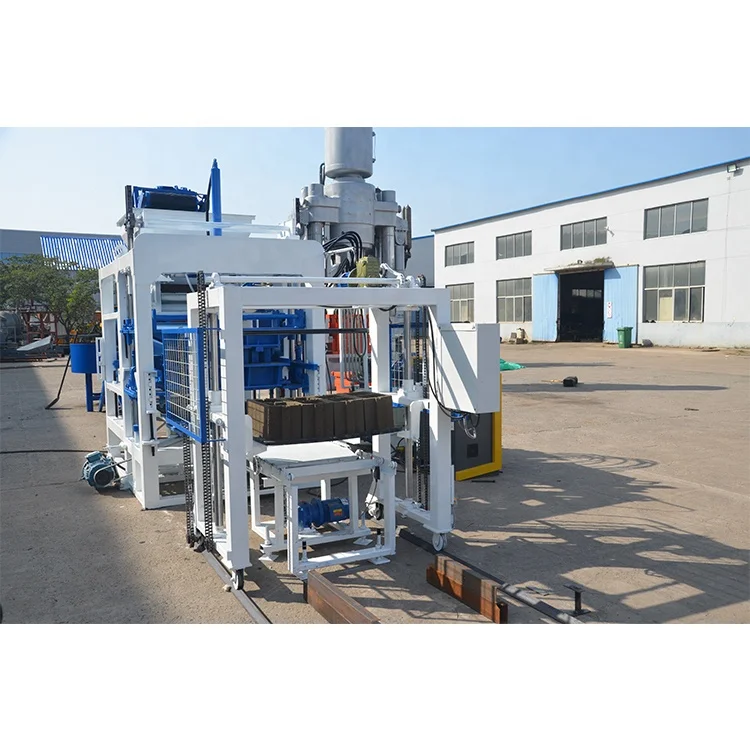
Stocked QT4-18 automatic block machine — pallets, standard hollow mould and matching line equipment held in inventory so container loading can proceed within days of order confirmation, not weeks after a new build cycle.
Technical Specifications
| Parameter | Value |
|---|---|
| Model | QT4-18 |
| Product Type | Automatic Concrete Block Making Machine |
| Overall Dimensions | 2500 × 1750 × 2200 mm |
| Rated Pressure | 16 MPa |
| Vibration Form | Platform Vibration |
| Pallet Size | 950 × 550 mm |
| Molding Cycle | 18–25 seconds (basis to be confirmed per block format) |
| Overall Power | 27.5 kW |
| Control System | PLC with frequency converter |
| Electrical Components | Schneider brand |
| Mould Lifting Mechanism | Double-sided synchronous gears |
| Material Feeder | Distribution belt hopper |
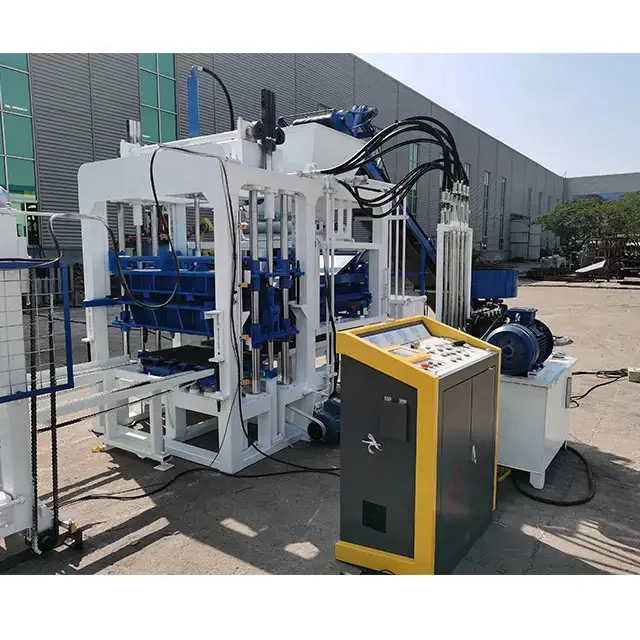
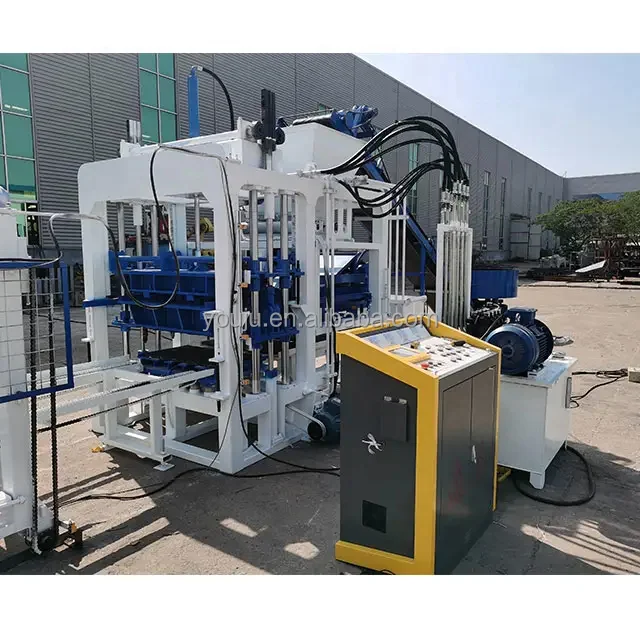
| Automation Level | Automatic (pallet feeder, block conveyor, hydraulic station, PLC console) |
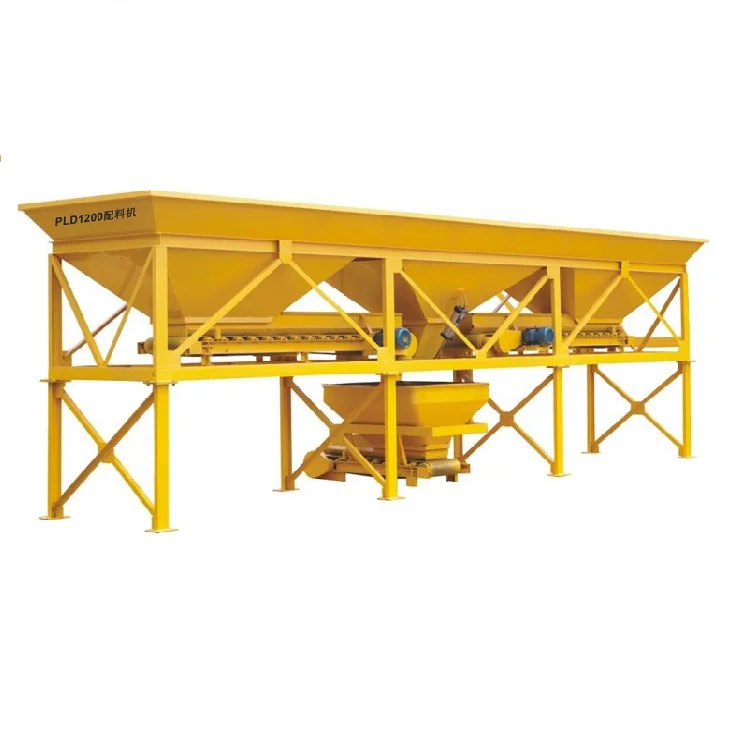
| Supporting Equipment Options | JQ500 pan mixer, 8 m or 6 m belt conveyor, stacker, block clamper, cement silo, batching plant, trolley |
| Mould Format | One hollow block mould included; additional formats orderable and customizable before shipment |
| Mould Change Method | Manual bolt removal, upper and bottom mould exchanged via block conveyor and small forklift |
| Voltage & Frequency | Not stated in source — confirm before commissioning |
| PLC Display Language | Not stated in source — confirm before commissioning |
| Certification | Not stated in source — confirm CE or applicable declarations |
Application Suitability
| Application | Material or Output |
|---|---|
| Hollow block production on project sites | Crushed stone, sand, cement, water mix fed via distribution belt hopper |
| Solid brick manufacturing for local distribution | Same aggregate base with solid block mould installed |
| Paving block and interlocking brick runs | Customizable mould formats ordered before dispatch |
| First block plant setup for entrepreneurs | Full line with JQ500 mixer, belt conveyor, stacker and trolley shipped in one container |
| On-site construction block production | Mobile or fixed layout depending on curing area and pallet circulation plan |
Why "In Stock" Must Mean Tested, Not Just Assembled
A machine sitting on the factory floor is not ready to ship until the PLC speaks your language and the voltage matches your grid.
I have stood at trade shows in Europe and North America where buyers signed contracts based on a promised ship date, only to find the control panel displayed in Chinese or the motor wired for a frequency that does not exist in their country. The machine was physically present, but electrically incompatible. That delay can push commissioning back by several weeks while a new transformer or control board is sourced locally [NEED_CITE: voltage and frequency standards by export market].
When you are working to a project deadline, the difference between a stocked QT4-18 that ships next week and one that requires electrical rework is the difference between blocks on site and an idle crew. This automatic block machine in stock must arrive with voltage, frequency and PLC display language already confirmed and factory-tested against your specific requirements.
Dispatch Timing You Can Plan Around
The QT4-18 is held as a stocked model with the standard hollow block mould pre-matched. When supporting equipment — the JQ500 pan mixer, belt conveyor, stacker and trolley — is ordered as a package, the entire line can be dismantled, photographed during packing, and loaded into a container within a short dispatch window.
Buyers working to a construction phase deadline need to know the exact sequence: factory test completion, packing photographs sent for approval, container loading plan confirmed, and dispatch to port. Each step has a checkpoint so the arrival estimate quoted upfront remains reliable.
Container Loading and Machine Dismantling
The QT4-18 is dismantled into major assemblies — main frame, hydraulic station, PLC console, pallet feeder and block conveyor — for container loading. The 2500 × 1750 × 2200 mm overall dimension means the press alone requires careful positioning, and the supporting equipment must be arranged to fill the remaining space without shifting during transit.
Packing photographs document every component before the container doors close. This record serves both as a shipping verification and as a reassembly reference when the machine arrives at the buyer’s site. The loading plan is shared before dispatch so the receiving team can prepare forklifts and staging area [NEED_CITE: container loading practices for heavy industrial machinery].
How Pressure, Vibration and Pallet Size Shape Every Block
The 16 MPa rated hydraulic pressure works together with platform vibration to compact the concrete mix into the mould cavity. The pressure forces material into corners and edges while vibration settles aggregate into a dense matrix. If the vibration force is too low for the buyer’s specific aggregate gradation, blocks emerge with weak edges; if too high, the mix segregates and coarse particles settle to the bottom.
The 950 × 550 mm pallet size is not arbitrary — it must match the curing rack dimensions and the forklift capacity already present at the buyer’s plant. A pallet too large for existing racks means building new curing infrastructure; a pallet too small means lower output per cycle and more pallet handling labor.
The 18–25 second molding cycle is adjustable through the PLC frequency converter, allowing operators to extend dwell time for complex mould shapes or shorten it for simple hollow blocks. This flexibility matters when a buyer switches between formats during a single production run.
Double-sided synchronous gears lift the mould evenly from both sides, preventing the freshly formed block from cracking or shifting during demoulding. Uneven lifting is a common cause of early-shift scrap that buyers do not anticipate until it happens on their own production floor.
The Cost of Skipping Electrical Confirmation
A QT4-18 that arrives with the wrong voltage rating cannot be commissioned until a matching transformer is sourced locally — a component that may not be available from regional suppliers on short notice. I have seen buyers lose an entire curing cycle because the machine sat idle while waiting for electrical adaptation.
The PLC display language, if not confirmed before shipment, forces operators to navigate menus in an unfamiliar script during the critical first days of production. Mistakes in parameter settings during this period can produce batches of blocks that fail strength testing, wasting raw material and eroding confidence in the equipment before it has proven itself [NEED_CITE: PLC programming language options for industrial machinery].
These are not hypothetical risks. They are the most common reasons a fast-dispatch machine turns into a delayed project.
Why Buyers Source This Machine Through This Channel
Block machinery is the single focus here, so the QT4-18 is specified as one matched system — press, mould, pallet and handling equipment — rather than assembled from separate suppliers who do not coordinate cycle times.
Configuration is set against the buyer’s actual mix design and local aggregate, not a catalogue default. The 16 MPa pressure and platform vibration are evaluated together with the specific raw materials available at the buyer’s location to ensure block strength meets local standards.
Mould design and supply covers the formats the buyer’s market actually sells. The included hollow block mould is standard; additional formats can be custom-designed from buyer drawings and added to the container before dispatch.
The automation level is selectable. A buyer can start with the automatic configuration — pallet feeder, block conveyor, hydraulic station and PLC console — and plan for future stacking or cubing upgrades without replacing the press itself.
Installation and commissioning support includes operator training, and the factory test record is provided before the machine leaves the facility so the buyer knows exactly what was verified.
Documentation & Verification
- Factory test record run on buyer’s specified block format before dispatch
- Machine specification sheet confirming all electrical and hydraulic parameters
- Pallet specification matched to buyer’s curing area and forklift capacity
- Voltage and control language confirmation document signed before production
- Packing photographs showing every component before container doors close
- Customs documentation support for destination port clearance procedures
Installation, Commissioning & Support
- Foundation plan accounts for 2500 × 1750 mm footprint and vibration isolation requirements
- Power supply must match confirmed voltage and frequency with dedicated circuit for 27.5 kW total load
- Machine arrives dismantled into major assemblies with reassembly reference from packing photographs
- PLC console configured to buyer’s confirmed display language and cycle parameters at first startup
- Operator training covers mould change procedure using block conveyor and small forklift
- Wear parts list and mould maintenance schedule provided at handover for ongoing production
What We Need to Move Your Order Forward
To confirm availability and provide a firm dispatch date for the QT4-18, we need your target block format and daily output requirement so we can verify which moulds are in stock and whether additional formats require production time before the container loads.
Your local voltage, frequency and preferred PLC display language must be confirmed before the factory test so the machine arrives ready to run. If you have existing curing racks, forklifts or upstream mixing equipment, share those details so the pallet size and supporting equipment can be matched to what is already on your site.
Frequently Asked Questions
Q: Which QT4-18 configurations and moulds are in stock now, and what is the dispatch lead time?
A: The standard QT4-18 with hollow block mould is held as a stocked model. Supporting equipment including the JQ500 pan mixer, belt conveyor and stacker can ship in the same container. Dispatch lead time depends on whether additional mould formats are ordered and require custom production before loading. Confirm your target block format to receive a specific date.
Q: How is the machine dismantled for container loading, and what container size is needed?
A: The main frame, hydraulic station, PLC console, pallet feeder and block conveyor are separated for loading. Packing photographs document every component. Container size depends on whether supporting equipment ships together. A loading plan is provided before dispatch so the receiving team can prepare appropriate handling equipment at destination.
Q: Can voltage, frequency and PLC language be confirmed before shipment to avoid on-site delays?
A: Yes, and this confirmation is mandatory before the factory test runs. The QT4-18 must be wired and programmed to match the buyer’s local grid and operator language. Skipping this step is the most common cause of commissioning delays after arrival, so it is addressed early in the order process.
Q: What supporting equipment can ship together in the same container?
A: The JQ500 pan mixer, 8 m or 6 m belt conveyor, stacker, block clamper and trolley are all available to ship alongside the QT4-18 in a single container. Cement silo and batching plant may require separate shipment depending on size. Confirming the full equipment list early ensures accurate container planning and a single arrival date.
Q: What arrival estimate and customs documentation are provided once the machine leaves the factory?
A: An arrival estimate is quoted upfront based on the destination port and current shipping schedules. Customs documentation support is included in the shipment package. The buyer receives packing photographs, specification sheets and any applicable declarations needed for clearance at the port of entry.