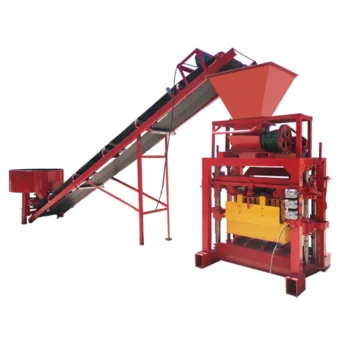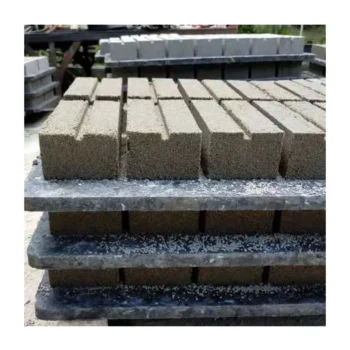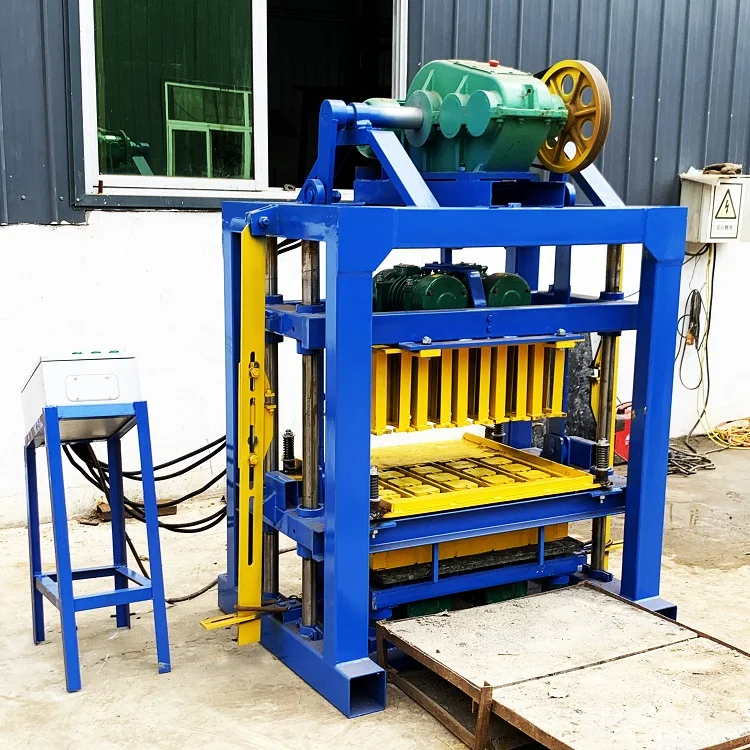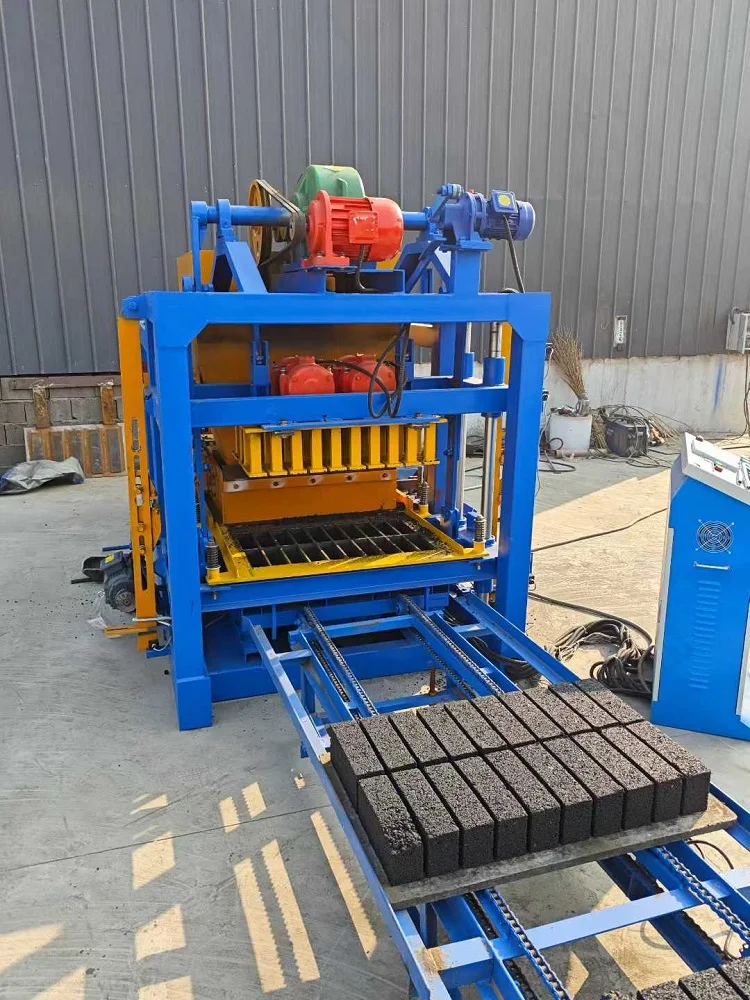

Description
Stocked QT4-15B, Verified Before Dispatch — voltage, PLC language, and mould list are confirmed against your site conditions before the machine leaves our Linyi workshop, so commissioning starts on day one.
Technical Specifications
| Parameter | Value |
|---|---|
| Model | QT4-15B |
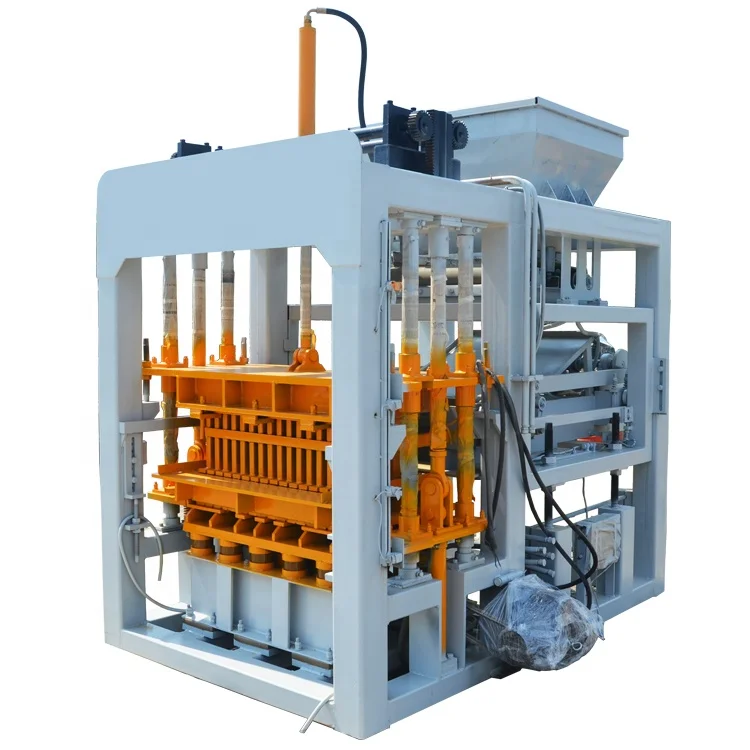
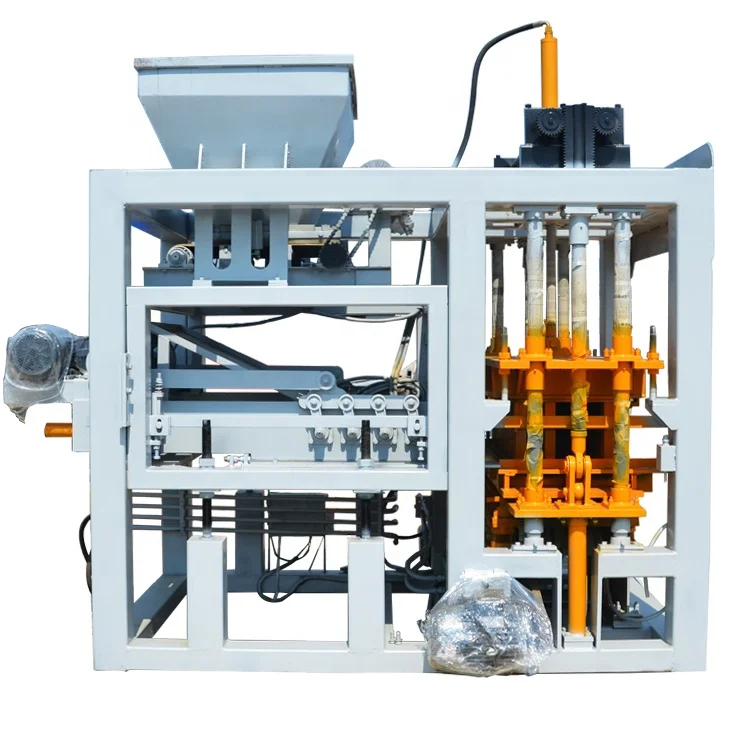
| Product Type | Fully Automatic Concrete Block Making Machine |
| Automation Level | Fully automatic, computer controlled |
| Control System | PLC computer control |
| Hydraulic System | High thermal efficiency, low heat generation |
| Vibration Mode | Multiaxis synchronizer vibration, vertically downward |
| Mixer System | Multiaxis forced mixer |
| Guide Bearing | Long-period over-length guide bearing for upper mould and mould box alignment |
| Frame Construction | High-strength rack with special welding technique, vibration shock resistant |
| Moulding Cycle | 15–20s |
| Output Capacity (hollow block) | 900–1200 pcs/h based on 400×200×200mm, 4 pcs/mould |
| Output Capacity (block) | 1080–1440 pcs/h based on 400×150×200mm, 5 pcs/mould |
| Output Capacity (block) | 1440–1920 pcs/h based on 400×100×200mm, 8 pcs/mould |
| Output Capacity (paving block) | 2880–3840 pcs/h based on 200×100×60mm, 16 pcs/mould |
| Output Capacity (standard brick) | 5930–6720 pcs/h based on 240×115×53mm, 28 pcs/mould |
| Daily Output — 8hr (hollow block) | 7200–9600 pcs based on 400×200×200mm |
| Daily Output — 8hr (standard brick) | 47400–53700 pcs based on 240×115×53mm |
| Warranty | 1 year for the whole machine (excluding spare parts) |
| Assembly State | Production line configuration available |
Application Suitability
| Application | Material or Output |
|---|---|
| Hollow block production | Crushed stone, sand, cement, fly ash aggregate mixes |
| Solid block production | Dense aggregate blends for load-bearing walls |
| Paving brick production | Fine aggregate and pigment mixes for exterior surfaces |
| Standard brick production | Clay-alternative mixes for masonry infill |
| Multicellular brick production | Lightweight aggregate for thermal insulation blocks |
| On-site contractor production | Mobile plant setups for housing project milestones |
Why "Pieces per Hour" Means Nothing Without the Block Format
A capacity figure without the block size and mould cavity count is a guess, not a guarantee.
I have watched buyers compare two machines on a single headline number, only to discover after arrival that the quoted throughput assumed a paving block they never intended to produce. The QT4-15B block machine in stock here ships with capacity documented per format — hollow block, standard brick, paving brick — so the number on the quotation matches the product you actually sell. Mismatched expectations on cycle output remain one of the most common reasons block plant projects stall during the first month of operation [NEED_CITE: block plant commissioning delays attributed to capacity misunderstanding].
Stock Status, Lead Time, and What "Ready to Ship" Actually Covers
When a project deadline is tight, the distinction between a machine sitting on the workshop floor and one still in the build queue determines whether your block line runs on schedule. The QT4-15B block machine in stock is held as a complete press unit with standard mould inventory, meaning the dispatch clock starts from order confirmation rather than from raw material procurement. Buyers working against a construction milestone need the exact dispatch date written into the purchase agreement, not an estimated range.
Container Loading and Dismantling for Ocean Freight
A fully automatic press of this class does not ship assembled. The QT4-15B block machine in stock is dismantled into major sub-assemblies — frame, vibration table, hydraulic station, PLC cabinet, mixer — each secured against container wall bracing. Container loading plans are prepared before the packing photographs are taken, so the buyer’s logistics team can pre-book the vessel and estimate the arrival window at destination port. We quote the arrival estimate upfront rather than after the bill of lading is issued [NEED_CITE: typical ocean freight transit times to West African and Southeast Asian ports].
How the Engineering Details Affect Your Daily Run
The multiaxis synchronizer vibration applies vertical downward force through the mould box, which means block density stays uniform across the full pallet surface rather than tapering at the edges. Combined with the PLC computer control, the moulding cycle holds at 15–20 seconds regardless of operator fatigue during a long shift. The long-period over-length guide bearing keeps the upper mould aligned with the mould box through thousands of cycles, reducing uneven wear that would otherwise force an early mould change mid-shift. The high-strength welded frame absorbs vibration shock continuously, preventing fatigue cracking at the joints that lighter frames develop after several months of production. The multiaxis forced mixer handles varying aggregate moisture levels without requiring the operator to stop the line and adjust water ratios manually [NEED_CITE: vibration force and hydraulic pressure matching for consistent block density].
The Cost of Skipping the Voltage Confirmation Step
Last year a QT4-15B class machine arrived at a West African port wired for 380V, while the site supply was 415V at 50Hz. The motor tripped on first startup and the plant sat idle for two weeks waiting for a replacement motor and transformer. Voltage, frequency, and PLC display language are now verified against the buyer’s site electrical specification before production release. Skipping this single confirmation step can turn a fast-dispatch order into a month-long delay [NEED_CITE: voltage and frequency standards by export market].
What Dispatch Documentation Tells You Before the Machine Arrives
Every stocked unit ships with a factory test record showing the machine running through its full moulding cycle under load, not an empty dry run. Packing photographs document the dismantling scheme and container bracing before the doors close. The hydraulic and electrical schematic allows the buyer’s electrician to prepare the site supply and control wiring before the container is opened. A wear parts and mould list is included so the first reorder can be planned before any component reaches its service interval. CE declaration documentation is provided where applicable to the destination market [NEED_CITE: CE machinery directive requirements for industrial equipment].
Why Buyers on a Deadline Source From This Stock Point
The QT4-15B is held as a single-focus block machinery product, meaning the press, mould, pallet, and handling equipment are specified as one matched system rather than assembled from separate suppliers. Voltage and PLC language confirmation happens before the machine leaves Linyi, not after it arrives at your port. Standard moulds for hollow block, paving block, and standard brick are inventoried alongside the press, eliminating a separate mould order that would add weeks to delivery. Container loading plans and dismantling schemes are prepared per shipment, so your freight forwarder receives the dimensions and weights needed to book the vessel immediately.
Documentation & Verification
- Factory test record showing the QT4-15B running through its full moulding cycle under load
- Voltage and frequency confirmation sheet matched to your site electrical supply before dispatch
- Packing photographs documenting dismantling scheme and container bracing before doors close
- Hydraulic and electrical schematic for site preparation before the container arrives
- Wear parts and mould list with part numbers for first reorder planning
- CE declaration where applicable to destination market import requirements
Installation, Commissioning & Support
- Foundation plan based on the QT4-15B frame footprint and vibration load distribution
- Dedicated electrical circuit sized to the machine rated power and confirmed voltage
- Dismantled sub-assemblies reassembled on-site with alignment verified at guide bearings
- PLC control language set to operator preference before first production run
- Mould change procedure trained to shift supervisors for format switching
- Hydraulic oil grade and filter replacement intervals documented in maintenance manual
What to Include With Your Inquiry
Send your target block format and daily output requirement so we can match the correct mould cavity count and confirm the cycle time against your production schedule. Include the site voltage and frequency along with your preferred PLC display language so these are locked in before the machine is released from stock. If you have existing pallet inventory or a curing area with known dimensions, share the pallet size so the feeding system is configured to match.
Frequently Asked Questions
Q: Is the QT4-15B currently in stock, and what is the dispatch lead time?
A: The QT4-15B is held as a stocked model with standard moulds available from inventory. Dispatch lead time is quoted at the inquiry stage once your voltage, frequency, and PLC language are confirmed. We provide the exact dispatch date in the purchase agreement rather than an estimated range, so your vessel booking aligns with the actual release date from our Linyi workshop.
Q: How is the machine dismantled and loaded for container shipment?
A: The press is separated into major sub-assemblies including the frame, vibration table, hydraulic station, PLC cabinet, and mixer. Each component is secured against container wall bracing with a documented dismantling scheme. Container loading plans with weights and dimensions are provided before shipment so your freight forwarder can pre-book the correct vessel and container type.
Q: What is the estimated arrival time to my destination port?
A: Arrival estimates are quoted upfront based on the destination port and typical ocean freight transit routes. The estimate is provided before order commitment so you can plan site preparation and commissioning schedules around a known delivery window rather than discovering the transit time after the bill of lading is issued.
Q: Are standard moulds shipped together with the machine or ordered separately?
A: Standard moulds for hollow block, paving block, and standard brick formats are inventoried alongside the press and can ship in the same container. Custom moulds designed to buyer drawings follow a separate production timeline that is confirmed at the inquiry stage so they do not delay dispatch of the main press unit.
Q: What documentation ships with the machine?
A: Each shipment includes a factory test record, packing list, hydraulic and electrical schematic, voltage confirmation sheet, operation and maintenance manual, wear parts list, and packing photographs. CE declaration is provided where applicable. Customs documentation support is included to assist with import clearance at the destination port.