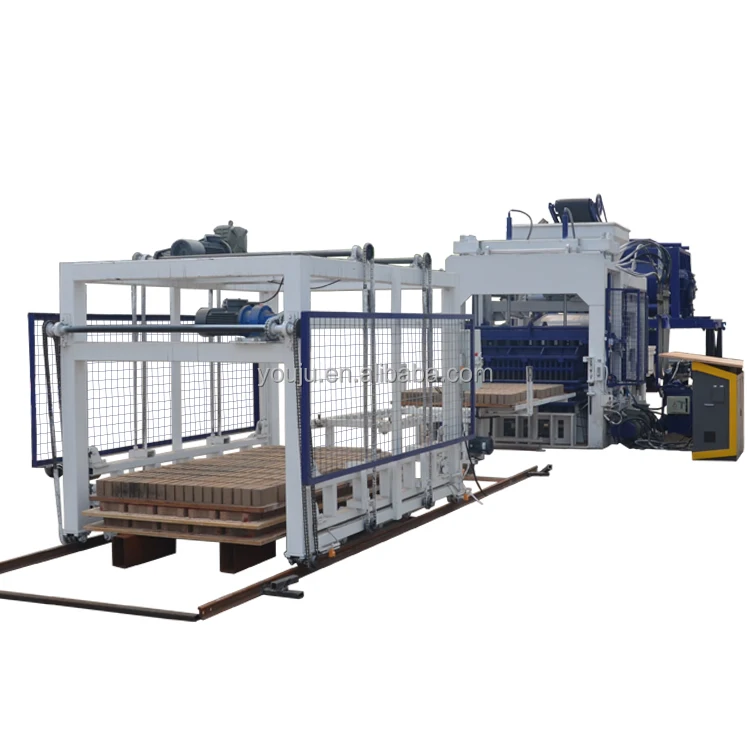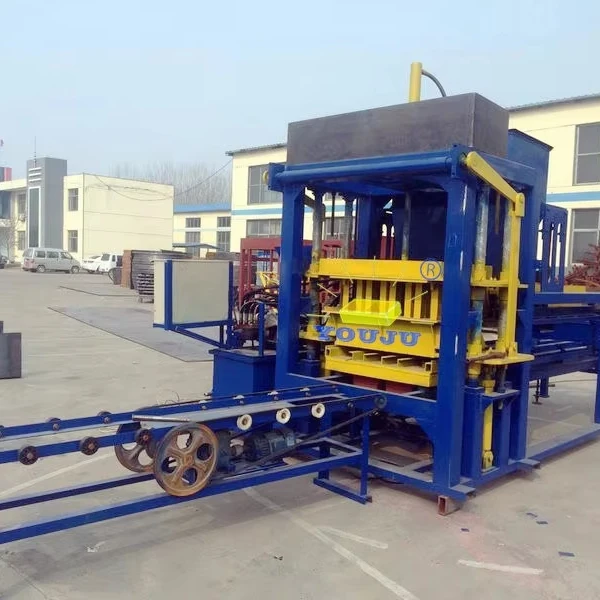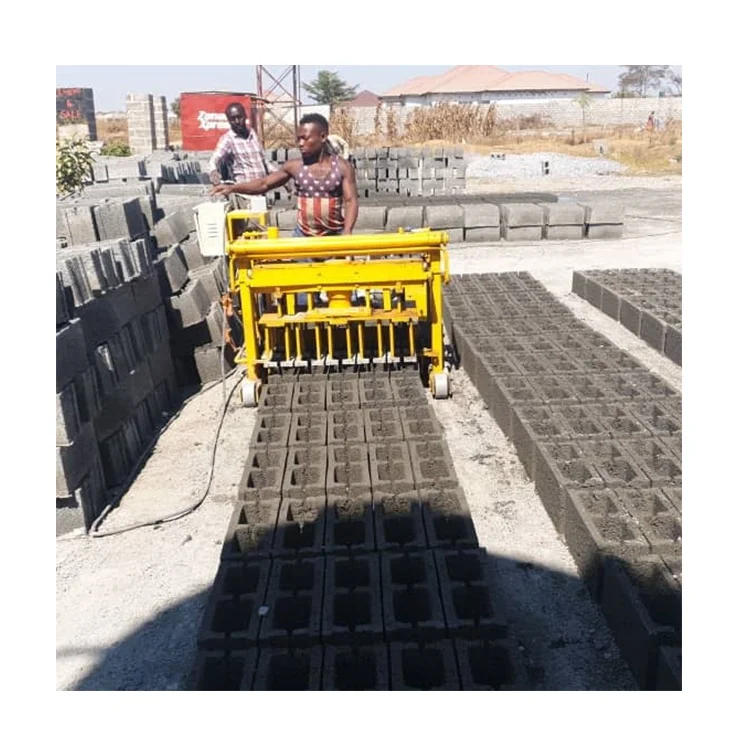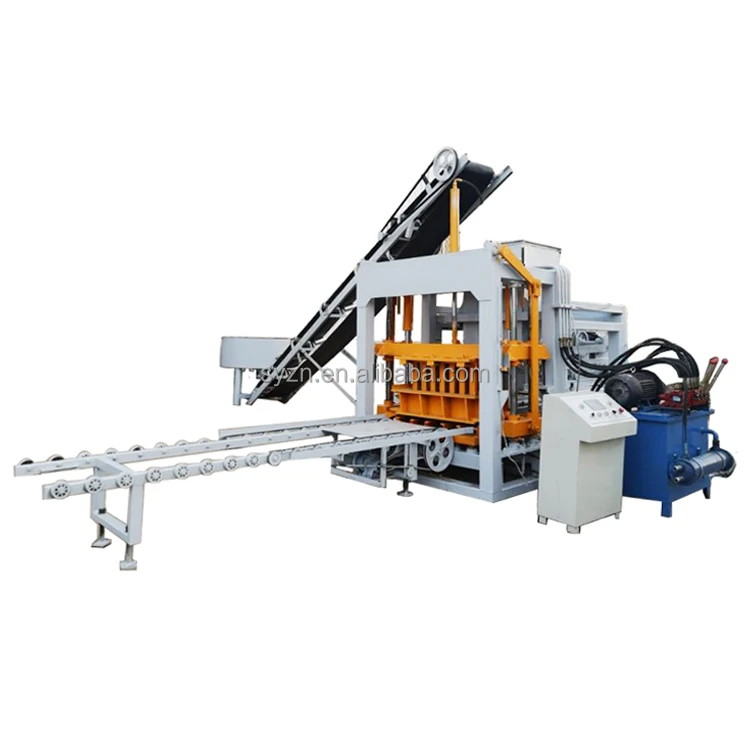
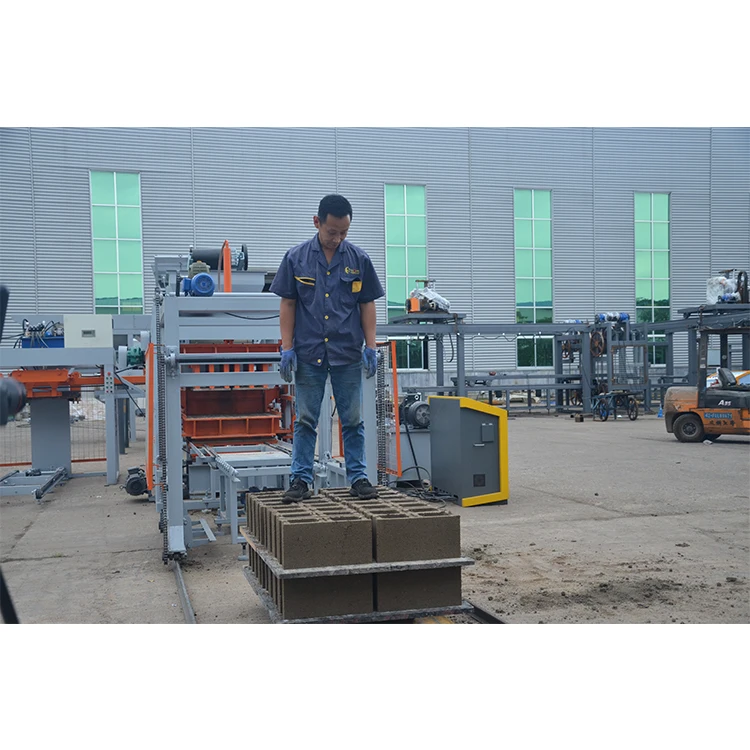
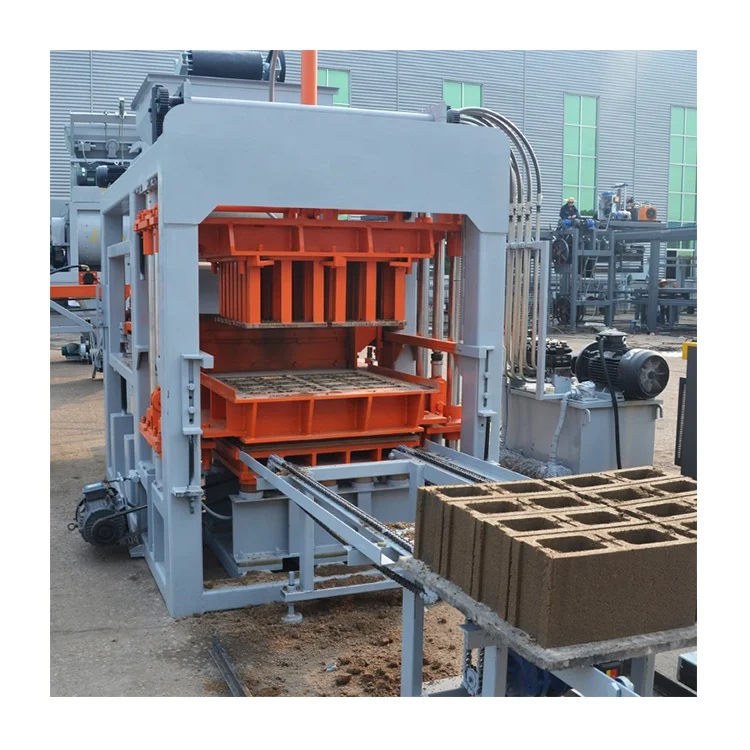
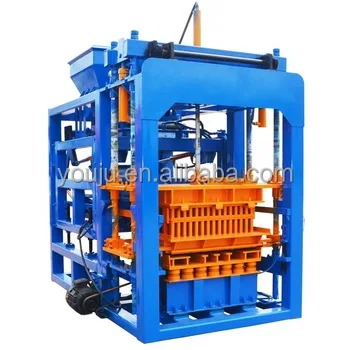
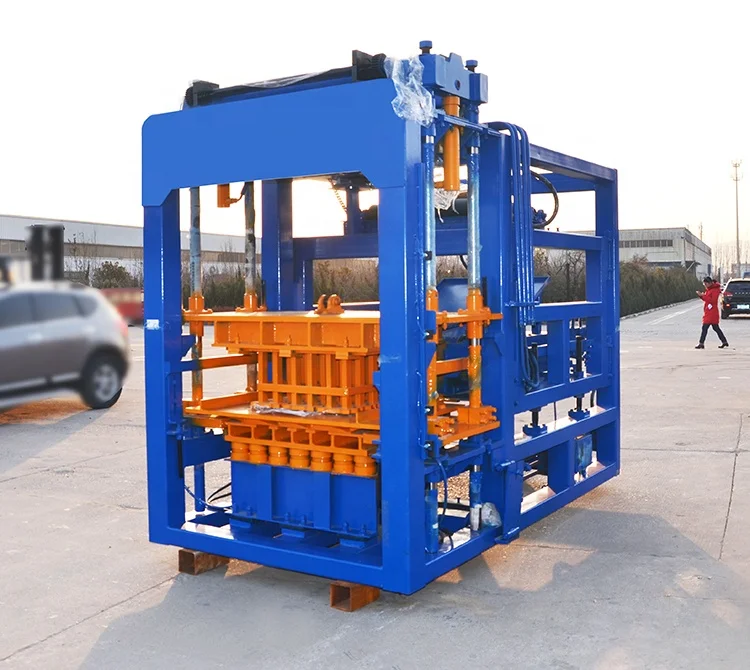
Description
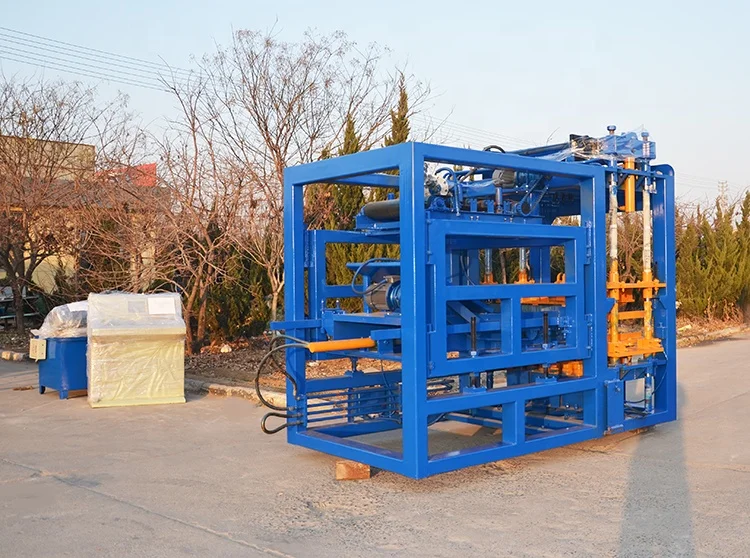
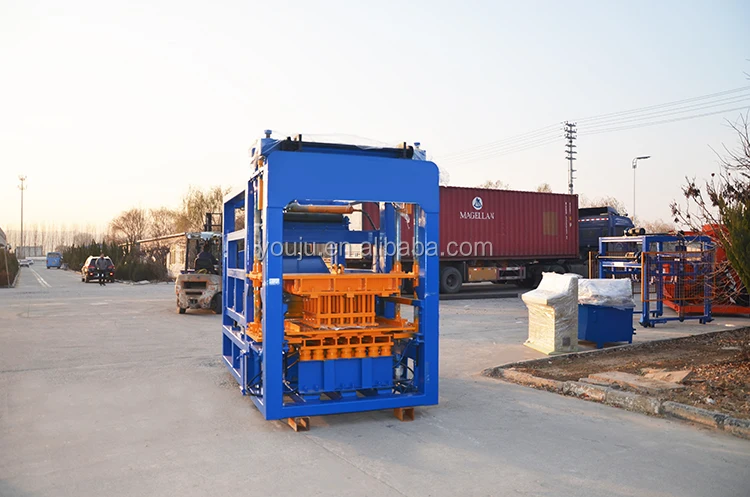
Container-Ready Dispatch — QT6-15 units are held in stock with top cylinder dismantled for standard container loading, so your project timeline is not held up by a production backlog.
Technical Specifications
| Parameter | Value |
|---|---|
| Model | QT6-15 |
| Product Type | Automatic Concrete Block Making Machine |
| Molding Way | Vibration and hydraulic pressing |
| Rated Pressure | 21 MPa |
| Molding Cycle | 15 s – 20 s |
| Pallet Size | 900 × 700 mm |
| Main Machine Weight | 6 000 kg |
| Output – Hollow Block | 1 440 pcs / h, 11 520 pcs / 8 h (based on 400 × 200 × 200 mm, 6 pcs per pallet) |
| Output – Paving Brick | 5 040 pcs / h, 40 320 pcs / 8 h (based on 200 × 100 × 60 mm, 21 pcs per pallet) |
| Output – Solid Brick | 7 680 pcs / h, 61 440 pcs / 8 h (based on 240 × 115 × 53 mm, 32 pcs per pallet) |
| Automation Level | Automatic; simple line option with mixer, conveyor belt, and stacker available |
| Raw Materials | Cement, sand, fly ash, stone powder, slag |
| Voltage | Configurable to local voltage and frequency (basis not stated in source — confirm before order) |
| Assembly for Shipment | Top cylinder removed for container loading |
| Warranty | 1 year (excluding wearing parts) |
Application Suitability
| Application | Material or Output |
|---|---|
| Hollow block production for wall construction | Cement, sand, fly ash, stone powder, slag — 400 × 200 × 200 mm format |
| Paving brick for sidewalks and road shoulders | Standard and color paving mixes — 200 × 100 × 60 mm format |
| Solid brick for load-bearing and partition walls | Dense concrete mix — 240 × 115 × 53 mm format |
| Interlocking brick and kerbstone | Adapted mould and mix design on the same pallet size |
Why the Voltage Question Should Come Before the Dispatch Date
Ordering a QT6-15 block machine in stock only solves half the problem if the motor winding does not match the grid at the destination port.
I once watched a container sit at a Kenyan site for three weeks because the 380 V / 50 Hz motor could not connect to the local supply, and the buyer had to source a step-down transformer before a single block was pressed [NEED_CITE: voltage and frequency standards by export market]. Since then I place voltage, frequency, and PLC display language on the first line of every pre-shipment checklist. When you confirm a stocked unit, the motor nameplate and control panel label are photographed and sent before the crate is closed, so the machine that arrives is the machine you can plug in.
What "In Stock" Actually Means for the QT6-15
A QT6-15 block machine in stock is not simply sitting on the showroom floor; it is a completed press that has passed the factory vibration and pressure test, with the upper hydraulic cylinder unbolted and crated separately so the main frame clears the internal height of a standard 40-foot container. Standard moulds — hollow block, solid brick, and paving brick — are bundled in the same shipment. The result is a single bill of lading and one customs entry instead of staggered arrivals that leave the press idle while pallets or mixers are still at sea.
Container Loading and Arrival Timing
Once the order is confirmed, the packing team photographs every crate and the open container door before the seal is applied, giving you a visual record for insurance and customs. Dispatch lead time is quoted in calendar days from payment receipt to gate-out at Linyi port, and the arrival estimate is calculated against the published sailing schedule [NEED_CITE: typical ocean transit windows from Qingdao to East Africa and Southeast Asia]. If your project critical path allows only a narrow window, the shipping documents and packing list are released in advance so your clearing agent can pre-lodge the entry.
Reading the Numbers That Matter
The 21 MPa rated pressure and vibration cycle of 15 – 20 seconds together determine how densely the concrete is compacted into the mould cavity. Higher pressure alone will not cure a weak mix; it must be matched to the vibration force and the aggregate gradation available locally. The 900 × 700 mm pallet size is fixed for this model, so before ordering you must check that your curing racks, forklift tine spacing, and yard layout accept that footprint. Output figures are stated per block format — 1 440 hollow blocks per hour based on a 400 × 200 × 200 mm cavity, 5 040 paving bricks per hour based on a 200 × 100 × 60 mm cavity — so your daily plan is built on a known mould, not a catalogue maximum.
The Cost of Skipping the Configuration Check
When a buyer assumes the quoted pallet will fit existing racks only to find the forklift cannot slide under the overhang, curing space is reorganised at the buyer’s expense and the first week of production is lost to yard rework [NEED_CITE: common pallet-handling mismatches reported by field technicians]. Similarly, a mould ordered after the machine has shipped means a second LCL consignment, separate duty, and a press that runs only one format until the mould arrives. Catching these mismatches before the container is sealed costs a few extra emails; correcting them on site costs weeks.
Why Buyers Source This Press Here
Block machinery is the sole product focus, so the press, moulds, pallets, and line equipment are specified as one matched set rather than assembled from separate vendors. Every QT6-15 block machine in stock is configured against the buyer’s actual mix design and target format, not a generic catalogue default. Moulds for interlocking brick, kerbstone, and porous brick are designed in-house to buyer drawings. Automation level is selectable, allowing a semi-automatic start with a defined upgrade path. Factory test records on the buyer’s chosen format are issued before dispatch.
Documentation & Verification
- Line layout and capacity calculation stating the block format assumed for the QT6-15
- Machine specification sheet with pallet size, cycle time, and rated pressure
- Mould drawing and format list for every cavity shipped
- Voltage, frequency, and PLC display language confirmation before crating
- Factory test record on your chosen block format prior to dispatch
- Packing photographs and customs documentation checklist
Installation, Commissioning & Support
- Foundation drawing issued so the 6 000 kg main frame is set on level concrete before arrival
- Power cable schedule confirming amperage for the confirmed voltage and frequency
- Top cylinder re-bolted and hydraulics bled during on-site commissioning
- PLC display language set to operator preference before first production run
- Operator training on mould change procedure and daily lubrication points
- Wear parts list with reorder codes for hydraulic seals and vibration springs
What to Include in Your Inquiry
To lock a QT6-15 block machine in stock against your deadline, send the block format you will produce first, the daily output target, and your local voltage and frequency. If you already own curing racks or a forklift, share the dimensions so the pallet and stacking layout can be verified before the container is booked.
Frequently Asked Questions
Q: Which QT6-15 models and moulds are currently ready for immediate dispatch?
A: Completed presses that have passed factory testing are held with standard hollow, solid, and paving moulds. Inventory changes daily, so a live stock list with serial numbers and photographs is sent on request before you commit to an order.
Q: How is the QT6-15 dismantled for container loading?
A: The top hydraulic cylinder is unbolted and crated separately so the main frame fits within the internal height of a standard container. Reassembly and hydraulic bleeding are covered during on-site commissioning.
Q: How is dispatch lead time calculated from order to port departure?
A: Lead time is quoted in calendar days from payment receipt to gate-out at Linyi, based on the current shipping schedule. Packing photographs and the container seal number are shared before the vessel sails.
Q: What standard moulds ship with the machine, and what is the lead time for additional formats?
A: Hollow block, solid brick, and paving brick moulds are included in the same container. Custom formats such as interlocking or kerbstone moulds are quoted separately with their own production timeline.
Q: How are voltage and motor specifications confirmed before shipment?
A: The required voltage, frequency, and PLC display language are written on the pre-shipment checklist. Motor nameplate and control panel photographs are sent for buyer approval before the crate is closed.