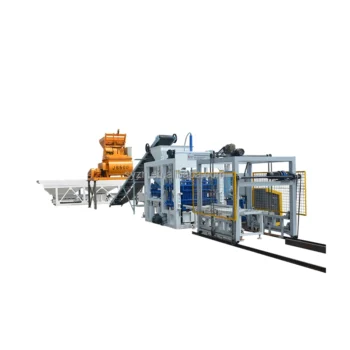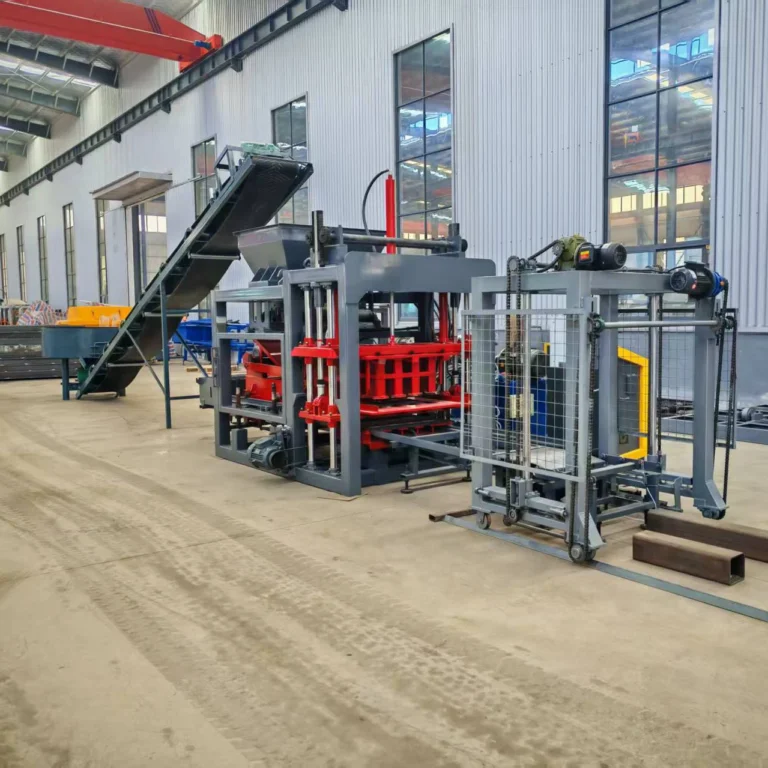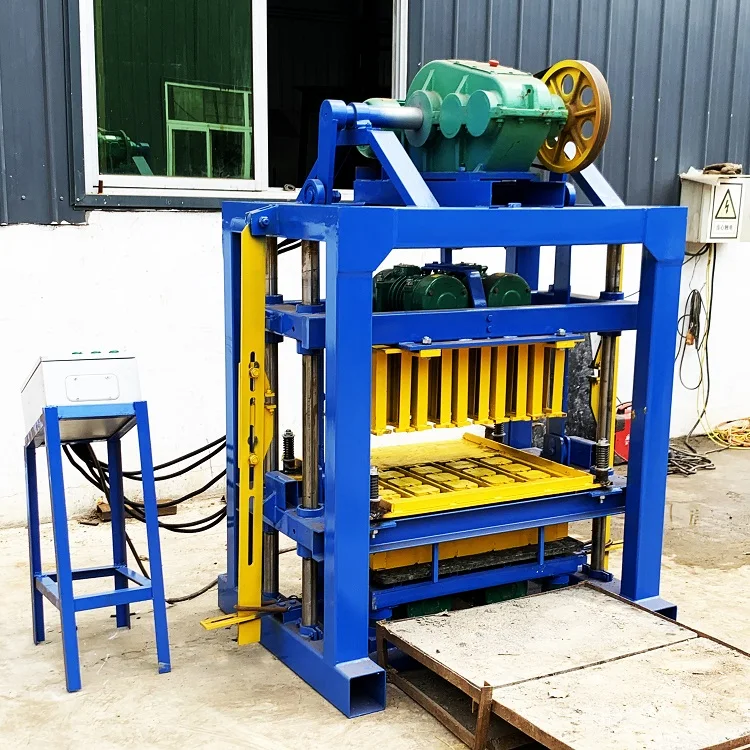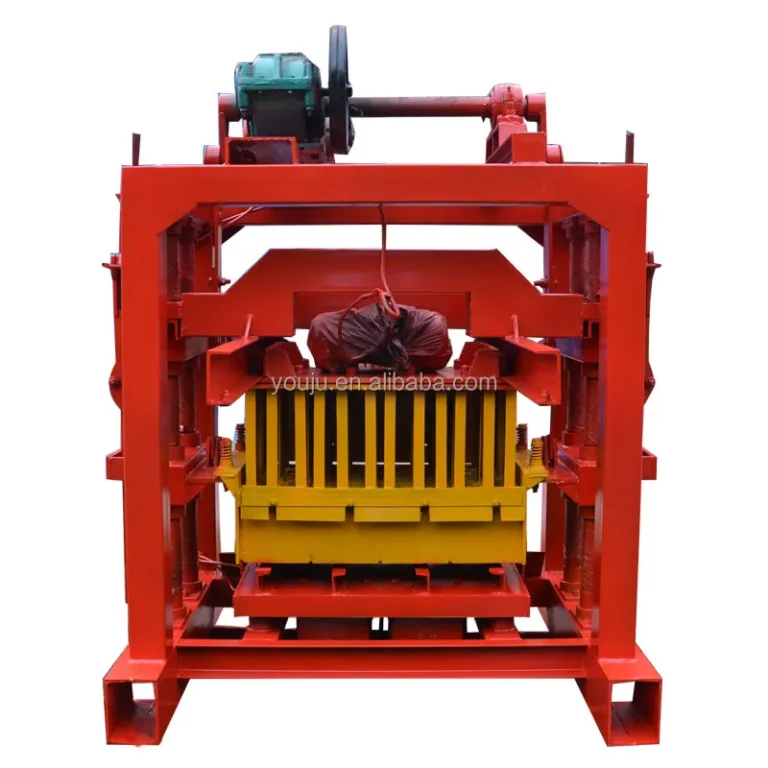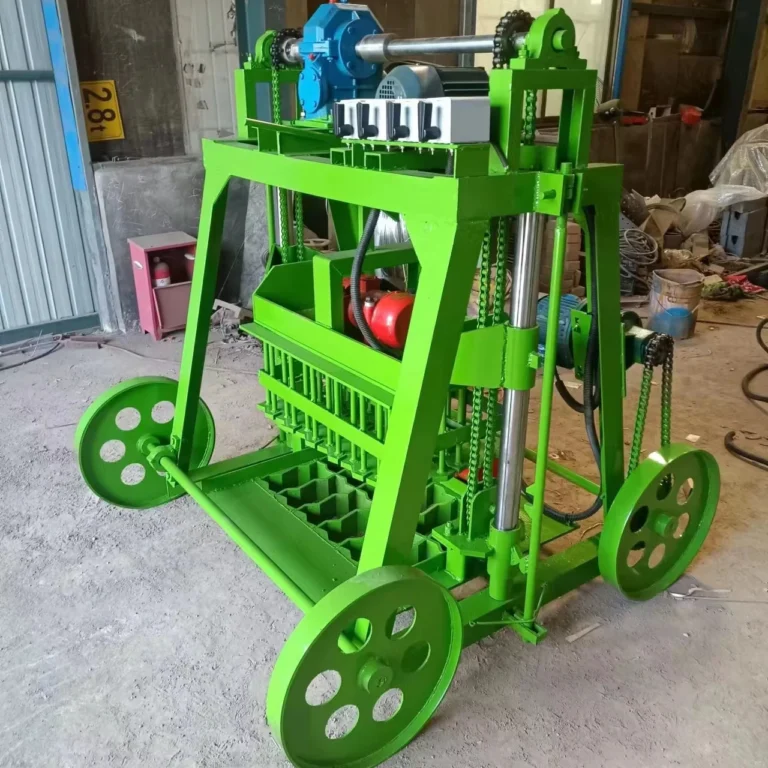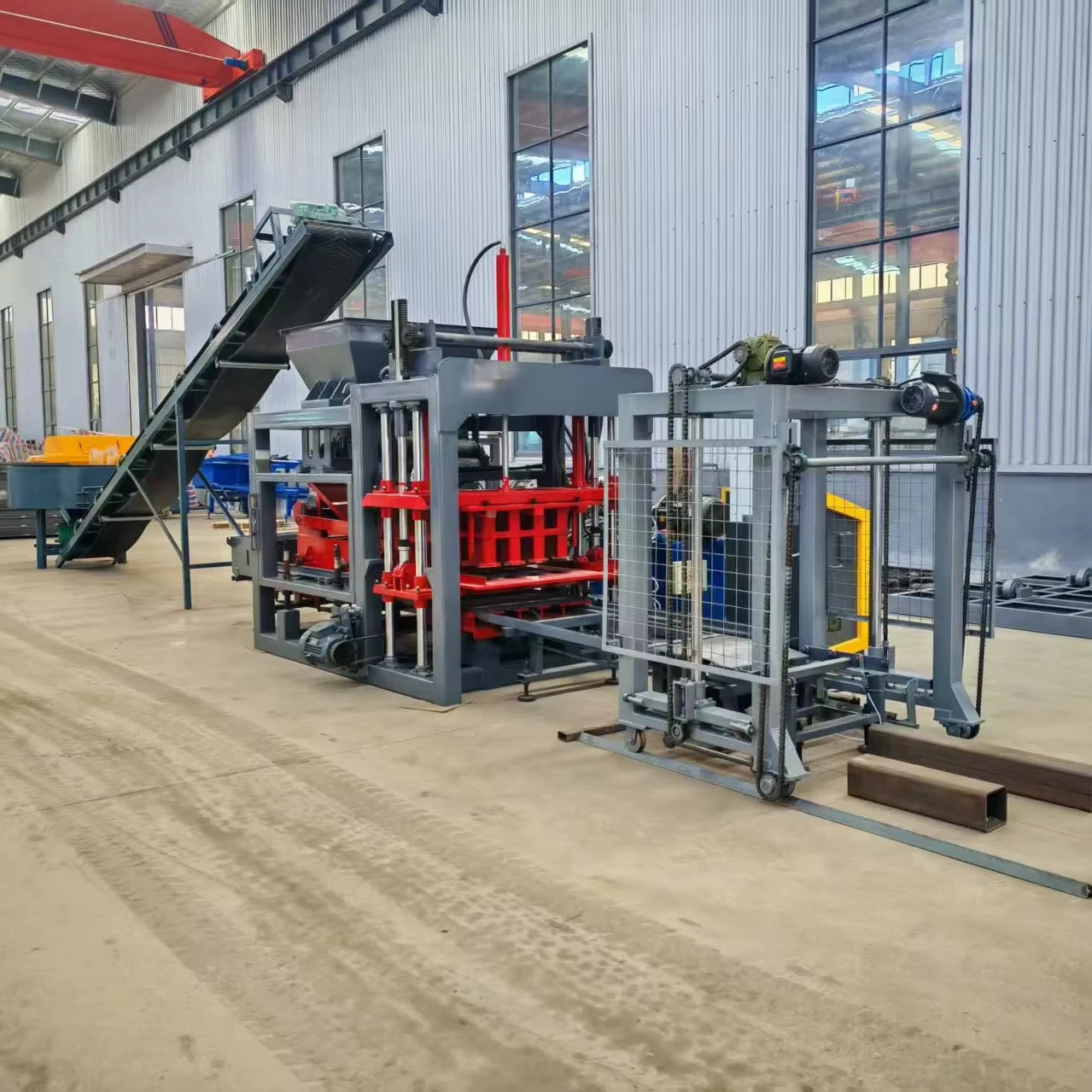
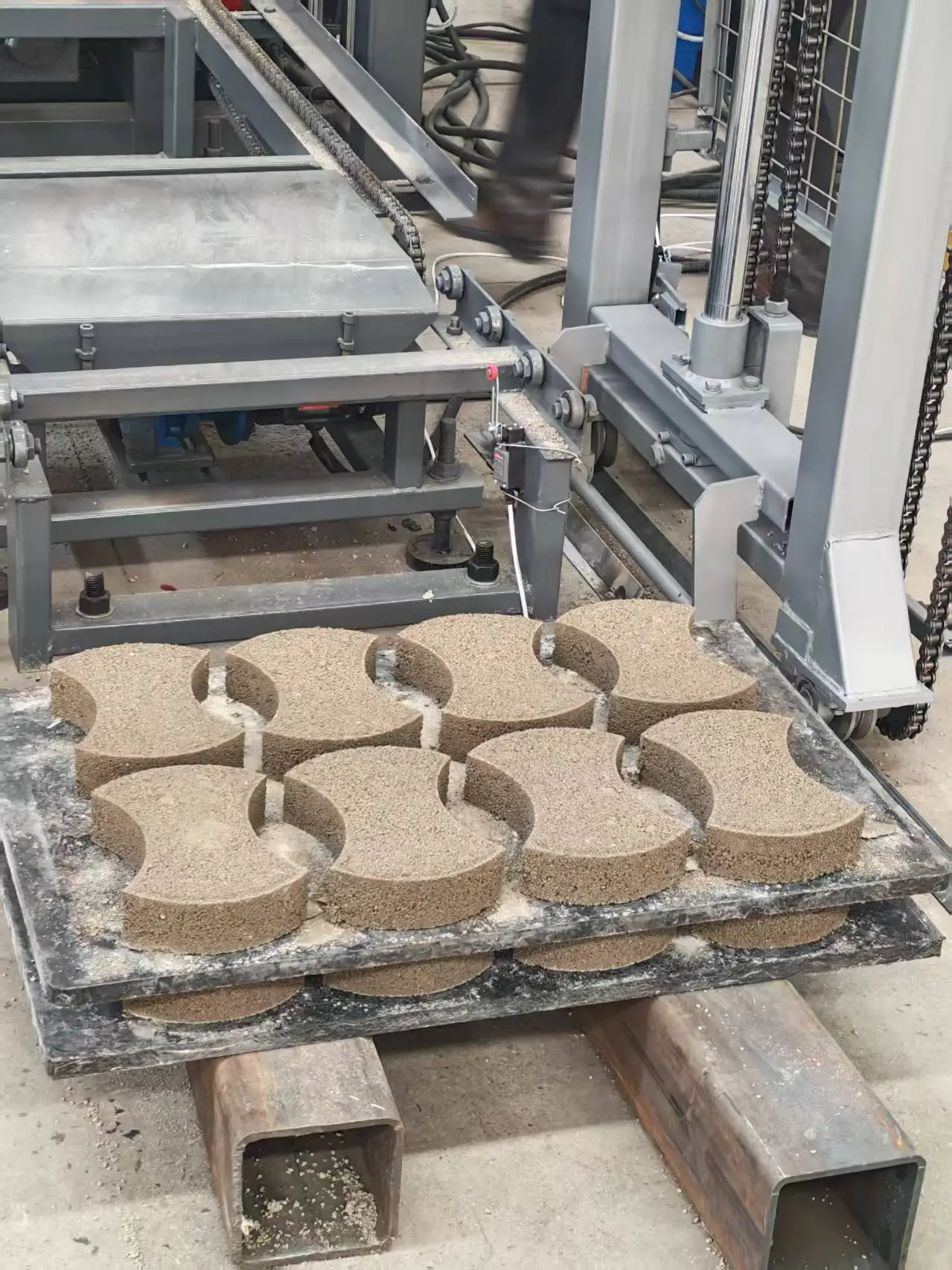
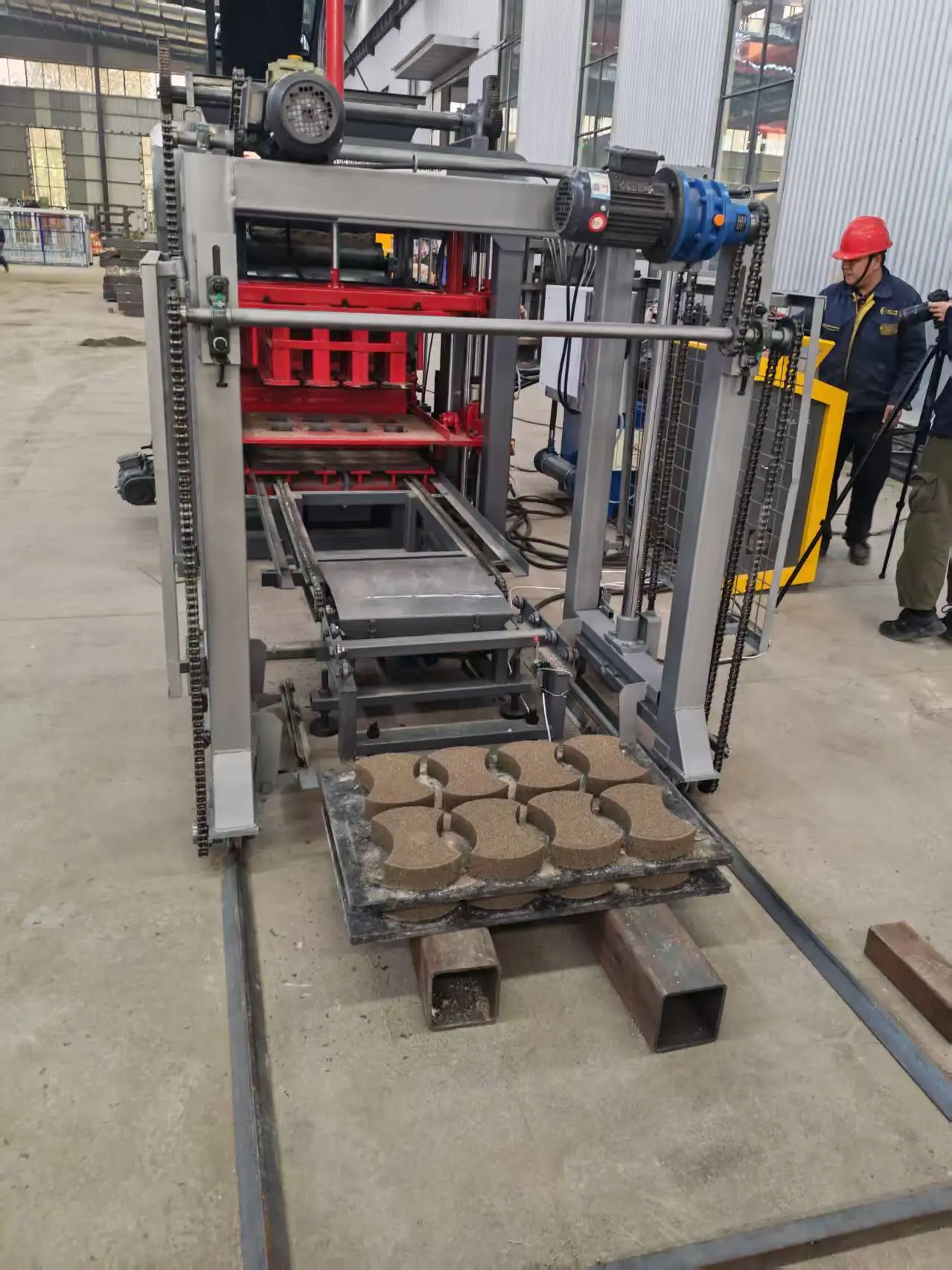
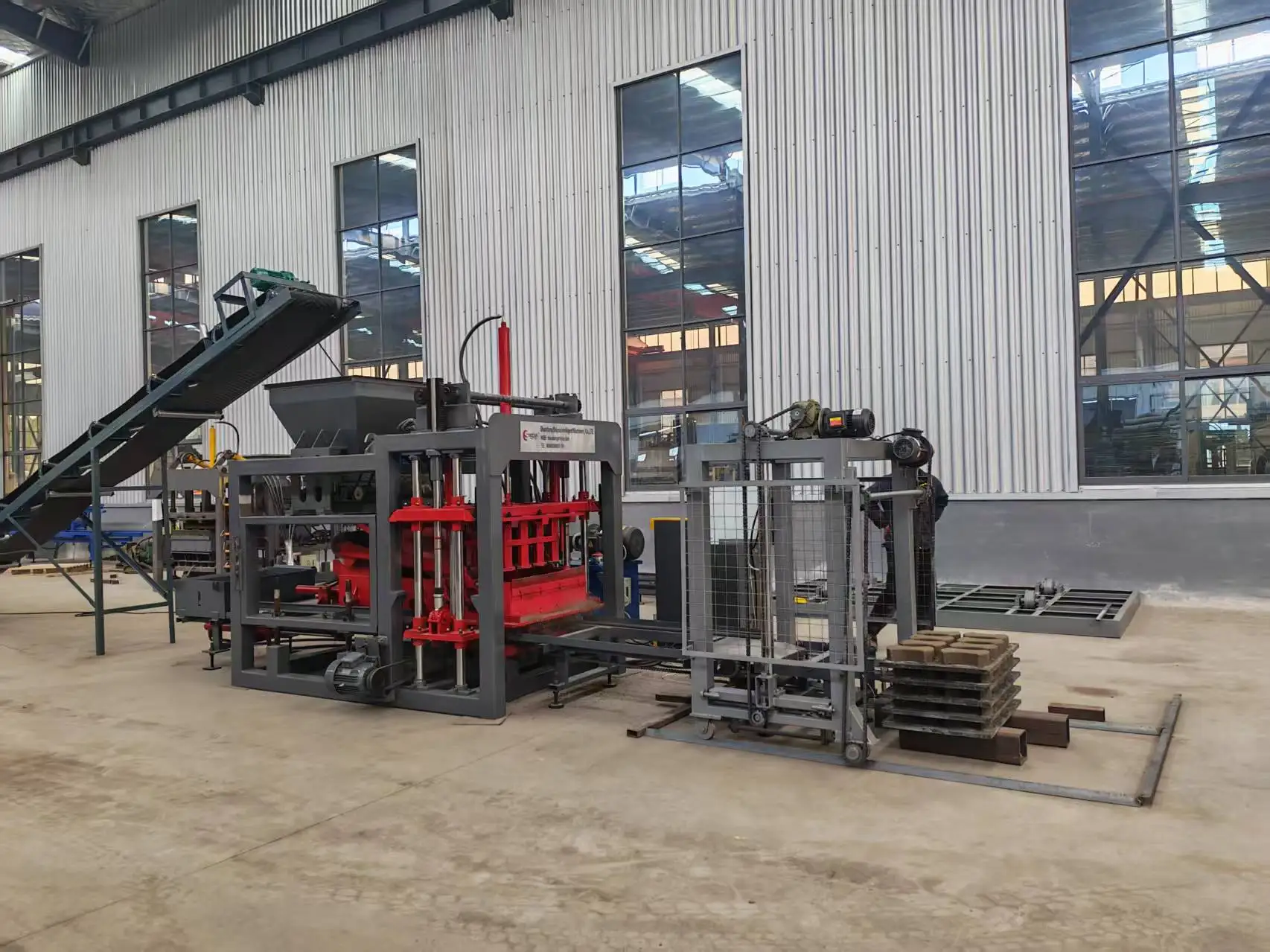
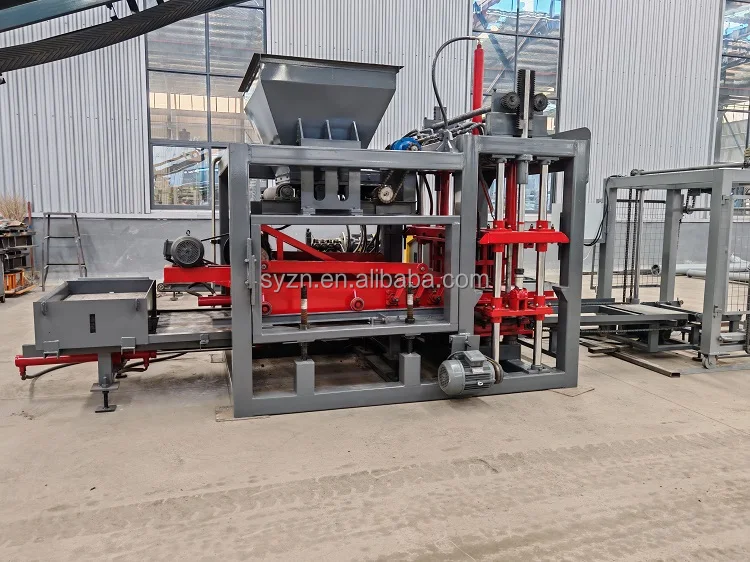
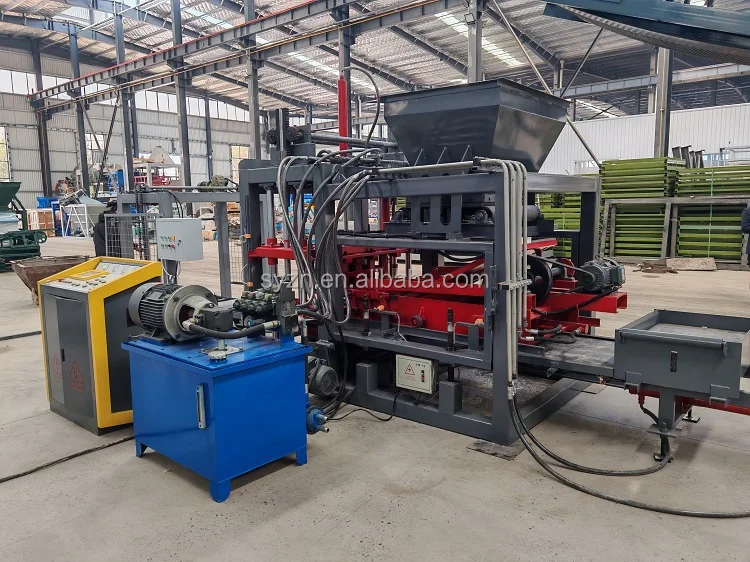
Description
Stocked Configuration Ready — the QT4-18 ships with pre-matched mould, pallet and hydraulic station so dispatch is measured in days, not production weeks.
Technical Specifications
| Parameter | Value |
|---|---|
| Model | QT4-18 |
| Product Type | Semi-Automatic Hydraulic Concrete Block Making Machine |
| Overall Dimensions (L×W×H) | 3900 × 1600 × 2300 mm |
| Total Weight | 3T |
| Rated Power | 24 kW |
| Molding Cycle | 15 – 25 s |
| Vibration Force | 40 – 50 kN |
| Mixer Model | JQ350 |
| Pallet Size | 850 × 550 × 25 mm |
| Hydraulic Station | Equipped |
| Automation Level | Semi-automatic |
| Applied Products | Paver, solid block, hollow block, curbstone |
| Raw Materials | Crushed stones, sand, cement, dust, fly ash |
| Output Capacity | 9,600 – 13,440 pcs / 8 hr (based on 400×200×200 mm hollow block) |
| Output Capacity | 14,400 – 19,200 pcs / 8 hr (based on 400×150×200 mm hollow block) |
| Output Capacity | 16,200 – 19,440 pcs / 8 hr (based on 240×115×53 mm solid brick) |
| Assembly State | Nude packing in 20GP container |
Application Suitability
| Application | Material or Output |
|---|---|
| Hollow block production for residential walls | Crushed stone, sand, cement, fly ash |
| Solid brick manufacturing for load-bearing structures | Local aggregate blended with cement and dust |
| Interlocking paver runs for driveways and walkways | Fine sand and cement with pigment additive |
| Kerbstone and curb production for site infrastructure | Coarse aggregate with high-cement mix |
| On-site block production for housing projects | Crusher dust, sand and cement sourced regionally |
Why the Voltage Question Should Come Before the Price
A QT4-18 block machine in stock ships fast, but only if voltage and frequency are confirmed before the crate closes.
I once watched a fully automatic hydraulic paver machine sit idle on a Jamaican job site for three weeks because the local grid ran 440 V / 60 Hz and the motor plate read 380 V / 50 Hz. Nobody had asked for a photo of the customer’s main distribution board. The transformer had to be air-freighted at a cost that wiped out the margin on the whole order [NEED_CITE: voltage and frequency standards by export market]. When a buyer is chasing a project deadline, a machine that arrives but cannot power up is worse than a machine still on the water. That is why every QT4-18 block machine in stock we prepare for dispatch goes through a final nameplate-versite-panel check before the container doors shut.
Dispatch Windows That Hold
The QT4-18 block machine in stock sits in a semi-automatic configuration with a JQ350 mixer and an equipped hydraulic station, meaning the core press, mixer and pallet return loop are already assembled and factory-tested. Buyers working against a fixed project completion date can request a confirmed dispatch window at inquiry stage rather than a catalogue estimate. Container loading plans show exactly how the frame, hydraulic pack and moulds are dismantled and secured, so the arrival estimate quoted upfront stays realistic through customs and inland haulage.
Container Loading Without Surprises
A single 20GP container carries the QT4-18 frame, hydraulic station, mixer, electrical panel and approximately 500 production pallets in nude packing. The dismantling method is documented in loading photographs taken before the container doors close, giving the buyer a visual record of how each sub-assembly is braced. This eliminates the common dispute where a machine arrives with shifted components and missing fasteners. Dispatch lead time is quoted from order confirmation to port departure, and the estimated sailing schedule to the destination port is shared in the same document so procurement teams can align crane hire and foundation curing on their end.
How Vibration and Pressure Shape Every Block
The 40 – 50 kN vibration force works in tandem with the hydraulic station to compact the mix into the mould cavity within a 15 – 25 s cycle. Higher vibration alone will not produce a dense block if hydraulic pressure is too low; the aggregate particles rearrange but never lock. Conversely, excessive pressure without sufficient vibration traps air voids and creates weak corners. The 850 × 550 × 25 mm pallet size determines the mould footprint, which directly sets the maximum block dimensions and the number of cavities per cycle. Buyers who plan to run multiple formats should confirm pallet stock in their curing yard before ordering additional moulds [NEED_CITE: pallet size and curing area planning for block plants]. The 24 kW rated power covers the combined draw of the hydraulic pump, vibration motor and mixer, so the site electrician can size the incoming breaker and cable run before the machine arrives.
The Cost of Skipping Pre-Shipment Checks
When voltage, control language and pallet dimensions are left to assumption, the machine may arrive but remain non-operational. A control panel labelled in a language the operator cannot read leads to incorrect parameter entry and inconsistent block density. Pallets that do not match the forklift fork spacing already on site force the buyer to rent or buy new handling equipment. Moulds specified without confirming local aggregate gradation produce blocks that fail compressive strength tests, and the buyer blames the machine rather than the mix [NEED_CITE: aggregate gradation and block compressive strength correlation]. Each of these issues is avoidable with a short pre-shipment checklist, yet they account for a large share of commissioning delays reported by first-time block plant operators.
Why Source the QT4-18 Here
Block machinery is the single focus of this operation, so the press, mould, pallet and handling equipment are specified as one matched set rather than assembled from separate vendors. The QT4-18 is configured against the buyer’s actual mix design and local aggregate, not a default catalogue sheet. Standard moulds for 8-inch and 6-inch hollow blocks are stocked alongside the machine, and custom mould drawings can be produced for formats the buyer’s market demands. Voltage, frequency and PLC display language are confirmed before production or dispatch, removing the most common cause of commissioning delay. Factory test records are taken on the buyer’s target block format so capacity figures are honest, not theoretical.
Documentation & Verification
- Factory test record run on your specified hollow or solid block format before dispatch
- Voltage, frequency and control language confirmation sheet signed before packing
- Container loading photographs showing dismantling method and bracing for each sub-assembly
- Hydraulic and electrical schematic matching the as-built configuration
- Operation and maintenance manual with mould change and daily greasing intervals
- Packing list detailing mould cavities, pallet count and spare wear parts included
Installation, Commissioning & Support
- 3,900 × 1,600 mm footprint requires a level concrete slab with anchor bolt provisions
- 24 kW rated power needs a dedicated breaker and correctly sized cable run from the main panel
- Machine arrives dismantled; hydraulic station and vibration motor reconnect on site with colour-coded hoses
- First production run supervised to set molding cycle between 15 – 25 s for the local mix
- Operator training covers mould change, pallet feeding and daily hydraulic oil level checks
- Wear parts list identifies high-wear items and recommended reorder quantities for the first year
What to Include in Your Inquiry
Send the target block format, daily output requirement and the gradation of the local aggregate you plan to run. Confirm the site voltage, frequency and the language your operators need on the control display. If the curing yard and forklift are already in place, share the pallet dimensions and fork spacing so the 850 × 550 × 25 mm pallets can be matched or adjusted before the QT4-18 block machine in stock is loaded.
Frequently Asked Questions
Q: Which QT4-18 configurations are currently in stock versus built-to-order?
A: The standard semi-automatic QT4-18 with JQ350 mixer, equipped hydraulic station and 850 × 550 mm pallets is stocked for immediate dispatch. Custom mould formats, non-standard voltage or alternative control languages require a short production window. Confirm your exact requirements at inquiry so we can separate stock items from built-to-order components and quote an accurate dispatch date.
Q: How is the machine dismantled for container loading, and what arrives pre-assembled?
A: The main frame, hydraulic station and vibration assembly are separated into bolted sub-modules that fit within a 20GP container alongside approximately 500 pallets. The electrical panel arrives as a sealed unit. Reassembly on site involves reconnecting colour-coded hydraulic hoses, bolting the vibration motor back to the frame and powering the control panel. Loading photographs are provided before the container is sealed.
Q: What is the dispatch lead time from order confirmation to port departure?
A: Stocked QT4-18 units with standard moulds and default voltage can be containerised within a few working days of payment confirmation. Built-to-order items such as custom moulds or alternative voltage windings add a short production period. The exact dispatch date is confirmed in writing at order stage so buyers can book vessel space and arrange inland transport at the destination port.
Q: Can arrival estimates be provided upfront based on destination port?
A: Yes. Once the dispatch date is confirmed, an estimated sailing schedule to the destination port is included in the order documentation. This estimate covers ocean transit only; customs clearance and inland haulage timing depend on local agents. Buyers working to a fixed project deadline should share their target arrival window at inquiry stage so the most suitable vessel can be selected.
Q: Are standard moulds for hollow blocks stocked, or do they require production lead time?
A: Common formats such as 8-inch and 6-inch hollow block moulds matching the 850 × 550 mm pallet are typically stocked alongside the QT4-18. Less common formats or custom curbstone profiles require a production run. Specify the exact block dimensions and cavity count in your inquiry so we can confirm stock status and, where needed, quote the additional lead time for mould fabrication.