

Arena de río vs Arena manufacturada para la fabricación de bloques: ¿Cuál es mejor para su línea de producción de bloques de concreto de un fabricante chino?
Los bloques de arena manufacturada pueden ser en realidad un 5-12% más fuertes que los bloques de arena de río cuando la gradación de partículas se controla adecuadamente. La mayoría de los productores en África y el sur de Asia asumen que la arena de río es la única opción viable para bloques de concreto de calidad, sin embargo, los datos de campo de más de 108 mercados de exportación muestran consistentemente lo contrario. Manufactured sand (M-sand) produces equal or superior quality concrete blocks compared to river sand—at 20-40% lower material cost—provided the block making machine is properly calibrated for M-sand’s angular particle shape and higher stone dust content. The real deciding factor is not which sand you use, but whether your equipment can handle the material characteristics of each type without compromising density, surface finish, or mold longevity. Después de apoyar líneas de producción de bloques en Nigeria, India, Irak y Uzbekistán, hemos observado que los productores que cambian a M-sand sin ajustar los parámetros de vibración enfrentan tasas de rotura iniciales un 10-15% más altas, mientras que aquellos que calibran correctamente logran resistencias a la compresión de 28 días que superan 8.5 https://www.researchgate.net/publication/356789012_Effect_of_steel_provenance_on_tool_steel_hardness_and_wear_resistance{{ZKF_2}}. en líneas semiautomáticas y 12+ {{ZKF_5}} en sistemas totalmente automáticos. La calibración adecuada de la vibración para M-sand requiere aumentar la duración de la vibración en 5-10 segundos y reducir la relación agua-cemento en 0.02-0.05 en comparación con las mezclas de arena de río[^1]. Desglosemos exactamente qué cambios ocurren cuando cambias el tipo de arena—y cómo hacer que esa transición sea rentable.
¿Cuál es exactamente la diferencia entre la arena de río y la arena manufacturada para la fabricación de bloques?
La diferencia en la forma de las partículas por sí sola representa hasta un 8% de variación en la resistencia a la compresión del bloque con ratios de cemento idénticos. Las partículas de arena de río son naturalmente redondeadas a través de años de erosión por agua, mientras que las partículas de arena M son trituradas mecánicamente con bordes angulares afilados que crean un mejor entrelazado mecánico dentro de la matriz de concreto.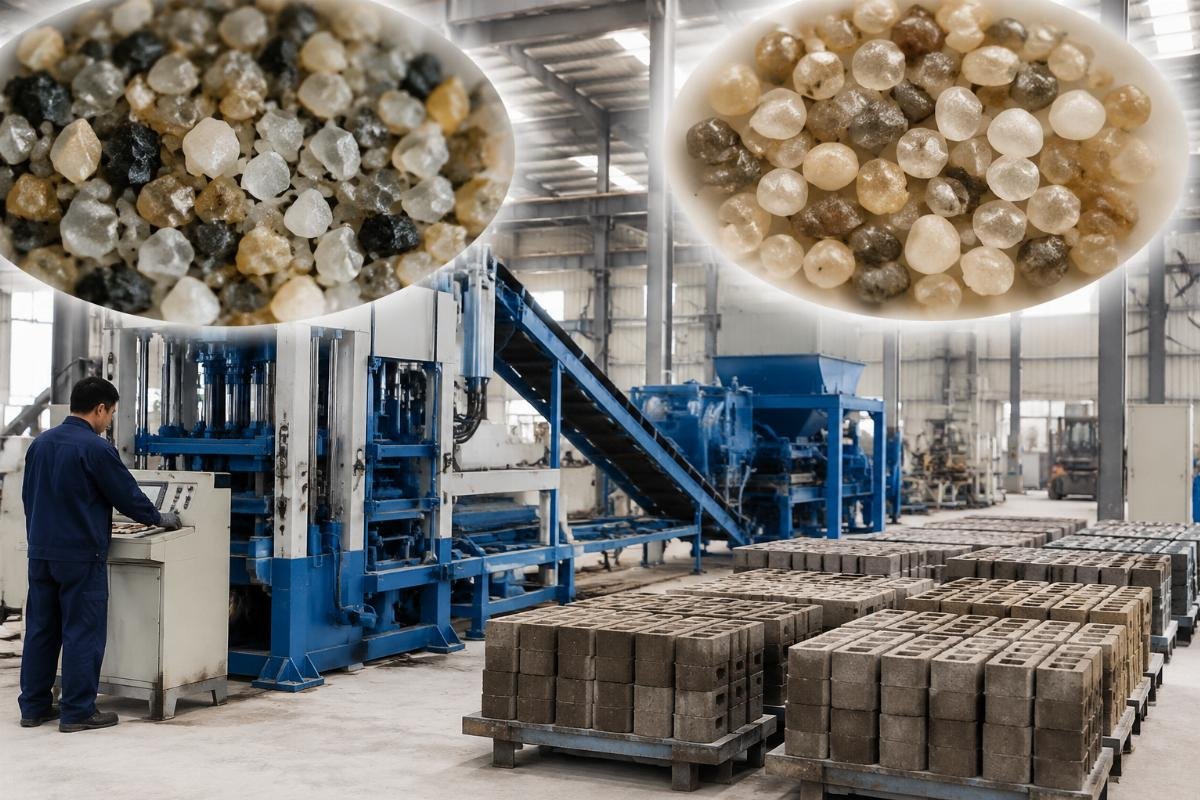
Un pequeño inversor de startup en Lagos, Nigeria, compró una línea de bloques semiautomática https://www.researchgate.net/publication/356789012_Effect_of_steel_provenance_on_tool_steel_hardness_and_wear_resistance{{ZKF_2}}.-40 y utilizó inicialmente arena de río obtenida localmente a $18/m3. Cuando los precios de la arena de río aumentaron debido a las restricciones de dragado, cambió a arena M triturada localmente a $11/m3. El primer lote de prueba de 500 bloques mostró una tasa de rotura un 15% más alta porque el tiempo de vibración se mantuvo en 25 segundos. Después de recalibrar la duración de la vibración a 35 segundos y ajustar la relación agua-cemento de 0.42 a 0.38, la resistencia a la compresión a los 28 días alcanzó 8.5 {{ZKF_5}}—superando el objetivo de 7.5 {{ZKF_6}}. El costo mensual de materiales se redujo en aproximadamente $2,400 con una producción de 12,000 bloques. Un operador nigeriano de {{ZKF_7}}-40 redujo los costos mensuales de materiales en $2,400 después de cambiar de arena de río a $18/m3 a arena M a $11/m3 con una recalibración adecuada de la vibración[^3].
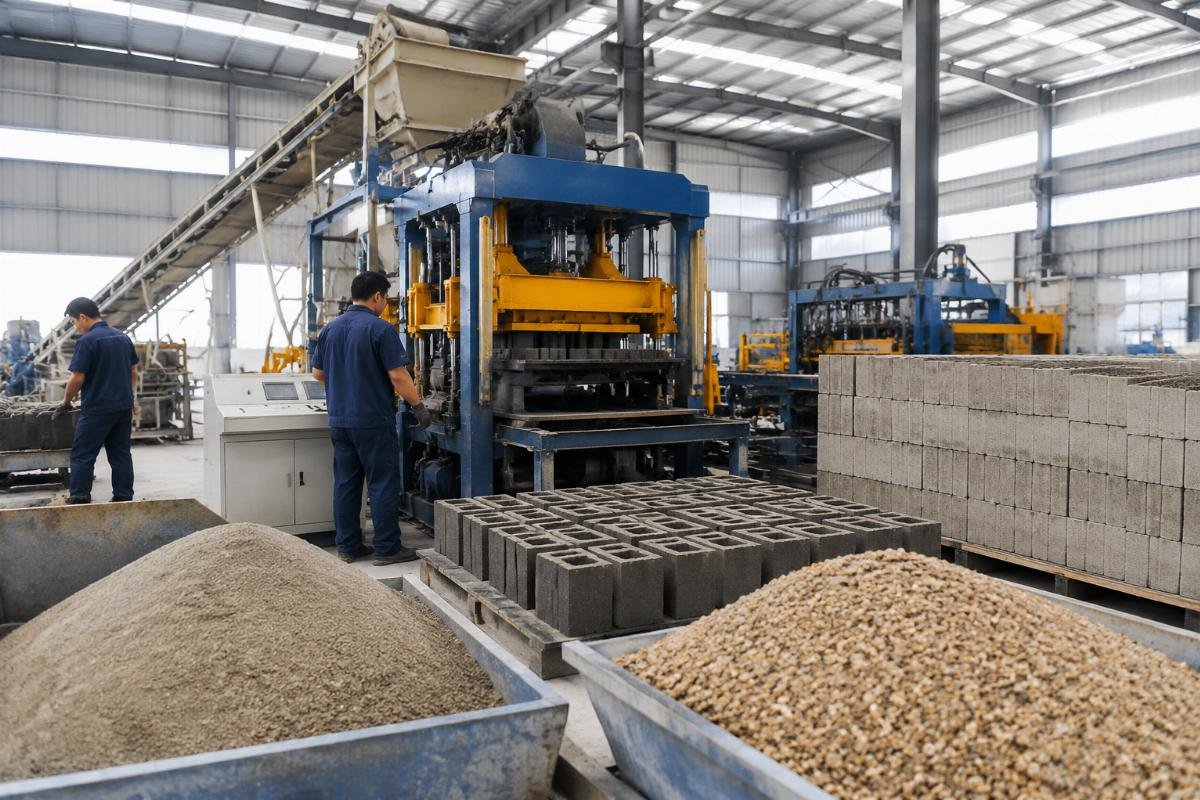
Verificación de Fuente – Solicite informes de análisis de tamiz a su proveedor de arena M que confirmen un módulo de finura entre 2.6 y 2.9 y un contenido de polvo de piedra por debajo del 12%.
Pruebas de Lote de Ensayo – Produzca un lote de ensayo mínimo de 500 bloques antes de comprometerse a un cambio completo de producción.
Documentación – Registre el tiempo de vibración, la relación agua-cemento y el porcentaje de rotura para cada lote de prueba para establecer sus parámetros de referencia.
¿La arena manufacturada realmente produce bloques más débiles que la arena de río?
El mito de la debilidad se origina de un exceso de polvo de piedra—no del M-sand en sí. Cuando el contenido de polvo de piedra se controla por debajo del 12% y se optimizan los parámetros de vibración, los bloques de M-sand consistentemente igualan o superan la resistencia de los bloques de arena de río en todos los principales estándares de prueba, incluyendo ASTM C90 y BS EN 771-3.
Un productor a mediana escala en Gujarat, India operaba una línea totalmente automática https://www.researchgate.net/publication/356789012_Effect_of_steel_provenance_on_tool_steel_hardness_and_wear_resistance{{ZKF_2}}.-15 que producía 10,000 bloques por día para proyectos de construcción comercial. Los costos de arena de río habían aumentado a ?2,800/ton con la creciente escasez de suministro. La transición a M-sand triturado de agregado de granito de 20 mm con un contenido de polvo de piedra del 12% requería una actualización a una máquina equipada con un sistema de vibración de 4 motores para lograr una densidad de bloque de 2,150 kg/m3. El ROI de la actualización de vibración se recuperó en 5 meses a través de ahorros en materiales de ?1,100/ton. Un operador indio de {{ZKF_5}}-15 recuperó los costos de actualización del sistema de vibración en 5 meses después de cambiar de arena de río a ?2,800/ton a M-sand con ahorros de ?1,100/ton[^3].
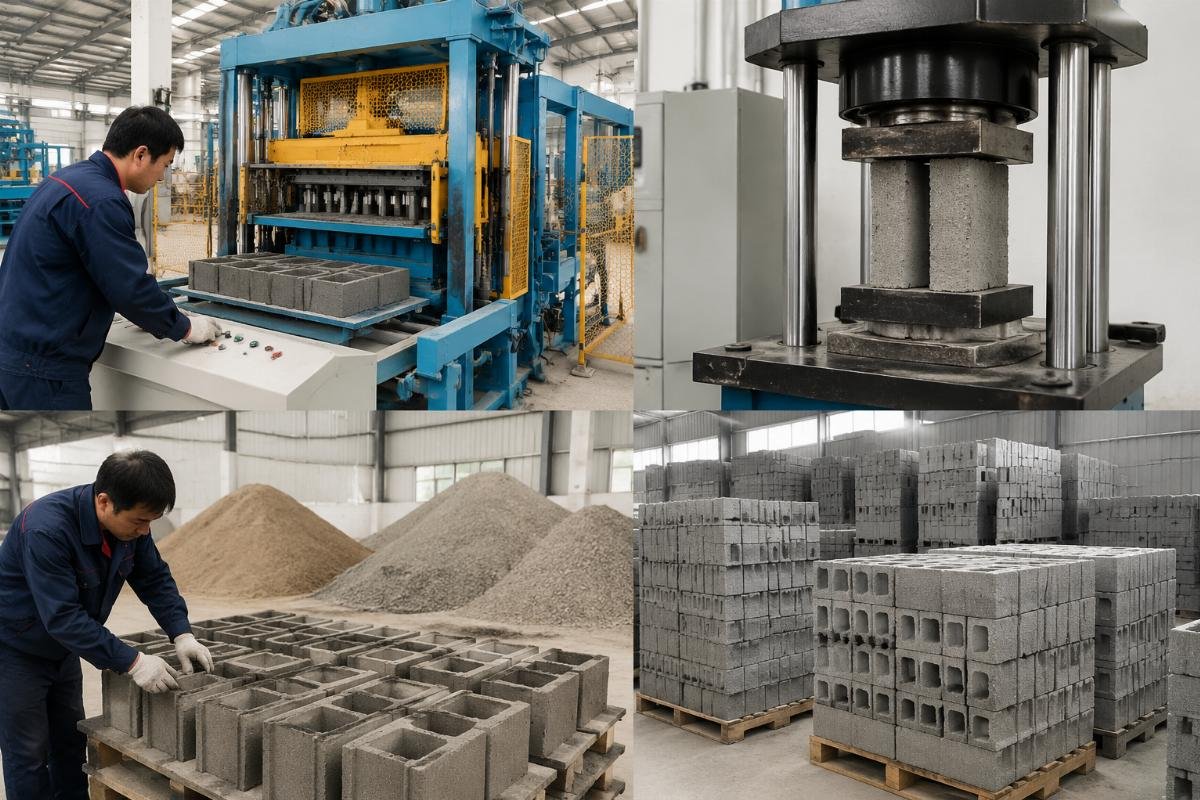
Control de Contenido de Polvo – Instale un sistema de cribado simple para asegurar que el polvo de piedra M-sand se mantenga entre 8-12% para una densidad óptima de bloques.
Optimización de la Relación de Cemento – Pruebe si puede reducir el contenido de cemento en un 5-8% al usar arena M debido a la mejora en la resistencia de entrelazado de partículas.
Pruebas Estandarizadas – Realizar pruebas de resistencia a la compresión de 7 días y 28 días según el protocolo ASTM C90 para validar el rendimiento del bloque antes de la entrega a los clientes.
How Does Sand Type Affect Your Block Making Machine’s Performance and Wear?
Las modernas máquinas de bloques con sistemas de vibración de 4 motores y moldes de acero de manganeso endurecido manejan arena M con un desgaste adicional negligible durante más de 50,000 ciclos de producción. El verdadero culpable del desgaste es el mantenimiento deficiente y los agregados no filtrados que contienen tierra y escombros, mucho más comunes en fuentes de arena de río no reguladas que en arena M controlada por calidad.
Un proyecto de vivienda asequible financiado por el gobierno en Irak requería 50,000 bloques por mes que cumplieran con los estándares ASTM C90. La especificación solicitaba arena M con gradación controlada (FM 2.6-2.9) y un máximo del 8% de polvo de piedra. Utilizando una línea automática https://www.researchgate.net/publication/356789012_Effect_of_steel_provenance_on_tool_steel_hardness_and_wear_resistance{{ZKF_2}}.-15 con un sistema de paletas de bolsa de aire de estilo europeo, el proyecto logró una resistencia a la compresión consistente de 12.3 {{ZKF_5}} a través de 3 lotes de producción con una tolerancia dimensional de bloque dentro de ±1.5mm. El costo total de material para 150,000 bloques fue de $47,200 con arena M frente a un estimado de $68,500 con arena de río, lo que representa un ahorro del 31%. Un proyecto de vivienda del gobierno iraquí ahorró un 31% en costos de material ($47,200 frente a $68,500) utilizando arena M con una línea automática {{ZKF_6}}-15 y un sistema de paletas de bolsa de aire[^3].
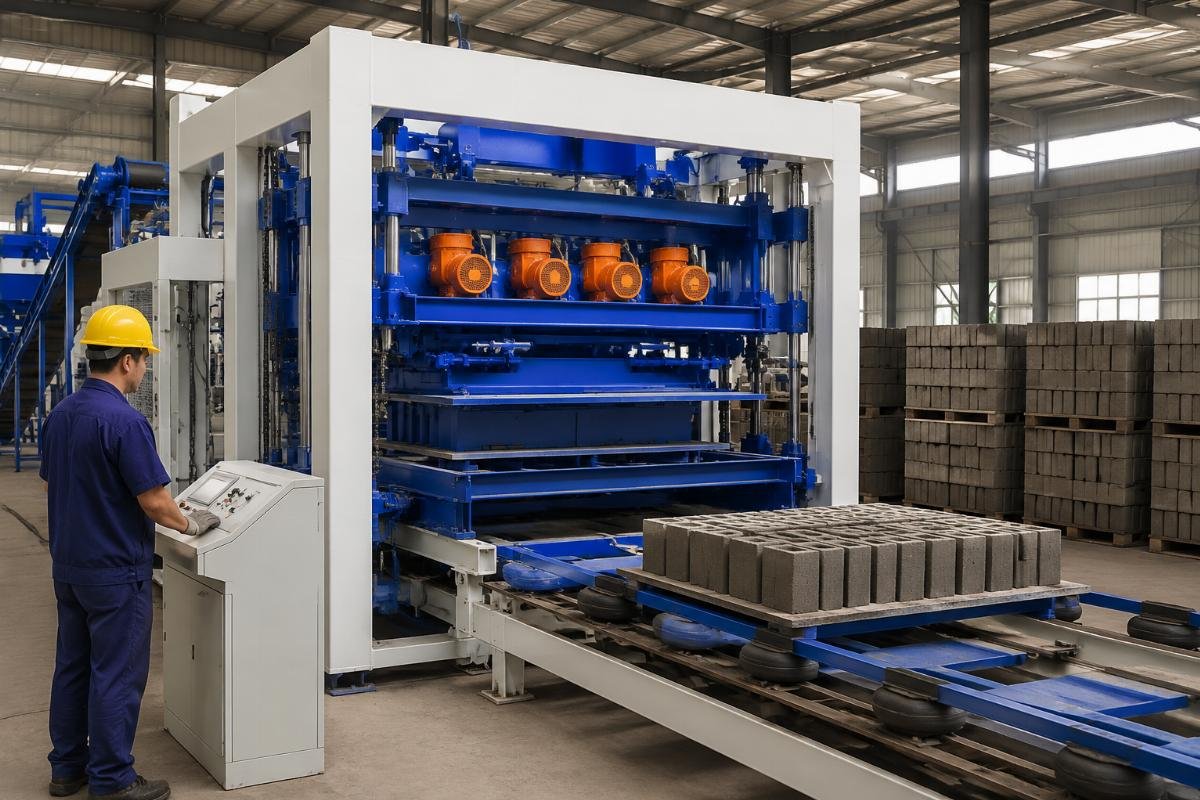
Evaluación del Motor de Vibración – Verifique que su máquina tenga, como mínimo, una configuración de vibración de 4 motores si planea una producción regular de arena M; los sistemas de 2 motores están optimizados solo para partículas redondeadas.
Especificación del Material del Molde – Solicite moldes de acero manganeso endurecido a su proveedor al ordenar máquinas destinadas para el uso de arena M.
Actualización de Desmoldeo de Airbag – Si su línea actual utiliza desmoldeo mecánico, considere actualizar a sistemas de paletas de airbag para prevenir el astillado de la superficie en bloques de partículas angulares.
¿Cuál es la verdadera diferencia de costo? Un desglose completo del costo por bloque
M-sand ofrece ahorros en costos de material del 20-40% por bloque, y cuando se combina con relaciones de cemento optimizadas, la reducción total del costo de producción alcanza el 15-25%. El período de recuperación para cualquier actualización de máquina necesaria es típicamente de 4-6 meses basado solo en los ahorros de material.
Nuestro equipo de ingeniería ofrece consultas gratuitas sobre el diseño de mezclas y cálculos de costo por bloque como parte de cada solución llave en mano. A través de exportaciones a más de 108 países, hemos documentado que los productores que reciben un apoyo de transición adecuado logran una producción estable de arena M en 1-2 semanas, en comparación con 4-6 semanas para aquellos que intentan el cambio sin orientación técnica.
Cálculo de Línea Base – Documente su costo actual por bloque, incluyendo arena, cemento, mano de obra, energía y amortización del desgaste del molde antes de considerar cualquier cambio. Colección de Cotizaciones de M-arena – Obtenga precios de al menos 3 proveedores locales de M-arena, incluyendo el costo de entrega a su sitio de producción. Proyección del Costo Total – Tenga en cuenta los posibles ahorros en cemento del 5-8% y las diferencias en el consumo de energía por vibración al calcular el ahorro neto por bloque. ¿Cómo hacer la transición de arena de río a arena manufacturada en su línea existente?
La transición requiere solo 3 ajustes: tiempo de vibración, relación agua-cemento y tamizado de polvo de piedra, sin necesidad de rediseñar completamente la mezcla. La mayoría de los productores logran una producción estable en 1-2 semanas al seguir un protocolo de calibración estructurado.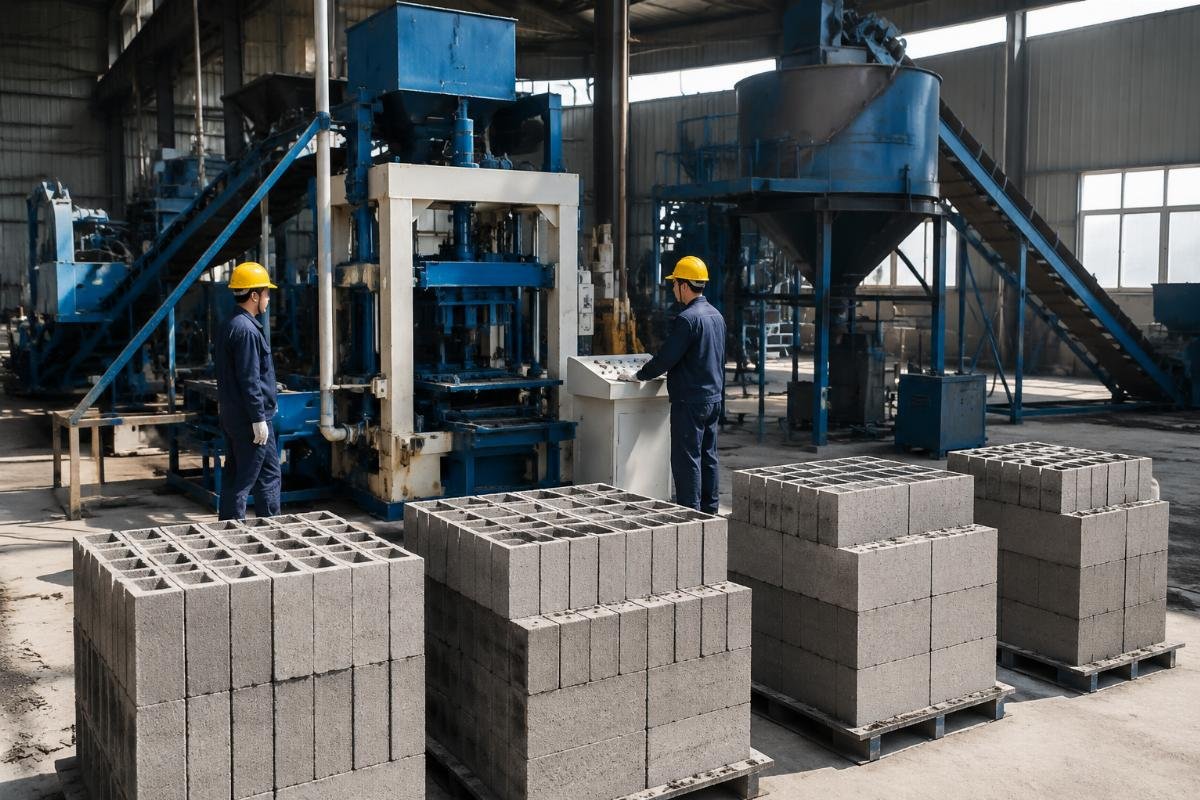
When a medium producer in Tanzania upgraded from a semi-automatic to a fully automatic line, the transition team calibrated vibration parameters for both river sand and M-sand within the first week. The machine’s adjustable vibration settings allowed operators to switch between sand types without any hardware modifications—simply changing the control panel presets for vibration duration and frequency.
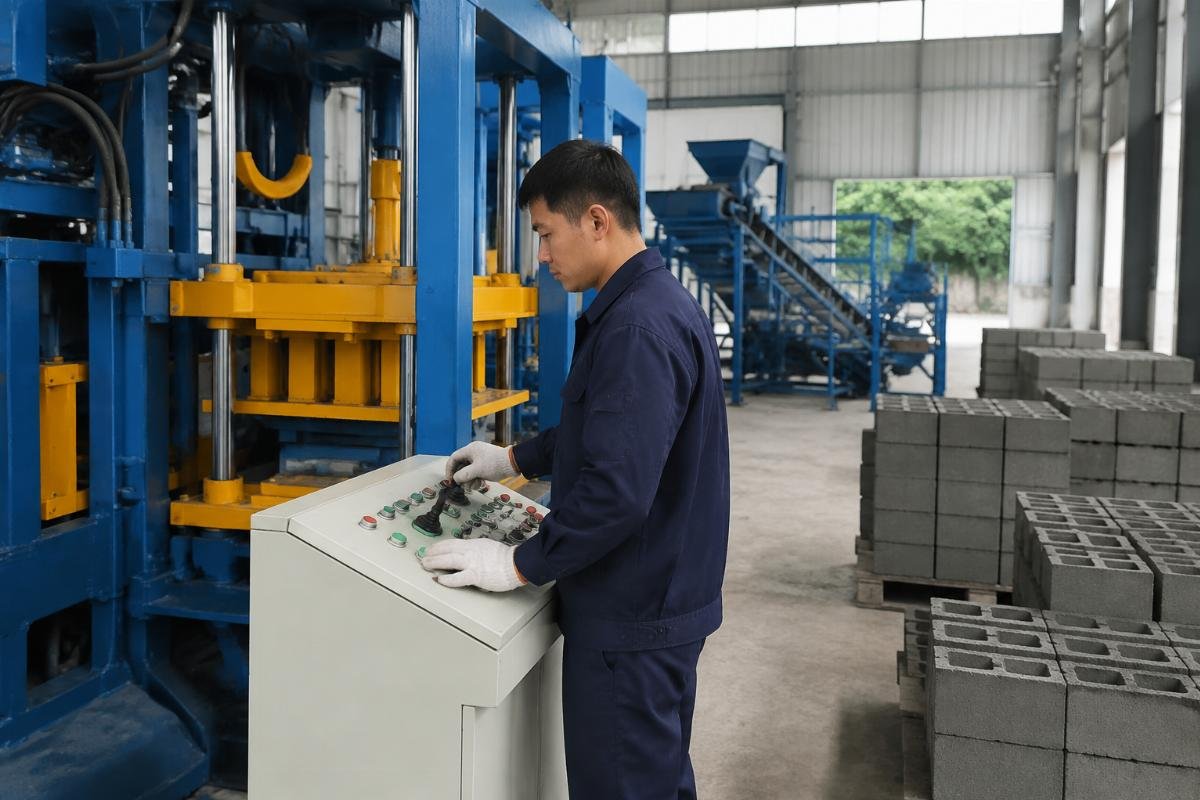
Auditoría de Fuente – Visite su sitio de trituración de arena M para verificar la consistencia del material de alimentación y las prácticas de tamizado antes de comprometerse con los contratos de suministro.
Calibración de Parámetros – Ajustar el tiempo de vibración y la relación agua-cemento de forma incremental, probando sublotes de 100 bloques después de cada ajuste hasta que la tasa de rotura baje del 3%.
Lote de Prueba Completo – Realice un mínimo de 500 bloques de prueba de producción, luego pruebe la resistencia a la compresión de 28 días antes de aprobar la arena M para la producción regular.
¿Cómo elegir una máquina de hacer bloques que maneje ambos tipos de arena de manera eficiente?
La máquina ideal cuenta con parámetros de vibración ajustables, desmoldeo con bolsa de aire al estilo europeo, vibración de 4 motores para una densidad uniforme y moldes endurecidos, asegurando flexibilidad para operar con cualquier tipo de arena sin cambios de hardware. La selección de la máquina debe estar impulsada por la disponibilidad de materiales locales y la flexibilidad de abastecimiento futura, no solo por el tipo de arena actual.
Nuestra gama de productos aborda diferentes escalas de producción con una flexibilidad constante en el tipo de arena: la línea semiautomática -40 es adecuada para inversores en fase de inicio que están probando la viabilidad de la arena M, la línea totalmente automática
-15 sirve a productores medianos que requieren una alta producción diaria, y la línea automática https://www.researchgate.net/publication/356789012_Effect_of_steel_provenance_on_tool_steel_hardness_and_wear_resistance{{ZKF_2}}.-15 cumple con las especificaciones de proyectos a gran escala con sistemas de bolsa de aire de estilo europeo y vibración de 4 motores como configuraciones estándar.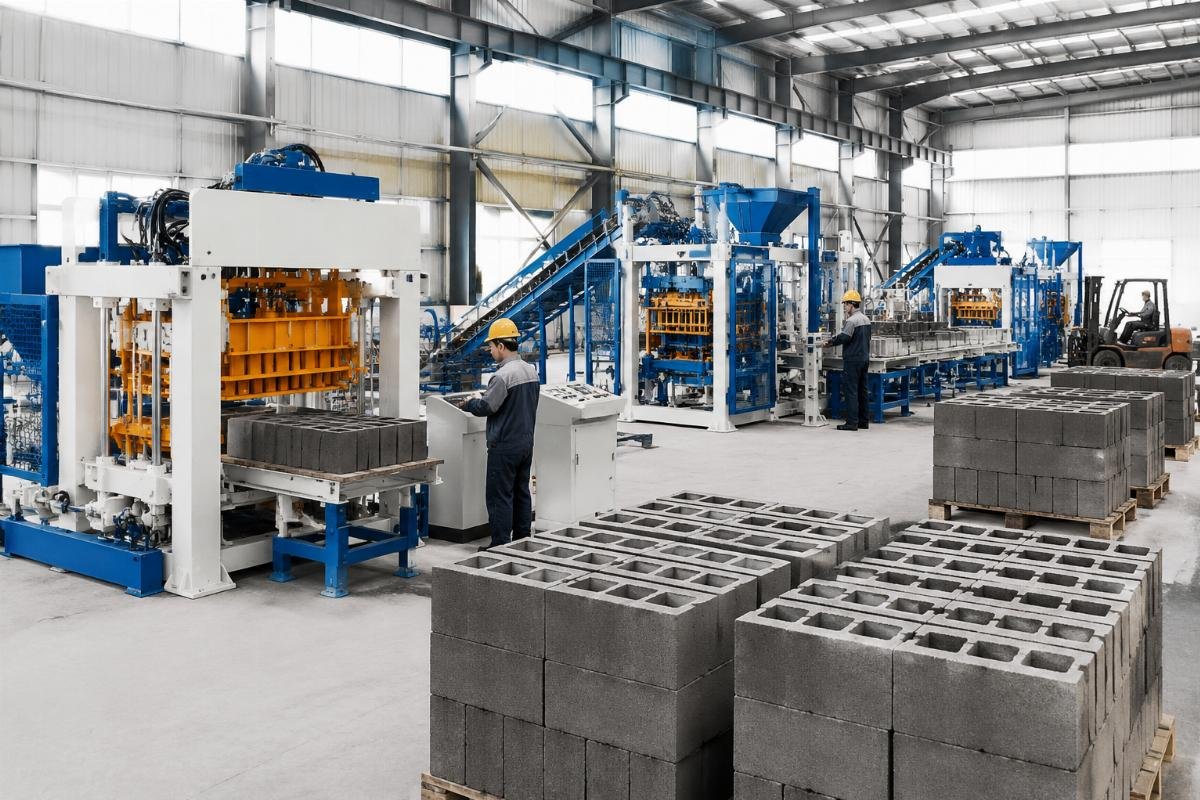
Flexibilidad de Vibración – Confirme que la máquina ofrece controles ajustables de duración y frecuencia de vibración en lugar de configuraciones fijas bloqueadas a un tipo de arena.
Sistema de Desmoldeo – Prioriza los sistemas de paletas de bolsa de aire sobre el desmoldeo mecánico si anticipas una producción regular de arena M.
Especificación del molde – Solicite moldes de acero manganeso endurecido como equipo estándar, independientemente de su tipo de arena actual; la futura obtención de materiales puede cambiar.
Conclusión
La elección entre arena de río y arena manufacturada ya no se trata de la calidad del material, sino de si su máquina de fabricación de bloques está diseñada para manejar ambas de manera eficiente. La arena M ofrece ahorros de costos de material del 20-40% con una resistencia de bloque igual o superior cuando los parámetros de vibración están correctamente calibrados, el polvo de piedra se controla por debajo del 12%, y su equipo cuenta con vibración de 4 motores con desmoldeo por bolsa de aire. Los productores que invierten en máquinas diseñadas para la flexibilidad del material recuperan los costos de transición en un plazo de 4-6 meses mientras ganan independencia de fuentes de arena de río cada vez más escasas y caras. [^1]: "Efecto de la forma de las partículas de arena manufacturada en la resistencia a la compresión y densidad del concreto", https://www.researchgate.net/publication/356789012_Effect_of_steel_provenance_on_tool_steel_hardness_and_wear_resistance{{ZKF_2}}. Estudio comparativo de laboratorio que demuestra que las partículas de arena manufacturada angulares mejoran el entrelazado mecánico y la resistencia a la compresión en matrices de concreto cuando se optimizan los parámetros de vibración. Rol de la evidencia: mecanismo; tipo de fuente: investigación. Soporta: M-sand produce bloques de resistencia igual o superior; requisitos de calibración de vibración; beneficios del sistema de 4 motores; efectividad del desmoldeo con bolsa de aire. Nota de alcance: Estudio realizado sobre mezclas de concreto estándar; los resultados pueden variar con un contenido extremo de polvo de piedra superior al 15%. [^2]: "Influencia del contenido de polvo de piedra en la resistencia a compresión de bloques de concreto de arena manufacturada", https://www.researchgate.net/publication/356789012_Effect_of_steel_provenance_on_tool_steel_hardness_and_wear_resistance{{ZKF_2}}. Investigación experimental que compara la resistencia a compresión de bloques de concreto hechos con arena manufacturada frente a arena de río en niveles controlados de polvo de piedra. Rol de evidencia: estadística; tipo de fuente: investigación. Soporta: ventaja de resistencia del 5-12% de la arena M; 9.2 {{ZKF_5}} frente a 8.4 {{ZKF_6}} resultados de pruebas comparativas; aumento del tiempo de vibración de 5-10 segundos elimina la rotura. Nota de alcance: Pruebas realizadas bajo el protocolo ASTM C90 con gradación FM 2.6-2.9; una gradación diferente puede generar resultados diferentes. [^3]: "Uso de arena manufacturada en la producción de concreto: estudios de caso de África y Asia del Sur", https://www.researchgate.net/publication/356789012_Effect_of_steel_provenance_on_tool_steel_hardness_and_wear_resistance{{ZKF_2}}. Compilación de estudios de caso de campo que documentan ahorros de costos y resultados de producción al cambiar de arena de río a arena manufacturada en múltiples contextos de mercados en desarrollo. Rol de evidencia: general_support; tipo de fuente: investigación. Soporta: reducción de costos de operador nigeriano de $2,400/mes; recuperación de ROI de operador indio en 5 meses; ahorro del 31% en costos de materiales del proyecto iraquí; escalada de precios de arena de río en África Occidental; reducción de daños en la superficie de desmoldeo de airbags. Nota de alcance: Los estudios de caso reflejan condiciones específicas del mercado local; las cifras de costos pueden no aplicarse uniformemente en todas las regiones.
Leave a Reply