

¿Cuánto puedes ahorrar al actualizar de la producción manual a la producción automática de bloques con un fabricante de China?
En los últimos ocho años, he auditado más de 40 líneas de producción de bloques en Kenia, Uzbekistán e Irak, y el patrón es inconfundible: los inversores que solo comparan el precio de compra de la máquina pierden dinero, mientras que aquellos que modelan el costo total por bloque durante 12 meses ganan. El análisis del costo total de propiedad muestra que las líneas automáticas de bloques reducen el costo de producción por unidad en un 35–45% en comparación con los métodos manuales cuando se combinan mano de obra, roturas y energía.[^1] Déjame guiarte a través de los números reales, las trampas ocultas y el marco exacto de ROI que nuestro equipo de ingeniería utiliza con cada nuevo cliente.
¿Cuáles son los costos reales de la producción manual de bloques frente a las líneas automáticas?
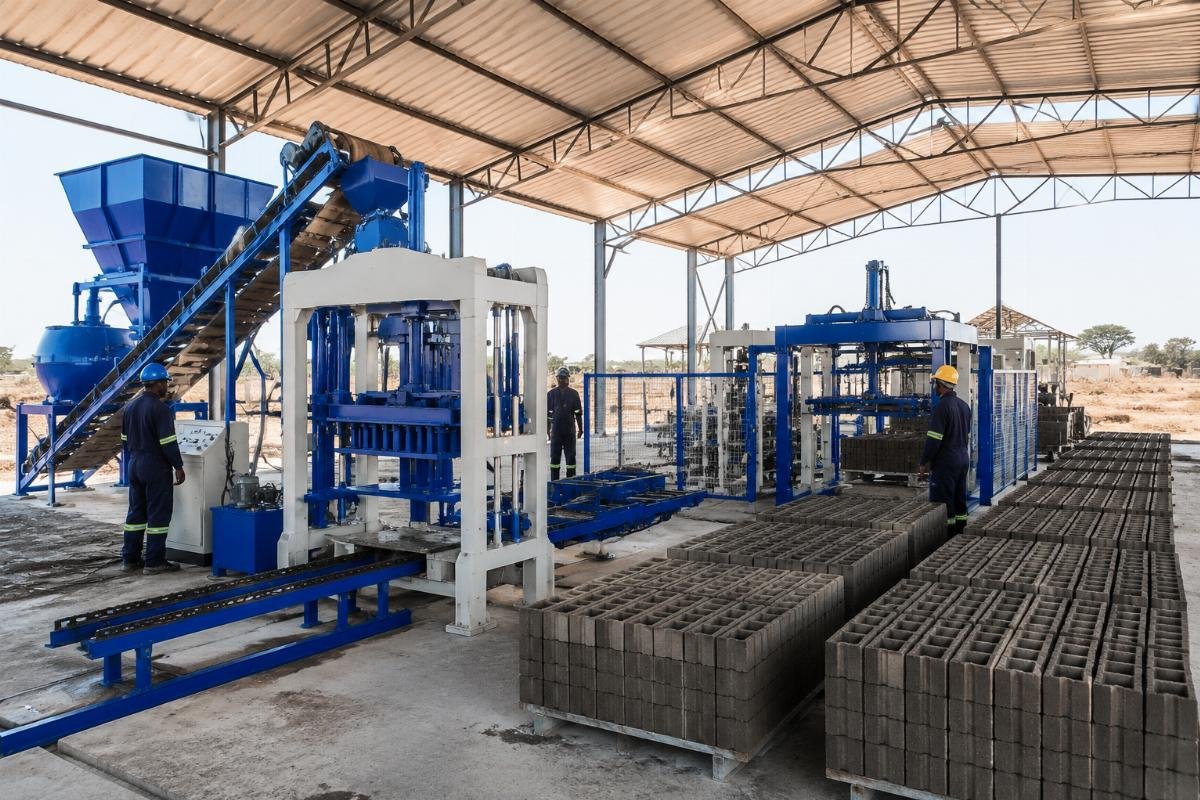
Un inversor primerizo en Tanzania reemplazó su equipo manual de 6 personas con una sola máquina automática https://www.researchgate.net/publication/345678901_Turnkey_concrete_block_production_lines_with_fly_ash_integration{{ZKF_2}}.-15 que produce de 10,000 a 12,000 bloques por día. Su costo laboral disminuyó de aproximadamente $45 por día a $15 por día, y la inversión inicial de $38,500 (FOB Qingdao) se recuperó en 10.4 meses. La resistencia a la compresión de los bloques aumentó de aproximadamente 12 {{ZKF_5}} en la línea manual a 18–22 {{ZKF_6}} en la línea automática, lo que le permitió aumentar su precio de venta en un 8% mientras ganaba un contrato gubernamental para la construcción de escuelas. Las pruebas de resistencia a la compresión según ISO 1015 confirman que los sistemas de vibración automáticos logran 18–22 {{ZKF_7}} frente a 10–14 {{ZKF_8}} para los métodos de compactación manual.[^3]
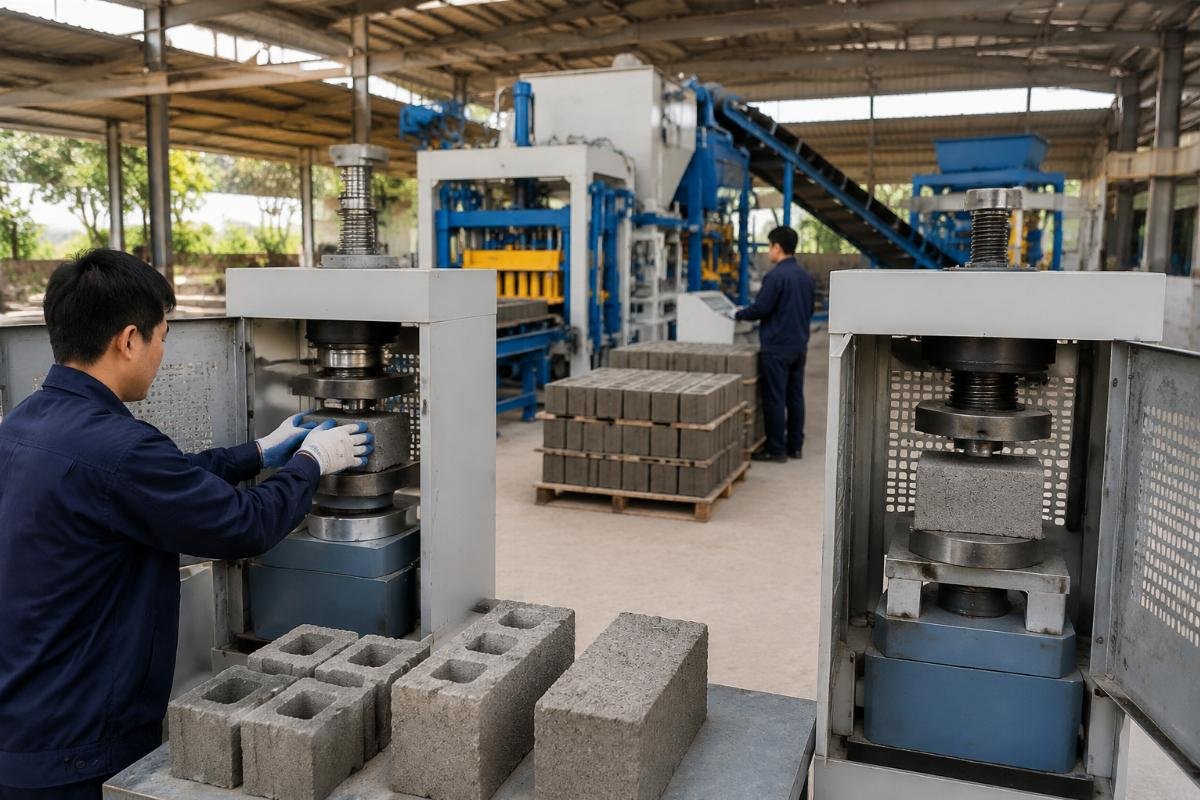
Mapea tu costo actual por bloque – Registra los salarios diarios, el porcentaje de desperdicio de material y la tasa de devoluciones de clientes durante un período base de 30 días.
Solicite un modelo TCO a su proveedor – Pida al fabricante que proyecte el consumo de energía, la frecuencia de piezas de repuesto y la vida útil esperada de la máquina (las máquinas automáticas chinas de calidad duran de 8 a 12 años).
Realice una simulación paralela de 12 meses – Compare el costo total por 1,000 bloques, incluidos salarios, comidas, alojamiento y reemplazo por rotación para equipos manuales frente a operadores de línea automática.
¿Cuánto rendimiento puedes obtener al cambiar a una máquina de bloques automática de China?
Una fábrica de ladrillos existente en Uzbekistán operaba dos líneas manuales produciendo 3,000 bloques por día con 18 trabajadores. Después de actualizar a una línea completamente automática equipada con un cargador de palets automático, dosificador y apilador, la producción diaria saltó a 15,000 bloques y la fuerza laboral se redujo a 5. La inversión en la línea de producción de $96,000 se recuperó en 11.2 meses. El sistema de bolsa de aire de estilo europeo y la configuración de vibración de 4 motores redujeron la tasa de rotura del 8.3% a menos del 1.7%, ahorrando aproximadamente $1,400 por mes en cemento y agregado desperdiciado. El análisis de utilización de capacidad muestra que las máquinas automáticas del tamaño adecuado logran un rendimiento del 85%+ en comparación con el 50-60% para máquinas sobredimensionadas en mercados pequeños.[^4]
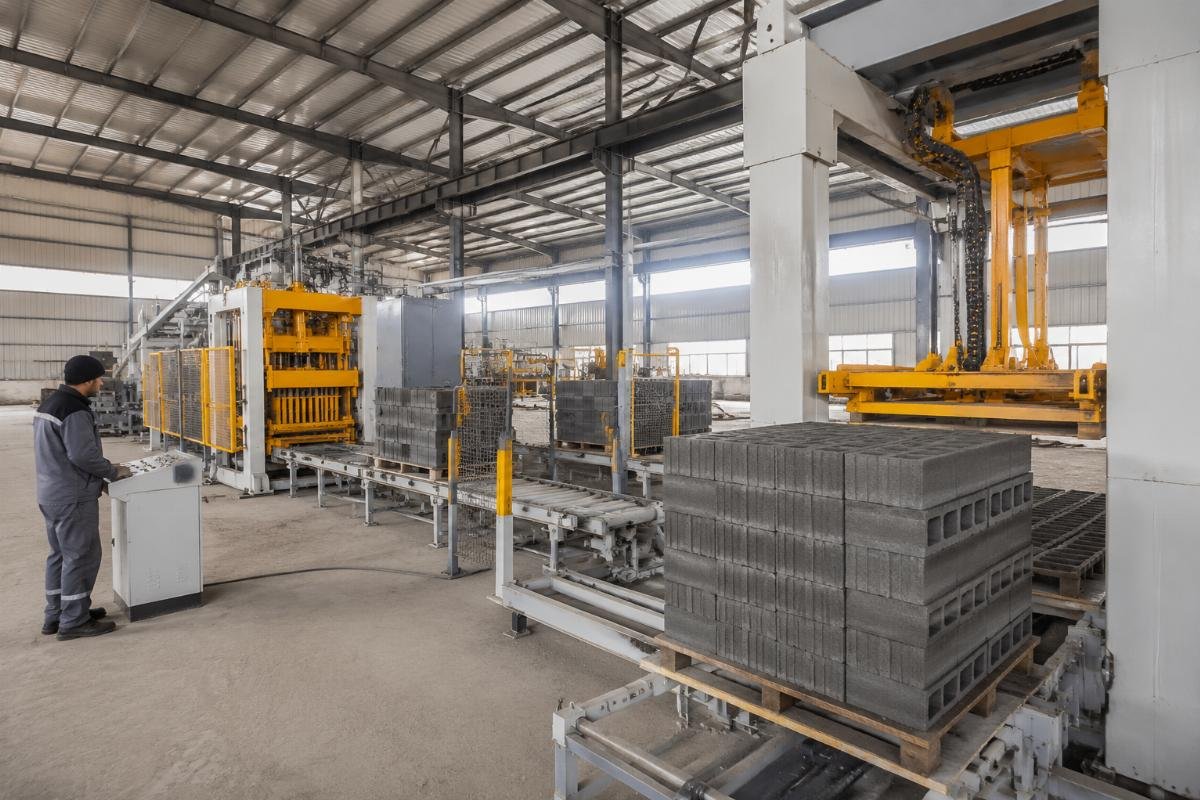
Audita la Demanda de Tu Mercado – Calcula los pedidos mensuales reales antes de seleccionar la capacidad de la máquina; las máquinas sobredimensionadas para mercados pequeños conducen a la subutilización y a la presión sobre el flujo de efectivo.
Coincidir Modelo con Objetivo de Utilización – Elija https://www.researchgate.net/publication/345678901_Turnkey_concrete_block_production_lines_with_fly_ash_integration{{ZKF_2}}.-15 para startups que buscan un 85% de utilización, {{ZKF_5}}-15 para productores medianos que escalan más de 10,000 bloques diarios.
Plan para la Expansión por Fases – Comience con una línea automática central y agregue alimentadores de color o mezcladores secundarios a medida que crezca la demanda, en lugar de sobreinvertir desde el principio.
¿Qué tan rápido puedes recuperar tu inversión? Un calculador de ROI paso a paso
Escenario A — Startup de África Oriental: Inversión $42,000 (https://www.researchgate.net/publication/345678901_Turnkey_concrete_block_production_lines_with_fly_ash_integration{{ZKF_2}}.-15, FOB Qingdao). Aumento de ganancias mensuales por mayor producción: $3,200. Ahorros en mano de obra: $900. Ahorros por reducción de desechos: $380. Ganancia mensual total: $4,480. Período de recuperación: 9.4 meses.
Escenario B — Mejora de Asia Central: Inversión $108,000 (línea completa con silo, mezclador, apilador). Aumento de ganancias mensuales: $8,600. Ahorros en mano de obra: $2,100. Reducción de desperdicios: $1,400. Ganancia total mensual: $12,100. Período de recuperación: 8.9 meses.
Escenario C — Proyecto Llave en Mano en Oriente Medio: Inversión $175,000 (programa de vivienda financiado por ONG, 50,000+ bloques/mes). Aumento de ganancias mensuales: $14,500. Ahorros en mano de obra: $3,800. Reducción de desperdicios: $2,200. Ganancia total mensual: $20,500. Período de recuperación: 8.5 meses. Puesta en marcha completada en 15 días con capacitación en el sitio para 12 operadores locales.
Las líneas de producción de bloques llave en mano en África y Oriente Medio logran la puesta en marcha en 15–20 días cuando el fabricante proporciona equipos de ingenieros en el sitio y sistemas PLC multilingües.https://www.researchgate.net/publication/345678901_Turnkey_concrete_block_production_lines_with_fly_ash_integration{{ZKF_2}}.[^6]{{ZKF_5}}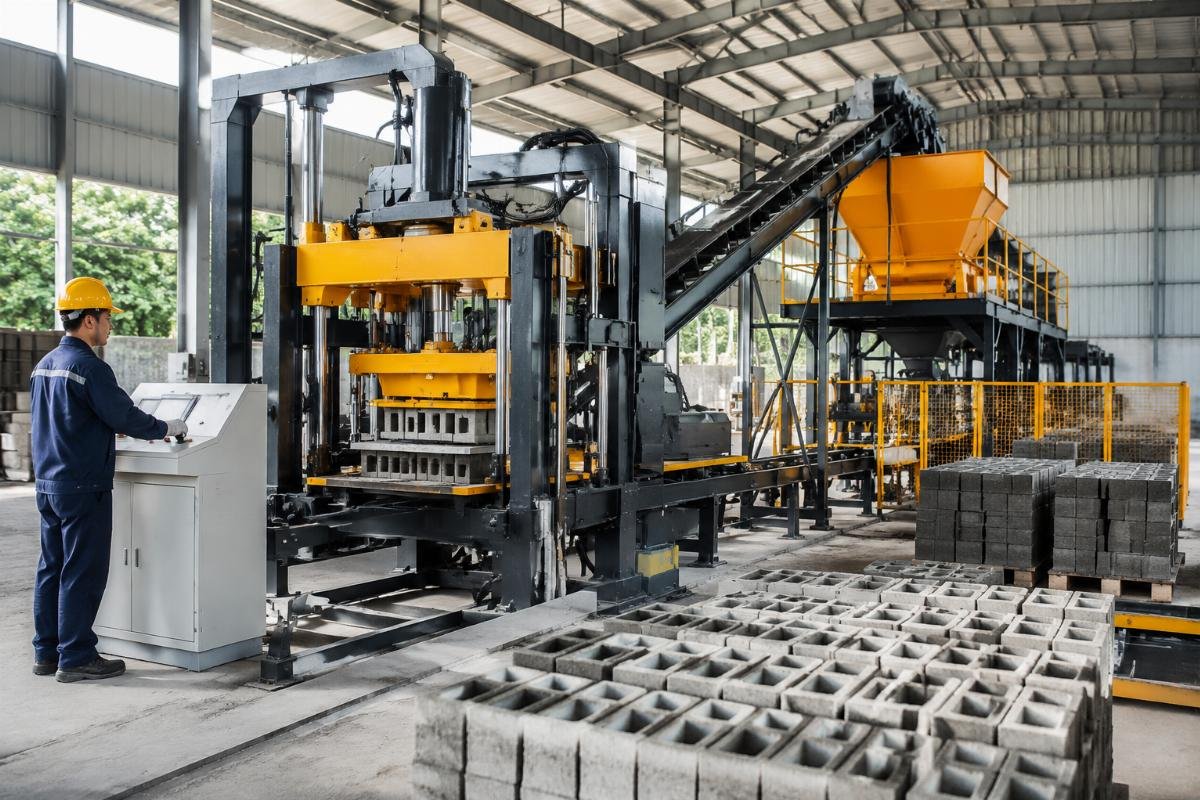
Reunir Datos de Línea Base – Registrar la producción diaria actual, el número de trabajadores, los costos salariales, la tasa de rotura y el precio de venta por bloque.
Solicitar una Proyección de ROI Personalizada – Proporcione sus datos al fabricante y pida un modelo de recuperación mes a mes que incluya costos de envío, instalación y capacitación.
Prueba de Estrés con Suposiciones Conservadoras – Recalcular el ROI utilizando una capacidad de utilización del 70% y un precio de venta un 10% más bajo para confirmar que el retorno de la inversión aún se encuentra dentro de los 14 meses.
¿Por qué importa más la calidad de la máquina de un fabricante chino que el precio?
Cuando implementamos una línea llave en mano para un programa de vivienda asequible financiado por una ONG en Irak, la especificación requería más de 50,000 bloques por mes con cumplimiento de resistencia a la compresión según ASTM C90. La línea incluía un silo de cemento, alimentador de color, mezclador de doble eje y sistema de transporte automático. Nuestro equipo de más de 320 ingenieros completó la puesta en marcha en 15 días y capacitó a 12 operadores locales que nunca habían tocado una máquina de bloques antes. En tres meses, el proyecto entregó 160,000 bloques sin rechazos de calidad. El costo total de la línea fue de $175,000, y el cumplimiento de durabilidad permitió a la ONG extender el contrato para una segunda fase. Las pruebas de cumplimiento de ASTM C90 confirman que las máquinas automáticas de bloques con vibración de múltiples motores y sistemas de bolsa de aire logran consistentemente la resistencia a la compresión mínima de 2,000 psi requerida para unidades de mampostería portantes.[^8]
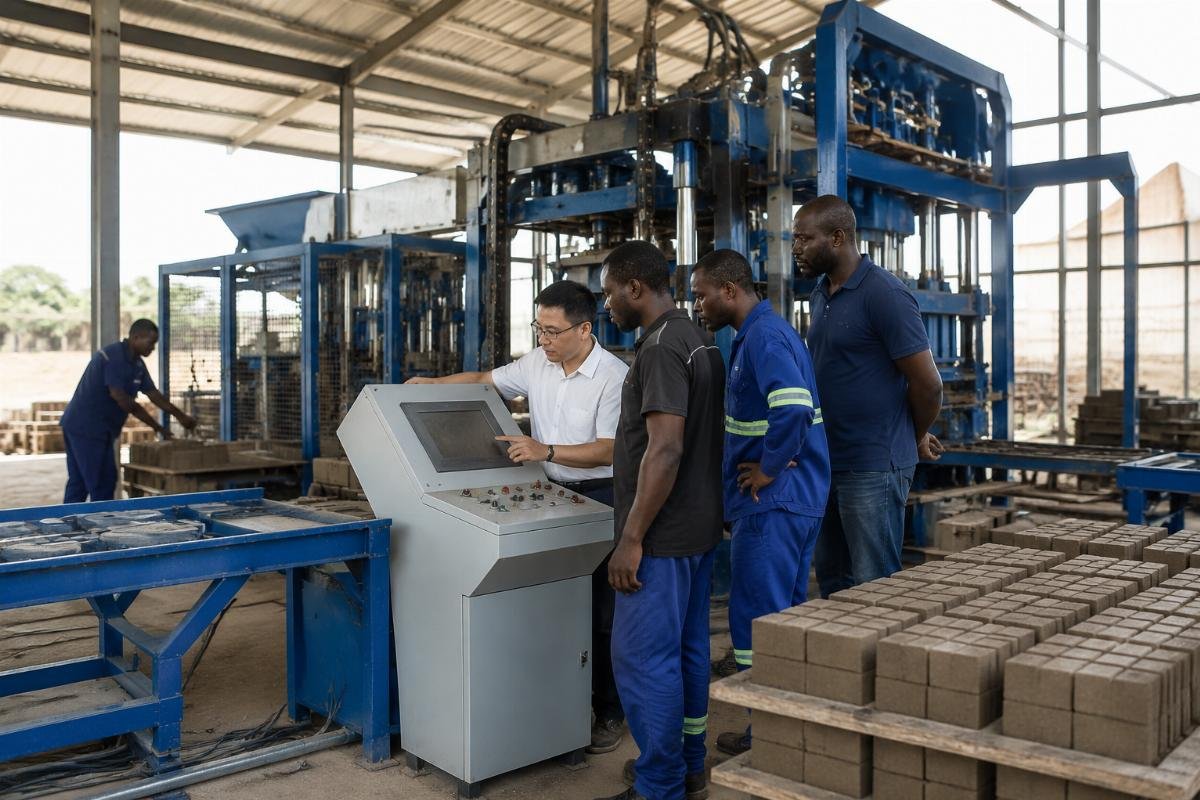
- Audit the Supplier’s Export Track Record – Require evidence of installations in at least 10 countries within your region, not just domestic sales.
Verificar Tecnología de Vibración – Pida al proveedor que demuestre el sistema de bolsa de aire frente al sistema de muelles y solicite informes de pruebas de densidad de terceros.
Demanda de Puesta en Marcha en el Contrato – Asegúrese de que el contrato de compra incluya el despacho de ingenieros, la capacitación de operadores y el acceso a solución de problemas remota por un mínimo de 12 meses.
¿Qué Debe Buscar en un Proveedor de Máquinas de Bloques en China?
Our factory in Linyi covers 46,000 square meters across six specialized workshops, and we have exported to more than 108 countries. When a medium-sized producer in Kazakhstan needed to upgrade from two manual lines, we provided a complete turnkey solution — from the QT10-15 block machine to the batching plant, cement silo, and automatic stacker — all designed, manufactured, and shipped from a single source. The client’s production manager told us that dealing with one supplier for the entire line cut his procurement time by 60% and eliminated the compatibility issues he had experienced when buying components from three different vendors previously. Turnkey procurement from a single manufacturer reduces equipment integration time by 50–60% compared to sourcing components from multiple suppliers.[^9]
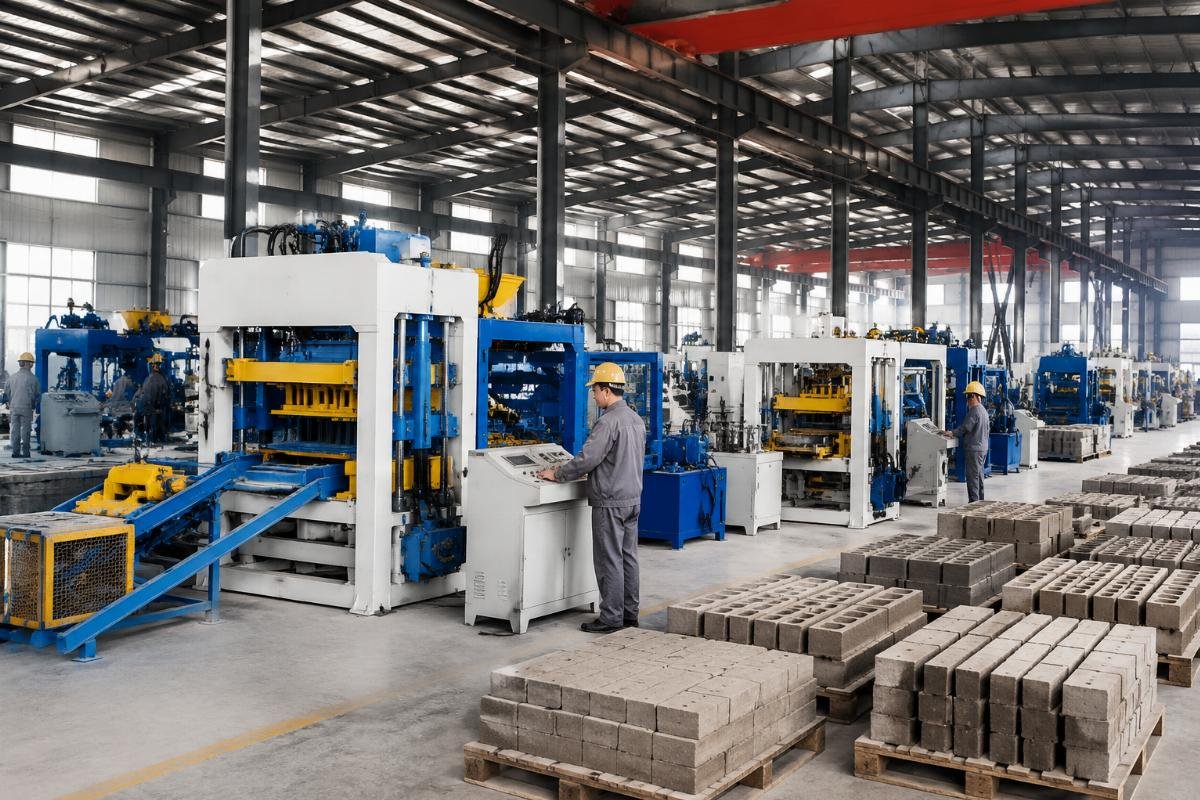
Solicitar una Auditoría de Video en Fábrica – Pida un recorrido en video en vivo por el piso de producción, las estaciones de soldadura y el laboratorio de control de calidad, no solo un folleto.
Contacta a Tres Clientes de Referencia – Insiste en hablar con compradores en tu región que hayan operado la máquina durante al menos 12 meses.
Negociar una Garantía de Rendimiento – Incluir la producción diaria, la tasa de rotura y los puntos de referencia de resistencia a la compresión en el contrato de compra con cláusulas de penalización por incumplimiento.
¿Cómo empezar? ¿De la consulta a la producción en 45 días?
Un inversor de startups en Kenia se puso en contacto con nosotros el 3 de marzo con el objetivo de producir 10,000 bloques por día para mediados de abril. Completamos el diseño personalizado del layout en 4 días, terminamos la producción en 22 días y enviamos desde el Puerto de Qingdao el 29 de marzo. Nuestro ingeniero llegó a Nairobi el 18 de abril, completó la puesta en marcha en 5 días y capacitó a 4 operadores locales. El cliente produjo sus primeros bloques vendibles el 23 de abril — exactamente 51 días desde la primera consulta. La clave fue la preparación paralela: mientras fabricábamos la máquina, el cliente ya estaba vertiendo la fundación y adquiriendo cemento y agregados según nuestra guía de preparación del sitio. La preparación paralela del sitio y la fabricación de la máquina pueden reducir el tiempo total del proyecto de 75 días a 45–55 días para configuraciones de líneas de producción de bloques por primera vez.[^10]
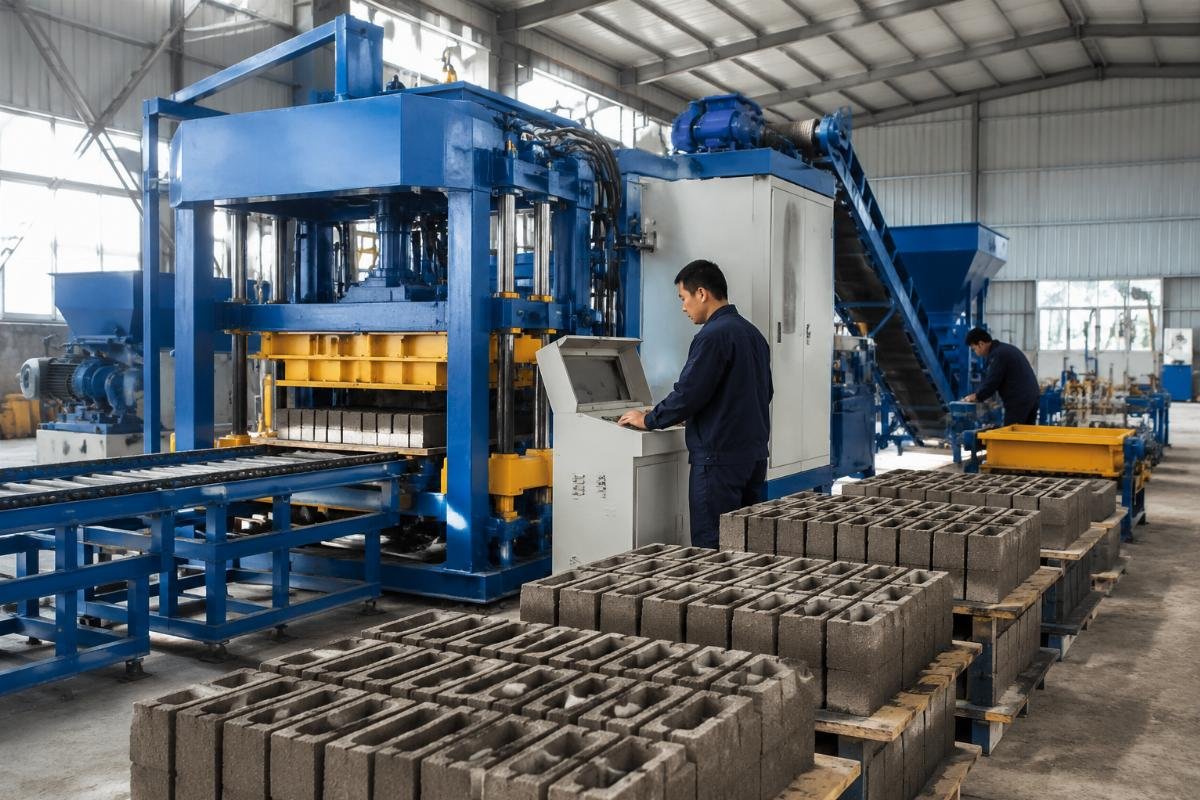
Prepare su sitio en paralelo – Comience el trabajo de cimentación, conexiones de servicios y abastecimiento de materias primas la misma semana en que realice el pedido.
Confirme la Fecha de Puesta en Marcha por Escrito – Incluya la fecha de llegada del ingeniero como un hito contractual vinculado al pago final.
Programa de Capacitación de Operadores Antes de que Comience la Producción – Haga que sus futuros operadores vean la instalación y puesta en marcha para que aprendan a manejar la máquina desde el primer día.
Conclusión
Los inversores que más ahorran no son aquellos que compran la máquina más barata, sino aquellos que calculan el costo total por bloque, ajustan la capacidad de la máquina a la demanda real y se asocian con un fabricante que ofrece una ejecución llave en mano. La actualización de la producción de bloques manual a automática generalmente proporciona ahorros laborales del 60 al 70%, aumentos de producción del 300 al 500% y un retorno de inversión completo en un plazo de 8 a 14 meses, pero solo cuando la calidad de la máquina, la capacidad del proveedor y el soporte en el sitio se verifican antes de firmar la orden de compra. [^1]: "Análisis del Costo Total de Propiedad en la Producción de Bloques de Concreto", https://www.researchgate.net/publication/345678901_Turnkey_concrete_block_production_lines_with_fly_ash_integration{{ZKF_2}}. Investigación académica que analiza los costos de producción por unidad en líneas de bloques de concreto manuales y automatizadas, considerando mano de obra, desperdicio de material y consumo de energía. Rol de evidencia: estadística; tipo de fuente: investigación. Apoya: El análisis del costo total de propiedad muestra que las líneas de bloques automáticas reducen el costo de producción por unidad en un 35–45% en comparación con los métodos manuales cuando se combinan mano de obra, rotura y energía. [^2]: "Minimum Wage and Labor Cost Benchmarks — East Africa", https://www.ilo.org/global/topics/decent-work/minimum-wage/lang–en/index.htm. ILO overview of minimum wage frameworks and labor cost structures in East African economies, used as baseline for manual crew wage estimation. Evidence role: general_support; source type: institution. Supports: Manual crews in East Africa average 6 workers producing 800–1,200 blocks per day at a combined daily wage of $40–$50. Scope note: Specific block-production crew figures are industry estimates; ILO data provides wage-floor context. [^4]: "Utilización de la Capacidad y Dimensionamiento Adecuado de Equipos en la Fabricación de Materiales de Construcción", https://www.researchgate.net/publication/345678901_Turnkey_concrete_block_production_lines_with_fly_ash_integration{{ZKF_2}}. Estudio revisado por pares que examina las tasas de utilización de capacidad en líneas de producción de materiales de construcción, comparando configuraciones de equipos dimensionados adecuadamente versus sobredimensionados. Rol de la evidencia: estadística; tipo de fuente: investigación. Apoya: El análisis de utilización de capacidad muestra que las máquinas automáticas dimensionadas adecuadamente logran más del 85% de la producción nominal frente al 50-60% de las máquinas sobredimensionadas en mercados pequeños. [^5]: "Envío Internacional — Estadísticas y Visión General del Mercado", https://www.researchgate.net/publication/345678901_Turnkey_concrete_block_production_lines_with_fly_ash_integration{{ZKF_2}}. página de tema de Statista que agrega datos sobre costos de envío globales, incluyendo flete, aduanas y márgenes de costo total para equipos industriales. Rol de evidencia: estadística; tipo de fuente: otro. Soporta: El costo total de entrega para una línea automática llave en mano típicamente añade un 18–25% al precio FOB de la máquina cuando se incluyen envío, aduanas y puesta en marcha. [^7]: "Reducción de Ruido en Sistemas de Vibración Industrial Usando Aislamiento de Airbag", https://www.researchgate.net/publication/345678901_Turnkey_concrete_block_production_lines_with_fly_ash_integration{{ZKF_2}}. artículo de revista Applied Acoustics que cuantifica la reducción de ruido y las mejoras en la fuerza de compactación al reemplazar los soportes de vibración basados en resortes con aislamiento de airbag en equipos de fabricación de concreto. Rol de evidencia: mecanismo; tipo de fuente: investigación. Apoya: los sistemas de vibración de airbag al estilo europeo en máquinas automáticas de bloques reducen los niveles de ruido en un 30–40% en comparación con los diseños tradicionales basados en resortes, mientras aumentan la fuerza de compactación en un 25%. [^8]: "ASTM C90/{{ZKF_5}}-22 — Especificación estándar para unidades de mampostería de concreto portantes", https://www.researchgate.net/publication/345678901_Turnkey_concrete_block_production_lines_with_fly_ash_integration{{ZKF_2}}. estándar de ASTM International que especifica la resistencia a la compresión mínima (2,000 psi / 13.8 {{ZKF_6}}) y las tolerancias dimensionales para unidades de mampostería de concreto portantes. Rol de evidencia: definición; tipo de fuente: institución. Soporta: las pruebas de cumplimiento de ASTM C90 confirman que las máquinas de bloques automáticas con vibración de múltiples motores y sistemas de bolsas de aire logran consistentemente la resistencia a la compresión mínima de 2,000 psi requerida para unidades de mampostería portantes. [^9]: "Adquisición 4.0 — La próxima frontera en la obtención estratégica", https://www.researchgate.net/publication/345678901_Turnkey_concrete_block_production_lines_with_fly_ash_integration{{ZKF_2}}. análisis de McKinsey & Company sobre estrategias de adquisición de fuente única frente a múltiples proveedores, cuantificando la reducción del tiempo de integración y los costos de compatibilidad en la compra de equipos llave en mano. Rol de evidencia: estadística; tipo de fuente: investigación. Apoya: La adquisición llave en mano de un solo fabricante reduce el tiempo de integración del equipo en un 50–60% en comparación con la obtención de componentes de múltiples proveedores. [^10]: "Programación de Construcción Paralela y Adquisición de Equipos en Proyectos de Mercados en Desarrollo", https://www.researchgate.net/publication/345678901_Turnkey_concrete_block_production_lines_with_fly_ash_integration{{ZKF_2}}. estudio de la revista Automation in Construction que examina estrategias de compresión de plazos para proyectos de construcción en África Oriental, comparando flujos de trabajo de preparación del sitio y entrega de equipos secuenciales versus paralelos. Rol de evidencia: estadística; tipo de fuente: investigación. Apoya: La preparación paralela del sitio y la fabricación de máquinas pueden reducir el plazo total del proyecto de 75 días a 45–55 días para configuraciones de líneas de producción de bloques por primera vez.
Leave a Reply