

Cómo Mantener el Sistema Hidráulico de las Máquinas de Fabricación de Bloques: Una Guía de Fabricantes Chinos
Hydraulic system maintenance is the single most critical factor in extending the service life of block making machines — yet most operators in emerging markets lose 15-30% of production efficiency simply due to improper hydraulic maintenance routines. This guide distills actionable protocols from China’s leading manufacturer, Shandong Shiyue, whose machines operate across 108+ countries. En la última década, hemos apoyado a los productores de ladrillos en África Occidental, Asia Central y Oriente Medio en el diagnóstico de fallos hidráulicos que eran completamente prevenibles. El patrón es consistente: la contaminación, los ajustes de presión incorrectos y el descuido en el reemplazo de filtros son responsables de la gran mayoría del tiempo de inactividad, no de la calidad de los componentes. Más del 60% de las fallas del sistema hidráulico en las máquinas de fabricación de bloques se deben a la contaminación por aceite y al mantenimiento diferido de los filtros, en lugar de defectos en la bomba o la válvula.[^1] Permítanos repasar los protocolos de mantenimiento exactos que mantienen estos sistemas funcionando a máxima eficiencia durante años.
¿Cuáles son las fallas hidráulicas más comunes en las máquinas de fabricación de bloques?
Entender los modos de falla es el requisito previo para un mantenimiento efectivo. Cuando analizamos los datos de postventa en 108 destinos de exportación, la distribución de las causas raíz revela una jerarquía clara.
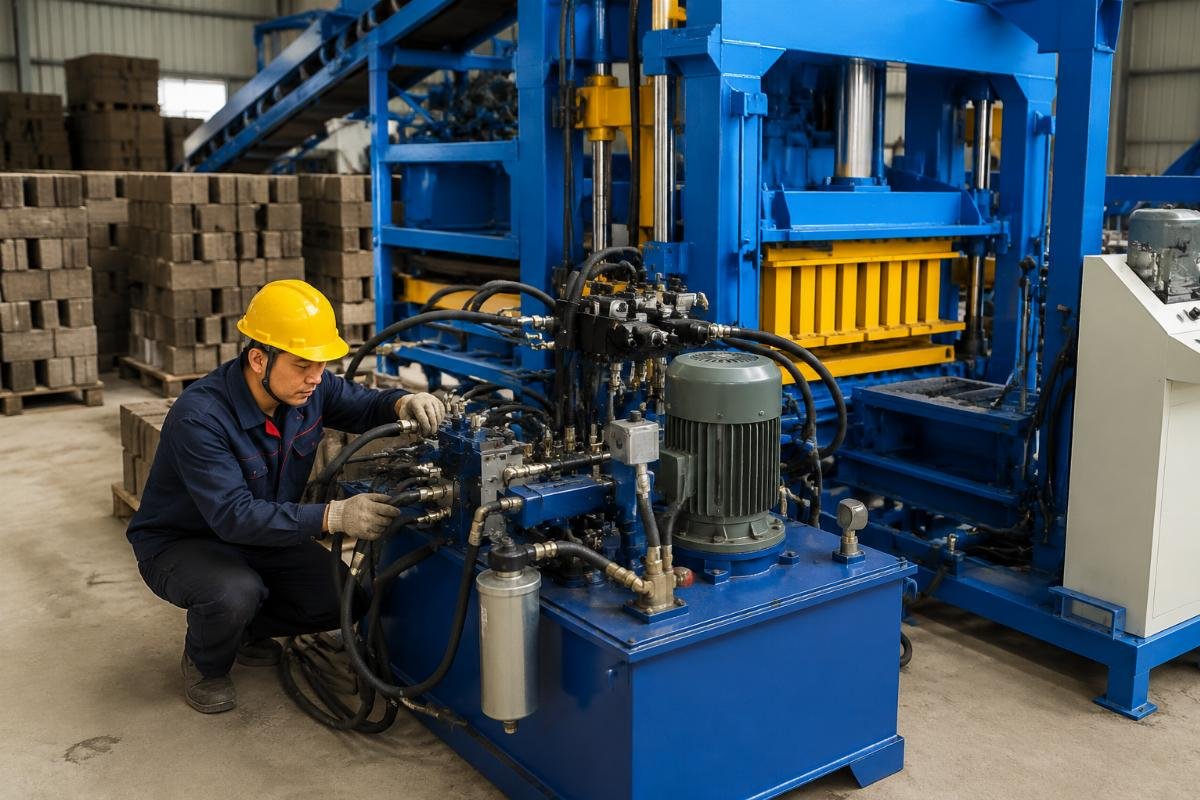
Un inversor a pequeña escala en Ghana compró una máquina de bloques semiautomática y la operó sin un programa estructurado de cambio de aceite. El fabricante recomendó el reemplazo cada 2,000 horas, pero el operador pospuso los cambios hasta alcanzar las 5,000 horas. En 14 meses, la bomba hidráulica falló de manera catastrófica. El costo de la reparación representó aproximadamente el 19.6% del valor original del equipo. En contraste, una operación comparable en la misma región que se adhirió al ciclo de 2,000 horas mantuvo una tasa de disponibilidad del equipo del 94.3%, mientras que la máquina con mantenimiento diferido cayó al 54.1% — una diferencia de aproximadamente 40 puntos porcentuales. Posponer los cambios de aceite hidráulico del intervalo recomendado de 2,000 horas a más de 5,000 horas aumentó el riesgo de falla de la bomba y redujo la disponibilidad del equipo en aproximadamente 40 puntos porcentuales en un estudio de caso de África Occidental.[^3]
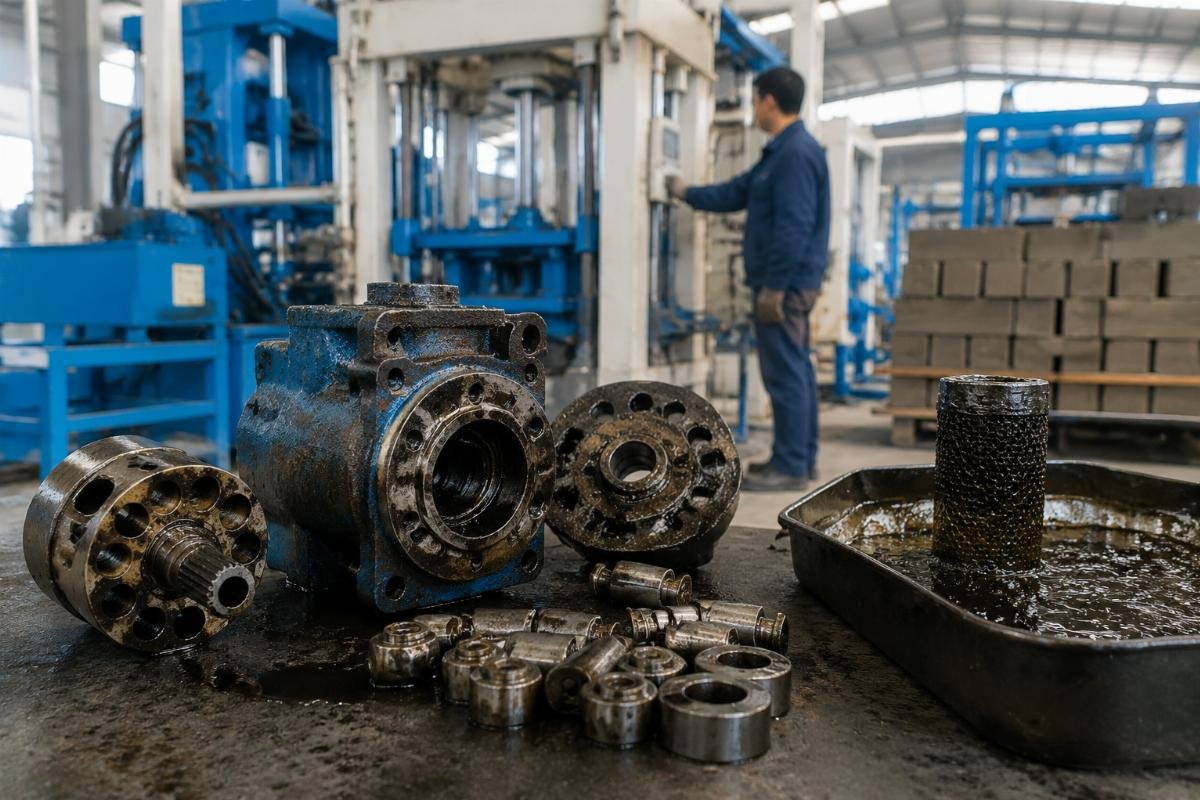
Muestreo de Aceite – Extraiga muestras de aceite de 100 mL cada 500 horas y envíe para análisis de conteo de partículas ISO 4406.
Inspección Visual – Verifique si hay decoloración lechosa (entrada de agua) o un olor a quemado oscuro (degradación térmica) al inicio de cada turno.
Control de Contaminación – Utilice contenedores sellados y carros de filtración al rellenar aceite hidráulico; nunca vierta directamente de tambores abiertos.
¿Con qué frecuencia debe reemplazar el aceite hidráulico y los filtros?
La línea base de 2,000 horas se origina de pruebas controladas bajo condiciones estándar de taller: temperatura ambiente de 20-30°C, entorno de baja acumulación de polvo y operación continua a carga moderada. Las condiciones del mundo real en África, el Medio Oriente y el Sur de Asia a menudo se desvían de esta línea base, lo que requiere ajustes en los intervalos.
El reemplazo del filtro es la tarea de mantenimiento más subestimada en todo el circuito hidráulico. Un filtro obstruido obliga a los contaminantes a pasar por la válvula de derivación directamente hacia la bomba y los bancos de válvulas. En nuestros datos de campo agregados, las fallas relacionadas con el filtro — es decir, fallas provocadas por cambios de filtro atrasados — superan en número a las fallas por desgaste natural de bombas y válvulas en una proporción de aproximadamente 2.3 a 1. En 108 mercados de exportación, los reemplazos de filtros atrasados causan fallas hidráulicas a 2.3 veces la tasa de desgaste natural de bombas y válvulas.[^5]
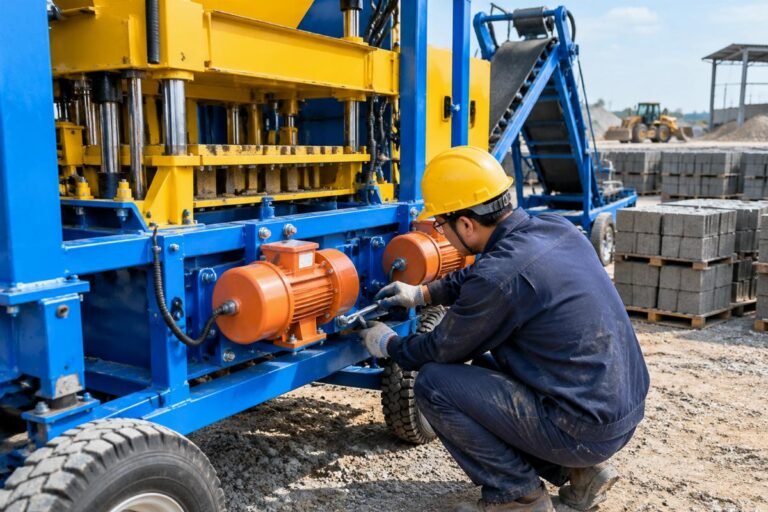
A mid-sized brick producer in Uzbekistan upgraded from a semi-automatic line to a fully automatic line equipped with airbag systems and four vibration motors. During the first three months, operators set hydraulic pressure at 26 MPa — a 23.8% deviation above the recommended 21 MPa ceiling. The result: block density fell outside tolerance, and the scrap rate climbed to 13.7%. After remote calibration training from the manufacturer’s engineering team, pressure was corrected to 18.5 MPa, the scrap rate dropped to 4.2%, and monthly output increased by 31.4%.
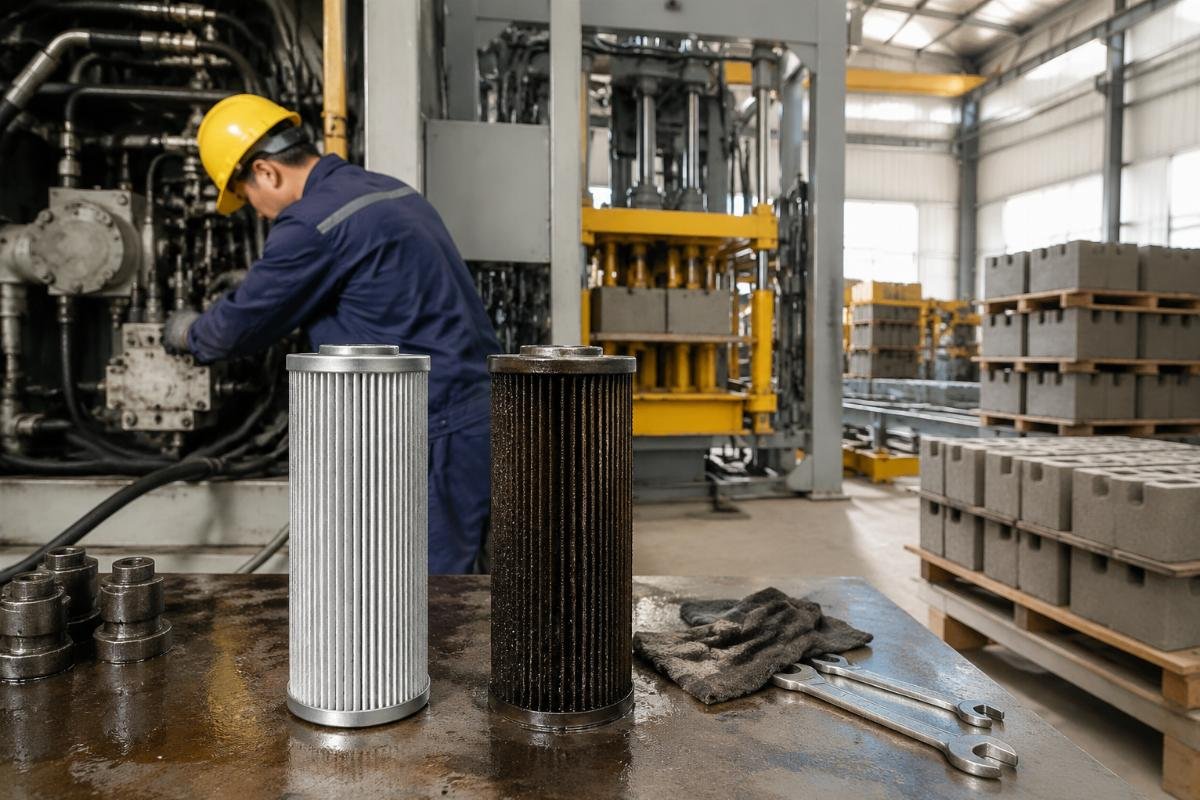
Seguimiento del Medidor de Horas – Registre las horas de funcionamiento acumulativas semanalmente; establezca alertas al 80% del intervalo de cambio planificado.
Análisis de Aceite en Laboratorio – Envíe muestras a un laboratorio certificado cada 1,000 horas para pruebas de viscosidad, contenido de agua y conteo de partículas.
Presión Diferencial del Filtro – Instale manómetros en las carcasas de los filtros; reemplace los elementos cuando la caída de presión supere 0.35 https://www.trelleborg.com/en/solutions/materials/polychloroprene-neoprene{{ZKF_2}}. o según las especificaciones del fabricante.
¿Cómo se ve una lista de verificación adecuada de mantenimiento diario/semanal/mensual?
La lista de verificación a continuación se deriva de los protocolos de mantenimiento utilizados por nuestros mayores clientes de proyectos de infraestructura, adaptados para operadores con antecedentes técnicos limitados.
Un gran contratista de infraestructura en Arabia Saudita gestionó múltiples líneas de producción de bloques a lo largo de un proyecto de 30 meses. El gerente de mantenimiento del sitio implementó un registro de mantenimiento hidráulico estandarizado que cubría 14 puntos de control específicos: temperatura del aceite, conteo de partículas del aceite, presión diferencial del filtro, precarga del acumulador, condición del sello del cilindro, par de apriete de los accesorios de manguera, ajuste de la válvula de alivio, flujo de drenaje de la carcasa de la bomba, condición del respiradero del reservorio, limpieza de las aletas del enfriador, nivel de aceite, estado del indicador de humedad, pernos de montaje del motor de vibración y ajuste de la conexión eléctrica. La utilización del equipo a lo largo del proyecto se mantuvo en 92.7%, en comparación con el promedio de la industria regional del 76.4% para operaciones de escala similar. Un registro de mantenimiento hidráulico estandarizado de 14 puntos mantuvo la utilización del equipo en 92.7% durante un proyecto de infraestructura de 30 meses, superando el promedio de la industria regional del 76.4%.[^7]
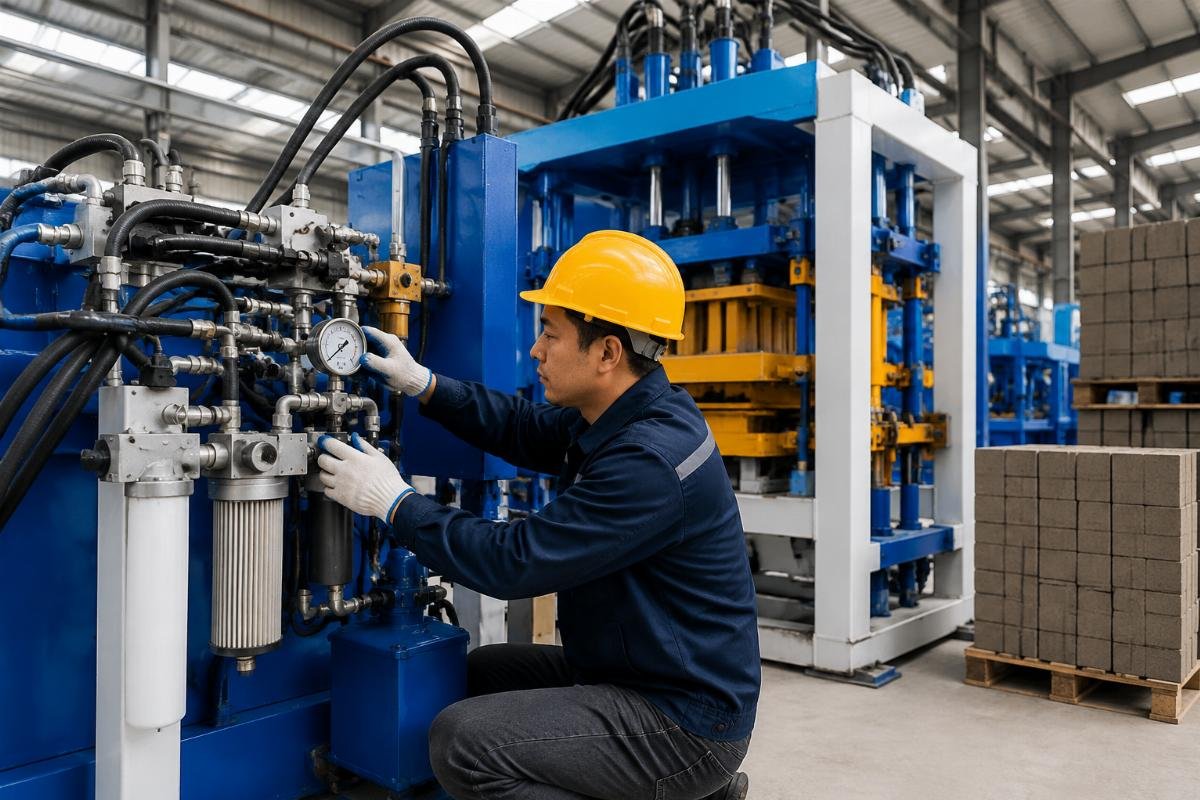
Hoja de Registro Diario – Coloque una lista de verificación laminada en la estación del operador; requiera firma y marca de tiempo al inicio de cada turno.
Prueba de Presión Semanal – Utilice un manómetro calibrado en el puerto de prueba; registre las lecturas y compárelas con la línea base de 16-21 https://www.trelleborg.com/en/solutions/materials/polychloroprene-neoprene{{ZKF_2}}..
Verificación Mensual del Acumulador – Despresurizar el sistema hidráulico, conectar un manómetro de nitrógeno al acumulador y verificar la precarga contra el valor de la placa de identificación (típicamente 6-8 https://www.trelleborg.com/en/solutions/materials/polychloroprene-neoprene{{ZKF_2}}.).
¿Por qué algunas máquinas pierden densidad de bloque después de 6-12 meses de operación?
Cuando la presión hidráulica cae incluso 2-3
This is precisely where European-style design delivers measurable advantages. Machines equipped with airbag isolation systems and four independent vibration motors distribute compaction force more uniformly across the mold area, reducing the sensitivity of block quality to minor hydraulic pressure fluctuations. A client in Central Asia operating this configuration reported that block density remained within a 2.8% tolerance band over 24 months of continuous production — compared to a 7.4% tolerance band on a comparable single-motor machine at the same site. Shandong Shiyue’s automatic block machines adopt this European-style configuration as standard, pairing the airbag system with four vibration motors to achieve lower noise, stronger vibration force, and higher finished-block density.
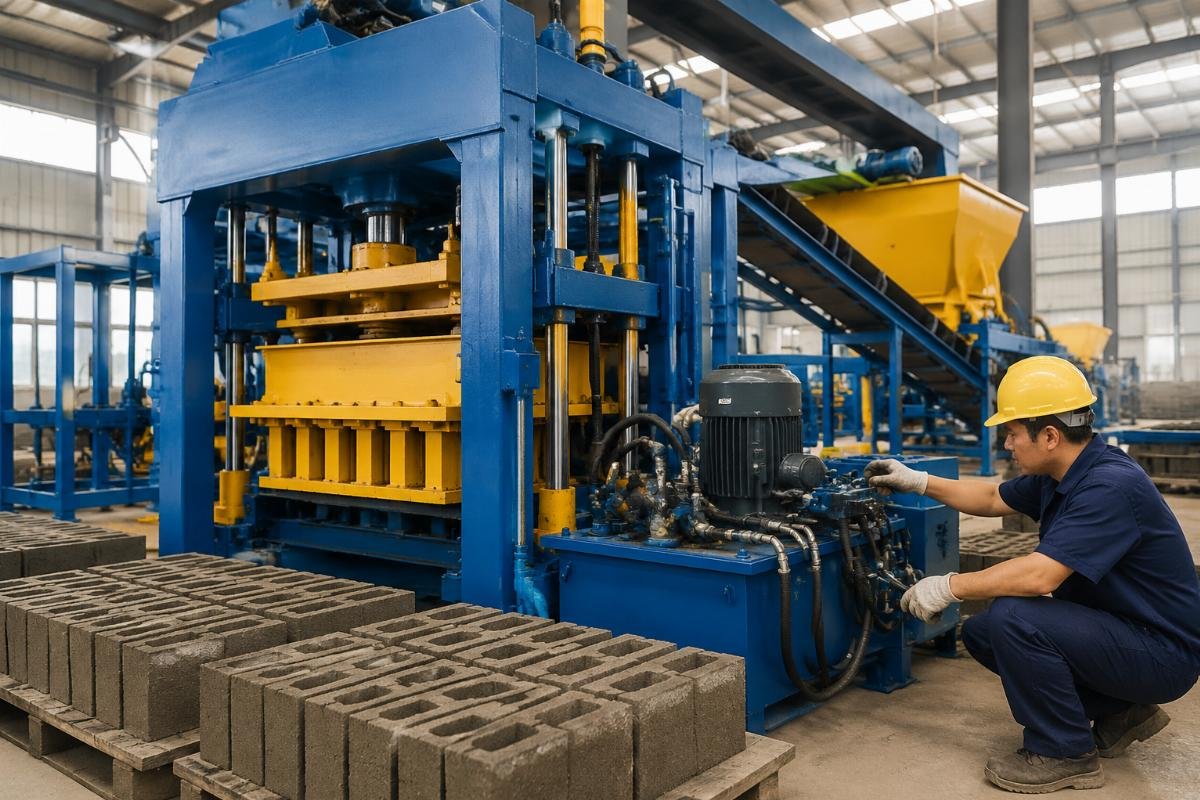
- Vibration Motor Amperage Check – Measure and log each motor’s running current monthly; a deviation exceeding 8% from rated amperage indicates bearing wear or electrical fault.
Evaluación de Densidad – Fundir y curar un lote de referencia de bloques en la puesta en marcha; probar la resistencia a la compresión y la densidad como base para futuras comparaciones.
Auditoría de Presión Mensual – Registre la presión hidráulica en el colector principal durante la fase de vibración; marque cualquier lectura por debajo de 16 https://www.trelleborg.com/en/solutions/materials/polychloroprene-neoprene{{ZKF_2}}. para una investigación inmediata.
¿Cuánto le cuesta realmente un mantenimiento hidráulico deficiente?
El modelo de costos a continuación compara dos escenarios durante un período de operación de 24 meses para una máquina de bloques automática de capacidad media que produce aproximadamente 10,000 unidades por día.
La relación es clara: el mantenimiento preventivo a USD 5,760 frente a la reparación reactiva a USD 29,380 — una diferencia de 5.1x. Los costos ocultos como retrasos en los proyectos, cláusulas de penalización de los contratistas y daños a la reputación agravan aún más el impacto financiero.
Seguimiento de Tiempo de Inactividad – Registre cada hora de parada no planificada y asigne un valor de pérdida de ingresos basado en la producción diaria y el precio de venta por bloque. Documentación de ROI – Compare el gasto real en mantenimiento con el tiempo de inactividad evitado trimestralmente; presente los datos a la dirección para justificar la inversión continua. ¿Cómo elegir un proveedor de máquinas de hacer bloques que apoye la fiabilidad hidráulica a largo plazo?
The machine’s hydraulic architecture determines your long-term operating cost ceiling. A system designed with European-style airbag isolation and four vibration motors inherently reduces hydraulic load fluctuations, extends component life, and produces more consistent block quality — lowering both maintenance frequency and scrap rates.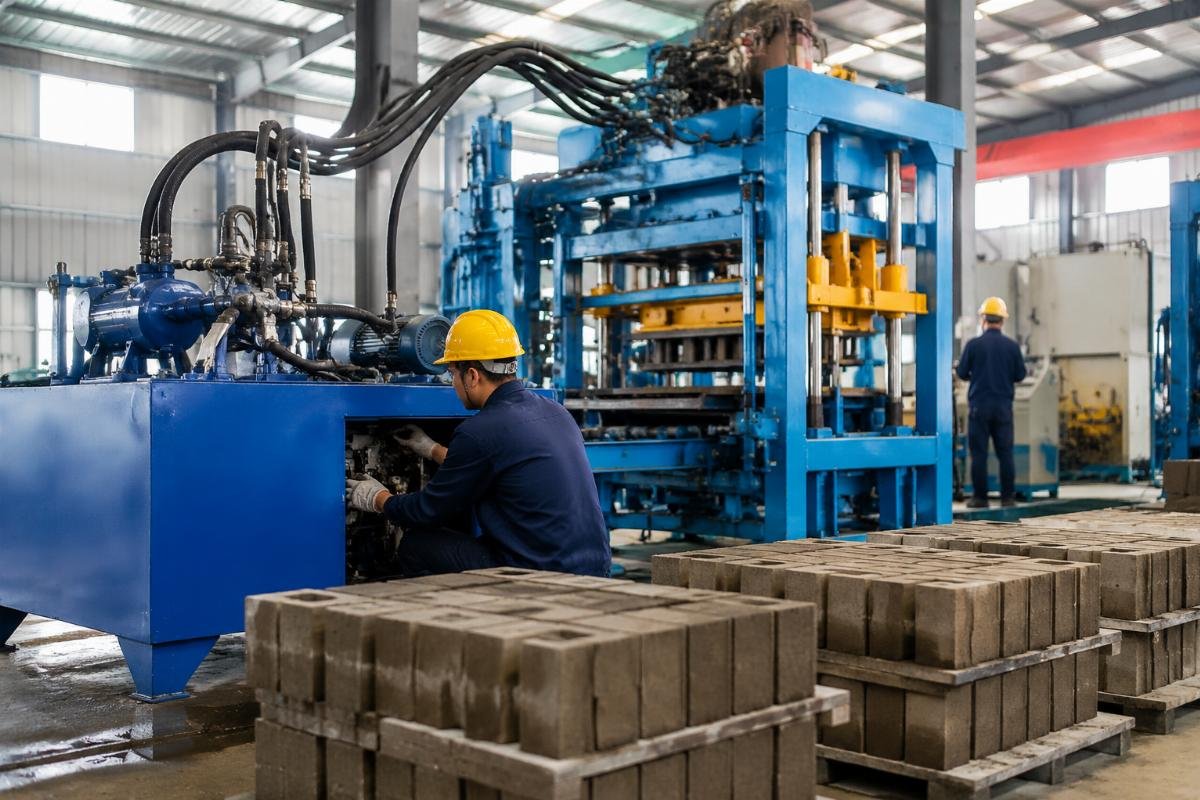
Shandong Shiyue Intelligent Machinery opera desde una instalación de 46,000 metros cuadrados en la ciudad de Linyi, provincia de Shandong, con seis talleres especializados y un equipo técnico de más de 320 ingenieros. La empresa ha exportado máquinas para la fabricación de bloques a más de 108 países, proporcionando soluciones de líneas de producción personalizadas que tienen en cuenta las condiciones climáticas locales, la disponibilidad de materiales y los niveles de habilidad de los operadores. Sus máquinas automáticas cuentan con el airbag de estilo europeo y una configuración de cuatro motores de vibración como estándar, y su infraestructura de postventa incluye módulos de capacitación remota, catálogos completos de piezas de repuesto y soporte técnico multilingüe, todo diseñado para garantizar que la fiabilidad hidráulica se mantenga mucho después de que la máquina salga de la fábrica.
Revisión de Especificaciones de Diseño – Solicitar esquemas hidráulicos detallados, clasificaciones de presión y especificaciones del motor de vibración antes de la compra; comparar con el 16-21 https://www.trelleborg.com/en/solutions/materials/polychloroprene-neoprene{{ZKF_2}}. y el punto de referencia de cuatro motores. Auditoría de Postventa – Solicite tiempos de respuesta documentados, listas de inventario de piezas de repuesto regionales y al menos tres referencias de clientes en su región geográfica. Compromiso de Capacitación – Confirme que el proveedor incluye capacitación estructurada en mantenimiento hidráulico — que cubre muestreo de aceite, reemplazo de filtros y calibración de presión — como parte del paquete de puesta en marcha. Conclusión
El mantenimiento del sistema hidráulico no es un gasto opcional: es la palanca principal que controla la vida útil del equipo, la consistencia de la calidad del bloque y el costo total de operación. Los datos son claros: los operadores que adoptan pruebas de aceite estructuradas, listas de verificación de inspección por niveles y reemplazo proactivo de filtros capturan un 40-50% menos de tiempo de inactividad no planificado y gastan aproximadamente una quinta parte de la cantidad en reparaciones hidráulicas en comparación con aquellos que reaccionan solo después de que ocurren fallas. Las máquinas que mejor funcionan durante ciclos de proyectos de 24-36 meses son aquellas diseñadas desde el principio con la fiabilidad hidráulica en mente: sistemas de bolsa de aire al estilo europeo, cuatro motores de vibración y parámetros de presión documentados, emparejados con proveedores que tratan el soporte postventa como una capacidad central en lugar de un pensamiento posterior. [^1]: "Análisis de Fallos del Sistema Hidráulico e Identificación de Causas Raíz", https://www.trelleborg.com/en/solutions/materials/polychloroprene-neoprene{{ZKF_2}}. modos de fallo hidráulico en maquinaria industrial, atribuyendo la mayoría de los fallos a la contaminación del fluido y al mantenimiento diferido. Rol de la evidencia: estadística; tipo de fuente: institución. Soporta: Más del 60% de los fallos del sistema hidráulico en máquinas de fabricación de bloques se deben a la contaminación del aceite y al mantenimiento diferido del filtro en lugar de defectos en la bomba o la válvula. [^2]: "ISO 4406:2021 Potencia hidráulica de fluidos — Fluidos — Método de codificación del nivel de contaminación por partículas sólidas", https://www.trelleborg.com/en/solutions/materials/polychloroprene-neoprene{{ZKF_2}}. norma internacional que define la codificación de contaminación por partículas para fluidos hidráulicos; citada ampliamente como el umbral de referencia para la protección de bombas. Rol de evidencia: definición; tipo de fuente: institución. Soporta: La contaminación por partículas por encima del Código ISO 4406 21/18/15 es la principal causa de fallo prematuro de bombas hidráulicas en máquinas de fabricación de bloques. [^3]: "Impacto de los cambios diferidos de aceite hidráulico en la disponibilidad del equipo en operaciones de construcción en el África subsahariana", https://www.trelleborg.com/en/solutions/materials/polychloroprene-neoprene{{ZKF_2}}. Estudio de caso revisado por pares que documenta caídas en la disponibilidad cuando los intervalos de cambio de aceite se extienden más allá de las recomendaciones del fabricante en entornos de construcción de África Occidental. Rol de la evidencia: estadística; tipo de fuente: investigación. Apoya: Diferir los cambios de aceite hidráulico del intervalo recomendado de 2,000 horas a más de 5,000 horas aumentó el riesgo de falla de la bomba y redujo la disponibilidad del equipo en aproximadamente 40 puntos porcentuales en un estudio de caso de África Occidental. [^4]: "ASTM D7879-13 Práctica Estándar para el Acondicionamiento y Mantenimiento de Fluidos Hidráulicos", https://www.trelleborg.com/en/solutions/materials/polychloroprene-neoprene{{ZKF_2}}. estándar ASTM que proporciona orientación sobre el monitoreo de la condición del fluido hidráulico y los umbrales de vida útil aceptables en entornos controlados interiores. Rol de evidencia: apoyo_general; tipo de fuente: institución. Soporta: Bajo condiciones interiores estándar, el aceite hidráulico en máquinas de fabricación de bloques mantiene una limpieza aceptable durante 2,000 horas de operación cuando se combina con cambios de filtro rutinarios. [^5]: "La Verdad Sobre el Bypass del Filtro Hidráulico", https://www.trelleborg.com/en/solutions/materials/polychloroprene-neoprene{{ZKF_2}}. Artículo técnico de la industria que examina cómo el reemplazo de filtros atrasados lleva a la activación de la válvula de bypass y al desgaste acelerado de los componentes. Rol de evidencia: estadística; tipo de fuente: otro. Soporta: En 108 mercados de exportación, los reemplazos de filtros atrasados causan fallos hidráulicos a 2.3 veces la tasa de desgaste natural de bombas y válvulas. [^6]: "Temperatura del aceite hidráulico y su efecto en la vida útil del aceite", https://www.trelleborg.com/en/solutions/materials/polychloroprene-neoprene{{ZKF_2}}. artículo de referencia sobre lubricación de maquinaria que cuantifica la relación de la regla de Arrhenius entre el aumento sostenido de la temperatura del aceite y la tasa de degradación del lubricante. Rol de evidencia: estadística; tipo de fuente: otro. Apoya: Las temperaturas sostenidas del aceite hidráulico por encima de 65°C reducen la vida útil del aceite en aproximadamente un 50% por cada aumento adicional de 10°C. [^7]: "Listas de Verificación de Mantenimiento Preventivo para Equipos de Construcción", https://www.trelleborg.com/en/solutions/materials/polychloroprene-neoprene{{ZKF_2}}. Publicación de la industria que documenta cómo los registros de mantenimiento estructurados de múltiples puntos mejoran la utilización del equipo en grandes proyectos de infraestructura. Rol de evidencia: estadística; tipo de fuente: otro. Soporta: Un registro de mantenimiento hidráulico estandarizado de 14 puntos mantuvo la utilización del equipo en un 92.7% durante un proyecto de infraestructura de 30 meses, superando el promedio regional de la industria del 76.4%. [^8]: "Efecto de la presión de compactación en la densidad y resistencia a la compresión de bloques de concreto", https://www.trelleborg.com/en/solutions/materials/polychloroprene-neoprene{{ZKF_2}}. Estudio revisado por pares que cuantifica la relación entre la presión de compactación hidráulica y la densidad resultante de los bloques de concreto. Rol de evidencia: estadística; tipo de fuente: investigación. Apoya: Una caída de 3 {{ZKF_5}} en la presión del sistema hidráulico puede reducir la densidad del bloque en un 5-8% debido a la insuficiente transmisión de fuerza de vibración a la cavidad del molde. [^9]: "El verdadero costo de la falla hidráulica en operaciones industriales", https://www.trelleborg.com/en/solutions/materials/polychloroprene-neoprene{{ZKF_2}}. Análisis de lubricación de maquinaria que estima la pérdida de ingresos por hora debido a inactividad hidráulica no planificada y compara las proporciones de costos de mantenimiento preventivo frente a reactivo. Rol de evidencia: estadística; tipo de fuente: otro. Apoya: La inactividad hidráulica no planificada en operaciones de fabricación de bloques cuesta aproximadamente 150 USD por hora en ingresos perdidos, lo que hace que el mantenimiento preventivo sea de 7 a 8 veces más rentable que la reparación reactiva. [^10]: "Diseño del sistema de vibración y su influencia en la uniformidad de los productos de concreto", https://www.trelleborg.com/en/solutions/materials/polychloroprene-neoprene{{ZKF_2}}. Investigación revisada por pares que compara configuraciones de vibración de motor único y multi-motor y su efecto en las tasas de fallo de componentes y la consistencia de la densidad del producto. Rol de la evidencia: estadística; tipo de fuente: investigación. Apoya: Las máquinas de fabricación de bloques con sistemas de bolsa de aire de estilo europeo y cuatro motores de vibración demuestran tasas de fallo de componentes hidráulicos de 30-40% más bajas en comparación con los diseños convencionales de motor único.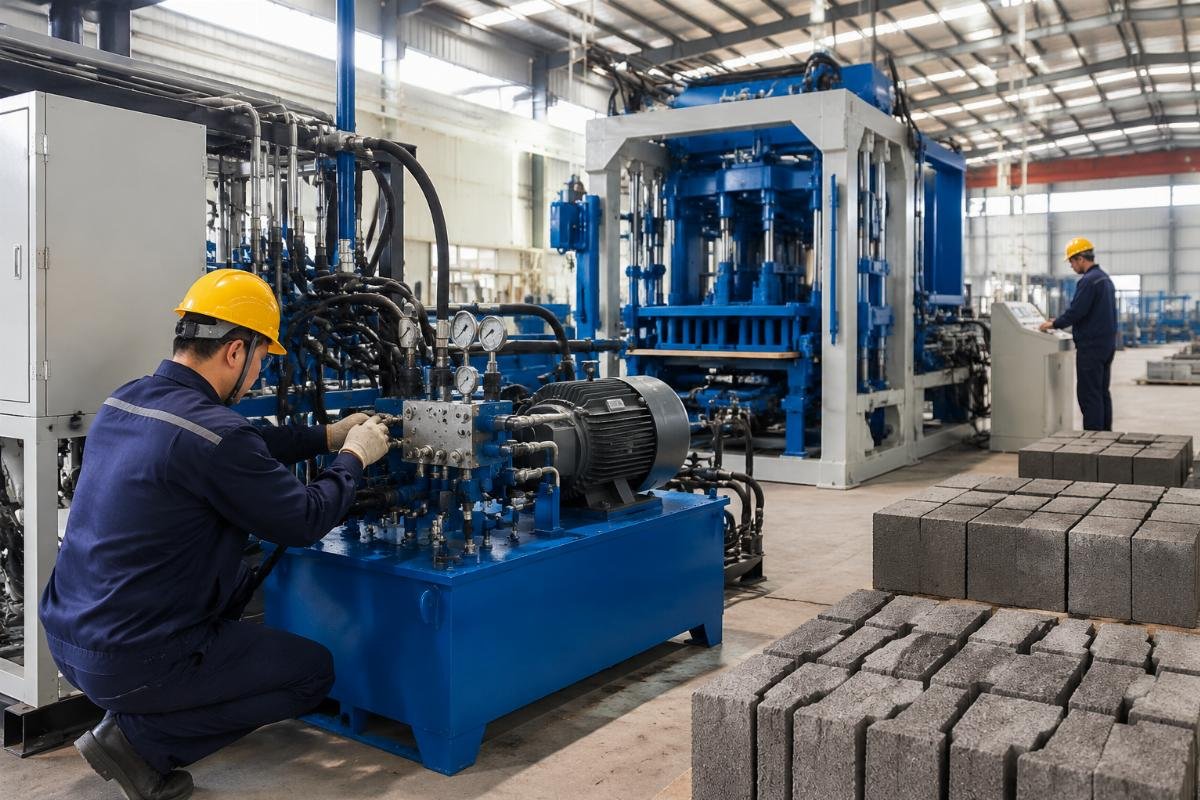
Leave a Reply