

Brick Machine Price in Brazil: 2026 QT10-15/QT12-15 FOB Supplier Guide
Most buyers fixate on the FOB quote, but the real brick machine price in Brazil is decided by voltage stabilization, import duties, and inland haulage from Santos or Paranaguá to your plant site.
When I first started welding frames in Linyi and later moved into overseas commissioning, I learned fast that a cheap machine sitting idle because of unstable power or seized moulds costs far more than a slightly pricier unit engineered for local conditions. For Brazilian investors evaluating a brick machine price in Brazil, the FOB figure is merely the starting line. The final landed cost includes CE/SGS-certified customization for 220V/60Hz grids, abrasive-resistant mould treatments for local river-sand aggregates, and pallet circulation systems tuned to tropical humidity. [NEED_CITE: Brazilian import tariff structure and IPI calculation methodology per federal revenue service guidelines]
Getting the brick machine price in Brazil right means looking past the invoice and into the soil, the grid, and the rainy season calendar where your plant will operate.
What Determines the Final Landed Cost of a Brick Machine in Brazil?
The brick machine price in Brazil is shaped by three layers beyond the factory gate: customs duties, voltage-driven electrical customization, and last-mile logistics from port to plant.
I once watched a full QT10-15 line sit in a Santos warehouse for weeks because the buyer had calculated freight based on port-to-port rates without accounting for inland truck scheduling during harvest season congestion. The storage fees alone ate into margins that the machine’s output would take months to recover. [NEED_CITE: Santos port congestion patterns and inland freight cost variability factors]
Brazil’s import tariff structure adds a significant layer. The Imposto de Importação combined with IPI industrialized product tax means the CIF value does not equal the cash leaving your account. Buyers who only compare FOB quotes from a Chinese brick machine price in Brazil supplier often discover the gap too late.
Then there is the electrical reality. Brazilian industrial grids, particularly in secondary cities outside São Paulo, experience voltage fluctuations that can destabilize hydraulic systems on poorly configured machines. A standard 380V/50Hz motor will not survive without rewinding and frequency adaptation. This customization adds to the brick machine price in Brazil upfront but prevents costly downtime later.
| Cost Layer | Standard FOB Scope | Brazil-Specific Addition |
|---|---|---|
| Electrical | Default motor spec | 220V/60Hz rewinding, voltage stabilizer integration |
| Mould treatment | Standard hardened steel | Enhanced abrasive resistance for river-sand mixes |
| Logistics | Port-to-port freight | Inland haulage, port storage buffer, customs brokerage |
| Certification | Basic export docs | CE/SGS for tender compliance, ABNT alignment review |
A private investor near Campinas once chose a competitor’s lower FOB quote, only to find the moulds wore out within months because the supplier had not adjusted the heat-treatment process for the high-silica river sand common in that region. The replacement mould shipments from overseas cost several times the initial savings.
Price Breakdown by Machine Type: Manual vs. Semi-Auto vs. Fully Automatic
The brick machine price in Brazil scales with output capacity, but the ROI inflection point depends on your daily block target and labor cost structure.
Investors typically narrow their search to three tiers when requesting a brick machine price in Brazil:
The QT4-25 mobile egg-laying type suits small operators or rental businesses. It produces directly on the curing yard without pallets, keeping the initial investment low. However, output per shift is modest, and the vibration system requires more frequent maintenance checks.
The QT6-15 semi-automatic line represents the entry point for serious commercial production. It uses pallets, requires a batching mixer and conveyor setup, but delivers consistent block quality at a pace that justifies a small team. This is the model most frequently quoted when buyers search for brick making machine cost Brazil options.
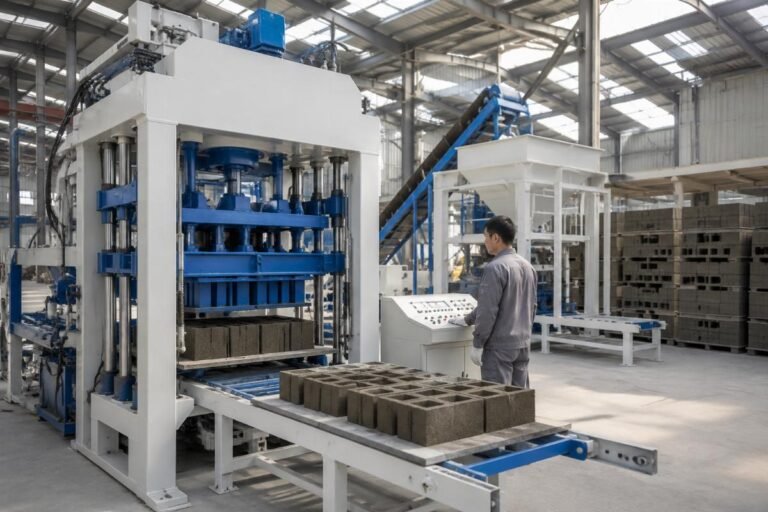
The QT10-15 and QT12-15 fully automatic lines target high-volume plants serving infrastructure contracts or housing developments. They integrate PLC control, automatic pallet circulation, and stacker systems. The concrete block machine price Brazil buyers see for these models is higher, but the per-block labor cost drops substantially.
| Machine Model | Automation Level | Pallet Required | Typical Output Range | Best Suited For |
|---|---|---|---|---|
| QT4-25 | Mobile / Manual assist | No | Low per shift | Rental operators, rural yards |
| QT6-15 | Semi-automatic | Yes | Medium | Private block plants, contractors |
| QT10-15 | Fully automatic PLC | Yes | High | Housing projects, large contractors |
| QT12-15 | Fully automatic PLC | Yes | Very high | Industrial-scale production |
A contractor in Brasília sourcing for a federal housing tender needed CE documentation and traceable quality records. The automatic brick plant cost for a QT10-15 line from a Turkish competitor carried a noticeable premium. By contrast, a Chinese supplier with CE/SGS certification and field experience in unstable-grid markets delivered comparable output at a lower brick machine price in Brazil, with on-site commissioning included.
The key is matching the machine to your actual daily target. Over-specifying wastes capital; under-specifying creates bottlenecks that no amount of overtime can fix.
Hidden Costs: Voltage Adaptation, Mould Wear, and Rainy Season Maintenance
The brick machine price in Brazil looks attractive until mould replacement frequency and electrical instability drive unplanned expenses.
Most buyers assume machine cost correlates directly with output capacity. The reality in Brazil is different. The true cost driver is often how well the machine is adapted to local conditions.
Voltage fluctuation is the silent killer of hydraulic brick machines. Brazilian industrial power in many regions does not hold steady at nominal levels. Without proper stabilizers and motors wound for 220V/60Hz, the hydraulic pump and vibration motors experience premature stress. I have seen machines where the hydraulic valve block needed replacement within a year because of inconsistent voltage input, not because of any defect in the machine itself.
Mould wear is another hidden cost that varies dramatically by region. In areas where producers use crushed granite or high-silica river sand, standard mould steel wears noticeably faster. The abrasive brick production line Brazil investment calculation must include mould lifecycle expectations. Suppliers who offer enhanced abrasive-resistant treatments or provide moulds with controlled hardness ranges give buyers a longer service window between replacements.
Rainy season maintenance is the third factor. Brazil’s tropical climate means extended periods of high humidity. Unprotected hydraulic components and electrical cabinets corrode faster. Proper sealing, rust-inhibitive coatings, and covered storage for spare parts are not optional extras. They are part of the realistic brick machine price in Brazil equation.
A rental operator in Bahia running QT4-25 units found that mould and vibration motor replacements consumed a significant portion of annual operating budget. Switching to a supplier who provided moulds with enhanced wear treatment and vibration systems rated for continuous duty in dusty, humid conditions reduced his replacement frequency noticeably. The per-unit brick machine price in Brazil was slightly higher, but the annual operating cost dropped.
| Hidden Cost Factor | Risk if Ignored | Mitigation Approach |
|---|---|---|
| Voltage instability | Hydraulic pump failure, motor burnout | 220V/60Hz custom winding, stabilizer integration |
| Mould abrasion | Frequent replacement, production downtime | Enhanced wear treatment, hardness-controlled steel |
| Humidity corrosion | Electrical faults, structural rust | Sealed cabinets, protective coatings, covered storage |
How to Calculate ROI for Your Brazilian Block Plant?
A realistic ROI model for your brick machine price in Brazil investment must factor local block selling price, cured output per shift, labor costs, and mould lifecycle.
Too many investors build their business case on the FOB quote alone. The brick machine price in Brazil is just one input. The output side of the equation depends on how many sellable blocks you produce per day and what the local market pays.
Start with your target market. Standard hollow blocks for wall construction sell at different price points than interlocking pavers or curb stones. Your machine model and mould selection must align with the highest-margin product your market absorbs.
Next, calculate realistic daily output. A QT6-15 running two shifts with a disciplined crew and well-maintained moulds will produce substantially more sellable blocks than a QT10-15 running one shift with frequent mould-change downtime. The brick making machine cost Brazil figure means nothing if the machine sits idle.
Labor cost in Brazil varies by region but remains a significant line item. Fully automatic lines reduce direct labor per block but require skilled technicians for PLC troubleshooting. Semi-automatic lines need more manual handlers but are simpler to maintain locally.
Factor in mould replacement cycles based on your aggregate type. If you use abrasive crushed stone, budget for mould replacements at shorter intervals than if you use washed river sand. This is where the brick production line Brazil investment calculation separates informed buyers from those who learn the hard way.
A private investor in São Paulo state ran the numbers for a QT6-15 line. His local block price, combined with two-shift operation and mould lifecycle based on his specific aggregate source, showed a payback period that justified the investment. He chose a supplier who provided detailed mould wear data for similar aggregate conditions and included operator training in the brick machine price in Brazil package. The training reduced early-stage production errors and accelerated the path to consistent output.
| ROI Input | What to Verify |
|---|---|
| Local block selling price | Confirm with multiple buyers in your zone |
| Daily output per shift | Based on your aggregate and crew discipline |
| Mould lifecycle | Matched to your specific sand or stone type |
| Labor cost per block | Includes skilled technician for automatic lines |
| Maintenance reserve | Moulds, vibration parts, hydraulic seals |
Conclusion
The brick machine price in Brazil is a layered figure, not a single number. FOB quotes, customs duties, voltage adaptation, mould wear patterns, and rainy season maintenance all combine to determine your true investment. Match your machine model to your actual daily output target, verify mould lifecycle against your local aggregate, and insist on electrical customization for Brazilian grid conditions. The lowest upfront quote rarely delivers the lowest cost per block over the life of your plant.
Leave a Reply