

QT8-15 Block Machine Manufacturer for Kenya Buyers
Higher automation does not guarantee higher ROI in East Africa if the machine cannot survive local power fluctuations.
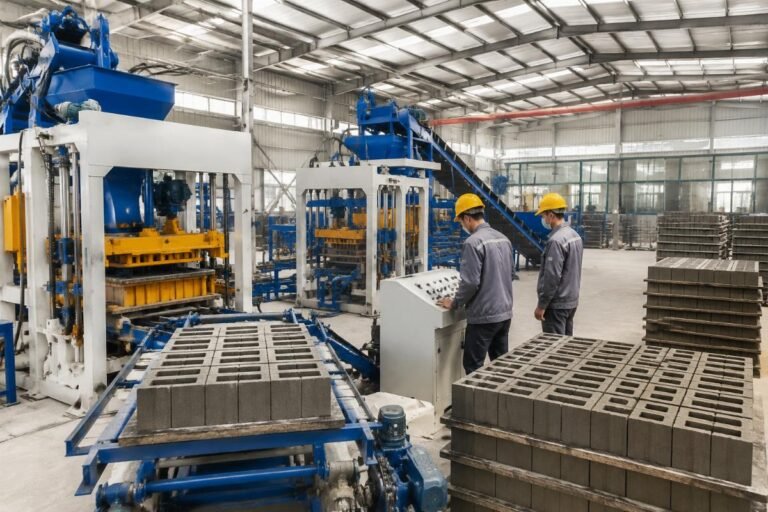
Sourcing a QT8-15 block machine for Kenya requires more than comparing output capacity on a spec sheet. Success depends on matching the hydraulic system to local voltage standards, securing correct PVOC documentation for Mombasa customs clearance, and optimizing the raw material mix for local aggregates. Without these three pillars, even the most advanced automatic brick machine will face costly downtime or rejection at the port.
I have seen too many investors focus solely on the price tag of an automatic brick machine supplier East Africa, only to realize later that the hidden costs of customs delays and operational instability far outweigh the initial savings. The following guide breaks down the critical technical and logistical steps needed to ensure your investment yields a fast return.
Why is the QT8-15 Model Suitable for Kenyan Market Scale?
The QT8-15 strikes a balance between high-volume output and manageable operational complexity for mid-sized plants.
For many Kenyan contractors, jumping straight to the largest available lines (such as QT12-15) often leads to underutilization due to insufficient raw material supply chains or market demand. The QT8-15 model typically produces standard hollow blocks, solid bricks, and paving stones at a rate that matches the growth trajectory of emerging construction hubs in Nairobi, Kisumu, and Mombasa. It offers enough automation to reduce labor dependency while remaining simple enough for local technicians to maintain without constant foreign support.
| Feature | QT8-15 Specification | Relevance to Kenyan Market |
|---|---|---|
| Output Capacity | Medium-High Volume | Matches mid-sized housing projects |
| Automation Level | Fully Automatic PLC | Reduces labor costs significantly |
| Mold Flexibility | Interchangeable | Produces blocks, pavers, and curbstones |
| Power Requirement | Standard Industrial | Compatible with local grid upgrades |
| Footprint | Moderate | Fits typical industrial plots in peri-urban areas |
[NEED_CITE: Typical output capacity ranges for QT8-15 models per industry standards]
A client in Nakuru initially considered a larger line but found that their daily sales volume could not justify the higher electricity and maintenance costs. Switching to a QT8-15 block machine for Kenya allowed them to scale production gradually. They started with single-shift operations and expanded to double shifts as their distributor network grew. This flexibility is crucial in markets where demand can fluctuate with seasonal construction cycles.
What Technical Specs Must Match Local Conditions?
Voltage stability and hydraulic pressure tolerance are more critical than nominal cycle speed.
Kenya’s power grid, while improving, still experiences fluctuations that can damage sensitive electronic components in fully automatic machines. Many buyers overlook the need for voltage stabilizers when purchasing from overseas suppliers. A standard QT8-15 block machine for Kenya must be equipped with a robust electrical control system that can handle minor voltage dips without tripping the entire production line.
Furthermore, the hydraulic system must be calibrated for the specific type of cement and aggregates available locally. Kenyan river sand often has different moisture content and particle size distribution compared to manufactured sand used in other regions. If the machine’s vibration frequency and pressure are not adjusted accordingly, the resulting blocks may lack the required compressive strength.
| Technical Parameter | Standard Requirement | Local Adaptation Needed |
|---|---|---|
| Voltage | 380V/50Hz | Check for 415V compatibility and stabilizer need |
| Hydraulic Pressure | High Pressure | Adjust for local aggregate density |
| Control System | PLC Based | Ensure surge protection is included |
| Mold Material | High-Strength Steel | Verify wear resistance for abrasive sand |
[NEED_CITE: Kenya Bureau of Standards requirements for electrical equipment imports]
I recall a project in Thika where the client faced frequent downtime because the PLC board kept failing during peak hours. The issue was not the machine quality but the lack of a proper voltage stabilizer. Once they installed a dedicated stabilizer, the QT8-15 block machine for Kenya ran smoothly for months without interruption. This highlights the importance of verifying electrical compatibility before shipment.
How to Navigate Mombasa Port Clearance and PVOC?
Pre-export verification is critical; ensure all documents match KEBS requirements to avoid delays.
The most common pitfall for importers is failing to secure the Certificate of Conformity (COC) under the Pre-Export Verification of Conformity (PVOC) program. Without this document, goods cannot clear customs at Mombasa port, leading to substantial storage fees and potential demurrage charges. An experienced automatic brick machine supplier East Africa will handle this documentation proactively, ensuring that the machine’s specifications align with the declared values in the shipping documents.
The process involves several steps: applying for the COC before shipment, undergoing inspection by an authorized agent in the country of origin, and ensuring that the bill of lading and commercial invoice match the physical goods exactly. Any discrepancy, no matter how minor, can result in the shipment being held for further inspection.
| Document | Purpose | Common Issue |
|---|---|---|
| Certificate of Conformity (COC) | Proof of compliance with KEBS standards | Missing or incorrect HS code |
| Commercial Invoice | Value declaration for duty calculation | Mismatch with actual goods |
| Bill of Lading | Title of goods and shipping details | Inconsistent description |
| Packing List | Detailed inventory of items | Missing spare parts listing |
[NEED_CITE: Kenya Revenue Authority guidelines on PVOC certification for machinery]
A shipment I managed for a client in Eldoret was delayed for weeks because the COC seal was missing from the packaging. The storage fees incurred were significant, eating into the project’s initial budget. Since then, I have ensured that every QT8-15 block machine for Kenya we ship includes a comprehensive documentation package, verified multiple times before loading. This attention to detail ensures seamless delivery and immediate installation support.
What Are the Hidden Costs in Installation and Operation?
Factor in foundation work, operator training, and initial spare parts inventory.
Many buyers focus exclusively on the machine price, ignoring the ancillary costs that contribute to the total cost of ownership. Proper foundation work is essential for the stability of a QT8-15 block machine for Kenya. Without a solid concrete base, the intense vibration during operation can cause misalignment, leading to premature wear and poor block quality.
Operator training is another critical component. Even with automated systems, skilled operators are needed to monitor the mixing process, adjust water-cement ratios, and perform routine maintenance. Investing in comprehensive training during the installation phase pays off in reduced downtime and higher product quality. Additionally, maintaining an initial inventory of spare parts, such as seals, filters, and wear plates, prevents long waits for replacements.
| Cost Component | Description | Impact on ROI |
|---|---|---|
| Foundation Work | Concrete base preparation | Prevents misalignment and wear |
| Operator Training | Skill development for staff | Improves efficiency and quality |
| Spare Parts Inventory | Initial stock of consumables | Reduces downtime during repairs |
| Raw Material Sourcing | Local aggregate and cement supply | Affects production consistency |
[NEED_CITE: Industry best practices for concrete block plant installation]
A contractor in Mombasa underestimated the cost of foundation work and used a substandard base. Within months, the machine developed structural issues, requiring expensive repairs. In contrast, another client who invested in proper foundation and training saw their QT8-15 block machine for Kenya operate at peak efficiency from day one. These examples illustrate that cutting corners on installation and training can lead to higher long-term costs.
Conclusion
Success with a QT8-15 line depends on holistic planning, not just hardware acquisition.
Selecting a QT8-15 block machine for Kenya is a strategic decision that requires careful consideration of technical specs, customs compliance, and operational readiness. By addressing voltage stability, securing proper PVOC documentation, and investing in training and infrastructure, buyers can avoid common pitfalls and achieve a fast return on investment. The right partner provides not just a machine, but a complete solution tailored to the local context.
Leave a Reply