
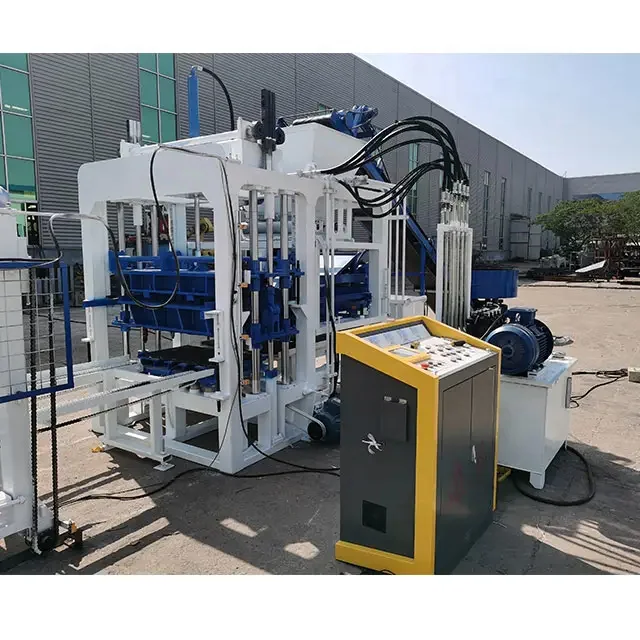
Description
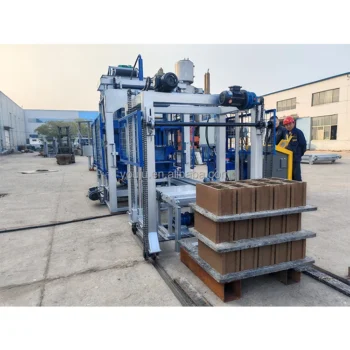
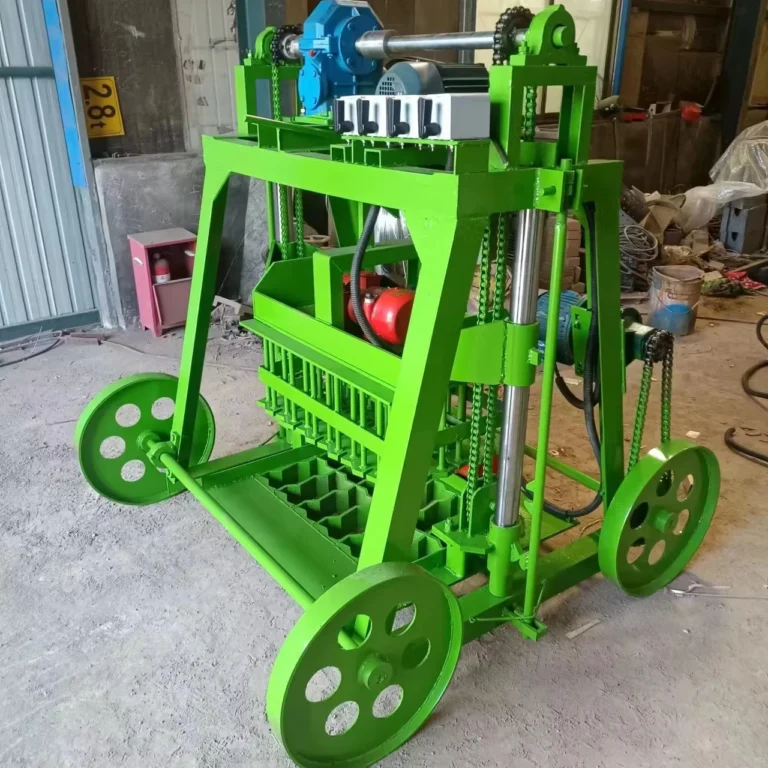
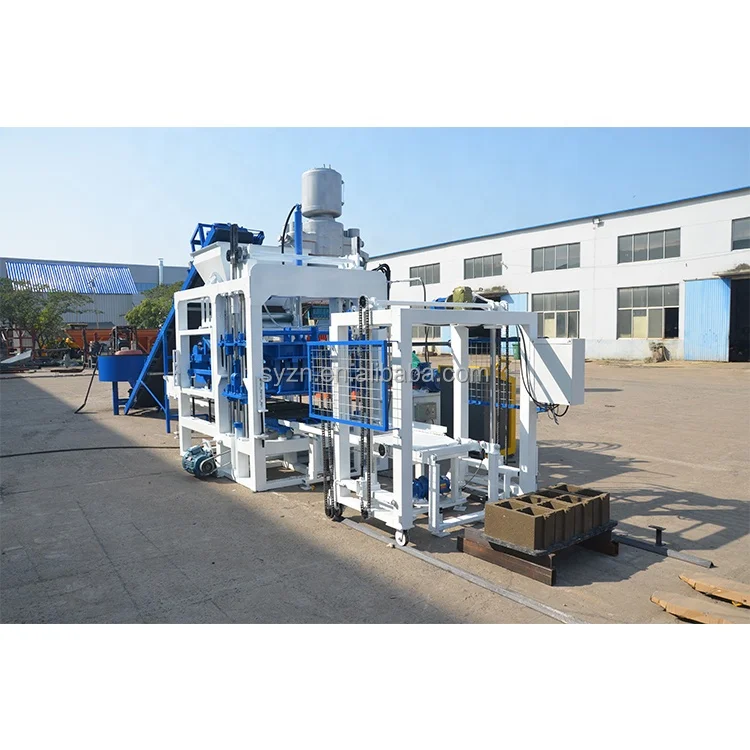
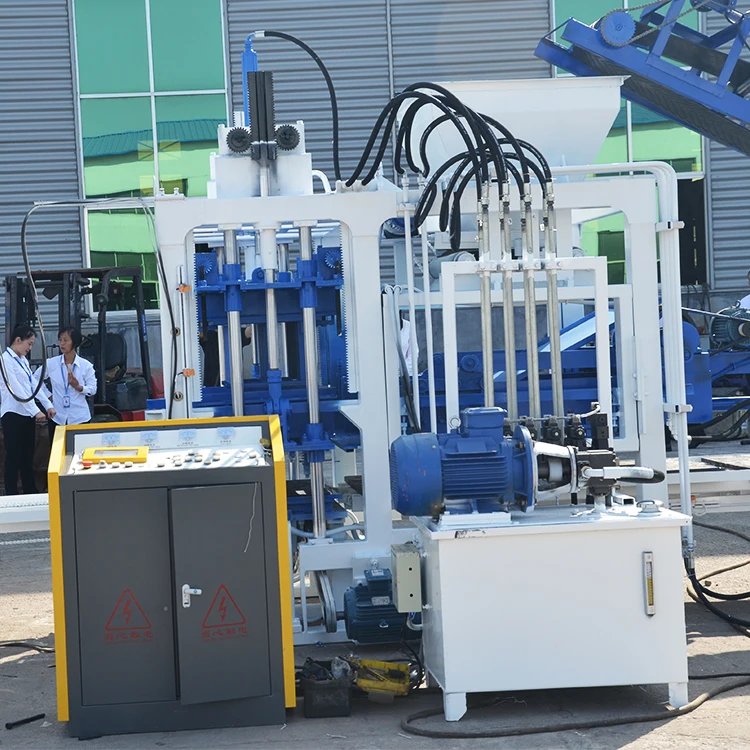
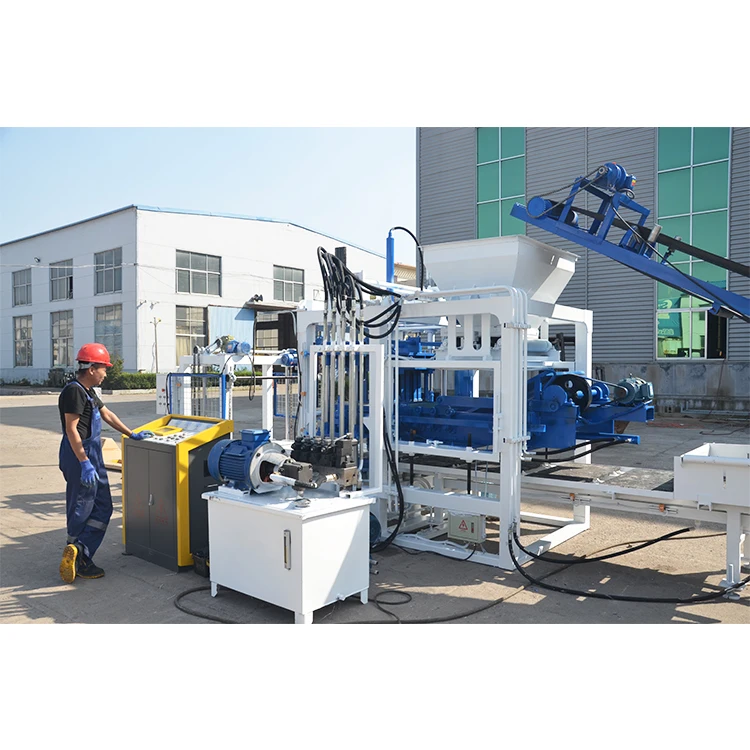
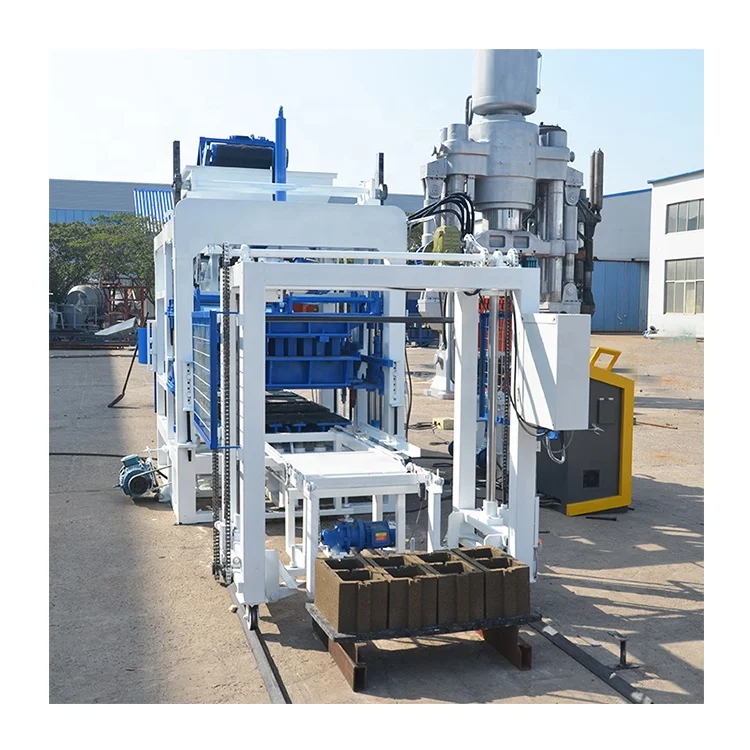
Block machinery as a single focus — every QT4-18 component from hydraulic station to pallet size is specified as one matched system before dispatch, so your container arrives ready to install rather than waiting on missing parts.
Technical Specifications
| Parameter | Value |
|---|---|
| Model | QT4-18 |
| Product Type | Hydraulic Concrete Block Making Machine |
| Overall Dimensions | 3900×1600×2300 mm |
| Molding Cycle | 15-25s |
| Vibration Force | 40-50 kN |
| Rated Power | 24 kW |
| Mixer Model | JQ350 |
| Pallet Size | 850×550×25 mm |
| Net Weight | 3T |
| Hydraulic System | Hydraulic station equipped |
| Automation Level | Semi-automatic |
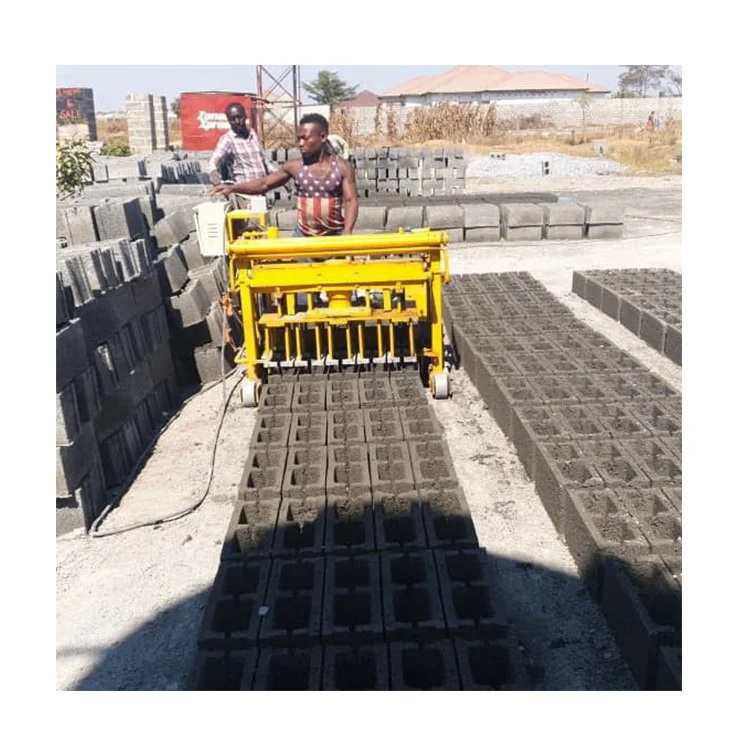
| Output (Hollow 400×200×200mm) | 9600-13440 pcs/8hr at 15-20s cycle, 4 pcs/mould |
| Output (Hollow 400×150×200mm) | 14400-19200 pcs/8hr at 15-20s cycle |
| Output (Solid 240×115×53mm) | 16200-19440 pcs/8hr at 15-20s cycle |
| Voltage & Frequency | Basis not stated in source — confirm before production |
| Control System | Basis not stated in source — confirm PLC brand and language |
Application Suitability
| Application | Material or Output |
|---|---|
| Hollow block production for building walls | Crushed stones, sand, cement, fly ash |
| Solid brick manufacturing for load-bearing structures | Crushed stones, sand, cement, dust |
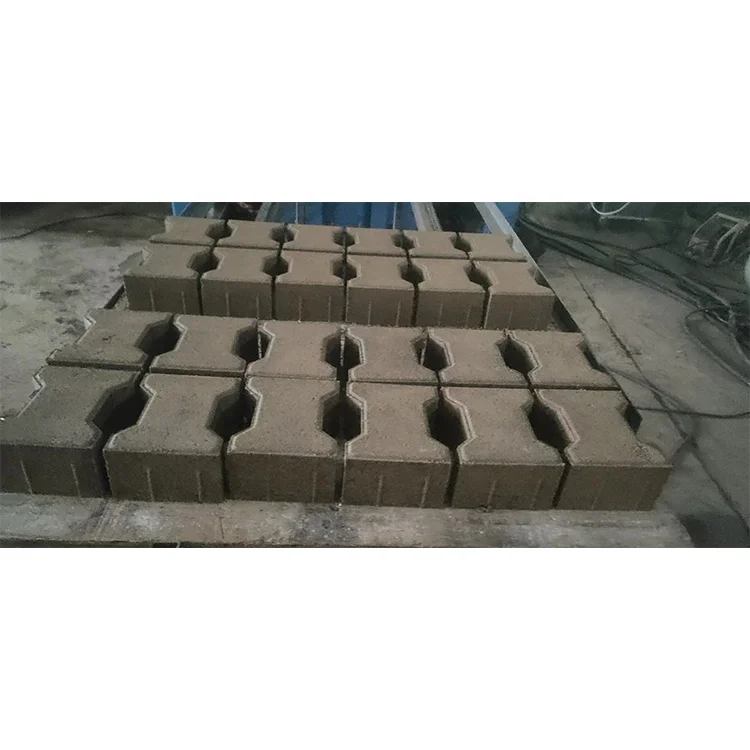
| Paver production for walkways and yards | Crushed stones, sand, cement |
| Curbstone forming for road and site edging | Crushed stones, sand, cement |
Why Voltage Confirmation Must Come Before Container Loading
A misaligned voltage specification can destroy the main motor on the first day of operation.
The QT4-18 stationary block machine in stock ships with a rated power of 24 kW driving both the hydraulic station and vibration system. When frequency and voltage do not match the destination grid, the motor draws excess current until insulation fails. I have seen a fully configured hydraulic block press sit idle for three weeks while the buyer sourced a step-down transformer locally. That delay is entirely avoidable when the electrical spec is locked before the machine leaves the factory floor [NEED_CITE: voltage and frequency standards by export market]. A fast delivery block machine only delivers on schedule if the electrical configuration matches the site from the start.
Dispatch Lead Time and Container Planning
Buyers working against project deadlines need a clear picture of when the QT4-18 leaves the factory and when it reaches the destination port. This stationary block machine in stock packs within a standard 20GP container given its 3900×1600×2300 mm footprint and 3T net weight. The machine is dismantled at specific joints for loading, and the dismantling method is documented with photographs before the container doors close. Dispatch lead time is quoted at the inquiry stage so you can align foundation work and operator availability with the arrival estimate.
Pallet Compatibility and Curing Area Fit
The 850×550×25 mm pallet size on the QT4-18 determines how blocks move from the press through curing and into storage. If your existing curing racks or forklift tines are sized for a different pallet dimension, you face double-handling from day one. Confirming pallet material — whether bamboo, PVC, or steel — against your local climate and curing duration prevents premature warping or cracking [NEED_CITE: pallet material durability in tropical curing environments]. A fast delivery block machine that arrives with mismatched pallets still leaves you stacking output by hand.
How Vibration Force and Hydraulic Pressure Shape Block Density
The QT4-18 delivers 40-50 kN of vibration force combined with hydraulic station pressure during each 15-25s molding cycle. Vibration compacts the aggregate particles while hydraulic pressure holds the mould cavity closed under that compaction. If vibration force is too low relative to the mix design, hollow blocks exit the press with inconsistent wall density and fail compressive strength tests. If hydraulic pressure is insufficient, the mould shifts during vibration and produces blocks with uneven dimensions. The JQ350 mixer upstream must deliver a uniform blend of crushed stones, sand, cement, and fly ash so that each mould cavity receives identical material. Pallet size at 850×550×25 mm also governs how many blocks cure per rack position, directly linking press output to your curing area capacity.
The Hidden Cost of Skipping the Packing Photo Set
When a stationary block machine in stock ships without a complete photo record of the dismantling and container loading sequence, the buyer faces guesswork on site. Bolts removed for container fit may not be obvious without a reference image, and reassembly takes longer than planned. Hydraulic hoses disconnected for transport need clear labeling to avoid cross-connection during commissioning. Missing these documentation steps turns a fast delivery block machine into a delayed startup, with operators standing around while the installation team traces pipe routes from memory [NEED_CITE: common commissioning delays from undocumented dismantling].
Why Procurement Through This Channel Works
Block machinery is the single focus here, meaning the QT4-18 machine, moulds, pallets, and handling equipment are specified as one matched system rather than assembled from separate suppliers. The configuration is set against your actual mix design and local aggregate, not a catalogue default. Voltage, frequency, and PLC display language are confirmed line by line before production starts. Each unit is photographed during dismantling and container loading so reassembly is straightforward. Standard moulds for hollow, solid, paver, and curbstone formats ship with the machine, and custom mould drawings are available when your market demands a non-standard format.
Documentation & Verification
- Factory test record on your selected hollow and solid block formats before dispatch
- Machine specification sheet confirming QT4-18 hydraulic and vibration ratings
- Voltage and control language confirmation document signed before production
- Packing photographs showing dismantling points and container loading sequence
- Pallet specification sheet matching 850×550×25 mm size and chosen material
- Customs documentation support for destination port clearance
Installation, Commissioning & Support
- Foundation pad leveled to 3900×1600 mm footprint with anchor bolt template provided
- Dedicated electrical circuit matching confirmed voltage and 24 kW rated power requirement
- Dismantling reference photos guide reassembly of hydraulic station and vibration assembly
- Mould installation and first cycle test run with your local aggregate and mix ratio
- Operator training covers molding cycle adjustment within the 15-25s range
- Wear parts list for hydraulic seals and vibration components included at handover
What to Share When Requesting a Dispatch Quote
Provide your target block format — hollow, solid, paver, or curbstone — along with the daily output your project requires. Confirm the local voltage and frequency at your site, plus the preferred language for the control panel display. Let us know whether you already have curing racks and forklifts so the 850×550×25 mm pallet size can be verified against your existing equipment.
Frequently Asked Questions
Q: Is the QT4-18 in stock and what is the typical dispatch lead time?
A: Stock status and lead time are confirmed at the inquiry stage based on current inventory and your selected mould configuration. The QT4-18 is packed into a standard 20GP container, and dispatch timing accounts for dismantling, packing, and customs documentation preparation before the container is sealed.
Q: How is the QT4-18 loaded into a container and reassembled on site?
A: The machine is dismantled at designated joints to fit the 20GP container given its 3900×1600×2300 mm dimensions. Each dismantling step is photographed and labeled so the reassembly team on site can follow the sequence without guessing bolt positions or hydraulic hose connections.
Q: What arrival estimate should I plan for once the container ships?
A: Arrival timing depends on the destination port and shipping line schedule. We quote the estimated arrival window at the order stage so you can prepare the foundation, electrical circuit, and operator availability to match the machine delivery date.
Q: Are pallets and moulds included or shipped separately?
A: The 850×550×25 mm pallets and selected moulds for your block formats ship in the same container as the QT4-18. Pallet quantity and mould format list are confirmed during the quotation stage so nothing arrives missing from the production line.
Q: Can I order standard moulds now and add more formats later?
A: Standard moulds for hollow, solid, paver, and curbstone formats are available for immediate inclusion. Additional custom mould designs can be ordered later to match new market demand, and each new mould is built to fit the QT4-18 press without modification.