


Description
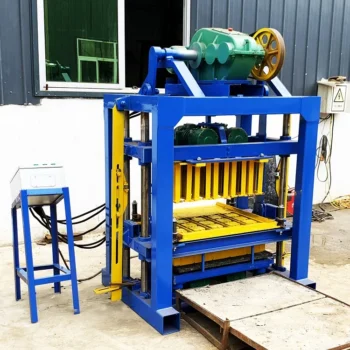
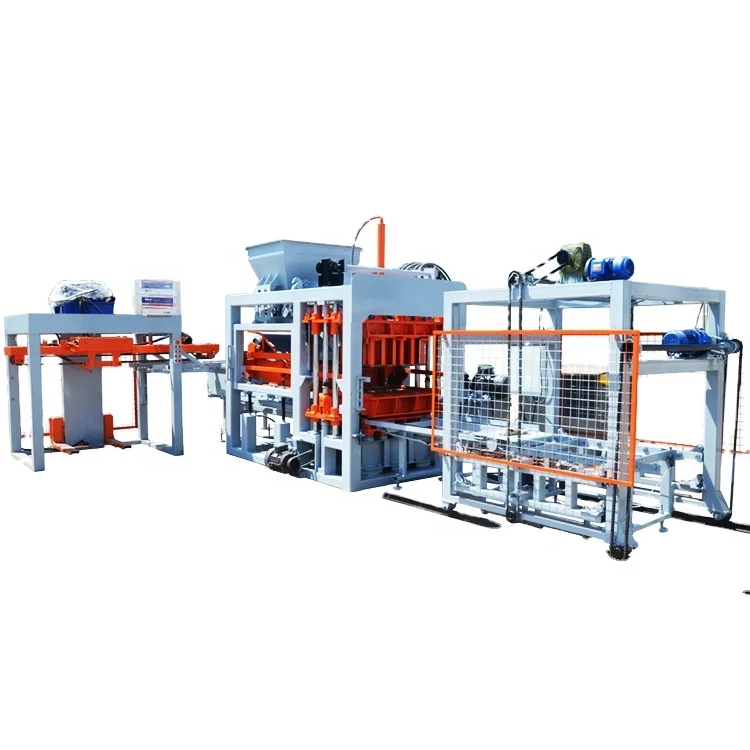
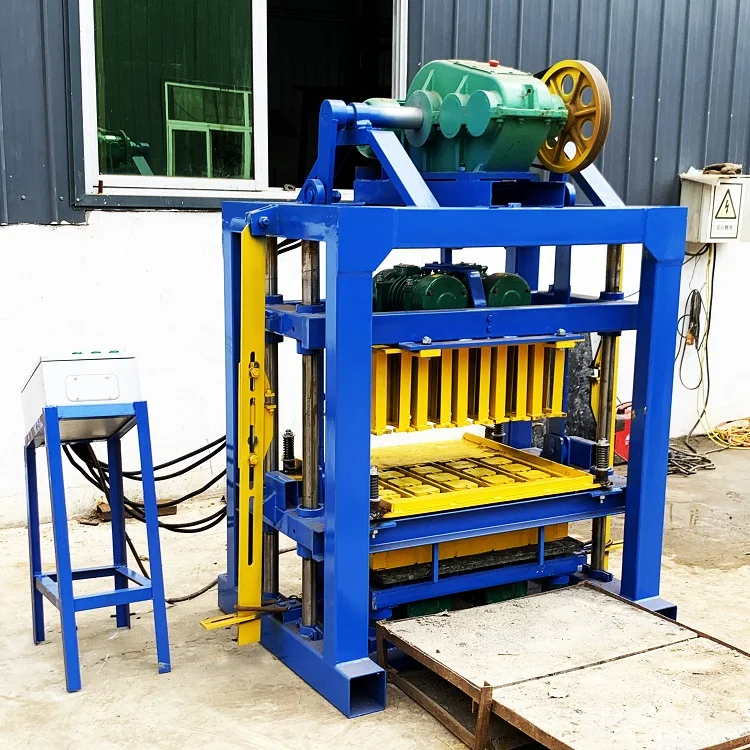
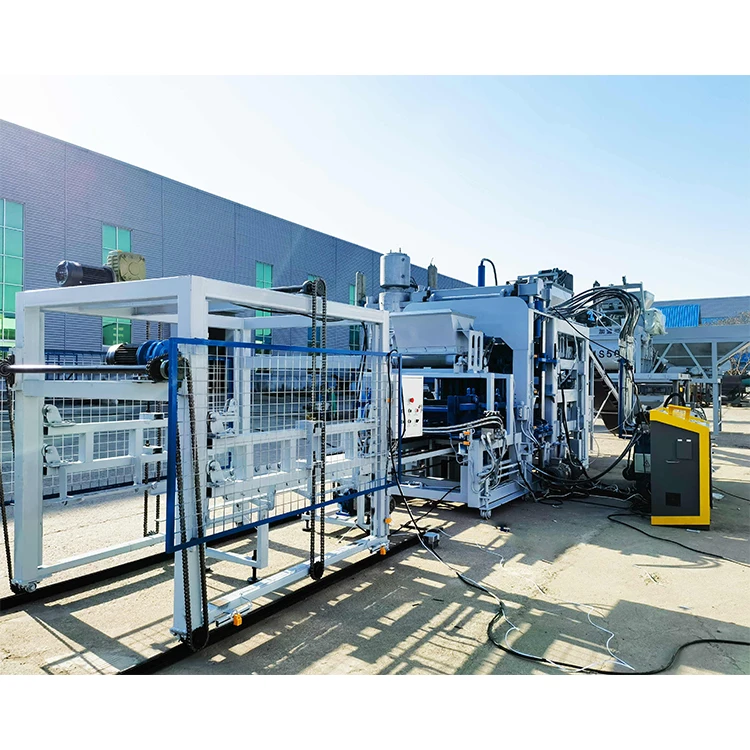
Stocked QT8-15 ready for container loading — Pallet size, total mass and dismantling sequence confirmed at inquiry so your freight forwarder gets exact dimensions on day one.
Technical Specifications
| Parameter | Value |
|---|---|
| Model | QT8-15 |
| Product Type | Automatic Hydraulic Concrete Block Making Machine |
| Overall Dimensions (L×W×H) | 8300×1860×3000 mm |
| Pallet Size | 950×900 mm |
| Rated Pressure | 21 MPa |
| Vibration Force | 60 kN |
| Vibration Frequency | 2800~4500 r/min |
| Main Vibration Form | Platform Vibration |
| Molding Cycle | 15-25 s |
| Overall Power | 55.5 kW |
| Total Mass | 9 T |
| Demolding Method | Hydraulic |
| General Water Consumption | 12 T/Day |
| Factory Area | 600 m² |
| Control System | PLC with human-machine interface dialogue system |
| Automation Level | Fully automatic (material feeding and block stacking included) |
| Raw Material Compatibility | Crushed stone, sand, cement, fly ash, gravel, slag |
| Productivity Claim | 20% higher than similar products (basis not stated in source — confirm block format / material / thickness) |
Application Suitability
| Application | Material or Output |
|---|---|
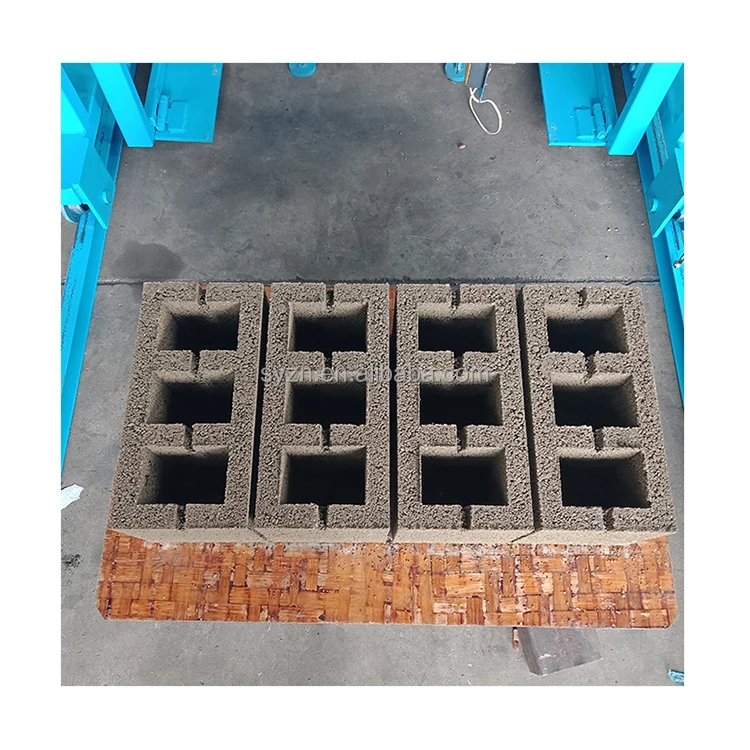
| Hollow and solid block production for housing projects | Crushed stone, sand, cement blends |
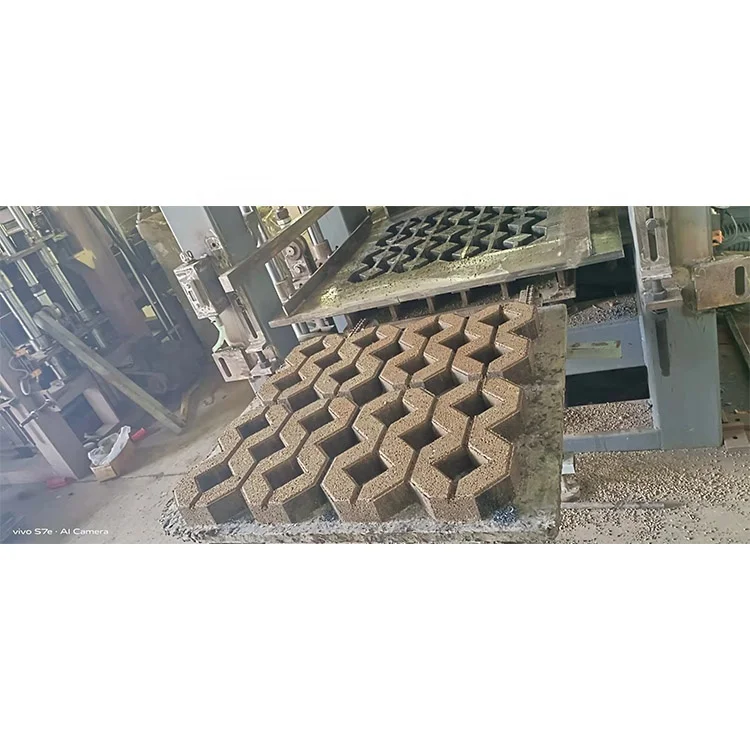
| Paving block manufacturing for roads and walkways | Gravel, sand, cement with color pigment option |
| Interlocking brick runs for retaining walls | Fly ash, sand, cement mixes |
| Curbstone and kerb production for municipal works | Coarse aggregate and cement at higher pressure settings |
| On-site block supply for remote development sites | Locally sourced stone dust, sand, cement |
Why the Arrival Date Matters More Than the Cycle Time
A fast molding cycle means nothing if the QT8-15 block machine in stock is still weeks from the port.
Buyers working to a housing handover or a road contract penalty clause rarely have the luxury of a relaxed production schedule. When the machine is not already built, every day of fabrication lead pushes the entire site program back — crews standing idle, curing racks assembled but empty, and a project manager fielding calls from the client. [NEED_CITE: typical construction penalty clauses for delayed milestones in Southeast Asian development contracts]
The practical question at inquiry stage is not just whether a QT8-15 block machine in stock exists, but which exact configuration sits ready, whether standard moulds ship with it, and how quickly container loading can happen once the order is confirmed.
Dispatch Readiness and What It Actually Covers
Having the QT8-15 block machine in stock means the main press frame, hydraulic station and PLC cabinet are assembled and factory-tested before your order arrives. The dispatch timeline then depends on which moulds you need — standard hollow block and paver moulds typically ship alongside the machine, while custom format moulds require a separate lead time. The container loading plan is prepared around the 9 T total mass and the 8300 mm frame length, with components dismantled in a sequence that allows straightforward unloading at destination.
From Factory Floor to Your Curing Yard
The gap between shipment and first block is where most delays hide. Voltage confirmation, panel language settings and the curing area layout all need to be settled before the QT8-15 block machine in stock leaves the factory. A machine wired for a frequency that does not match the local grid sits silent while an electrician sources a transformer — a situation I have personally resolved at midnight on a job site. Locking in these details at the quotation stage keeps the arrival estimate reliable. [NEED_CITE: voltage and frequency standards by export market]
Reading the Specs That Shape Your Site Layout
The 950×900 mm pallet size determines more than block output per cycle — it dictates the curing rack dimensions, the forklift tine width and the spacing between curing lanes in your 600 m² factory area. Buyers who choose a pallet size without checking their existing handling equipment end up replacing forklifts or rebuilding curing racks.
The 60 kN vibration force paired with 21 MPa hydraulic pressure governs block density and compressive strength. If your local aggregate is coarse crushed stone rather than fine sand, the vibration and pressure settings must be adjusted during commissioning to prevent surface spalling or weak cores. The platform vibration system delivers energy uniformly across the pallet area, which matters when producing thinner pavers alongside taller hollow blocks.
The 15-25 s molding cycle varies with block height and mix consistency. A thinner paver reaches full compaction faster than a 200 mm hollow block, so quoting a single cycle time across all formats would misrepresent actual daily throughput.
The Real Cost of Skipping Pre-Shipment Checks
Skipping container loading confirmation and voltage matching before dispatch creates a cascade of delays. The machine arrives, the electrician discovers a three-phase mismatch, and production start moves back by the time it takes to procure and install a transformer. Meanwhile the contractor’s block supply runs out and masons switch to a competitor’s product. These are not hypothetical — they are recurring patterns on sites where pre-shipment verification was treated as optional. [NEED_CITE: CE machinery directive requirements for industrial equipment]
What Sets This Dispatch Apart
Machine, mould, pallet and handling equipment are specified as a matched set from a single supplier, so the 950×900 mm pallets align with the mould cavities and the stacking system without adapter plates. The dispatch package includes a dismantling sequence that matches the container loading plan, so the heaviest components come out first and do not block lighter items behind them. Voltage, frequency and PLC display language are confirmed in writing before production, eliminating the most common commissioning delay. Packing photographs document the machine condition before the container doors close, giving both buyer and freight insurer a clear baseline. Customs documentation is prepared to match the destination port requirements, reducing clearance hold-ups that have nothing to do with the machine itself.
Documentation & Verification
- Factory test record showing the QT8-15 running your specified block format before dispatch
- Container loading plan with component weights and dismantling sequence for your freight forwarder
- Voltage, frequency and PLC language confirmation sheet signed before shipment
- Packing photographs of the QT8-15 and moulds taken at the factory for receiving verification
- Customs documentation package matched to your destination port clearance requirements
Installation, Commissioning & Support
- Foundation layout based on the 8300×1860 mm footprint and 9 T operating mass for your 600 m² site
- Dedicated power circuit sized for the 55.5 kW total draw at your confirmed local voltage and frequency
- Dismantled component list with reassembly sequence so your crew unloads in the correct order
- First-run parameter tuning of the 60 kN vibration and 21 MPa pressure to match your local aggregate mix
- Operator training on the PLC interface in your confirmed display language covering mould change and daily checks
- Wear parts and mould list with part numbers for reorder when first replacement is due
What to Include in Your Inquiry
Provide the block format you need to produce and your target daily output so the correct moulds ship with the QT8-15. Confirm your local three-phase voltage, frequency and preferred PLC display language to avoid on-site electrical delays. Share your available curing area dimensions and any existing forklift or pallet handling equipment so the 950×900 mm pallet specification is validated against your layout.
Frequently Asked Questions
Q: Which QT8-15 configurations are currently available for immediate dispatch?
A: The standard fully automatic configuration with PLC control, hydraulic demolding and platform vibration is available as a stocked unit. Standard hollow block and paver moulds can ship alongside the machine. Custom format moulds or specific pallet material upgrades require an additional production window, which we quote at the inquiry stage based on your format drawings.
Q: How is container loading arranged and what is the typical dispatch lead time?
A: The 9 T machine is dismantled into components that fit standard container dimensions, with the 8300 mm frame loaded first for efficient unloading. A stocked QT8-15 can be prepared for container loading within a short window after order confirmation. We provide the loading plan and packing photographs before the container doors close so your freight forwarder has everything needed.
Q: What arrival estimate can I expect from order to port of destination?
A: The arrival estimate depends on your destination port and the shipping route from the loading port in China. Sea freight transit times vary by region. We provide a quoted arrival window at the order stage based on current sailing schedules, so you can plan your site preparation and crew mobilization around a known date rather than guessing.
Q: Which standard moulds ship with the machine and which need separate ordering?
A: Common hollow block and solid block moulds matching the 950×900 mm pallet size are available as standard items that ship with the machine. Interlocking brick, paver and curbstone moulds may be stocked in popular formats. Moulds for non-standard dimensions or buyer-specific drawings require a custom production run, quoted separately with its own lead time.
Q: What customs documentation is provided to support clearance?
A: We prepare the commercial invoice, packing list, bill of lading and certificate of origin matched to your destination country requirements. Where applicable, a CE declaration is included. All documents are reviewed against your local import regulations before shipment to minimize the risk of port clearance delays that hold up delivery to your site.