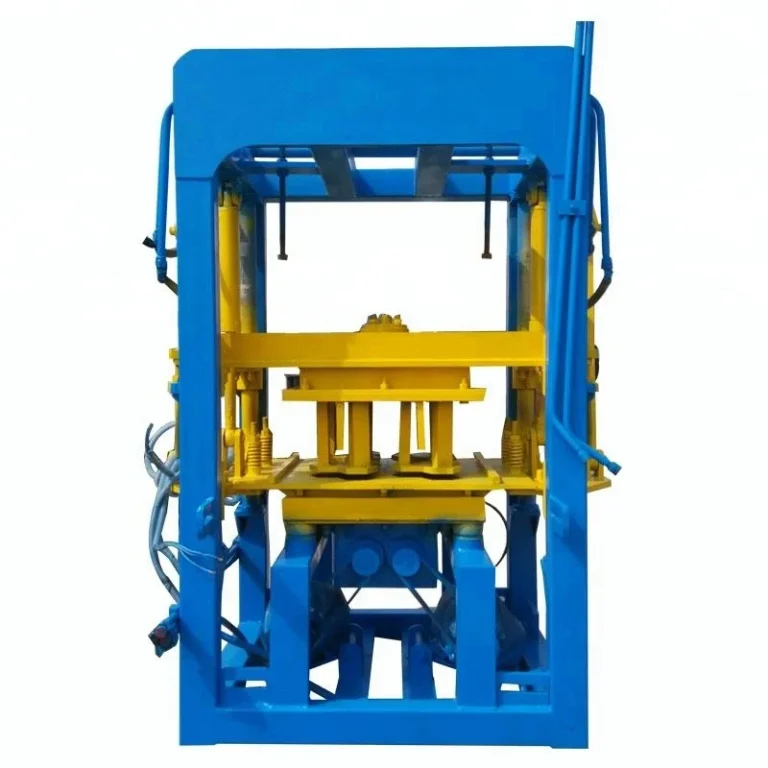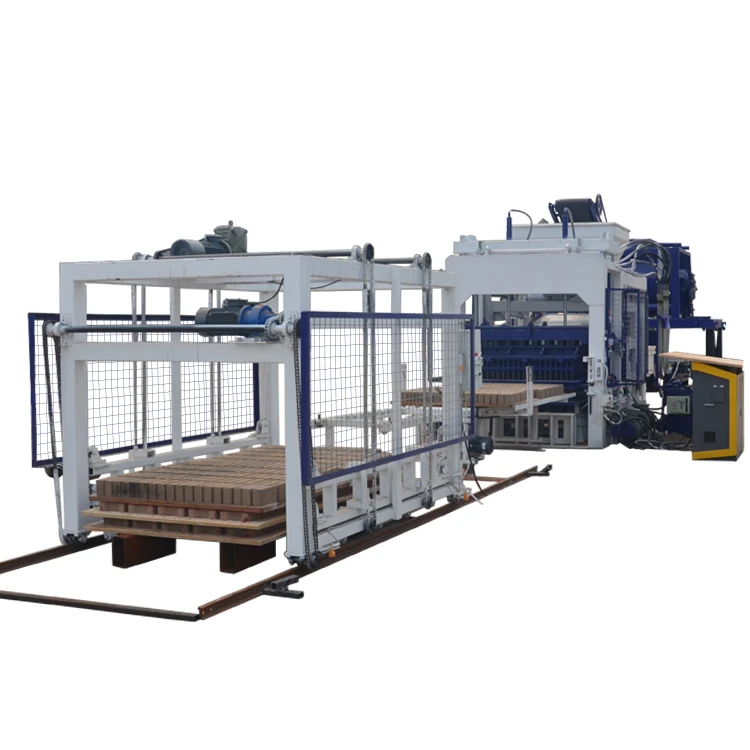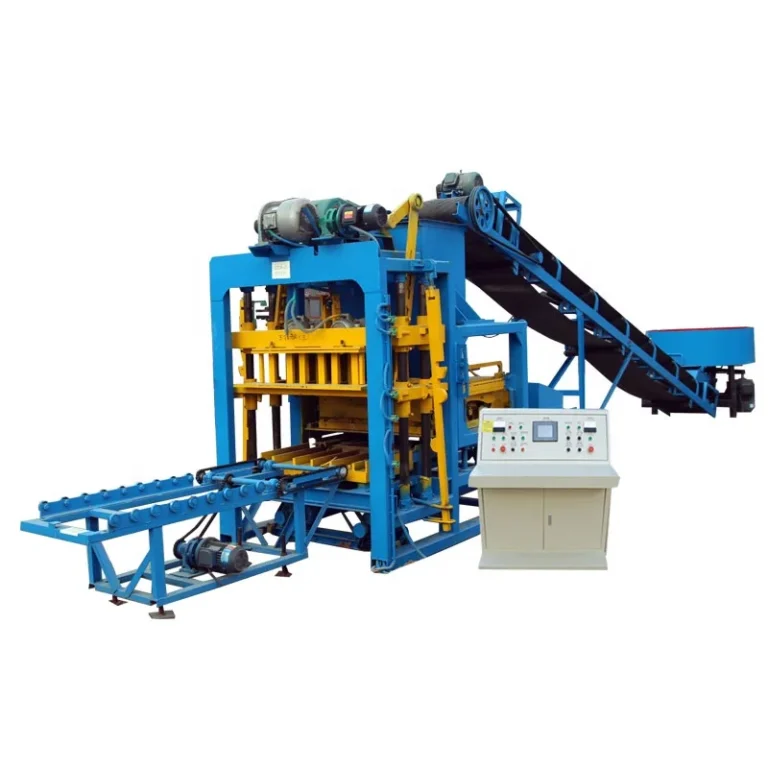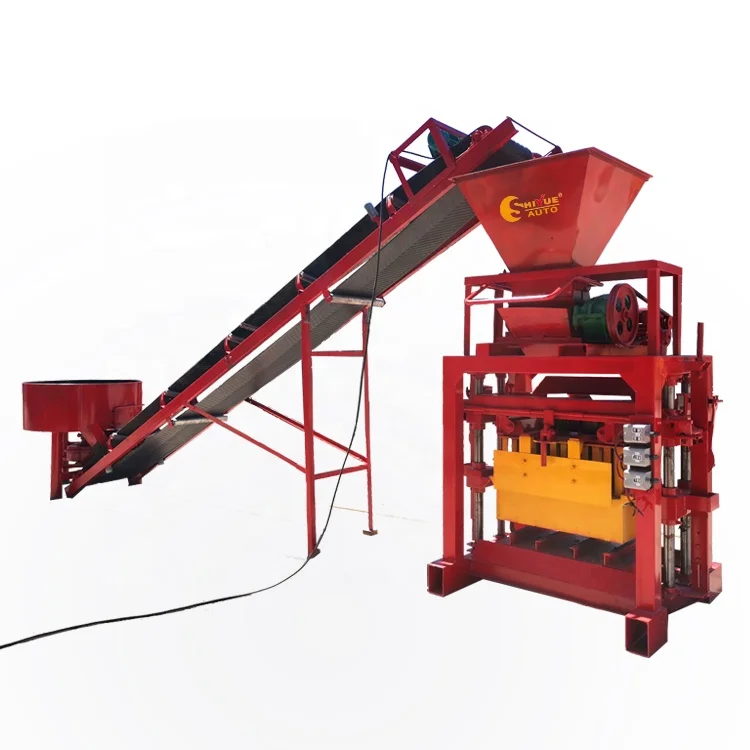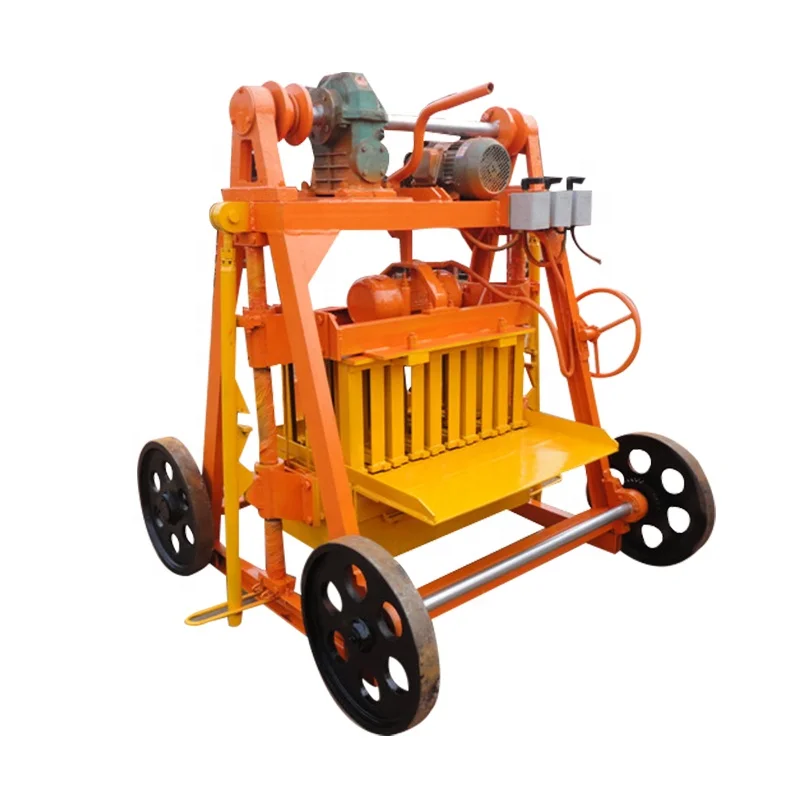


Description
Stock-Ready Dispatch — QMJ4-45 units staged for immediate container loading, with voltage, frequency, and plug specification confirmed before the crate closes.
Technical Specifications
| Parameter | Value |
|---|---|
| Model | QMJ4-45 |
| Product Type | Mobile Egg Laying Block Making Machine |
| Molding Method | Twice-vibration of molding core |
| Molding Capacity | 4 pcs/mould (400×200×200mm hollow block basis) |
| Vibration Frequency | 2400 r/m |
| Productivity (400×200×200mm hollow block) | 3000 pcs/day (8 hours, 4 pcs/mould, 40–45s cycle) |
| Productivity (400×150×200mm hollow block) | 3500 pcs/day (8 hours, 5 pcs/mould, 40–45s cycle) |
| Productivity (400×120×200mm hollow block) | 4500 pcs/day (8 hours, 6 pcs/mould, 40–45s cycle) |
| Molding Cycle | 40–45 s |
| Vibration Method | Mold vibration |
| Demold Method | Manual |
| Turning Method | Manual |
| Total Power | 6 kW |
| Power Source | Diesel / Petrol engine |
| Pallet Requirement | Reduced consumption pallets (specification to be confirmed per site) |
| Block Formats Supported | Hollow block, multicellular brick, paving brick, standard brick |
| Automation Level | Manual / egg-laying (mobile, no fixed plant required) |
| Warranty | 1 year (whole machine) |
| Certification | CE |
Application Suitability
| Application | Material or Output |
|---|---|
| On-site housing project block production | Hollow blocks from crushed stone, sand, and cement |
| Small-scale cement product workshop | Paving bricks and standard bricks from local aggregate |
| Remote construction site without grid power | Diesel-powered hollow block production at project location |
| Contractor self-supply for development projects | Multicellular bricks and hollow blocks produced beside the build zone |
Why the Voltage Conversation Must Happen Before the Crate Nails Down
A mobile egg laying block machine in stock ships fast — but only arrives useful if electrical specs match the destination.
I have watched a QMJ4-45 sit idle on a Middle Eastern job site for three weeks because the local grid voltage did not match the motor winding. The transformer had to be sourced locally, and the whole block-laying schedule slipped. Since then, every dispatch confirmation on my desk includes a voltage, frequency, and plug-type line that the buyer signs off before the machine leaves the yard [NEED_CITE: voltage and frequency standards by export market].
The QMJ4-45 draws 6 kW total. On a diesel or petrol engine that is straightforward, but any electrically driven auxiliary — lighting, vibrator upgrade, or conveyor add-on — must match the site supply. Confirming this at the inquiry stage is the difference between a machine that produces on day one and one that waits for an adapter.
Stock Positioning and Dispatch Lead Time
When a buyer needs a mobile egg laying block machine in stock, the first question is not whether the model exists but whether the exact configuration — engine type, mould set, and voltage — is staged for dispatch. The QMJ4-45 is held in standard configurations with the most requested mould formats: 400×200×200mm hollow, 400×150×200mm hollow, and paving brick. These units can be dismantled for container loading within a typical multi-day window once paperwork clears.
Engine-side options (diesel or petrol) are stocked separately from the press frame. Matching the engine to the buyer’s fuel availability on site is confirmed at the order stage so the correct unit is pulled from the line, not substituted at the last moment.
Container Loading and Arrival Estimate
Dismantling for shipment is planned around the QMJ4-45’s manual demold and turning design — there is no hydraulic stacker or conveyor to complicate the crate. The press frame, engine, and mould set are broken down into flat-pack sections that fit standard 20-foot container dimensions. Each section is photographed before the crate closes, giving the buyer a visual packing record [NEED_CITE: container loading standards for heavy industrial machinery].
Arrival estimates are quoted at the quotation stage based on port of origin and destination, so the buyer can work backward from a project deadline rather than guessing at transit weeks.
How Vibration, Cycle Time, and Mould Count Shape Daily Output
The twice-vibration molding core runs at 2400 r/m, delivering two compaction pulses per cycle instead of one. On cement-aggregate mixes, this produces denser block walls and more uniform strength across a batch. The 40–45 second molding cycle is measured on the 400×200×200mm hollow block format at 4 pieces per mould; switching to the 400×120×200mm format at 6 pieces per mould raises theoretical daily output because more units drop per cycle, not because the cycle itself is faster.
Total power of 6 kW is low enough for a diesel engine to cover without an oversized generator set, which matters when the machine operates away from grid infrastructure. Manual demold and manual turning keep the electrical load simple — no hydraulic pumps running continuously — and reduce the spare-parts burden on remote sites. Pallet specification must still match the curing area the buyer has set aside; undersized pallets create bottlenecks at the stacking end even when the press itself keeps pace.
The Cost of Skipping the Configuration Checklist
A mobile block machine that arrives with the wrong mould format forces the buyer to either produce blocks the local market does not buy or wait weeks for a replacement mould. When the engine type does not match the fuel available on site, operators resort to improvised refueling arrangements that damage injectors [NEED_CITE: diesel engine maintenance risks from contaminated fuel].
Skipping the pallet-size conversation means the buyer’s existing forklift and curing racks may not accept the output, turning a machine-levelled production rate into a hand-stacking bottleneck. Each of these mismatches costs more in lost production days than the ten minutes it takes to confirm specifications at the order stage.
Why Buyers Source This Machine Through Our Dispatch Desk
Single-focus block machinery supply means the QMJ4-45 press, mould, and pallet are specified as one matched set rather than assembled from unrelated vendors. Configuration is set against the buyer’s actual aggregate and target block format, not a default catalogue line [NEED_CITE: aggregate variability effects on block strength].
Dispatch lead times are quoted with container-loading plans already drafted, so the buyer sees the shipment date alongside the machine price. Stock moulds cover the formats most commonly traded in the buyer’s region, and custom mould drawings are reviewed against the press’s mould-change envelope before production is scheduled. Factory test records and packing photographs accompany every unit, providing a paper trail that supports customs clearance and on-site acceptance.
Documentation & Verification
- Factory test record run on your target block format before dispatch
- CE declaration covering the QMJ4-45 machine and standard mould set
- Packing photographs showing each dismantled section inside the crate
- Voltage, frequency, and engine-type confirmation sheet signed at order stage
- Operation and maintenance manual in your preferred control language
Installation, Commissioning & Support
- Level compacted ground sufficient for egg-laying operation — no fixed foundation required
- Diesel or petrol engine matched to locally available fuel grade and altitude
- Mould set mounted and aligned on site with manual turning mechanism checked
- First production run supervised to confirm 40–45 s cycle on your mix design
- Spare vibration springs and mould wear plates included in the initial dispatch
- Operator training covers mix consistency, mould change, and daily greasing points
What We Need From Your Side to Move Fast
Send us the block formats your market actually trades, the daily volume you need to hit, and the fuel type available on your project site. Include your local voltage and frequency if any electrically driven auxiliaries are planned, and let us know which port the container should sail to so we can return an arrival estimate with the quotation.
Frequently Asked Questions
Q: Which QMJ4-45 configurations are currently in stock and ready to ship?
A: Standard stock covers the QMJ4-45 press frame with diesel or petrol engine options and mould sets for 400×200×200mm hollow, 400×150×200mm hollow, and paving brick formats. Non-standard moulds are produced to order. Confirm your preferred engine type and mould list so we can reserve the matching unit from the yard and quote a dispatch date.
Q: How long from order confirmation to container loading?
A: Once the configuration sheet — engine type, mould set, and voltage specification — is signed off, a stocked mobile egg laying block machine in stock can be dismantled and staged for container loading within a typical multi-day window. We provide a loading plan with crate dimensions at the quotation stage so your freight forwarder can book the vessel in parallel.
Q: Is the diesel-powered version stocked, or does it require a production slot?
A: Diesel and petrol engine versions are both maintained in stock for the QMJ4-45. The engine is mounted and tested at our facility before the machine is broken down for shipment. If your project site runs on a less common fuel grade, let us know at inquiry so we can confirm compatibility before dispatch.
Q: How is the machine dismantled for shipment and reassembled on arrival?
A: The QMJ4-45 is designed around manual demold and turning, so there is no hydraulic system to drain or recalibrate. The press frame, engine, and mould set separate into flat-pack sections for standard container loading. Reassembly on site involves bolting the frame sections together, mounting the engine, and aligning the mould — tasks a trained crew completes with basic hand tools.
Q: What standard moulds are in stock, and how long do custom moulds take?
A: Stock moulds cover hollow block formats at 400×200×200mm, 400×150×200mm, and 400×120×200mm, plus common paving brick dimensions. Custom moulds are designed to your drawing and reviewed against the QMJ4-45 mould-change envelope before production. Lead time for custom tooling is quoted at the drawing-approval stage and runs in addition to machine dispatch timing.