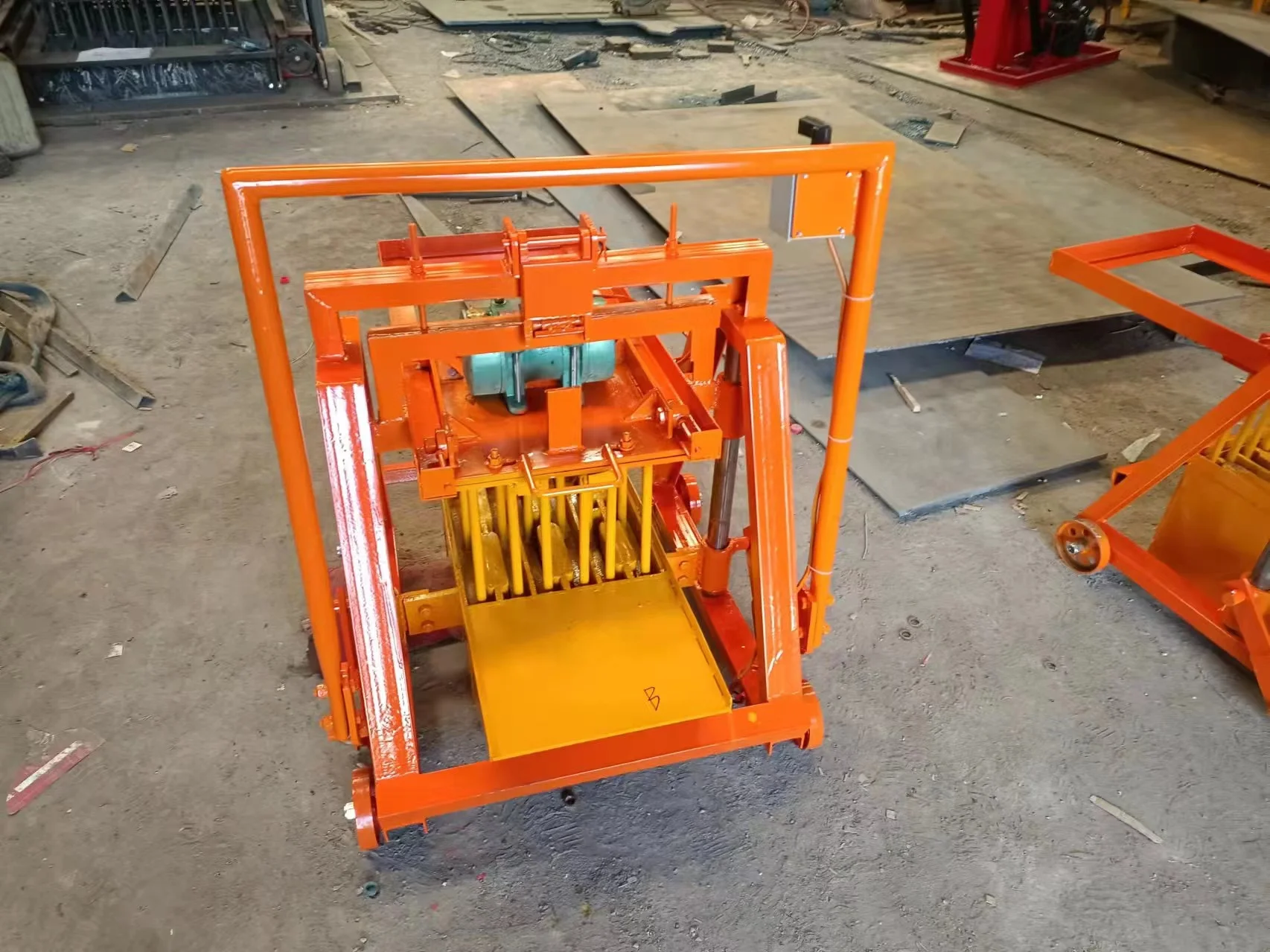
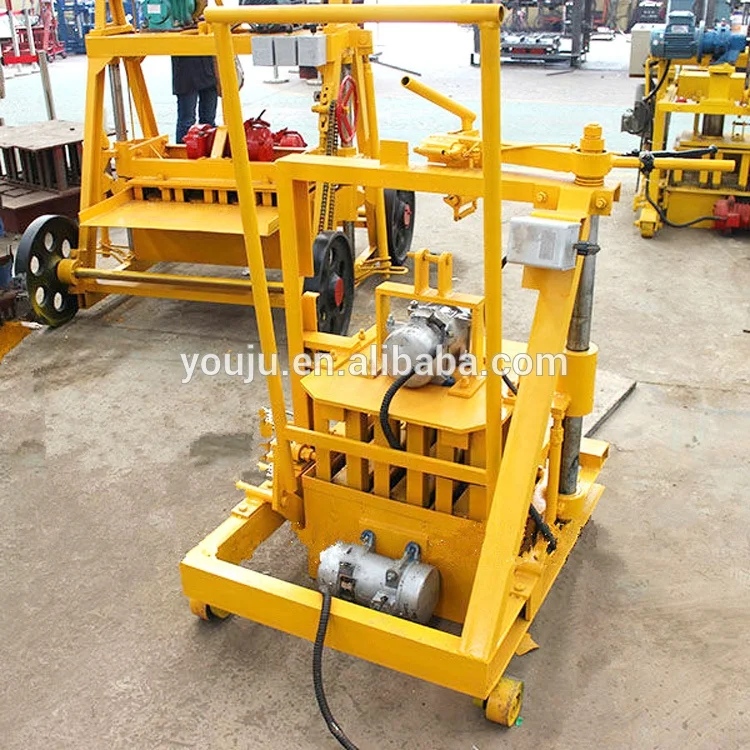
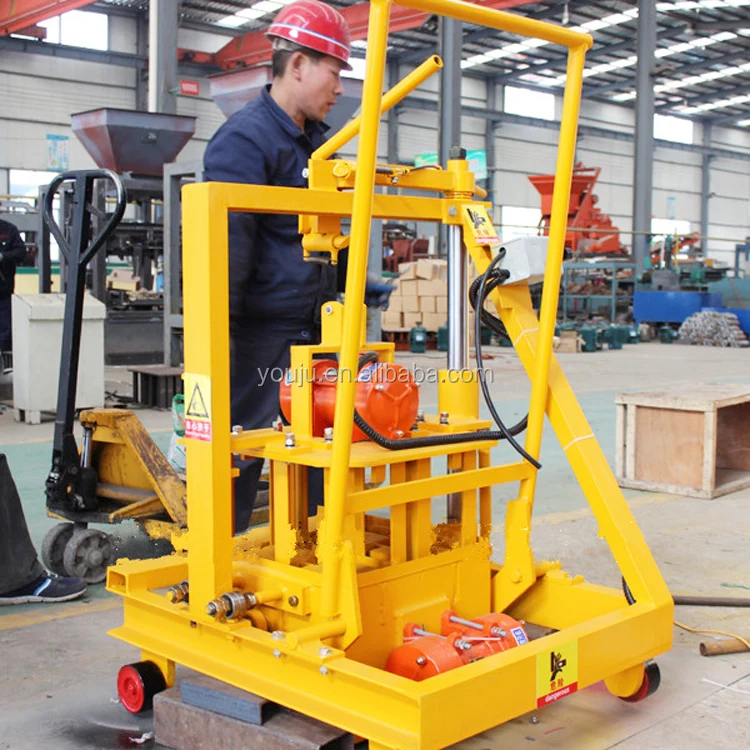
Description
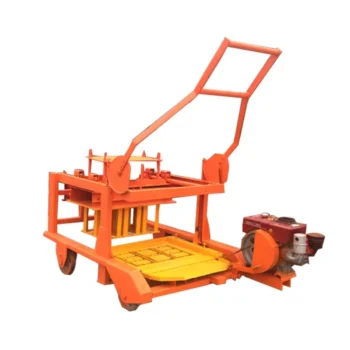
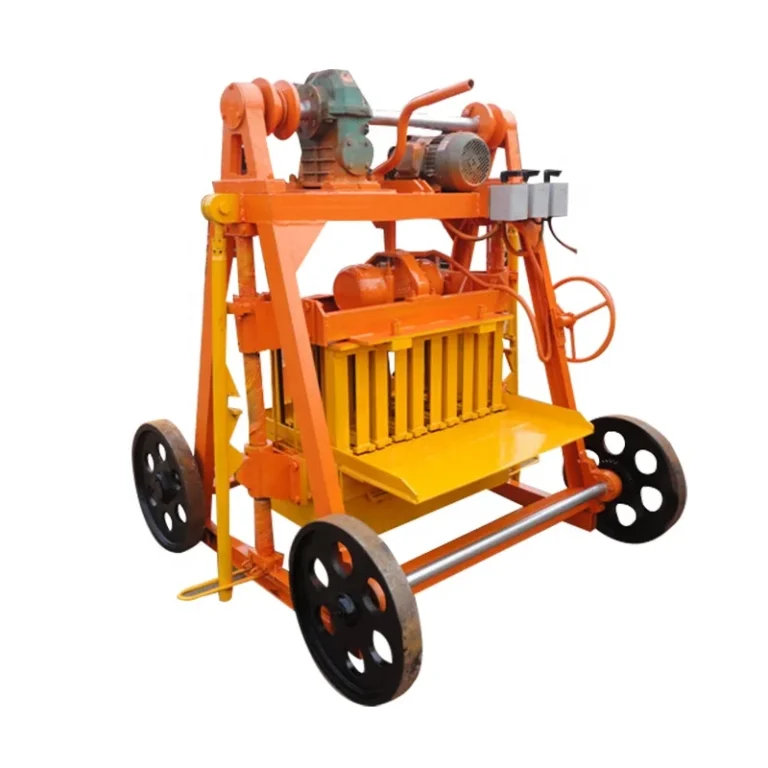
Stocked machines ready for dispatch — Every QMJ2-45 unit on our floor is inspected, dismantled for container loading, and paired with the exact spare mould and wear parts list before we quote your arrival date.
Technical Specifications
| Parameter | Value |
|---|---|
| Model | QMJ2-45 |
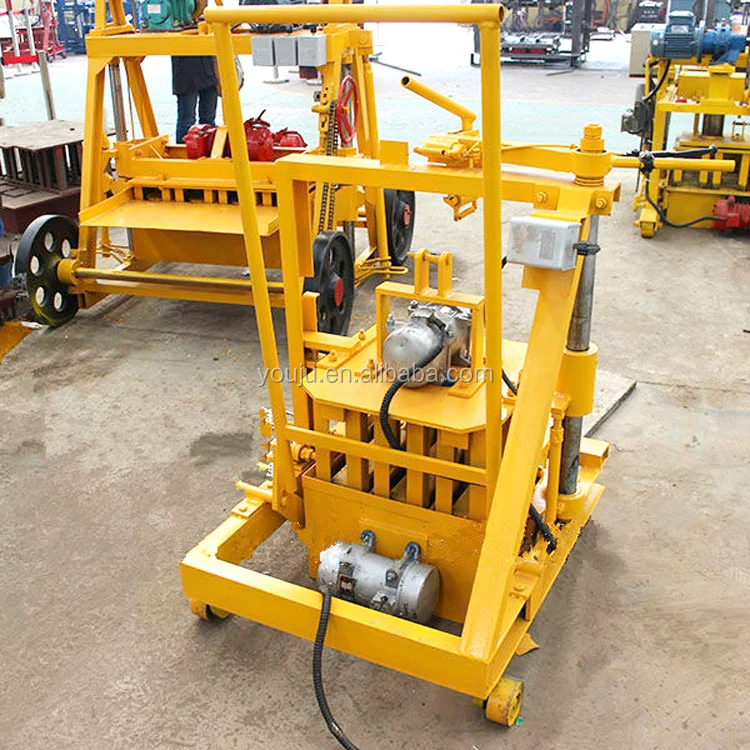
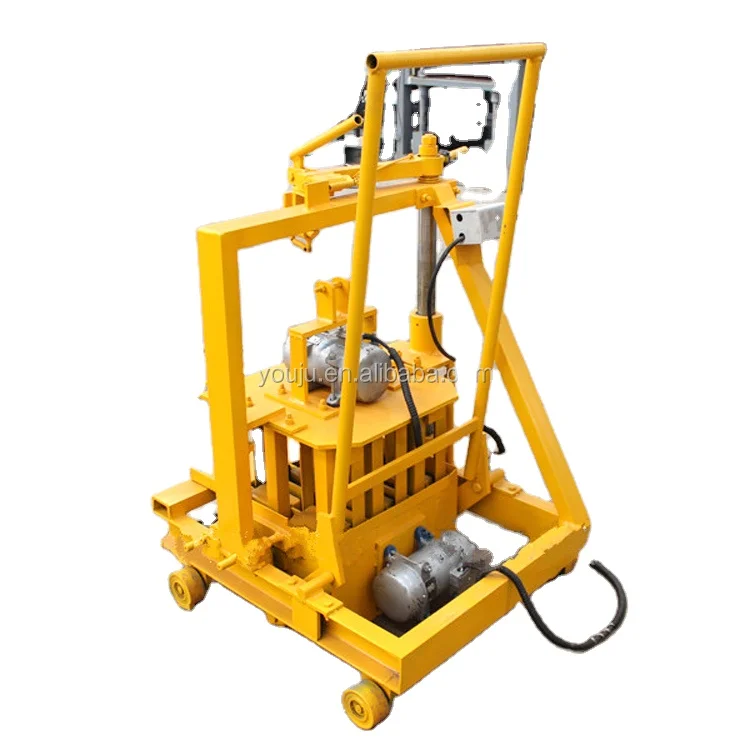
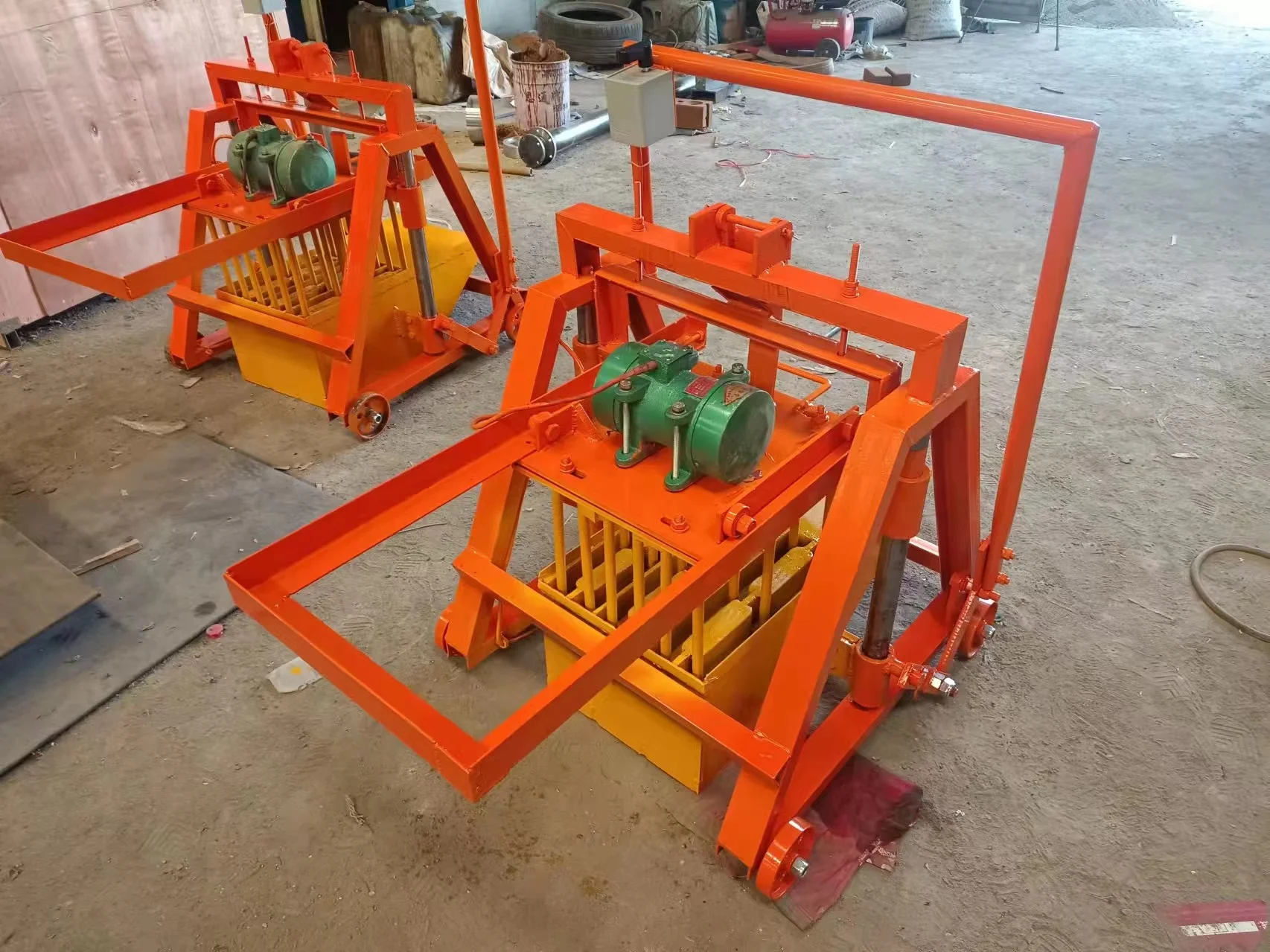
| Product Type | Mobile Concrete Block Making Machine |
| Automation Level | Manual mobile operation |
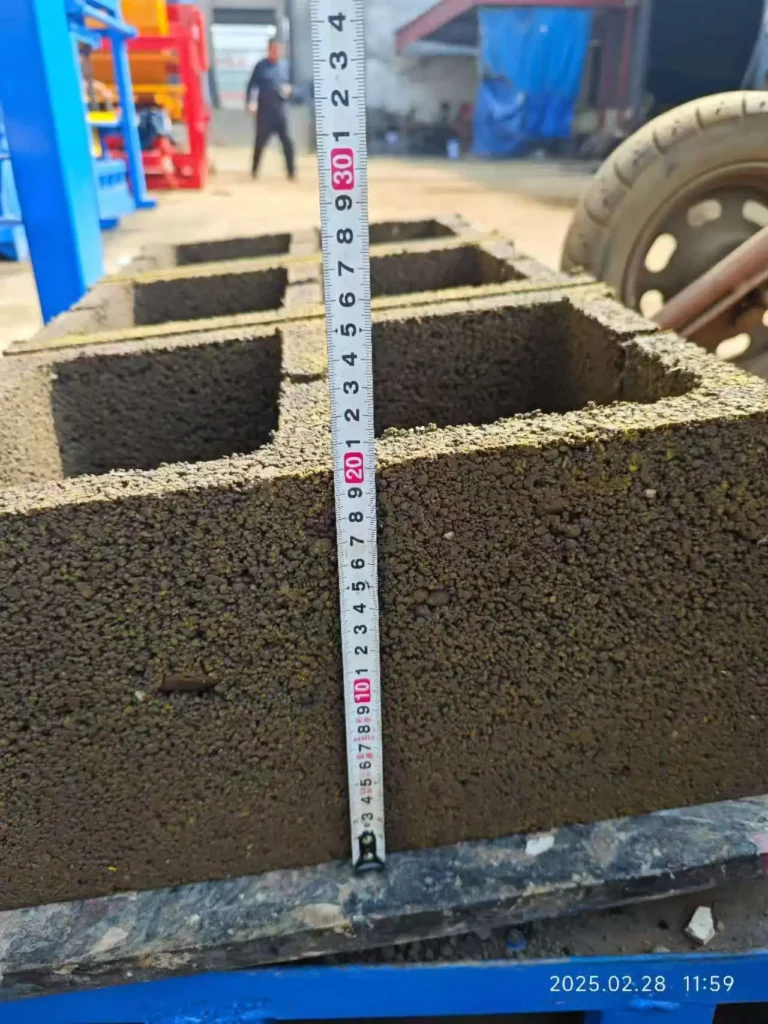
| Mould Format | Interchangeable moulds for hollow brick production |
| Cycle Time | 25–30 s (basis not stated in source — confirm block format and material) |
| Output Capacity (400×200×200 mm) | 2 pcs/mould · 1,280 pcs/8 hr (basis to be confirmed) |
| Output Capacity (400×150×200 mm) | 3 pcs/mould · 1,920 pcs/8 hr (source value corrected from 4,800; basis to be confirmed) |
| Output Capacity (400×100×200 mm) | 4 pcs/mould · 2,560 pcs/8 hr (basis to be confirmed) |
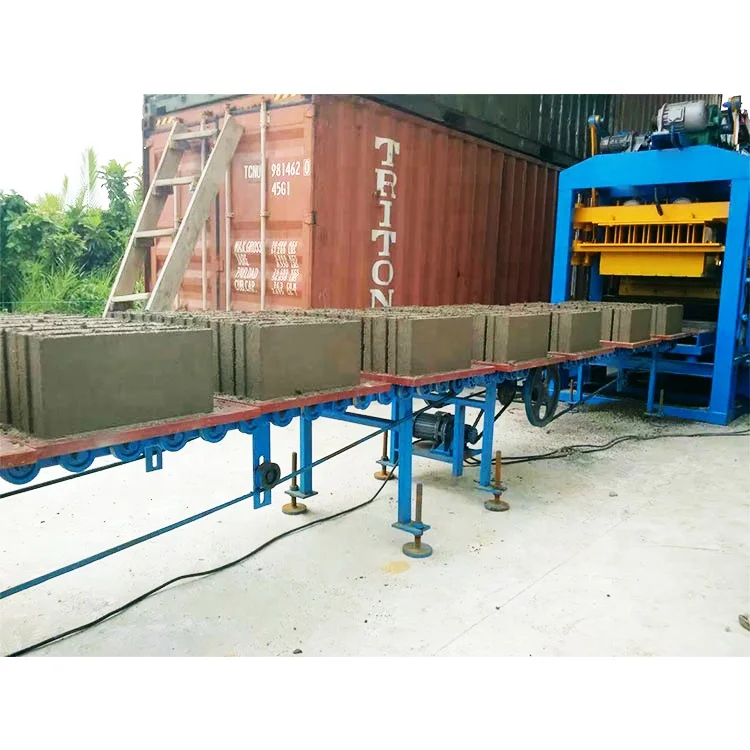
| Pallet Requirement | No pallet required (egg-laying type) |
| Labor Requirement | 1–3 workers |
| Mould Change | Manual |
| Mobility | Hand-pushed, free movement on site |
| Power Source | To be confirmed at inquiry |
| Voltage & Frequency | Configurable to destination market |
| Control System | Not applicable (manual operation) |
| Standards | ISO 9001:2000, CE |
Application Suitability
| Application | Material or Output |
|---|---|
| Small-scale hollow block production | Cement, crushed stone, sand, water |
| On-site construction block supply | Direct production at housing project locations |
| Low-investment first block plant | Minimal capital setup without fixed infrastructure |
| Remote or off-grid block making | Areas with constrained power and pallet logistics |
What "In Stock" Actually Means Before You Commit
We tell you the exact ship date and container load plan before you pay the deposit.
Many machinery suppliers list units as available without clarifying whether the machine is fully assembled on the factory floor or still waiting for component procurement. When project deadlines tighten, this distinction matters. A mobile block machine in stock should mean the main frame, motor, and moulds are physically ready for inspection and packing [NEED_CITE: standard definitions of machinery stock availability]. I have watched contractors in West Africa wait additional weeks because a quoted "ready" machine still needed its hydraulic components sourced from a third-party vendor.
Dispatch Lead Time That Reflects Reality
When a buyer secures a mobile block machine in stock, the real lead time includes factory testing, dismantling for shipment, and inland transport to the port. We quote this full timeline at the inquiry stage. The QMJ2-45 requires partial dismantling to fit container dimensions, and we complete this on our floor — not at your site.
Container Loading and Arrival Planning
The QMJ2-45 ships in standard container configurations. We provide a loading plan showing how the main frame, motor assembly, mould set, and spare parts crate are secured. Arrival estimates are calculated from the dispatch date plus sea transit to your destination port, and we flag any customs documentation requirements specific to your country [NEED_CITE: container shipping documentation requirements by region].
Reading the Capacity Figures Honestly
The QMJ2-45 produces different output totals depending on the hollow brick format. A 400×200×200 mm block yields 2 pieces per mould, while a 400×100×200 mm block yields 4 pieces per mould. The cycle time of 25–30 seconds applies across formats, but daily totals shift accordingly. We state capacity per format so buyers compare machines against their actual product mix rather than a single headline number.
Why Mould Format Determines Your Real Output
The egg-laying design means each block cures where it is laid — no pallets to purchase, rotate, or store. This simplifies site logistics considerably. However, it also means the ground surface must be level and prepared. Mould change between formats is manual but straightforward, requiring one worker to swap the mould box and adjust the feed gate. The number of workers needed stays at 1–3 regardless of format [NEED_CITE: labour allocation for manual mobile block machines].
When the Wrong Configuration Stops Your Site
Ordering a QMJ2-45 without confirming your local aggregate grading can result in blocks that crack during curing or fail compression tests. The mix design must match what you can source within transport distance of your site. Similarly, specifying a mould format that your local market does not purchase leaves you with production capacity but no buyers. I have visited project sites where the machine arrived correctly but the wrong mould size was ordered, forcing a re-order that delayed block production by weeks [NEED_CITE: common specification mismatches in block machinery procurement].
Why Buyers Source This Machine Through Us
Block machinery is our single focus, meaning the QMJ2-45 is specified as one matched system — machine, mould, and handling approach — rather than assembled from unrelated suppliers. We confirm voltage and frequency for your destination market before production, avoiding commissioning delays on arrival. Each unit ships with a factory test record demonstrating the machine running under load. Mould and wear parts lists are included so your first replacement order can be placed immediately.
Documentation & Verification
- Factory test record showing the QMJ2-45 running with your specified hollow brick mould
- Packing photographs of the dismantled machine and mould crate before container sealing
- Voltage and frequency confirmation matched to your destination country grid
- CE declaration and ISO 9001:2000 documentation included with shipment papers
- Operation manual covering mould change procedure and daily maintenance checks
- Customs documentation support with HS code and export paperwork prepared
Installation, Commissioning & Support
- Level ground preparation required — no concrete foundation needed for the QMJ2-45 mobile operation
- Power connection to local supply confirmed before dispatch to match motor rating
- Partial reassembly on site using included fastener kit and alignment guide
- First production run supervised remotely with cycle time verification per mould format
- Operator training covers manual mould swap and feed gate adjustment
- Spare wear parts list provided with recommended first-order quantities
- Daily maintenance schedule focuses on vibration motor bolts and mould slide surfaces
What We Need to Quote Your Arrival Date
Provide your destination port, the hollow brick formats your market requires, and your local voltage and frequency. We also need to know whether your site has access to a flat, paved production area for egg-laying operation. With these details, we confirm which QMJ2-45 units are available now, the dispatch lead time, and the estimated arrival at your port.
Frequently Asked Questions
Q: Which QMJ2-45 units are in stock and how fast can they ship?
A: Stock status varies by mould configuration and voltage specification. We confirm availability at inquiry, then quote a dispatch date that includes factory testing and dismantling. Standard configurations ship faster than custom voltage builds, but we always state the exact date before taking your deposit.
Q: How is the machine dismantled and loaded into a container for shipment?
A: The main frame, motor assembly, and mould set are separated for loading. We handle dismantling at the factory and provide a loading plan showing how components are secured inside the container. Reassembly on site requires basic tools and the included fastener kit.
Q: What is the realistic arrival time to my port after dispatch?
A: Arrival depends on sea transit from the port of loading to your destination. We calculate the estimate from the confirmed dispatch date and provide it upfront. Inland transport from your port to the site is not included but we can advise on typical haulage requirements.
Q: Do I need pallets or a curing yard to run this machine on-site?
A: No. The QMJ2-45 is an egg-laying mobile machine, meaning blocks cure directly on the ground where they are produced. You need a flat, level surface such as a concrete slab or compacted ground. No curing pallets are required, which reduces both cost and handling labour.
Q: What voltage options are available and is the correct configuration shipped for my market?
A: We confirm your local voltage and frequency at the inquiry stage and build the motor and electrical system to match. This avoids commissioning delays caused by voltage mismatches on arrival. Standard and non-standard voltage builds are available, with lead time differences stated in the quotation.