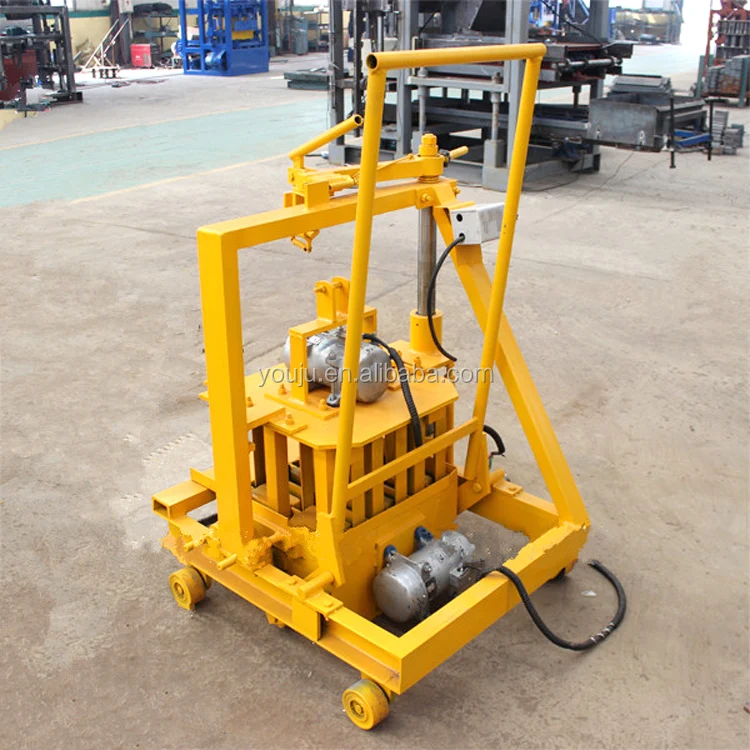
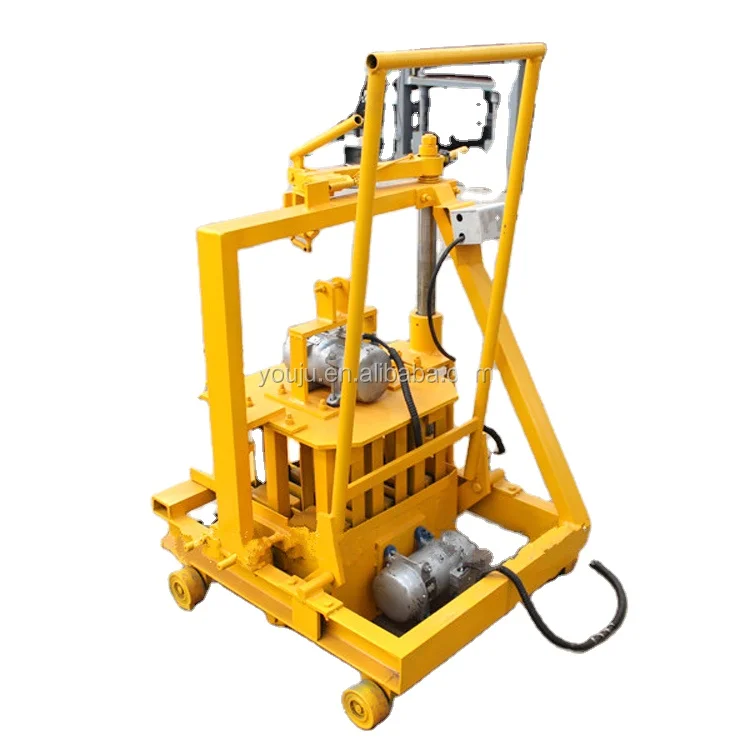
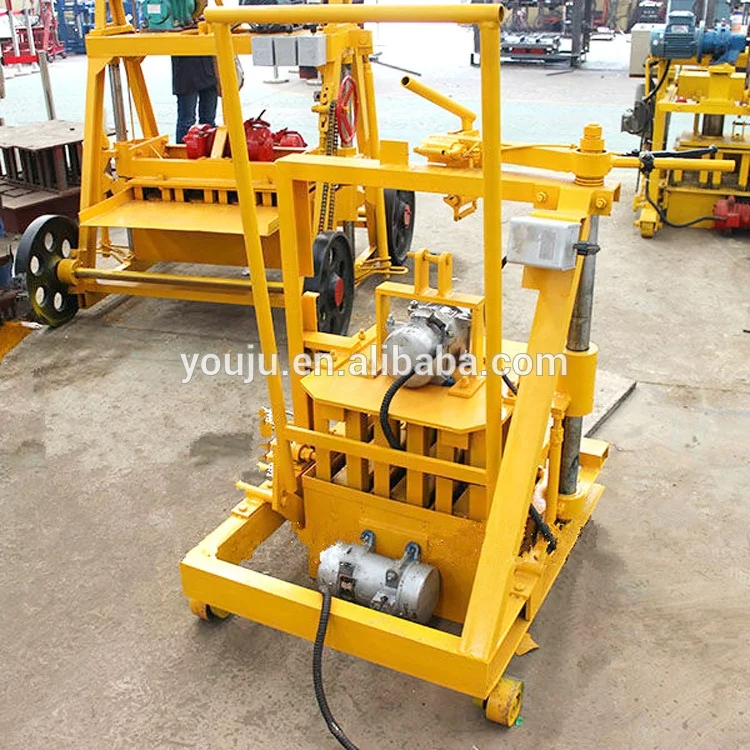
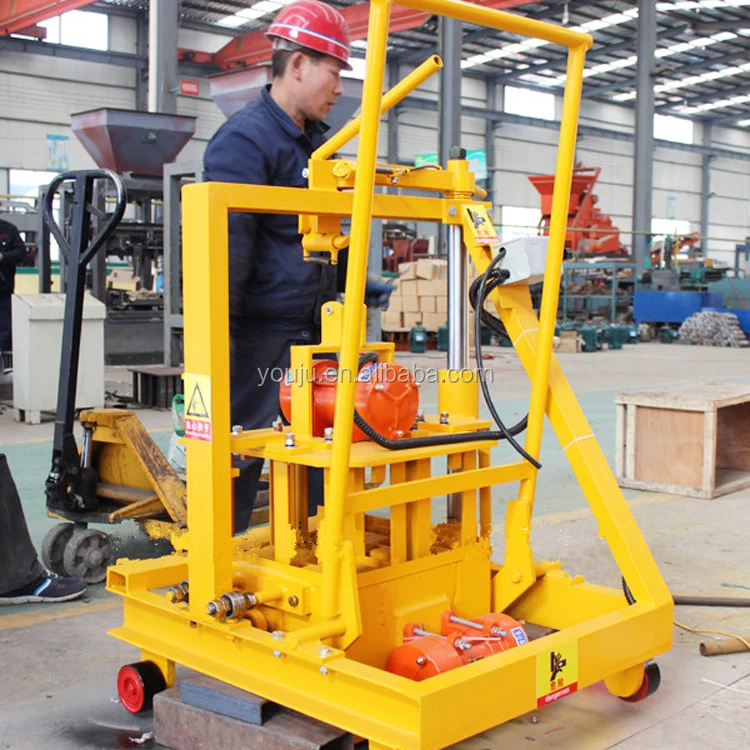
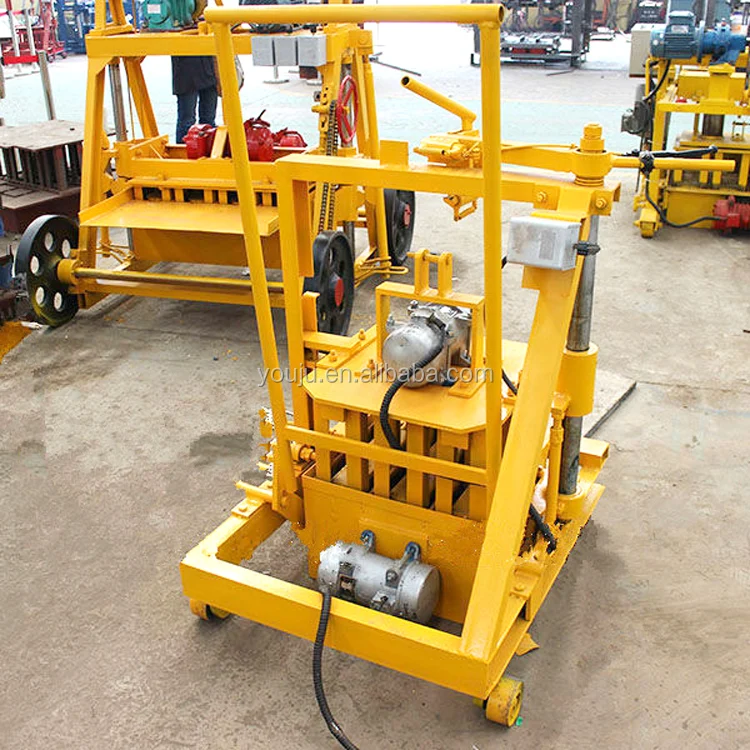
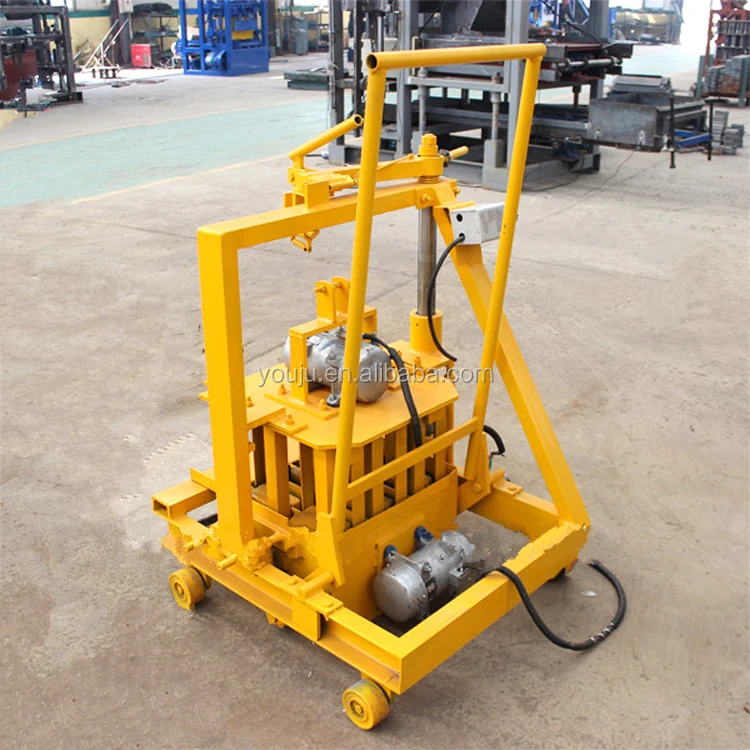
Description
Stocked for Dispatch — QMJ2-45 mobile block making machine in stock with container loading and arrival timing quoted before you sign the purchase order.
Technical Specifications
| Parameter | Value |
|---|---|
| Model | QMJ2-45 |
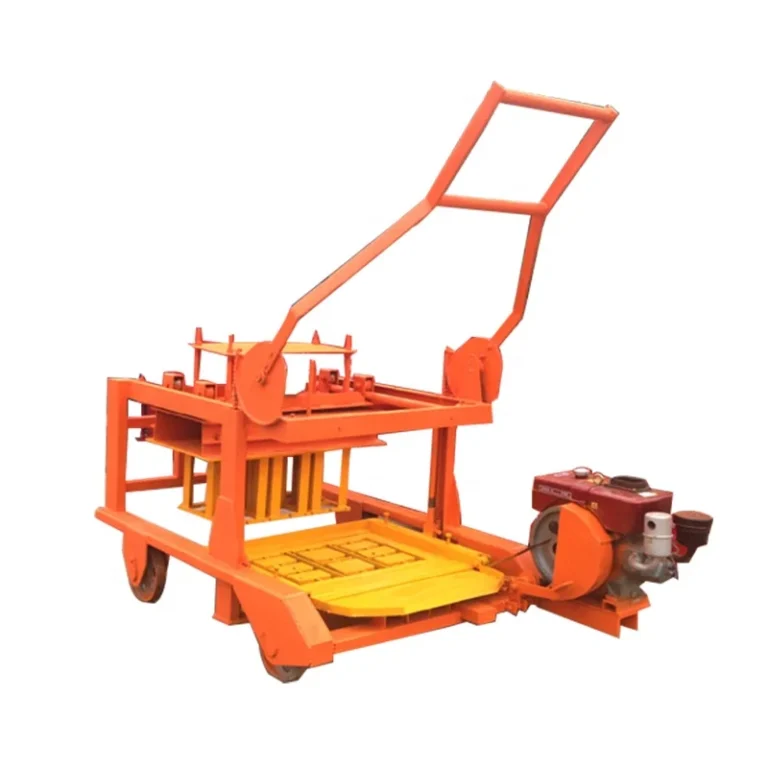
| Product Type | Mobile / Egg-Laying Block Making Machine |
| Operation Mode | Manual |
| Pallet Requirement | No pallets required |
| Power Source | Electric engine |
| Labor Requirement | 1 to 3 workers |
| Mould Change | Supports different hollow brick formats |
| Cycle Time | 25–30s |
| Output Capacity | 160 pcs/h (based on 400×200×200mm hollow brick, 2 pcs/mould) |
| Output Capacity | 240 pcs/h (based on 400×150×200mm hollow brick, 3 pcs/mould) |
| Output Capacity | 320 pcs/h (based on 400×100×200mm hollow brick, 4 pcs/mould) |
| 8-Hour Output | 1280 pcs (based on 400×200×200mm hollow brick) |
| 8-Hour Output | 2560 pcs (based on 400×100×200mm hollow brick) |
| Mobility | Free movement, no fixed plant required |
| Standards | ISO 9001:2000, CE |
Application Suitability
| Application | Material or Output |
|---|---|
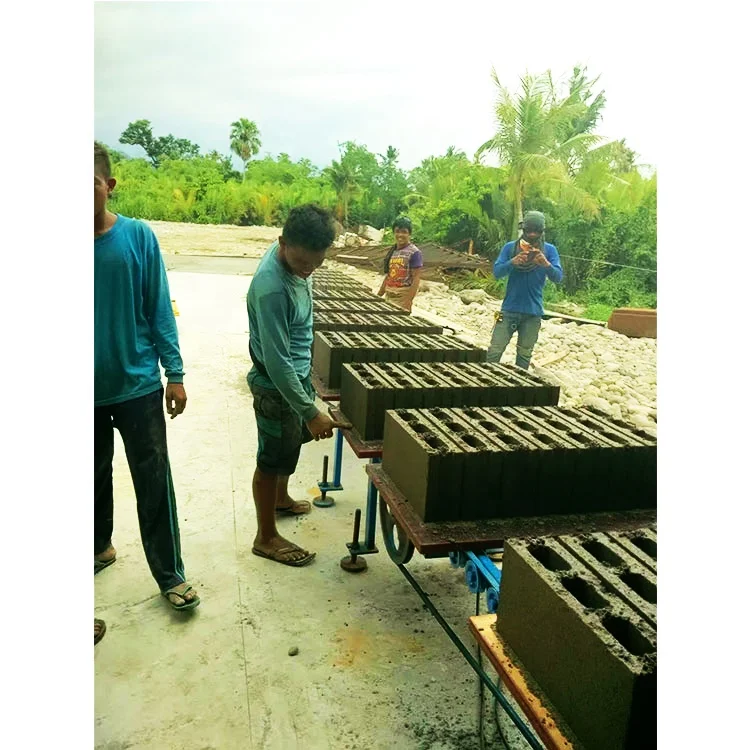
| On-site block production | Crushed stone, sand, cement, and water mixes without a fixed plant |
| Small-space block manufacturing | Low-investment hollow brick runs in confined project yards |
| Construction contractor block supply | 400×200×200mm, 400×150×200mm, and 400×100×200mm hollow formats |
| First-stage block plant setup | Minimal infrastructure with no curing rack or pallet inventory needed |
What "In Stock" Really Means When You Need a Mobile Block Making Machine in Stock
A stocked unit only matters if the dispatch lead time and container loading plan are confirmed before you pay the deposit.
Too many buyers have been told a machine is ready, only to find out the voltage doesn’t match their site, the mould isn’t the right format, or the unit still needs a week of wiring before it can leave the factory floor. When you’re working against a project deadline, the gap between "available" and "on the water" is where schedules break. The QMJ2-45 is a straightforward machine — electric-powered, no pallets, no fixed foundation — which means the things that delay dispatch are usually configuration details that should be locked down on day one, not discovered at the loading dock [NEED_CITE: typical delays in machinery export dispatch].
Stocked Units and What "Ready to Ship" Actually Covers
When we list a QMJ2-45 mobile block making machine in stock, the unit has completed its factory test and is sitting in a configured state — meaning the mould installed, the wiring done to a known voltage, and the electric engine bench-checked. The dispatch lead time we quote starts from the moment your configuration is confirmed and ends at the port gate, not the factory gate. That distinction matters because inland transport to the loading port and customs clearance paperwork each take their own time, and neither should come as a surprise after the order is signed.
Container Loading and Dismantling for Shipment
The QMJ2-45 ships in a dismantled state so the frame, mould assembly, and electric engine fit within a standard container without oversized freight surcharges. We provide a container loading plan that shows exactly how the components are packed and secured, so you know what you’re unloading on the other end. Machine dismantling also means reassembly at your site is straightforward — the frame bolts together, the mould drops onto the forming table, and the electric engine connects to your site power supply. No hydraulic lines to bleed, no complex calibration routines [NEED_CITE: container loading standards for industrial machinery export].
How Cycle Time Translates to Real Daily Output
The 25–30 second cycle time on the QMJ2-45 is consistent across hollow brick formats, but the hourly output changes depending on how many cavities the mould holds. With the 400×200×200mm mould (2 cavities), you get 160 pieces per hour, which works out to roughly 1,280 pieces in an 8-hour shift. Switch to the 400×100×200mm mould (4 cavities), and the same cycle time produces 320 pieces per hour, or 2,560 pieces over 8 hours. The manual operation means your crew’s rhythm — feeding, moving, and resetting — directly affects whether you hit the upper end of that cycle window. This is where a crew that has run the machine for a few days outperforms one on their first shift.
What Happens When Dispatch Details Get Skipped
We’ve seen buyers accept a machine that was "in stock" without confirming the voltage and frequency, only to spend weeks sourcing a step-down transformer locally before they could run a single test cycle. Others have received a machine with a mould that didn’t match the hollow brick format their market actually buys, forcing them to wait for a replacement mould while the machine sat idle on site. The QMJ2-45 is simple enough that these are the exact points where things go wrong — not in the mechanics, but in the paperwork and configuration checks that should happen before the container is sealed. Skipping those steps doesn’t save time; it just moves the delay from the factory to your project site [NEED_CITE: machinery commissioning delays due to voltage mismatch].
Why Buyers Working to Deadlines Source Here
The QMJ2-45 is treated as a matched system — machine, mould, and power configuration confirmed together — rather than a press sold alone with pallets and automation bolted on from separate suppliers after the fact. Stock status is quoted against your destination port transit time, so you get an arrival estimate that accounts for sea freight, not just a dispatch date. Moulds for the standard hollow brick formats (400×200×200mm, 400×150×200mm, 400×100×200mm) are carried alongside the machine stock, meaning a format change doesn’t trigger a second shipment. Voltage and control language are confirmed against your site requirements before the unit leaves the workshop. Container loading and dismantling plans are provided with the quotation so freight costs are predictable.
Documentation & Verification
- Factory test record on your specified hollow brick format before dispatch
- Voltage and frequency confirmation sheet matching your destination site
- Mould drawing and format list for all included cavity configurations
- Container loading plan with component packing and securing details
- Operation manual with crew workflow and cycle time guidance
- CE declaration and ISO 9001:2000 documentation included with shipment
Installation, Commissioning & Support
- No fixed foundation required — the QMJ2-45 operates on level ground at your project site
- Electric engine connects to your confirmed voltage supply with no diesel dependency
- Frame bolts together on arrival using the provided dismantling and reassembly guide
- First test cycle run with your local aggregate mix to verify block strength
- Mould change procedure trained on site so crew can switch hollow brick formats independently
- Wear parts list provided with recommended reorder intervals for continuous operation
Before You Send the Inquiry
Tell us which hollow brick format your market actually sells, your destination port, and your site voltage and frequency so we can confirm which stocked QMJ2-45 units match your requirements. If you have a project start date, share it — we’ll work backward from arrival to tell you which dispatch window fits. For buyers running a local aggregate with high clay or silt content, sending a raw material sample ahead of time lets us adjust the vibration and mix guidance before the machine ships.
Frequently Asked Questions
Q: Which QMJ2-45 units are in stock now and what is the dispatch lead time?
A: Current stock covers the QMJ2-45 with standard hollow brick moulds installed and tested. Dispatch lead time is quoted from the moment your voltage, frequency, and mould format are confirmed — not from the inquiry date. We give you a port-to-port arrival estimate that includes sea freight transit so you can plan your site schedule against a real date.
Q: How is the machine dismantled and loaded into a container for shipment?
A: The QMJ2-45 is dismantled into its frame, mould assembly, and electric engine components to fit a standard container without oversized freight charges. A loading plan is provided with the quotation showing how each component is packed and secured. Reassembly at your site involves bolting the frame together and connecting the power supply.
Q: What is the estimated arrival time to my destination port?
A: Arrival is calculated from dispatch date plus sea freight transit time to your specific port. We quote this estimate upfront so you can confirm it fits your project timeline before committing. Transit times vary by destination, and the estimate accounts for the confirmed dispatch window, not an assumed one.
Q: Can I order standard moulds from stock along with the machine?
A: Standard moulds for 400×200×200mm, 400×150×200mm, and 400×100×200mm hollow brick formats are carried in stock alongside the QMJ2-45. Ordering them with the machine means they ship in the same container, avoiding a second freight cycle and getting you format flexibility from day one on site.
Q: What voltage and frequency options are available on stocked units?
A: Stocked QMJ2-45 units carry specific voltage and frequency configurations that are confirmed against your destination country’s standards before shipment. If your site requires a configuration not currently in stock, we quote the adjustment time as part of the dispatch lead time so there are no surprises at the loading stage.