
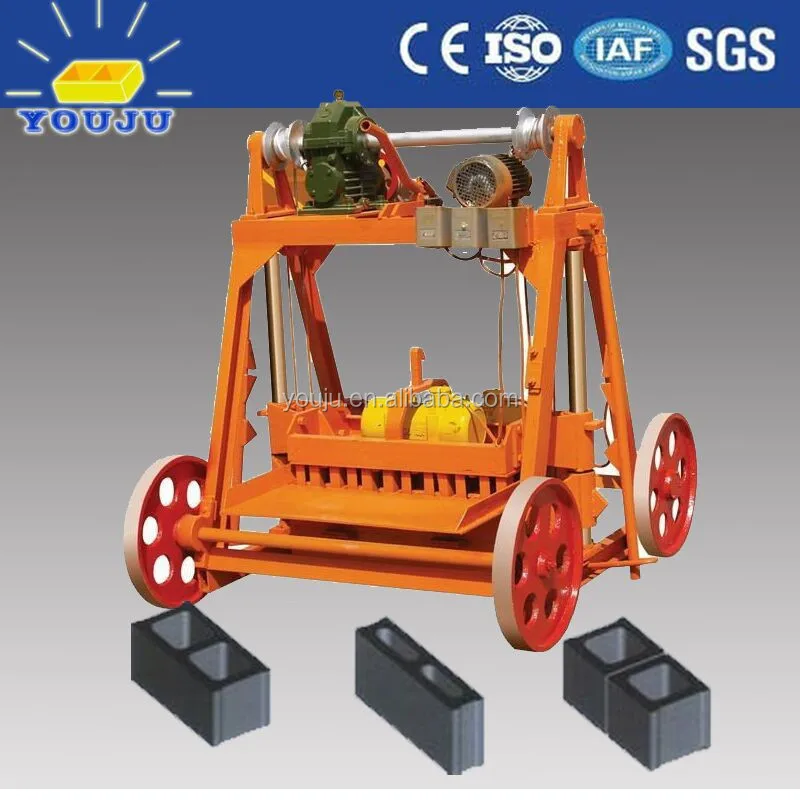
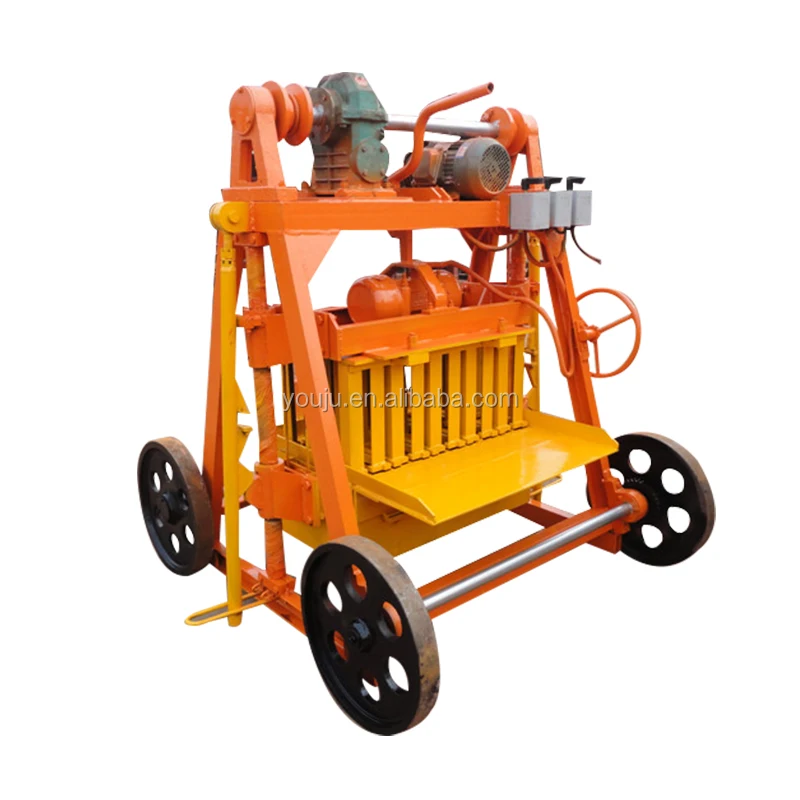
Description
Stocked for immediate dispatch — every QMJ4-45 unit is factory-tested and container-ready, so your project site starts producing blocks the week the crate arrives.
Technical Specifications
| Parameter | Value |
|---|---|
| Model | QMJ4-45 |
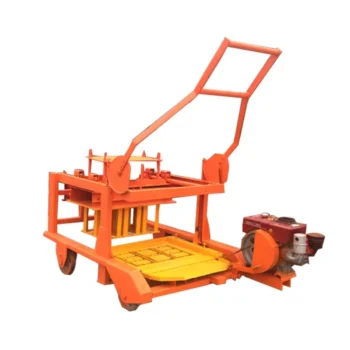
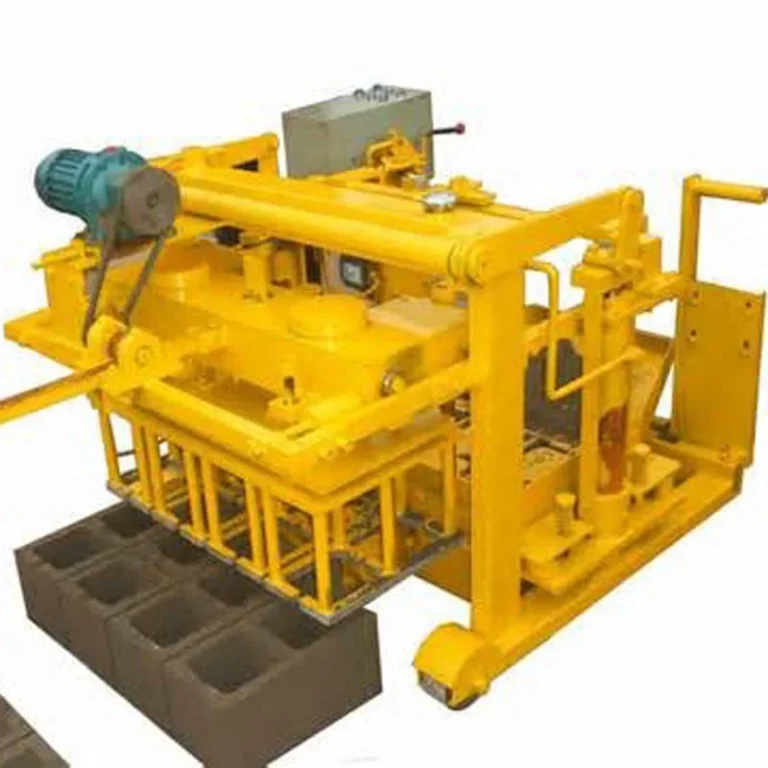
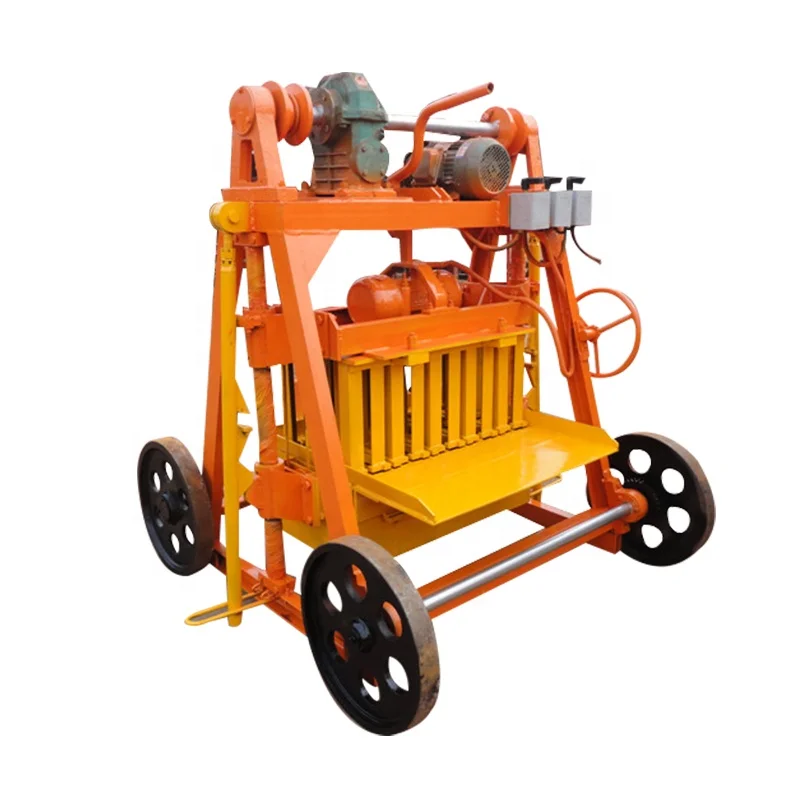
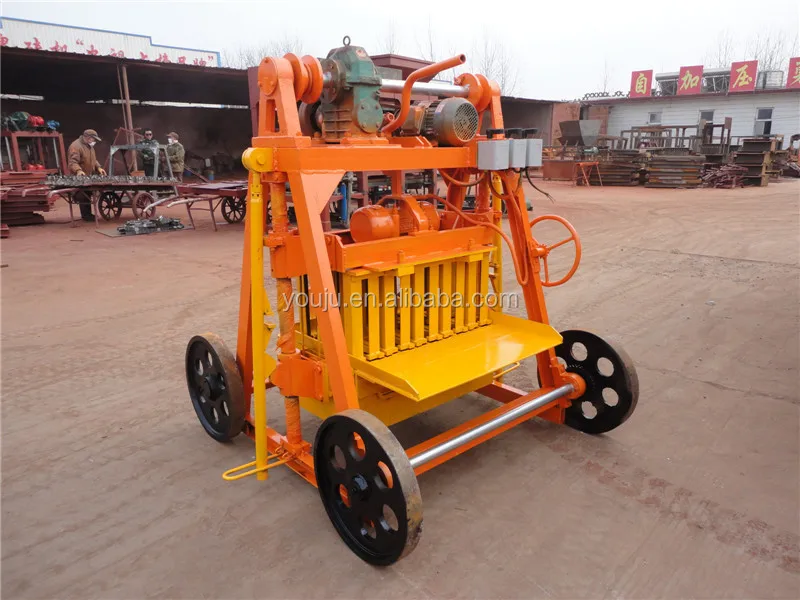
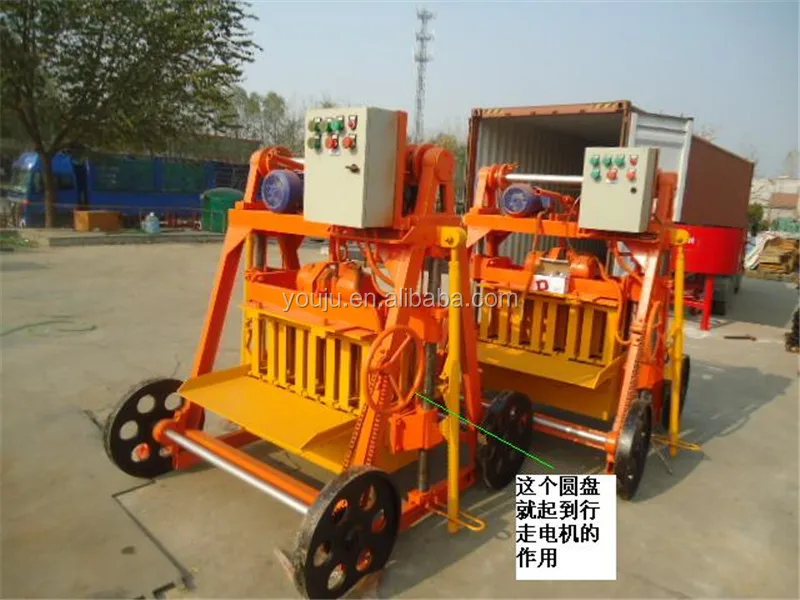
| Product Type | Mobile Egg-Laying Block Making Machine |
| Molding Capacity | 4 pcs per mould (basis to be confirmed by block format and material) |
| Molding Cycle | 45 seconds |
| Vibration Frequency | 2400 r/m |
| Vibration Method | Mold vibration |
| Demold Method | Manual |
| Turning Method | Manual |
| Power Source | Diesel / Petrol engine |
| Total Power | 6 kW |
| Automation Level | Manual, egg-laying mobile operation |
| Hollow Block Output (400×200×200 mm) | Approx. 3000 pcs / 8-hour shift |
| Hollow Block Output (400×150×200 mm) | Approx. 3500 pcs / 8-hour shift |
| Hollow Block Output (400×120×200 mm) | Approx. 4500 pcs / 8-hour shift |
| Warranty | One year for the complete machine |
| Certification | CE |
Application Suitability
| Application | Material or Output |
|---|---|
| On-site housing project production | Cement, sand, crushed stone hollow blocks laid directly on the ground |
| Remote construction camps | Diesel-powered block forming where grid electricity is unavailable |
| First-time block plant startups | Low-infrastructure egg-laying operation without curing racks or pallets |
| Small-scale masonry supply | Solid and hollow blocks for local building material distributors |
Why the Voltage Question Must Be Settled Before the Mobile Block Machine in stock Ships
Confirming the local voltage and frequency before dispatch prevents a burned motor on day one.
A mobile block machine in stock may look ready to go, but if the destination site runs on a different electrical standard than the factory default, the motor will overheat and fail within the first hour of operation. I have seen a diesel-powered unit arrive at a West African project site only to discover the auxiliary control circuit was wired for a voltage that the local generator could not supply [NEED_CITE: voltage and frequency standards by export market]. The contractor lost an entire week waiting for a replacement contactor. With an egg-laying machine, the power source is often a portable generator, and generator output fluctuates more than grid supply, making pre-shipment verification even more critical.
Dispatch Readiness and Container Loading
Every QMJ4-45 is dismantled into a compact frame and mold assembly that fits inside a standard 20-foot container alongside spare wear parts and the diesel engine crate. The machine ships in a bolted-down state with the hopper, vibration box, and handle bar separated, reducing the overall footprint. Before loading, we photograph the packing arrangement and share the images with the buyer so the receiving team knows exactly which crate holds the mold and which holds the control panel. This mobile block machine in stock approach eliminates surprises at the port and lets the site crew plan their unloading equipment in advance.
Arrival Timing and Port-to-Site Logistics
Once the container is sealed, transit time depends entirely on the destination port and customs clearance speed [NEED_CITE: typical ocean freight transit times by region]. We quote an arrival estimate at the order stage, not after the machine has sailed. For buyers working against a project mobilization deadline, knowing the estimated arrival date before committing to the purchase order is often the deciding factor. The QMJ4-45 requires no foundation work; once the crate is offloaded, the machine can be assembled on leveled ground and begin producing blocks within the same shift.
Reading the Output Numbers Honestly
The daily productivity figures in the specification table are tied directly to the block dimensions listed beside them. A 400×120×200 mm hollow block uses less concrete per cycle and clears the mold faster, which is why the figure climbs to around 4500 pieces over an eight-hour shift. Switch to a 400×200×200 mm format and the same 45-second molding cycle yields roughly 3000 pieces. These numbers assume a continuous workflow with a trained operator, consistent raw material feed, and no unplanned stops. If your project specifies a non-standard wall thickness or a lighter aggregate blend, cycle behavior may shift, so we always recommend a sample run before finalizing the order.
What Happens When the Mold Is Not Matched to the Mix
An egg-laying machine lays blocks directly on the ground without pallets, so the concrete must hold its shape the instant the mold lifts. If the mix is too wet, the block slumps; if it is too dry, the 2400 r/m mold vibration cannot compact it fully, leaving weak corners. Contractors who skip the mix trial often blame the machine for low block strength when the real issue is the water-to-cement ratio or the grading of the local sand [NEED_CITE: effect of aggregate grading on block compressive strength]. Spending two hours testing three mix variations before full production will save far more time than replacing cracked blocks later.
Why Buyers Choose This Source for a QMJ4-45
We focus exclusively on block machinery, which means the mold, engine, and vibration system are specified as one matched unit rather than assembled from unrelated suppliers. Each QMJ4-45 is configured against the buyer’s local aggregate and target block format before it leaves the factory. Custom mold designs are available when the local market sells a format that the standard catalog does not cover. The machine ships with a factory test record that documents vibration performance and cycle timing under load, not just an idle run. Installation guidance and operator training are included so the site crew can start production without an external technician.
Documentation & Verification
- Factory test record covering the QMJ4-45 vibration frequency and molding cycle under load
- CE declaration accompanying each unit for customs and site inspection requirements
- Packing photographs showing container loading arrangement shared before vessel departure
- Operation and maintenance manual written for the operator language confirmed at order
- Wear parts and mold list with part numbers for reorder reference
Installation, Commissioning & Support
- Assemble the QMJ4-45 frame, hopper, and handle bar on leveled compacted ground with no concrete foundation required
- Connect the 6 kW diesel or petrol engine and verify fuel line routing before the first start
- Confirm that the vibration box mounting bolts are torqued to specification after transport vibration
- Run three test cycles with local aggregate to validate the 45-second molding rhythm before full production
- Replace the mold wear strips after the first production batch to maintain block dimension accuracy
Requesting the Right Information Upfront
To receive a dispatch schedule and container loading plan, share your destination port, the block dimensions your market requires, and whether the site will run on a diesel generator or grid power. If you already have a curing area layout or a specific aggregate source, include those details so the mold and mix recommendation can be aligned before the QMJ4-45 leaves our floor.
Frequently Asked Questions
Q: Is the QMJ4-45 currently in stock and what is the dispatch lead time?
A: Yes, QMJ4-45 units are stocked and ready for container loading. Once the destination port and engine type are confirmed, we provide a dispatch schedule and packing photographs before the container is sealed. Typical preparation takes several working days for documentation and crating.
Q: How is the machine loaded and what are the shipping dimensions?
A: The QMJ4-45 is dismantled into its frame, vibration box, hopper, and mold, then secured inside a standard 20-foot container. The diesel engine is crated separately. We share loading photographs so the receiving team can plan forklift and crane requirements at the destination port.
Q: What arrival estimate can I expect at my port?
A: Transit time varies by destination and shipping line schedule. We quote an estimated arrival date at the order confirmation stage, not after dispatch, so you can align your project mobilization timeline accordingly. Customs clearance speed at the destination port may add variability.
Q: Does the QMJ4-45 arrive ready to run or does it need on-site assembly?
A: The machine ships partially dismantled for container efficiency. On-site, the crew reattaches the hopper, handle bar, and mold, then connects the engine. The process takes a few hours with basic hand tools, and no concrete foundation or fixed plant infrastructure is required.
Q: What spare parts ship with the machine?
A: Each QMJ4-45 ships with a documented wear parts list and a set of replacement items appropriate to the first maintenance interval. Additional molds for different block formats can be included in the same container if confirmed before loading.