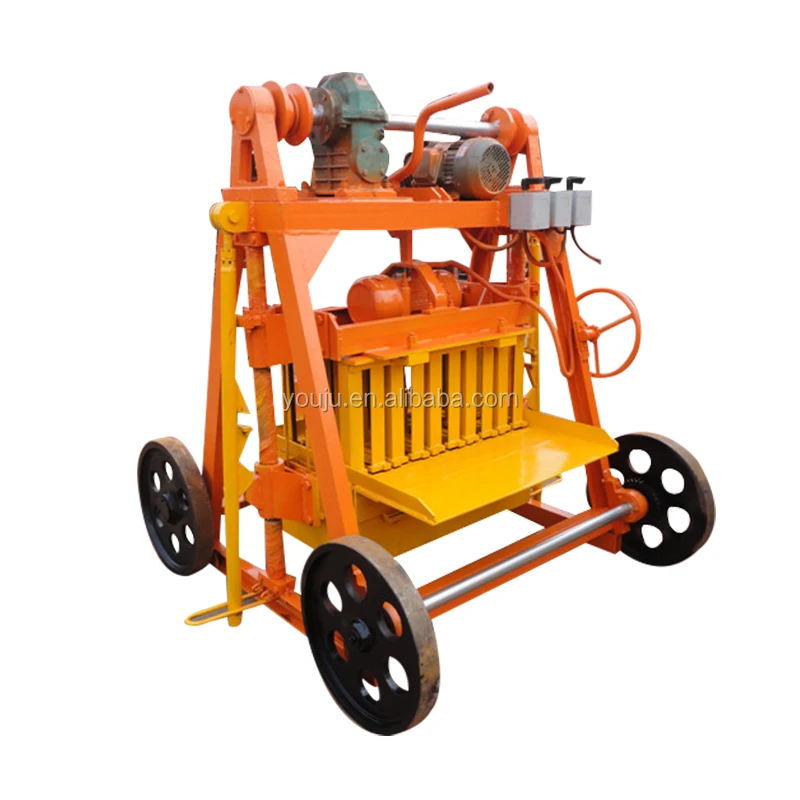
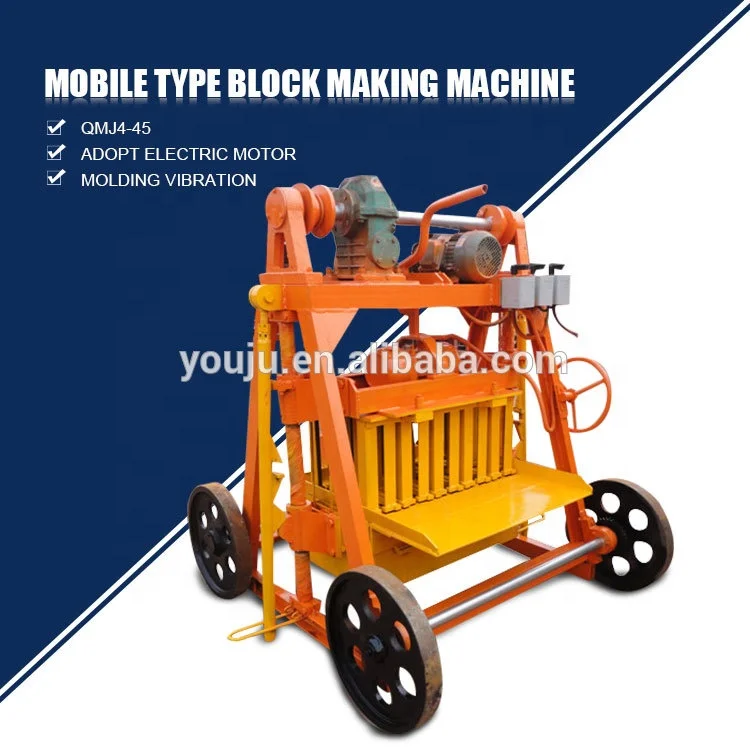


Description
Fast Dispatch Readiness — QMJ4-45 mobile block machine stocked for container loading, with arrival estimates confirmed before you pay the deposit.
Technical Specifications
| Parameter | Value |
|---|---|
| Model | QMJ4-45 |
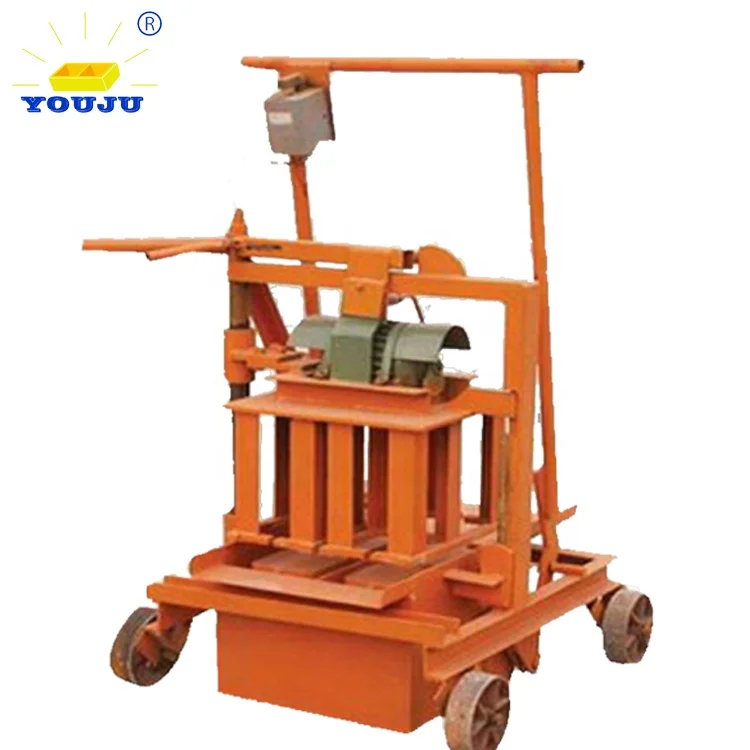
| Product Type | Mobile Egg-Laying Concrete Block Making Machine |
| Machine Type | Egg-laying mobile block making machine |
| Vibration System | Twice vibrations of molding core |
| Mobility | Self-propelled on-site movement |
| Mould Compatibility | Various block types via mould change; custom moulds by drawings |
| Automation Level | Manual |
| Pallet Requirement | None (pallet-free egg-laying operation) |
| Output Capacity | basis to be confirmed — depends on block format, material, and thickness |
| Rated Power | basis to be confirmed |
| Voltage & Frequency | configurable to destination market requirements |
| Overall Dimensions | basis to be confirmed |
| Certification | CE referenced at company level; machine-level applicability to be verified |
Application Suitability
| Application | Material or Output |
|---|---|
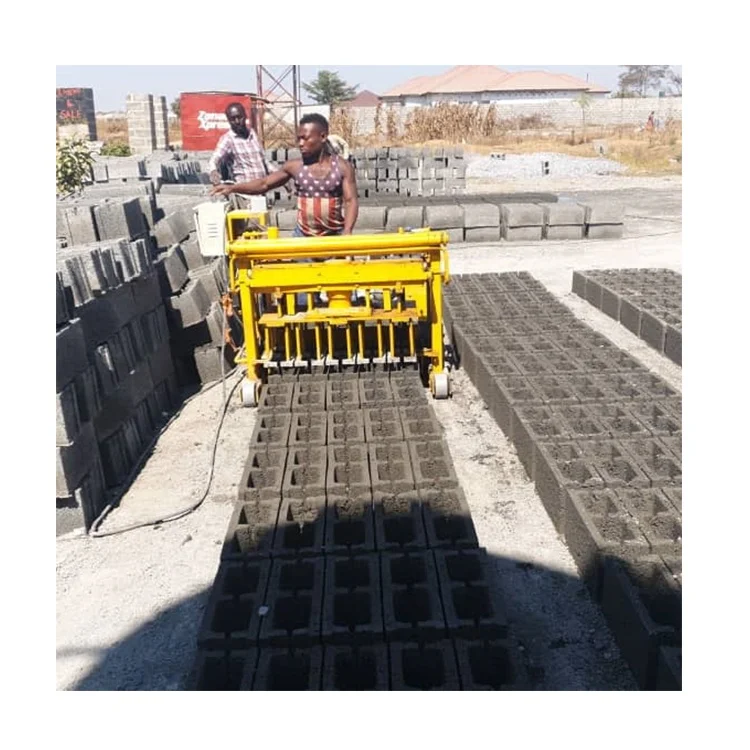
| On-site concrete block production for building contractors | Crushed stone, sand, cement, and water mix laid directly on cured ground |
| Small-scale hollow block manufacturing | Hollow block formats produced on compact curing yards |
| Paving and interlocking brick runs for housing projects | Paver and interlocking formats via mould swap on the same machine |
| First block plant for entrepreneurs with limited capital | Solid and hollow blocks with no fixed plant infrastructure required |
Why the Voltage Question Must Come Before the Invoice
A mobile block machine sitting idle on a job site because of a voltage mismatch wastes more than just time.
I once watched a QMJ4-45 mobile block machine arrive at a West African project site only to find the local supply was 415V while the motor had been wired for 380V at the factory. The vibration system could not reach operating frequency, and every block laid that first day crumbled before curing. The crew waited for replacement contactors and motor windings to arrive by air freight while the construction schedule slipped [NEED_CITE: voltage and frequency standards by export market]. With a QMJ4-45 mobile block machine in stock and ready to ship, the conversation about your site voltage, frequency, and plug standard now prevents that kind of costly standstill later. Confirming these electrical details before dispatch is not optional paperwork — it is the single step that keeps your machine producing from day one on site.
Stock Availability and What "Ready to Ship" Actually Means
When a supplier says a QMJ4-45 mobile block machine is in stock, the next question should be which configurations and moulds are physically on the warehouse floor. A bare machine without the moulds your market requires is not ready to produce anything. Our stock list specifies the exact block formats currently paired with available units, so you know whether hollow, solid, paving, or interlocking moulds can ride in the same container. This is the core advantage of sourcing a QMJ4-45 mobile block machine in stock from a supplier whose single focus is block machinery and its matched tooling.
Container Loading and the Dismantling Detail That Matters
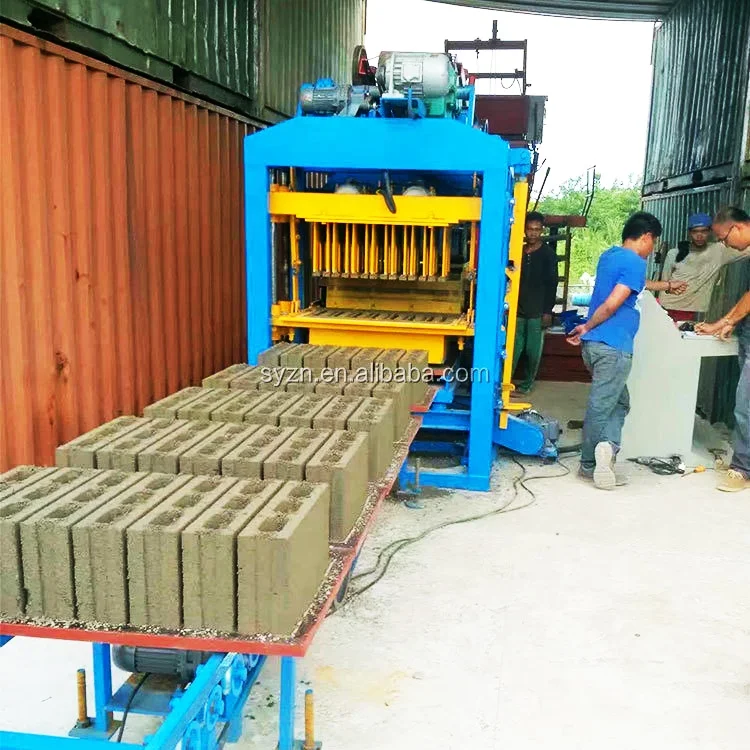
An egg-laying machine like the QMJ4-45 travels partially dismantled to fit container dimensions, and how it is broken down determines how quickly your crew can reassemble it on site. Bolts, hydraulic lines, and the vibration motor mount each need labelled packing so that your team is not guessing which bracket belongs where under the sun. We photograph every stage of the loading process — machine secured on the flat rack, moulds crated separately, electrical panel wrapped and strapped — so you have a visual record before the container doors close [NEED_CITE: container loading standards for heavy industrial machinery].
Reading the Specs That Decide Your Daily Output
The twice-vibration molding core on the QMJ4-45 delivers two compaction pulses per cycle instead of one, which translates directly into denser block walls and more consistent compressive strength across every block laid. For an egg-laying machine that deposits blocks directly onto the ground, this vibration quality matters even more because there is no steel pallet underneath to reflect force back into the mix. The manual automation level keeps the control system simple — an operator guides the machine across the curing yard and triggers each cycle by hand, which reduces the electrical complexity and the number of components that can fail in remote site conditions. Mould compatibility spans multiple block formats, and the changeover is mechanical rather than hydraulic, meaning a small crew with basic hand tools can swap formats within a single shift.
The Cost of Skipping the Dispatch Checklist
Sending a machine to port without confirming the buyer’s curing area dimensions often results in a machine that cannot turn at the end of each row, forcing the operator to produce shorter runs and waste mix. Skipping the voltage and frequency confirmation means the vibration motor either underperforms or burns out within the first week — neither outcome is covered by a warranty that excludes electrical misuse. Ordering moulds separately after the machine ships adds a second freight cost and a second customs clearance, delaying the formats your customers are actually asking for [NEED_CITE: common import delays for industrial equipment without complete documentation].
Why Source This Machine Here
Block machinery is our single product focus, so the QMJ4-45 is specified as a matched system with its moulds and handling approach rather than assembled from unrelated catalogue pages. Stock levels and dispatch lead times are stated upfront, with arrival estimates tied to your destination port rather than left vague. Every machine undergoes a factory test before crating, and the test record ships with the documentation package. We confirm voltage, frequency, and control language before production begins, not after the container is booked. Custom moulds are designed and manufactured to buyer drawings in the same facility, so format compatibility is verified before the machine leaves the floor.
Documentation & Verification
- Factory test record showing vibration frequency and block density on your specified mix
- Mould drawing and format list confirming every block type included in your order
- Voltage, frequency, and plug-type confirmation sheet signed before dispatch
- Packing photographs documenting machine securing and container loading stage by stage
- CE declaration documentation with machine-level applicability noted where confirmed
- Customs paperwork package matched to your destination country import requirements
Installation, Commissioning & Support
- Flat ground curing area required with enough length for the QMJ4-45 to travel and turn at each row end
- Power supply matching the confirmed voltage and frequency must be available before the machine is unloaded
- Partially dismantled state on arrival with labelled components for on-site reassembly by a small crew
- First-run commissioning includes vibration timing adjustment and mix consistency calibration to your local aggregate
- Operator training covers mould changeover procedure, cycle triggering, and daily vibration system inspection
- Wear parts list provided at dispatch so replacement mould plates and vibration springs can be ordered in advance
What We Need to Confirm Before Booking Your Shipment
To match a stocked QMJ4-45 mobile block machine to your project, we need to know the block formats your market requires, the destination port for arrival estimation, and the site voltage and frequency so the motor and control panel are wired correctly before dispatch. Share your curing yard dimensions so we can confirm the machine has enough travel space, and let us know if you want additional moulds included in the same container to avoid a second freight cycle.
Frequently Asked Questions
Q: Which QMJ4-45 configurations and moulds are currently in stock and ready to ship?
A: Our stock list specifies the exact QMJ4-45 units available alongside their paired mould sets. Each listing notes which block formats — hollow, solid, paving, or interlocking — are included so you can match inventory to your market demand before committing to an order.
Q: What is the dispatch lead time and estimated arrival at my destination port?
A: Stocked QMJ4-45 machines are prepared for dispatch once voltage, frequency, and mould selections are confirmed. We provide an arrival estimate based on your destination port and current shipping schedules before you pay the deposit, so your project timeline stays on track.
Q: How is the QMJ4-45 dismantled and loaded into a container for shipment?
A: The machine is partially dismantled to fit standard container dimensions. The vibration assembly, mould, and electrical panel are separated, labelled, and secured independently. Packing photographs are taken at every stage and shared with you before the container is sealed.
Q: Can I order additional moulds together with the machine to avoid a second shipment?
A: Yes. Additional moulds for other block formats can be included in the same container as the QMJ4-45. This avoids a separate freight booking, a second customs clearance, and the delay of waiting for formats your customers need immediately.
Q: What customs documentation and packing photographs are provided to support import clearance?
A: Each shipment includes a commercial invoice, packing list, certificate of origin, and CE documentation where applicable. Packing photographs showing machine securing and container loading are provided to support your customs broker during the clearance process.