

Description
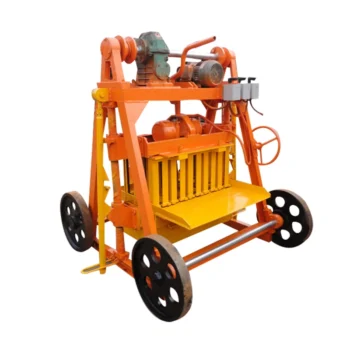
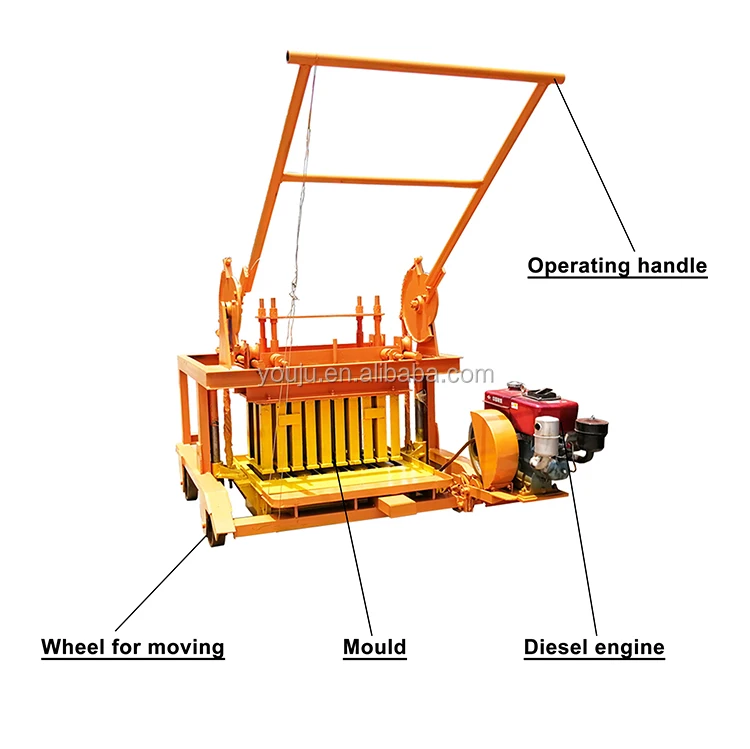
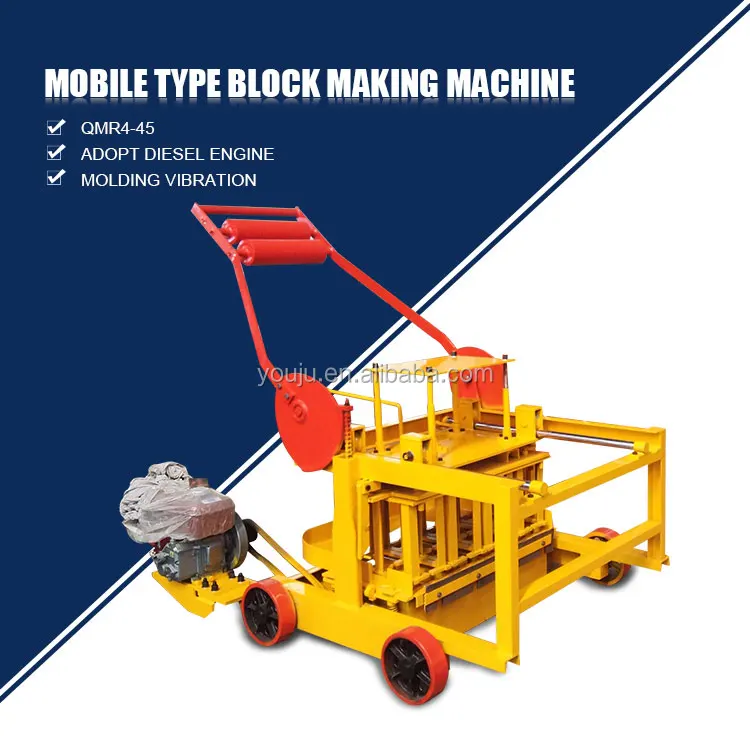
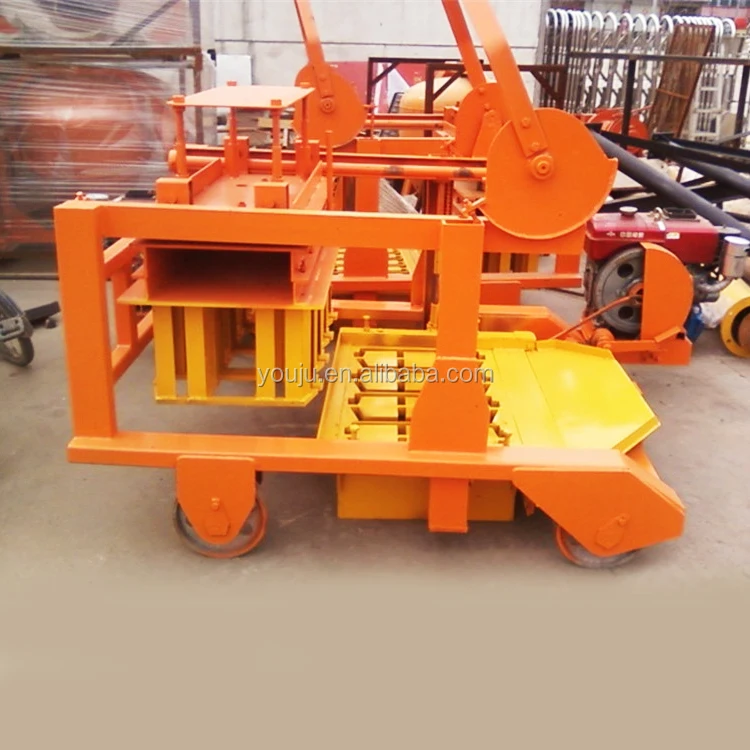
Stocked for Fast Dispatch — this QMR4-45 diesel movable block machine sits in our Linyi yard ready for container loading, so your site starts producing before a fixed plant is even poured.
Technical Specifications
| Parameter | Value |
|---|---|
| Product Type | Diesel Movable Egg-Laying Concrete Block Machine |
| Model | QMR4-45 |
| Overall Dimensions (L×W×H) | 2420 × 1320 × 1650 mm |
| Net Weight | 810 kg |
| Power Source | Diesel engine, 6 kW or 6–8 HP |
| Rated Electrical Power | 6 kW (vibrator and auxiliary circuits) |
| Voltage | 220 V / 380 V or configurable to local supply |
| Moulding Cycle | 40–45 s |
| Pallet Requirement | None (egg-laying type) |
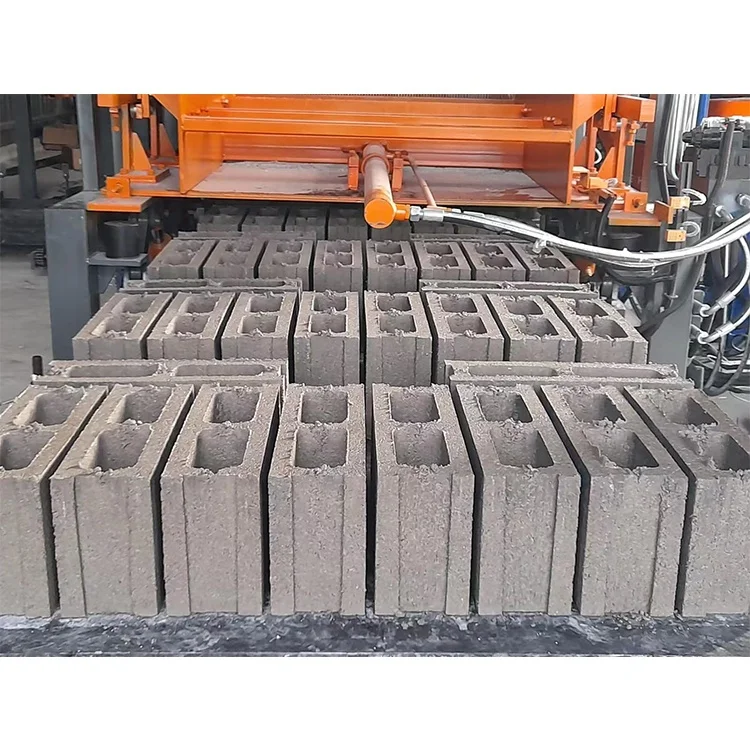
| Productivity (400×200×200 mm hollow block, 4 pcs/mould) | 3000 pcs/day over 8 hours (basis: hollow block format stated) |
| Productivity (400×150×200 mm hollow block, 5 pcs/mould) | 3500 pcs/day over 8 hours (basis: hollow block format stated) |
| Productivity (400×120×200 mm hollow block, 6 pcs/mould) | 4500 pcs/day over 8 hours (basis: hollow block format stated) |
| Automation Level | Manual / semi-automatic |
| Mould Change | Interchangeable moulds for different block specifications |
| Operating Environment | Sites without grid power; no concrete floor required |
| Warranty | One year for the whole machine |
Application Suitability
| Application | Material or Output |
|---|---|
| Remote construction site block production | Hollow blocks from local sand, crushed stone and cement using diesel power |
| Housing project on-site manufacturing | 400×200×200 mm, 400×150×200 mm and 400×120×200 mm hollow blocks |
| Small-scale cement product workshop | Solid and hollow concrete blocks without fixed plant infrastructure |
| Off-grid or developing-area production | Blocks formed directly on compacted ground, no pallets needed |
| Contractor self-supply for masonry walls | Multiple hollow block widths from a single machine with mould swap |
What "3000 Pieces per Day" Actually Means for Your Site
Output only holds when your mix design and block format match the test basis.
I once shipped a diesel egg-laying machine to West Africa. The buyer loaded red soil far beyond the ratio we tested at the factory. Every brick cracked on the first day. We spent two weeks adjusting vibration force and mix proportions remotely before the blocks passed. That is why I now ask every buyer to send a raw material sample before dispatch [NEED_CITE: impact of local aggregate on block compressive strength]. When you see a capacity figure like 3000 pieces per day for a QMR4-45 diesel movable block machine in stock, it refers to 400×200×200 mm hollow blocks over an eight-hour shift. Switch to a thinner wall or a different aggregate, and the cycle time and block integrity both shift.
Stocked and Ready for Container Loading
When a project deadline is tight, waiting weeks for a custom build is not an option. The QMR4-45 diesel movable block machine in stock is a standard configuration held at our Linyi facility. Once your voltage and mould selection are confirmed, the machine can be dismantled for container loading and dispatched within a short lead window. This matters when your construction crew is already on-site and burning through purchased blocks at a cost you did not budget for.
No Grid, No Concrete Floor, No Problem
The diesel engine drives the hydraulic system independently, so the machine operates where grid electricity is unreliable or absent. The egg-laying design means blocks are formed directly on the ground — no pallets to buy, no curing racks to install, no concrete floor to pour first. You uncrate the QMR4-45 diesel movable block machine in stock, level the ground, mix your material, and start producing [NEED_CITE: site preparation requirements for mobile egg-laying block machines].
Reading the Specs That Matter on Site
The 40–45 second moulding cycle is the heartbeat of daily output. At that pace, each mould completes roughly 640 to 720 cycles per eight-hour shift. Multiply by the cavity count — four cavities for 200 mm blocks, six for 120 mm blocks — and you see why the thinner format yields more pieces per day. The 810 kg net weight keeps the machine mobile enough to move around a site but heavy enough that vibration force transfers into the mix rather than shaking the frame. The 6 kW diesel engine must be matched to the hydraulic pump displacement; an undersized engine causes pressure drops mid-cycle, leading to weak blocks at the bottom of the mould. Voltage confirmation still matters even on a diesel model, because the vibrator motor and any auxiliary lighting run on the specified electrical supply [NEED_CITE: diesel engine sizing for hydraulic block machine drives].
The Hidden Cost of Skipping a Material Sample
Buyers who skip the raw material trial often discover the problem after the machine is already on a ship. A mix that works with graded river sand will behave completely differently with laterite or crusher dust. Without testing, you risk weeks of wasted cement, cracked inventory, and a crew standing idle while you adjust ratios by trial and error. That delay costs far more than the time it takes to courier a bag of your local aggregate to our workshop for a press trial before the QMR4-45 leaves the yard [NEED_CITE: common causes of block cracking in mobile machine operations].
Why Source This Machine Through Our Stock Channel
Block machinery is our single focus, so the QMR4-45 diesel movable block machine in stock is specified as a matched system — engine, hydraulic pump, vibrator, and mould are balanced against each other rather than assembled from separate suppliers. We configure the mould set to the block formats your market actually sells, including custom drawings when your region demands a non-standard width. Dispatch lead time, container loading plan, and arrival estimates are quoted at the inquiry stage so your project schedule stays intact. Every machine leaves with a factory test record run on the block format you specified, not a generic bench test.
Documentation & Verification
- Factory test record showing cycle time on your specified hollow block format
- Voltage and electrical ancillary confirmation document for your local supply
- Mould drawing and format list matching your ordered cavity set
- Packing photographs taken before container door closure
- Customs documentation package prepared for your destination port
- CE declaration documentation provided where applicable
Installation, Commissioning & Support
- Compact 2420 × 1320 mm footprint requires only levelled compacted ground, no poured slab
- Diesel engine arrives dry; fuel and hydraulic oil filled on site per included fluid spec sheet
- Machine dismantled into major assemblies for container loading, reassembled with basic hand tools
- First-run block trial supervised remotely with mix ratio guidance based on your material sample
- Interchangeable mould swap procedure covered in the operation manual with torque settings listed
- One-year warranty covers the full QMR4-45 unit; wear parts and replacement moulds available separately
What We Need Before Quoting Your Dispatch
Tell us which hollow block format your project requires and the daily volume you are targeting. Send a sample of your local sand or aggregate so we can run a press trial and confirm the mix ratio. Confirm your site voltage and frequency for the auxiliary circuits, even though the main drive is diesel. With those three inputs, we can quote a dispatch date and a container loading plan built around your project timeline.
Frequently Asked Questions
Q: Is the QMR4-45 currently in stock and how fast can it ship?
A: Yes, this model is held as a stocked configuration at our Linyi facility. Once you confirm the mould set and voltage for auxiliary circuits, the machine is dismantled for container loading and dispatched within a short lead window. Exact dates are quoted at inquiry based on your destination port and current shipping schedules.
Q: How is the machine packed for ocean freight?
A: The QMR4-45 is dismantled into major assemblies — frame, hydraulic unit, diesel engine, and mould set — and secured in a standard shipping container. Packing photographs are taken before the container doors close and shared with you. We prepare all customs documentation needed for clearance at your destination port.
Q: What arrival timeline should I plan for?
A: From order confirmation to site delivery, the timeline depends on your port and current vessel schedules. We quote an estimated arrival date upfront at the inquiry stage so you can align it with your project milestones. Sea transit plus inland haulage from port to site is factored into that estimate.
Q: Can I order extra moulds from stock with the machine?
A: Standard hollow block moulds for 200 mm, 150 mm, and 120 mm widths are available from stock alongside the QMR4-45. If your market requires a non-standard format, we work from your drawings to produce a custom mould. Ordering moulds together with the machine means they ship in the same container.
Q: What paperwork arrives with the shipment?
A: Every shipment includes a factory test record, operation and maintenance manual, mould drawing set, hydraulic and electrical schematics, CE declaration where applicable, and a wear parts list. We also supply the customs documentation package your clearing agent needs to process entry at the destination port.