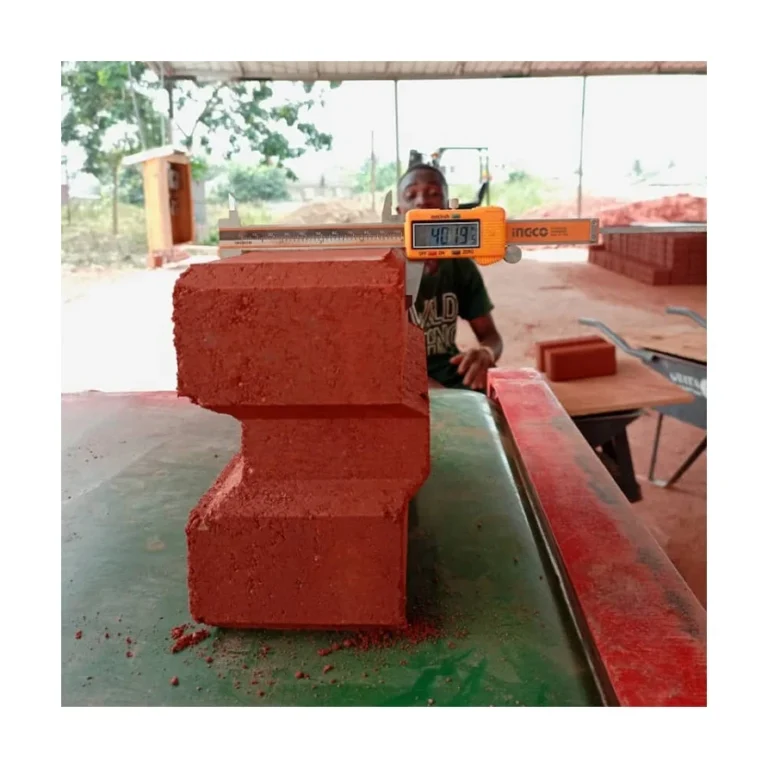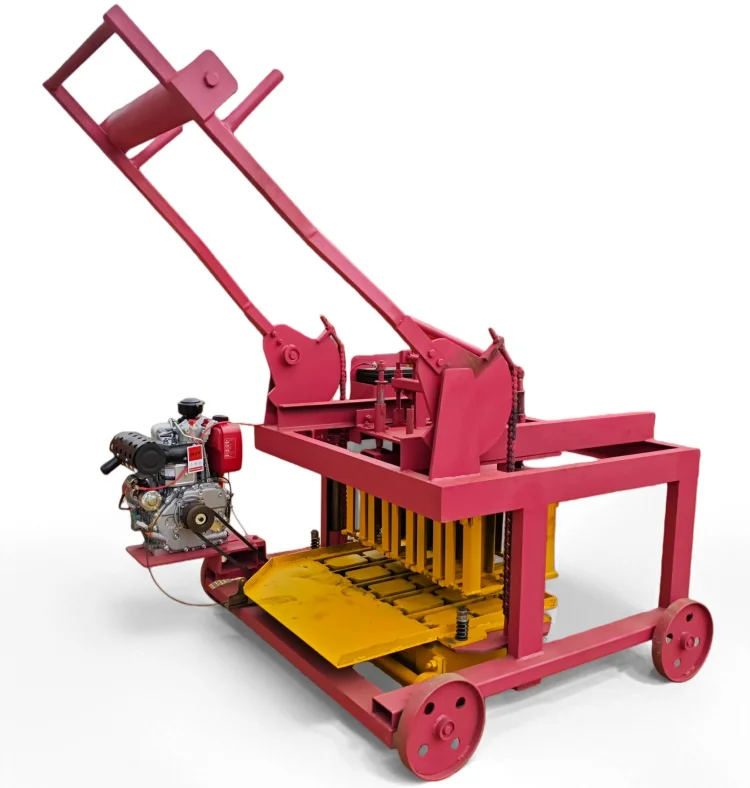
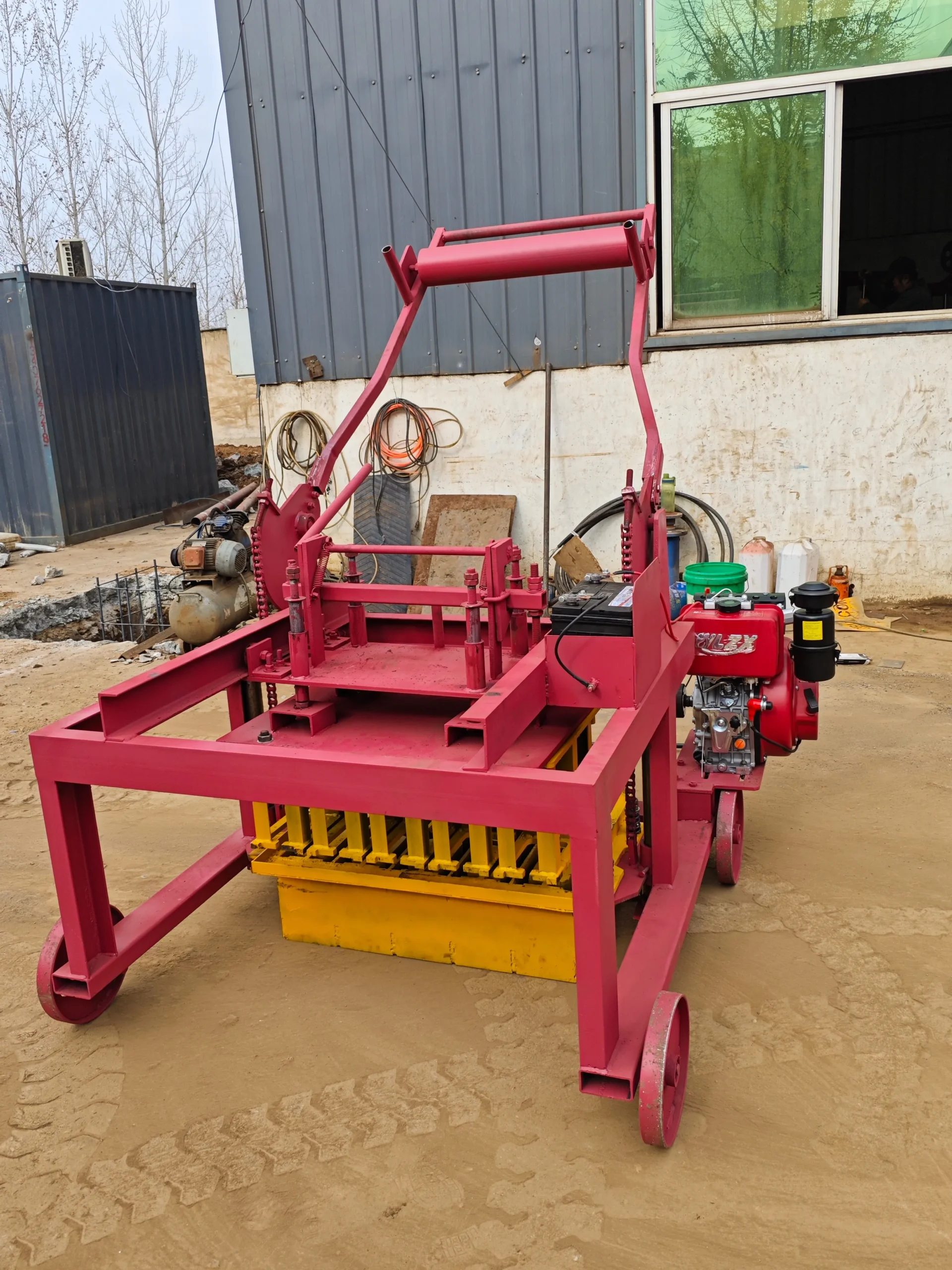
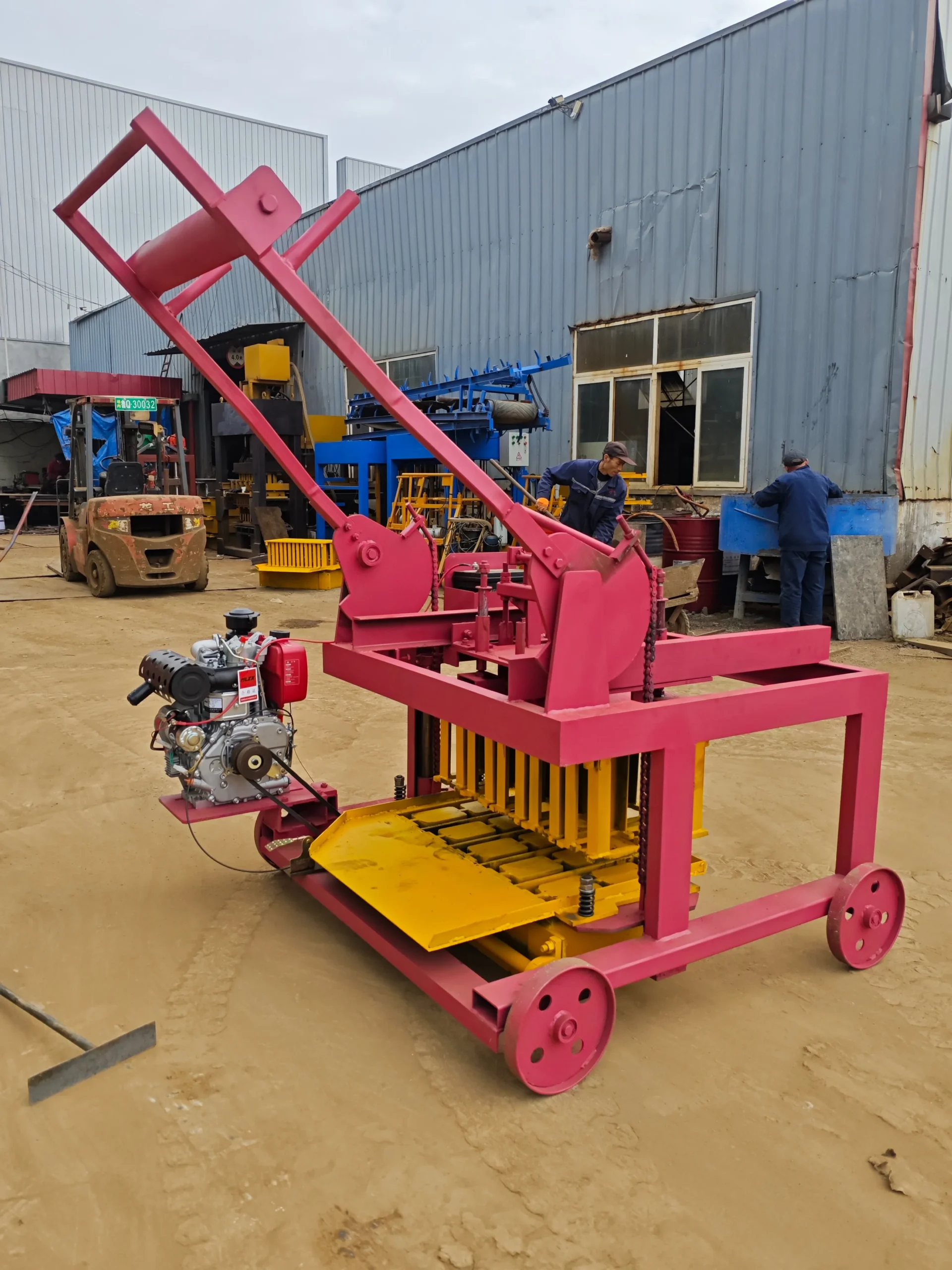
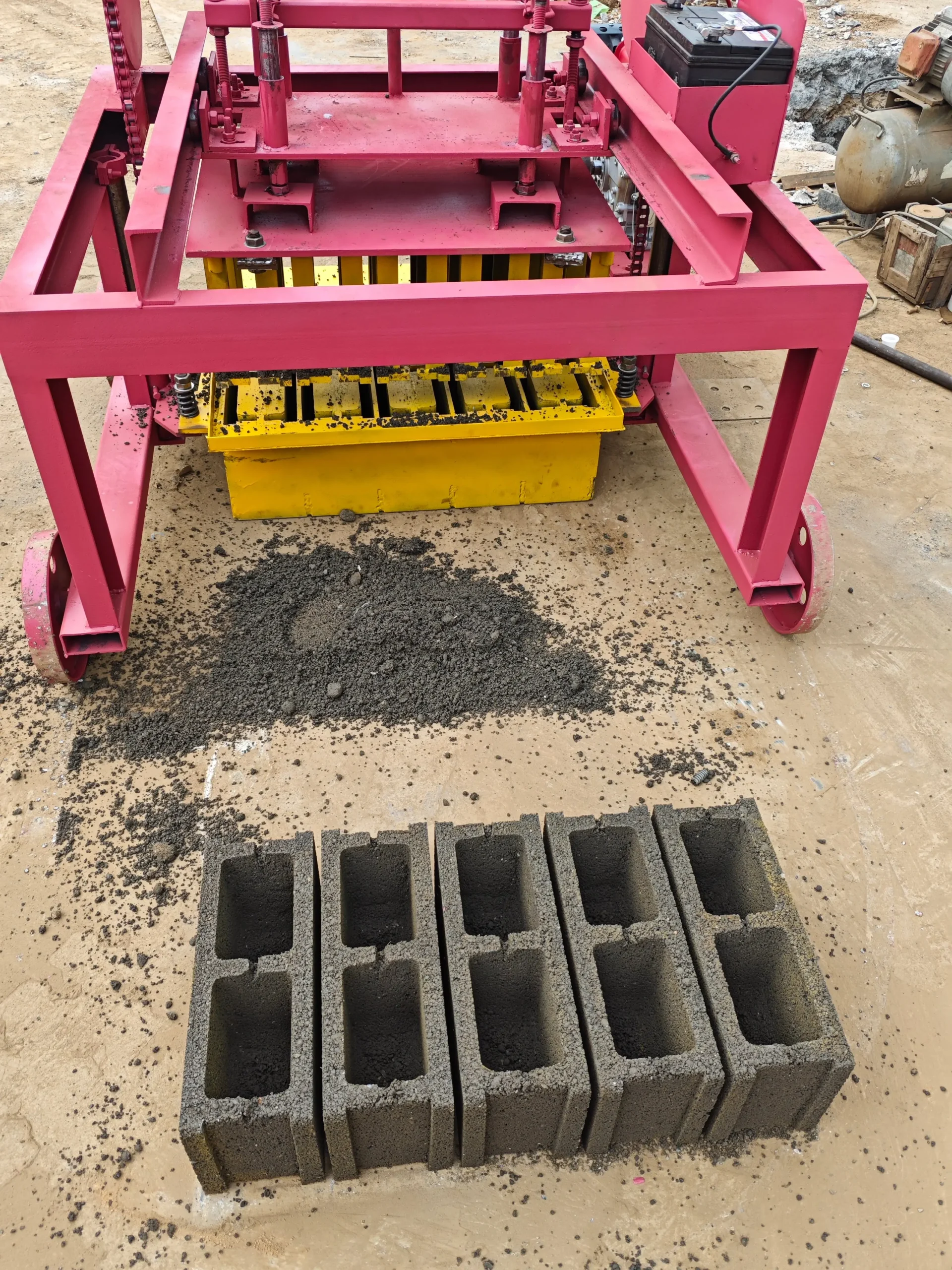
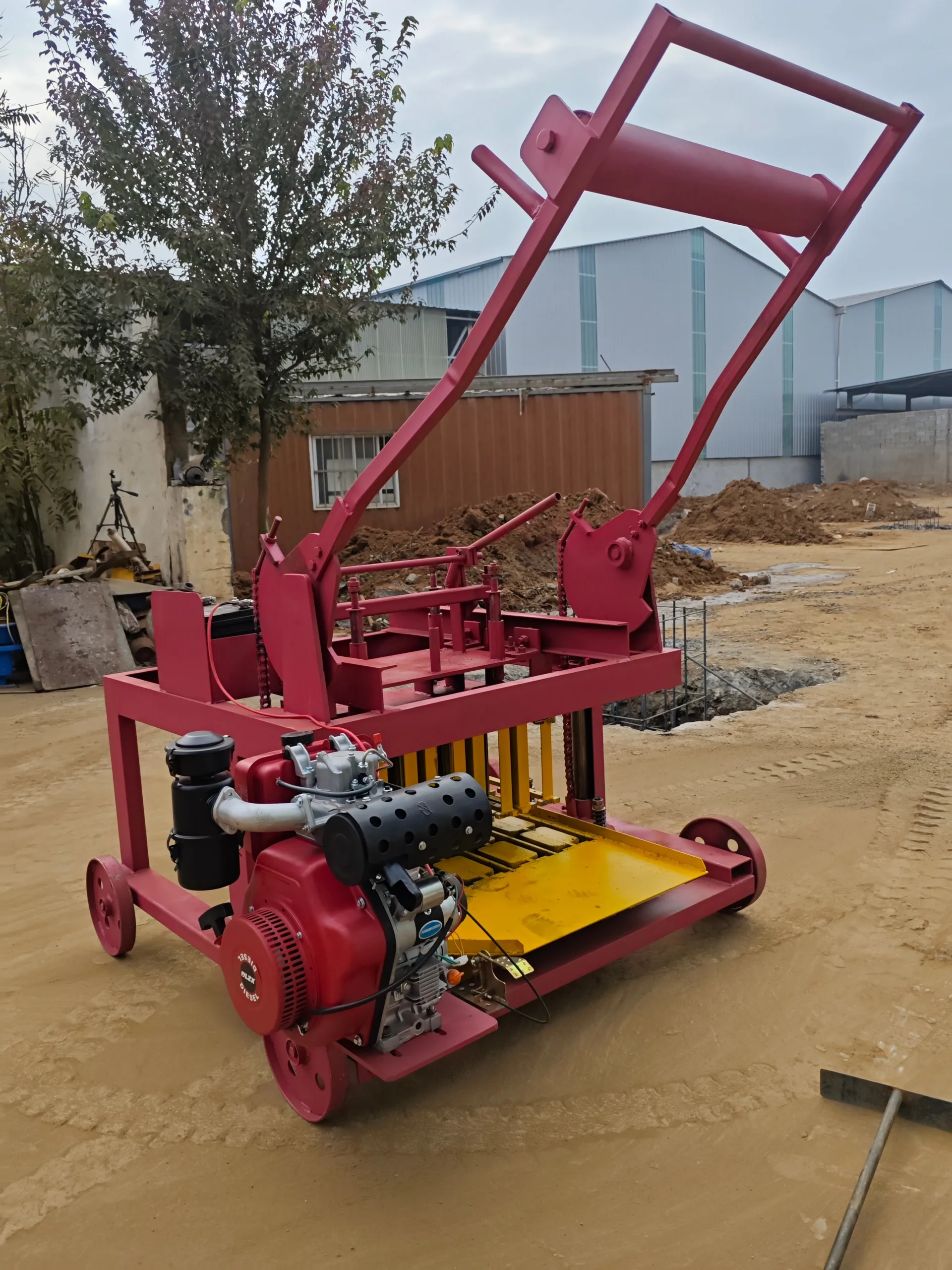
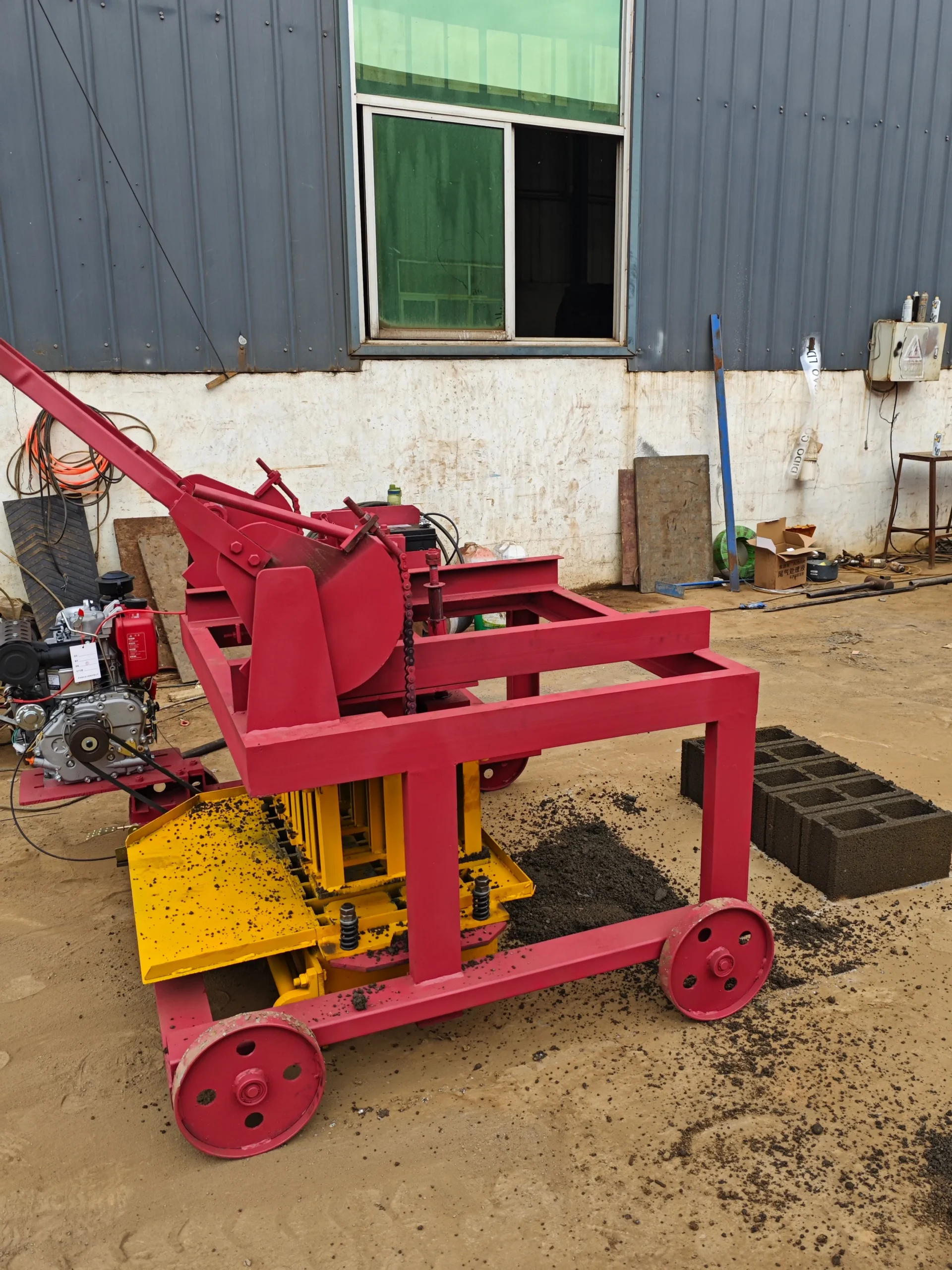
Description
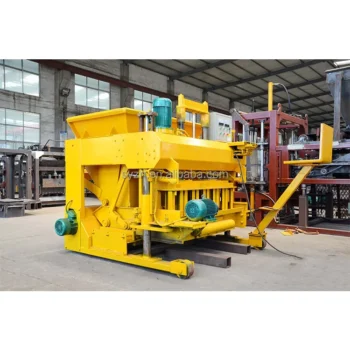
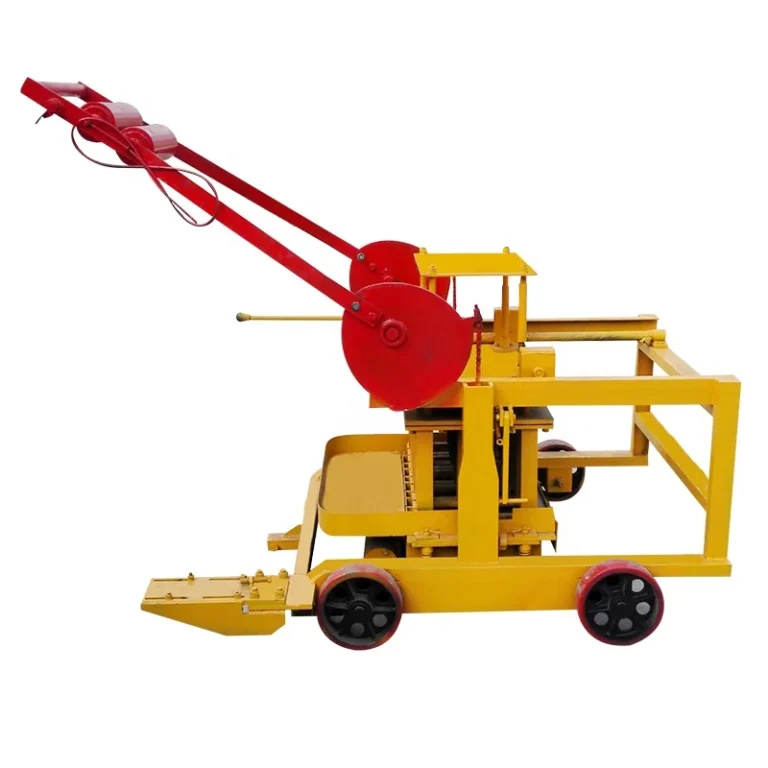
Rapid Dispatch Readiness — QMR4-45 diesel mobile block machines are held in stock with standard moulds, allowing container loading and shipment without a production wait.
Technical Specifications
| Parameter | Value |
|---|---|
| Model | QMR4-45 |
| Product Type | Mobile Diesel Block Making Machine |
| Power Source | Diesel Engine |
| Engine Power | 8 hp |
| Molding Cycle | 45 s (basis to be confirmed by block format and material) |
| Molding Form | Vibration and Pressure |
| Vibration Force | 60 KN |
| Total Weight | 800 kg |
| Overall Dimensions (L×W×H) | 2420 × 1320 × 1650 mm |
| Pallet Requirement | None (egg-laying type) |
| Basic Equipment Included | JZC350 or JQ350 Diesel Concrete Mixer; Trolley |
| Mould Compatibility | Hollow block, solid brick, paver brick, fly ash brick |
| Voltage & Frequency | To be confirmed with buyer |
| Control System | To be confirmed with buyer |
Application Suitability
| Application | Material or Output |
|---|---|
| On-site building construction | Hollow blocks and solid bricks from local aggregate and cement |
| Remote infrastructure projects | Paver bricks and kerbstones in areas without stable grid power |
| Small-scale block entrepreneurship | Entry-level production of concrete masonry units for local sale |
| Linear civil works | Roadside and drainage channel blocks produced along the project route |
What "In Stock" Actually Means for Your Project Deadline
A mobile block machine in stock is only useful if it can run the moment it arrives on your site.
Buyers often focus on the dispatch date, but the real delay happens after the container is unloaded. I have seen mobile block machines sit idle for weeks because the auxiliary mixer voltage did not match the local grid, or the ground was not prepared for egg-laying operation. The QMR4-45 is configured against your site conditions before it leaves the yard, so the diesel engine, mixer, and vibration system align with what you actually have on the ground. [NEED_CITE: typical site preparation requirements for mobile egg-laying block machines]
Container Loading and Dispatch Sequence
The QMR4-45 is compact enough to fit inside a standard shipping container along with the diesel mixer and initial mould set. This single-container footprint means one customs clearance, one inland transport arrangement, and one unloading event at your project site. Every mobile block machine in stock undergoes a pre-shipment functional test where the engine is started, the vibration system is engaged, and the mould change procedure is demonstrated on video for the buyer’s record.
Arrival and First-Day Production
Once the machine is on your ground, the egg-laying design eliminates the need for curing pallets, which are often a bottleneck in conventional block lines. The operator simply walks the QMR4-45 forward after each 45-second cycle, leaving freshly formed blocks on the floor to cure in place. This is critical for contractors working against a project schedule where every day of pallet procurement or rack construction is a day lost from block output. [NEED_CITE: on-site concrete curing practices in tropical climates]
Vibration and Pressure Matching Local Aggregate
The 60 KN vibration force works in combination with mechanical pressure to compact the concrete mix inside the mould. For buyers in Southeast Asia, local aggregate often includes laterite or crushed river gravel with high fines content. The vibration frequency and amplitude on the QMR4-45 must be matched to this specific mix, otherwise blocks may crack during demoulding or fail to reach the required compressive strength. We confirm your aggregate source and mix design before the machine is released from stock.
The Hidden Cost of Skipping Site Verification
When a mobile block machine arrives without prior site verification, the consequences cascade through the project. If the ground is soft or uneven, the egg-laying machine cannot travel in a straight line, producing blocks with inconsistent height. If the diesel specification does not match ambient temperature and altitude, the 8 hp engine may struggle during the vibration phase. These are not warranty issues — they are configuration oversights that cost the buyer time and rework. [NEED_CITE: field performance of small diesel engines in high-temperature environments]
Why Procurement Through This Channel Works
Block machinery is our single focus, so the QMR4-45 is never shipped as a standalone press but as a matched system with its mixer, moulds, and trolley. Configuration is set against your actual mix design and target block format, not a catalogue default. Standard moulds for hollow block, solid brick, and paver formats are held alongside the machines, so your order ships complete. Voltage and control parameters are confirmed in writing before dispatch, preventing the transformer delays that stall so many site starts. Installation guidance covers ground preparation and first-run procedures specific to egg-laying operation.
Documentation & Verification
- Factory test record showing engine start and vibration run on your specified mould format
- Container loading photographs documenting machine dismantling and securing for shipment
- Mould drawing and format list confirming the block dimensions included in your order
- Diesel engine specification sheet with fuel and oil requirements for your climate zone
- Operation manual covering egg-laying travel technique and mould change procedure
Installation, Commissioning & Support
- Ground must be level concrete or compacted earth to allow the 800 kg machine to travel smoothly during egg-laying cycles
- Diesel fuel and engine oil specifications confirmed for local ambient temperature before first start
- Mould change procedure demonstrated on video so your operator can practice before the machine arrives
- Initial mould set installed and tested at the factory against your target block format
- Spare vibration springs and mould wear plates included in the first shipment to cover early production runs
- Engine break-in schedule and daily greasing points documented in the operator manual
What We Need to Prepare Your Shipment
To release a QMR4-45 from stock and match it to your site, provide the block format and dimensions you intend to produce, the type of local aggregate available, and the altitude and temperature range of your project location. If you plan to use an auxiliary electric mixer alongside the diesel unit, confirm your local voltage and frequency. This allows us to prepare the correct mould, verify the engine specification, and load the container without delay.
Frequently Asked Questions
Q: Which QMR4-45 units and moulds are currently in stock?
A: We maintain a rotating stock of QMR4-45 diesel mobile block machines along with standard moulds for hollow blocks, solid bricks, and paver formats. Custom mould sizes require a separate production run. When you submit your target block dimensions, we check stock against your requirement and confirm which units and moulds can ship immediately.
Q: How soon can the machine arrive at my project site?
A: Once configuration is confirmed and payment is received, a stocked QMR4-45 is prepared for container loading within days. Total arrival time depends on your port of destination and customs clearance speed. We provide a dispatch date and estimated arrival window at the quotation stage so you can plan your project schedule accordingly.
Q: What ground conditions does the QMR4-45 need for egg-laying operation?
A: The machine requires a flat, firm surface such as a concrete slab or well-compacted earth. Soft or uneven ground causes the 800 kg unit to tilt during travel, resulting in blocks with inconsistent height. We provide ground preparation guidance specific to your soil type before the machine is dispatched.
Q: Can the QMR4-45 be converted from diesel to electric power later?
A: The QMR4-45 is designed around its diesel engine for full mobility on sites without grid power. Converting the main vibration system to electric is not a standard option. If your site has reliable electricity and you prefer an electric configuration, we can recommend an alternative model from our range that is purpose-built for that setup.
Q: Are wear parts and spare mould liners included in the first shipment?
A: Yes. Every QMR4-45 dispatched from stock includes a set of vibration springs and mould wear components sufficient for the initial production period. We also provide a wear parts list so you can identify which items to reorder locally or from us when the first replacement cycle is due.