

Description
Dispatch Speed — Stocked QMR4-45 mobile egg-laying machines are ready for container loading once voltage and engine type are confirmed, avoiding the multi-week production delays that cost contractors their project schedules.
Technical Specifications
| Parameter | Value |
|---|---|
| Model | QMR4-45 |
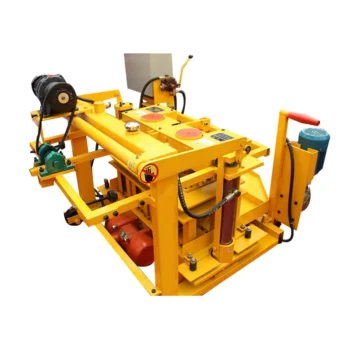
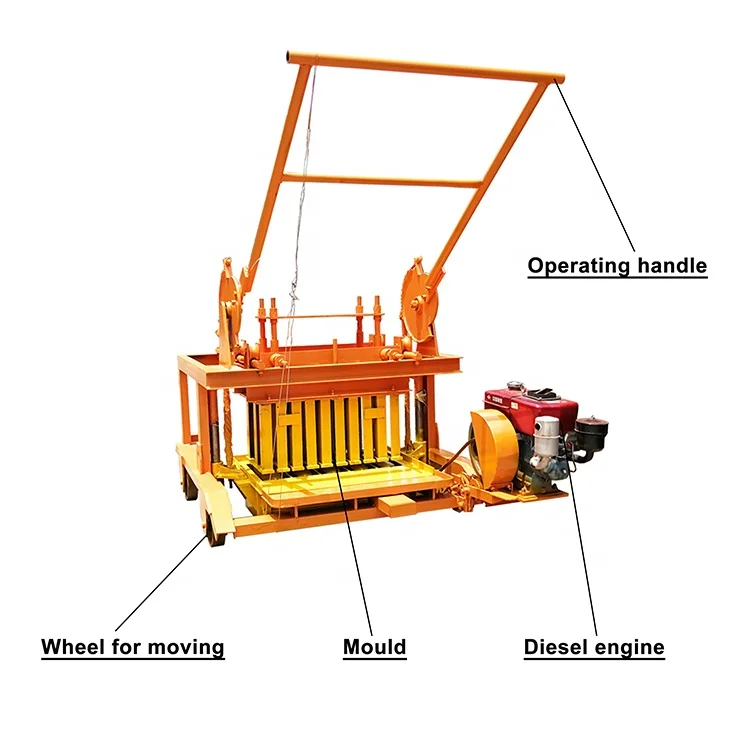
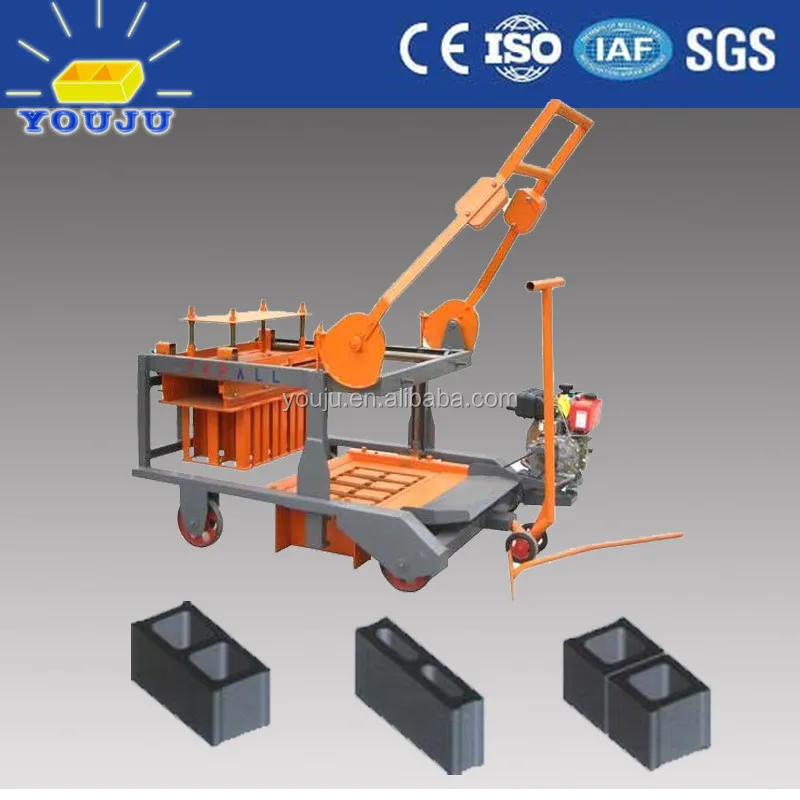
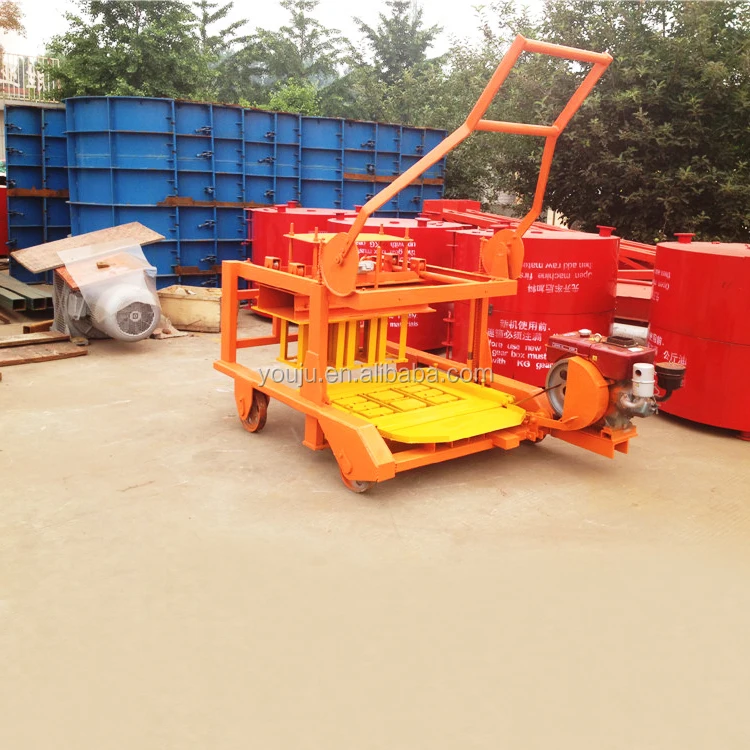
| Product Type | Mobile Diesel Egg-Laying Concrete Block Making Machine |
| Overall Dimensions (L×W×H) | 2420×1320×1650 mm |
| Net Weight | 810 kg |
| Moulding Cycle | 40–45 s |
| Pallet Size | No pallet required (egg-laying type) |
| Rated Power | 6 kW |
| Diesel Engine Option | 6 kW or 6–8 HP |
| Voltage | 220 V / 380 V (configurable to local supply) |
| Output Capacity | 3000 pcs/day for 400×200×200 mm hollow block; 3500 pcs/day for 400×150×200 mm; 4500 pcs/day for 400×120×200 mm over an 8-hour shift |
| Mould Format Options | 400×200×200 mm (4 pcs/mould), 400×150×200 mm (5 pcs/mould), 400×120×200 mm (6 pcs/mould) |
| Automation Level | Manual / semi-automatic (mobile egg-laying) |
| Assembly State | Mobile, no fixed plant or concrete floor required |
| Warranty | One year for the whole machine |
Application Suitability
| Application | Material or Output |
|---|---|
| Remote construction sites with unreliable grid power | Hollow blocks from local sand, crushed stone and cement using diesel engine |
| Housing and development projects requiring on-site block supply | 400×200×200 mm and 400×150×200 mm hollow blocks laid directly on compacted ground |
| First-time block plant entrepreneurs with limited capital | Multiple hollow block formats on a single QMR4-45 mobile block machine in stock |
| Contractors adding block production to an existing building operation | 400×120×200 mm hollow blocks with quick mould change between runs |
Why "3000 Blocks per Day" Can Mislead Your Project Schedule
The quoted daily output only holds if your block format, material moisture and operator rhythm all match the test conditions behind that number.
I have watched contractors order a mobile machine based on a brochure figure, only to find their local sand was high-clay and the daily tally fell far short once the mould started sticking. A QMR4-45 mobile block machine in stock and ready to ship still needs its capacity confirmed against the specific hollow block format you intend to run and the aggregate you can actually source on-site. When the material does not release cleanly from the mould, each 40–45 second cycle stretches, and the eight-hour shift target quietly slips away [NEED_CITE: effect of clay content in sand on concrete block demoulding and cycle consistency].
Stock Availability and the Real Dispatch Timeline
When a project deadline is tight, the difference between a machine arriving in time and arriving late is often decided before the order is placed. A QMR4-45 mobile block machine in stock means the frame, vibration motor and diesel engine are already assembled and can move to container loading once the buyer confirms voltage and control language. The compact 2420×1320×1650 mm footprint and 810 kg weight allow the unit to be loaded into a standard container without the dismantling that larger automatic lines require. Dispatch timing then depends on the remaining pre-shipment checks: factory test on the buyer’s chosen mould format, packing photographs and customs documentation preparation.
Diesel Power Where the Grid Cannot Reach
Many building sites in remote or developing regions do not have a stable three-phase supply capable of running a 6 kW block press. The QMR4-45 mobile block machine in stock with the 6–8 HP diesel engine option removes the dependency on grid power entirely. The engine drives the vibration and hydraulic functions through a direct coupling, so the machine can produce hollow blocks on a cleared and compacted patch of ground wherever the project is located. Operators refuel from the same diesel supply that feeds the site excavators and mixers, keeping logistics simple. This configuration is the reason the QMR4-45 remains a common choice for contractors who need block production to follow the build rather than the other way around [NEED_CITE: diesel-powered construction equipment adoption in off-grid project sites].
What the Moulding Cycle and Format Mean for Your Output
The 40–45 second moulding cycle is the mechanical heartbeat of this machine, but what it delivers per shift depends entirely on the block format loaded into the mould box. With the 400×200×200 mm mould, each cycle produces four hollow blocks; swap to the 400×120×200 mm mould and the same cycle time yields six. The net weight of 810 kg keeps the machine stable during vibration without requiring a bolted-down foundation, yet light enough to be repositioned across a site as the build progresses. The egg-laying design means blocks are deposited directly on the ground, so there is no pallet return system to maintain and no pallet inventory to purchase. For a contractor comparing formats, the key calculation is the wall thickness the local market demands matched against the per-cycle yield and the available curing space on-site.
The Hidden Cost of Skipping Material Confirmation Before Dispatch
Sending a mobile machine to a site without first testing the buyer’s aggregate is one of the most common reasons production stalls after arrival. High-clay sand causes the mix to cling inside the mould, forcing operators to stop and scrape between cycles and accelerating wear on the mould liner. The result is a machine that technically works but produces far fewer blocks per shift than anyone planned for, while mould replacement costs arrive months ahead of schedule [NEED_CITE: mould wear acceleration from abrasive and high-clay aggregate in concrete block production]. Confirming a material sample before the QMR4-45 leaves the shop allows the vibration force and mould clearance to be matched to what the site will actually feed into the mixer.
Why Sourcing This Machine Here Matters for Your Deadline
The QMR4-45 is the only model in our range that we hold as a complete, tested unit ready for container loading. Every stocked machine is matched as a system — frame, vibration assembly, mould and diesel engine — rather than pulled from separate inventories and assembled after the order is placed. Voltage and engine specification are confirmed against the buyer’s local supply before dispatch, not discovered as a mismatch on arrival. Packing photographs and full customs documentation are issued before the container is sealed, so the buyer can track the shipment and prepare site clearance with accurate timing. Factory test records on the specific mould format ordered are included in the documentation package, giving the buyer confidence that the machine performed on the block size the project actually requires.
Documentation & Verification
- Factory test record on the buyer’s chosen hollow block format before dispatch
- Machine specification sheet with confirmed voltage, frequency and engine type
- Mould drawing and format list for all included mould sizes
- Packing photographs showing loading and securing inside the container
- Customs documentation support for destination-country clearance requirements
- Operation and maintenance manual with wear parts list
Installation, Commissioning & Support
- No concrete foundation needed; machine operates on compacted level ground at the 810 kg operating weight
- Diesel engine option removes the need for a dedicated 380 V three-phase supply on-site
- Mould change between 400×200×200 mm and smaller formats completed with basic hand tools
- First-run commissioning includes vibration adjustment to match the buyer’s confirmed aggregate sample
- Operator training covers cycle timing, mix consistency and mould release technique for egg-laying production
- One-year warranty on the complete machine with wear parts list supplied at dispatch
What to Share With Your Inquiry
To confirm stock and prepare an accurate dispatch schedule, share the hollow block format and wall thickness your project requires, the sand and aggregate type available locally, and your site’s voltage and frequency if the electric motor option is preferred over diesel. Include the target daily output and the shift length you plan to run, so the capacity calculation reflects your actual working hours rather than a generic eight-hour figure.
Frequently Asked Questions
Q: Is the QMR4-45 currently in stock and what is the dispatch lead time?
A: The QMR4-45 mobile block machine in stock is held as a complete unit with diesel and electric motor options. Once the buyer confirms voltage, engine preference and mould format, factory testing and packing proceed immediately. Container loading and customs documentation typically follow within days, not weeks, keeping the machine aligned with tight project schedules.
Q: How is the machine packed and loaded into a container for shipment?
A: At 2420×1320×1650 mm and 810 kg, the QMR4-45 fits inside a standard shipping container without dismantling the main frame. The machine is secured to the container floor with steel brackets and packing photographs are sent to the buyer before the doors are sealed. Moulds and loose components are packed separately and labelled for quick identification on arrival.
Q: Can the voltage and diesel engine be confirmed before delivery?
A: Yes. The electric motor is configurable to 220 V or 380 V, or to the buyer’s specific local voltage and frequency when confirmed before production. The diesel engine option delivers 6–8 HP independent of grid supply. Both options are tested during the pre-dispatch factory run on the buyer’s selected mould format.
Q: What is the realistic daily output per block format on an 8-hour shift?
A: Output depends on the block format loaded. The 400×200×200 mm hollow block yields approximately 3000 pieces per 8-hour shift, the 400×150×200 mm yields around 3500 pieces, and the 400×120×200 mm reaches approximately 4500 pieces. These figures assume consistent material feed, steady operator rhythm and the stated 40–45 second moulding cycle per format.