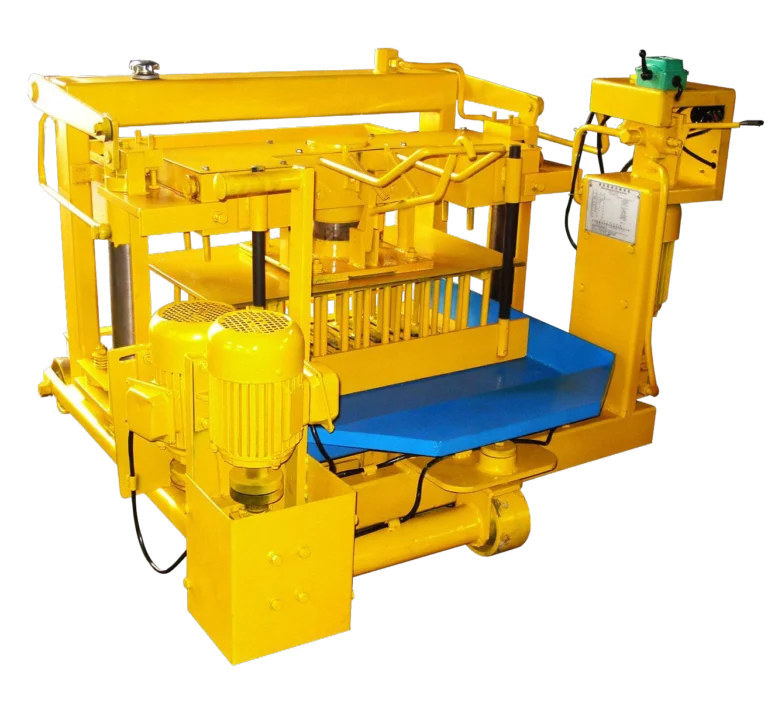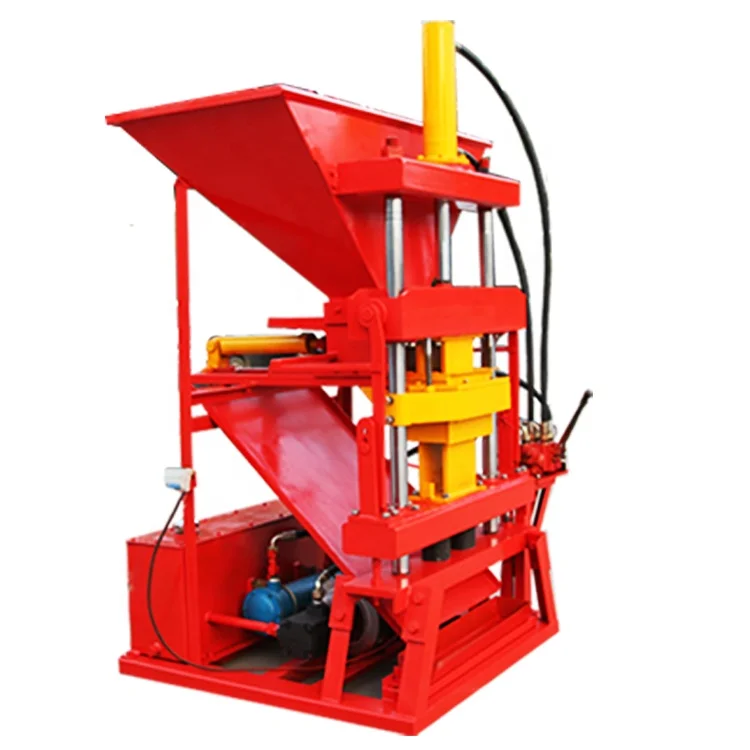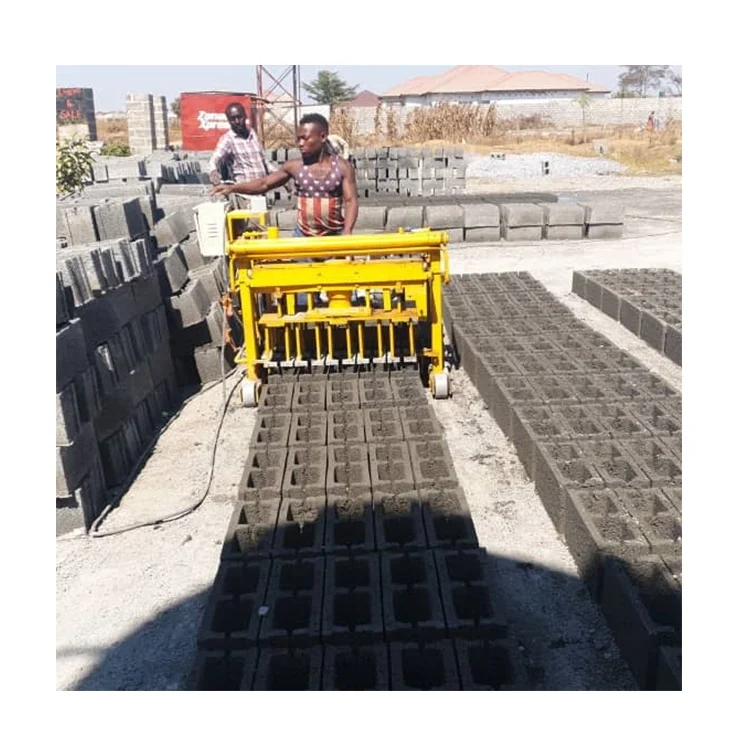

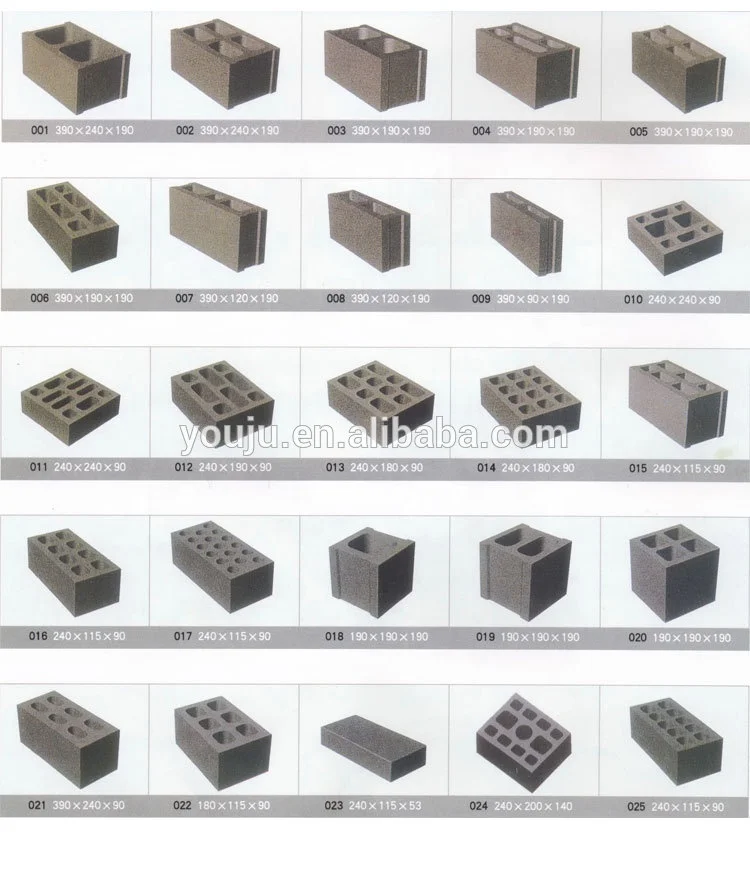

Description
Stocked dispatch readiness — the QMY4-30 is held in finished inventory so container loading dates are confirmed at the inquiry stage rather than after production begins.
Technical Specifications
| Parameter | Value |
|---|---|
| Model | QMY4-30 |
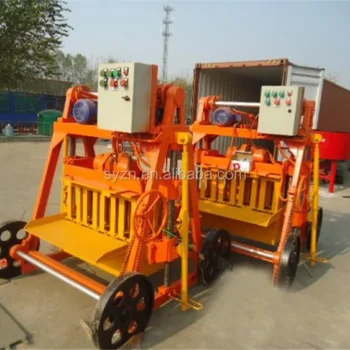
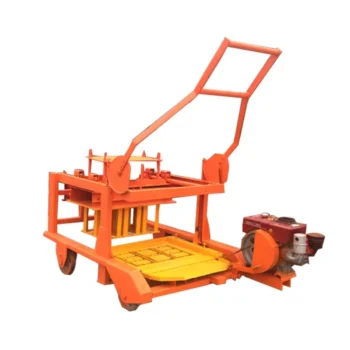
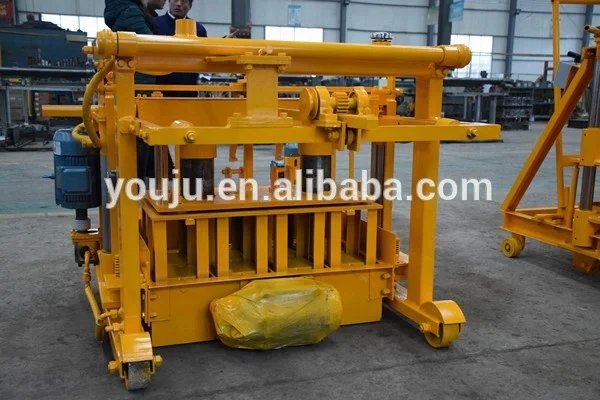
| Product Type | Mobile Hydraulic Concrete Block Making Machine |
| Rated Power | 5 kW |
| Overall Dimensions (L×W×H) | 1200 × 1200 × 1100 mm |
| Net Weight | 950 kg |
| Molding / Cycle Time | 30 seconds |
| Output Capacity | 480 pcs/h based on 400×200×200 mm hollow block, 4 pcs/mold |
| Output Capacity | 600 pcs/h based on 400×150×200 mm hollow block, 5 pcs/mold |
| Output Capacity | 840 pcs/h based on 400×100×200 mm hollow block, 7 pcs/mold |
| Output per 8-hour Shift | 3,840 pcs (400×200×200 mm) / 4,800 pcs (400×150×200 mm) / 6,720 pcs (400×100×200 mm) |
| Raw Materials | Cement, sand, crushed stones, slag |
| Mould Format | Interchangeable moulds for hollow block and solid brick |
| Machine Type | Mobile / egg-laying block making machine |
| Pallet | Not applicable — blocks laid directly on ground |
| Voltage & Frequency | To be confirmed with buyer’s site supply |
| Assembly State | Shipped as single unit |
Application Suitability
| Application | Material or Output |
|---|---|
| On-site hollow block production without a fixed plant | Cement, sand, and crushed stone mixes laid on compacted ground |
| Small-scale solid brick runs for housing projects | Slag-blended or sand-cement solid brick formats |
| Contractor-led block supply for remote development sites | Locally sourced aggregate with portable mixing setups |
| Start-up block plant with minimal infrastructure | Interchangeable hollow block and solid brick moulds |
What the Cycle Time Figure Actually Means for Your Daily Output
The QMY4-30 completes one mould every 30 seconds, but daily throughput depends entirely on the block format your market buys.
Catalogue capacity numbers often quote the fastest possible cycle with the smallest block, which does not match what a contractor or plant owner actually sells. I have watched project sites order a mobile block machine in stock based on a headline number, then face idle crews when the machine spends a full shift producing 400×200×200 mm hollow blocks at a rate that covers barely half the masonry demand. The real question is not cycles per hour — it is whether the format you need can meet your daily wall area before the mortar dries [NEED_CITE: block format and daily masonry consumption rates on typical housing sites].
Arrival Timing Is the Only Lead Time That Matters on a Project Deadline
When a contractor is three weeks behind schedule, the production lead time is only part of the story. A stocked mobile block machine in stock means the unit has already passed factory testing and is ready for container loading. The real timeline runs from dispatch confirmation through port transit to customs clearance at destination, and each of these stages needs to be quoted before payment so the buyer can map machine arrival against the construction programme. Buyers working to a project deadline need a dispatch date, not a manufacturing estimate.
How the Egg-Laying Design Removes Fixed-Plant Bottlenecks
The QMY4-30 lays blocks directly on the ground and moves forward on its own wheels after each cycle, which eliminates the pallet return loop that governs every stationary press. There is no pallet feeding system, no curing rack, and no automatic stacker to install or maintain [NEED_CITE: mobile egg-laying block machine operating principle versus stationary press logistics]. For a contractor setting up a temporary yard beside a housing development, this means production starts the day the machine is unloaded. Ground quality becomes the production variable — a compacted, level concrete apron delivers straight block rows, while soft soil causes tilting and breakage during curing.
Reading the Spec Sheet Against Your Block Format
The 30-second cycle time is the mechanical constant, but throughput shifts with every mould change. At 400×200×200 mm, the press produces four blocks per cycle, reaching 3,840 pieces in an eight-hour shift. Swap to the 400×100×200 mm partition block mould and the same machine outputs seven per cycle, raising shift volume to 6,720 pieces. This gap matters because a buyer budgeting for 200 mm wall blocks but quoting based on the 100 mm figure will overestimate revenue by nearly half. The 5 kW rated power reflects the hydraulic and vibration demand for a single-mould egg-laying press — it is not comparable to the motor loads of a pallet-based automatic line. Mould interchangeability within a single shift gives format flexibility, but each change requires manual alignment and a test cycle to confirm block dimension before full production resumes.
The Cost of Skipping the Aggregate Sample Before Dispatch
Shipping a mobile block machine in stock without verifying the buyer’s local sand and aggregate is the fastest route to a commissioning failure. High clay content in river sand reduces block cohesion, forcing the operator to increase cement dosage and compress margins, or accept breakage rates that make the yard unprofitable. I have delayed dispatch by several days to wait for a material sample because a machine tuned to clean washed sand will underperform on silty fill — and no amount of vibration adjustment compensates for poor raw material [NEED_CITE: effect of aggregate clay content on concrete block compressive strength]. The QMY4-30 handles cement, sand, crushed stone, and slag, but the proportioning must match what the buyer can actually source within hauling distance of the site.
Why Buyers Order This Machine Through This Channel
Stock status is confirmed at the inquiry stage so buyers know whether the unit ships from finished inventory or enters a production queue. Container loading plans and packing photographs are provided before dispatch, giving the buyer visibility into shipment readiness. Voltage and frequency are verified against the buyer’s site supply before the machine leaves the workshop, preventing a situation where the motor arrives incompatible with local power [NEED_CITE: industrial voltage and frequency standards across export markets]. The QMY4-30 ships as a single unit, which simplifies container allocation and customs documentation. Mould and wear part availability is confirmed alongside the machine so the first replacement cycle does not stall production weeks after arrival.
Documentation & Verification
- Factory test record run on the specific hollow block mould format included with your order
- Voltage and frequency confirmation sheet matched to your site electrical supply before dispatch
- Container loading plan with machine positioning and securing details for freight forwarder review
- Packing photographs documenting the QMY4-30 condition at the point of dispatch
- Mould drawing and format list covering all interchangeable moulds shipped with the unit
Installation, Commissioning & Support
- Requires a level, compacted concrete apron — the 1200 × 1200 mm footprint fits within a standard bay
- Power connection at 5 kW requires a dedicated circuit; voltage confirmed before machine leaves factory
- Shipped as a single unit; no heavy lifting equipment needed to position the 950 kg machine on site
- First production run supervised remotely or on-site to set cycle timing and vibration duration per mould
- Operator training covers mould change procedure, mix proportioning for local aggregate, and daily maintenance checks
- Wear parts list provided at dispatch so replacement mould plates and seals are available locally or by shipment
Before You Request a Quote
To confirm dispatch timing and match the QMY4-30 to your site, the inquiry should include the block format your market sells, the daily volume your project or plant requires, and the voltage and frequency of your local power supply. If you are sourcing aggregate from a new supplier, a material sample or gradation report helps verify mix compatibility before the machine ships.
Frequently Asked Questions
Q: Is the QMY4-30 currently in stock, and what is the typical dispatch lead time?
A: Stock status for the QMY4-30 is confirmed at the inquiry stage. When the unit is in finished inventory, dispatch follows container booking and pre-shipment inspection. Buyers receive a confirmed loading date rather than a production estimate, which shortens the gap between order and port arrival.
Q: How is the QMY4-30 packed, and how many units fit in a container?
A: The QMY4-30 ships as a single unit. The 950 kg machine and its standard mould set are secured within the container using a loading plan shared with the buyer before dispatch. Exact unit count per container depends on the mould and spare part configuration included in each order.
Q: What is the estimated arrival time from order to destination port?
A: Ocean transit time depends on the destination port and current shipping schedules. Buyers receive a departure confirmation and estimated arrival window once the container is booked. The total timeline is quoted upfront so project schedules can be planned around machine delivery.
Q: Which moulds are included as standard, and can additional formats be ordered?
A: The QMY4-30 ships with interchangeable moulds for hollow block and solid brick in the formats specified at inquiry. Additional moulds for other block sizes can be ordered alongside the machine or shipped separately. Lead time for custom moulds is confirmed at the quotation stage.
Q: Can the machine be configured for my local voltage and frequency before shipping?
A: Voltage and frequency are confirmed with the buyer before the QMY4-30 leaves the factory. The motor and control wiring are matched to the site power supply so the machine is ready for connection on arrival, avoiding commissioning delays caused by electrical incompatibility.