


Description
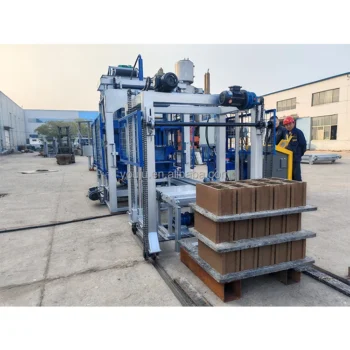
Stocked Machine Dispatch — QT4-15 units available for immediate container loading with dismantling plan and voltage confirmation completed before departure.
Technical Specifications
| Parameter | Value |
|---|---|
| Model | QT4-15 |
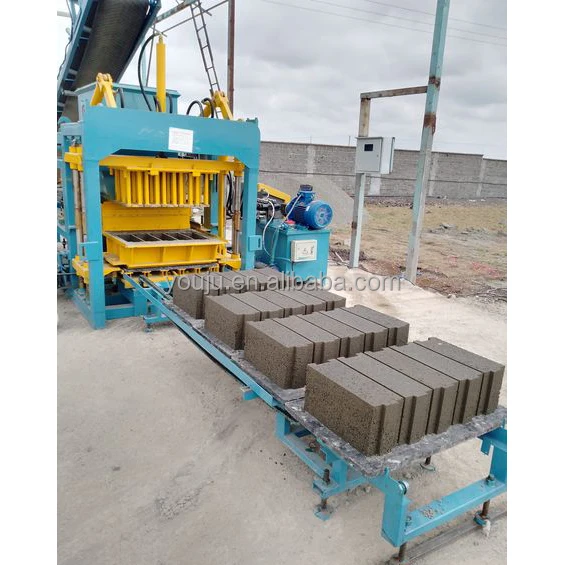
| Product Type | Stationary Concrete Block Making Machine |
| Host Machine Power | 27.5 kW |
| Vibration Force | 40 kN |
| Moulding Cycle | 15 s (basis not stated in source — confirm block format / material / thickness) |
| Overall Dimensions (L×W×H) | 7100 × 1600 × 2610 mm |
| Pallet Size | 1020 × 570 mm |
| Net Weight | 5 T |
| Mixer Model | JS500 |
| Voltage | 380 V (frequency not stated in source — confirm target market standard) |
| Motor Brand | Siemens |
| Control System | PLC with computer-controlled directional vibration, frequency and brake |
| Vibration Method | Low-frequency feeding, high-frequency vibrating; table and mould vibrate together |
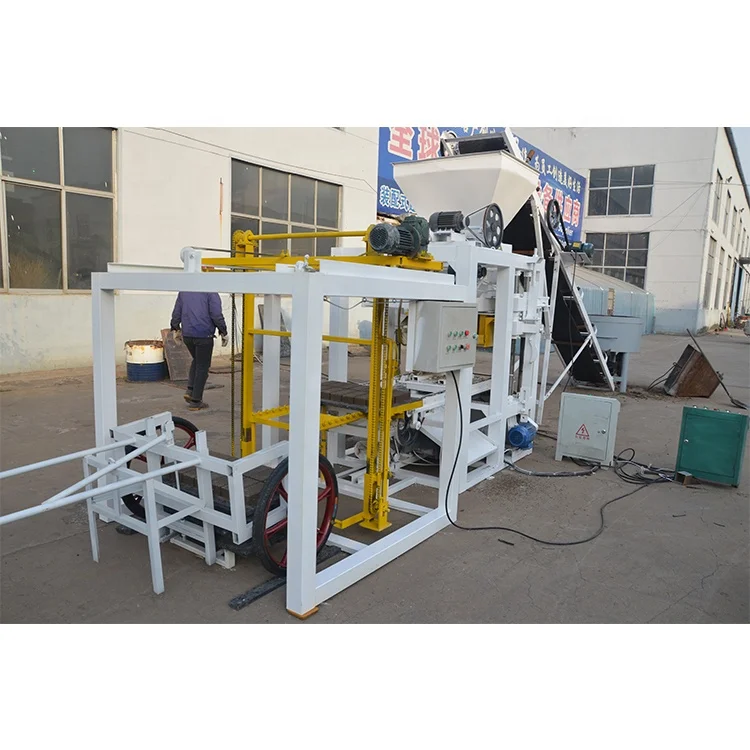
| Feeding System | Hopper with swing-type cutting device |
| Material Level Control | Photoelectric sensor |
| Workers Required | 3–4 |
| Workshop Area | 150 m² |
| Automation Level | Automatic (degree of pallet handling, stacking and cubing to be confirmed) |
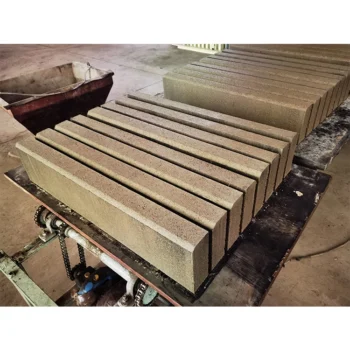
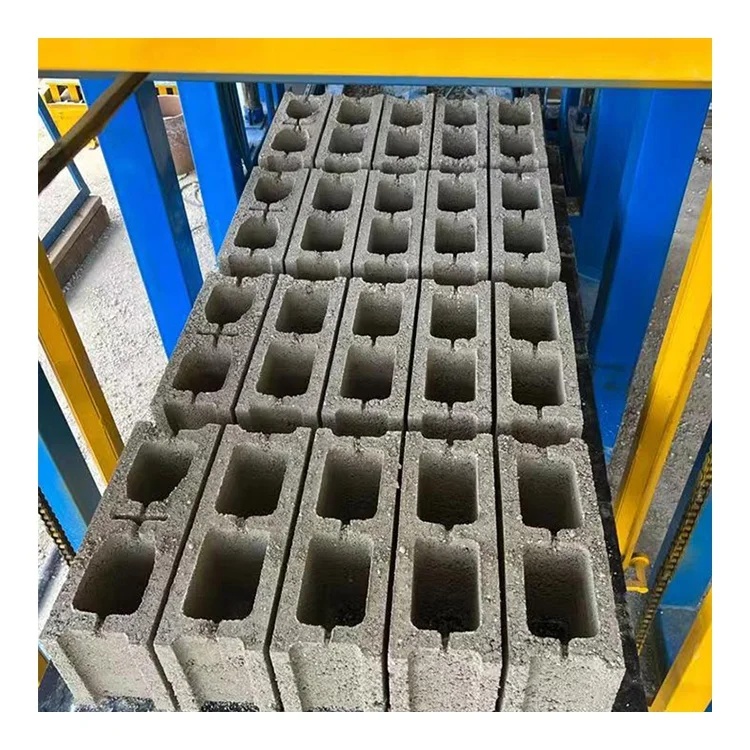
| Mould Format | Hollow block, multicellular brick, paving brick, standard brick |
| Warranty | 1 year for the whole machine |
Application Suitability
| Application | Material or Output |
|---|---|
| Small-scale concrete block manufacturing plants | Hollow blocks and standard bricks from crushed stone, sand and cement |
| On-site block production for construction contractors | Paving bricks and multicellular bricks using locally sourced aggregate |
| Building material distributors expanding product range | Multiple block formats from a single machine with mould changes |
| Entrepreneur-led first block plant setups | Daily output volumes aligned to local market demand for standard masonry units |
What "Stock Availability" Actually Means for Your Project Deadline
A machine listed as in-stock should be dismantled, photographed and container-loaded within days — not weeks.
Buyers working against a construction milestone or a distributor replenishment schedule cannot afford ambiguity around dispatch timing. I have seen project contractors pay demurrage charges because a block machine arrived late, and I have seen first-time plant owners lose their initial customer contracts while waiting for a machine that was still "in production." When you evaluate a QT4-15 concrete block making machine in stock listing, the real question is whether the supplier can show you the physical unit, confirm the voltage wound for your country, and provide a container loading plan before you transfer the deposit [NEED_CITE: typical container loading and dispatch timelines for stationary block machinery].
Dispatch Lead Time and Container Loading Readiness
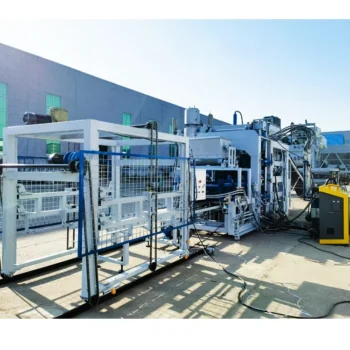
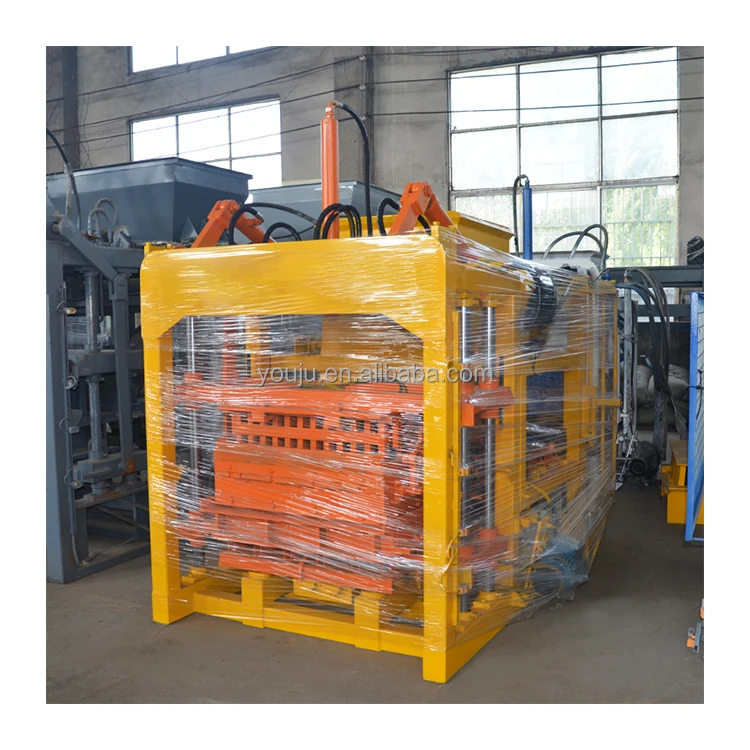
The QT4-15 concrete block making machine in stock status means the host press, JS500 mixer and standard mould set are assembled and factory-tested. For project-deadline buyers, this removes the typical multi-week build queue. The machine is dismantled into container-loadable sections — the main frame, vibration table, hydraulic station and control cabinet are separated and secured with timber bracing. Packing photographs are taken at each stage so the buyer sees exactly how their unit is stuffed before the container door closes.
Voltage Confirmation Before the Machine Leaves the Factory
A 380 V machine built for a 50 Hz market will run hot and fail prematurely on a 60 Hz supply. Before any QT4-15 unit ships, the motor winding specification and PLC frequency setting must match the destination country’s grid standard [NEED_CITE: voltage and frequency standards by export market]. This confirmation happens at the quotation stage, not after the machine is already crated. The control cabinet label, motor nameplate and PLC parameter sheet are all cross-checked against the buyer’s stated electrical standard.
Reading the Specifications That Actually Matter on Site
The 40 kN vibration force paired with the 27.5 kW host power defines what density the machine can achieve in a given block format. Higher vibration force compacts the mix more aggressively, which matters when the buyer’s local aggregate is angular or poorly graded. The 1020 × 570 mm pallet size determines how many blocks are formed per cycle — a standard 400×200×200 mm hollow block fits four per pallet, but a smaller paving brick format may fit twelve or more. The photoelectric material level sensor prevents overfeeding that can cause aftershock vibration damage to freshly formed blocks still on the pallet. The JS500 mixer provides batch consistency that manual mixing cannot match, though its output must be timed to the press cycle so the hopper never runs dry.
The Hidden Cost of Ordering a Machine That Is Not Actually Ready
Buyers who accept a vague "two to three weeks" delivery promise often discover that the machine was never built — it was a catalogue listing. By the time the truth emerges, the project deadline has slipped, the contractor has sourced blocks from a competitor, and the deposit is locked in a production queue the buyer cannot see [NEED_CITE: common procurement delays in imported construction machinery]. A genuinely stocked QT4-15 eliminates this risk because the buyer can request a video call to see the specific serial-numbered unit before payment.
Why Buyers Source This Machine Through Our Dispatch Workflow
Block machinery is our single focus, which means the QT4-15 is specified as a matched system — press, mixer, mould and pallet — rather than assembled from unrelated suppliers. We confirm the buyer’s local aggregate and target block format before recommending a configuration, because a machine tuned for river sand will underperform with volcanic scoria. Container loading plans are quoted upfront with the dismantling sequence, so the buyer knows which forklift capacity is needed at the destination port. Factory test records document the actual cycle time achieved with a stated mix, not a catalogue figure. Customs documentation — including packing list, certificate of origin and HS code — is prepared in parallel with loading so arrival clearance is not delayed [NEED_CITE: standard export documentation requirements for block making machinery].
Documentation & Verification
- Factory test record showing cycle time on the buyer’s specified block format
- Voltage and frequency confirmation sheet matched to destination grid standard
- Container loading plan with dismantling sequence and packing photographs
- Packing list and HS code for customs clearance at destination port
- Operation and maintenance manual in the buyer’s required language
Installation, Commissioning & Support
- 150 m² workshop footprint requires a level concrete slab with drainage for mixer washout
- 27.5 kW host power demands a dedicated circuit with correct breaker rating for the local voltage
- Machine arrives dismantled; reassembly requires a forklift rated for the 5 T host frame
- PLC parameters calibrated on-site to match local aggregate and block format
- Operator training covers mould change procedure and daily vibration table inspection
- Wear parts list identifies hydraulic seals and vibration springs for first reorder
Before You Request a Quote
Tell us which block formats your market sells and what daily volume you need to sustain your operation. Specify your local aggregate type — crushed limestone, river sand, volcanic scoria or recycled concrete — because this determines the vibration setting and mix design we configure before shipping. Confirm your site voltage and frequency so the motor and PLC are matched to your grid before the machine leaves the factory.
Frequently Asked Questions
Q: Is the QT4-15 currently in stock or built to order, and what is the dispatch lead time?
A: Stock status varies by configuration. When a QT4-15 unit is available, it can be dismantled, loaded and dispatched within days of order confirmation. Built-to-order units follow a standard production queue. We confirm the exact lead time and physical unit availability before accepting any deposit.
Q: How is the machine dismantled for container loading, and what container type is required?
A: The host frame, vibration table, hydraulic station and JS500 mixer are separated and secured with timber bracing inside a standard open-top or flat-rack container. A full loading plan with packing photographs is provided before departure so the buyer sees exactly how the machine is stowed.
Q: Can voltage and frequency be confirmed for my country before shipment?
A: Yes. The motor winding and PLC frequency parameter are matched to the destination country’s grid standard at the quotation stage. The control cabinet label and motor nameplate are cross-checked against the buyer’s stated voltage and frequency before crating.
Q: What is included in the shipment — are pallets, moulds and the JS500 mixer part of the package?
A: The standard package includes the host press, JS500 mixer and one set of moulds for the buyer’s chosen block format. Pallets and additional mould sets are quoted separately. The exact inclusion list is confirmed in the quotation before order.
Q: What customs documentation do you provide on arrival?
A: We supply a commercial invoice, packing list, certificate of origin and HS code classification. CE declaration is available where applicable. All documents are prepared in parallel with loading so they reach the buyer before the vessel arrives at the destination port.