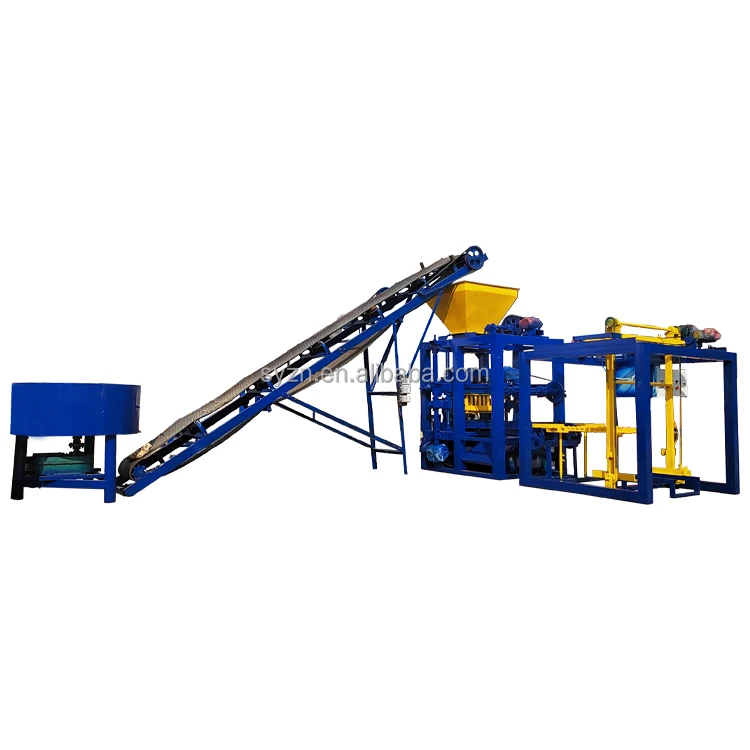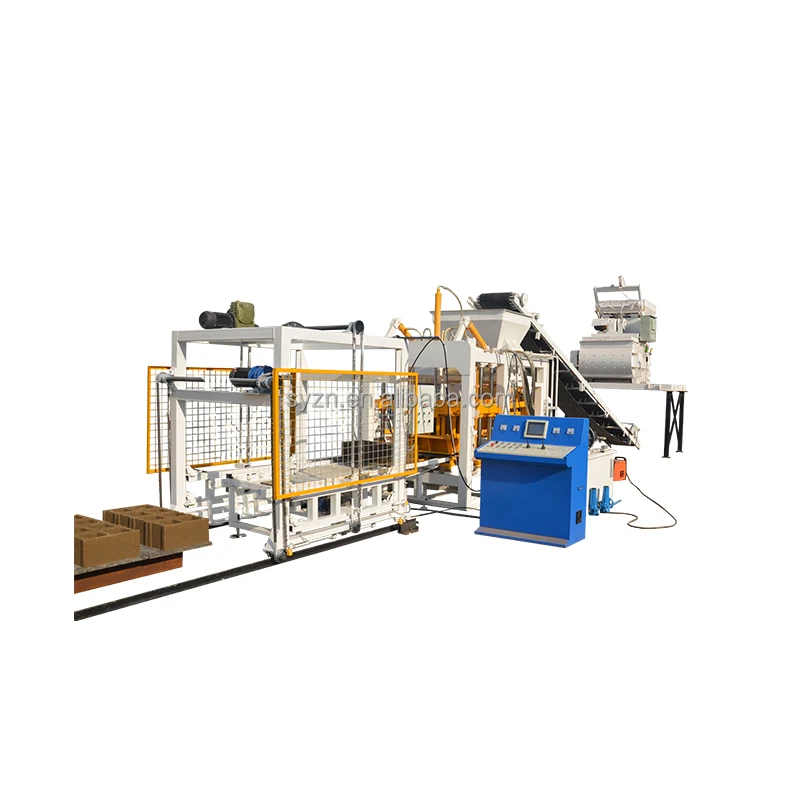


Description
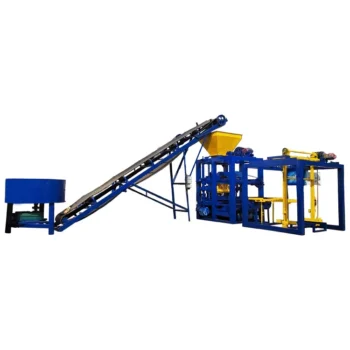
Matched System Dispatch — Every QT4-15A unit ships with its mould, pallet and handling gear specified together, so the line runs from day one instead of waiting for missing parts.
Technical Specifications
| Parameter | Value |
|---|---|
| Product Type | Automatic Concrete Block Making Machine |
| Model | QT4-15A |
| Overall Dimensions | 7100 x 1600 x 2610 mm |
| Molding Cycle | 15–25 s |
| Vibration Frequency | 4600 r/min |
| Exciting Power | 40–50 KN |
| Rated Power | 18.45 kW |
| Mixer Model | JQ350 |
| Pallet Size | 850 x 550 x 25 mm |
| Net Weight | 3 T |
| Control System | PLC control system |
| Hydraulic Pressure | (source value — verify against manufacturer catalog) |
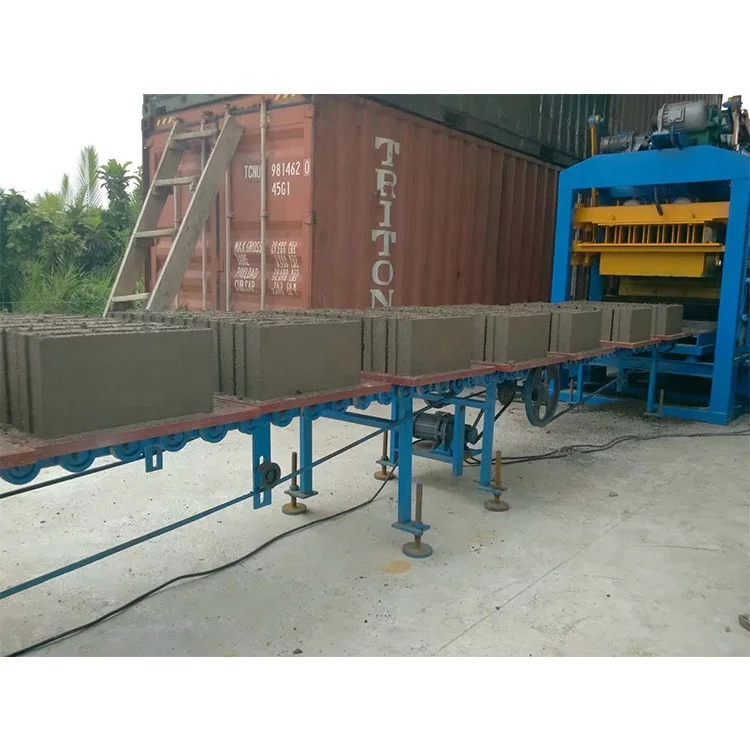
| Output (Hollow Block 400×200×200 mm) | 408 pcs/hr, 3264 pcs/8 hr |
| Output (Hollow Block 400×150×200 mm) | 510 pcs/hr, 4080 pcs/8 hr |
| Output (Solid Brick 240×115×53 mm) | 2100 pcs/hr, 17000 pcs/8 hr |
| Included Equipment | Block making machine, hydraulic station, PLC control system, pallet feeder, brick conveyor, block sweeper |
| Free Accessories | Manual hydraulic trolley, spare parts and tools |
| Key Features | Automatic operation with pallet feeder, conveyor and sweeper included |
Application Suitability
| Application | Material or Output |
|---|---|
| Hollow block production for building walls | Crushed stones, sand, cement, fly ash, dust |
| Solid brick manufacturing for masonry | Cement, sand, crushed aggregate blends |
| Paver production for walkways and yards | Cement, sand, fine aggregates |
| Curbstone forming for road edges | Cement, crushed stones, sand |
| On-site block production by contractors | Local aggregate, cement, fly ash where available |
| Start-up block plant for entrepreneurs | Standard concrete mixes using regional raw materials |
Why "In Stock" Matters More Than a Quoted Lead Time
A QT4-15A block making machine in stock means the dispatch clock starts when you confirm, not when a production slot opens weeks later.
I once watched a Latin American project stall for nearly a month because the block machine arrived at site with a 380V electrical setup while the local grid ran at 440V/60Hz. The crew stood idle, the contractor paid penalty clauses, and a transformer had to be sourced locally at a premium. That kind of delay does not come from the machine itself — it comes from poor pre-shipment verification. When the schedule is tight, the difference between a machine on the warehouse floor and one still in the build queue is the difference between meeting your deadline and explaining to your client why the foundation is curing with nothing to lay on it [NEED_CITE: common causes of project delay due to equipment delivery mismatches].
Dispatch Readiness from the Warehouse Floor
The QT4-15A block making machine in stock status is confirmed against actual units on the floor, not a production forecast. Before dispatch, each machine goes through a factory test where the hydraulic station cycles under load, the PLC control system runs through its program, and the pallet feeder feeds and retrieves sample pallets. The container loading plan is agreed before the crate is sealed — the press, hydraulic station, and control cabinet travel in a standard container with pallets stacked alongside to fill the remaining volume.
Arrival Estimates Quoted Upfront
Once the QT4-15A block making machine in stock is loaded and the bill of lading is issued, the sailing schedule gives a realistic arrival window. I build the dispatch timeline from factory test through customs clearance at origin port, ocean transit, and arrival at destination. This means the buyer can align foundation work, raw material stockpiling, and operator availability to a calendar date rather than a guess [NEED_CITE: typical ocean freight transit times for containerised machinery shipments].
Matching the Machine to the Deadline
Not every project can wait for a custom build. The QT4-15A is configured for a defined range of block formats — hollow blocks at 400×200×200 mm and 400×150×200 mm, solid bricks at 240×115×53 mm — which covers the majority of standard construction demand. When the project timeline is measured in weeks rather than months, pulling a tested, stocked unit from the floor is the practical choice.
How Vibration and Pressure Shape the Block
The QT4-15A runs a vibration frequency of 4600 r/min with an exciting force of 40–50 KN. In block production, vibration compacts the mix into the mould cavity while hydraulic pressure applies a top-down squeeze to lock the particles together. If vibration is strong but hydraulic pressure is low, blocks come out with air pockets and inconsistent density. If pressure is high but vibration is weak, the mix does not fill the mould corners and edges crumble. The QT4-15A pairs both systems so the mould fills completely and compresses evenly. The 850×550×25 mm pallet size sets the footprint for every mould, meaning the curing area and forklift capacity at the buyer’s site need to accommodate that pallet dimension. The 15–25 s molding cycle reflects a range because denser mixes and larger block formats push the cycle toward the longer end.
What Happens When Electrical Specs Are Overlooked
A block machine sitting in a yard with no power is the most expensive piece of furniture on any construction site. I have seen voltage mismatches halt entire project schedules because the factory defaulted to a common domestic voltage while the destination country operated on a different grid standard. Frequency differences are equally damaging — a motor rated for 50 Hz running on a 60 Hz supply spins faster, overheats, and fails prematurely. The QT4-15A draws 18.45 kW at its rated power, which means the local transformer and supply cabling must be sized accordingly before the machine arrives, not after [NEED_CITE: voltage and frequency standards by export market].
Why Stocked Machines Move Faster Here
Single-focus machinery sourcing means the QT4-15A leaves the factory with mould, pallet, and handling equipment matched as one system. The electrical parameters are confirmed with the buyer before the machine is crated — voltage, frequency, and PLC display language are locked in writing. Dispatch lead times are quoted in days rather than vague production windows because the unit is physically present and test-ready. Container loading plans include dismantling points so the machine reassembles at site without missing hardware. Packing photographs document the condition at the moment of sealing, giving the buyer a visual record for customs and insurance purposes.
Documentation & Verification
- Factory test record showing hydraulic cycle and PLC function on the stocked QT4-15A before dispatch
- Voltage and control language confirmation sheet signed before crating
- Container loading plan with dismantling points and pallet count per container
- Packing photographs documenting machine condition at the time of sealing
- Operation and maintenance manual matching the shipped configuration
- Customs documentation package prepared for the destination port
Installation, Commissioning & Support
- Foundation pad sized to 7100 x 1600 mm footprint with level tolerance confirmed before arrival
- Dedicated electrical supply rated for 18.45 kW connected and tested before the machine is powered on
- Machine dismantled for container loading and reassembled on-site with alignment verification
- PLC control system parameters loaded and molding cycle tested across all supplied mould formats
- Operator training covering pallet feeder sequence, mould change procedure, and daily maintenance checkpoints
- Wear parts list and spare tool kit included in the free accessories for the first production runs
Before You Request a Quote
To match a stocked QT4-15A to your project timeline, send the block format you need to produce, the daily output target, and your local voltage and frequency. If you already have a curing area or forklift, confirm the pallet dimensions you can handle so the 850×550 mm pallets fit your existing layout. State your port of destination so the sailing schedule can be checked against your project deadline.
Frequently Asked Questions
Q: Which mould formats are available on the QT4-15A in stock right now?
A: The standard stocked moulds cover hollow blocks at 400×200×200 mm and 400×150×200 mm, plus solid bricks at 240×115×53 mm. If your market requires pavers or curbstones, confirm availability of those specific moulds before ordering, as they may need to be scheduled separately or added from existing stock.
Q: How long does dispatch take once the order is confirmed?
A: A stocked QT4-15A moves from factory test through crating and container loading within a defined dispatch window after confirmation. The exact number of days depends on the electrical parameter verification and customs paperwork preparation. We quote the dispatch date in writing at the time of order.
Q: Can the pallets ship in the same container as the machine?
A: Yes, the container loading plan typically includes pallets stacked alongside the dismantled machine and hydraulic station. The 850×550×25 mm pallets fill remaining container volume, reducing the need for a separate shipment and keeping your line components together.
Q: What is the on-site installation timeline after arrival?
A: The QT4-15A is dismantled at specific points for container loading and reassembled on a prepared foundation. Installation covers mechanical reassembly, electrical connection to a supply matching the confirmed voltage, and commissioning runs with the supplied moulds. A prepared site with foundation and power ready shortens the process considerably.
Q: If the project is urgent, can the schedule be compressed?
A: A stocked unit already bypasses the production queue, which is where most lead time sits. Further compression depends on how quickly electrical parameters are confirmed, factory testing is completed, and a shipping slot is available. Early confirmation of all technical details is the single most effective way to accelerate dispatch.