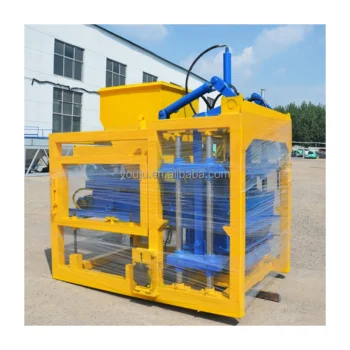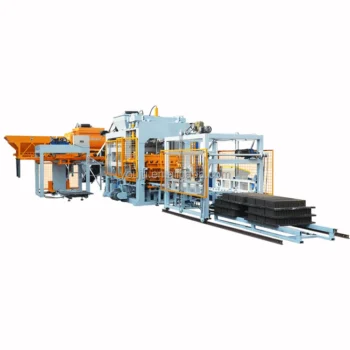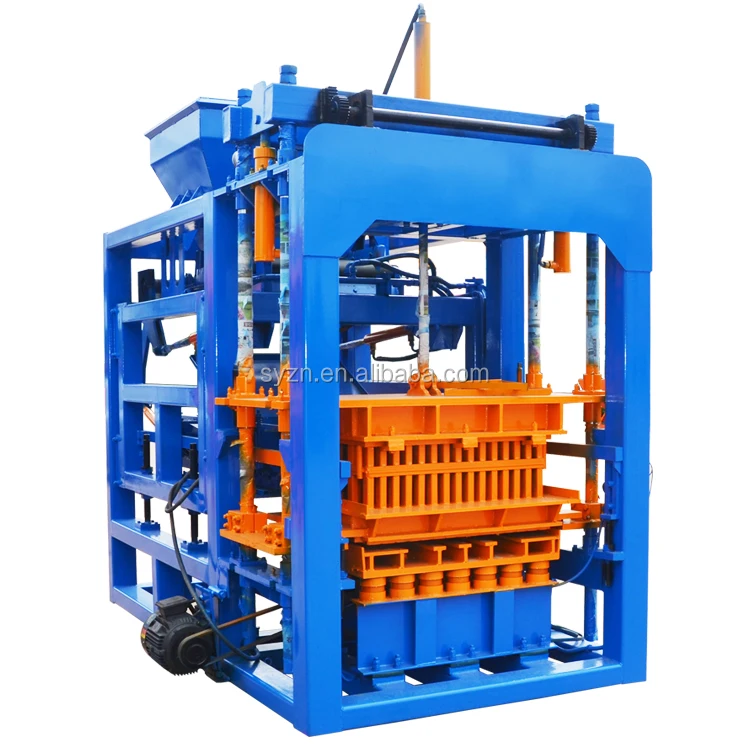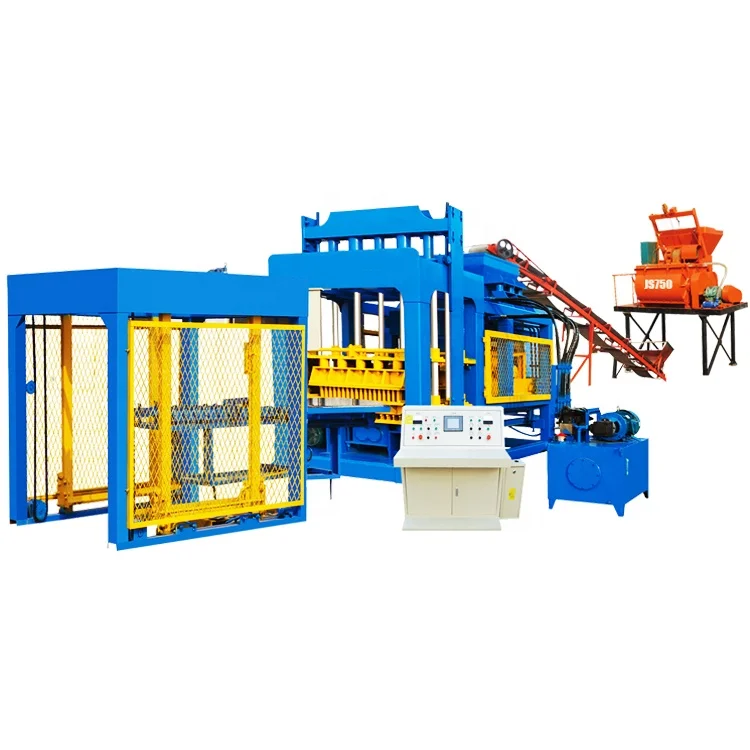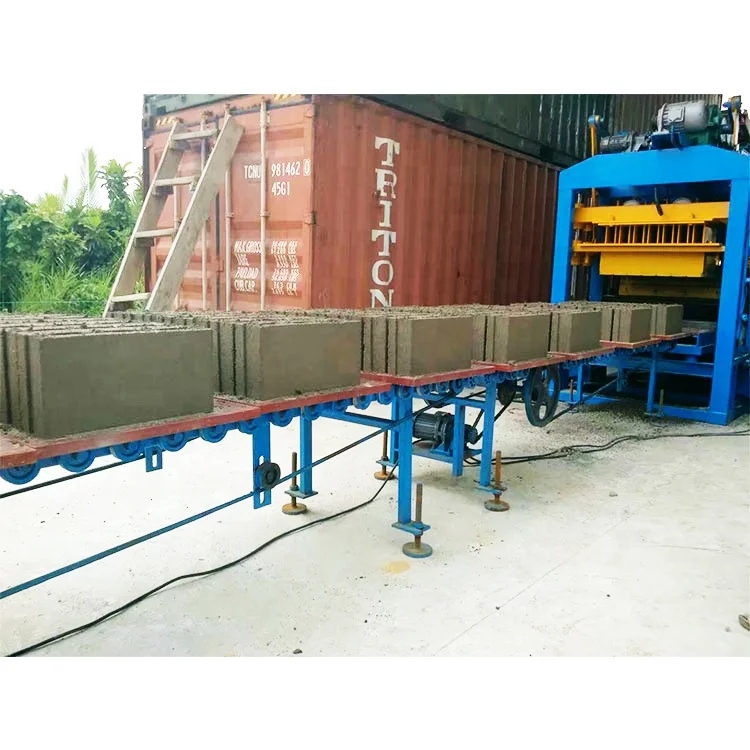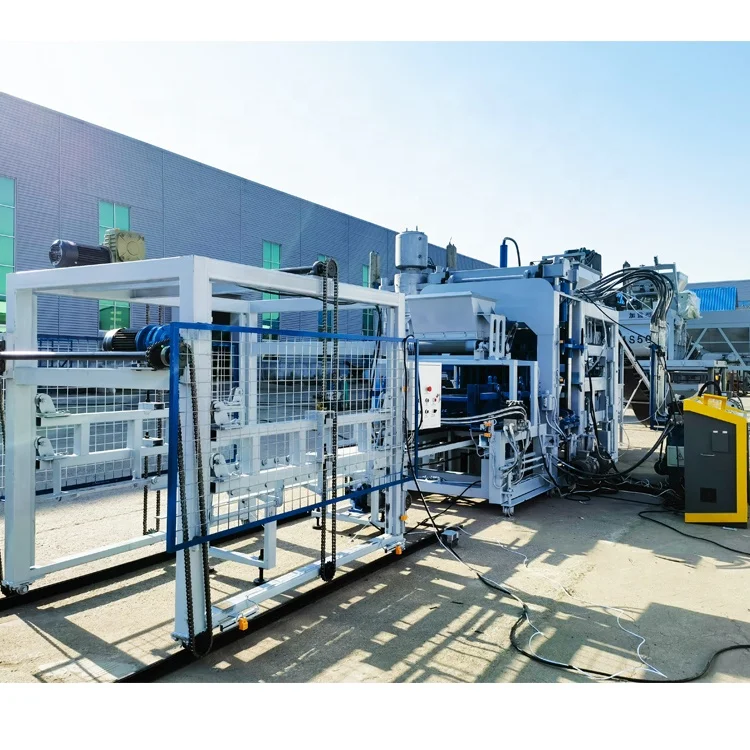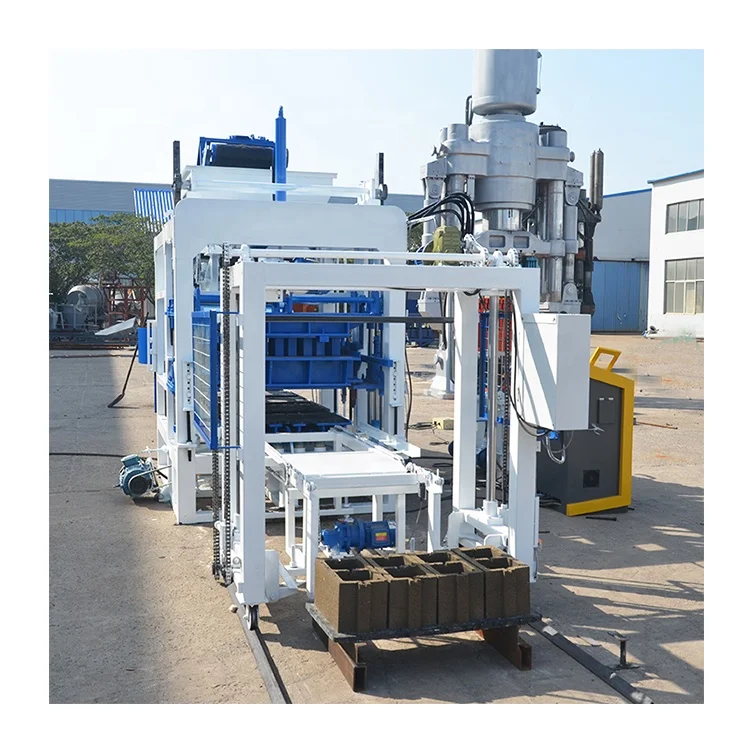


Description
Ready-to-Ship Configuration — the QT4-16 block machine arrives dismantled, container-loaded, and voltage-verified so your project deadline stays intact from factory gate to port arrival.
Technical Specifications
| Parameter | Value |
|---|---|
| Model | QT4-16 |
| Product Type | Automatic Hydraulic Concrete Block Making Machine |
| Overall Dimension | 7400 × 1950 × 2800 mm |
| Total Mass | 5 T |
| Rated Pressure | 21 MPa |
| Vibration Force | 40 kN |
| Vibration Frequency | 2800–4500 r/min |
| Main Vibration Form | Platform Vibration |
| Pallet Size | 900 × 550 mm |
| Molding Cycle | 15–20 s (basis not stated in source — confirm block format, material, and thickness before quoting output) |
| Demolding Method | Hydraulic |
| Factory Area Required | 600 m² |
| Control System | PLC intelligent control with man-machine interface, logic control, production program, malfunction diagnosis, and remote control function |
| Voltage & Frequency | Configurable — must be confirmed against destination site grid before dispatch |
| PLC Display Language | Configurable — must be confirmed before shipment |
| Raw Materials | Crushed stone, sand, cement, fly ash, gravel, slag, dust |
| Applied Products | Concrete blocks, hollow blocks, solid blocks, pavers, interlocking blocks, curbstone, colored pavers |
Application Suitability
| Application | Material or Output |
|---|---|
| On-site hollow block production for housing projects | Crushed stone, sand, and cement mixed locally |
| Solid block manufacturing for load-bearing walls | Fly ash blended with gravel and cement |
| Interlocking paver production for driveways and walkways | Colored concrete mix with fine aggregate |
| Curbstone forming for road and infrastructure works | Coarse aggregate with high cement content |
| Small-scale block plant for building material distributors | Standard concrete mix across multiple block formats |
Why the Voltage Question Must Come Before the Container Booking
A machine sitting idle at a job site because of a voltage mismatch costs more than any shipping delay.
I once watched a QT4-16 arrive at a West African project site only to sit silent for weeks. The local grid ran on a different voltage and frequency than the factory default, and nobody had checked before the machine left Linyi. The contractor paid for an emergency transformer while the construction schedule slipped. That is why every QT4-16 block machine in stock here goes through a voltage and frequency cross-check against the buyer’s destination grid before it is cleared for container loading [NEED_CITE: voltage and frequency standards by export market]. The electrical schematic is matched to the order file, and the PLC display language is confirmed so the operator can actually read the fault codes on day one.
Dispatch Lead Time and What "In Stock" Really Means
When a buyer needs a fast delivery automatic block machine, the first question is always how fast. Stock availability for the QT4-16 block machine in stock means the main press frame, hydraulic station, and vibration platform are assembled and factory-tested, not sitting as a pile of parts waiting for a production slot. Standard moulds for common hollow block and solid block formats are matched and palletized alongside the machine.
Container Loading and Machine Dismantling for Shipment
The QT4-16 is dismantled into modules that fit a standard container loading plan. The hydraulic station, PLC cabinet, and vibration platform are separated and secured with timber bracing. Before the container doors close, loading photographs are taken and shared with the buyer so there is a visual record of every component. An arrival estimate is calculated from the booking confirmation to the destination port, giving the buyer a working timeline for site preparation [NEED_CITE: typical ocean freight transit times by region].
Reading the Specs That Matter on the Job Site
The 21 MPa rated pressure and 40 kN vibration force work together to compact the concrete mix into a dense block. Higher hydraulic pressure alone does not guarantee block strength — it must be paired with sufficient vibration to settle the aggregate evenly through the mould cavity. The platform vibration form delivers that force from below, which suits the 900 × 550 mm pallet size and keeps compaction uniform across the block surface.
The 2800–4500 r/min vibration frequency range allows the operator to tune the setting for different mix designs. A coarse aggregate mix with crushed stone needs a lower frequency to avoid segregation, while a fine sand and fly ash mix responds better at higher frequencies. The PLC control stores these parameters so they can be recalled when the mould is changed from hollow block to paver format.
The 15–20 second molding cycle is a reference figure. Actual cycle time depends on block thickness, mix consistency, and the specific format being produced. A taller hollow block requires a longer vibration phase than a thin paver, so daily output must be calculated per format, not quoted as a single blanket number.
What Happens When Pallet and Curing Area Are an Afterthought
A 900 × 550 mm pallet must match the curing racks and forklift tines already on the buyer’s site. When this is overlooked, the buyer ends up hand-stacking wet blocks or buying a new forklift to handle pallets that do not fit the existing racks. The curing area must also be sized for the daily output volume — if the racks fill up faster than blocks can cure, production stalls regardless of how fast the press cycles. These mismatches are discovered after the machine arrives, not at the quotation stage, and they turn a fast delivery automatic block machine into a bottleneck instead of a solution [NEED_CITE: common block plant commissioning delays from pallet and curing mismatches].
Why Buyers Source the QT4-16 Here
Block machinery is the single focus of this operation, so the QT4-16 machine, mould, pallet, and handling equipment are specified as one matched system rather than assembled from separate suppliers.
Configuration is set against the buyer’s actual mix design and local aggregate, not a catalogue default that assumes materials the buyer cannot source.
Standard moulds for the formats the buyer’s market actually sells are kept in stock, and custom mould design is available from buyer drawings when the local demand requires a non-standard format.
The automation level is selectable — a buyer can start with the standard QT4-16 block machine in stock configuration and add pallet handling or stacking upgrades later as production volume grows.
Dispatch timing and container loading details are confirmed before payment, so the buyer knows exactly when the machine ships and when it arrives.
Documentation & Verification
- Electrical schematic cross-referenced to your destination voltage and frequency
- Factory test record showing the QT4-16 running on your specified block format
- Container loading photographs documenting every module before doors close
- Pallet specification sheet confirming 900 × 550 mm dimensions and material grade
- PLC display language confirmation signed off before dispatch authorization
- Operation and maintenance manual in your confirmed language
Installation, Commissioning & Support
- Foundation plan sized to the 7400 × 1950 mm footprint and 5 T operating mass
- Dedicated power circuit matching the confirmed voltage and frequency rating
- On-site reassembly from container modules with dismantling photographs as reference
- First-run parameter setup for your specific block format and local mix design
- Operator training covering PLC interface navigation and fault diagnosis readout
- Wear parts list identifying hydraulic seals and vibration components for reorder planning
What to Include in Your Inquiry
Send the block format you intend to produce, the daily output target stated per that format, and the dimensions of your available workshop or open site area. Include your local grid voltage and frequency — the QT4-16 block machine in stock will be configured and tested against those values before it leaves the factory. If you have existing curing racks or forklifts, share the specifications so the 900 × 550 mm pallet compatibility can be verified before dispatch.
Frequently Asked Questions
Q: Which QT4-16 configurations and moulds are in stock right now?
A: The main press, hydraulic station, and vibration platform for the QT4-16 are held as stocked units. Standard moulds for common hollow block and solid block formats are matched and ready for dispatch. Non-standard or custom moulds require a short production lead. Confirm your target block format at inquiry so the correct mould set is allocated from stock or scheduled accordingly.
Q: What is the dispatch lead time from order confirmation to container loading?
A: Stocked QT4-16 units with standard moulds move from order confirmation to container loading within a short turnaround window. The exact timeline depends on voltage confirmation, PLC language setup, and factory testing against your block format. The dispatch date is written into the quotation so you can plan site preparation around a known schedule.
Q: How is the machine dismantled for shipment and what container size is needed?
A: The QT4-16 is broken down into the press frame, hydraulic station, PLC cabinet, and vibration platform. Each module is secured with timber bracing inside the container. Loading photographs are shared with the buyer before the container is sealed. The loading plan and container type are confirmed at the quotation stage based on your order configuration.
Q: Can I get an arrival estimate for my destination port before placing the order?
A: Yes. An estimated arrival window is calculated from the dispatch date and the ocean freight transit time to your port. This estimate is included in the quotation so you can align site readiness, foundation work, and crane hire to a known timeline rather than guessing when the machine will arrive.
Q: Are voltage and PLC language confirmed before shipment, or do I need to specify them separately?
A: Both must be specified at the order stage. The electrical system is configured to your site voltage and frequency, and the PLC display language is set to your operator’s preference. The factory test runs the QT4-16 on these confirmed settings before dispatch, so there are no surprises when the machine is powered up on your job site.